Escape Ladders
Basement Window Well Escape
Only a few feet to climb, and more people are trapped by a basement window than by a second-floor one. The height is not the problem — the well, the grate and the opening size are.
By Ryder M.Last reviewed
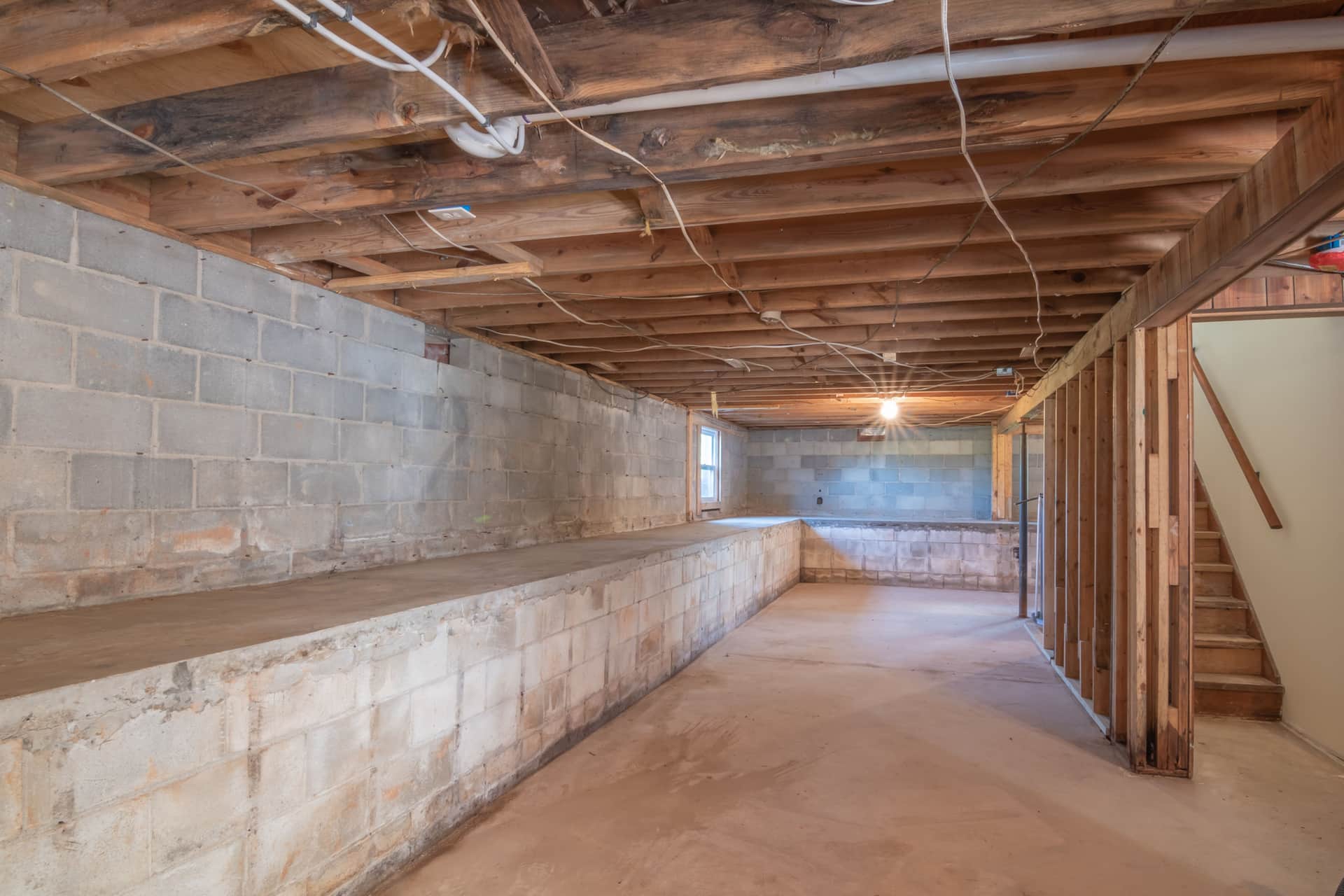
A basement escape needs three things the upstairs case does not: a window that opens to the minimum dimensions the residential code sets for an escape opening, a well big enough to stand up in, and a cover or grate that opens from inside without a tool. The climb itself is short. Standard portable escape ladders are designed to hook over an upstairs sill and are usually the wrong tool here — a fixed well ladder or well steps are what the situation actually calls for.
There are no product picks on this page and that is deliberate. The portable escape ladders we recommend elsewhere hook over an upstairs window sill and are not designed for climbing up out of a window well. The fixes here are a correctly-sized opening, a well ladder or well steps, and a cover that opens from inside — building work and hardware rather than something to add to a cart. Recommending an upstairs ladder for this would be attaching a product to a page that does not need one.
Why the short climb is the dangerous one
The instinct is that a basement is safer because the drop is small. The opposite is often true, for three reasons that have nothing to do with height.
You are climbing up, not down. Getting out of a basement window means lifting your own body weight through an opening above your head, then out of a well. Descending a ladder uses gravity; this does not. For a child, an older adult or anyone injured, upward is dramatically harder.
The opening is often too small. Basement windows in older houses are frequently smaller than the residential code requires for a sleeping-room escape opening. A window that a body cannot pass through is not an exit no matter what equipment is beside it.
There may be a grate on it. Window well covers and security grates are extremely common, and many cannot be opened from inside. That converts the exit into a trap, and it is the single most consequential thing on this page.
What the code asks for
Basements with sleeping rooms, and habitable basements generally, are covered by the emergency escape and rescue opening requirements in IRC section R310. The requirements set minimum net clear opening area, minimum clear width and height, and a maximum sill height above the floor — and for below-grade openings they also set minimum dimensions for the window well itself, including a requirement for a permanently affixed ladder or steps where the well is deep.
Covers and grates are addressed too: where a well has a cover or a grate, it has to be openable from the inside without keys, tools or special knowledge, and without exceeding a specified opening force.
Look those requirements up for your own edition and jurisdiction rather than relying on a number in an article. Editions differ, states amend the model code, and your local authority having jurisdiction may require more. What matters for the purposes of this page is the shape of the requirement: a big enough hole, a big enough well, a way up, and a cover you can open from inside.
Audit your basement window in ten minutes
Do this now. Most of what you will find is free to fix.
Open the window fully, from inside
All the way. Casement windows swing, hoppers tilt into the room and eat the opening, and sliders only ever give you half the frame. What you can see through is not the same as what you can climb through.
Measure the actual clear opening
Width and height of the hole you could pass a body through, with the window in its fully open position — not the frame size on the order sheet. Then compare it with your local requirement.
Measure the sill height above the basement floor
The code sets a maximum for a reason: a sill above chest height on an adult is above a child's head. If it is high, a fixed platform or step below the window is a cheap, legitimate fix.
Get into the well and stand up
Seriously. If an adult cannot stand in the well and turn around, neither can a person coming out of that window in a hurry. Check the well dimensions and depth against the requirement.
Try to open the cover or grate from inside
From inside the well, with no tools, in the dark if you want a realistic test. If it needs a key, a screwdriver or a knack, it is not an escape route. Fix this first, before anything else on the list.
Look for a way up
A deep well needs a permanently affixed ladder or steps. If yours has neither and the well is deep, that is a real gap with a standard hardware solution.
Clear it out
Wells collect leaves, bikes, garden tools and last year's pumpkins. Whatever is in there is in the way. Also check the drain is not blocked, because a well that floods is a different hazard.
Why a standard escape ladder is the wrong tool here
The portable ladders recommended elsewhere on this site hook over an interior window sill and hang down an exterior wall. They are built for a descent and they rely on the sill being above the ladder.
In a window well you need the opposite: something fixed to the outside wall of the well that you can climb up. Hanging a portable escape ladder in a well does not work well — there is nothing at the right height to hook it over, it is being loaded upward rather than downward, and the well wall is usually too close for the rungs to be usable.
The right hardware is a window well ladder or well steps — rungs or steps permanently fixed to the well wall — or a stepped or terraced well that functions as stairs. Both are standard products sold through building supply rather than through the emergency-preparedness aisle, and for a deep well the code may require one regardless of your preferences.
Inside the basement, if the sill is high, a fixed step, platform or a sturdy piece of furniture that cannot be moved away by a child is a legitimate and cheap improvement.
The fixes, cheapest first
- Make the cover openable from inside. Replace a screwed-down grate with one that releases from within the well. Nothing else on this list matters if this one is wrong.
- Clear the well and unblock the drain. Free, immediate, and it also stops the well flooding.
- Add a fixed step or platform below a high sill, so the opening is reachable by the shortest person who sleeps down there.
- Fit a window well ladder or well steps where the well is deep. Standard hardware, straightforward installation.
- Enlarge the window where the opening does not meet the requirement for a sleeping room. This is real building work — a contractor, and usually a permit — and it is the correct answer rather than a workaround.
- Stop using the room for sleeping until the opening complies. Unsatisfying, and it is the right call in the meantime.
Do not forget the alarm and the CO detector
A basement needs a smoke alarm on the ceiling regardless of whether anyone sleeps down there — NFPA 72 requires one on every level of a dwelling including basements, and a basement fire that is detected late is the classic way a whole house fills with smoke before anyone upstairs knows. The placement guide covers where it goes relative to the stair.
A basement also usually contains the furnace or the water heater, which makes it the most common origin point for carbon monoxide in a house. It needs CO detection, and not mounted directly above the appliance where it will nuisance-trip on start-up. Where to install CO detectors has the room-by-room detail.
If a basement bedroom is part of the household, the escape plan needs to show its second way out explicitly, because it is the room where 'go out the window' is least likely to be true by default.
Questions people actually ask
Do escape ladders work on window wells?
Does a basement bedroom need an escape window?
Can a window well have a grate over it?
How deep can a window well be before it needs a ladder?
What else does a basement need for fire safety?
Sources
- International Code Council — IRC R310 — emergency escape and rescue openings
- US Fire Administration — Home fire escape planning
- NFPA — NFPA 72, National Fire Alarm and Signaling Code (2025 edition)
Read next

Escape Ladders
How to Use a Fire Escape Ladder
The deployment sequence, the three mistakes at the sill, and how to practice safely.

Escape Ladders
Escape Ladders for Kids and Older Adults
Why the ladder often is not the answer for children or older adults, and what is.
Placement & Code
Fire Escape Plan Template
A fill-in template: two exits per room, a meeting place, and who helps whom.
Placement & Code
Smoke Detector Placement, Room by Room
The three requirements, the four exclusions, and an original placement diagram.
Carbon Monoxide Detectors
Where to Install CO Detectors
Room by room, and a straight answer to the high-or-low question.