Carbon Monoxide Detectors
Kidde COBDL Review
A listed alarm that deliberately speaks earlier than the standard requires. The right second alarm for a household with somebody vulnerable in it.
By Ryder M.Last reviewed
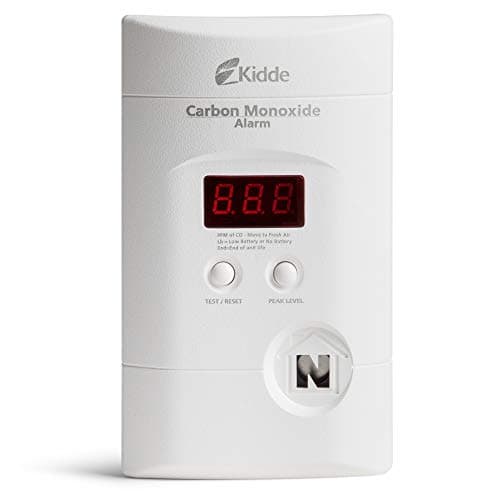
The Kidde COBDL is worth buying as a second alarm in a room where somebody vulnerable sleeps. It is UL 2034 5th edition and ETL listed, runs on two AA batteries, has a backlit digital display, and — the reason it exists — gives a distinct light and sound alert at 30 to 70 ppm, inside the band where a standard alarm is specifically permitted to stay silent. Then it sounds the full alarm at 70 ppm, exactly as the standard requires. Two honest limits: it is a listed alarm rather than a professional monitor, so it does not read single-figure ppm; and the Defender-branded low-level monitors people often search for are a different product sold outside Amazon.
Siren & Safe is reader-funded. We earn a commission on some links on this page, at no cost to you. It does not change what we recommend or the order we rank it in. Full disclosure.
How we judged it
This is a specification and documentation review. We do not expose alarms to carbon monoxide, and we do not quote numbers we cannot point at: every figure below is either the manufacturer's published specification or the published requirement of the standard the unit is listed to. Where a figure is not published, this page says so rather than estimating it.
The five criteria are the ones that decide whether a low-level alarm is worth owning: how early it speaks, what listing stands behind it, whether you can read it, what it asks of you over ten years, and how likely it is to become the alarm everybody ignores. The last one is not a soft criterion. An alarm that alerts more often has a higher chance of being hushed into uselessness, and that risk has to be weighed against the earlier warning it buys.
What the standard requires, and where this alarm sits
The UL 2034 rows are the requirements every listed residential CO alarm is tested against. The last row is what makes this unit different.
| Concentration | What a standard UL 2034 alarm does | What the Kidde COBDL adds |
|---|---|---|
| 30 ppm constant for 30 days | Must NOT alarm | — |
| 30-70 ppm | No requirement to alarm | Distinct light and sound alert |
| 70 ppm | Must alarm between 60 and 240 minutes | Full alarm, as required |
| 150 ppm | Must alarm between 10 and 50 minutes | Full alarm, as required |
| 400 ppm | Must alarm between 4 and 15 minutes | Full alarm, as required |
The UL 2034 alarm points are as published by the manufacturer. The 30-70 ppm row is the whole argument for this product: a standard alarm is allowed to be silent there, and for some occupants that silence is the problem.
Quick picks
Scored against early warning, listing and paperwork, readout, ten-year upkeep and nuisance risk. Tap a row for the full write-up. The price in each buy button is the live Amazon price at the last check, stamped with the date it was taken.
| # | Product | Best for | Score | Price |
|---|---|---|---|---|
| 1 | 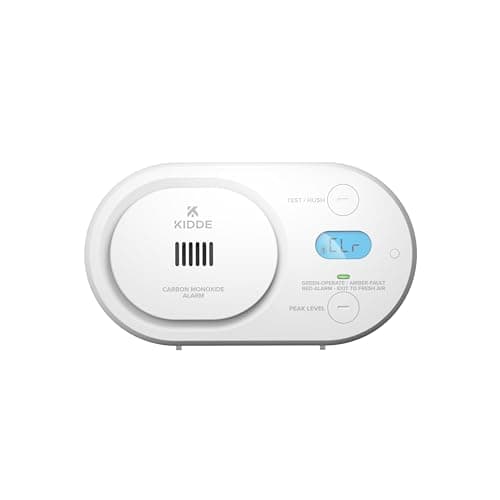 Kidde COBDL Low-Level Carbon Monoxide Alarm The gap in UL 2034 is real and this closes part of it, with a listing behind it. Buy it as a second alarm, not your only one. | A nursery, or a room used by somebody the standard threshold does not serve | 8.0/ 10 | $40.47 · View on Amazon #ad how we are funded · price as of October 19, 2026 |
| 2 | 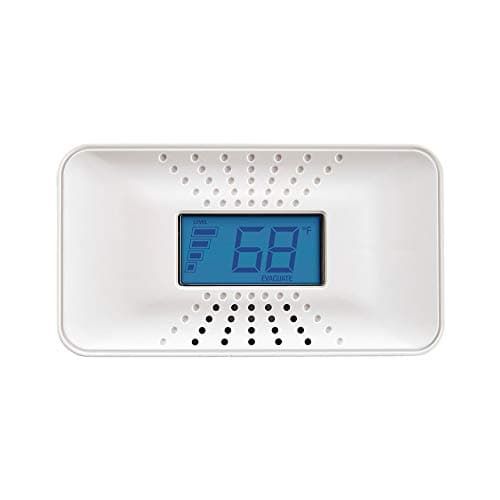 First Alert CO710 Sealed-Battery CO Alarm Sealed ten-year battery, UL 2034, digital display. The alarm that covers the sleeping areas while the COBDL covers the band below. | The standard alarm this one sits alongside | 8.4/ 10 | $44.00 · View on Amazon #ad how we are funded · price as of October 19, 2026 |
| 3 | 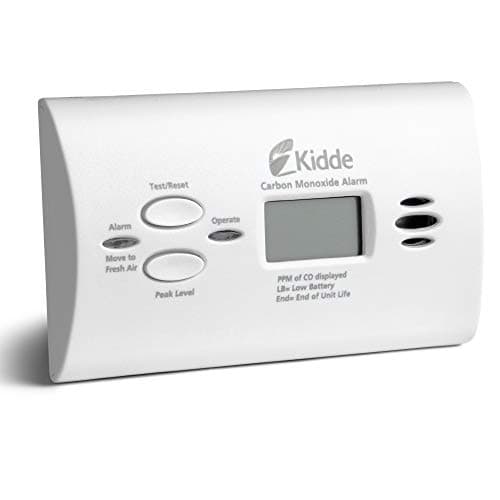 Kidde KN-COPP-B-LPM Battery CO Alarm with Digital Display Peak-level memory from 11 ppm. The cheaper way to find out whether you have a low-level problem at all. | Evidence of a chronic problem, without the early alert | 7.8/ 10 | $27.97 · View on Amazon #ad how we are funded · price as of October 19, 2026 |
The verdict, and what to pair it with
1. A nursery, or a room used by somebody the standard threshold does not serve
Kidde COBDL Low-Level Carbon Monoxide Alarm
The gap in UL 2034 is real and this closes part of it, with a listing behind it. Buy it as a second alarm, not your only one.
- Listed to
- UL 2034, 5th edition; ETL listed
- Sensing / agent
- Electrochemical CO sensor
- Power / service life
- Two AA batteries; 10-year limited warranty on the alarm
The gap this product exists to fill. UL 2034 builds a deliberate delay into every listed CO alarm, and once you see the numbers the reason for a low-level alarm becomes obvious. A listed alarm must not sound when exposed to a constant 30 ppm for 30 days. It must alarm within 60 to 240 minutes at 70 ppm, within 10 to 50 minutes at 150 ppm, and within 4 to 15 minutes at 400 ppm. That design is defensible: it prevents a household being woken by cooking, traffic and attached-garage cold starts, and an alarm that cries wolf gets unplugged.
But it leaves a real band uncovered. A persistent 40 or 50 ppm in a bedroom is legally invisible to a standard alarm and is not medically nothing — particularly for a small child, an older adult with cardiac or respiratory disease, or a pregnant person, where foetal hemoglobin binds CO more avidly than adult hemoglobin does. Kidde is explicit that this is the population the earlier threshold is for, which is more than most low-level products will say in writing.
What it is not. It is not a professional low-level monitor. The instruments heating engineers carry read in single figures and log over time; this reads and alerts from 30 ppm. If you want an instrument to diagnose a chronic problem rather than an alarm to tell you about one, that is a different purchase. And it is not a replacement for the alarms outside your sleeping areas — the code requirement stands, and a low-level alarm is an addition to it.
The Defender question. A lot of searches for a low-level CO monitor are looking for the Defender-branded units, which are a separate product line sold through their own channels rather than on Amazon. We are not going to pretend this is that product under another name: it is a Kidde alarm, with a Kidde listing, and the honest comparison is that the Defender units read lower and the Kidde unit is listed, battery-simple and far easier to buy. Best low-level CO monitors sets out the whole category.
What it does well
- **Alerts at 30 to 70 ppm** with a distinct light and sound pattern, below the concentration at which a standard UL 2034 alarm is permitted to sound
- Kidde names the people that band is for: young children, older adults, pregnant women and pets
- Separate full alarm at 70 ppm, so it still behaves like a code-compliant alarm when the concentration is genuinely dangerous
- **UL 2034 5th edition and ETL listed** — this is a listed alarm in its own right, not an uncertified instrument
- Backlit digital display and a test/hush button, so a reading is legible at night
- Battery powered with no wiring, so it goes at whatever height the room needs
The downside
- **Two AA batteries, not a sealed ten-year cell** — there is a real annual check to remember, and a battery somebody can remove
- It is a listed alarm, not a professional monitor: it does not read single-figure ppm the way a technician's instrument does
- An early-warning band means more alerts, and in some houses that will mean several a winter
- Specialist availability compared with mainstream alarms, so replacement is less of a shelf purchase
- 10-year limited warranty on the alarm, which is the sensor life rather than a service promise
Do not buy this if: your only CO alarm, and not for a household that will hush an early warning permanently. The standard alarms outside the sleeping areas come first; this is the addition that covers the band they are allowed to ignore.
- Alerts earlier, at 30 to 70 ppm, with a distinct light and sound pattern — below the concentration at which a standard UL 2034 alarm is permitted to sound
- Kidde names the people that early band is for: young children, older adults, pregnant women and pets
- Digital backlit display and a test/hush button; no wiring, so it can sit at the height the room needs
- Separate full alarm at 70 ppm, as the standard requires
- It is a listed alarm in its own right, not a professional monitor — it does not read single-figure ppm
#ad how we are funded · price as of October 19, 2026
2. The standard alarm this one sits alongside
First Alert CO710 Sealed-Battery CO Alarm
Sealed ten-year battery, UL 2034, digital display. The alarm that covers the sleeping areas while the COBDL covers the band below.
- Listed to
- UL 2034
- Sensing / agent
- Electrochemical CO sensor
- Power / service life
- 10-year sealed battery
We recommend this pairing rather than one clever alarm. Sealed-battery listed alarms in the positions code names, because those are the alarms that must still work in year nine with nobody having touched them; plus a low-level alarm in the one room where the earlier threshold matters.
Best carbon monoxide detectors is the roundup for the standard positions, and how many CO detectors do I need does the count.
What it does well
- Sealed ten-year battery — nothing to change, nothing to remove, no annual decision
- UL 2034 listed with a digital display of the measured concentration
- No cord, so placement is free
- The right unit for the positions code actually asks for
The downside
- Will not alert in the 30-70 ppm band — by design, as the standard allows
- No peak memory, so an intermittent problem leaves no record
- Replace the whole unit at end of life
Do not buy this if: the vulnerable-occupant case on its own. That is the reason the COBDL is on this page.
- Sealed 10-year battery — nothing to change, and no low-battery chirp until it is genuinely done
- Digital display showing the measured concentration
- Placement is free: no outlet required, so it can sit at the height the room actually needs
- End of life means replacing the whole unit, by design
#ad how we are funded · price as of October 19, 2026
3. Evidence of a chronic problem, without the early alert
Kidde KN-COPP-B-LPM Battery CO Alarm with Digital Display
Peak-level memory from 11 ppm. The cheaper way to find out whether you have a low-level problem at all.
- Listed to
- UL 2034
- Sensing / agent
- Electrochemical CO sensor
- Power / service life
- Battery powered; 10-year unit life
If you are not sure you have a low-level problem, this is the cheaper first step. Clear the peak memory, live normally for a couple of weeks, then read it. A flat zero is real reassurance. A number in the teens or twenties tells you something in the house is making CO, and that is the point at which the low-level alarm above becomes a sensible purchase rather than a precaution.
Either way, the next call is a heating engineer rather than another alarm. An alarm tells you there is CO; only a service visit tells you why.
What it does well
- Peak-level memory records concentrations as low as 11 ppm, so a leak you were out for still leaves a trace
- UL 2034 listed with a digital display
- Battery powered and portable, which makes it useful for narrowing down a source
- Considerably easier to find than any specialist low-level unit
The downside
- It records low concentrations but does not alert at them
- Replaceable batteries, so it needs the annual check
- Ten-year unit life regardless of battery condition
Do not buy this if: a household that needs to be warned in the 30-70 ppm band rather than informed about it afterwards. Memory is diagnosis; the COBDL is warning.
- Battery only, so it goes where there is no outlet — a bedroom wall, a cabin, a rental
- Digital display plus peak-level memory
- Portable enough to travel with, which matters more than most buying guides admit
- Replaceable batteries mean an annual check is genuinely required
#ad how we are funded · price as of October 19, 2026
Who should buy it
Four situations where the earlier threshold changes something real.
- A nursery or a child's bedroom. Small bodies, smaller blood volume, and a child who cannot tell you they have a headache that only happens at home.
- A room used by somebody with heart or lung disease. Reduced oxygen-carrying capacity is exactly the mechanism CO exploits, and a concentration an adult shrugs off is not neutral here.
- A home with a pregnant occupant. Foetal hemoglobin binds carbon monoxide more readily than adult hemoglobin does, which Kidde names directly in its own description of the product.
- A house with a suspected chronic source — an older boiler, a wood stove, an attached garage with a leaky door. Pair it with the peak-memory alarm above and a service visit.
Who should not
And what to buy instead in each case.
- You want one alarm for the whole house. Buy a sealed ten-year listed alarm for each required position first — best carbon monoxide detectors.
- Nobody in the house will check a battery. Two AA cells is a commitment. A sealed ten-year unit removes it.
- You want to diagnose a problem in single-figure ppm. That is a professional instrument, not a listed alarm. Get a heating engineer with a calibrated analyzer.
- You are fitting out a rental. An early-warning alarm in a unit you do not live in is an alarm you will be called about and cannot investigate. Standard listed alarms, and a maintenance record.
The thing an alarm cannot do
Every CO alarm, early or standard, tells you a gas is present. None of them tells you why, and none of them fixes it. A persistent low-level reading is a service call: a flue, a heat exchanger, a blocked vent, a back-drafting water heater, a garage door that no longer seals. Chasing it with more alarms is a way of avoiding the appointment.
And the response to a full alarm does not change because you own a better alarm. Get everybody into fresh air first, then call 911 from outside. Do not go back in to open windows or find the source — carbon monoxide impairs judgment, which means the person deciding whether it is serious is the least reliable judge of that.
Questions people actually ask
Is the Kidde COBDL worth it?
What does a low-level CO alarm detect that a normal one does not?
Is the Kidde COBDL the same as a Defender low level CO monitor?
Does the Kidde COBDL replace my regular CO alarms?
What batteries does the Kidde COBDL use?
How these picks were chosen. On published specifications, safety listings and manufacturer documentation — plus the findings of organizations that do run tests. We have no laboratory and we do not burn anything. Read the full methodology.
Sources
- UL Solutions — UL 2034 — single and multiple station carbon monoxide alarms
- BRK Electronics / First Alert — What levels of CO cause an alarm?
- CPSC — Carbon Monoxide Fact Sheet
- NFPA — NFPA 72, National Fire Alarm and Signaling Code (2025 edition)
- International Code Council — IRC Chapter 3 — building planning (R310, R314, R315)
Read next
Carbon Monoxide Detectors
The Best Low-Level CO Monitors
Why the 30 ppm floor exists, who it fails, and what a low-level monitor adds.
Carbon Monoxide Detectors
The Best Carbon Monoxide Detectors
Four listed alarms, and why peak-level memory beats a fancier display.
Carbon Monoxide Detectors
The Best CO Detectors With a Digital Display
A readout plus peak memory tells you what happened while you were out. What UL 2034 hides.
Carbon Monoxide Detectors
Carbon Monoxide Poisoning Symptoms
The symptoms, the flu-without-fever pattern, and the emergency action first.
Carbon Monoxide Detectors
How Many Carbon Monoxide Detectors Do I Need?
Two rules decide the count: separate sleeping areas, and levels. Worked through by house size.