Carbon Monoxide Detectors
How Many Carbon Monoxide Detectors Do I Need?
The count comes from two rules, not from square footage. Work out the sleeping areas and the levels, and the number falls out of the floor plan.
By Ryder M.Last reviewed
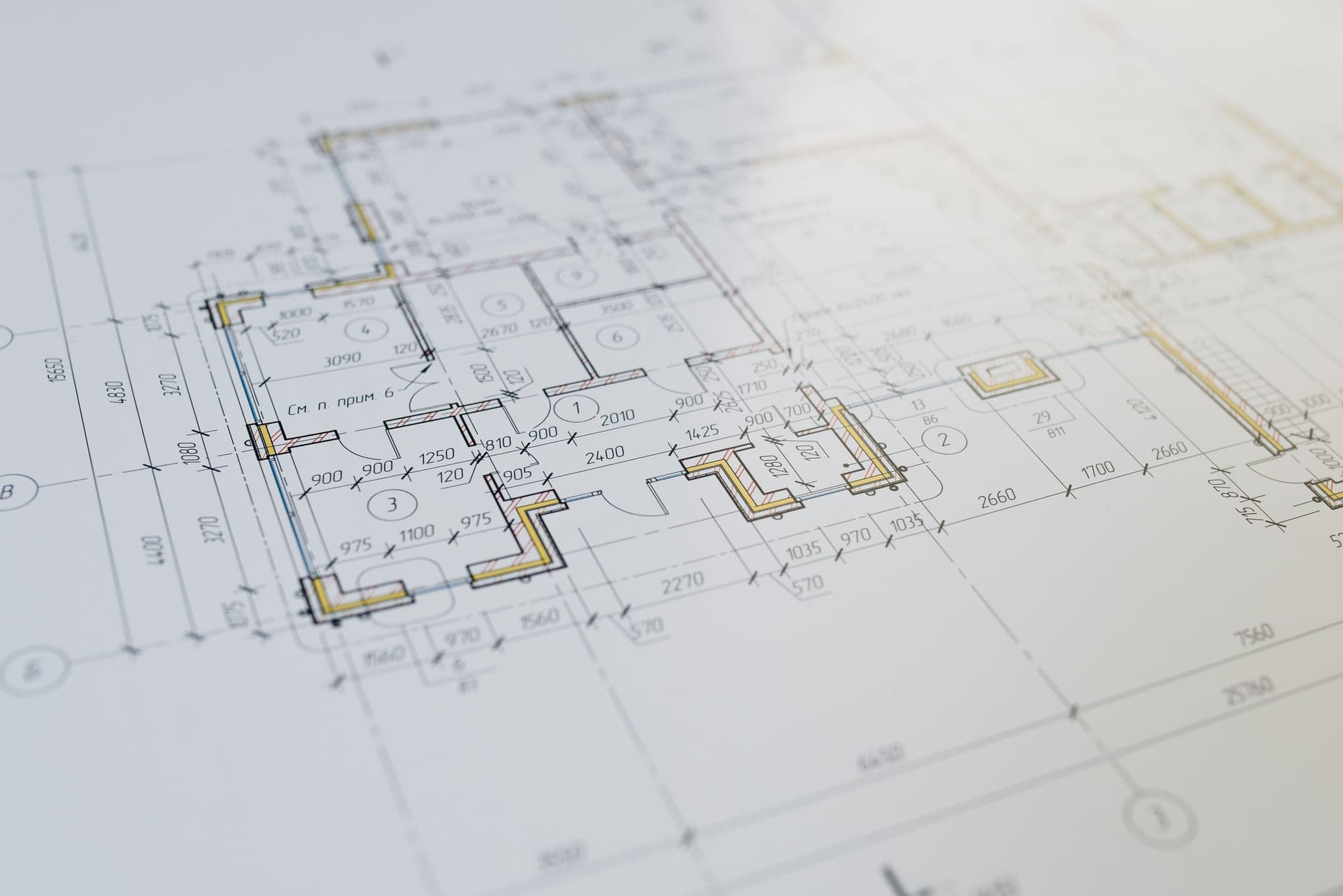
**One CO alarm outside each separate sleeping area, and at least one on every level of the home including the basement.** For a typical two-story, three-bedroom house with a basement where the bedrooms share one hallway, that is three: one on the bedroom landing, one on the main level, one in the basement. Add one more for every group of bedrooms served by a different hallway, and one for a finished attic or a bonus room over a garage. This is a floor rather than a ceiling, and it is not a square-footage calculation.
Siren & Safe is reader-funded. We earn a commission on some links on this page, at no cost to you. It does not change what we recommend or the order we rank it in. Full disclosure.
The two rules that produce the number
Rule one: one alarm outside each separate sleeping area. A sleeping area is a group of bedrooms served by the same hallway or landing. Three bedrooms off one corridor is one sleeping area and needs one alarm. Two bedrooms at one end of the house and a converted garage bedroom at the other end are two sleeping areas and need two.
Rule two: at least one alarm on every level of the home, including the basement. A level with no bedrooms still needs one, because the sources live on those levels — the furnace, the water heater, the attached garage, the fireplace, the gas range.
The two rules overlap, and where they do, one alarm satisfies both. An alarm on the bedroom landing is the sleeping-area alarm for those bedrooms and the level alarm for that floor at the same time.
What is not in the rules is square footage. CO alarm counts are not driven by area the way sprinkler coverage is, because carbon monoxide mixes with air and distributes through a level rather than banking in a corner. A 900 sq ft one-level apartment with one bedroom hallway needs one alarm; a 900 sq ft two-level townhouse needs two.
This is a floor rather than a ceiling. NFPA 72 and the residential code both set minimums, and local requirements are frequently stricter — several states require an alarm in each bedroom rather than outside it. Verify locally before treating any number here as sufficient for an inspection.
Quick picks
Scored against suits a bedroom hallway, annual effort, survives a power cut, readability and cost per position. Tap a row for the full write-up. The price in each buy button is the live Amazon price at the last check, stamped with the date it was taken.
| # | Product | Best for | Score | Price |
|---|---|---|---|---|
| 1 | 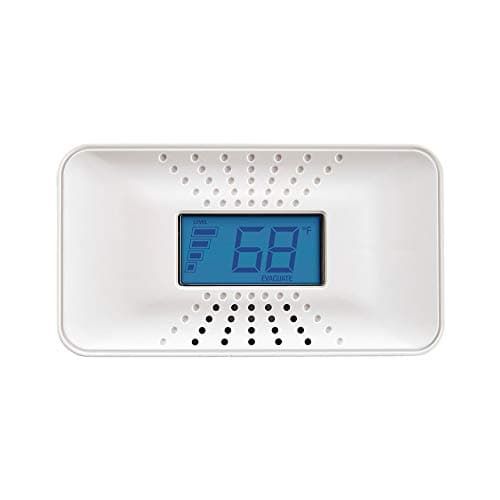 First Alert CO710 Sealed-Battery CO Alarm Sealed 10-year battery with a display, and it goes where there is no outlet. | The alarm outside the bedrooms | 9.1/ 10 | $44.00 · View on Amazon #ad how we are funded · price as of October 19, 2026 |
| 2 | 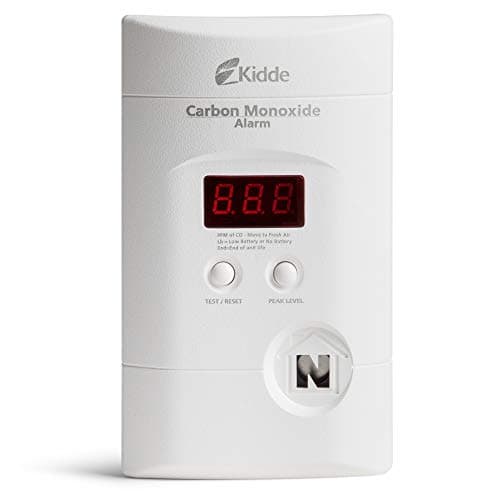 Kidde Nighthawk KN-COPP-3 Plug-In CO Alarm Plug-in with 9V backup, a display and peak memory down to 11 ppm. | The main-level position, if there is a socket | 7.4/ 10 | $44.50 · View on Amazon #ad how we are funded · price as of October 19, 2026 |
| 3 | 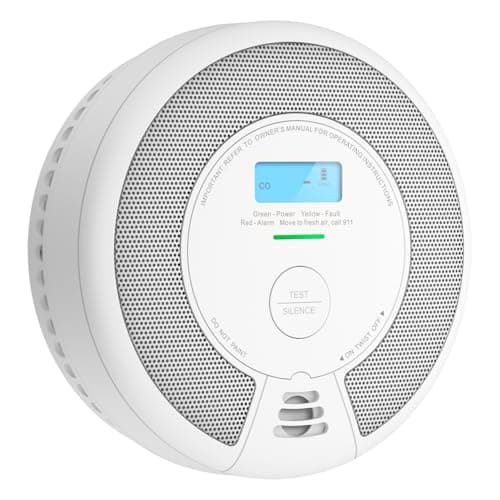 X-Sense SC07 Smoke & Carbon Monoxide Alarm UL 217 and UL 2034 in one unit, on a 10-year sealed lithium battery. | One device where the ceiling only has room for one | 9.2/ 10 |
Units that fit the positions the count creates
1. The alarm outside the bedrooms
First Alert CO710 Sealed-Battery CO Alarm
Sealed 10-year battery with a display, and it goes where there is no outlet.
- Listed to
- UL 2034
- Sensing / agent
- Electrochemical CO sensor
- Power / service life
- 10-year sealed battery
This is the unit for the position that matters most, and the reason is boring: the hallway outside the bedrooms rarely has an outlet where the alarm belongs. A sealed-battery alarm can be exactly where the standard says, which is worth more than any feature.
It also removes the single most common way residential alarms get disabled. Nobody takes the battery out of a sealed unit at 3am to stop a chirp, because there is no battery to take out.
Buy as many as the sleeping-area count requires rather than one and a plan to add more later. Where to install them covers the wall and the height.
What it does well
- Sealed 10-year battery — nothing to change and nothing anybody can remove to stop a chirp
- No outlet required, so it can occupy the position the code actually specifies
- Digital display showing the measured concentration
- Immune to a power cut by design
The downside
- The whole unit is consumable at end of life
- Harder to relocate mid-life than a plug-in unit
- No mains interconnection
Do not buy this if: you want mains interconnection so that one alarm sounding wakes the whole house. That needs a hardwired or wireless-interconnect unit instead.
- Sealed 10-year battery — nothing to change, and no low-battery chirp until it is genuinely done
- Digital display showing the measured concentration
- Placement is free: no outlet required, so it can sit at the height the room actually needs
- End of life means replacing the whole unit, by design
#ad how we are funded · price as of October 19, 2026
2. The main-level position, if there is a socket
Kidde Nighthawk KN-COPP-3 Plug-In CO Alarm
Plug-in with 9V backup, a display and peak memory down to 11 ppm.
- Listed to
- UL 2034
- Sensing / agent
- Electrochemical CO sensor
- Power / service life
- 10-year unit life; 9V battery backup
If you buy one unit with peak-level memory, this is the one and the main level is the place for it. The memory is what tells you whether anything happened while the house was empty, and the main level is the floor most likely to see a transient source — a gas range, a fireplace, a car on an attached driveway.
The 6 ft cord gives it more reach than its format suggests, which matters when the only socket is at the wrong end of the hall.
Use it to answer questions, not to meet the count. The count is met by alarms outside the bedrooms, and the plug-in versus battery comparison is the argument for mixing formats per position.
What it does well
- Display reads 30 to 999 ppm with a 15-second refresh, easy to read at outlet height
- Peak-level memory records down to 11 ppm — the diagnostic feature worth having on one unit in the house
- Direct-plug, 6 ft cord or tabletop, so the socket does not fully dictate the position
- Battery backup through an outage
The downside
- Outlet-dependent, which rules it out of most bedroom-hallway positions
- 9V backup cell needs an annual check
- Occupies a socket, often the only one in a hallway
Do not buy this if: it would be the only CO alarm in the house. One plug-in unit in a hallway is not the same as coverage outside every sleeping area.
- Digital display reads 30 to 999 ppm and refreshes every 15 seconds
- Peak-level memory records concentrations as low as 11 ppm — the feature that catches a chronic leak
- Direct-plug, 6 ft cord or tabletop mounting
- Battery backup keeps it monitoring through a power cut, which is exactly when generators come out
#ad how we are funded · price as of October 19, 2026
3. One device where the ceiling only has room for one
X-Sense SC07 Smoke & Carbon Monoxide Alarm
UL 217 and UL 2034 in one unit, on a 10-year sealed lithium battery.
- Listed to
- UL 217 and UL 2034
- Sensing / agent
- Photoelectric smoke sensing plus an electrochemical CO cell
- Power / service life
- 10-year sealed lithium battery, not hardwired
Combination units change the arithmetic of this page, because one device can satisfy both the smoke alarm count and the CO alarm count for a given position.
That is genuinely useful on a bedroom landing, where the smoke alarm requirement and the CO alarm requirement both land on the same stretch of ceiling and nobody wants two discs a foot apart.
The honest caveat is height. Smoke rises and wants a ceiling; carbon monoxide mixes with air and is less fussy, so a ceiling-mounted combo is a small compromise against CO rather than a large one. Combo versus separate sets out both sides, and the combination roundup covers the units.
What it does well
- Listed to **UL 217 and UL 2034** — a real smoke alarm and a real CO alarm in one housing
- 10-year sealed lithium battery, not hardwired, so it goes anywhere
- One device, one position, one set of dates to remember
- Covers both hazards on a landing where there is only room for one unit
The downside
- The ideal mounting height for smoke and for CO are not identical, so a combo unit compromises slightly on one
- Both sensors retire together, even if only one has aged out
- Not hardwired, so no mains interconnection
Do not buy this if: you want each hazard monitored at its own ideal height, or you want a hardwired interconnected system. A combo unit is a sensible compromise rather than the optimum for either hazard.
- LCD reads the measured CO concentration rather than only alarming
- Standalone unit — no wireless interconnect, no Wi-Fi, no base station
- Sealed battery, so there is no annual battery ritual and no low-battery chirp until end of life
- Test and silence on one control
The count, worked through by house
Minimums from the two rules. Add one for any additional sleeping area and one for any additional level.
| Home | Sleeping areas | Levels | Minimum CO alarms | Where |
|---|---|---|---|---|
| Studio or 1-bed apartment, one level | 1 | 1 | 1 | Outside the sleeping area, away from the kitchen range |
| 2-bed apartment, one level, one hallway | 1 | 1 | 1 | The hallway serving both bedrooms |
| 2-story, 3-bed, bedrooms on one landing, no basement | 1 | 2 | 2 | Bedroom landing, plus the main level |
| 2-story, 3-bed, one landing, with a basement | 1 | 3 | 3 | Bedroom landing, main level, basement |
| 2-story, 4-bed with a split landing or a bedroom over the garage | 2 | 3 | 4 | Each sleeping area, main level, basement |
| Ranch with a finished basement bedroom | 2 | 2 | 2 or 3 | Main bedroom hallway, basement sleeping area, plus the basement level if separate |
| 3-story townhouse, bedrooms on the top floor | 1 | 3 | 3 | Top-floor landing, middle level, ground or garage level |
| Any home with an attached garage | — | — | Add coverage in the adjoining room | In the room next to the garage, not inside the garage itself |
Several states and municipalities require an alarm inside each bedroom, not merely outside each sleeping area. Confirm with your local authority before relying on a minimum.
The positions people miss
These are the rooms that fall between the two rules, and each one is a genuine gap rather than an upgrade.
- The basement. The furnace, water heater and any fuel-burning appliance usually live here, and it is the level most often left uncovered because nobody sleeps in it. Basement picks covers the specifics, including how far from the appliance to mount.
- A bedroom over an attached garage. A car started in the garage below vents into the floor cavity, and that room is both a sleeping area and the most exposed position in the house.
- A converted attic or bonus room. If somebody sleeps there, it is a sleeping area and a level at once, and it is frequently served by a different staircase than the main bedrooms.
- A finished basement with a sofa bed. Occasional sleeping counts. A guest asleep in a basement next to a furnace is the highest-risk position in many houses.
- An RV, a boat with an enclosed cabin, or a cabin with a propane heater. Different rules, different products — the RV and travel roundup covers them.
- A room with a wood stove or a gas fireplace, which is a source on a level that may otherwise look low-risk.
Where not to put them, and why over-fitting backfires
More alarms is not linearly better, because every alarm in a bad position is a nuisance alarm waiting to happen, and a household that has silenced one alarm is a household that will silence the next.
Not within a few feet of a fuel-burning appliance. A furnace, a water heater or a gas range produces a small transient concentration on start-up that is entirely normal, and an alarm mounted too close will sound for it. Manufacturers publish minimum distances; respect them.
Not in the garage itself. Vehicle exhaust guarantees nuisance alarms. Put the alarm in the adjoining room, which is where the exposure that matters ends up anyway.
Not in a bathroom or directly beside one. Humidity shortens electrochemical sensor life and causes faults.
Not in dead air or behind a door. A corner where two walls and a ceiling meet, the space behind a swinging door, or a spot blocked by furniture all slow the alarm's response.
Not in direct sunlight or above a radiator. Temperature extremes are outside the specified operating range for most units.
The count that matters is the number of alarms in good positions, which is why this page is organized around sleeping areas and levels rather than around a total.
Combination alarms and the arithmetic
A unit listed to both UL 217 and UL 2034 is a smoke alarm and a CO alarm, and it counts toward both requirements at once. On a bedroom landing, where both requirements land on the same ceiling, that is a real simplification.
Where the compromise shows is height and lifespan. Smoke rises, so a smoke alarm wants a ceiling; carbon monoxide mixes with air, so a CO alarm is less height-sensitive. Mounting a combo on the ceiling is therefore a small compromise for the CO sensor rather than a large one — which is why combination units are a reasonable default rather than a mistake.
The lifespan point is sharper. The two sensors age at different rates but retire together, because the unit has one replacement date. You accept retiring a serviceable smoke sensor to retire a used-up CO one.
Combo versus separate is the full argument, and the short version is: combination units on the landings, separate CO units in the basement near the plant and separate smoke alarms where the ceiling is awkward.
Count the dates as well as the alarms
A house with four CO alarms, three of them past their replacement date, has one CO alarm. This is the most common failure on this subject and the easiest to fix.
Electrochemical CO sensors have a finite service life — ten years on most current units, less on some. The alarm does not stop looking like an alarm when the sensor expires; it keeps a green light on and passes the test button, because the test button checks the horn and the power, not the sensor.
Take every unit down once a year, read the manufacture date on the back, and replace anything within a year of its limit. Write the replacement date on the unit in marker so the next check takes ten seconds.
Lifespan and replacement covers the end-of-life signals, which are easy to mistake for a low battery and are the reason so many expired alarms get a fresh 9V instead of being replaced.
Questions people actually ask
How many carbon monoxide detectors do I need in my house?
Do I need a carbon monoxide detector in every bedroom?
Do I need a CO detector in the basement?
How many CO detectors for a 3-bedroom house?
Is one carbon monoxide detector enough for an apartment?
Can you have too many carbon monoxide detectors?
How these picks were chosen. On published specifications, safety listings and manufacturer documentation — plus the findings of organizations that do run tests. We have no laboratory and we do not burn anything. Read the full methodology.
Sources
- NFPA — NFPA 72, National Fire Alarm and Signaling Code (2025 edition)
- International Code Council — IRC Chapter 3 — building planning (R310, R314, R315)
- CPSC — Carbon Monoxide Fact Sheet
- UL Solutions — UL 2034 — single and multiple station carbon monoxide alarms
Read next
Carbon Monoxide Detectors
Room by room, and a straight answer to the high-or-low question.
Carbon Monoxide Detectors
Do I Need a Carbon Monoxide Detector?
The five sources all-electric homes forget, and the one case where no is honest.
Carbon Monoxide Detectors
The Best Carbon Monoxide Detectors
Four listed alarms, and why peak-level memory beats a fancier display.
Carbon Monoxide Detectors
Combination Alarms vs Separate Units
One device or two — the replacement-timing trade nobody mentions.
Placement & Code
NFPA 72 Residential Requirements
The residential sections, quoted with their numbers, and what each one means in practice.