Carbon Monoxide Detectors
The Best Carbon Monoxide Detectors for Basements
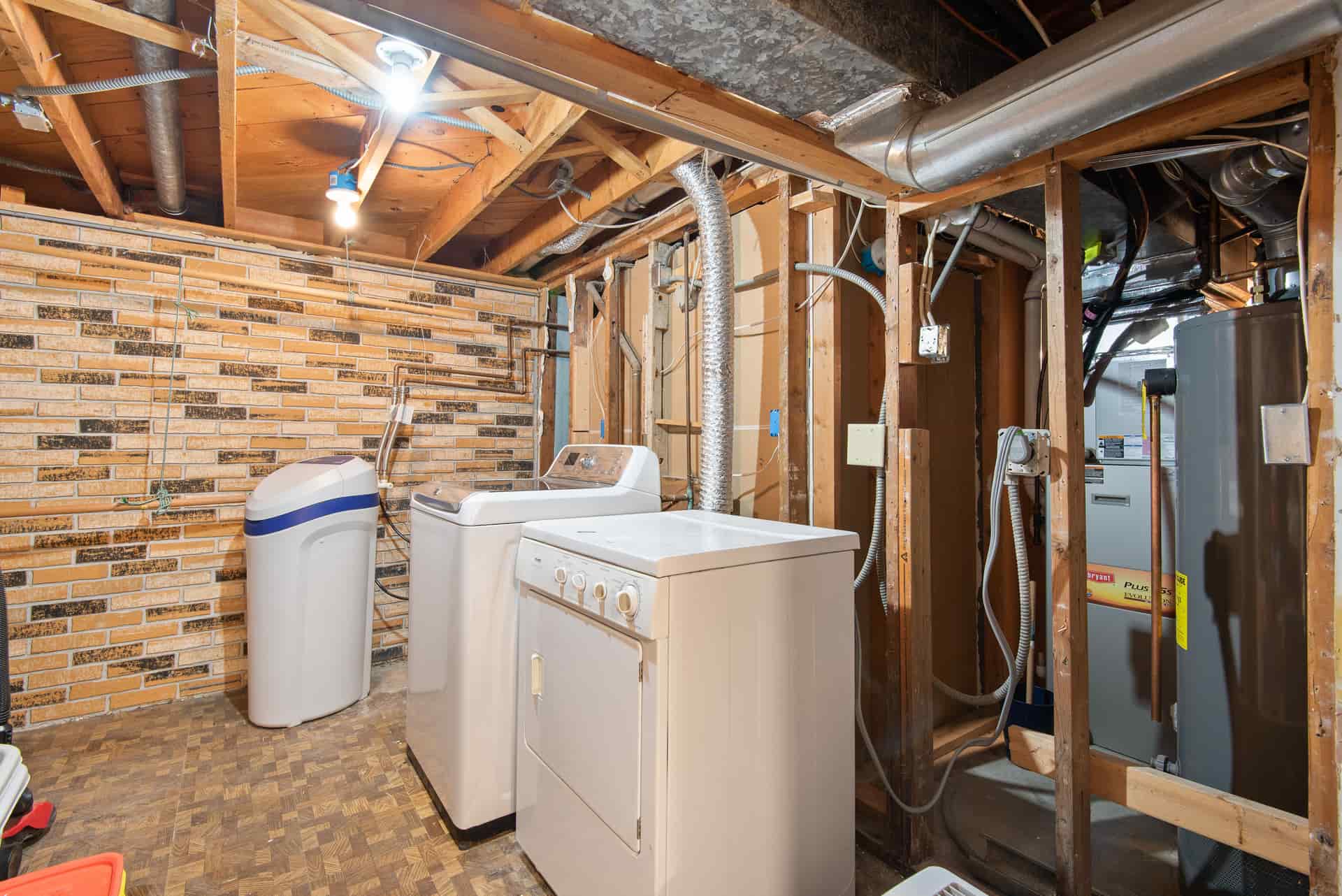
This is the room where residential carbon monoxide is produced and the room people most often leave uncovered. It also has no outlet where you want one, and it gets cold.
By Ryder M.Last reviewed
Buy an alarm with peak-level memory for a basement, because the failure you are looking for down there is usually a slow one — a cracked heat exchanger or a partially blocked flue producing low concentrations for weeks. Our pick is the Kidde Nighthawk KN-COPP-3, which records peaks down to 11 ppm and plugs in where there is an outlet. If the furnace corner has no outlet, the First Alert CO710 runs on a sealed ten-year battery and goes where the room needs it. Mount it in the same space as the appliance, several feet away, and never directly above it.
Siren & Safe is reader-funded. We earn a commission on some links on this page, at no cost to you. It does not change what we recommend or the order we rank it in. Full disclosure.
Why the basement is the position that gets missed
Most residential carbon monoxide comes from an incompletely burning fuel appliance, and in most American houses those appliances live in the basement: the furnace, the water heater, sometimes a boiler, sometimes a gas dryer.
The basement is also the least-visited ceiling in the house. Alarms up there get installed and then not thought about again, which is a problem for a device with a ten-year life and an end-of-life chirp that nobody is standing close enough to hear.
And an attached garage frequently opens off it. A cold engine running for thirty seconds in a closed garage produces a large amount of CO, and a shared wall or a stair door is not a seal.
So the basement combines the highest source density in the house with the lowest inspection frequency. That is the argument for both buying for it specifically and writing the replacement date on the unit.
The same level needs smoke detection as well, mounted at the foot of the stairs rather than over the furnace — best smoke detectors for basements covers that position and the sensing choice.
The one placement rule people get wrong
Same room as the appliance. Several feet away. Never directly above it.
The reason is the start-up plume. Many fuel-burning appliances produce a brief burst of combustion products at ignition, before the flue draft is fully established. That burst is normal, it clears in seconds, and an alarm mounted in its path will sound for it. An alarm that cries wolf every time the furnace fires is an alarm that gets unplugged by March.
Height matters much less than people expect. Carbon monoxide has a molar mass very close to air, so it mixes rather than pooling at the floor or layering at the ceiling. Follow the manufacturer's instructions for your specific unit — the height is part of the listing — and spend your attention on the room and the distance instead.
One thing to avoid regardless: the dead air within about 6 in of a ceiling-to-wall corner, where there is very little air movement.
If the basement is unheated, uninsulated or regularly damp, check the operating temperature and humidity range in the manual before you fit anything. Alarms specified for living space routinely are not specified for a cold crawl space, and an alarm reporting a fault all winter is an alarm that comes down.
Quick picks
Scored against peak memory, outage survival, placement freedom, readability at the unit and basement durability. Tap a row for the full write-up. The price in each buy button is the live Amazon price at the last check, stamped with the date it was taken.
| # | Product | Best for | Score | Price |
|---|---|---|---|---|
| 1 | 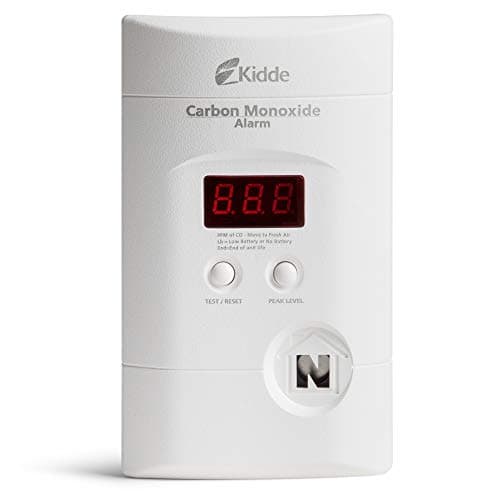 Kidde Nighthawk KN-COPP-3 Plug-In CO Alarm Peak-level memory down to 11 ppm, which is the diagnostic feature a basement needs. | Catching a slow leak from the furnace | 8.4/ 10 | $44.50 · View on Amazon #ad how we are funded · price as of October 19, 2026 |
| 2 | 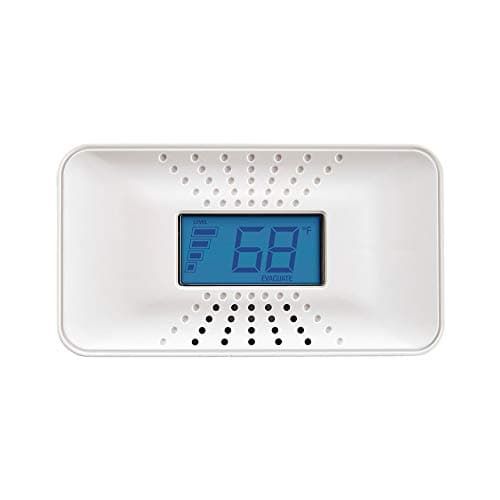 First Alert CO710 Sealed-Battery CO Alarm Sealed ten years, no outlet needed, so the alarm goes where the room wants it. | A furnace corner with no outlet | 8.4/ 10 | $44.00 · View on Amazon #ad how we are funded · price as of October 19, 2026 |
| 3 | 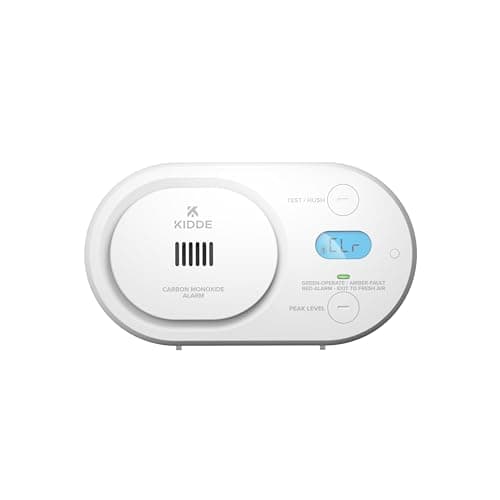 Kidde COBDL Low-Level Carbon Monoxide Alarm A listed alarm that warns in the 30 to 70 ppm band, where a standard alarm stays quiet. | A basement where you already suspect something | 8.1/ 10 | $40.47 · View on Amazon #ad how we are funded · price as of October 19, 2026 |
| 4 | 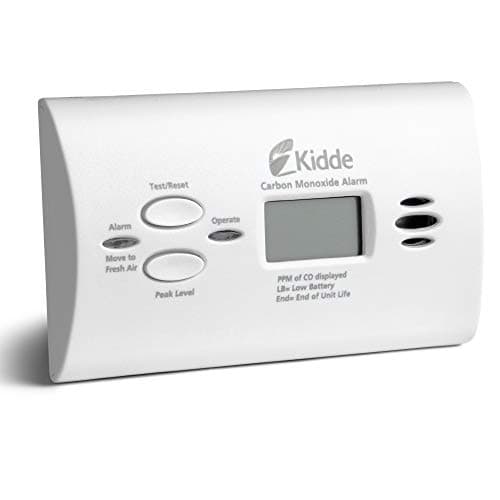 Kidde KN-COPP-B-LPM Battery CO Alarm with Digital Display Battery, display and peak memory in a unit you can put at the bedside. | A basement bedroom or a finished basement suite | 8.3/ 10 | $27.97 · View on Amazon #ad how we are funded · price as of October 19, 2026 |
1. Catching a slow leak from the furnace
Kidde Nighthawk KN-COPP-3 Plug-In CO Alarm
Peak-level memory down to 11 ppm, which is the diagnostic feature a basement needs.
- Listed to
- UL 2034
- Sensing / agent
- Electrochemical CO sensor
- Power / service life
- 10-year unit life; 9V battery backup
The reason peak memory is the headline feature in a basement and not elsewhere is the type of failure you are looking for. A UL 2034 alarm is required to stay silent at low concentrations — that is deliberate, and it exists to stop nuisance alarms. The consequence is that an appliance producing a steady 15 or 20 ppm will never sound an alarm, and that is precisely the signature of a cracked heat exchanger or a partially blocked flue.
Peak memory makes that visible. Press the button after a cold week and you get the highest concentration the unit has seen. A reading of zero is reassurance. A reading of 25 is a service call you would otherwise never have made.
Place it in the same space as the furnace or water heater but several feet away and out of the start-up plume. Appliances commonly produce a brief spike at ignition before the draft establishes, and an alarm sitting directly above the flue will nuisance-trip on a perfectly healthy boiler.
Where to install CO detectors covers the positioning room by room, including the high-or-low question.
What it does well
- Records peak concentrations as low as 11 ppm — far below the level the alarm itself will ever sound at, which is exactly what turns a hunch into a service call
- Digital display refreshing every 15 seconds, readable at outlet height without a stepladder
- 9V battery backup, so it keeps monitoring through the outage that brings the generator out
- Direct plug, 6 ft cord or tabletop mounting, so one product fits three different basement layouts
The downside
- **Needs an outlet**, and basement outlets are rarely where the furnace is
- The backup battery is a replaceable cell, so it is one more annual job
- A damp or unheated basement is outside the environment most alarms are specified for — check the operating range for your unit
- Plug-in position is fixed at outlet height whether or not that suits the room
Do not buy this if: an unheated or frequently damp basement. Humidity and cold both sit outside the specified operating envelope of most residential alarms, and an alarm reporting a fault every winter gets unplugged.
- Digital display reads 30 to 999 ppm and refreshes every 15 seconds
- Peak-level memory records concentrations as low as 11 ppm — the feature that catches a chronic leak
- Direct-plug, 6 ft cord or tabletop mounting
- Battery backup keeps it monitoring through a power cut, which is exactly when generators come out
#ad how we are funded · price as of October 19, 2026
2. A furnace corner with no outlet
First Alert CO710 Sealed-Battery CO Alarm
Sealed ten years, no outlet needed, so the alarm goes where the room wants it.
- Listed to
- UL 2034
- Sensing / agent
- Electrochemical CO sensor
- Power / service life
- 10-year sealed battery
The strongest practical argument for a sealed-battery alarm in a basement is that placement stops being a compromise. CO detection wants to be in the same space as the appliance and clear of its plume, and the chance of an outlet sitting exactly there is small.
The second argument is the chirp. A replaceable-battery alarm in a basement chirps at 3am from two floors away, gets ignored for a week, and then gets its battery pulled by somebody standing on a chair at midnight. A sealed ten-year cell removes that failure mode entirely.
Write the install date on the casing with a marker and put the replacement year in your calendar. The thing that kills basement alarms is not failure, it is being forgotten.
What it does well
- Sealed ten-year battery — nothing to replace, and no annual chirp in a room nobody visits
- Complete placement freedom: the right distance from the appliance rather than the nearest socket
- Digital display of the current concentration
- Unaffected by a power cut, which is when portable generators appear and CO risk peaks
The downside
- **End of life means replacing the whole unit** — that is the design, not a fault
- No mains power means no permanent indicator that it is alive; you have to go down and test it
- A basement is the easiest room in the house to forget for ten years
- Battery performance drops in genuinely cold spaces — keep it within the stated operating range
Do not buy this if: somebody who wants the reassurance of a glowing power light every time they walk past. In a basement nobody walks past, which is arguably the point.
- Sealed 10-year battery — nothing to change, and no low-battery chirp until it is genuinely done
- Digital display showing the measured concentration
- Placement is free: no outlet required, so it can sit at the height the room actually needs
- End of life means replacing the whole unit, by design
#ad how we are funded · price as of October 19, 2026
3. A basement where you already suspect something
Kidde COBDL Low-Level Carbon Monoxide Alarm
A listed alarm that warns in the 30 to 70 ppm band, where a standard alarm stays quiet.
- Listed to
- UL 2034, 5th edition; ETL listed
- Sensing / agent
- Electrochemical CO sensor
- Power / service life
- Two AA batteries; 10-year limited warranty on the alarm
This is the right second device for a basement with an older appliance, an unusual flue arrangement, or a household where somebody has headaches that improve when they leave the house.
A steady reading in the thirties in a basement is not an emergency and it is unambiguous evidence that something is wrong with an appliance or a flue. A standard listed alarm will not tell you, because it is not required to sound until 70 ppm has persisted for over an hour. This one alerts in that window.
Treat the early alert as diagnostic. If it fires repeatedly in the 30 to 70 ppm band, the next call is to a heating engineer rather than to us. Low-level CO monitors covers the category in full.
What it does well
- Kidde publishes a distinct alert at 30 to 70 ppm, below the level a standard alarm sounds at
- A full 85 dB alarm at 70 ppm on top of the early band, where a standard alarm can stay silent for over an hour
- Two AA batteries and no wiring, so it goes at the height the room needs, and a digital backlit display
- UL 2034 5th edition and ETL listed, with a digital backlit display
The downside
- **It does not read single-digit ppm**, so a genuinely chronic low-level source can still sit under it
- Replaceable AA cells rather than a sealed ten-year battery
- Will alert on readings in the thirties that some homes see transiently, which takes interpretation
- Marketed partly as a travel unit, which is not the reason to buy it for a basement
Do not buy this if: you need visibility in single-digit ppm. That is a trade instrument. This is a listed alarm that warns earlier than it has to.
- Alerts earlier, at 30 to 70 ppm, with a distinct light and sound pattern — below the concentration at which a standard UL 2034 alarm is permitted to sound
- Kidde names the people that early band is for: young children, older adults, pregnant women and pets
- Digital backlit display and a test/hush button; no wiring, so it can sit at the height the room needs
- Separate full alarm at 70 ppm, as the standard requires
- It is a listed alarm in its own right, not a professional monitor — it does not read single-figure ppm
#ad how we are funded · price as of October 19, 2026
4. A basement bedroom or a finished basement suite
Kidde KN-COPP-B-LPM Battery CO Alarm with Digital Display
Battery, display and peak memory in a unit you can put at the bedside.
- Listed to
- UL 2034
- Sensing / agent
- Electrochemical CO sensor
- Power / service life
- Battery powered; 10-year unit life
A basement that someone sleeps in is a different problem from a basement that holds a furnace, and a lot of houses have both in one space.
Carbon monoxide poisoning most often kills people who are asleep, and a basement bedroom is frequently the furthest sleeping position from every other alarm in the house. That argues for an alarm in the room, not just in the stairwell.
If the basement is a separate dwelling unit — an in-law suite, a rented apartment — it is its own dwelling for code purposes, with its own levels and sleeping areas to cover. Do I need a CO detector and rental and landlord requirements both bear on that.
What it does well
- Battery only, so it goes on a bedroom wall or a shelf rather than at a socket
- Digital display plus peak-level memory in one unit
- Portable, which matters if the basement is also a guest room
- Replaceable batteries make an annual check a real event rather than a decade-long assumption
The downside
- **Replaceable batteries mean an annual job** in the room you visit least
- No mains power, so an outage does not change anything and nor does anything else
- A finished basement still needs an alarm in the plant room as well — one alarm does not cover both
- Will chirp at low battery, in a basement, at night
Do not buy this if: a plant room as the only alarm. A finished basement with a sleeping area needs a unit for the sleeping area and a unit for the appliance space; these are different positions with different jobs.
- Battery only, so it goes where there is no outlet — a bedroom wall, a cabin, a rental
- Digital display plus peak-level memory
- Portable enough to travel with, which matters more than most buying guides admit
- Replaceable batteries mean an annual check is genuinely required
#ad how we are funded · price as of October 19, 2026
Which one for which basement
| Your basement | The unit | Why |
|---|---|---|
| Furnace corner with an outlet nearby | Kidde Nighthawk KN-COPP-3 | Peak memory to 11 ppm plus battery backup, readable at outlet height |
| Furnace corner with no outlet | First Alert CO710 | Sealed ten-year battery, so position is dictated by the room rather than the wiring |
| Finished basement with a bedroom | Kidde KN-COPP-B-LPM in the sleeping area | Battery and display at bedside height — plus a separate unit in the plant room |
| You already suspect an appliance | Kidde COBDL where the sensitive person sleeps | Alerts in the 30 to 70 ppm band a standard alarm is allowed to sit silent through |
| Unheated, damp or a crawl space | Check the manual first | Most residential alarms are not specified for those conditions. The answer may be a different room |
None of these replaces a smoke alarm. NFPA 72 wants one on the basement ceiling near the foot of the stairs — a different device in a different position. Combination vs separate alarms.
The basement checks worth doing once a year
Ten minutes, once a year, in the room that produces the hazard. Do it when the clocks change so you remember.
- Read the peak memory, if the unit has it, before you reset anything. Anything above zero is information
- Press test on every alarm down there, and confirm you can hear it from the top of the stairs with the door shut
- Look at the flue, where you can see it: corrosion, soot staining, a loose joint, a visible gap at the appliance
- Check the manufacture date on the back of each unit. Ten years from manufacture, not from installation — CO detector lifespan and replacement
- Confirm nothing is stored against the appliance. Basements accumulate, and combustion air intakes get blocked by boxes
- Book the annual appliance service. The alarm is the backstop; the service is the actual control
Questions people actually ask
Should a carbon monoxide detector be in the basement?
Where exactly should a CO detector go in a basement?
Does a basement CO detector need a digital display?
Will a CO detector work in a cold or damp basement?
How many CO detectors does a house with a basement need?
Can one alarm cover both the basement furnace and the stairs?
How these picks were chosen. On published specifications, safety listings and manufacturer documentation — plus the findings of organizations that do run tests. We have no laboratory and we do not burn anything. Read the full methodology.
Sources
- CPSC — Carbon Monoxide Fact Sheet
- CPSC — Carbon monoxide alarm conformance testing to UL 2034
- NFPA Fire Protection Research Foundation — A review of carbon monoxide alarm and detection thresholds
- NFPA — NFPA 72, National Fire Alarm and Signaling Code (2025 edition)
- UL Solutions — UL 2034 — single and multiple station carbon monoxide alarms
- CDC — Carbon monoxide poisoning — about
Read next
Carbon Monoxide Detectors
The Best Carbon Monoxide Detectors
Four listed alarms, and why peak-level memory beats a fancier display.
Carbon Monoxide Detectors
Room by room, and a straight answer to the high-or-low question.
Carbon Monoxide Detectors
The Best Low-Level CO Monitors
Why the 30 ppm floor exists, who it fails, and what a low-level monitor adds.
Carbon Monoxide Detectors
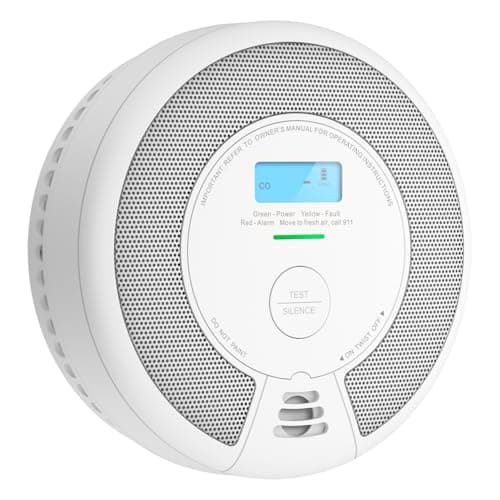
Combination Alarms vs Separate Units
One device or two — the replacement-timing trade nobody mentions.
Carbon Monoxide Detectors
CO Detector Lifespan and Replacement
7-10 years from the manufacture date, why the test button proves little, and what END means.
Carbon Monoxide Detectors
Generator Carbon Monoxide Safety
Outdoors only, well clear of openings — and why an open garage door changes nothing.