Smoke Detectors
The Best Smoke Detectors for Basements
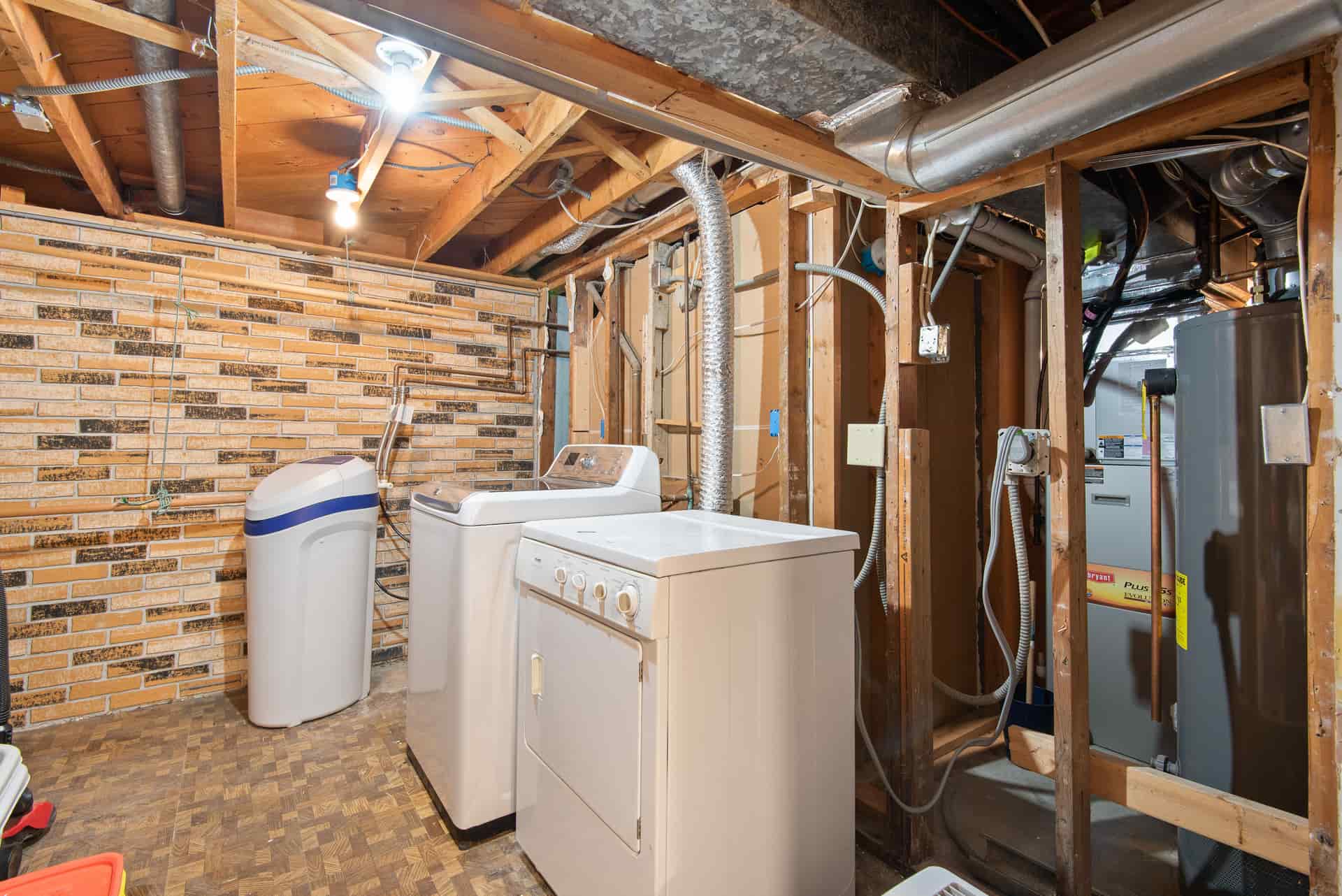
The basement is the level most often left uncovered and the one most likely to contain the ignition source. It also has a position rule the rest of the house does not.
By Ryder M.Last reviewed
The First Alert SM310 is the pick for a basement: a dual-sensor alarm with both a photoelectric and an ionization chamber, which is the right hedge in a room that can produce either a smoldering electrical fire or a fast-flaming one from stored liquids. Mount it **on the ceiling at the bottom of the basement stairs**, not above the furnace, because the stairwell is the path smoke takes to the rest of the house. If the basement contains fuel-burning plant, it needs carbon monoxide coverage as well, and a combination unit is the efficient way to get both.
Siren & Safe is reader-funded. We earn a commission on some links on this page, at no cost to you. It does not change what we recommend or the order we rank it in. Full disclosure.
The position rule that is specific to basements
NFPA guidance for basements puts the alarm on the ceiling at the bottom of the basement stairway, and it is one of the few genuinely basement-specific placement rules in home fire safety.
The logic is about the path rather than the source. Smoke from anywhere in a basement collects at the ceiling and then moves toward the stairwell, because the stairwell is the opening. An alarm at the foot of the stairs sees that flow early regardless of which corner the fire started in.
A basement alarm also has no audience, which is why linking it to the bedrooms matters more here than anywhere else in the house — the best interconnected smoke detectors covers the wired and wireless routes.
It also avoids the two positions people instinctively choose and should not. Directly above the furnace puts the alarm in the path of normal combustion by-products and dust, which produces nuisance alarms. In the far corner of a storage area puts it where smoke arrives last.
The usual qualifiers still apply: at least 4 in from any wall if ceiling-mounted, out of dead-air corners, and not within 3 ft of an air supply register. If the basement ceiling is open joists, mount the alarm on the bottom of a joist rather than up in the cavity between two of them.
Quick picks
Scored against covers both fire profiles, nuisance resistance, nothing to maintain, install anywhere and covers carbon monoxide. Tap a row for the full write-up. The price in each buy button is the live Amazon price at the last check, stamped with the date it was taken.
| # | Product | Best for | Score | Price |
|---|---|---|---|---|
| 1 | 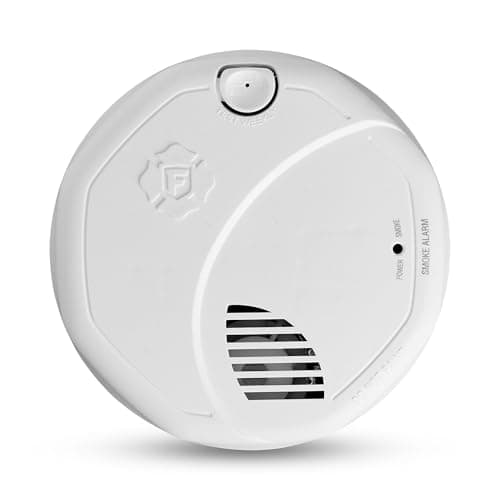 First Alert SM310 10-Year Sealed Battery Dual Sensor Smoke Alarm Dual sensor — photoelectric and ionization in one housing, sealed for ten years. | A basement that could produce either kind of fire | 8.3/ 10 | |
| 2 | 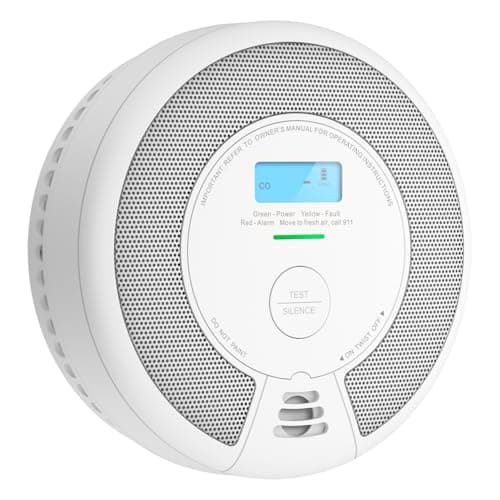 X-Sense SC07 Smoke & Carbon Monoxide Alarm UL 217 and UL 2034 on a sealed ten-year lithium cell. Both hazards, one device. | A basement with a furnace or water heater | 9.0/ 10 | |
| 3 | 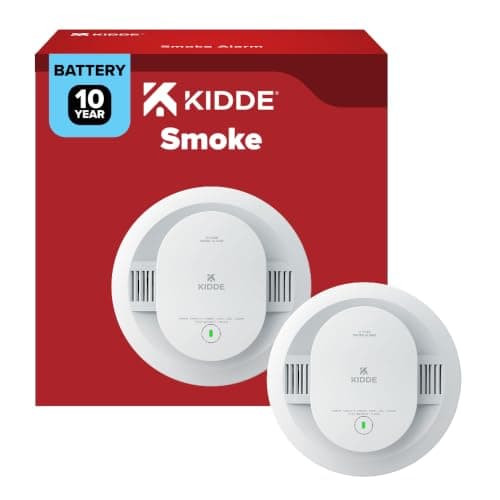 Kidde 20SD10 10-Year Battery Smoke Alarm Photoelectric, UL 217 10th edition, sealed ten-year battery. | A clean, finished basement | 8.4/ 10 | $32.47 · View on Amazon #ad how we are funded · price as of October 19, 2026 |
| 4 | 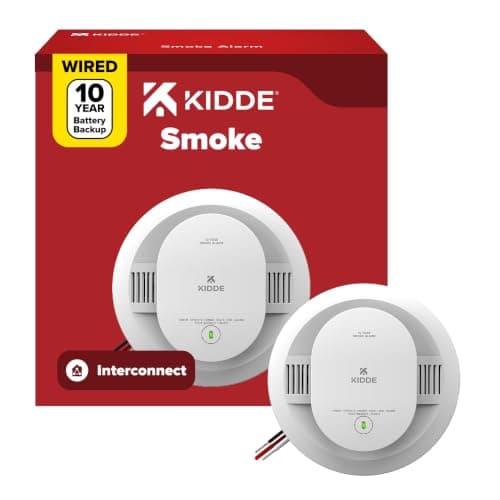 Kidde 20SA10 Hardwired Smoke Alarm with 10-Year Backup Battery Hardwired photoelectric with a sealed ten-year backup, and it interconnects. | A basement on the house alarm circuit | 8.0/ 10 | $39.97 · View on Amazon #ad how we are funded · price as of October 19, 2026 |
The alarms in full
1. A basement that could produce either kind of fire
First Alert SM310 10-Year Sealed Battery Dual Sensor Smoke Alarm
Dual sensor — photoelectric and ionization in one housing, sealed for ten years.
- Listed to
- UL 217 — First Alert states compliance with the latest edition
- Sensing / agent
- Dual sensor: a photoelectric chamber and an ionization chamber in one housing
- Power / service life
- Sealed 10-year lithium battery; 10-year limited warranty
A basement is the one room in a house where the dual-sensor argument is genuinely strong, because it is the one room that can credibly produce either fire profile.
Smoldering, from the electrical side: a sub-panel, an old freezer compressor, a dehumidifier running continuously, extension leads under storage. Fast-flaming, from the storage side: paint thinners, a gas can, aerosols, a workbench with solvent on it.
Everywhere else in a house, photoelectric is the clear choice because the realistic fire is a smoldering one. In a basement the fuel mix is wide enough that covering both chambers is a defensible premium rather than marketing.
The locking feature is a small thing that matters in a basement specifically — an alarm within reach above a workbench is an alarm that gets lifted off to stop a nuisance alarm during a dusty job, and a locked bracket makes that a deliberate act.
What it does well
- **The only dual-sensor unit in this registry** — photoelectric and ionization, so it is not trading one fire type for the other
- First Alert calls the sensing Precision Detection and states it reduces cooking nuisance alarms
- Sealed 10-year lithium battery with a 10-year limited warranty
- Optional locking feature that stops the alarm being lifted off its bracket
The downside
- Two chambers means two things that can be fouled by basement dust
- No CO cell, so a basement with fuel-burning plant needs a second device
- Battery only — it cannot join a hardwired interconnect circuit
Do not buy this if: the basement contains a furnace or water heater and you intend to fit only one device. That room needs CO coverage, and a combination unit or a separate CO alarm is not optional there.
- The only dual-sensor unit here — photoelectric and ionization, so it is not trading one fire type for the other
- First Alert calls the sensing Precision Detection, and states it reduces cooking nuisance alarms
- 85 dB at 10 ft
- Optional locking feature that stops the alarm being lifted off its bracket
- 5 x 5 x 2 in, 0.54 lb
First Alert product documentation
2. A basement with a furnace or water heater
X-Sense SC07 Smoke & Carbon Monoxide Alarm
UL 217 and UL 2034 on a sealed ten-year lithium cell. Both hazards, one device.
- Listed to
- UL 217 and UL 2034
- Sensing / agent
- Photoelectric smoke sensing plus an electrochemical CO cell
- Power / service life
- 10-year sealed lithium battery, not hardwired
If the basement contains a furnace, a boiler, a water heater, a gas dryer or a wood stove, this is the device the room wants, and the reasoning is risk-weighted rather than aesthetic.
The basement is where most residential carbon monoxide originates, because that is where the combustion appliances live and where a blocked flue, a cracked heat exchanger or a back-drafting vent shows up first. A level with plant on it and no CO alarm is the commonest real gap in an otherwise well-equipped house.
Combining both sensors in one unit is efficient, but the mounting distance rule changes: it must be far enough from the appliance that normal start-up does not produce a nuisance CO alarm. Manufacturers publish minimum distances and they are worth respecting, because a nuisance-alarming basement unit gets unplugged.
Basement CO picks covers the dedicated CO option, which is the better route if there is already a smoke alarm at the foot of the stairs.
What it does well
- Listed to **UL 217 and UL 2034** — a real smoke alarm and a real CO alarm in one housing
- 10-year sealed lithium battery, so one device has one replacement date
- Photoelectric smoke sensing plus an electrochemical CO cell
- The efficient answer for the level that usually contains the fuel-burning plant
The downside
- Photoelectric only on the smoke side, so no ionization chamber for a fast-flaming liquid fire
- Both sensors retire together even if only one has aged out
- Must be far enough from the appliance to avoid nuisance CO alarms on start-up
Do not buy this if: the basement is dry storage with no fuel-burning appliance at all. There the CO cell is paying for nothing and a dual-sensor smoke alarm is the better use of the position.
- LCD reads the measured CO concentration rather than only alarming
- Standalone unit — no wireless interconnect, no Wi-Fi, no base station
- Sealed battery, so there is no annual battery ritual and no low-battery chirp until end of life
- Test and silence on one control
3. A clean, finished basement
Kidde 20SD10 10-Year Battery Smoke Alarm
Photoelectric, UL 217 10th edition, sealed ten-year battery.
- Listed to
- UL 217, 10th edition (UL 217-2024 Ed.10)
- Sensing / agent
- Photoelectric smoke sensing only — no CO cell
- Power / service life
- Sealed 10-year lithium battery; 10-year limited warranty
A finished basement — carpet, a sofa, a television, a spare bedroom — is not really a basement for the purposes of this decision. It is a living level, and it should be equipped like one: photoelectric, sealed, ceiling-mounted.
The self-test behavior is worth noting for a level nobody visits daily. An alarm that checks itself is an alarm that tells you about a fault without depending on somebody remembering to press a button on a different floor.
If anybody sleeps down there, even occasionally on a sofa bed, the basement becomes a sleeping area and needs both a smoke alarm in the sleeping space and CO coverage on the level. How many smoke detectors do I need works through the counting.
What it does well
- Listed to UL 217 10th edition, which carries the newer nuisance-resistance testing
- Photoelectric sensing, which is the right default for a finished basement used as living space
- No low-battery chirps for ten years
- Twist-and-click bracket, and it self-tests rather than waiting for you to press the button
The downside
- No ionization chamber, so slower on a fast-flaming liquid fire
- No CO cell
- Battery only — no hardwired interconnection
Do not buy this if: the basement is an unfinished storage and workshop space with fuel and solvents in it. That is a dual-sensor room, and probably a CO room too.
- Listed to the 10th edition of UL 217, which carries the cooking-nuisance test the 8th edition introduced
- Kidde's own wording: enhanced sensing technology reduces false alarms often caused by cooking
- No low-battery chirps for ten years — the first end-of-life beep is the replacement signal
- Three long beeps and a red flash on smoke, so the pattern tells you which hazard it is
- Twist-and-click bracket, and it self-tests rather than waiting for you to press the button
#ad how we are funded · price as of October 19, 2026
4. A basement on the house alarm circuit
Kidde 20SA10 Hardwired Smoke Alarm with 10-Year Backup Battery
Hardwired photoelectric with a sealed ten-year backup, and it interconnects.
- Listed to
- UL 217, 10th edition (UL 217-2024 Ed.10)
- Sensing / agent
- Photoelectric smoke sensing only — no CO cell
- Power / service life
- 120V AC with a sealed 10-year backup battery; 10-year limited warranty
Interconnection matters more for a basement than for any other level, and the reason is simple: nobody is in the basement.
A fire that starts beside the furnace at 2am has nobody to hear the local alarm. The people who need to know are two floors up behind closed doors, and a standalone basement alarm does not reach them until smoke has climbed the stairs — by which time the stairwell, the escape route, is the thing that is full of smoke.
If the house has a hardwired alarm circuit that reaches the basement, putting a current-generation unit on it is the highest-value change available on this page. If it does not, wireless interconnect achieves most of it: interconnected alarms covers both routes.
One caution on hardwired basements: the position is wherever the wiring already is, and that is frequently above the furnace rather than at the foot of the stairs. Moving a wired box is an electrician's job and it is worth doing.
What it does well
- **Interconnects over the existing wire**, so a basement fire sounds the bedroom alarms immediately
- Sealed 10-year backup battery, so a tripped breaker does not leave the level unprotected
- Listed to UL 217 10th edition with reduced-nuisance sensing
- The direct successor to the P4010ACS line, which Kidde has discontinued
The downside
- Requires an existing 120V alarm circuit reaching the basement
- Mixing manufacturers on one interconnect circuit is a known source of trouble
- Position is fixed by where the wiring already is, which may not be the foot of the stairs
Do not buy this if: the basement has no alarm wiring. A wireless-interconnect or sealed-battery unit gets you most of the way without new cable through a floor.
- Drops onto an existing 120V alarm circuit and interconnects over the wire — one sounds, they all sound
- Sealed 10-year backup battery, so a tripped breaker does not leave the house unprotected
- Same reduced-nuisance sensing as the battery model in this series
- No low-battery chirps across the ten years
- The direct successor to the P4010ACS line, which Kidde has discontinued
#ad how we are funded · price as of October 19, 2026
Side by side for a basement
Listings exactly as each manufacturer publishes them. Prices are shown live inside each buy button, dated.
| First Alert SM310 | X-Sense SC07 | Kidde 20SD10 | Kidde 20SA10 | |
|---|---|---|---|---|
| Smoke sensing | Photoelectric + ionization | Photoelectric | Photoelectric | Photoelectric |
| Covers carbon monoxide | No | Yes, UL 2034 | No | No |
| Listing | UL 217 | UL 217 and UL 2034 | UL 217 10th ed. | UL 217 10th ed. |
| Power | Sealed 10-year | Sealed 10-year lithium | Sealed 10-year | 120V AC + 10-year backup |
| Interconnects | No | No | No | Yes |
| Needs existing wiring | No | No | No | Yes |
| Lock-off bracket | Yes, optional | No | No | No |
| Best basement | Unfinished, storage and workshop | Any basement with plant | Finished living space | Any basement on the alarm circuit |
What makes a basement hard on an alarm
Four environmental factors, and all of them shorten the life or raise the nuisance rate of a unit chosen for a bedroom.
- Dust. Construction dust, sawdust from a bench, dust from stored boxes and from a dirt or unsealed floor. Particulate in a sensing chamber is the commonest cause of unexplained basement nuisance alarms.
- Humidity. Basements run damp, and sustained humidity above the alarm's stated operating range causes faults and shortens sensor life. High-humidity picks covers the specifics, and a dehumidifier helps the alarm as much as the walls.
- Cold. An unheated basement in a cold climate can fall below the specified operating temperature range, which most people never check. Manufacturers publish it; a garage or an unheated cellar can genuinely breach it.
- Combustion by-products. A furnace, water heater or dryer produces a small amount of normal exhaust on start-up, and an alarm mounted too close will react to it. This is a position problem rather than a product problem.
- Nobody present. The practical one. A basement alarm has no audience, which is why interconnection matters more here than anywhere else in the house.
The carbon monoxide question, which is not optional
If the basement contains a furnace, a boiler, a water heater, a gas dryer, a wood stove or a generator, it needs a carbon monoxide alarm on that level, and a smoke alarm does not do that job regardless of what the packaging implies.
A smoke alarm detects particulate. Carbon monoxide is a colorless, odorless gas that produces no particulate, and the two require completely different sensors. A UL 217 listing says nothing about CO; UL 2034 is the CO listing, and a unit either carries it or it does not.
The basement is also the level where most residential CO originates, because that is where combustion happens and where a cracked heat exchanger, a blocked flue or a back-drafting vent first shows up.
Two routes: a combination unit listed to both standards at the foot of the stairs, or separate devices — a smoke alarm at the stairs and a CO alarm positioned per the appliance manufacturer's minimum distance. Combo versus separate weighs them, and how many CO detectors covers the count for the whole house.
If the basement is a bedroom, the rules change
A basement used for sleeping — a guest room, a teenager's room, a converted den with a sofa bed — becomes a sleeping area, and three requirements land on it at once.
An alarm inside the sleeping room, not only at the foot of the stairs. CO coverage on the level, which is already true if there is plant down there. And a second way out, which is the one people skip.
That last one is a code matter as well as a safety one. Residential code requires an emergency escape and rescue opening in a basement used as a sleeping room, with minimum dimensions and a maximum sill height, and the commonest arrangement is an egress window into a window well.
A window well deep enough to need a ladder needs a ladder, permanently, not a plan to find one. Basement window well escape covers the dimensions and the options, and rental and landlord requirements covers what gets inspected if the room is let.
The annual basement walk-round
Four things, once a year, on the same day as the rest of the house.
Read the date on the back of the alarm. Not the test button — the manufacture date. Past ten years and it is no longer an alarm, however convincingly it beeps.
Vacuum the alarm. A soft brush attachment around the vents, gently. In a basement this is the single most effective maintenance action, because dust in the chamber is what causes the nuisance alarms that lead to the alarm being removed.
Check the furnace and water heater have been serviced, and look at the flue from outside for a nest, a dislodged cap or snow. A blocked vent is the most common domestic CO source and it is visible from the garden.
Test the interconnection, if the house has it, by holding the test button on the basement unit and confirming the bedroom alarms sound. An interconnect that has quietly stopped working is a system nobody knows is broken. The home safety checklist has the whole-house version.
Questions people actually ask
Where should a smoke detector be placed in a basement?
What type of smoke detector is best for a basement?
Do I need a smoke detector in the basement?
Do I need a carbon monoxide detector in the basement too?
Why does my basement smoke alarm keep going off?
Does a basement bedroom need anything extra?
How these picks were chosen. On published specifications, safety listings and manufacturer documentation — plus the findings of organizations that do run tests. We have no laboratory and we do not burn anything. Read the full methodology.
Sources
- NFPA — Smoke alarms — installation and placement guidance
- NFPA — NFPA 72, National Fire Alarm and Signaling Code (2025 edition)
- UL Solutions — UL 217 — smoke alarms
- International Code Council — IRC Chapter 3 — building planning (R310, R314, R315)
- CPSC — Carbon Monoxide Fact Sheet
Read next
Smoke Detectors
The Best Smoke Detectors for a Home
Four alarms, what UL 217 tests, and why interconnection beats every other feature.
Smoke Detectors
The Best Smoke Detectors for High-Humidity Areas
The non-condensing limit, why cold ceilings cause winter nuisance alarms, and four alarms for damp rooms.
Carbon Monoxide Detectors
The Best Carbon Monoxide Detectors for Basements
Peak memory, cold tolerance and the furnace plume — what changes when the alarm goes in a basement.
Escape Ladders
Why the short climb is the hard one: opening size, well depth, and grates that do not open.
Placement & Code
How Many Smoke Detectors Do I Need?
Worked counts for real house shapes, including split levels and open plans.