Smoke Detectors
The Best Smoke Detectors for High-Humidity Areas
Humidity nuisance alarms are usually a condensation problem rather than a steam problem, and the difference decides whether you need a different alarm or a different position.
By Ryder M.Last reviewed
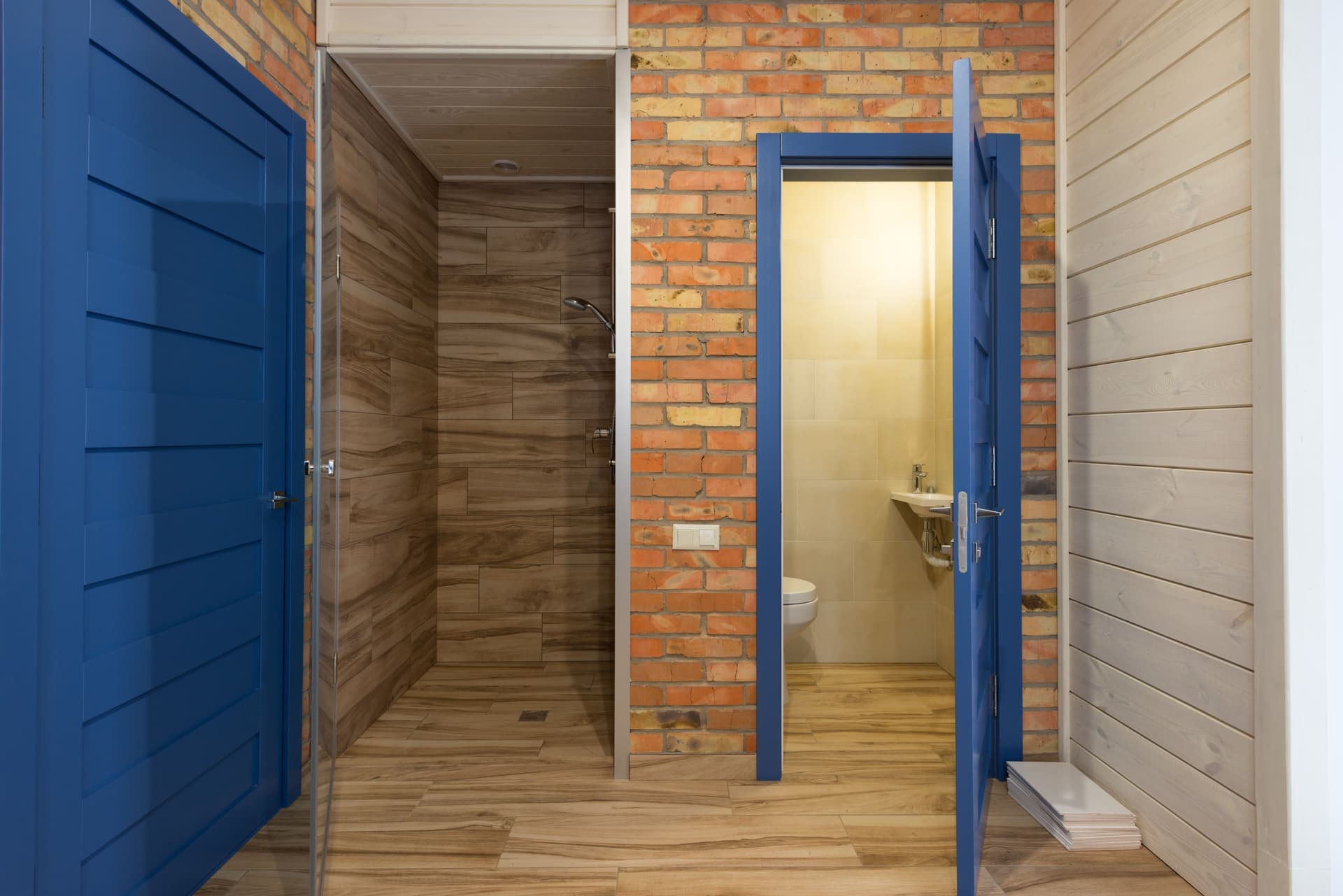
Mainstream smoke alarms are rated to operate between roughly 10% and 95% relative humidity, non-condensing — and that last word is where bathrooms, laundry rooms and damp basements break them. For a bathroom-adjacent hallway the Kidde 20SD10 is our pick, because photoelectric sensing plus the 10th-edition UL 217 nuisance listing is the most forgiving combination available. For a laundry room or an unfinished basement, choose the X-Sense SC06 for its dust-resistant housing. And for a genuinely wet or unheated space, no smoke alarm is the right device at all.
Siren & Safe is reader-funded. We earn a commission on some links on this page, at no cost to you. It does not change what we recommend or the order we rank it in. Full disclosure.
Humidity is rarely the real cause
People arrive here because an alarm goes off when somebody showers, or at random on cold mornings, and conclude the house is too humid. Usually the humidity is a contributing factor and the actual trigger is condensation — liquid water forming on a cold surface, including surfaces inside the alarm.
A basement adds cold and dust to the same humidity problem, and it has a placement rule of its own — best smoke detectors for basements covers both.
Kidde's own support guidance names three causes, and the third is the one almost nobody has heard: extreme temperature changes, high ambient humidity, and installation in a non-insulated electrical box. That last one explains a specific and very common complaint. A hardwired alarm mounted to an uninsulated metal box on a ceiling directly beneath a cold attic has a cold metal plate pressed against the back of it all winter. Warm moist household air reaches that cold surface, condenses, and the alarm reacts to water it was never designed to have inside it.
The symptom is an alarm that goes off in the small hours in winter, with no cooking, no shower and no fire — and which is blamed on a faulty unit and replaced, whereupon the new one does the same thing. Kidde's advice in that situation is to move the alarm rather than replace it, and that is the right advice.
So before you buy anything, work out which problem you have. Steam from a bathroom is a placement problem. Random winter alarms on a ceiling under an attic are a condensation problem. Lint in a laundry room is a particulate problem. Only the third of those is fixed by a different alarm.
Which damp room, which answer
Four rooms that all read as high humidity and want four different responses.
| Room | What is actually happening | The right response |
|---|---|---|
| Bathroom itself | Saturated air and condensation on every surface | No alarm in the room. NFPA 72 excludes positions within 36 in of a bathroom door for this reason |
| Hallway outside a bathroom | Steam escaping through the door when it opens | Photoelectric alarm with a current nuisance listing, mounted beyond 36 in from the door |
| Laundry room | Warm moist dryer air carrying lint | Dust-resistant photoelectric alarm, positioned away from the vent |
| Ceiling under a cold attic | Condensation in a non-insulated electrical box | Move the alarm, or insulate the box. A new alarm in the same box behaves the same way |
| Unheated garage or crawl space | Condensation as normal winter behavior, plus a temperature range outside the listing | A heat alarm. A smoke alarm does not belong there at all |
Quick picks
Scored against humidity tolerance, nuisance resistance, sensor suitability, upkeep and value in a damp room. Tap a row for the full write-up. The price in each buy button is the live Amazon price at the last check, stamped with the date it was taken.
| # | Product | Best for | Score | Price |
|---|---|---|---|---|
| 1 | 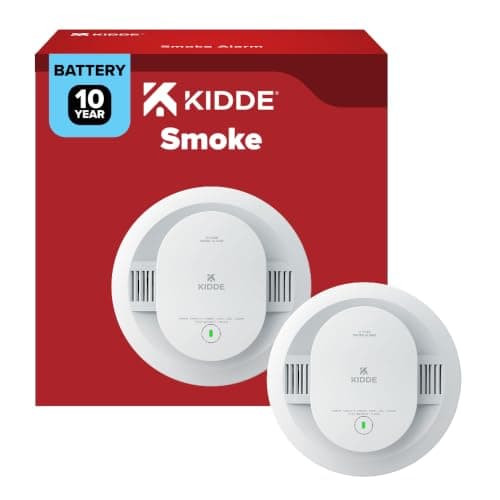 Kidde 20SD10 10-Year Battery Smoke Alarm Photoelectric sensing with the newest nuisance listing, which is as forgiving as a smoke alarm gets. | A hallway outside a bathroom | 8.7/ 10 | $32.47 · View on Amazon #ad how we are funded · price as of October 19, 2026 |
| 2 | 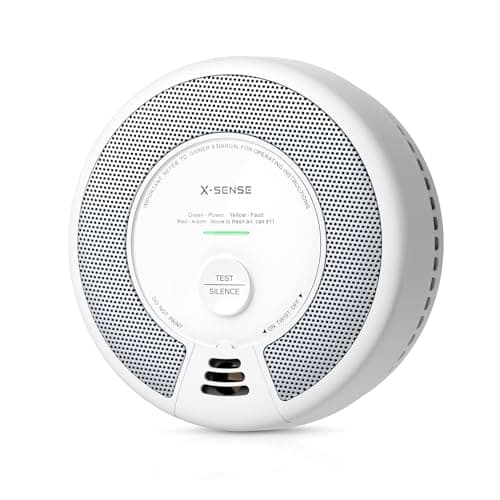 X-Sense SC06 Smoke & Carbon Monoxide Alarm The dust-resistant housing, which is also the housing that copes best with damp, dirty air. | A laundry room or an unfinished basement | 8.5/ 10 | |
| 3 | 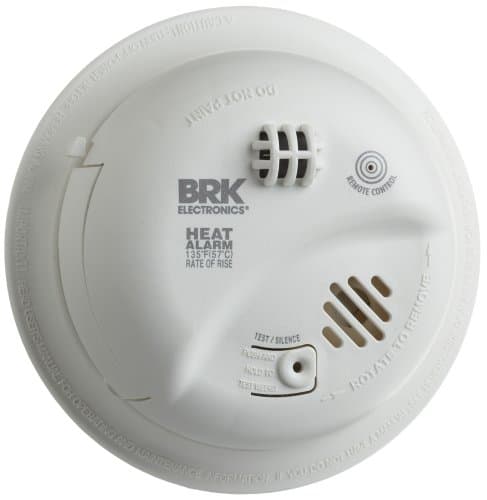 First Alert HD6135FB Hardwired Heat Alarm Completely immune to steam, because it is not looking for particles at all. | A room a smoke alarm genuinely cannot live in | 7.6/ 10 | $29.79 · View on Amazon #ad how we are funded · price as of October 19, 2026 |
| 4 | 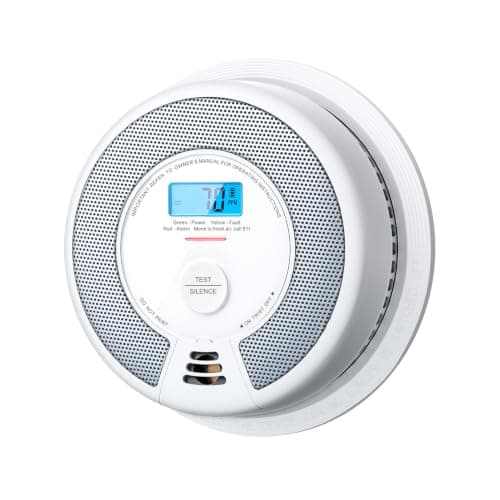 X-Sense SC07-W Wireless Interconnected Smoke & CO Alarm The interconnect that turns a damp-room alarm into a whole-house warning. | Doing the whole house at once | 8.6/ 10 | $44.99 · View on Amazon #ad how we are funded · price as of October 19, 2026 |
1. A hallway outside a bathroom
Kidde 20SD10 10-Year Battery Smoke Alarm
Photoelectric sensing with the newest nuisance listing, which is as forgiving as a smoke alarm gets.
- Listed to
- UL 217, 10th edition (UL 217-2024 Ed.10)
- Sensing / agent
- Photoelectric smoke sensing only — no CO cell
- Power / service life
- Sealed 10-year lithium battery; 10-year limited warranty
This is the alarm for the position most people are actually asking about: the landing or hallway ceiling that happens to be near a bathroom door, which goes off when somebody takes a long shower.
Two things make it the right choice. Photoelectric sensing is less prone to reacting to the fine water droplets in steam than an ionization chamber, and the 10th-edition listing means the unit's sensing logic was tested for its ability to distinguish a real fire from a plausible impostor. That test uses cooking smoke rather than steam, so this is not a humidity certification — but the discrimination it forces into the design is the same capability that helps here.
What it will not do is survive being in the wrong place. If the alarm is within 36 in of the bathroom door, move it before you replace it. Kitchen and bathroom placement has the distances, and moving the existing alarm three feet is free.
What it does well
- Listed to UL 217 10th edition, which carries the cooking-nuisance test — the same sensing discrimination that helps with steam
- Photoelectric only, which is the sensor type to want anywhere moisture is in play
- Sealed ten-year lithium cell, so damp air never gets at a battery compartment you have to open
- Self-testing, which matters in a room you would rather not stand under with a broom handle
The downside
- Rated non-condensing like every other alarm here — it is more tolerant, not waterproof
- **No interconnect**, so a bathroom-adjacent hallway alarm sounding does not wake the rest of the house
- Smoke only, no CO cell
- Photoelectric chambers are the ones most affected by long-term dust and moisture film, so it still wants occasional vacuuming
Do not buy this if: inside the bathroom itself. There is no smoke alarm that belongs in a room that fills with steam, and fitting a more tolerant unit there instead of moving it is the mistake this page exists to prevent.
- Listed to the 10th edition of UL 217, which carries the cooking-nuisance test the 8th edition introduced
- Kidde's own wording: enhanced sensing technology reduces false alarms often caused by cooking
- No low-battery chirps for ten years — the first end-of-life beep is the replacement signal
- Three long beeps and a red flash on smoke, so the pattern tells you which hazard it is
- Twist-and-click bracket, and it self-tests rather than waiting for you to press the button
#ad how we are funded · price as of October 19, 2026
2. A laundry room or an unfinished basement
X-Sense SC06 Smoke & Carbon Monoxide Alarm
The dust-resistant housing, which is also the housing that copes best with damp, dirty air.
- Listed to
- UL 217 and UL 2034
- Sensing / agent
- Photoelectric smoke sensing plus an electrochemical CO cell
- Power / service life
- 10-year sealed battery
A laundry room is the hardest domestic environment for a smoke alarm: warm moist air from a dryer vent, lint in that air, and often a cold exterior wall for it to condense against. An unfinished basement is a close second.
The dust-resistant housing is the useful spec because in these rooms the two problems arrive together. Lint and dust scatter light in a photoelectric chamber exactly the way smoke does, and moisture makes that particulate stick rather than settle out. Keeping it out of the chamber in the first place addresses both.
The combination listing is the other reason this is the right basement unit. Furnaces, water heaters and gas dryers live down there, and a CO alarm on a basement ceiling is not a substitute for one on the sleeping floor but is a sensible addition — see where to install CO detectors.
The standalone limitation is real and we would not skate over it. If the basement is the room you are worried about, the interconnected X-Sense below is the better buy and you manage the dust by vacuuming the vents when you change the furnace filter.
What it does well
- Dust-resistant housing — in a basement or utility room the nuisance trigger is usually airborne particulate as much as moisture, and this is the direct fix
- UL 217 and UL 2034 together, which matters in a basement where the furnace and water heater live
- Ten-year sealed battery with no compartment for damp air to corrode
- Photoelectric sensing
The downside
- No display, so a CO event tells you there is CO and not how much
- **Standalone** — no interconnect, and a basement is the worst room in the house to have an isolated alarm in
- The dust resistance is a housing design, not a serviceable filter you can inspect
- Same non-condensing rating as everything else: it tolerates damp air, not water on the sensor
Do not buy this if: a basement that floods, or one with standing damp on the walls. That is a building problem, and no alarm rating survives condensation forming on the inside of the chamber.
- Dust-resistant housing — the cheap fix for nuisance alarms in a dusty utility space
- Dual smoke and CO detection in one ceiling position
- Single test and silence control
- No display: it alarms, it does not report a concentration
3. A room a smoke alarm genuinely cannot live in
First Alert HD6135FB Hardwired Heat Alarm
Completely immune to steam, because it is not looking for particles at all.
- Listed to
- UL 539 — a heat alarm standard, NOT UL 217. It is not a smoke alarm and cannot replace one
- Sensing / agent
- Thermistor with a microprocessor: alarms at a fixed 135°F, or on a rate of rise of 15°F per minute
- Power / service life
- 120V AC with a 9V replaceable backup battery
There is a category of room where the honest answer is that a smoke alarm does not belong: an unheated utility room on an exterior wall, a damp garage, a boiler cupboard, a crawl space. These are places where condensation is not an occasional event but the normal state of the ceiling for part of the year.
A heat alarm is the correct device there, and it is immune to the whole problem because it measures air temperature and has no chamber for moisture to get into. Wire it into the house circuit so that a fire in that room sounds the alarms where people actually are.
Be clear about what you are buying, though. This is property protection rather than life safety, and it is slower than a smoke alarm in every fire type. The full argument is in smoke detectors versus heat detectors.
What it does well
- Measures temperature, so steam, condensation and humidity are irrelevant to it by design
- Fixed 135°F plus rate-of-rise at 15°F per minute, so it reacts to a fast fire before the threshold
- Rated for unconditioned spaces where a smoke alarm is outside its listed range
- Interconnects with compatible BRK and First Alert alarms, so it can sound the alarms inside the house
- Listed to UL 539 and compliant with NFPA 72, CSFM, HUD and FHA requirements
The downside
- **It cannot detect smoke.** In a smoldering fire it is the last device in the building to react
- Does not satisfy a code requirement for a smoke alarm in any position
- Hardwired only, with a 9V replaceable backup battery
- Only worth fitting in rooms nobody sleeps in
Do not buy this if: a hallway, a landing or anywhere near a bedroom. Reaching for a heat alarm to end nuisance alarms in a living space swaps imperfect detection for effectively none.
- Fixed-temperature AND rate-of-rise sensing, so it reacts to a fast temperature climb before 135°F is reached
- Interconnects with compatible BRK and First Alert alarms on the same circuit
- Intended for garages, attics, crawl spaces, furnace rooms and laundry rooms — places a smoke alarm cannot live
- Complies with UL 539, CSFM, NFPA 72, HUD and FHA requirements
- Detects heat, not smoke: in a smoldering fire it will be the last thing in the house to notice
First Alert product documentation
#ad how we are funded · price as of October 19, 2026
4. Doing the whole house at once
X-Sense SC07-W Wireless Interconnected Smoke & CO Alarm
The interconnect that turns a damp-room alarm into a whole-house warning.
- Listed to
- UL 217 and UL 2034
- Sensing / agent
- Photoelectric smoke sensing plus an electrochemical CO cell
- Power / service life
- 10-year sealed lithium battery, not hardwired
If you are replacing everything anyway, this is the set to replace into, and the reason is the room this page is about. Damp rooms are usually basements, laundry rooms and utility spaces — rooms at the edge of the house that nobody is in, and whose alarms nobody would hear.
An alarm in an unfinished basement that sounds only in the unfinished basement is close to decorative. The same alarm wired into a whole-house set is the earliest warning the household will get about the most common location for a slow-developing fire.
Manage the nuisance risk with position rather than with the unit. Keep it away from the dryer vent and off the coldest exterior wall, and the humidity problem largely goes away.
What it does well
- Wireless interconnect across up to 24 units, so the basement or laundry alarm sounds every alarm in the house
- UL 217 and UL 2034 in one unit
- Ten-year sealed battery
- LCD reports the CO concentration rather than only alarming
The downside
- No dust-resistant housing, so in a lint-heavy laundry room it is more nuisance-prone than the SC06
- Proprietary mesh — every position in the house has to be the same system
- Photoelectric only
- You need several before the interconnect is worth anything, so this is a whole-house purchase rather than a one-room fix
Do not buy this if: solving one problem alarm. If you have a single nuisance-prone position and the rest of the house is fine, buy the right unit for that position rather than replacing eight alarms.
- Wireless interconnect for up to 24 units — one alarm triggers the whole set
- No wiring, which is the point: it retrofits interconnection into a house that never had it
- LCD CO reading on each unit
- X-Sense recommends it for large or multi-story homes
#ad how we are funded · price as of October 19, 2026
Fix the position before you buy a unit
Most humidity nuisance alarms are solved for free. Work through this before spending anything.
Measure 36 inches from the bathroom door
NFPA 72's specific-location requirements exclude smoke alarm positions within 36 in of a bathroom door containing a shower or tub. If your alarm is inside that arc, that is the whole explanation. Move it further along the hallway — the alarm still covers the sleeping area from there.
Run the extractor fan for longer
Most bathroom fans are switched with the light and run for a minute after. The steam takes considerably longer than that to clear. A fan left running for ten to fifteen minutes after a shower, with the door shut, removes the moisture before it reaches the hallway ceiling.
Check what the alarm is mounted to
If it is a hardwired unit on a ceiling beneath an unheated attic, put a hand on the mounting plate on a cold morning. If it is cold, you have found your condensation source. Insulating the box, or relocating the alarm to an interior ceiling position, fixes what no replacement unit will.
Vacuum the chamber
Moisture makes accumulated dust stick inside the sensing chamber instead of settling out, and a dusty chamber is a sensitive chamber. Run a vacuum brush around the vents. In a laundry room do it every time you clean the dryer duct.
Check the date on the back
An alarm in a damp room has had a harder decade than one on a landing. If it is anywhere near ten years old, the nuisance alarms are probably an aging chamber rather than the weather. When to replace smoke detectors covers reading the stamp.
Only then change the alarm
If the position is right, the fan runs, the box is not cold and the unit is recent, you have a genuine environment problem — and that is what the picks above are for.
Why photoelectric is the right sensor in damp air
Every alarm we would put in a humid position is photoelectric, and the reason is worth understanding because it runs opposite to the usual advice about kitchens.
A photoelectric chamber looks for particles scattering a beam of light. An ionization chamber measures a current flowing through air and detects particles disrupting it. Fine water droplets — which is what steam is — are very good at disrupting that current, which is why ionization alarms have a reputation for reacting to showers and to the steam off a kettle.
Photoelectric chambers are not immune. Droplets scatter light too. But they are appreciably less reactive to it, and the trade-off — slightly slower on fast flaming fires — is one we would take in a hallway outside a bathroom every time.
This is also why a dual-sensor alarm, which is a good general-purpose choice elsewhere, is the wrong choice here: it carries an ionization chamber, and that is the half that objects to steam. Ionization versus photoelectric goes through the full trade.
Questions people actually ask
Can humidity set off a smoke detector?
Can I put a smoke detector in a bathroom?
What is the humidity range a smoke detector can handle?
Why does my smoke alarm go off in winter when nothing is burning?
Is a photoelectric or ionization alarm better for a humid room?
Will a waterproof smoke detector solve this?
Do I need a different alarm for a humid climate?
How these picks were chosen. On published specifications, safety listings and manufacturer documentation — plus the findings of organizations that do run tests. We have no laboratory and we do not burn anything. Read the full methodology.
Sources
- Kidde — Effects of humidity on smoke alarms — support guidance
- UpCodes — Specific location requirements for smoke alarms (NFPA 72 §29.11.3.4)
- NFPA — NFPA 72, National Fire Alarm and Signaling Code (2025 edition)
- UL Solutions — UL 217 — smoke alarms
- NFPA — Smoke alarms — installation and placement guidance
- Kidde — Smoke Alarm, 10-Year Battery Powered (20SD10) — product specifications
Read next
Smoke Detectors
Why Your Smoke Alarm Goes Off for No Reason
Position first, contamination second, faulty alarm a distant third.
Smoke Detectors
Smoke Detectors vs Heat Detectors
Why a heat alarm is always slower, and the four rooms where that is the right trade.
Smoke Detectors
The Best Battery-Operated Smoke Detectors
Sealed ten-year cells, the interconnect problem, and four battery alarms that are current models.
Smoke Detectors
The two mechanisms, the fires each sees first, and why photoelectric wins at home.
Placement & Code
Kitchen and Bathroom Placement
The cooking and bathroom exclusion distances, and how to satisfy them in an open plan.
Smoke Detectors
When to Replace Smoke Detectors
Where the date is, why the test button proves little, and what to replace with.