Smoke Detectors
Why Your Smoke Alarm Goes Off for No Reason
Take a tape measure before you take the alarm off the ceiling. Most nuisance alarms are a distance problem, and a distance problem is free to fix.
By Ryder M.Last reviewed
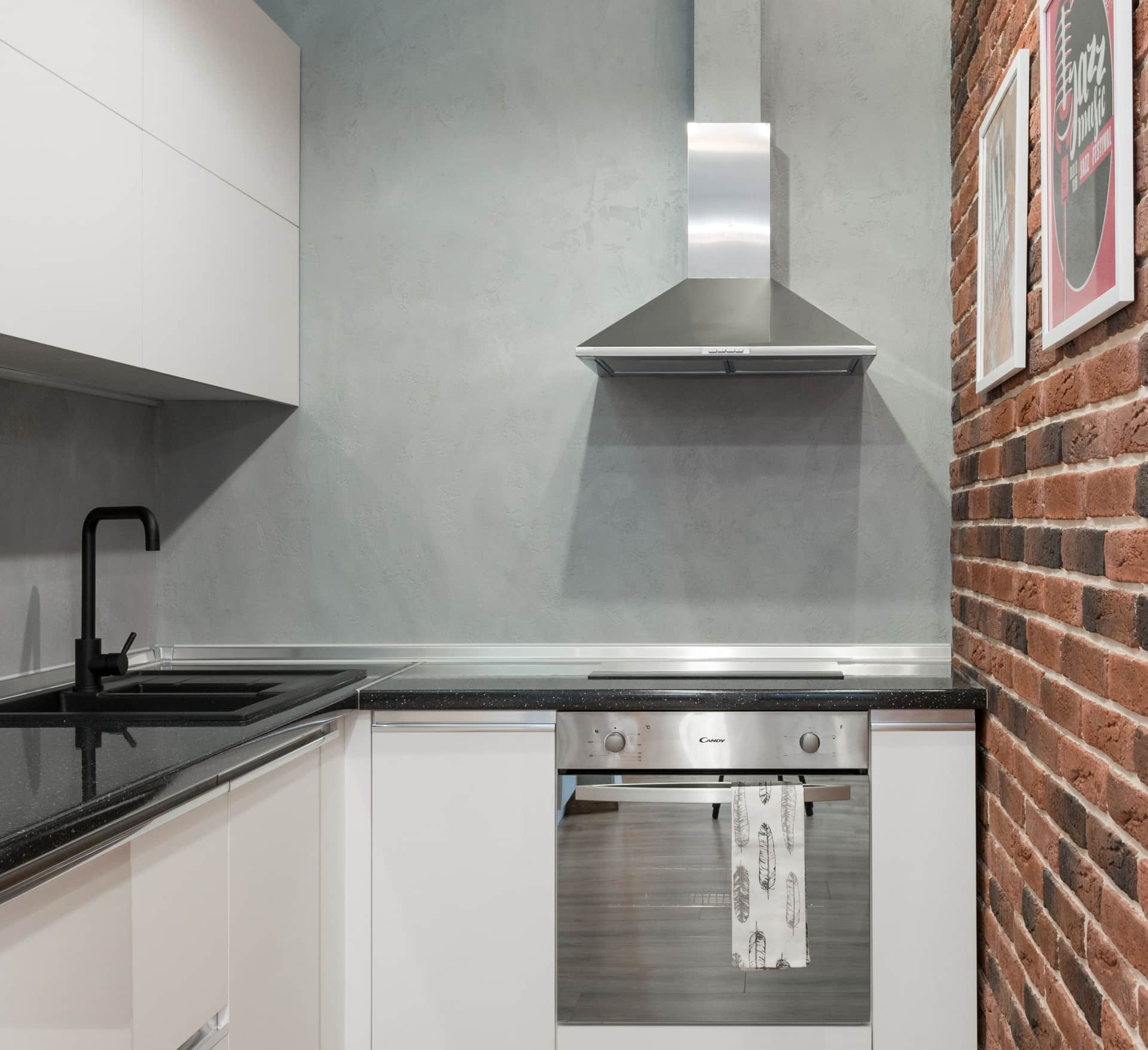
Measure to the nearest cooking appliance, bathroom door, supply register and ceiling fan first: NFPA 72 excludes alarms from within 10 ft of a fixed cooking appliance and from within 36 in of a bathroom door with a tub or shower, a supply register, or paddle-fan blade tips. Then vacuum the sensing chamber, because dust and insects are the second cause. A faulty alarm is a much rarer explanation than a badly positioned or dirty one — and whatever you do, do not disable it, because that is the step that turns a nuisance into a fatality statistic.
Siren & Safe is reader-funded. We earn a commission on some links on this page, at no cost to you. It does not change what we recommend or the order we rank it in. Full disclosure.
The diagnostic, in order
Steps 1 and 2 resolve the large majority of cases and both are free. Do them before you buy or replace anything.
Measure to the nearest cooking appliance
NFPA 72 (2025) §29.11.3.4 excludes alarms from a 10 ft radial distance from a stationary or fixed cooking appliance. Between 10 and 20 ft the alarm needs a silencing means or photoelectric sensing, and from 6 to 20 ft it must be listed for resistance to common cooking nuisance sources. If you are inside 10 ft, that is your answer — move the alarm.
Measure to the bathroom door, the supply register and the fan
Not within 36 in of the door to a bathroom containing a tub or shower, not within 36 in of a forced-air supply register, and not within 36 in of ceiling-suspended paddle-fan blade tips. Steam and moving air both trip alarms, and a register also blows dust into the chamber.
Vacuum the sensing chamber
Soft brush attachment around the vents, ten seconds per alarm. Dust, cobwebs and small insects are the second-commonest cause and this costs nothing.
Read the manufacture date on the back
An old alarm nuisance-trips more as the chamber degrades and accumulates contamination. Over ten years means replace it regardless. When to replace.
Identify the sensor type
The label states it, and ionization units carry radioactive-material labeling. An ionization alarm near a kitchen is a very likely explanation on its own. Ionization vs photoelectric.
Look for humidity and temperature extremes
Alarms in unheated garages, attics, crawl spaces and conservatories trip on condensation and temperature swings. Those positions are not required and generally should not have smoke alarms — a garage wants a heat detector.
On a wired set, find which unit is triggering
Interconnected alarms all sound, which makes the culprit hard to identify. Many units have an indicator that shows which one initiated. Check each unit's light after an event, or check the app if they are smart.
Only then consider replacing it
If the position is compliant, the chamber is clean, the unit is within date and it still trips, you have a genuine fault. That is the rare case rather than the first hypothesis.
Causes, ranked by how often they are actually it
| Cause | The fix | Cost |
|---|---|---|
| Too close to a cooking appliance | Move the alarm outside the 10 ft radius, or use a photoelectric/hush unit listed for cooking nuisance in the 10-20 ft band | Free, or one alarm |
| Dust or insects in the chamber | Vacuum around the vents with a brush attachment | Free |
| Steam from a bathroom | Move it 36 in clear of the bathroom door; run the extractor; close the bathroom door while showering | Free |
| Within 36 in of a supply register | Move it. The register both pushes smoke past the sensor and blows dust in | Free |
| Within 36 in of paddle-fan blade tips | Move the alarm off-center. That is correct, not a compromise | Free |
| Ionization sensor near a kitchen | Replace with photoelectric | One alarm |
| Alarm over ten years old | Replace it — degraded chambers trip more | One alarm |
| Humidity or temperature extremes | Relocate out of garages, attics and crawl spaces; use a heat detector in a garage | Free, or one detector |
| Genuine fault | Replace the unit, and check the CPSC recall list for the model | One alarm |
Quick picks
Scored against nuisance resistance, silencing control, interconnection, both hazards covered and fits the code conditions. Tap a row for the full write-up. No price is shown anywhere on this site because we do not cache retailer prices.
| # | Product | Best for | Score | Price |
|---|---|---|---|---|
| 1 |  X-Sense SC07-W Wireless Interconnected Smoke & CO Alarm Photoelectric with a hush control and interconnect — the right spec near a kitchen. | Replacing an alarm you cannot move | 9.0/ 10 | Check price on Amazon #ad how we are funded · we do not cache prices |
| 2 | 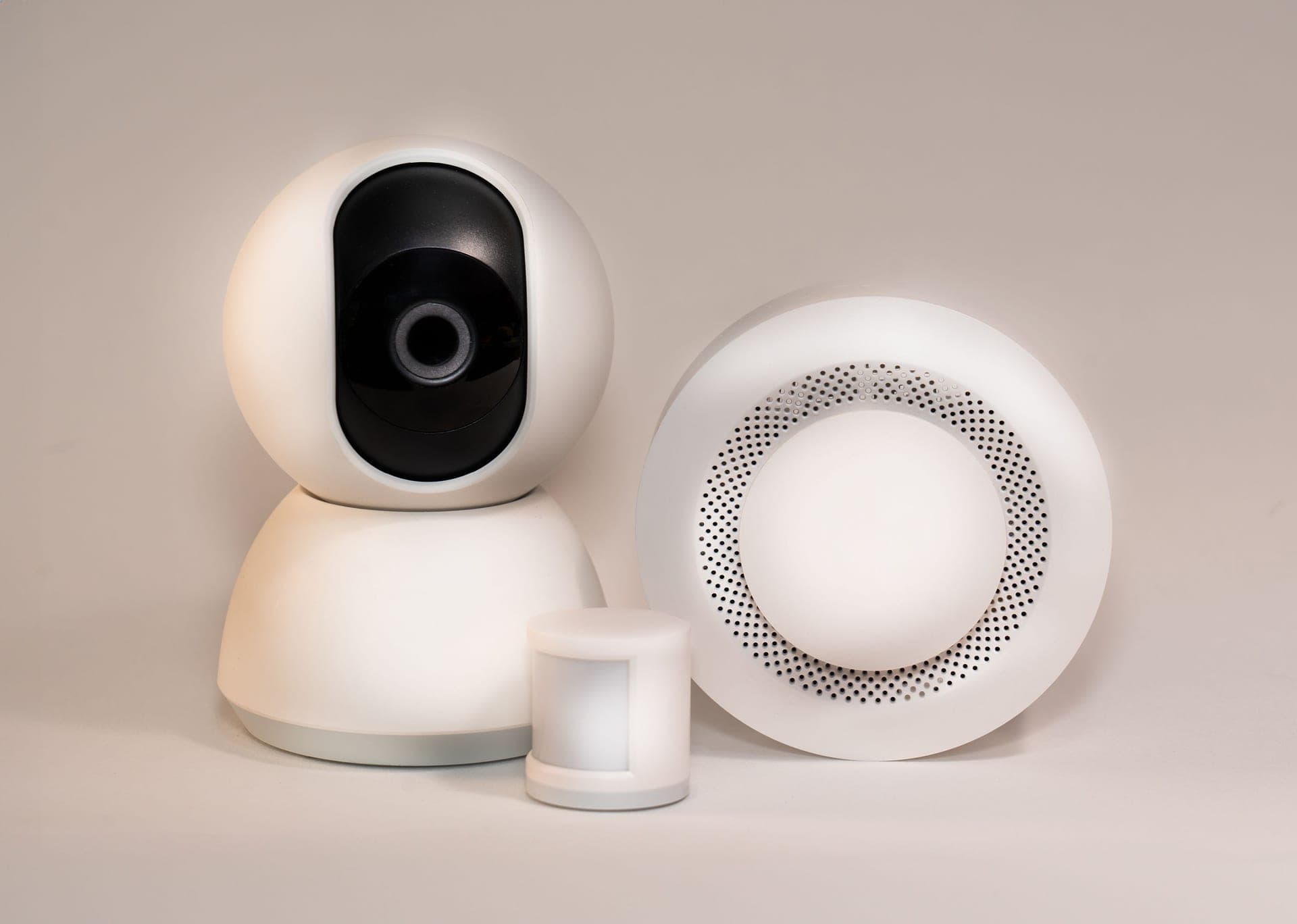 X-Sense SC06 Smoke & Carbon Monoxide Alarm Dust-resistant housing — the cheap structural fix for the second cause. | A dusty position | 7.4/ 10 | Check price on Amazon #ad how we are funded · we do not cache prices |
If replacement is the answer
Illustrative photo
1. Replacing an alarm you cannot move
X-Sense SC07-W Wireless Interconnected Smoke & CO Alarm
Photoelectric with a hush control and interconnect — the right spec near a kitchen.
- Listed to
- UL 217 and UL 2034
- Sensing / agent
- Photoelectric smoke sensing plus an electrochemical CO cell
- Power / service life
- 10-year sealed lithium battery, not hardwired
Interconnection matters specifically for nuisance alarms, and this is the subtle reason it is here. In the 10-20 ft band the code permits an alarm with a silencing means, and people use that hush button. On a standalone alarm, hushing the kitchen unit leaves that position unprotected with no cost elsewhere. On an interconnected set, the rest of the house keeps its protection while one nuisance-prone position is temporarily quiet.
Photoelectric is the other half. Cooking aerosols disrupt ion current far more readily than they scatter light, which is why ionization alarms cause most domestic nuisance tripping and why NFPA 72 accepts photoelectric alone as satisfying the 10-20 ft condition. Ionization vs photoelectric.
Buy it only after you have measured and cleaned. Replacing an alarm that was in the wrong place just gives you a newer alarm in the wrong place.
What it does well
- Photoelectric, which satisfies the 10-20 ft cooking condition on its own and trips far less than ionization
- Test and silence on one control — the hush function the code asks for in that band
- Interconnected, so hushing the nuisance-prone unit does not silence the house
- UL 217 and UL 2034, useful if the room has a gas range
The downside
- No specification fixes an alarm inside the 10 ft exclusion — move it first
- Photoelectric only, so no dual-sensor coverage
- Proprietary mesh across the house
Do not buy this if: the alarm is inside 10 ft of the cooker. Move it before you buy anything; nothing on the market makes that position work.
- Wireless interconnect for up to 24 units — one alarm triggers the whole set
- No wiring, which is the point: it retrofits interconnection into a house that never had it
- LCD CO reading on each unit
- X-Sense recommends it for large or multi-story homes
#ad how we are funded · we do not cache prices
Illustrative photo
2. A dusty position
X-Sense SC06 Smoke & Carbon Monoxide Alarm
Dust-resistant housing — the cheap structural fix for the second cause.
- Listed to
- UL 217 and UL 2034
- Sensing / agent
- Photoelectric smoke sensing plus an electrochemical CO cell
- Power / service life
- 10-year sealed battery
Dust is the nuisance source nobody markets against, and it is a genuine cause: an unfinished basement, a utility room, a house being renovated, a flat with a combined kitchen-laundry. All of them put particulate into the air that a photoelectric chamber sees.
A dust-resistant housing is a structural answer rather than a maintenance one, and few household alarms advertise it.
It does not remove the need to vacuum. It reduces how often the vacuuming has to happen to keep the alarm quiet.
What it does well
- Dust-resistant housing, which addresses the second-biggest nuisance cause after cooking
- Photoelectric with a single test-and-silence control
- UL 217 and UL 2034 with a 10-year sealed battery
- Goes anywhere — no wiring or outlet needed
The downside
- No interconnect, a real limitation in a multi-story house
- No display
Do not buy this if: a multi-story house where whole-house alerting matters. Use the interconnected version and vacuum more often.
- Dust-resistant housing — the cheap fix for nuisance alarms in a dusty utility space
- Dual smoke and CO detection in one ceiling position
- Single test and silence control
- No display: it alarms, it does not report a concentration
#ad how we are funded · we do not cache prices
The one cause that is not a nuisance alarm
A real fire you have not found yet. It is uncommon and it is worth naming, because 'the alarm must be faulty' is a comfortable conclusion.
An alarm that triggers with no visible cause can be responding to a smoldering fire inside a wall, a ceiling void, an appliance housing or a piece of furniture — exactly the slow-developing fires photoelectric sensing is good at and that a person in the room may not notice for a long time.
So before you conclude nuisance: check for warm spots on walls, outlets or appliances, an unexplained smell, or an appliance that has been behaving oddly. If an alarm triggers repeatedly in one room with no cooking, steam, dust or register nearby, that is worth taking seriously rather than explaining away.
And on a combination unit, make sure you know which hazard triggered. A CO alarm is a leave-the-building event with no benign interpretation available to you, because you cannot detect the gas yourself. CO beeping codes.
How to hush an alarm without breaking anything
Press the hush or silence button. Most modern alarms desensitize temporarily — commonly for several minutes — and then restore themselves automatically. That is the designed way to deal with cooking smoke and it is what the code contemplates in the 10-20 ft band.
Ventilate. Open a window and a door and clear the smoke rather than waiting the alarm out. Fanning a tea towel at it works and is oddly effective.
Do not remove the battery, disconnect a wired unit, bag it, tape it or take it down and leave it down. All of those persist long past the cooking and all of them are how a house ends up with an unprotected position.
If you find yourself hushing the same alarm more than about once a week, that is not a hush problem. That is a position problem, and step 1 of the diagnostic is where it gets solved.
Questions people actually ask
Why does my smoke alarm go off for no reason?
How do I stop my smoke alarm from false alarming?
Why does my hardwired smoke detector keep going off?
Can steam set off a smoke alarm?
Should I replace a smoke alarm that keeps false alarming?
Is it ever a real fire when there is no smoke to see?
How these picks were chosen. On published specifications, safety listings and manufacturer documentation — plus the findings of organizations that do run tests. We have no laboratory and we do not burn anything. Read the full methodology.
Sources
- UpCodes — Specific location requirements for smoke alarms (NFPA 72 §29.11.3.4)
- NFPA — NFPA 72, National Fire Alarm and Signaling Code (2025 edition)
- NFPA — Smoke Alarms in US Home Fires
- UL Solutions — UL 217 — smoke alarms
- CPSC — Recalls and product safety news
- US Fire Administration — Smoke alarm outreach and home fire prevention
Read next
Placement & Code
Kitchen and Bathroom Placement
The cooking and bathroom exclusion distances, and how to satisfy them in an open plan.
Smoke Detectors
Ionization vs Photoelectric
The two mechanisms, the fires each sees first, and why photoelectric wins at home.
Smoke Detectors
The Best Smoke Detectors for Kitchens
The exclusion distances first, then the alarms that belong near a cooker.

Smoke Detectors
Smoke Detector Chirping
The diagnostic in order, and why a new battery often is not the answer.
Placement & Code
Smoke Detector Placement, Room by Room
The three requirements, the four exclusions, and an original placement diagram.