Smoke Detectors
Smoke Detectors vs Heat Detectors
These are not competing products. One is life safety for sleeping people; the other is property protection for rooms where the first one cannot survive.
By Ryder M.Last reviewed

Buy smoke alarms for every room where someone sleeps and every level of the house — that is the life-safety decision and a heat alarm cannot substitute for it, because heat alarms are always slower and are listed to a different standard entirely. Add a heat alarm only in the specific places a smoke alarm cannot live: an unconditioned garage, an attic, a furnace room, a dusty workshop. The First Alert HD6135FB is our pick there because it senses a fast temperature rise as well as a fixed 135°F.
Siren & Safe is reader-funded. We earn a commission on some links on this page, at no cost to you. It does not change what we recommend or the order we rank it in. Full disclosure.
What each one is actually detecting
A smoke alarm samples the air for combustion particles. A photoelectric chamber shines light across a dark space and watches for particles scattering it; an ionization chamber passes a small current across the air and watches for particles disrupting it. Either way the alarm is responding to the products of combustion, which reach the ceiling early — often long before there is meaningful heat anywhere near it.
A heat alarm measures temperature with a thermistor. It has no opinion about smoke, and no ability to form one. It alarms when the air at the ceiling reaches a fixed threshold — 135°F on both units here — and, on the better models, also when that temperature is climbing faster than a set rate.
That difference has one consequence that governs everything else on this page: the heat alarm is always later. Not sometimes later, not usually later. A fire has to produce enough energy to raise the air at the ceiling by fifty or sixty degrees before a heat alarm has anything to react to, and by then a smoke alarm in the same room has been sounding for minutes. In a smoldering fire — upholstery, bedding, a slow electrical fault — the gap can be very large indeed, because those fires produce a great deal of smoke and very little heat for a long time.
This is why heat alarms are described as property protection rather than life safety. They are there to notice a fire in a room nobody sleeps in, in time to save the building.
The room this choice usually comes down to is the garage, and it has its own page: heat alarms for garages covers why a smoke alarm does not survive in there and which of the two residential heat alarms to fit.
Side by side
The specification differences that follow from sensing heat instead of smoke.
| Smoke alarm | Heat alarm | |
|---|---|---|
| Listing standard | UL 217 | UL 539 |
| Detects | Combustion particles | Air temperature, and on better units its rate of change |
| Speed in a smoldering fire | Minutes, often many | Very late, possibly not until flashover |
| Speed in a fast flaming fire | Early | Later, but within a useful window |
| False alarms from cooking, steam, dust | The main weakness of the category | None — it is blind to all of it |
| Works in an unconditioned garage or attic | No — outside its listed temperature range | Yes, that is the design case |
| Satisfies a code requirement for a smoke alarm | Yes | No, never |
| Right position | Bedrooms, outside sleeping areas, every level | Garage, attic, furnace room, workshop |
Quick picks
Scored against detection speed, survives dirty air, interconnection, temperature range and life-safety value. Tap a row for the full write-up. The price in each buy button is the live Amazon price at the last check, stamped with the date it was taken.
| # | Product | Best for | Score | Price |
|---|---|---|---|---|
| 1 | 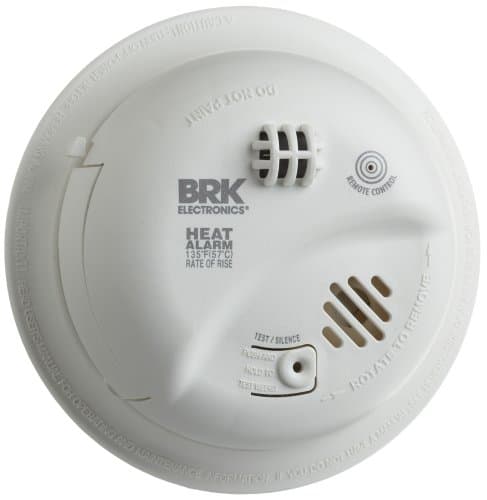 First Alert HD6135FB Hardwired Heat Alarm Fixed 135°F and rate-of-rise sensing, so it reacts before the threshold is reached. | The heat alarm to actually buy | 7.8/ 10 | $29.79 · View on Amazon #ad how we are funded · price as of October 19, 2026 |
| 2 | 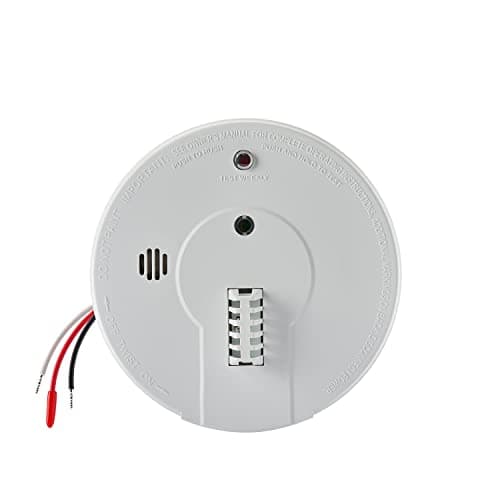 Kidde HD135F Hardwired Heat Alarm Alarms at 135°F and nothing cleverer, which is a real limitation rather than a rounding error. | A cheaper fixed-temperature option | 6.6/ 10 | $42.97 · View on Amazon #ad how we are funded · price as of October 19, 2026 |
1. The heat alarm to actually buy
First Alert HD6135FB Hardwired Heat Alarm
Fixed 135°F and rate-of-rise sensing, so it reacts before the threshold is reached.
- Listed to
- UL 539 — a heat alarm standard, NOT UL 217. It is not a smoke alarm and cannot replace one
- Sensing / agent
- Thermistor with a microprocessor: alarms at a fixed 135°F, or on a rate of rise of 15°F per minute
- Power / service life
- 120V AC with a 9V replaceable backup battery
Rate-of-rise sensing is the reason to choose this over the cheaper fixed-temperature alarms. A fixed-threshold device waits patiently for 135°F. A rate-of-rise device also watches the slope: if the air is climbing 15°F every minute, something is badly wrong regardless of the absolute number, and it alarms then. In a garage fire involving fuel, solvent or a vehicle, that difference is meaningful minutes.
The interconnection is the other reason this is worth doing properly. A heat alarm that sounds only in the garage is protecting an empty room. Wired into the house circuit, a garage fire sounds every alarm indoors — and an attached-garage fire that the household learns about early is the single best argument for fitting one of these at all.
On the backup battery: it takes a 9V, which is a step back from the sealed cells in current smoke alarms. Put it on the same annual date as everything else. A heat alarm in a garage is exactly the device nobody thinks about for six years.
What it does well
- Two sensing modes: a fixed 135°F threshold AND a rate of rise of 15°F per minute, so a fast-developing fire trips it before the air reaches 135°F
- Listed to UL 539, and compliant with CSFM, NFPA 72, HUD and FHA requirements
- Interconnects with compatible BRK and First Alert alarms on the same circuit, so a garage fire sounds the alarms inside the house
- Completely immune to dust, steam, exhaust fumes and cooking smoke — the things that make a smoke alarm unusable in these rooms
- Rated for the temperature swings of an unconditioned space, where a smoke alarm is outside its listed range
The downside
- **It cannot detect smoke.** In a smoldering fire it will be the last device in the house to notice anything
- Hardwired only — this is not a battery retrofit, and it needs a circuit in the garage or attic
- 9V replaceable backup battery rather than a sealed ten-year cell, so it is an annual job
- Listed to UL 539, not UL 217, which means it does not satisfy a code requirement for a smoke alarm anywhere
Do not buy this if: any room where somebody sleeps, and not for a hallway, landing or living room. A heat alarm in a bedroom is a device that waits for the room to reach 135°F before it makes a sound, by which point the occupant has been breathing smoke for several minutes.
- Fixed-temperature AND rate-of-rise sensing, so it reacts to a fast temperature climb before 135°F is reached
- Interconnects with compatible BRK and First Alert alarms on the same circuit
- Intended for garages, attics, crawl spaces, furnace rooms and laundry rooms — places a smoke alarm cannot live
- Complies with UL 539, CSFM, NFPA 72, HUD and FHA requirements
- Detects heat, not smoke: in a smoldering fire it will be the last thing in the house to notice
First Alert product documentation
#ad how we are funded · price as of October 19, 2026
2. A cheaper fixed-temperature option
Kidde HD135F Hardwired Heat Alarm
Alarms at 135°F and nothing cleverer, which is a real limitation rather than a rounding error.
- Listed to
- UL 539 — a heat alarm standard, NOT UL 217. It is not a smoke alarm and cannot replace one
- Sensing / agent
- Fixed-temperature thermistor that alarms at 135°F. No rate-of-rise sensing
- Power / service life
- 120V AC with a 9V replaceable backup battery
This exists because it is cheaper, and it is a legitimate buy in one situation: your circuit is Kidde, the space is small, and the realistic fire load is low — a tidy single garage used for storage, or a small furnace cupboard.
Outside that, we would pay the difference. The gap between fixed-temperature and rate-of-rise is not a specification detail, it is the difference between a device that reacts to a fire developing and a device that reacts to a fire that has already developed. In a room with a car, a fuel can or a charging bench in it, that is the wrong place to save money.
If your existing alarms are Kidde and you want rate-of-rise, the sensible move is to check Kidde's current heat alarm range rather than defaulting to this model, and to accept a First Alert unit only if you are prepared to run it as a standalone rather than on the interconnect.
What it does well
- Listed to UL 539 and interconnects with compatible Kidde alarms on the same circuit
- Same immunity to dust, fumes and steam as any heat alarm
- Two LEDs for power and alarm state, so a glance tells you it is alive
- Cheaper than the rate-of-rise model, and the right brand match if the rest of your circuit is Kidde
The downside
- **Fixed temperature only.** It waits for 135°F rather than reacting to how fast the air is heating, which in a fast fire is the slower of the two behaviors
- Same total blindness to smoke as every heat alarm
- Hardwired with a 9V replaceable backup
- In a large or high-ceilinged garage the air at the ceiling can take a long time to reach the threshold
Do not buy this if: a garage containing a vehicle, fuel, a workshop or lithium battery charging. Those are the fires that develop fastest, and they are exactly the case where rate-of-rise sensing earns its extra cost. Buy the First Alert instead.
- Fixed temperature only — it waits for 135°F rather than reacting to how fast the air is heating
- Interconnects with compatible Kidde alarms on the same circuit
- Two LEDs for power and alarm status
- The cheaper of the two mainstream residential heat alarms, and the less capable
- Same category limit as every heat alarm: it is deaf to smoke
#ad how we are funded · price as of October 19, 2026
The four rooms a heat alarm belongs in
In each of these, a smoke alarm is either outside its listed operating range or guaranteed to nuisance-alarm until somebody takes it down. That is the entire argument for a heat alarm, and it does not extend past these rooms.
- An attached or unconditioned garage. Exhaust fumes, dust and a temperature range that runs well outside what a smoke alarm is listed for. It is also the room most worth monitoring, because an attached-garage fire enters the house through a shared wall
- An unfinished attic or crawl space. Summer temperatures alone will exceed a smoke alarm's listed maximum, and it will be full of dust and insulation fiber
- A furnace room, boiler cupboard or utility space with combustion appliances in it, where a smoke alarm will be triggered by normal operation
- A workshop or dusty storage room. Sawdust and drywall dust scatter light exactly the way smoke does, so a photoelectric alarm in a workshop is a device that cries wolf until somebody disconnects it
The mistake this comparison exists to prevent
People arrive at heat alarms for one of two reasons, and only one of them is good.
The good reason: there is a garage, an attic or a furnace room with no detection in it at all, and they want that to change. A heat alarm is the right answer, and adding one is a genuine improvement.
The bad reason: a smoke alarm somewhere in the house keeps going off while they cook, and a heat alarm looks like a device that would not. It would not — and it also would not detect the fire. Swapping a nuisance-prone smoke alarm for a heat alarm in a kitchen or a hallway takes a room from imperfect protection to effectively none, and it is not permitted by the code anywhere we are aware of.
If nuisance alarms are the problem, the fixes are placement and a current-generation alarm rather than a different device class. Move the alarm outside the 10 ft cooking radius, choose a photoelectric unit listed to the newest edition of UL 217 with its cooking-nuisance test, and read smoke alarm false alarms. A kitchen-adjacent position has real answers — they are just not this one.
The verdict
Smoke alarms are the decision. Heat alarms are an addition.
Fit smoke alarms inside every bedroom, outside every separate sleeping area and on every level of the house, including the basement. That is the life-safety system, it is what the code requires, and nothing on this page changes it. If you are choosing between the two for a room where a person sleeps, there is no choice: it is a smoke alarm.
Then, separately, ask whether you have a garage, an attic, a furnace room or a workshop with no detection in it. If you do, add a heat alarm there — the First Alert HD6135FB, because rate-of-rise sensing is worth the difference in exactly the rooms heat alarms go in, and because interconnecting it with the alarms inside the house is what turns it from a noise in an empty garage into a warning for the people in the building.
What you must not do is treat one as a substitute for the other. They are listed to different standards, they detect different physical phenomena, and the heat alarm is always the slower of the two. It earns its place by surviving rooms the smoke alarm cannot, and that is the whole of its case.
The same point applies to the two words people use interchangeably for the device on the ceiling, which are also different products listed to different standards — smoke detector versus smoke alarm covers it.
Questions people actually ask
Can a heat detector replace a smoke detector?
Where should I put a heat detector in my house?
Do I need a heat detector in my garage?
What is the difference between fixed temperature and rate-of-rise?
Will a heat detector stop my false alarms?
Are heat detectors hardwired or battery powered?
How these picks were chosen. On published specifications, safety listings and manufacturer documentation — plus the findings of organizations that do run tests. We have no laboratory and we do not burn anything. Read the full methodology.
Sources
- UL Solutions — UL 217 — smoke alarms
- NFPA — NFPA 72, National Fire Alarm and Signaling Code (2025 edition)
- NFPA — Smoke alarms — installation and placement guidance
- International Code Council — IRC Chapter 3 — building planning (R314 smoke alarms, R315 CO alarms)
- BRK / First Alert — HD6135FB 120V AC/DC 135°F with rate-of-rise heat alarm — product specifications
- UpCodes — Specific location requirements for smoke alarms (NFPA 72 §29.11.3.4)
Read next
Smoke Detectors
The Best Smoke Detectors for a Home
Four alarms, what UL 217 tests, and why interconnection beats every other feature.
Smoke Detectors
The Best Hardwired Smoke Detectors
Four current hardwired alarms, the backup-battery decision, and the compatibility rule that breaks interconnects.
Smoke Detectors
The two mechanisms, the fires each sees first, and why photoelectric wins at home.
Smoke Detectors
Why Your Smoke Alarm Goes Off for No Reason
Position first, contamination second, faulty alarm a distant third.
Placement & Code
Kitchen and Bathroom Placement
The cooking and bathroom exclusion distances, and how to satisfy them in an open plan.
Placement & Code
How Many Smoke Detectors Do I Need?
Worked counts for real house shapes, including split levels and open plans.