Smoke Detectors
Smoke Detector vs Smoke Alarm
Everyday speech treats them as synonyms. The standards do not, and the difference decides what you can legally install and what an inspector will accept.
By Ryder M.Last reviewed
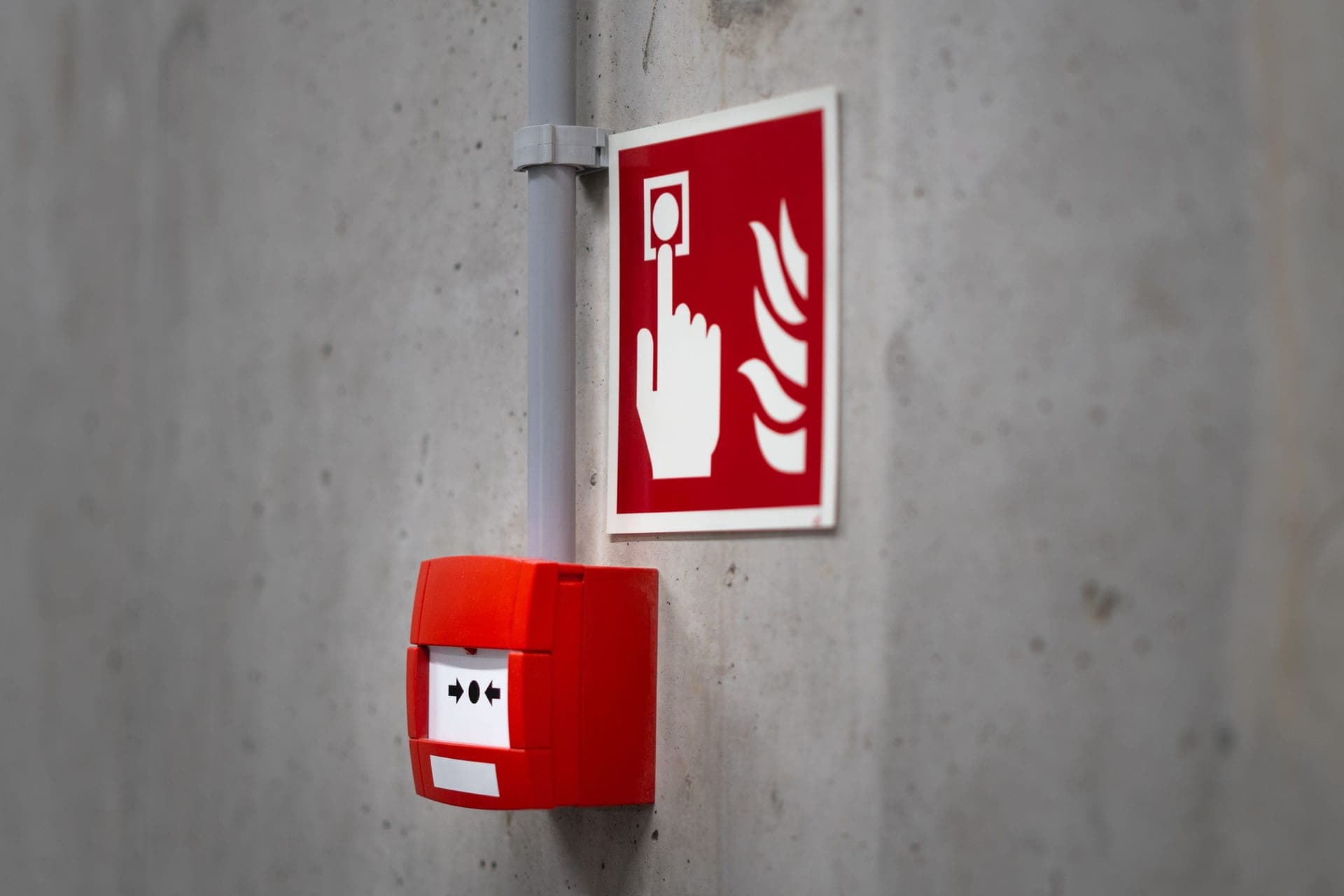
A **smoke alarm** is a self-contained device that senses smoke and sounds its own horn, listed to UL 217, and it is what belongs on the ceiling of a house. A **smoke detector** is a sensing device with no sounder of its own that reports to a fire alarm control panel, listed to UL 268, and it belongs in a commercial system. Everything sold for a home is a smoke alarm, whatever the box or the retailer calls it. The words matter in exactly two places: when you are reading a code requirement, and when you are buying for a building with a panel.
Siren & Safe is reader-funded. We earn a commission on some links on this page, at no cost to you. It does not change what we recommend or the order we rank it in. Full disclosure.
The actual distinction, in one paragraph
A smoke alarm senses smoke and sounds its own horn. It is a complete device. The governing standard is UL 217, *Smoke Alarms*, and the codes call it a single station alarm when it stands alone or a multiple station alarm when several are interconnected.
A smoke detector senses smoke and reports that to a fire alarm control panel, which then decides what to do — sound notification appliances, release a door holder, call a monitoring station. It has no horn of its own. The governing standard is UL 268, *Smoke Detectors for Fire Alarm Systems*.
That is the whole difference, and everything else follows from it. A detector is a component; an alarm is a product.
Which means: if you are standing in a hardware store looking at discs on a shelf, you are looking at smoke alarms. Every one of them. The word detector on the packaging is retail English rather than a technical claim, and nobody should feel misled by it — but when you read a code requirement, the two words are not interchangeable.
Side by side
The distinction as the standards and the codes draw it, rather than as everyday speech uses the words.
| Smoke alarm | Smoke detector | |
|---|---|---|
| Standard | UL 217 | UL 268 |
| Sounds its own horn | Yes | No |
| Needs a control panel | No | Yes |
| Self-contained | Yes | No |
| Typical setting | Houses and apartments | Commercial buildings, schools, offices, large multi-family |
| Power | Battery, or 120V with battery backup | Powered by the panel circuit |
| Code term | Single or multiple station alarm | System smoke detector |
| Can be monitored by a central station | Not directly | Yes, through the panel |
| What a US home needs | This one | Only if the building has a panel |
| Interchangeable | No | No |
A hardwired interconnected residential alarm is still a smoke alarm — the codes call it a multiple station alarm. Interconnection does not make it a system detector.
Quick picks
Scored against right listing for a home, nothing to maintain, install anywhere, interconnects and nuisance resistance. Tap a row for the full write-up. The price in each buy button is the live Amazon price at the last check, stamped with the date it was taken.
| # | Product | Best for | Score | Price |
|---|---|---|---|---|
| 1 | 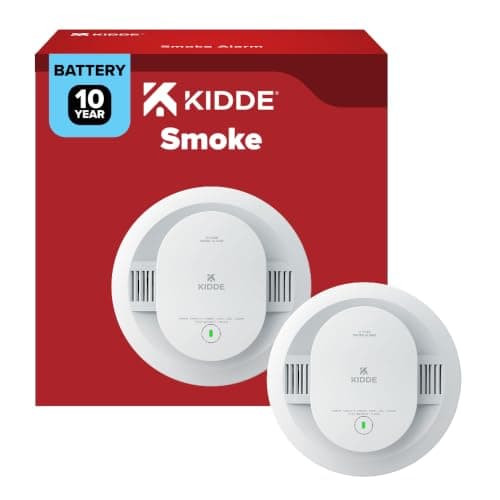 Kidde 20SD10 10-Year Battery Smoke Alarm UL 217 10th edition, photoelectric, sealed ten-year battery. | The standalone smoke alarm a house needs | 8.6/ 10 | $32.47 · View on Amazon #ad how we are funded · price as of October 19, 2026 |
| 2 | 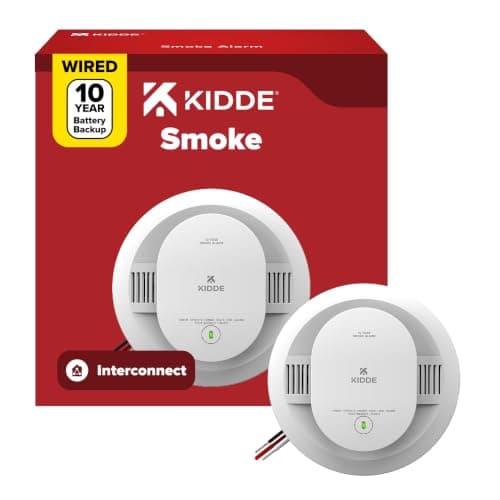 Kidde 20SA10 Hardwired Smoke Alarm with 10-Year Backup Battery Hardwired UL 217 alarm that interconnects over the existing circuit. | Multiple station alarms wired together | 8.3/ 10 | $39.97 · View on Amazon #ad how we are funded · price as of October 19, 2026 |
| 3 | 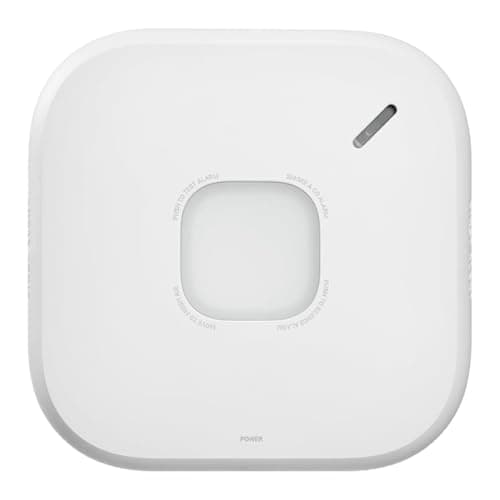 First Alert SC5 Smart Smoke & Carbon Monoxide Alarm A UL 217 and UL 2034 smart alarm. Still an alarm, not a system detector. | An alarm that also reports to an app | 8.9/ 10 | $124.97 · View on Amazon #ad how we are funded · price as of October 19, 2026 |
The devices, and what each one actually is
1. The standalone smoke alarm a house needs
Kidde 20SD10 10-Year Battery Smoke Alarm
UL 217 10th edition, photoelectric, sealed ten-year battery.
- Listed to
- UL 217, 10th edition (UL 217-2024 Ed.10)
- Sensing / agent
- Photoelectric smoke sensing only — no CO cell
- Power / service life
- Sealed 10-year lithium battery; 10-year limited warranty
This is the device the word alarm describes, and it is what the overwhelming majority of readers are looking for when they search for a smoke detector.
Self-contained is the defining property: a sensing chamber, a horn, a power source and a test button in one housing that needs nothing else to function. UL 217 is the standard that governs it, and the current editions add nuisance-resistance testing that older units never faced.
The only thing it does not do is talk to anything else. For a single-level apartment or a small house that is often fine; for a two-story house it is the main limitation, because the person who needs warning is on a different floor to the alarm that detected the fire.
What UL 217 certification covers is the detailed read, and it is the most useful thing on this site for understanding what you are actually buying.
What it does well
- **Listed to UL 217**, which is the standard that applies to single and multiple station smoke alarms in homes
- Photoelectric sensing, the right default for a residential smoldering fire
- Sealed 10-year lithium battery with no low-battery chirps across its life
- Self-contained: it senses and sounds, with no panel and no wiring required
The downside
- Standalone — it will not make other alarms in the house sound
- No CO cell
- Sealed design means the unit is the consumable
Do not buy this if: the building has a fire alarm control panel and the requirement is for a system detector. A UL 217 alarm is not a UL 268 detector and cannot be wired into a panel circuit.
- Listed to the 10th edition of UL 217, which carries the cooking-nuisance test the 8th edition introduced
- Kidde's own wording: enhanced sensing technology reduces false alarms often caused by cooking
- No low-battery chirps for ten years — the first end-of-life beep is the replacement signal
- Three long beeps and a red flash on smoke, so the pattern tells you which hazard it is
- Twist-and-click bracket, and it self-tests rather than waiting for you to press the button
#ad how we are funded · price as of October 19, 2026
2. Multiple station alarms wired together
Kidde 20SA10 Hardwired Smoke Alarm with 10-Year Backup Battery
Hardwired UL 217 alarm that interconnects over the existing circuit.
- Listed to
- UL 217, 10th edition (UL 217-2024 Ed.10)
- Sensing / agent
- Photoelectric smoke sensing only — no CO cell
- Power / service life
- 120V AC with a sealed 10-year backup battery; 10-year limited warranty
This is the device that confuses the terminology most, and it is worth being precise: a hardwired interconnected alarm is still a smoke alarm, not a smoke detector. The standard phrase in the codes is *multiple station alarm* — several self-contained alarms linked so that one sounding makes them all sound.
What makes it not a detector is that each unit still senses and sounds independently. There is no control panel making decisions; the interconnect conductor just passes a signal along so the horns fire together.
This distinction has a practical consequence. You cannot wire a UL 217 alarm into a fire alarm control panel's initiating circuit, and you cannot substitute a UL 268 system detector for a required residential alarm. They are not interchangeable parts even though they look alike on a ceiling.
Interconnected alarms covers both the wired and wireless routes, and why interconnection is the biggest practical upgrade available to a multi-story house.
What it does well
- **Multiple station interconnection** — one alarm detects, every alarm on the circuit sounds
- Still a UL 217 smoke alarm, not a panel detector: each unit sounds for itself as well
- Sealed 10-year backup battery, so a tripped breaker does not disable the circuit
- Drops onto an existing 120V alarm circuit without new cable
The downside
- Needs an existing alarm circuit with a compatible interconnect conductor
- Mixing manufacturers on one circuit is a known source of trouble
- Positions are fixed by the existing wiring
Do not buy this if: the house has no alarm wiring. A wireless-interconnect alarm achieves the same whole-house sounding without running cable through floors.
- Drops onto an existing 120V alarm circuit and interconnects over the wire — one sounds, they all sound
- Sealed 10-year backup battery, so a tripped breaker does not leave the house unprotected
- Same reduced-nuisance sensing as the battery model in this series
- No low-battery chirps across the ten years
- The direct successor to the P4010ACS line, which Kidde has discontinued
#ad how we are funded · price as of October 19, 2026
3. An alarm that also reports to an app
First Alert SC5 Smart Smoke & Carbon Monoxide Alarm
A UL 217 and UL 2034 smart alarm. Still an alarm, not a system detector.
- Listed to
- Conforms to UL 217 10th edition — First Alert's published specification names no UL 2034 number
- Sensing / agent
- Photoelectric smoke sensing plus an electrochemical CO cell
- Power / service life
- Six replaceable 3V CR123A lithium cells; 10-year limited warranty
Smart alarms are where the terminology gets genuinely misleading, because a device that notifies a phone feels like it is reporting to something — and in the sense that matters for the standards, it is not.
It is a UL 217 self-contained alarm with a radio bolted on. The horn is the primary function and the notification is a convenience. If the Wi-Fi is down, the alarm still works; if the cloud service is down, the alarm still works. That is the right architecture, and it is why a smart alarm is not a monitored system.
A genuinely monitored system has UL 268 detectors on a panel, a communicator, and a central station with people in it who call the fire service. Nothing sold as a consumer smart alarm does that.
Useful for an empty house, a rental you manage or a relative you worry about. Smart versus regular is the honest assessment of what the notification buys you.
What it does well
- Listed to **UL 217 and UL 2034**, so it is a real smoke alarm and a real CO alarm
- Sends a notification to a phone, which is the closest a home device gets to remote monitoring
- 10-year sealed battery
- Photoelectric smoke sensing plus an electrochemical CO cell
The downside
- App notification depends on a working network and a working cloud service — it is a supplement, not the alarm
- A smart alarm is still not a monitored system, and it does not summon the fire service
- Sealed design means the unit is the consumable
Do not buy this if: you are looking for monitored fire detection that dispatches a response. That is a panel-based monitored system with UL 268 detectors and a central station, which is a different product category entirely.
- Google promotes it as the Nest Protect replacement, and it mounts on the same bracket
- Wireless interconnect, including with compatible Google Nest Protect units, so a changeover can be staged one alarm at a time
- Voice alerts with Heads-Up warning, naming the hazard and the location rather than only sounding
- Phone alerts through the Resideo Connect app when the alarm sounds away from home
- 85 dB at 10 feet — the standard household figure, not a louder one
First Alert product documentation
#ad how we are funded · price as of October 19, 2026
Why the words matter: reading a requirement
Here is where the distinction stops being pedantry. Residential code and NFPA 72 both use these terms precisely, and a requirement written for one device is not satisfied by the other.
If a requirement says smoke alarms shall be installed in each sleeping room, outside each separate sleeping area and on each additional story, it means self-contained UL 217 devices. Fitting UL 268 system detectors with no panel would satisfy nothing, because they would never sound.
If a requirement in a larger multi-family building says a fire alarm system with smoke detection is required, a shelf of UL 217 alarms does not satisfy it, because there is no panel, no monitoring and no notification appliance circuit.
This comes up most often in three real situations: converting a house into apartments, letting a property where the licensing authority has written a specification, and renovating a building that has an existing panel. In all three cases the word in the document decides what you buy, and NFPA 72 residential requirements is the page that sets out the residential side.
Terms that get confused with these two
Four more phrases that appear on packaging and in requirements, and what each one actually denotes.
- Heat alarm — a device that responds to temperature, not smoke, listed to UL 539. It is not a smoke alarm and cannot replace one. It is the correct device for a garage or an attic where a smoke alarm would nuisance-alarm. The comparison covers what you give up.
- Combination alarm — one housing listed to both UL 217 and UL 2034, meaning it is a real smoke alarm and a real carbon monoxide alarm at once. Two sensors, two listings, one replacement date.
- Multiple station alarm — the code term for interconnected residential alarms. Still smoke alarms, not system detectors.
- Monitored system — a fire alarm control panel with UL 268 detectors and a communicator to a central station with staff who call the fire service. A consumer smart alarm that notifies a phone is not this, and the difference matters if you are buying for peace of mind while away.
- Smoke detector, in American retail English — a smoke alarm. Almost always. Including on this site's own hub, because that is the word readers search for.
What this site calls them, and why
This site uses *smoke detector* and *smoke alarm* fairly interchangeably in headings and navigation, and that is deliberate rather than careless.
People searching for help with a beeping disc on their ceiling type smoke detector, and a site that insists on the technically correct term in a heading is a site those readers do not find. The hub is called smoke detectors for that reason.
Where the distinction changes a decision, this site is precise. Every product page states the listing — UL 217, UL 2034, UL 539 — because the listing is the checkable fact and the retail name is not.
That is the practical takeaway. Do not shop on the word; shop on the listing. A unit listed to UL 217 is a smoke alarm whatever the box says, a unit listed to UL 539 is a heat alarm and will not detect smoke, and a unit with no stated listing is a unit with no verified performance claim at all.
What a house should actually have
Smoke alarms, interconnected if possible, in each sleeping room, outside each separate sleeping area, and on every level including the basement.
Photoelectric sensing as the default, because the residential fire that kills is usually a smoldering one and because ionization chambers produce most of the nuisance alarms that get units disabled. The comparison sets out the evidence.
Carbon monoxide alarms on every level and outside each sleeping area, either as separate UL 2034 units or as combination alarms. A smoke alarm cannot detect CO, and no listing on a smoke-only unit implies otherwise.
A heat alarm in the garage, interconnected if the system supports it, because a smoke alarm in that room will nuisance-alarm on exhaust and dust.
Replacement dates on the back of every unit, checked annually. The test button checks the horn and the power, not the sensor — which is the single most consequential misunderstanding in this whole subject. When to replace covers it.
Questions people actually ask
What is the difference between a smoke detector and a smoke alarm?
Is a hardwired interconnected alarm a smoke detector?
Which one do I need for my house?
Are UL 217 and UL 268 interchangeable?
Is a smart smoke alarm a monitored system?
Why does this site say detector if alarm is correct?
How these picks were chosen. On published specifications, safety listings and manufacturer documentation — plus the findings of organizations that do run tests. We have no laboratory and we do not burn anything. Read the full methodology.
Sources
- UL Solutions — UL 217 — smoke alarms
- UL Solutions — UL 217, Standard for Smoke Alarms, published with new technical requirements
- NFPA — NFPA 72, National Fire Alarm and Signaling Code (2025 edition)
- International Code Council — IRC Chapter 3 — building planning (R310, R314, R315)
- UpCodes — Specific location requirements for smoke alarms (NFPA 72 §29.11.3.4)
Read next
Smoke Detectors
What the standard tests, what the recent editions changed, and how to verify a mark is real.
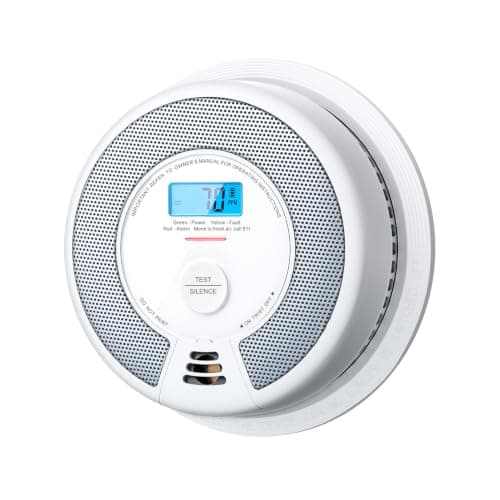
Smoke Detectors
Why interconnection matters most, and the wired, wireless and hybrid routes.
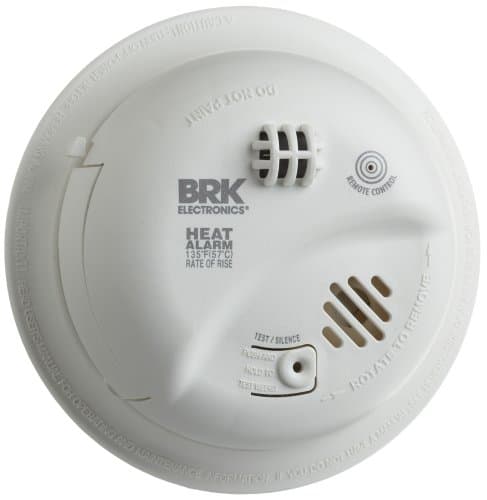
Smoke Detectors
Smoke Detectors vs Heat Detectors
Why a heat alarm is always slower, and the four rooms where that is the right trade.
Smoke Detectors
The two mechanisms, the fires each sees first, and why photoelectric wins at home.
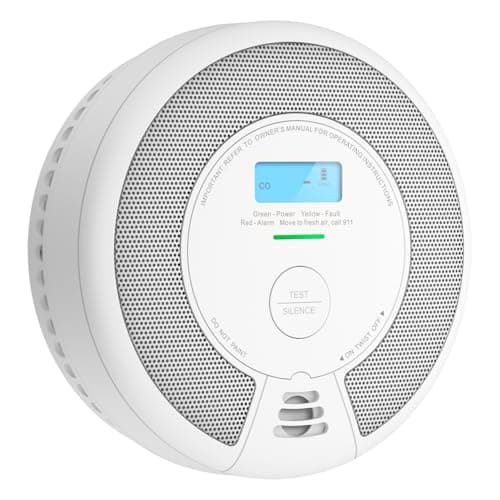
Placement & Code
NFPA 72 Residential Requirements
The residential sections, quoted with their numbers, and what each one means in practice.