Smoke Detectors
UL Listed Smoke Detectors
A listing is the only evidence a smoke alarm offers that it does what the box says. It is also the one specification almost every buying guide skips.
By Ryder M.Last reviewed
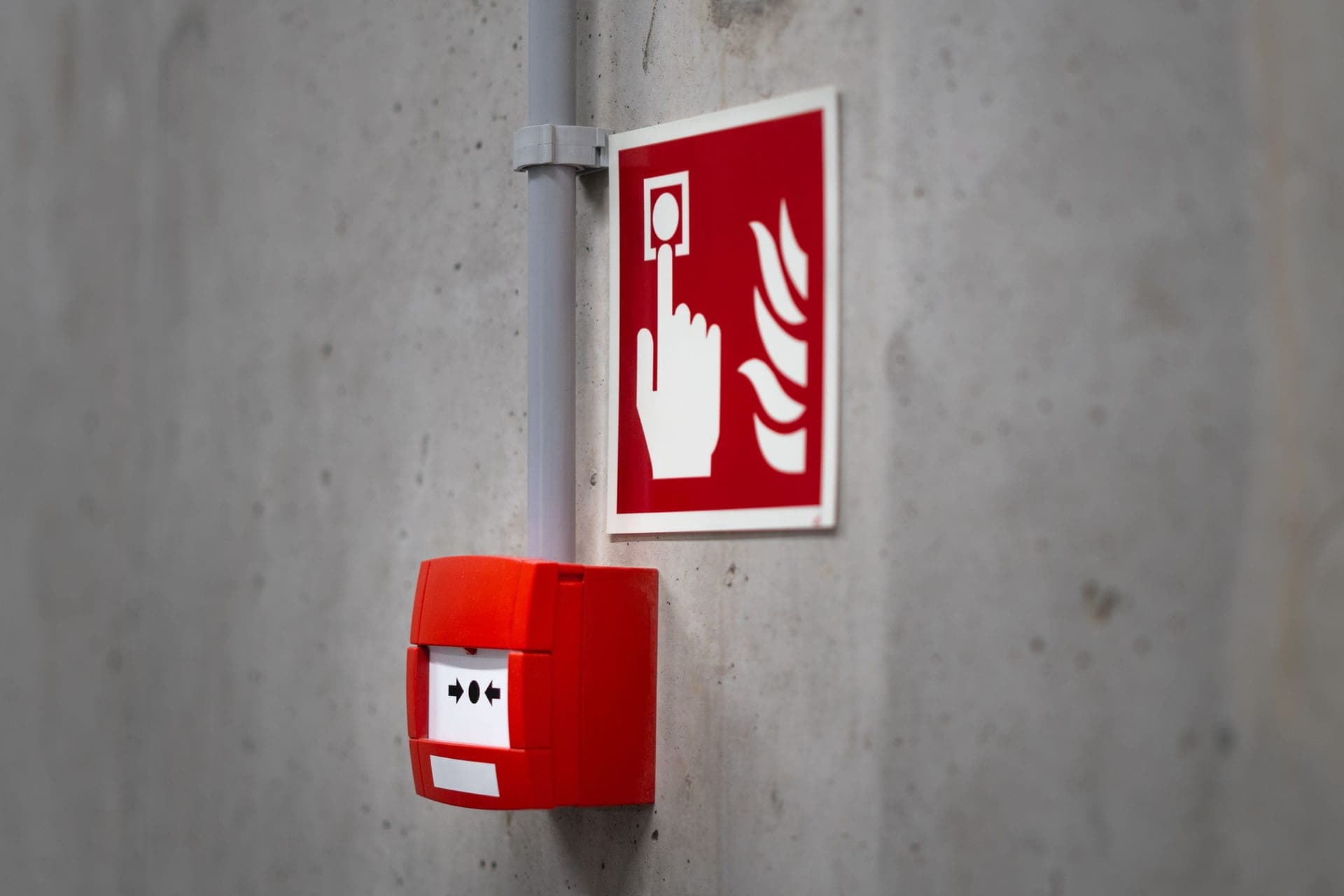
A UL listed smoke alarm has been tested to UL 217, the US standard for single and multiple station smoke alarms, and is subject to ongoing factory surveillance — not a one-off certificate. The cooking nuisance alarm test arrived in the 8th edition and every edition since carries it, so an alarm listed to the current 10th edition has been required to distinguish burning toast from a real fire. Buy listed alarms only, prefer a manufacturer that names the edition rather than claiming the latest, and check the mark on the back of the unit against the UL Product iQ database rather than trusting a listing photograph.
Siren & Safe is reader-funded. We earn a commission on some links on this page, at no cost to you. It does not change what we recommend or the order we rank it in. Full disclosure.
What a UL listing actually is
A UL listing means a product has been tested by UL Solutions against a published standard and that the manufacturer's factory is subject to ongoing surveillance to confirm production units still match the one that was tested. That second half is the part people miss. A listing is a continuing arrangement, not a certificate issued once and framed.
For smoke alarms the standard is UL 217, which covers single and multiple station smoke alarms — the devices a householder buys and installs. For carbon monoxide alarms it is UL 2034. A combination smoke and CO alarm carries both.
UL 268 is the standard for the other device the two words get used for, and the difference decides what an inspector will accept — smoke detector versus smoke alarm sets it out.
A UL Recognized component mark is a different thing and does not mean the finished product is listed. So is a generic "tested to UL standards" phrase in a listing description, which commits the seller to nothing at all. The claim you want is that the finished alarm is listed to UL 217, ideally with an edition.
ETL, from Intertek, is a genuine alternative. An ETL listing to UL 217 is testing to the same standard by a different nationally recognized laboratory, and it is not a lesser mark — several alarms we recommend carry it.
What UL 217 puts an alarm through
The standard is long and most of it is electrical and mechanical. These are the tests that bear on whether an alarm protects a household.
- Smoldering fire response — the slow, smoke-heavy fire that kills people asleep. This is the test photoelectric sensing is good at
- Flaming fire response — paper and wood burning fast, with less visible smoke and more combustion products
- Cooking nuisance resistance — introduced in the 8th edition. The alarm has to not sound for a defined cooking aerosol while still sounding for real fires
- Sensitivity limits — the alarm has to respond within a defined band, neither too early nor too late. An alarm cannot pass simply by being hypersensitive
- Audibility — a minimum sounder output, which is why residential alarms are specified at 85 dB at 10 ft
- Environmental endurance — temperature, humidity, dust, corrosion and stability over time
- Power and end of life — battery performance, low-battery signaling and an end-of-life signal the user can recognize
What the recent editions changed, and why it matters to you
The last three editions of UL 217 are collectively the most consequential revision the standard has made for ordinary households, and they are worth understanding because the edition number is the difference you can shop for.
The 8th edition added a cooking nuisance alarm test, alongside smoldering and flaming polyurethane foam tests reflecting what modern furnishings are made of. An alarm must demonstrate that it can tell the difference between a defined cooking aerosol and a real fire — and crucially, it has to do that without losing fire sensitivity. Passing by becoming less sensitive is not available. The 9th edition then added a go/no-go flaming-foam test run immediately after the cooking test, so the alarm has to prove it is still awake once the nuisance has passed. The 10th edition harmonized the US and Canadian requirements and added low-frequency audibility requirements, which matter for sleeping occupants.
Why that matters more than any other test in the standard: the most common way a household loses smoke alarm protection is not sensor failure, it is somebody taking the alarm down because it goes off when they cook. An alarm in a drawer protects nobody. A standard that attacks the reason alarms end up in drawers is attacking the actual failure mode.
Each edition carries the previous ones forward, so a 10th-edition listing is the most comprehensively tested product on the shelf rather than a different flavor of testing.
The practical consequence for a buyer is simple. Where two alarms are otherwise comparable, the one whose manufacturer names the current edition has published evidence of every test that matters. Best smoke detectors for fewer false alarms is the buying page if nuisance alarms are what brought you here.
Quick picks
Scored against listing evidence, nuisance test coverage, service life clarity, position flexibility and verification ease. Tap a row for the full write-up. The price in each buy button is the live Amazon price at the last check, stamped with the date it was taken.
| # | Product | Best for | Score | Price |
|---|---|---|---|---|
| 1 | 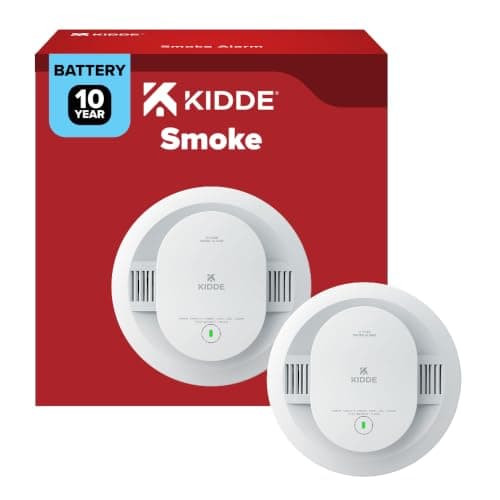 Kidde 20SD10 10-Year Battery Smoke Alarm UL 217, 10th edition, stated as an edition rather than as a claim. | A named listing edition | 9.1/ 10 | $32.47 · View on Amazon #ad how we are funded · price as of October 19, 2026 |
| 2 | 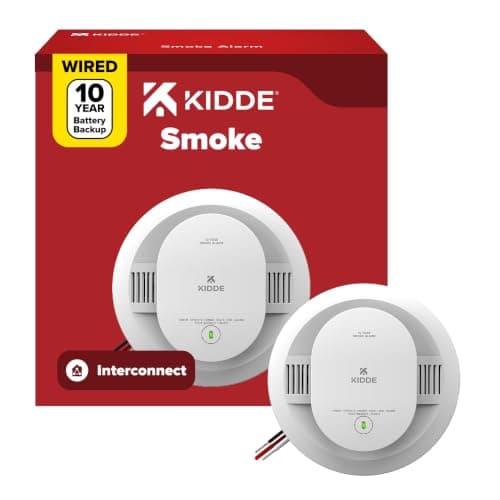 Kidde 20SA10 Hardwired Smoke Alarm with 10-Year Backup Battery 10th edition listing with mains power and interconnect over the existing wire. | The same listing on a wired circuit | 8.7/ 10 | $39.97 · View on Amazon #ad how we are funded · price as of October 19, 2026 |
| 3 | 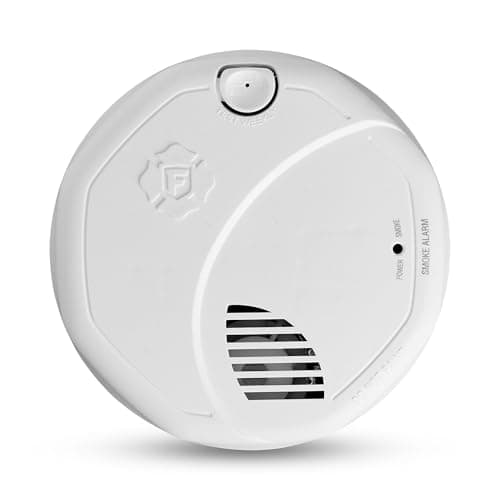 First Alert SM310 10-Year Sealed Battery Dual Sensor Smoke Alarm Listed to UL 217 with two sensing chambers rather than one. | Both sensor types under one listing | 8.1/ 10 |
Alarms with the clearest listing evidence
1. A named listing edition
Kidde 20SD10 10-Year Battery Smoke Alarm
UL 217, 10th edition, stated as an edition rather than as a claim.
- Listed to
- UL 217, 10th edition (UL 217-2024 Ed.10)
- Sensing / agent
- Photoelectric smoke sensing only — no CO cell
- Power / service life
- Sealed 10-year lithium battery; 10-year limited warranty
If you are reading a page about listings, you are a buyer who filters on what a product is certified to. This is the unit that rewards that.
Nearly every alarm on the market says it reduces false alarms. Very few say which edition of UL 217 they are listed to, which is the only form of that claim you can check. Kidde names the edition in its documentation for this series, and the 10th edition is specifically the one that added a cooking-nuisance test to the standard.
Treat that as the baseline you ask for, not as the end of the decision. The hardwired version of the same series carries the same listing if your house has alarm wiring.
What it does well
- Listed to UL 217, 10th edition (UL 217-2024 Ed.10) — named, specific and checkable
- A 10th-edition listing carries the cooking nuisance alarm test the 8th edition introduced, which is the single most useful change the standard has made for households
- Sealed ten-year lithium cell, so the service life is defined rather than dependent on somebody changing a battery
- Self-testing, which is the only part of an alarm's health a household will not otherwise monitor
The downside
- **Photoelectric only** — the listing does not change the sensor trade
- No CO cell, so a gas house needs separate UL 2034 devices
- No interconnect
- A named edition is evidence of testing, not evidence that this unit is better than an unnamed-edition unit at detecting your fire
Do not buy this if: a buyer who wants every feature. This is on the page as the clearest certification evidence available in the category, not as the most capable alarm in it.
- Listed to the 10th edition of UL 217, which carries the cooking-nuisance test the 8th edition introduced
- Kidde's own wording: enhanced sensing technology reduces false alarms often caused by cooking
- No low-battery chirps for ten years — the first end-of-life beep is the replacement signal
- Three long beeps and a red flash on smoke, so the pattern tells you which hazard it is
- Twist-and-click bracket, and it self-tests rather than waiting for you to press the button
#ad how we are funded · price as of October 19, 2026
2. The same listing on a wired circuit
Kidde 20SA10 Hardwired Smoke Alarm with 10-Year Backup Battery
10th edition listing with mains power and interconnect over the existing wire.
- Listed to
- UL 217, 10th edition (UL 217-2024 Ed.10)
- Sensing / agent
- Photoelectric smoke sensing only — no CO cell
- Power / service life
- 120V AC with a sealed 10-year backup battery; 10-year limited warranty
The reason this is here rather than in a roundup is a point about listings specifically: if your ceilings already have wired alarms, the listing argument and the interconnect argument point at the same product, and that is unusual.
Houses with alarm wiring frequently lose the interconnect during maintenance, because a failed hardwired unit gets replaced with a battery one on the day and the position still has an alarm. Nothing looks wrong and the house has quietly lost whole-house alerting.
Replace like for like, one brand, one model, one visit. Then test the interconnect rather than the alarms — hold the test button on the furthest unit and confirm the rest sound.
What it does well
- UL 217, 10th edition, same as the battery unit in the series
- Drops onto an existing 120V alarm circuit and interconnects over the wire — one sounds, they all sound
- Sealed ten-year backup battery, so a tripped breaker does not leave the house unprotected
- The direct successor to the discontinued P4010ACS, which is what a lot of ceilings currently carry
The downside
- **Needs an existing circuit at every position** — not a retrofit answer
- Smoke only, no CO cell
- Mixing manufacturers on one interconnected circuit can silently break the interconnect
- Replacing a whole house of wired alarms is a coordinated job rather than an afternoon
Do not buy this if: a house with no alarm wiring. Running new circuits to satisfy a listing preference is not a sensible trade — buy the sealed battery version of the same series instead.
- Drops onto an existing 120V alarm circuit and interconnects over the wire — one sounds, they all sound
- Sealed 10-year backup battery, so a tripped breaker does not leave the house unprotected
- Same reduced-nuisance sensing as the battery model in this series
- No low-battery chirps across the ten years
- The direct successor to the P4010ACS line, which Kidde has discontinued
#ad how we are funded · price as of October 19, 2026
3. Both sensor types under one listing
First Alert SM310 10-Year Sealed Battery Dual Sensor Smoke Alarm
Listed to UL 217 with two sensing chambers rather than one.
- Listed to
- UL 217 — First Alert states compliance with the latest edition
- Sensing / agent
- Dual sensor: a photoelectric chamber and an ionization chamber in one housing
- Power / service life
- Sealed 10-year lithium battery; 10-year limited warranty
This is the counterweight to the rest of the page. A listing is evidence, and evidence is not the only thing that matters.
A dual-sensor alarm covers both the smoldering fire and the fast flaming fire without you having to predict which one your house will produce. That is a real safety argument, and it is independent of how precisely the manufacturer words its listing claim.
So the sensible reading is: insist on a listing, prefer a named edition where you can get one, and do not let the naming question override a genuine difference in sensor coverage. Ionization vs photoelectric covers the trade in full.
What it does well
- UL 217 listed with both a photoelectric and an ionization chamber, so the listing covers a wider range of fire profiles in one device
- Precision Detection sensing, which First Alert states reduces cooking nuisance alarms
- Optional locking feature, a genuinely useful tamper control
- Sealed ten-year lithium cell and a ten-year limited warranty
The downside
- **First Alert states compliance with the latest edition without naming it**, which is the weaker form of the claim on this page's own terms
- The ionization chamber is the half associated with cooking nuisance alarms
- No CO cell
- More expensive per position than a single-sensor alarm
Do not buy this if: somebody whose entire decision rests on a named edition. On that specific criterion this unit is behind the Kidde, and we are not going to dress that up.
- The only dual-sensor unit here — photoelectric and ionization, so it is not trading one fire type for the other
- First Alert calls the sensing Precision Detection, and states it reduces cooking nuisance alarms
- 85 dB at 10 ft
- Optional locking feature that stops the alarm being lifted off its bracket
- 5 x 5 x 2 in, 0.54 lb
First Alert product documentation
How to check a mark is genuine
Counterfeit and overstated marks exist, particularly on marketplace listings from unfamiliar sellers. Five minutes of checking is worth it on a device you will leave in place for a decade.
Read the label on the back of the unit, not the product page
The listing photograph is marketing. The molded or printed label on the rear of the alarm carries the mark, the standard, the model number and the manufacture date. If a seller cannot show you that label, treat the listing as unverified.
Look for a file number next to the mark
A genuine listing mark is accompanied by a file or control number identifying the certification. A bare logo with nothing beside it is a flag.
Search UL Product iQ for the model
UL publishes its certifications in a free searchable database. Search the manufacturer and the model number and confirm the certification exists and covers smoke alarms. This is the authoritative check and it takes a minute.
Check the wording of the claim
"UL listed" is a claim. "Meets UL standards", "tested to UL 217" and "UL compliant" are not listings and commit the seller to nothing. Treat the vaguer phrasings as unlisted until proven otherwise.
Prefer a named edition
A manufacturer that publishes the edition it is listed to is giving you something checkable. A manufacturer that says it complies with the latest edition may well be right, and you cannot verify it.
Check the recall database before you fit it
The CPSC publishes recalls for exactly this category, and smoke and CO alarms appear on it regularly. Search the model before installation and again if you ever have reason to doubt a unit.
The marks and phrases you will see
| What the listing says | What it means | Buy it? |
|---|---|---|
| UL Listed to UL 217 | Finished product tested to the smoke alarm standard, with ongoing factory surveillance | Yes |
| ETL Listed to UL 217 | Same standard, tested by Intertek — a nationally recognized laboratory | Yes |
| UL 217 10th edition named | As above, and the edition number tells you the cooking-nuisance and flaming-foam tests are included | Yes — the strongest evidence available |
| "Complies with the latest UL 217 edition" | Probably true, not checkable as stated | Acceptable from a known manufacturer |
| "UL Recognized" | A component mark. The finished alarm is not listed | No |
| "Meets UL standards" / "UL compliant" | Marketing language with no certification behind it | No |
| No mark at all | Untested | No. This is not a cheaper alarm, it is not an alarm |
Certifications can be confirmed free of charge in UL's Product iQ database. How we review sets out what we check and what we do not.
Why an unlisted alarm is not a cheap alarm
There is a version of this decision that looks like a value judgment — pay more for the certified one, or save money on the one that probably works. That framing is wrong, and it is worth saying plainly.
An unlisted smoke alarm has no demonstrated sensitivity band, no demonstrated sounder output, no demonstrated behavior in humidity or dust, and no end-of-life signal you can rely on. It may sound at the right time. Nobody has established that it does, including the person selling it.
It also fails every requirement that matters outside your own judgment. Residential code requires listed alarms. Landlord obligations are written around listed alarms. An insurer asking questions after a fire will ask about listed alarms. An unlisted device satisfies none of them.
And the saving is small. Listed sealed ten-year alarms from established manufacturers sit a few dollars above the unlisted tier, spread across ten years of service. There is no version of this trade that is worth making.
What a listing does not tell you
Keeping this honest matters as much as the rest of the page, because a listing is a floor and not a ranking.
It does not say which sensor is in the housing. A photoelectric alarm and an ionization alarm can both be listed to the same edition while responding differently to your fire. Ionization vs photoelectric.
It does not say the alarm is in the right place. A perfectly listed alarm 4 ft from a cooking appliance will nuisance-trip, and a perfectly listed alarm missing from a bedroom protects nobody in it. Smoke detector placement.
It does not say the alarm is still good. Every alarm has a ten-year life from the date of manufacture, and the test button confirms the horn and the power, never the sensing chamber. When to replace smoke detectors.
It does not cover carbon monoxide. UL 217 is a smoke standard. CO detection is UL 2034, and a smoke-only alarm in a house with gas appliances leaves the other hazard uncovered. Do I need a CO detector.
Questions people actually ask
What does UL listed mean on a smoke detector?
Are all smoke detectors UL listed?
What is the difference between UL 217 and UL 2034?
What did the 10th edition of UL 217 change?
How do I check if my smoke detector is really UL listed?
Is ETL as good as UL for a smoke alarm?
Does a UL listing mean the smoke detector never gives false alarms?
How these picks were chosen. On published specifications, safety listings and manufacturer documentation — plus the findings of organizations that do run tests. We have no laboratory and we do not burn anything. Read the full methodology.
Sources
- UL Solutions — UL 217 — smoke alarms
- UL Solutions — UL 217, Standard for Smoke Alarms, published with new technical requirements
- UL Solutions — UL 2034 — single and multiple station carbon monoxide alarms
- CPSC — Recalls and product safety news
- NFPA — NFPA 72, National Fire Alarm and Signaling Code (2025 edition)
- BRK / First Alert — Codes and standards reference for smoke and CO alarms
- International Code Council — IRC Chapter 3 — building planning (R314 smoke alarms, R315 CO alarms)
Read next
Smoke Detectors
First Alert vs Kidde vs X-Sense
Sensor coverage, listing clarity and what each brand includes — a three-way with no default winner.
Smoke Detectors
The Best Smoke Detectors for a Home
Four alarms, what UL 217 tests, and why interconnection beats every other feature.
Smoke Detectors
The two mechanisms, the fires each sees first, and why photoelectric wins at home.
Smoke Detectors
When to Replace Smoke Detectors
Where the date is, why the test button proves little, and what to replace with.
Smoke Detectors
The Best Smoke Detectors for Fewer False Alarms
The UL 217 10th edition nuisance test, how to read it on a box, and four alarms that pass it.
Placement & Code
NFPA 72 Residential Requirements
The residential sections, quoted with their numbers, and what each one means in practice.