Smoke Detectors
The Best Smoke Detectors for Fewer False Alarms
Until recently, nuisance resistance was a marketing claim with nothing behind it. A change to the listing standard turned it into a spec you can check.
By Ryder M.Last reviewed
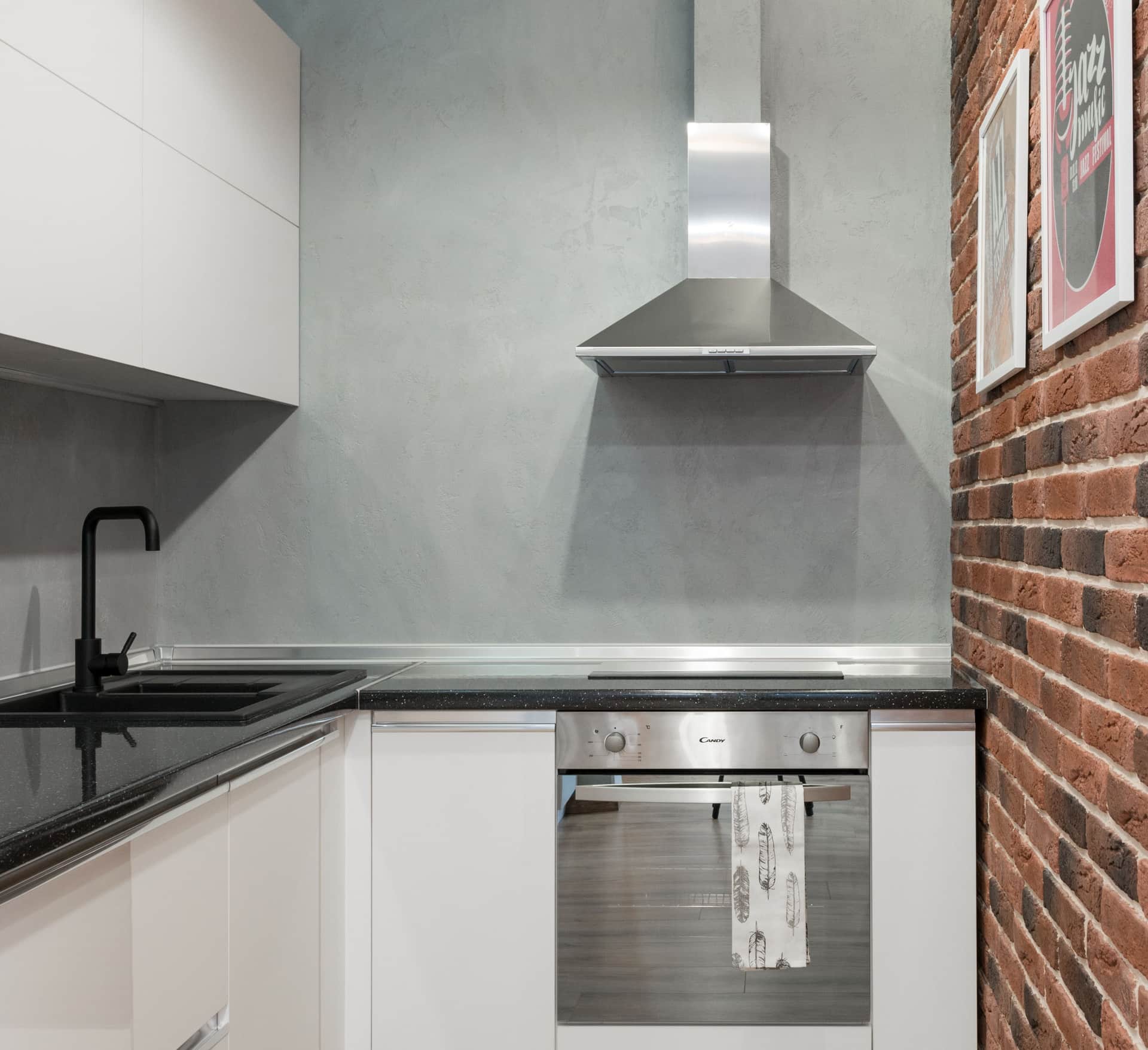
Buy an alarm listed to the 10th edition of UL 217 and put it more than 10 ft from the cooker. That listing is new, and it is the first time a smoke alarm has had to prove it can tell cooking smoke from a fire in order to be sold. The Kidde 20SD10 is our pick for a battery position and the First Alert SMI105-AC for a wired one. If the problem is a dusty basement rather than a kitchen, the X-Sense SC06's dust-resistant housing is the more direct fix.
Siren & Safe is reader-funded. We earn a commission on some links on this page, at no cost to you. It does not change what we recommend or the order we rank it in. Full disclosure.
Nuisance resistance stopped being a marketing claim
Every smoke alarm sold in the US is listed to UL 217. For most of the standard's life, that listing answered one question — does this alarm detect fires — and manufacturers were free to describe their nuisance performance however they liked, because nothing independent tested it.
The 10th edition of UL 217 changed that. It adds a cooking-nuisance test: the alarm is exposed to smoke from cooking food at a defined distance and must not alarm, while still passing every fire detection test in the standard. An alarm cannot carry the listing without demonstrating both.
This is the single most useful development in this category in years, and it is almost invisible at the point of sale. It means "reduces false alarms" has gone from an adjective to a claim with a test behind it — if the alarm carries the current listing edition.
Kidde states the edition on its Detect series documentation. First Alert describes its Precision Detection sensing as complying with the latest industry standards without naming the edition on the product page. Both are current-generation; Kidde is simply more legible about it, and when you are choosing between two boxes on a shelf, legibility is worth something.
How to check it on the box
Four things worth two minutes in the aisle, in the order they are worth doing.
- Look for the UL 217 edition on the packaging or the manufacturer's spec sheet. 10th edition — sometimes written UL 217-2024 Ed.10 — is the one with the cooking test. If the edition is not stated anywhere, assume it is not the newest
- Check the sensor type. Photoelectric is the right choice anywhere cooking, steam or humidity is a factor. A dual-sensor alarm includes an ionization chamber, which is the half that objects to steam
- Read the date of manufacture, not the date you bought it. Shelf stock can be a year or two old, which on a ten-year device is ten to twenty percent of its life gone, and older stock is more likely to carry the older listing
- Check whether it interconnects and hushes as a set. In a wired or wirelessly linked house, being able to silence the whole set from the unit you can reach is the difference between an irritation and a household argument
Quick picks
Scored against listing evidence, sensor suitability, dust tolerance, silence controls and upkeep. Tap a row for the full write-up. The price in each buy button is the live Amazon price at the last check, stamped with the date it was taken.
| # | Product | Best for | Score | Price |
|---|---|---|---|---|
| 1 | 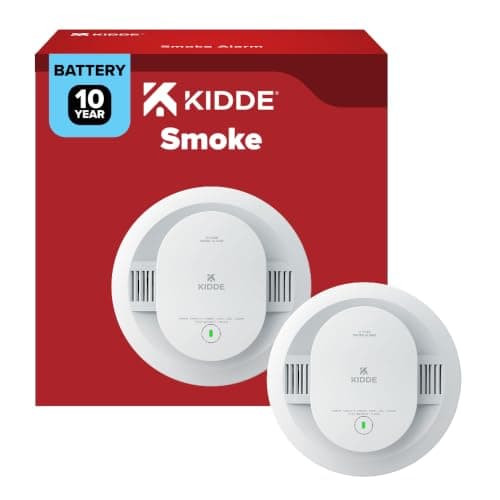 Kidde 20SD10 10-Year Battery Smoke Alarm Listed to the edition of UL 217 that added the cooking test, and Kidde says so plainly. | A battery position near a kitchen | 8.8/ 10 | $32.47 · View on Amazon #ad how we are funded · price as of October 19, 2026 |
| 2 | 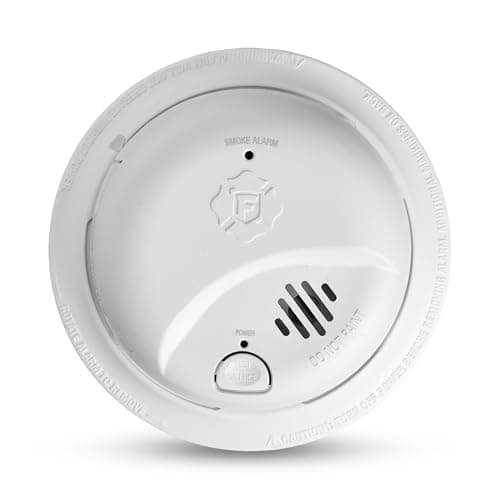 First Alert SMI105-AC Hardwired Smoke Alarm with 10-Year Battery Backup First Alert's Precision Detection on a hardwired circuit, so the whole set can be hushed together. | A wired position near a kitchen | 8.5/ 10 | |
| 3 | 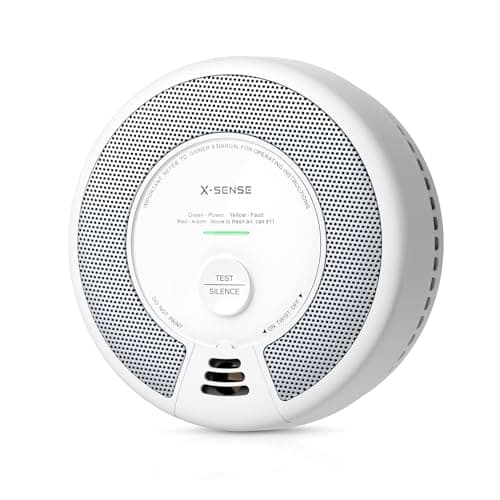 X-Sense SC06 Smoke & Carbon Monoxide Alarm A dust-resistant housing, which addresses the trigger most people misdiagnose as cooking. | When the cause is dust, not dinner | 8.2/ 10 | |
| 4 | 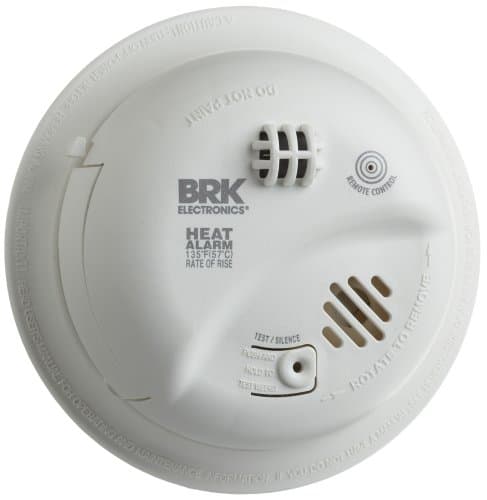 First Alert HD6135FB Hardwired Heat Alarm Zero nuisance alarms, because it is not looking for smoke — and that is the whole trade. | A room that should not have a smoke alarm in it | 7.2/ 10 | $29.79 · View on Amazon #ad how we are funded · price as of October 19, 2026 |
1. A battery position near a kitchen
Kidde 20SD10 10-Year Battery Smoke Alarm
Listed to the edition of UL 217 that added the cooking test, and Kidde says so plainly.
- Listed to
- UL 217, 10th edition (UL 217-2024 Ed.10)
- Sensing / agent
- Photoelectric smoke sensing only — no CO cell
- Power / service life
- Sealed 10-year lithium battery; 10-year limited warranty
This is the alarm to buy if your problem is the hallway outside a kitchen and the position is already correct. The listing edition is the reason, and it is a genuinely new thing to be able to say about a smoke alarm.
Previous editions of UL 217 asked a single question: does this alarm detect fires? The 10th edition adds a second one: can it tell a fire apart from cooking? An alarm has to be exposed to smoke from cooking food at a defined distance without alarming, while continuing to pass every fire test it always had to. That is a real, adversarial test, and an alarm carrying that listing has been through it.
Kidde markets the result as "enhanced sensing technology" across the Detect series. We would ignore the phrase and look at the listing, because the phrase is what any manufacturer would write and the listing is what somebody else verified.
What it does well
- UL 217 10th edition (UL 217-2024 Ed.10) — the listing is the evidence, not the marketing copy
- Kidde's own wording: enhanced sensing technology reduces false alarms often caused by cooking
- Photoelectric only, with no ionization chamber to react to steam and fine cooking aerosols
- Sealed ten-year cell, so there is no annual low-battery chirp to be mistaken for a fault
- Three long beeps and a red flash for smoke, which is a pattern you can learn to recognize
The downside
- Nuisance-resistant is not nuisance-proof — a badly placed alarm still alarms
- **No interconnect**, so it cannot be silenced as part of a set
- Smoke only, no CO cell
- Photoelectric chambers still accumulate dust, which raises sensitivity over the years
Do not buy this if: a position inside the 10 ft cooking radius. No listing makes that position acceptable, and buying a better alarm instead of moving a badly placed one is the most common wasted purchase in this category.
- Listed to the 10th edition of UL 217, which carries the cooking-nuisance test the 8th edition introduced
- Kidde's own wording: enhanced sensing technology reduces false alarms often caused by cooking
- No low-battery chirps for ten years — the first end-of-life beep is the replacement signal
- Three long beeps and a red flash on smoke, so the pattern tells you which hazard it is
- Twist-and-click bracket, and it self-tests rather than waiting for you to press the button
#ad how we are funded · price as of October 19, 2026
2. A wired position near a kitchen
First Alert SMI105-AC Hardwired Smoke Alarm with 10-Year Battery Backup
First Alert's Precision Detection on a hardwired circuit, so the whole set can be hushed together.
- Listed to
- UL 217 — First Alert states compliance with the latest edition
- Sensing / agent
- Photoelectric smoke sensing only — no CO cell
- Power / service life
- 120V AC with a sealed 10-year lithium backup battery
On a wired circuit, the silence behavior is as important as the sensing. When one alarm in an interconnected set trips on a piece of toast, every alarm in the house sounds — and if pressing hush on the offending unit does not hush the rest, the household experience is a lot of running up stairs. Modern interconnected sets silence together from any unit, which is a much bigger practical improvement in nuisance tolerance than any sensor specification.
The other reason a wired position is easier: you can move a hardwired alarm along the circuit more readily than people assume, because the constraint is the junction box rather than the exact ceiling spot. If the alarm is inside the cooking radius, relocating the box a few feet is an electrician's short visit and it solves the problem permanently.
We would like First Alert to name the UL 217 edition on its product pages the way Kidde does. The sensing is current-generation and the company says so; we would simply rather see the certificate than the adjective.
What it does well
- Precision Detection sensing, which First Alert states meets the new industry standards on cooking nuisance alarms
- Photoelectric, the right sensor anywhere cooking aerosols or steam are in play
- Hardwired and interconnected, so hushing one alarm hushes the set rather than leaving five others sounding
- Sealed ten-year backup cell, so no annual backup-battery chirp
- The current SM2-series model rather than the outgoing SMI line
The downside
- First Alert describes compliance in marketing language rather than naming the listing edition on the product page, which is less transparent than Kidde
- Smoke only — no CO cell at that position
- Requires an existing alarm circuit; not a battery retrofit
- Stock at First Alert's own store has been inconsistent
Do not buy this if: a house with Kidde alarms on the circuit. Brand-matching the interconnect matters more than the difference between these two units — see [the best hardwired smoke detectors](/smoke-detectors/best-hardwired-smoke-detectors).
- Photoelectric sensing on a hardwired circuit, which is the combination most houses should be replacing into
- Precision Detection sensing, which First Alert states meets the new industry standards on cooking nuisance alarms
- Non-replaceable 10-year backup cell rather than an annual 9V change
- Test/silence button that holds the hush for up to eight hours
- Interconnects over the existing alarm circuit with compatible First Alert and BRK units
First Alert product documentation
3. When the cause is dust, not dinner
X-Sense SC06 Smoke & Carbon Monoxide Alarm
A dust-resistant housing, which addresses the trigger most people misdiagnose as cooking.
- Listed to
- UL 217 and UL 2034
- Sensing / agent
- Photoelectric smoke sensing plus an electrochemical CO cell
- Power / service life
- 10-year sealed battery
A large share of "random" nuisance alarms are dust. Sawdust from a project, drywall dust from a renovation, lint from a dryer, furnace dust at the start of the heating season — all of it scatters light in a photoelectric chamber in exactly the way smoke particles do, and the alarm has no way to tell the difference.
The tell is the location and the timing. Kitchen nuisance alarms happen while you cook. Dust nuisance alarms happen in utility spaces, during building work, or in the first week of autumn when the furnace runs for the first time and pushes a summer's worth of dust through the ducts.
If that is your pattern, this housing is a better answer than any sensing improvement — and vacuuming the vents of your existing alarms may fix it for free before you buy anything.
What it does well
- Dust-resistant housing — the direct fix for a basement, workshop, laundry room or a house under renovation
- UL 217 and UL 2034, so a utility-space position covers both hazards
- Ten-year sealed battery
- Single test-and-silence control
The downside
- Standalone with no interconnect, so it cannot be hushed as part of a set
- No display for CO concentration
- The dust resistance is a housing design rather than a serviceable filter you can check
- X-Sense does not name a UL 217 edition, so the nuisance evidence here is the housing rather than the listing
Do not buy this if: a kitchen-adjacent hallway, where the trigger is cooking aerosol rather than particulate and the 10th-edition listing is the more relevant spec.
- Dust-resistant housing — the cheap fix for nuisance alarms in a dusty utility space
- Dual smoke and CO detection in one ceiling position
- Single test and silence control
- No display: it alarms, it does not report a concentration
4. A room that should not have a smoke alarm in it
First Alert HD6135FB Hardwired Heat Alarm
Zero nuisance alarms, because it is not looking for smoke — and that is the whole trade.
- Listed to
- UL 539 — a heat alarm standard, NOT UL 217. It is not a smoke alarm and cannot replace one
- Sensing / agent
- Thermistor with a microprocessor: alarms at a fixed 135°F, or on a rate of rise of 15°F per minute
- Power / service life
- 120V AC with a 9V replaceable backup battery
Included because it is the correct answer to one specific version of this question, and the wrong answer to every other version.
If the alarm that keeps going off is in a garage, an attic, a furnace cupboard or a dusty workshop, it is in a room where no smoke alarm can work reliably. The right fix is not a better smoke alarm, it is a heat alarm — and that room probably should have had one all along.
If the alarm that keeps going off is in a hallway, a kitchen or a bedroom, this is not your product and nothing in this section applies to you. Smoke detectors versus heat detectors sets out the line.
What it does well
- Immune to cooking smoke, steam, dust and exhaust by design — it measures temperature
- Fixed 135°F plus rate-of-rise at 15°F per minute
- Interconnects with compatible BRK and First Alert alarms, so the garage sounds the house
- Listed to UL 539 and compliant with NFPA 72, CSFM, HUD and FHA requirements
The downside
- **It cannot detect smoke**, so it is the slowest device in the building in a smoldering fire
- Does not satisfy a code requirement for a smoke alarm anywhere
- Hardwired with a 9V replaceable backup
- Only legitimate in a garage, attic, furnace room or workshop
Do not buy this if: a kitchen, a hallway or anywhere near a bedroom. Reaching for a heat alarm to stop nuisance alarms in a living space trades imperfect detection for effectively none, and it is not code-compliant.
- Fixed-temperature AND rate-of-rise sensing, so it reacts to a fast temperature climb before 135°F is reached
- Interconnects with compatible BRK and First Alert alarms on the same circuit
- Intended for garages, attics, crawl spaces, furnace rooms and laundry rooms — places a smoke alarm cannot live
- Complies with UL 539, CSFM, NFPA 72, HUD and FHA requirements
- Detects heat, not smoke: in a smoldering fire it will be the last thing in the house to notice
First Alert product documentation
#ad how we are funded · price as of October 19, 2026
The position is still the bigger variable
We have to say this plainly, because a page recommending alarms has an obvious incentive not to: for most people reading this, the fix is free. A new alarm in a bad position nuisance-alarms too.
NFPA 72's specific-location requirements exclude smoke alarm positions within a 10 ft straight-line radius of a cooking appliance, with a conditional allowance between 10 and 20 ft, and separately exclude positions within 36 in of a bathroom door, a supply register or the blade tip of a paddle fan. Those distances exist because they are where nuisance alarms come from.
So measure before you buy. If the alarm is 6 ft from the hob, it is in a position the code does not want it in, and moving it is both free and more effective than any product on this page. If the alarm is 14 ft away, in still air, and still tripping, then you have a genuine sensing problem and the 10th-edition listing is what you want.
Kitchen and bathroom placement has the exclusions in detail, and why your smoke alarm goes off for no reason is the diagnostic to run before you spend anything.
Match the trigger to the fix
Nuisance alarms have different causes that look identical from the hallway. The cause decides whether you need a new alarm or something else entirely.
| Pattern you see | Likely cause | What actually fixes it |
|---|---|---|
| Goes off while cooking, every time | Position inside the cooking radius | Move the alarm past 10 ft. A better alarm is second best |
| Goes off after a shower | Steam reaching a hallway alarm | Relocate beyond 36 in of the bathroom door and run the extractor longer |
| Goes off in a basement or workshop | Airborne dust or lint in the chamber | Dust-resistant housing, and vacuum the vents |
| Random, at night, in winter | Condensation in a cold ceiling box | Relocate or insulate the box. A new alarm behaves identically |
| A single chirp every 30 to 60 seconds | Low battery or end of life — not a nuisance alarm at all | Replace the battery, or the unit if it is past ten years |
| Goes off in a garage or attic | A smoke alarm in a room it cannot work in | Replace with a heat alarm |
What to do in the moment, without breaking anything
Every alarm here has a hush control — the same button you test with. Pressing it desensitizes the alarm temporarily, typically for several minutes, and it then restores itself automatically. That is the correct response to burning toast, and it is designed for exactly this.
What it is not is a mute button. Hush reduces sensitivity for a period; it does not switch the alarm off, and if smoke concentration keeps rising the alarm will sound again regardless. That is the intended behavior and it is why hushing is safe in a way that removing a battery is not.
Two things to avoid. Do not fan the alarm with a tea towel while standing on a chair — that is how people fall, and it does not clear the chamber any faster than opening a window. And do not disconnect a hardwired unit at the harness "just for tonight"; that is the state in which houses are found after a fire.
If the alarm is hushed and sounds again within minutes with nothing cooking, stop treating it as a nuisance alarm. Something is producing smoke.
Questions people actually ask
Which smoke detector has the fewest false alarms?
What is the UL 217 10th edition cooking test?
Are photoelectric alarms less likely to false alarm?
Will a smart smoke detector stop false alarms?
Can I move my smoke alarm to stop false alarms?
Why does my new smoke alarm still go off when I cook?
Is it safe to use the hush button?
How these picks were chosen. On published specifications, safety listings and manufacturer documentation — plus the findings of organizations that do run tests. We have no laboratory and we do not burn anything. Read the full methodology.
Sources
- UL Solutions — UL 217 — smoke alarms
- UpCodes — Specific location requirements for smoke alarms (NFPA 72 §29.11.3.4)
- NFPA — NFPA 72, National Fire Alarm and Signaling Code (2025 edition)
- NFPA — Smoke alarms — installation and placement guidance
- Kidde — Smoke Alarm, 10-Year Battery Powered (20SD10) — product specifications
- Kidde — Effects of humidity on smoke alarms — support guidance
Read next
Smoke Detectors
Why Your Smoke Alarm Goes Off for No Reason
Position first, contamination second, faulty alarm a distant third.
Smoke Detectors
The Best Smoke Detectors for Kitchens
The exclusion distances first, then the alarms that belong near a cooker.
Smoke Detectors
The two mechanisms, the fires each sees first, and why photoelectric wins at home.
Smoke Detectors
The Best Smoke Detectors for High-Humidity Areas
The non-condensing limit, why cold ceilings cause winter nuisance alarms, and four alarms for damp rooms.
Smoke Detectors
Smoke Detectors vs Heat Detectors
Why a heat alarm is always slower, and the four rooms where that is the right trade.
Placement & Code
Kitchen and Bathroom Placement
The cooking and bathroom exclusion distances, and how to satisfy them in an open plan.
Smoke Detectors
Best Cigarette and Vape Detectors for Rentals
Particulate monitors that notice smoking and vaping, what each one can actually prove, and why your smoke alarm is not one of them.