Smoke Detectors
The Best Smoke Detectors for a Home
Every listed alarm has passed the same UL 217 tests, so this is not a contest about detection. It is about sensor type, power, interconnection and how many you will actually end up with.
By Ryder M.Last reviewed
For most houses the right buy is a 10-year sealed-battery combination smoke and CO alarm, and the X-Sense SC07-W is our pick because it adds wireless interconnect — one alarm sounding sounds all of them, which is what wakes a family on the far side of the house. If your house already has hardwired alarms on a circuit, replace like with like using the Kidde P4010ACSCO rather than dropping to battery units and losing the interconnection.
Siren & Safe is reader-funded. We earn a commission on some links on this page, at no cost to you. It does not change what we recommend or the order we rank it in. Full disclosure.
Why this is the most consequential purchase on this site
NFPA's analysis of US home fires found that nearly three out of five home fire deaths — 59% — occurred in homes with no smoke alarms (43%) or with alarms that failed to operate (16%), and that the death rate per 1,000 home structure fires is around 60% lower where an alarm worked.
No extinguisher, blanket or escape ladder moves a number of that size. If your household has to make one purchase from this site, it is this one — and if the alarms you own are more than ten years old, you effectively have no alarms.
That 16% is worth reading twice. One in six of those deaths happened in a home that had bought alarms and had them fail — most often because the battery had been removed after nuisance tripping, which is a placement problem rather than a product problem. Kitchen placement is where that gets fixed.
What UL 217 actually tests, and what changed
Every alarm worth buying is listed to UL 217, which covers smoke alarm performance: sensitivity to smoke from defined fire scenarios, response timing, audibility, resistance to false alarms, electrical safety and durability.
The important recent development is the 8th edition, which added nuisance-resistance requirements for cooking aerosols. NFPA 72 (2025) now leans on it directly: alarms installed between 10 and 20 ft of a fixed cooking appliance must comply with the nuisance-resistance requirements of UL 217 8th edition, and alarms from 6 to 20 ft must be listed for resistance to common nuisance sources from cooking.
Why that matters when you are holding two boxes: it turns 'resists false alarms from cooking' from a marketing claim into a tested property. A modern alarm near a kitchen behaves genuinely better than one from a decade ago, and the listing is how you tell.
Combination units carry UL 2034 as well, which is the carbon monoxide standard. Worth knowing that UL 2034 forbids a CO alarm from sounding below 30 ppm — a deliberate anti-nuisance requirement with real consequences for sensitive households, covered in low-level CO monitors.
How we ranked these
We ran no burn tests and we have no smoke chamber. We did not need one: UL 217 listing is independent evidence of the detection performance, produced under a standard we could not replicate.
So the scoring covers what the listing does not decide. Listing coverage is whether the unit covers smoke only or smoke and CO. Sensor type is photoelectric, ionization or dual, and what that means for the fires a house actually produces. Interconnection is whether one alarm sounding sounds them all — the feature we weight most heavily, because it is the one that determines whether the right people hear it. Service life and upkeep is sealed versus replaceable battery and what maintenance the unit demands over a decade. Reports a number is whether a CO event tells you the concentration.
Not scored: price, which we do not display, and retailer star ratings, which we will not launder into a score. Almost nobody reviewing a smoke alarm has had a fire.
Quick picks
Scored against listing coverage, sensor type, interconnection, service life and upkeep and reports a number. Tap a row for the full write-up. No price is shown anywhere on this site because we do not cache retailer prices.
| # | Product | Best for | Score | Price |
|---|---|---|---|---|
| 1 |  X-Sense SC07-W Wireless Interconnected Smoke & CO Alarm Wireless interconnect with no wiring, plus a CO cell and a ten-year battery. | Most houses | 9.0/ 10 | Check price on Amazon #ad how we are funded · we do not cache prices |
| 2 | 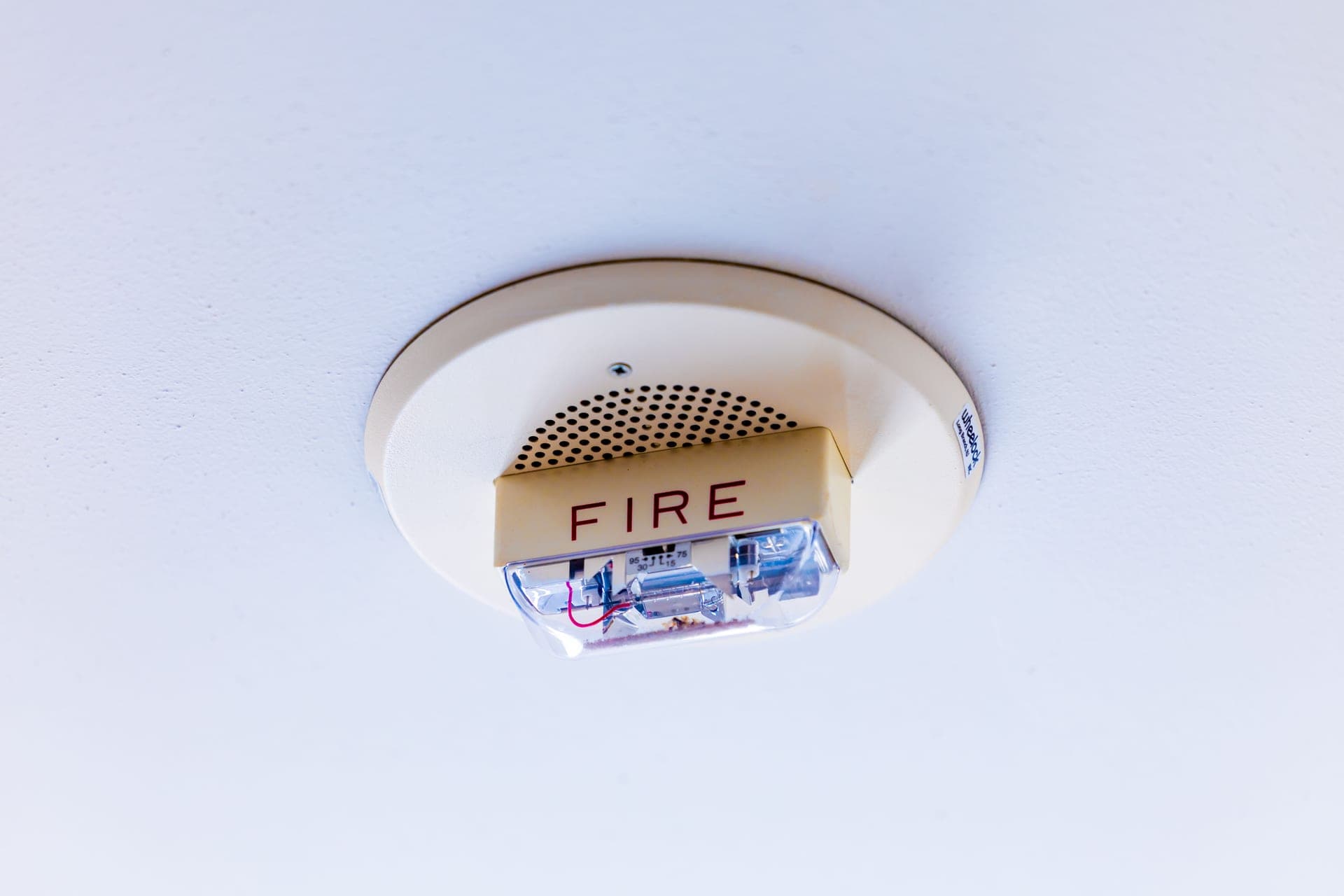 Kidde P4010ACSCO Hardwired Combination Smoke & CO Alarm Like-for-like on a wired circuit, with a CO cell and a voice. | A house with existing alarm wiring | 8.4/ 10 | Check price on Amazon #ad how we are funded · we do not cache prices |
| 3 |  X-Sense SC07 Smoke & Carbon Monoxide Alarm Same listings and battery, without the interconnect you may not need. | A single position, or an apartment | 7.5/ 10 | Check price on Amazon #ad how we are funded · we do not cache prices |
| 4 |  First Alert SC5 Smart Smoke & Carbon Monoxide Alarm Phone alerts and Google Home, and it is the unit Google points Nest owners to. | A smart alarm, or replacing a Nest Protect | 8.5/ 10 | Check price on Amazon #ad how we are funded · we do not cache prices |
The four alarms in full
Illustrative photo
1. Most houses
X-Sense SC07-W Wireless Interconnected Smoke & CO Alarm
Wireless interconnect with no wiring, plus a CO cell and a ten-year battery.
- Listed to
- UL 217 and UL 2034
- Sensing / agent
- Photoelectric smoke sensing plus an electrochemical CO cell
- Power / service life
- 10-year sealed lithium battery, not hardwired
Interconnection is the feature that changes outcomes, and it is the one most buying guides treat as a footnote. A basement fire in a house with standalone alarms does not wake the far bedroom upstairs until it is a long way along. Interconnected alarms all sound at once, which is what buys the minutes a household needs to get out — and it is the difference that matters most in a house where an adult has to reach a child's room.
Doing it wirelessly is the point here. Retrofitting wired interconnection into a house that never had it means opening walls; this is a ceiling plate and a mesh pairing. For a house with no alarm wiring, that is the single highest-value upgrade available.
On the listings: UL 217 for smoke and UL 2034 for carbon monoxide. Those are two separate sensors in one housing — a photoelectric chamber and an electrochemical cell — not one clever sensor doing both jobs, which is what makes both listings legitimate. CO detector vs smoke detector explains why sensors do not cross over.
The sealed ten-year battery is the right design for a device whose sensing chamber has a ten-year life anyway. One clock, one signal, one replacement event. When to replace.
What it does well
- UL 217 and UL 2034 — smoke and carbon monoxide in one listed device
- Wireless interconnect for up to 24 units, so one alarm sounding sounds the whole house with no wiring
- 10-year sealed lithium battery: nothing to replace, and no low-battery chirp until end of life
- LCD reads the CO concentration rather than only alarming
The downside
- Photoelectric smoke sensing only, so no dual-sensor coverage of fast flaming fires
- Wireless interconnect is a proprietary mesh — you are committing to one manufacturer across the house
- At end of life the whole unit goes, including the smoke sensor and the CO cell together
Do not buy this if: your house already has hardwired alarms on a circuit. Do not replace a working wired interconnect with a wireless one — you would be spending money to get back a capability you already have. Use the hardwired Kidde below instead.
- Wireless interconnect for up to 24 units — one alarm triggers the whole set
- No wiring, which is the point: it retrofits interconnection into a house that never had it
- LCD CO reading on each unit
- X-Sense recommends it for large or multi-story homes
#ad how we are funded · we do not cache prices
Illustrative photo
2. A house with existing alarm wiring
Kidde P4010ACSCO Hardwired Combination Smoke & CO Alarm
Like-for-like on a wired circuit, with a CO cell and a voice.
- Listed to
- UL 217 and UL 2034
- Sensing / agent
- Photoelectric smoke sensing plus an electrochemical CO cell
- Power / service life
- 120V AC with a 10-year sealed battery backup
If your ceilings already have wired alarms, this is the straightforward answer and the trap to avoid is obvious once stated: do not replace hardwired interconnected alarms with standalone battery units. People do it because battery units are easier to fit, and it silently removes the whole-house alerting that the wiring was providing.
The voice announcement is more useful than it sounds on a combination unit. A smoke alarm sometimes has a benign explanation — toast, steam, a dusty heater on its first run. A CO alarm never does, because you cannot detect the gas yourself. A unit that says which one it is removes an ambiguity that matters.
Kidde also makes the smoke-only version of this unit on the same platform, which is useful if you would rather put CO detection somewhere the smoke alarm should not go — see combo versus separate for when that is the better arrangement.
What it does well
- Drops straight onto an existing 120V alarm circuit and interconnects over the wire
- UL 217 and UL 2034 — one ceiling position covers both hazards
- Voice messaging announces which hazard rather than sounding an ambiguous horn
- 10-year sealed battery backup, so a power cut does not silence it
The downside
- Needs an existing AC alarm circuit at each position — not a battery-only retrofit
- No display, so a CO event tells you there is CO but not how much
- Replacing a whole wired set at once is a bigger job than swapping battery units
Do not buy this if: your house has no alarm wiring. Running new circuits to six ceiling positions to gain interconnection is the expensive way to get what a wireless set gives you for the price of the alarms.
- Drops straight onto an existing hardwired circuit and interconnects over the wire
- Voice messaging distinguishes a smoke event from a CO event out loud
- One ceiling position covers both hazards
- Needs an existing 120V alarm circuit — it is not a battery-only retrofit
#ad how we are funded · we do not cache prices
Illustrative photo
3. A single position, or an apartment
X-Sense SC07 Smoke & Carbon Monoxide Alarm
Same listings and battery, without the interconnect you may not need.
- Listed to
- UL 217 and UL 2034
- Sensing / agent
- Photoelectric smoke sensing plus an electrochemical CO cell
- Power / service life
- 10-year sealed lithium battery, not hardwired
For a small flat where every room is within earshot of one ceiling, interconnection buys you very little and this is the sensible unit: both listings, a ten-year sealed battery, and a CO readout.
For anything larger, we would pay the difference for the interconnected version. The argument is not about features — it is that a standalone alarm protects the room it is in, and a house is a set of rooms with doors between them.
X-Sense also makes the SC06 and SC01 on similar terms. The SC06's dust-resistant housing is the one worth knowing about, because a dusty utility space or an unfinished basement is where nuisance alarms come from.
What it does well
- UL 217 and UL 2034 in a standalone unit, with a 10-year sealed battery
- LCD CO reading, which is unusual at this level
- Genuinely fit-and-forget: nothing to wire, nothing to maintain, no pairing to manage
- Right for a one-bedroom flat where a single alarm is within earshot of everything
The downside
- **No interconnect at all**, which is a real limitation in a multi-story house
- No Wi-Fi or app, so no alert when nobody is home
- Photoelectric only
Do not buy this if: a house over one floor. In a two-story house standalone alarms mean a fire on one level may not wake anyone on another, and that is the failure this whole category exists to prevent.
- LCD reads the measured CO concentration rather than only alarming
- Standalone unit — no wireless interconnect, no Wi-Fi, no base station
- Sealed battery, so there is no annual battery ritual and no low-battery chirp until end of life
- Test and silence on one control
#ad how we are funded · we do not cache prices
Illustrative photo
4. A smart alarm, or replacing a Nest Protect
First Alert SC5 Smart Smoke & Carbon Monoxide Alarm
Phone alerts and Google Home, and it is the unit Google points Nest owners to.
- Listed to
- UL 217 and UL 2034
- Sensing / agent
- Photoelectric smoke sensing plus an electrochemical CO cell
- Power / service life
- 10-year sealed battery
Smart alarms have exactly one feature that genuinely changes outcomes: a notification when the alarm sounds and nobody is home. A fire in an empty house is the case where a local horn achieves nothing, and for a house that is often empty, or a second home, that is worth real money.
It is also the clean answer for Nest Protect owners. Google stopped producing the Nest Protect in March 2025, and First Alert's own compatibility guidance confirms the SC5 reuses the Nest mounting bracket and ships a quick-connect adapter for hardwired replacements — so a staged changeover is possible rather than a single expensive weekend. Nest Protect vs First Alert SC5 works through that swap in detail.
Keep the priority straight, though. If the choice is one smart alarm or four ordinary ones, buy four. Coverage is the thing NFPA's data is about; app notifications are not.
What it does well
- UL 217 and UL 2034, with a 10-year sealed battery
- Phone alerts when the alarm sounds and nobody is home — the one genuine smart-alarm advantage
- Works with the Google Home app, and Google promotes it as the Nest Protect replacement
- Reuses the Nest Protect mounting bracket, with a quick-connect adapter for hardwired swaps
The downside
- Depends on Wi-Fi and an app for its distinguishing features, which is a dependency a dumb alarm does not have
- More expensive per position, which matters when the correct number is six
- The smart features do nothing for the fire itself — coverage still beats cleverness
Do not buy this if: you are buying one smart alarm for a house with three unprotected bedrooms. Six ordinary alarms beat one clever one, every time, and that is not a close call.
- Works with the Google Home app; Google promotes it as the Nest Protect replacement
- Reuses the Nest Protect mounting bracket, and ships a quick-connect adapter for hardwired swaps
- Interconnects with existing Nest Protect units during a staged changeover
- Phone alerts when the alarm sounds away from home
First Alert product documentation
#ad how we are funded · we do not cache prices
Side by side
| X-Sense SC07-W | Kidde P4010ACSCO | X-Sense SC07 | First Alert SC5 | |
|---|---|---|---|---|
| Listings | UL 217 + UL 2034 | UL 217 + UL 2034 | UL 217 + UL 2034 | UL 217 + UL 2034 |
| Power | 10-yr sealed battery | 120V AC + 10-yr sealed backup | 10-yr sealed battery | 10-yr sealed battery |
| Interconnect | Wireless, up to 24 units | Over existing wiring | None | Via app and Google Home |
| Needs wiring | No | Yes | No | No |
| CO reading shown | Yes — LCD | No | Yes — LCD | Via app |
| Phone alerts | No | No | No | Yes |
| Best for | Most houses | Houses with alarm wiring | A flat or single position | Often-empty houses, Nest swaps |
Specifications as published by each manufacturer. No prices appear anywhere on this site because we do not cache retailer prices.
Photoelectric, ionization or dual
Photoelectric sensing responds sooner to smoldering fires — upholstery, bedding, wiring — which are the fires that kill people while they sleep. It also nuisance-trips far less on cooking aerosols.
Ionization responds sooner to fast, flaming fires with little visible smoke. It is also the sensor that goes off when you sear a steak, which is why it has largely lost the argument for domestic use: an alarm that cries wolf gets its battery removed.
Dual-sensor units contain both. If you want belt and braces and you are prepared to manage the nuisance behavior, they are a defensible choice.
Our recommendation is photoelectric or dual, and every alarm on this page is photoelectric. Ionization vs photoelectric explains the mechanism rather than just restating the conclusion.
How many you need, and where
One inside every sleeping room, one outside each separate sleeping area in the immediate vicinity of the bedrooms, and one on every level including the basement. For a typical three-bedroom two-story house with a basement that is six alarms — which is usually more than the house currently has.
The term people miss is 'each separate sleeping area'. Bedrooms at opposite ends of a floor are two sleeping areas and need two hallway alarms, not one in the middle doing both jobs. How many do I need works through real floor plans.
Then the exclusions, which is where nuisance alarms come from: not within 10 ft of a fixed cooking appliance; not within 36 in of a bathroom door with a tub or shower, a forced-air supply register, or paddle-fan blade tips. The placement guide has the diagram.
Quantity beats features. Going from two alarms to six does more for a household than any single feature on any box on this page.
Who should buy something else
If your house has hardwired alarms, buy the wired combination unit and keep the interconnection. Replacing wired alarms with battery ones is a downgrade dressed as a convenience. Interconnected smoke alarms.
If the position is kitchen-adjacent, you need a unit that satisfies the 10-20 ft conditions — photoelectric or with a silencing means, and listed for cooking-nuisance resistance. Kitchen alarms.
If you want CO detection in a different position from the smoke alarm — a basement with the furnace at one end and the stair at the other — separate units are the better arrangement. Combo vs separate.
If you own Nest Protects, they were discontinued in March 2025 and the SC5 is the successor Google itself points to, reusing the same bracket. Nest Protect review.
Questions people actually ask
What is the best smoke detector for a home?
Photoelectric or ionization smoke detector?
Are interconnected smoke alarms worth it?
Do I need a smart smoke detector?
How long do smoke detectors last?
How many smoke detectors do I need?
How these picks were chosen. On published specifications, safety listings and manufacturer documentation — plus the findings of organizations that do run tests. We have no laboratory and we do not burn anything. Read the full methodology.
Sources
- NFPA — Smoke Alarms in US Home Fires
- UL Solutions — UL 217 — smoke alarms
- NFPA — NFPA 72, National Fire Alarm and Signaling Code (2025 edition)
- UpCodes — Specific location requirements for smoke alarms (NFPA 72 §29.11.3.4)
- UL Solutions — UL 2034 — single and multiple station carbon monoxide alarms
- US Fire Administration — Smoke alarm outreach and home fire prevention
Read next

Smoke Detectors
The Best Combination Smoke and CO Alarms
Two listings, one position — and the one room where separate units win.
Smoke Detectors
Ionization vs Photoelectric
The two mechanisms, the fires each sees first, and why photoelectric wins at home.

Smoke Detectors
Interconnected Smoke Alarms
Why interconnection matters most, and the wired, wireless and hybrid routes.
Placement & Code
Smoke Detector Placement, Room by Room
The three requirements, the four exclusions, and an original placement diagram.

Placement & Code
How Many Smoke Detectors Do I Need?
Worked counts for real house shapes, including split levels and open plans.

Smoke Detectors
When to Replace Smoke Detectors
Where the date is, why the test button proves little, and what to replace with.