Carbon Monoxide Detectors
CO Detector vs Smoke Detector
They look alike, they sit on the same ceilings, and they detect completely unrelated things. A smoke alarm will not notice carbon monoxide and a CO alarm will not notice a fire.
By Ryder M.Last reviewed
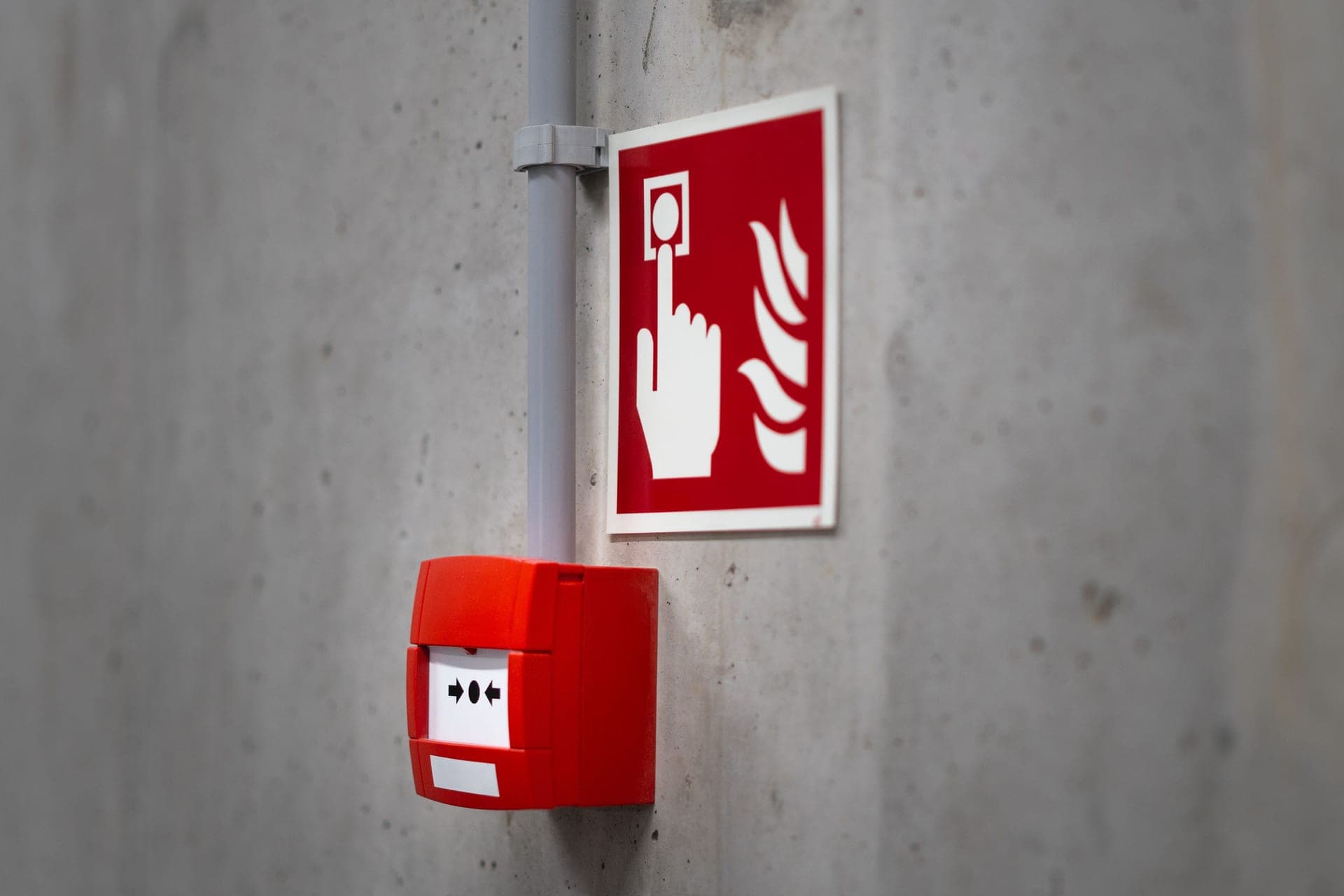
A smoke detector senses particles — it is looking at the physical products of combustion scattering or blocking light. A carbon monoxide detector senses a specific gas electrochemically, and that gas is invisible and odorless. Neither sensor can do the other's job, they are listed to different standards (UL 217 and UL 2034), and their placement rules differ because smoke rises while CO mixes with air. You need both hazards covered, whether that is two devices or one combination unit.
Siren & Safe is reader-funded. We earn a commission on some links on this page, at no cost to you. It does not change what we recommend or the order we rank it in. Full disclosure.
The two hazards side by side
| Smoke | Carbon monoxide | |
|---|---|---|
| What it is | Airborne particles from combustion | A colorless, odorless gas — CO |
| Can you detect it yourself | Yes — you can see and smell it | No. No color, no smell, no taste |
| Sensing method | Photoelectric (light scatter) or ionization | Electrochemical cell |
| Standard | UL 217 | UL 2034 |
| Typical source | Cooking, electrical faults, smoking materials, heating | Furnaces, water heaters, fireplaces, generators, cars in attached garages |
| Behavior in a room | Rises and forms a ceiling layer | Mixes with air; travels with air currents |
| Placement logic | Ceiling, away from cookers and steam | Every level, within earshot of bedrooms, follow the manual for height |
| Typical service life | 10 years | 7-10 years depending on model |
| Correct response | Get out; a kitchen cause may be obvious | Get out and call 911. Always |
Why the sensors cannot substitute
A photoelectric smoke sensor shines a light beam across a chamber with the detector offset from the beam. Ordinarily no light reaches the detector. Smoke particles entering the chamber scatter light onto it, and that is the alarm. It is a physical-obstruction measurement, so it responds to anything particulate — smoke, steam, dust, cooking aerosols. Carbon monoxide is a gas molecule that scatters nothing.
An electrochemical CO cell contains electrodes in an electrolyte. Carbon monoxide diffusing into the cell is oxidized at one electrode, producing a small current proportional to concentration. It is a chemically specific measurement, which is why it produces a number, and why it cannot detect smoke — smoke is not carbon monoxide and does not react in the cell.
Ionization smoke sensing, the older technology, uses a small radioactive source to ionize air in a chamber and measures the current between plates; combustion particles disrupt the ion flow. Also particulate. Also blind to CO. Ionization vs photoelectric covers why photoelectric is the better domestic choice.
So a combination alarm is genuinely two sensors, and a claim that one device detects both with one sensor would be a red flag.
Why the responses differ
This is the practical consequence and it matters more than the physics.
A smoke alarm sometimes has an obvious, benign cause. Toast, a dusty heater on its first run of the winter, steam from a shower reaching an alarm that is too close to the bathroom door. You can investigate while staying ready to leave, and you can often see or smell the cause.
A CO alarm has no benign interpretation available to you, because you cannot detect the gas yourself. You cannot look around and confirm there is no carbon monoxide. And the early symptoms — headache, dizziness, confusion — impair exactly the judgment you would need to assess it. CDC's guidance is unambiguous: get out into fresh air and call for help.
So the rule is asymmetric on purpose. A smoke alarm, investigate cautiously. A CO alarm, get everyone outside and call 911 from outside — every time, including when you are fairly sure it is a fault. The beeping-codes page covers how to tell an alarm from an end-of-life signal afterwards, from outside.
What both of them cannot do
Neither detects natural gas or propane. A gas leak is a different hazard again, detected by a combustible-gas sensor, and neither a smoke alarm nor a CO alarm will notice one. Natural gas is odorized so you can smell it; propane is heavier than air and pools low. If a gas leak is your concern, that is a separate device.
Neither is a substitute for servicing the appliance. A CO alarm tells you the appliance has already failed. An annual professional service of every fuel-burning appliance and flue is what stops it failing, and it is the item households skip most.
Neither replaces a plan. Detection buys time; what you do with it is decided in advance. The escape plan template.
Questions people actually ask
Will a smoke detector detect carbon monoxide?
Will a carbon monoxide detector detect a fire?
What is the difference between a smoke detector and a carbon monoxide detector?
Do I need both a smoke detector and a carbon monoxide detector?
Can one alarm detect smoke, CO and gas?
How these picks were chosen. On published specifications, safety listings and manufacturer documentation — plus the findings of organizations that do run tests. We have no laboratory and we do not burn anything. Read the full methodology.
Sources
Read next

Carbon Monoxide Detectors
Combination Alarms vs Separate Units
One device or two — the replacement-timing trade nobody mentions.
Carbon Monoxide Detectors
The Best Carbon Monoxide Detectors
Four listed alarms, and why peak-level memory beats a fancier display.
Smoke Detectors
Ionization vs Photoelectric
The two mechanisms, the fires each sees first, and why photoelectric wins at home.

Carbon Monoxide Detectors
Carbon Monoxide Poisoning Symptoms
The symptoms, the flu-without-fever pattern, and the emergency action first.

Smoke Detectors
The Best Combination Smoke and CO Alarms
Two listings, one position — and the one room where separate units win.