Carbon Monoxide Detectors
CO Detector vs Natural Gas Detector
One looks for a poison produced by burning fuel. The other looks for unburned fuel that might explode. They share a shape, a wall socket and nothing else.
By Ryder M.Last reviewed
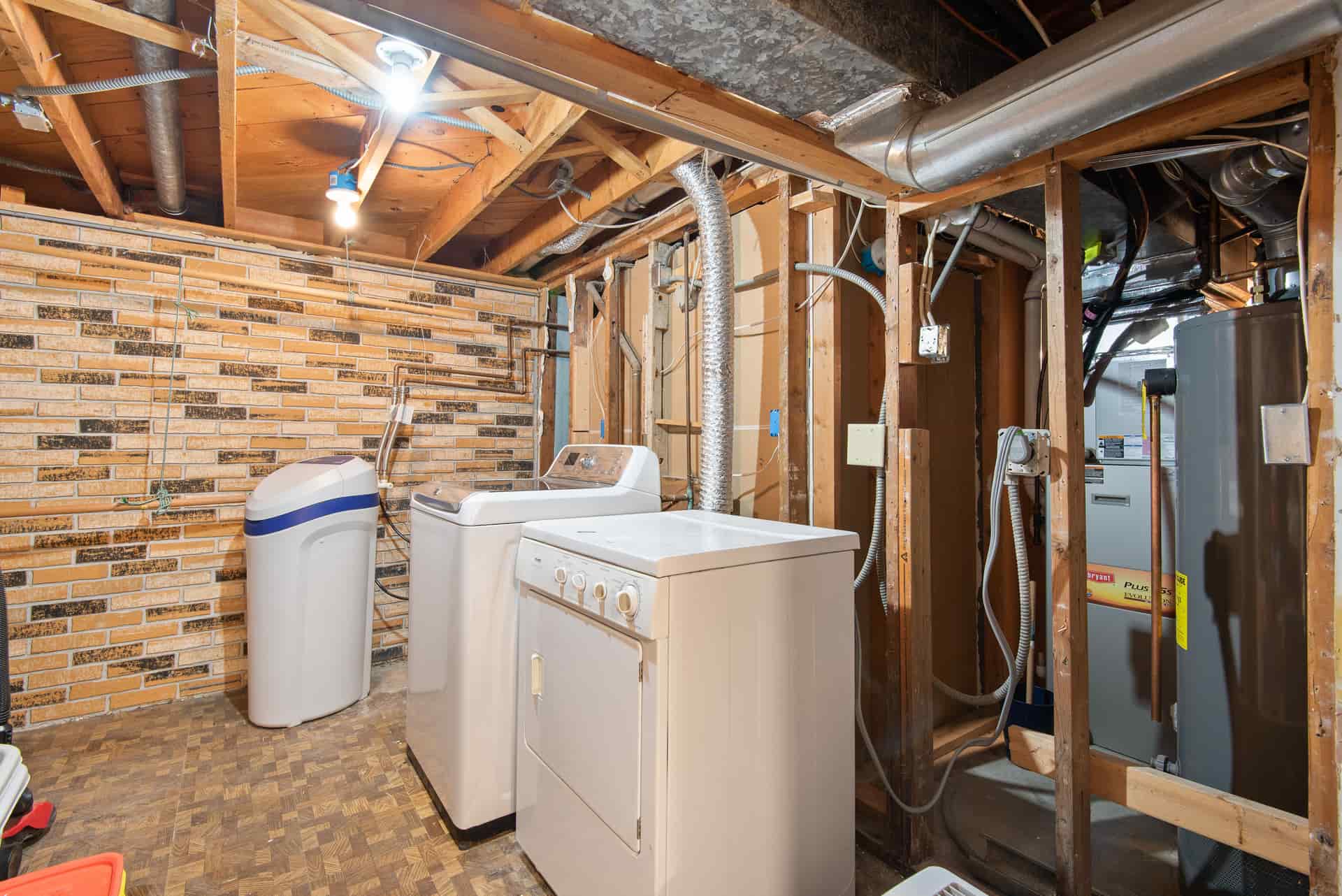
A carbon monoxide alarm does not detect natural gas, and a natural gas detector does not detect carbon monoxide. CO is a toxic, odorless byproduct of incomplete combustion, sensed by an electrochemical cell and listed to UL 2034; natural gas is unburned methane, odorized with a deliberate rotten-egg additive, sensed by a combustible-gas sensor and listed to UL 1484. The hazards differ too: CO poisons at parts per million, methane explodes at percentages. Every house with a fuel-burning appliance needs CO alarms. A gas detector is an optional second device, and a strong smell of gas is an evacuate-and-call situation regardless of what any device says.
Siren & Safe is reader-funded. We earn a commission on some links on this page, at no cost to you. It does not change what we recommend or the order we rank it in. Full disclosure.
Two completely different hazards
The confusion is understandable. Both devices are small plastic boxes that go on a wall near a gas appliance and make a loud noise. They are not variants of one product.
Carbon monoxide is a product of combustion. It is what a fuel appliance makes when it does not burn cleanly — a blocked flue, a cracked heat exchanger, a car idling in an attached garage, a generator running too close to the house. It is colorless, odorless and tasteless, it binds to hemoglobin in place of oxygen, and it is dangerous at parts per million. The hazard is poisoning, and the reason alarms exist is that a person cannot detect it by any sense they have.
Natural gas is fuel that has not burned at all. It is mostly methane, it leaks from a pipe, a fitting or an appliance left on, and the hazard is fire and explosion rather than poisoning. It becomes explosive somewhere around 5% of the air in a room, which is roughly fifty thousand parts per million — four orders of magnitude above the concentrations a CO alarm deals in.
That gap in scale is the single clearest way to understand why one device cannot do both jobs. A sensor built to resolve 30 ppm of a toxic gas and a sensor built to warn at a few percent of a flammable one are solving different engineering problems.
Carbon dioxide is the third gas people fold into this question, and it is not a life-safety device at all. CO2 vs carbon monoxide detectors explains the difference and what the published exposure limits actually are.
Side by side
| CO alarm | Natural gas detector | |
|---|---|---|
| What it senses | Carbon monoxide — a combustion byproduct | Methane — unburned fuel |
| The hazard | Poisoning | Fire and explosion |
| Concentration that matters | Parts per million | Percent of the room's air |
| Can you smell it? | No — colorless and odorless | Yes — utilities add a sulfur odorant deliberately so you can |
| Typical sensor | Electrochemical cell | Combustible-gas sensor (catalytic or semiconductor) |
| US listing standard | UL 2034 | UL 1484, residential gas detectors |
| Required by residential code | Commonly yes, where fuel appliances or an attached garage exist | Generally no |
| Does it detect the other? | No | No |
UL 1484 covers electrically operated gas detectors for residential occupancies and recreational vehicles, intended to detect flammable gases including natural gas and propane. UL 2034 covers single and multiple station carbon monoxide alarms.
Quick picks
Scored against detects co, detects natural gas, placement freedom, service burden and readability. Tap a row for the full write-up. The price in each buy button is the live Amazon price at the last check, stamped with the date it was taken.
| # | Product | Best for | Score | Price |
|---|---|---|---|---|
| 1 | 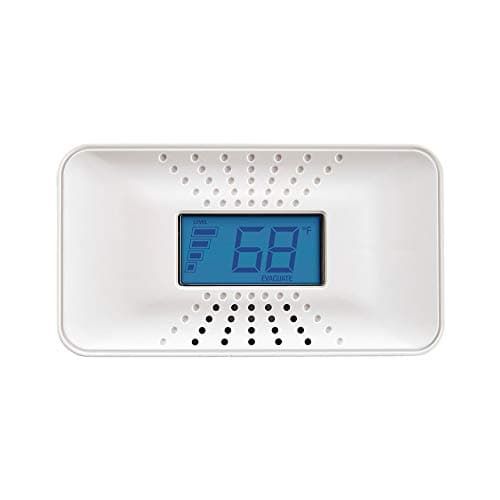 First Alert CO710 Sealed-Battery CO Alarm Sealed ten years, placed where the room needs it rather than where the socket is. | The CO coverage every house needs first | 8.6/ 10 | $44.00 · View on Amazon #ad how we are funded · price as of October 19, 2026 |
| 2 | 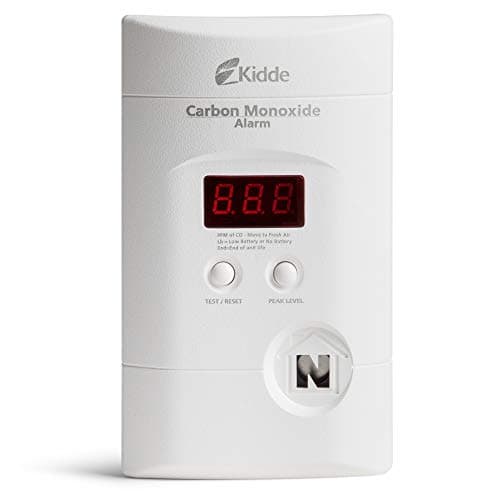 Kidde Nighthawk KN-COPP-3 Plug-In CO Alarm Peak memory to 11 ppm — the feature that catches the slow leak a gas detector would never see. | Seeing a reading rather than waiting for a siren | 8.2/ 10 | $44.50 · View on Amazon #ad how we are funded · price as of October 19, 2026 |
| 3 |  X-Sense SC07 Smoke & Carbon Monoxide Alarm Two hazards, one ceiling position, one date to track. | Covering smoke and CO in one position | 8.4/ 10 |
1. The CO coverage every house needs first
First Alert CO710 Sealed-Battery CO Alarm
Sealed ten years, placed where the room needs it rather than where the socket is.
- Listed to
- UL 2034
- Sensing / agent
- Electrochemical CO sensor
- Power / service life
- 10-year sealed battery
If you buy one thing after reading this page, buy CO coverage. The hazard it addresses is the one that kills people quietly and without warning, and it is the one every fuel-burning appliance in a house can produce.
The reason a sealed-battery unit is the default recommendation is placement. CO detection is a question of the right room and the right distance from the appliance, and tying that decision to an outlet position compromises it for no reason.
One per level, one within earshot of every sleeping area, one in the space with the furnace or water heater. Where to install CO detectors has the room-by-room detail.
What it does well
- UL 2034 listed — the standard that governs what a residential CO alarm must do and when it must sound
- Sealed ten-year battery, so there is nothing to replace and no annual chirp
- Goes anywhere: the right distance from an appliance rather than the nearest outlet
- Digital display of the measured concentration
The downside
- **Detects carbon monoxide only.** It will not respond to a methane or propane leak at any concentration
- Replacing the unit is the only end-of-life path
- No mains indicator, so you have to go and test it rather than glance at it
- A display alone is not peak memory — check the unit if a slow leak is your concern
Do not buy this if: anyone shopping because they smelled gas. That is a different device and, more urgently, a different procedure — leave the building and call the gas utility from outside.
- Sealed 10-year battery — nothing to change, and no low-battery chirp until it is genuinely done
- Digital display showing the measured concentration
- Placement is free: no outlet required, so it can sit at the height the room actually needs
- End of life means replacing the whole unit, by design
#ad how we are funded · price as of October 19, 2026
2. Seeing a reading rather than waiting for a siren
Kidde Nighthawk KN-COPP-3 Plug-In CO Alarm
Peak memory to 11 ppm — the feature that catches the slow leak a gas detector would never see.
- Listed to
- UL 2034
- Sensing / agent
- Electrochemical CO sensor
- Power / service life
- 10-year unit life; 9V battery backup
The practical case for a reading rather than a siren is the chronic leak. UL 2034 deliberately requires an alarm to stay silent at low concentrations so that ordinary cooking and traffic do not set it off, which means a cracked heat exchanger producing a steady 15 ppm is legally invisible to a listed alarm.
Peak memory makes that visible. It is the one CO feature that catches the failure mode a gas detector would never catch either, because the gas in question is fully burned by the time it becomes a problem.
Best carbon monoxide detectors has the full comparison, and best CO detectors for basements covers the room where this matters most.
What it does well
- Peak-level memory recording concentrations as low as 11 ppm, well below any alarm threshold
- Digital display refreshing every 15 seconds at outlet height, so you read and test it without a stepladder
- Battery backup keeps it monitoring through a power cut
- Plug, cord or tabletop mounting from one product
The downside
- **Detects carbon monoxide only** — no response to methane, propane or any other fuel gas
- Needs an outlet, which constrains where it can go
- Replaceable backup cell is an annual job
- Outlet height is not always the most useful height for the room
Do not buy this if: a position with no socket. If the furnace corner has no outlet, a sealed-battery unit is the better answer and placement should win that argument.
- Digital display reads 30 to 999 ppm and refreshes every 15 seconds
- Peak-level memory records concentrations as low as 11 ppm — the feature that catches a chronic leak
- Direct-plug, 6 ft cord or tabletop mounting
- Battery backup keeps it monitoring through a power cut, which is exactly when generators come out
#ad how we are funded · price as of October 19, 2026
3. Covering smoke and CO in one position
X-Sense SC07 Smoke & Carbon Monoxide Alarm
Two hazards, one ceiling position, one date to track.
- Listed to
- UL 217 and UL 2034
- Sensing / agent
- Photoelectric smoke sensing plus an electrochemical CO cell
- Power / service life
- 10-year sealed lithium battery, not hardwired
For most rooms in most houses, a combination alarm is the sensible default: the best smoke position and the best CO position coincide in a hallway or a bedroom, and halving the device count halves the number of dates somebody has to track.
It is worth saying clearly on this page that a combination smoke and CO alarm is still not a gas detector. The word "combination" in this category always means smoke plus CO, and never means fuel gas.
Combination vs separate alarms works through where the compromise is worth it and where it is not.
What it does well
- UL 217 and UL 2034 together — one device covering smoke and carbon monoxide
- Photoelectric smoke sensing, which is the right sensor near kitchens and for smoldering fires
- Sealed battery, so one install and one replacement date for both hazards
- Fewer devices means fewer dates to track and fewer units quietly past their life
The downside
- **Still detects nothing flammable** — no methane, no propane, no gasoline vapor
- A single position has to suit both sensors, which is a compromise in a basement
- Combination units replace as a whole when either sensor expires
- Ceiling mounting puts the unit out of easy reach for testing
Do not buy this if: a basement where the best smoke position and the best CO position are genuinely different. There, two separate units in two places beats one compromise.
- LCD reads the measured CO concentration rather than only alarming
- Standalone unit — no wireless interconnect, no Wi-Fi, no base station
- Sealed battery, so there is no annual battery ritual and no low-battery chirp until end of life
- Test and silence on one control
Why you can smell gas and not CO
Natural gas as it comes out of the ground is effectively odorless. The smell everybody recognizes is added on purpose — a sulfur compound injected by the utility specifically so that a leak announces itself to anyone in the room.
That is a safety system, and it is a good one. It is also the reason a domestic natural gas detector is an optional extra rather than a code requirement in most places: your nose already is the detector, and it works at concentrations far below the explosive range.
Carbon monoxide has no equivalent. Nothing is added to it because nobody produces it deliberately — it is a failure product. There is no smell, no taste, no irritation and no warning, and the early symptoms are a headache and nausea that the affected person will attribute to a cold. That asymmetry is the entire reason CO alarms are mandated and gas detectors largely are not.
It is also why the symptom pattern matters. Carbon monoxide poisoning symptoms covers what to look for, including the detail that makes it recognizable: symptoms that improve when everyone leaves the house and return when they come back.
Where each one goes, and why the heights differ
CO alarms: the right room matters far more than the height. Carbon monoxide has a molar mass very close to air, so it mixes rather than rising or sinking reliably. Follow the manufacturer's instructions for your specific unit, and spend your attention on covering every level, every sleeping area and the space with the fuel appliance.
Methane rises. Natural gas is lighter than air, so a methane detector belongs high on the wall or near the ceiling, close to the appliance or the meter.
Propane sinks. LPG is heavier than air and pools at floor level, which is why a propane detector in an RV or a cabin goes low, near the floor. A detector in the wrong position for its gas is close to useless, and this is the most common installation error in the category.
If you are covering an RV, both questions come up at once in a very small space. CO detectors for RV and travel covers the CO half.
If you smell gas
This is different from a CO alarm sounding, and the difference is that an ignition source is the thing that will hurt you. Nothing here involves looking at a detector.
Do not touch any electrical switch
Not a light switch, not an extractor fan, not a thermostat. A switch arcs, and an arc in a gas-air mixture is an ignition source. This includes turning things off.
Do not use a phone indoors
Take it outside with you and call from there. Do not stop to find it if it is not in your pocket.
Get everyone out
Out of the building, not into a different room. Leave the door open behind you if it is on your way; do not go around opening windows.
Shut off the supply only if the valve is outside and you know how
If the meter and valve are outdoors and you have been shown how to close it, do it on your way past. Never go back inside to find a valve.
Call the gas utility's emergency number from outside
Your supplier runs a 24-hour leak line and will attend. If anyone feels unwell or the smell is strong, call 911 as well.
Stay out until somebody tells you it is safe
Not until the smell fades. A gas-air mixture can persist in a void or a cupboard long after a room smells clear.
Do you need a natural gas detector as well?
For most houses, no — and we do not sell or recommend gas detectors on this site, because it is a product category outside what we cover and we are not going to pretend otherwise.
The honest case for one is narrow but real: a household where nobody would reliably smell the odorant. Anosmia from age, illness or injury is more common than people expect, and a sleeping household smells nothing at all. A gas detector near the appliance is a reasonable backstop in that situation, as is a propane detector at floor level in an RV, a boat or a cabin.
The case against buying one as a substitute is absolute. A gas detector does not detect carbon monoxide, will not sound for a cracked heat exchanger, and does nothing about the hazard that kills people in their sleep. If you only fit one device, fit the CO alarm.
If you do buy a gas detector, look for the UL 1484 listing and match the mounting height to the gas: high for natural gas, low for propane.
Questions people actually ask
Will a carbon monoxide detector detect a natural gas leak?
Will a natural gas detector detect carbon monoxide?
What is the difference between carbon monoxide and natural gas?
Do I need both a CO detector and a gas detector?
Where should a natural gas detector be installed?
Is there a combination CO and natural gas alarm?
My CO alarm went off but I can smell gas — which is it?
How these picks were chosen. On published specifications, safety listings and manufacturer documentation — plus the findings of organizations that do run tests. We have no laboratory and we do not burn anything. Read the full methodology.
Sources
- CPSC — Carbon Monoxide Fact Sheet
- CDC — Carbon monoxide poisoning — about
- UL Solutions — UL 2034 — single and multiple station carbon monoxide alarms
- UL Standards & Engagement — UL 1484, Standard for Residential Gas Detectors
- NFPA — NFPA 72, National Fire Alarm and Signaling Code (2025 edition)
- International Code Council — IRC Chapter 3 — building planning (R315 carbon monoxide alarms)
Read next
Carbon Monoxide Detectors
Two hazards, two sensors, two standards — and why one device cannot substitute.
Carbon Monoxide Detectors
Do I Need a Carbon Monoxide Detector?
The five sources all-electric homes forget, and the one case where no is honest.
Carbon Monoxide Detectors
Room by room, and a straight answer to the high-or-low question.
Carbon Monoxide Detectors
Carbon Monoxide Poisoning Symptoms
The symptoms, the flu-without-fever pattern, and the emergency action first.
Carbon Monoxide Detectors
The Best Carbon Monoxide Detectors
Four listed alarms, and why peak-level memory beats a fancier display.
Carbon Monoxide Detectors
Combination Alarms vs Separate Units
One device or two — the replacement-timing trade nobody mentions.