Carbon Monoxide Detectors
CO2 vs Carbon Monoxide Detectors
Two gases, one letter apart, with completely different hazards. The one that kills people in their homes is carbon monoxide, and that is the alarm to buy.
By Ryder M.Last reviewed
If you are deciding what to put on the wall of a house, buy a carbon monoxide alarm. Carbon monoxide (CO) is a colorless, odorless product of incomplete combustion that binds to hemoglobin and kills at concentrations in the hundreds of parts per million; a listed UL 2034 alarm is legally required outside sleeping areas in most dwellings with fuel appliances or an attached garage. Carbon dioxide (CO2) is the gas you exhale — ordinary outdoor air holds a few hundred ppm and NIOSH's recommended workplace limit is 5,000 ppm as an eight-hour average. A CO2 monitor is an air-quality and ventilation instrument, not a life-safety device. And no smoke alarm detects either gas unless it is specifically a combination smoke and CO alarm.
Siren & Safe is reader-funded. We earn a commission on some links on this page, at no cost to you. It does not change what we recommend or the order we rank it in. Full disclosure.
CO vs CO2, side by side
The exposure figures for carbon dioxide are NIOSH's published values. The carbon monoxide alarm thresholds are the UL 2034 requirements the alarm itself is tested against.
| Carbon monoxide (CO) | Carbon dioxide (CO2) | |
|---|---|---|
| What it is | Product of incomplete combustion | Product of complete combustion and of breathing |
| Smell or color | None | None |
| How it harms you | Binds to hemoglobin, starving tissue of oxygen | Displaces oxygen at high concentration; causes drowsiness and headache well before that |
| Typical indoor background | Should be zero | Several hundred ppm, rising with occupancy |
| Dangerous concentration | Hundreds of ppm | Tens of thousands of ppm |
| Published limits | UL 2034 alarm points: 70 ppm in 60-240 min, 150 ppm in 10-50 min, 400 ppm in 4-15 min | NIOSH REL 5,000 ppm (8 hr TWA); STEL 30,000 ppm; IDLH 40,000 ppm |
| Device you need at home | A listed UL 2034 CO alarm — often required by code | Nothing required. An air-quality monitor if ventilation interests you |
| Is it a life-safety device? | Yes | No |
Why one letter matters this much
Carbon monoxide has one oxygen atom; carbon dioxide has two. That difference is the whole story, because the missing oxygen is what makes CO reactive in the body. Hemoglobin binds carbon monoxide far more readily than it binds oxygen, so even small concentrations progressively take red blood cells out of service. The victim gets a headache, feels unwell, becomes confused — and confusion is the part that kills, because the person best placed to decide to leave is the person least able to.
Carbon dioxide does nothing of the kind. Your body produces it constantly and is built to carry and shed it. At the concentrations a house reaches it causes stuffiness, drowsiness and measurably worse cognitive performance; it becomes genuinely dangerous only at concentrations an order of magnitude beyond that, in industrial settings, a brewery cellar, a silo, or a room flooded by a CO2 fire suppression system.
Which is why the shopping advice is blunt. A CO alarm is a legal requirement in most dwellings and a life-saving device. A CO2 monitor is a comfort and productivity instrument. Buying the second instead of the first is a serious mistake, and it happens because the names look almost identical on a product listing.
Quick picks
Scored against life-safety value, placement freedom, readout and ten-year upkeep. Tap a row for the full write-up. The price in each buy button is the live Amazon price at the last check, stamped with the date it was taken.
| # | Product | Best for | Score | Price |
|---|---|---|---|---|
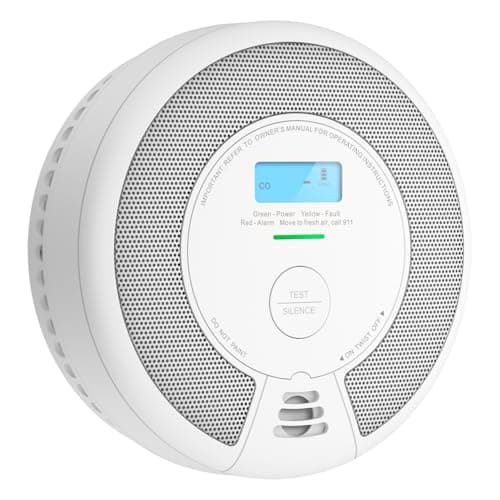
| 1 | 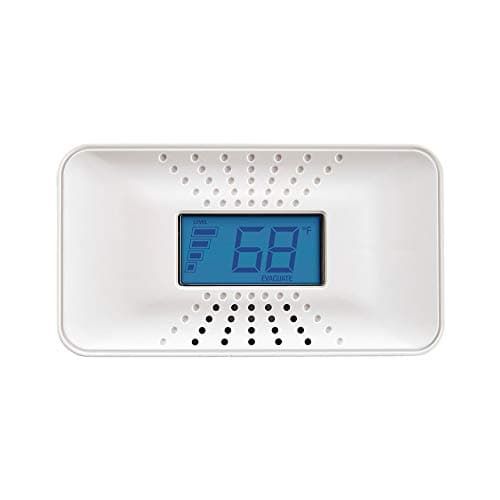 First Alert CO710 Sealed-Battery CO Alarm UL 2034, sealed ten-year battery, digital readout. The right answer to "which one do I buy". | The alarm a home actually needs | 8.8/ 10 | $44.00 · View on Amazon #ad how we are funded · price as of October 19, 2026 |
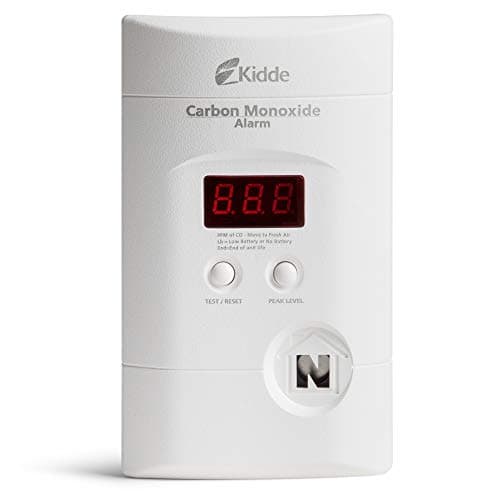
| 2 | 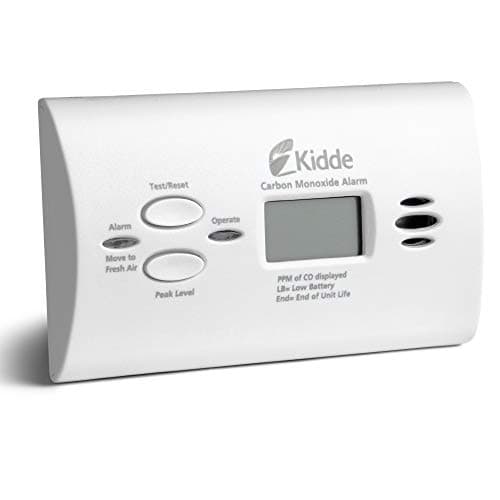 Kidde KN-COPP-B-LPM Battery CO Alarm with Digital Display Battery-powered with peak-level memory from 11 ppm. The alarm for somebody who wants evidence, not just a siren. | Seeing a number and remembering the peak | 8.1/ 10 | $27.97 · View on Amazon #ad how we are funded · price as of October 19, 2026 |
| 3 | 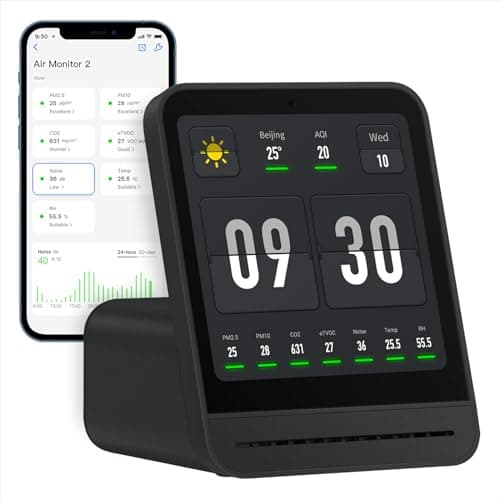 Qingping Air Quality Monitor Gen 2 A monitoring instrument with a screen. Useful for a stuffy room, and not a life-safety device in any sense. | Actually measuring CO2, for ventilation rather than safety | 6.0/ 10 | $149.99 · View on Amazon #ad how we are funded · price as of October 19, 2026 |
What to buy
1. The alarm a home actually needs
First Alert CO710 Sealed-Battery CO Alarm
UL 2034, sealed ten-year battery, digital readout. The right answer to "which one do I buy".
- Listed to
- UL 2034
- Sensing / agent
- Electrochemical CO sensor
- Power / service life
- 10-year sealed battery
If you take one thing from this page: the device a dwelling is required to have, and the one that saves lives, is a listed carbon monoxide alarm. Everything about CO2 below is interesting and none of it is life safety.
Best carbon monoxide detectors is the full roundup, and do I need a CO detector answers the all-electric-house version of the question.
What it does well
- UL 2034 listed — the standard that fixes the concentrations and response times a CO alarm must meet
- Sealed ten-year battery: one purchase, no cells to buy, no chirp until it is genuinely done
- Digital display, so a reading is a number rather than a guess
- No outlet dependency, so it goes at the height the room needs
The downside
- No peak-level memory to catch an intermittent leak you were out for
- No app or notification — an empty house alarms to nobody
- Whole-unit replacement at end of life, by design
Do not buy this if: measuring indoor air quality or ventilation. It is a CO alarm and nothing else — it will not tell you a bedroom is stuffy.
- Sealed 10-year battery — nothing to change, and no low-battery chirp until it is genuinely done
- Digital display showing the measured concentration
- Placement is free: no outlet required, so it can sit at the height the room actually needs
- End of life means replacing the whole unit, by design
#ad how we are funded · price as of October 19, 2026
2. Seeing a number and remembering the peak
Kidde KN-COPP-B-LPM Battery CO Alarm with Digital Display
Battery-powered with peak-level memory from 11 ppm. The alarm for somebody who wants evidence, not just a siren.
- Listed to
- UL 2034
- Sensing / agent
- Electrochemical CO sensor
- Power / service life
- Battery powered; 10-year unit life
The reason this pick belongs on a page about confusing two gases is that it produces a number. A great deal of CO2-versus-CO confusion comes from people seeing a reading somewhere — on a thermostat, an air monitor, a phone app — and not knowing which gas it refers to or what the number means.
An alarm with a readout and a peak memory gives you a CO number you can act on: zero is zero, a persistent teens-to-twenties reading means something in the house is producing CO, and anything higher means get out and call it in.
What it does well
- Peak-level memory records concentrations as low as 11 ppm — far below the level at which a listed alarm may sound
- UL 2034 listed with a digital display
- Battery only, so no outlet constrains where it goes
- Portable, which makes it useful for tracking down a suspected source
The downside
- Replaceable batteries mean a genuine annual check
- Ten-year unit life regardless of battery condition
- Still a CO alarm — it says nothing about carbon dioxide or ventilation
Do not buy this if: a household that will not maintain it. Buy the sealed unit instead and accept the loss of the peak memory.
- Battery only, so it goes where there is no outlet — a bedroom wall, a cabin, a rental
- Digital display plus peak-level memory
- Portable enough to travel with, which matters more than most buying guides admit
- Replaceable batteries mean an annual check is genuinely required
#ad how we are funded · price as of October 19, 2026
3. Actually measuring CO2, for ventilation rather than safety
Qingping Air Quality Monitor Gen 2
A monitoring instrument with a screen. Useful for a stuffy room, and not a life-safety device in any sense.
- Listed to
- Not a listed smoke or CO alarm — a monitoring instrument with a screen
- Sensing / agent
- Laser particulate sensor for PM2.5 and PM10 plus a Sensirion SCD40 NDIR sensor for carbon dioxide
- Power / service life
- USB powered with a small internal battery for short periods off the cable
This is the pick for the small number of people whose question really was about carbon dioxide: a bedroom that feels airless by morning, a home office where concentration drops after two hours, a converted basement room with no trickle vent. CO2 is an excellent proxy for ventilation, because the main indoor source is the people in the room.
The numbers to hold on to: outdoor air sits in the low hundreds of ppm; a well-ventilated occupied room stays reasonably close to that; a closed bedroom with two sleeping adults climbs steadily through the night. NIOSH's recommended exposure limit — 5,000 ppm as an eight-hour average, with 30,000 ppm as a short-term limit and 40,000 ppm immediately dangerous to life or health — is a workplace figure, far above anything an ordinary bedroom produces. In other words: a high CO2 reading in a home is a ventilation signal, not a hazard reading.
Best CO detectors with digital display is the page if what you actually want is a number for the dangerous gas.
What it does well
- Reports readings on a screen so you can see how a room responds to opening a window
- Useful for the genuine CO2 question: is this bedroom, office or classroom ventilated enough
- Standalone instrument, so it works without wiring in
The downside
- **Not a listed smoke or CO alarm.** It is a monitoring instrument with a screen and it satisfies no code requirement
- Will not wake a sleeping household, because it is not an alarm
- An air-quality reading is easy to over-interpret — a high CO2 number means open a window, not evacuate
- Adds a device to maintain for a problem that is about comfort and concentration, not survival
Do not buy this if: any part of your fire or CO protection. If you own one, own it alongside listed alarms, never instead of them.
- Seven readings on a color touchscreen: PM2.5, PM10, CO2, TVOC, temperature, humidity and ambient noise
- Published PM2.5 range of 0 to 999 micrograms per cubic meter at plus or minus 10 micrograms or 10 percent
- Published CO2 range of 400 to 9,999 ppm — useful for ventilation, and not a substitute for a CO alarm
- Qingping+ app with history, plus an open API, which is what makes a record rather than a snapshot
- Internal battery runs only a few hours, so it is a plugged-in device in practice
#ad how we are funded · price as of October 19, 2026
Where the confusion usually comes from
Five real versions of this question, and the short answer to each.
- "Does my smoke detector detect CO2?" No — and it does not detect CO either unless it is a combination alarm. CO detector vs smoke detector is the page.
- "My air monitor says 900 — is that dangerous?" If that is CO2 in ppm, no: it means the room could use more ventilation. If it were CO in ppm, it would be an emergency. Check which gas the reading refers to.
- "Do I need a CO2 detector by my furnace?" No. A furnace's hazard is carbon monoxide from incomplete combustion. That is a CO alarm, and the basement is a sensible place for one — best CO detectors for basements.
- "Is carbon dioxide what comes out of a car exhaust?" Both do, and the dangerous one is the carbon monoxide. That is exactly why an attached garage triggers a CO alarm requirement — best CO detectors for an attached garage.
- "A CO2 fire extinguisher — does that need a detector?" Only in a space where a large discharge could displace the oxygen in a confined room. In a house, no. CO2 vs dry chemical extinguishers covers the agent.
If you want to measure both
There is a sensible two-device setup, and it is worth stating because it is not a compromise. Put listed CO alarms where code and good sense require them — outside each sleeping area, on every level, and in any room adjoining an attached garage. Then, if ventilation genuinely interests you, add a CO2 monitor to the one room where the question matters: the bedroom, the office, the converted basement.
What not to do is let the second device stand in for the first. Air-quality monitors are not alarms: they report, they live on a shelf, they get muted, and they are not designed or listed to wake a household at three in the morning. Cigarette and vape detectors for rentals makes the same point about particulate monitors, for the same reason.
And know the symptoms of the dangerous gas, because the alarm is the backup and your own judgment is the front line. Headache, dizziness, nausea and confusion that get better when you go outside and worse when you come back in is the pattern. Carbon monoxide poisoning symptoms is the page to read today rather than during an incident.
Questions people actually ask
Do smoke detectors detect CO2?
What is the difference between a CO2 detector and a carbon monoxide detector?
Do I need a carbon dioxide detector in my house?
What CO2 level is dangerous indoors?
Can carbon monoxide come from something that is not gas?
How these picks were chosen. On published specifications, safety listings and manufacturer documentation — plus the findings of organizations that do run tests. We have no laboratory and we do not burn anything. Read the full methodology.
Sources
- CDC / NIOSH — NIOSH Pocket Guide to Chemical Hazards — carbon dioxide
- CDC / NIOSH — Occupational exposure guidance and chemical databases
- CPSC — Carbon Monoxide Fact Sheet
- UL Solutions — UL 2034 — single and multiple station carbon monoxide alarms
- BRK Electronics / First Alert — What levels of CO cause an alarm?
- International Code Council — IRC Chapter 3 — building planning (R310, R314, R315)
Read next
Carbon Monoxide Detectors
Two hazards, two sensors, two standards — and why one device cannot substitute.
Carbon Monoxide Detectors
CO Detector vs Natural Gas Detector
Two different hazards, two different sensors, two different standards — and which one a house actually needs.
Carbon Monoxide Detectors
Do I Need a Carbon Monoxide Detector?
The five sources all-electric homes forget, and the one case where no is honest.
Carbon Monoxide Detectors
Carbon Monoxide Poisoning Symptoms
The symptoms, the flu-without-fever pattern, and the emergency action first.
Carbon Monoxide Detectors
The Best Carbon Monoxide Detectors
Four listed alarms, and why peak-level memory beats a fancier display.