Carbon Monoxide Detectors
The Best CO Detectors With a Digital Display
A readout answers the question an alarm cannot: is this a spike or a slow leak. The feature that matters more than the display itself is the peak memory behind it.
By Ryder M.Last reviewed
The Kidde Nighthawk KN-COPP-3 is the pick: it displays from 30 ppm, refreshes every 15 seconds, and its peak-level memory records concentrations as low as 11 ppm — which is the feature that catches a chronic low-level leak rather than an emergency. A display is worth paying for, but understand what it will not show you: **a UL 2034 alarm is not required to display anything below 30 ppm**, so a readout of zero is not proof of zero. If the concern is chronic exposure at single-digit levels, a low-level monitor is a different instrument.
Siren & Safe is reader-funded. We earn a commission on some links on this page, at no cost to you. It does not change what we recommend or the order we rank it in. Full disclosure.
What a display is actually for
Not for the emergency. During an alarm, the instruction is to get everyone into fresh air and call 911 from outside, and standing in a hallway reading a number is the opposite of that.
A display earns its keep in the quiet weeks. It answers three questions an alarm cannot: is there anything at all, did something happen while we were out, and is the level we are seeing rising or falling.
The second of those is the valuable one, and it needs peak-level memory rather than just a readout. A live number read at 7pm tells you nothing about the forty minutes the furnace ran badly at 3am; a peak memory does.
The third matters to the fire service and the gas utility rather than to you. When the responder asks what the alarm showed, a unit with a memory gives a useful answer and a unit with a horn does not.
Quick picks
Scored against display usefulness, peak-level memory, placement freedom, power resilience and reads below 30 ppm. Tap a row for the full write-up. The price in each buy button is the live Amazon price at the last check, stamped with the date it was taken.
| # | Product | Best for | Score | Price |
|---|---|---|---|---|
| 1 | 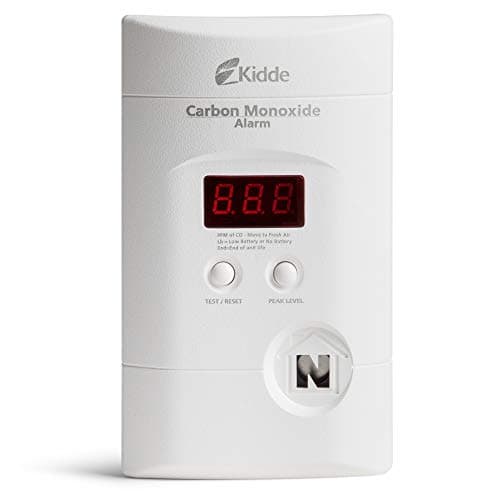 Kidde Nighthawk KN-COPP-3 Plug-In CO Alarm 30 to 999 ppm, refreshing every 15 seconds, with peak memory down to 11 ppm. | A display with a memory worth reading | 8.1/ 10 | $44.50 · View on Amazon #ad how we are funded · price as of October 19, 2026 |
| 2 | 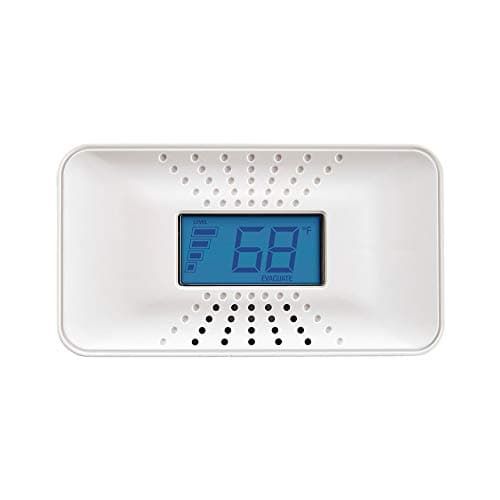 First Alert CO710 Sealed-Battery CO Alarm Sealed 10-year battery with a digital readout. No outlet needed. | A display you can put anywhere | 7.9/ 10 | $44.00 · View on Amazon #ad how we are funded · price as of October 19, 2026 |
| 3 | 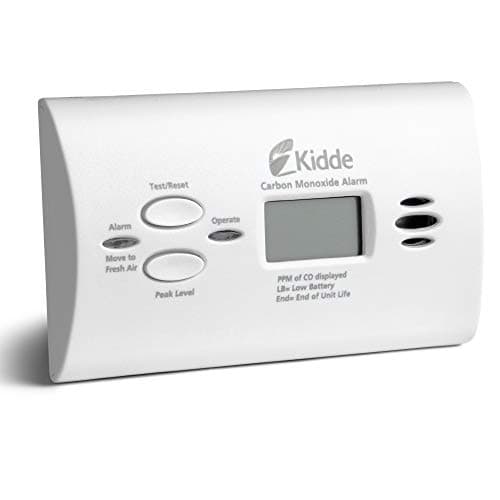 Kidde KN-COPP-B-LPM Battery CO Alarm with Digital Display Battery-only with display and peak memory. It goes in a bag. | A display that travels | 7.8/ 10 | $27.97 · View on Amazon #ad how we are funded · price as of October 19, 2026 |
| 4 | 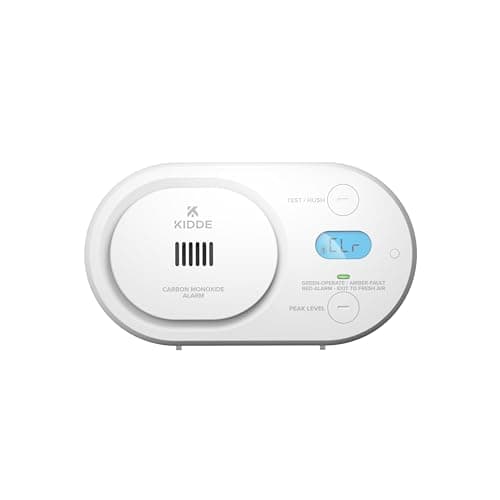 Kidde COBDL Low-Level Carbon Monoxide Alarm A listed alarm with a distinct alert at 30 to 70 ppm, before the full alarm sounds. | Warning in the band a standard alarm sits silent through | 7.5/ 10 | $40.47 · View on Amazon #ad how we are funded · price as of October 19, 2026 |
The units in full
1. A display with a memory worth reading
Kidde Nighthawk KN-COPP-3 Plug-In CO Alarm
30 to 999 ppm, refreshing every 15 seconds, with peak memory down to 11 ppm.
- Listed to
- UL 2034
- Sensing / agent
- Electrochemical CO sensor
- Power / service life
- 10-year unit life; 9V battery backup
The peak memory is the reason this is the top pick rather than the display. A live readout tells you about the moment you are standing there, which is almost never the moment that mattered.
Peak memory tells you what happened while you were out, and it records down to 11 ppm — well below the level a UL 2034 alarm is permitted to sound at. That turns the unit from an emergency device into a diagnostic one: if you come home and the peak reads 24 ppm, nothing alarmed, nobody was hurt, and you have just learned that something in the house is producing carbon monoxide.
Press-to-read peak is the single most useful thing to do with a CO alarm, and almost nobody does it. Make it part of the same annual walk-round as the alarm dates.
The 15-second refresh matters during an actual event too. A number that updates lets you tell a rising level from a falling one, which is the difference between ventilating a space and leaving it. Not that you should be standing there reading it — get out and call 911 is still the instruction.
What it does well
- Digital display reads 30 to 999 ppm and refreshes every 15 seconds, so you can watch a level move
- **Peak-level memory records concentrations as low as 11 ppm** — the feature that catches a chronic leak rather than an emergency
- Direct-plug, 6 ft cord or tabletop mounting, so one unit suits three positions
- Battery backup keeps it monitoring through a power cut, which is exactly when generators come out
The downside
- Plug-in format ties it to an outlet height rather than the height the room needs
- 9V backup battery rather than a sealed ten-year cell — an annual visit is genuinely required
- Like every UL 2034 alarm, it will not display a level below 30 ppm in normal operation
Do not buy this if: there is no outlet where the alarm needs to be, or you want a sealed-battery unit you never have to touch. A battery model goes where the room wants it; this one goes where the wiring is.
- Digital display reads 30 to 999 ppm and refreshes every 15 seconds
- Peak-level memory records concentrations as low as 11 ppm — the feature that catches a chronic leak
- Direct-plug, 6 ft cord or tabletop mounting
- Battery backup keeps it monitoring through a power cut, which is exactly when generators come out
#ad how we are funded · price as of October 19, 2026
2. A display you can put anywhere
First Alert CO710 Sealed-Battery CO Alarm
Sealed 10-year battery with a digital readout. No outlet needed.
- Listed to
- UL 2034
- Sensing / agent
- Electrochemical CO sensor
- Power / service life
- 10-year sealed battery
Placement freedom is worth more than most buying guides admit. The right position for a CO alarm is driven by the room and the sleeping areas, not by where an electrician happened to put a socket, and a sealed-battery unit with a display is the only format that gives you both the readout and a free hand.
It is also the format that fits the one position plug-in units cannot: a bedroom wall or ceiling at the height the standard calls for, outside each sleeping area, rather than at baseboard height in a hallway.
The sealed cell removes the annual battery task and with it the single most common reason a CO alarm ends up disabled — somebody takes the battery out to stop a chirp and never puts it back.
Where to install CO detectors is the companion read, because a display on the wrong wall is still a display on the wrong wall.
What it does well
- Sealed 10-year battery — nothing to change, and no low-battery chirp until the unit is genuinely done
- Digital display showing the measured concentration
- **Placement is free**: no outlet required, so it goes at the height the room actually needs
- End of life means replacing the whole unit, which is the honest design for a sensor with a finite life
The downside
- Sealed battery means the whole unit is consumable — there is no servicing it
- Replaceable-battery units are easier to relocate mid-life
- Same UL 2034 display floor as every listed alarm
Do not buy this if: you want to be able to swap a battery and keep the unit. A sealed design is a ten-year appliance by intent, and that is a feature rather than a defect — but it is a different purchase.
- Sealed 10-year battery — nothing to change, and no low-battery chirp until it is genuinely done
- Digital display showing the measured concentration
- Placement is free: no outlet required, so it can sit at the height the room actually needs
- End of life means replacing the whole unit, by design
#ad how we are funded · price as of October 19, 2026
3. A display that travels
Kidde KN-COPP-B-LPM Battery CO Alarm with Digital Display
Battery-only with display and peak memory. It goes in a bag.
- Listed to
- UL 2034
- Sensing / agent
- Electrochemical CO sensor
- Power / service life
- Battery powered; 10-year unit life
This is the travel answer, and the case for it is specific: vacation rentals and older hotels are a recognized CO exposure setting, and the one thing you cannot verify on arrival is whether there is a working alarm outside the bedroom.
A battery unit with a display in a bag solves that in about thirty seconds. Put it on the nightstand, press the peak button in the morning, and you have more information than the property gave you.
At home it fills the same gap as the sealed-battery unit — any position with no outlet — with the trade that you own the battery schedule. RV and travel picks covers the moving version of the same problem, where engine exhaust and generators change the calculation.
What it does well
- Battery only, so it goes where there is no outlet — a bedroom wall, a cabin, a rental
- Digital display plus peak-level memory, which is the combination that matters
- Portable enough to travel with, which is more useful than it sounds in hotels and vacation rentals
- Replaceable batteries mean the unit outlives any single cell
The downside
- Replaceable batteries mean an annual check is genuinely required, and chirps get silenced
- No AC power, so no resilience advantage over a sealed unit
- Same UL 2034 display floor
Do not buy this if: you want a fit-and-forget alarm. A replaceable-battery unit needs a person in the loop once a year, and households that will not do that should buy a sealed ten-year unit instead.
- Battery only, so it goes where there is no outlet — a bedroom wall, a cabin, a rental
- Digital display plus peak-level memory
- Portable enough to travel with, which matters more than most buying guides admit
- Replaceable batteries mean an annual check is genuinely required
#ad how we are funded · price as of October 19, 2026
4. Warning in the band a standard alarm sits silent through
Kidde COBDL Low-Level Carbon Monoxide Alarm
A listed alarm with a distinct alert at 30 to 70 ppm, before the full alarm sounds.
- Listed to
- UL 2034, 5th edition; ETL listed
- Sensing / agent
- Electrochemical CO sensor
- Power / service life
- Two AA batteries; 10-year limited warranty on the alarm
Everything above will not sound until 70 ppm has been present for over an hour, and will not display below 30 ppm. That is not a flaw in those products; it is what UL 2034 specifies, and the reason is to prevent nuisance alarms from transient everyday sources.
The consequence is real though. Chronic exposure at levels well under 30 ppm is associated with headaches, nausea and fatigue that households spend months attributing to something else, and a listed alarm is silent through all of it.
This alarm closes part of that gap by alerting in the 30 to 70 ppm band rather than waiting for the full threshold. The honest framing is that it is an earlier warning, not a laboratory instrument: it will not show you a steady 12 ppm. You buy it because somebody in the house has unexplained symptoms, or because there is an appliance you do not trust.
The low-level roundup goes into the thresholds properly, and the symptoms page covers what chronic exposure looks like.
What it does well
- **A distinct light-and-sound alert at 30 to 70 ppm** — below the concentration a standard alarm sounds at
- A separate full 85 dB alarm at 70 ppm, as the standard requires
- UL 2034 5th edition and ETL listed, with a digital backlit display and a test/hush button
- Two AA batteries and no wiring, so it can sit at the height the room actually needs
The downside
- **It does not read single-digit ppm** — Kidde names 30 ppm as the bottom of the early band
- Replaceable AA cells rather than a sealed ten-year battery
- Marketed partly for travel, which is useful but is not why you would fit one at home
Do not buy this if: you need single-digit ppm visibility. That is a trade instrument, and no retail product here does it. This alarms earlier than a standard alarm, which is a narrower claim and the honest one.
- Alerts earlier, at 30 to 70 ppm, with a distinct light and sound pattern — below the concentration at which a standard UL 2034 alarm is permitted to sound
- Kidde names the people that early band is for: young children, older adults, pregnant women and pets
- Digital backlit display and a test/hush button; no wiring, so it can sit at the height the room needs
- Separate full alarm at 70 ppm, as the standard requires
- It is a listed alarm in its own right, not a professional monitor — it does not read single-figure ppm
#ad how we are funded · price as of October 19, 2026
Side by side
Specifications as published by each manufacturer. Prices are shown live inside each buy button, dated.
| Kidde KN-COPP-3 | First Alert CO710 | Kidde KN-COPP-B-LPM | Kidde COBDL | |
|---|---|---|---|---|
| Listing | UL 2034 | UL 2034 | UL 2034 | UL 2034, 5th edition |
| Alerts from | 70 ppm | 70 ppm | 70 ppm | 30 ppm |
| Peak-level memory | Yes, down to 11 ppm | Check the model | Yes | Backlit digital display |
| Power | Plug-in with 9V backup | Sealed 10-year battery | Replaceable batteries | Two AA cells |
| Placement freedom | Outlet height only | Anywhere | Anywhere | Anywhere |
| Satisfies a code requirement | Yes | Yes | Yes | Yes |
| Annual battery task | Yes | None | Yes | Yes |
| Service life | 10-year unit life | 10-year sealed | 10-year unit life | Warranted 3 years minimum |
| Best for | Diagnosing a suspected source | A bedroom wall, fit and forget | Travel and no-outlet positions | Chronic low-level investigation |
Why a reading of zero is not proof of zero
This is the single most important thing to understand before buying a CO alarm with a display, and it is almost never said plainly on a product page.
UL 2034 sets a lower bound on what a residential alarm may report. The standard is designed so that listed alarms do not sound or display at the transient low concentrations that ordinary life produces — a gas hob, a car starting on a driveway, a nearby barbecue — because an alarm that cries wolf gets unplugged.
The practical effect is that a UL 2034 alarm showing 0 ppm means the concentration is below the display floor, not that it is nothing. A house sitting at 15 ppm around the clock reads zero on every listed alarm in it.
The alarm thresholds themselves are time-weighted: higher concentrations must trigger faster, lower ones are permitted a long delay. That is the correct design for preventing acute poisoning and the wrong design for detecting chronic exposure, and the NFPA research foundation review of CO alarm thresholds sets out the trade-off in detail.
So: buy a listed alarm with a display for the diagnosis it gives you above 30 ppm, and buy a low-level monitor as well if somebody has symptoms. Do not buy a low-level monitor instead.
How to use the display you have paid for
Four habits, none of which take longer than a minute, and all of which are more valuable than upgrading the alarm.
- Press the peak-level button once a year, on the same day you check the dates. If it reads anything above zero, something in the house produced carbon monoxide and you now know to look.
- Press it after any event — a power cut with a generator running, a chimney fire, a furnace that started behaving strangely, a car left running in an attached garage.
- Reset the memory after you have read it, so the next reading means something. A peak from four years ago tells you nothing about this winter.
- Write the number down with the date. Two readings a year apart are a trend; one reading is an anecdote, and a trend is what persuades a utility to come out.
- Report the peak figure when you call. The gas utility and the fire service both treat a recorded concentration very differently to a report that the alarm went off.
Position still beats features
A display on the wrong wall is worth less than a plain horn on the right one. The alarms that matter are the ones outside each sleeping area and on every level of the home, because the exposure that kills happens while people are asleep.
Plug-in units with displays have a particular weakness here: they live at outlet height in a hallway, which is a convenient position rather than a chosen one. If the only socket is at the wrong end of the landing, that is where the alarm goes, and that is a worse outcome than a battery unit on the correct wall.
Carbon monoxide mixes with air rather than stratifying reliably, so height is less critical for CO than for smoke — but which room is critical, and so is the distance from fuel-burning appliances, which should be far enough that normal start-up does not cause nuisance alarms.
Where to install CO detectors works through the positions room by room, and how many you need covers the count.
The replacement date is the feature nobody shops for
Electrochemical CO sensors have a finite life, and every listed alarm has a date after which it is no longer a CO alarm regardless of what the display says. Ten years is the common figure; some units are shorter.
A display makes this easier to get wrong, because a unit showing a cheerful 0 ppm looks like a working unit. It is not. The number on the screen is produced by a sensor that may be past its service life, and an expired sensor can read zero very convincingly.
Take the unit off the wall and read the manufacture date on the back. If it is undated or illegible, replace it — an alarm whose age you cannot establish is an alarm you cannot trust.
Lifespan and replacement covers the dates and the end-of-life signals, which differ between manufacturers and are easy to mistake for a low battery.
Questions people actually ask
Is a carbon monoxide detector with a digital display worth it?
Why does my CO detector show zero all the time?
What is peak level memory on a CO alarm?
What level of carbon monoxide is dangerous?
Should a CO detector with a display be plug-in or battery?
Does a digital display mean the alarm lasts longer?
How these picks were chosen. On published specifications, safety listings and manufacturer documentation — plus the findings of organizations that do run tests. We have no laboratory and we do not burn anything. Read the full methodology.
Sources
- UL Solutions — UL 2034 — single and multiple station carbon monoxide alarms
- CPSC — Carbon Monoxide Fact Sheet
- NFPA — NFPA 72, National Fire Alarm and Signaling Code (2025 edition)
- International Code Council — IRC Chapter 3 — building planning (R310, R314, R315)
Read next
Carbon Monoxide Detectors
The Best Carbon Monoxide Detectors
Four listed alarms, and why peak-level memory beats a fancier display.
Carbon Monoxide Detectors
The Best Low-Level CO Monitors
Why the 30 ppm floor exists, who it fails, and what a low-level monitor adds.
Carbon Monoxide Detectors
Plug-In vs Battery CO Detectors
Outlet resilience against placement freedom. And why mains-only is the wrong buy either way.
Carbon Monoxide Detectors
Room by room, and a straight answer to the high-or-low question.
Carbon Monoxide Detectors
CO Detector Lifespan and Replacement
7-10 years from the manufacture date, why the test button proves little, and what END means.