Carbon Monoxide Detectors
Best CO Detectors for an Attached Garage
The answer is not the alarm you hang over the workbench. It is the alarm on the other side of that wall, in the room people sleep behind.
By Ryder M.Last reviewed

Buy the First Alert CO710 and mount it in the house, not in the garage: a UL 2034 sealed ten-year battery alarm with a digital display and no cord, so it can go at whatever height the room next to the garage needs. This is the one CO page where the honest advice contradicts the search — First Alert's own instructions say not to install a CO alarm in a garage, both because vehicle exhaust will set it off by design and because residential CO alarms are specified for roughly 40°F to 100°F. An attached garage is a genuine CO risk to a house. The alarm that manages that risk lives inside the house, on the garage's shared wall.
Siren & Safe is reader-funded. We earn a commission on some links on this page, at no cost to you. It does not change what we recommend or the order we rank it in. Full disclosure.
Why not in the garage
This is the part that surprises people, so it is the first section. First Alert's own installation instructions tell you not to locate a CO alarm in garages, kitchens, crawl spaces or unfinished attics, and they give two separate reasons. The first is exhaust: in a garage, vehicle exhaust contains carbon monoxide, and the levels are highest in the first moments after a cold start. An alarm there will sound every time you start a car, which teaches the household to ignore it.
The second reason is temperature. The alarm should not be installed where it is colder than 40°F or hotter than 100°F, and the instructions name garages, porches, uninsulated ceilings, non-air-conditioned crawl spaces and unfinished attics as the places that go outside that band. An electrochemical CO cell is a wet chemical sensor; freeze it or bake it and its response changes, and nothing tells you that has happened.
So the risk is real and the alarm goes somewhere else. An attached garage is one of the clearest residential CO hazards there is — an engine runs in a space that shares a wall, a ceiling and often a door with the living area, and the pressure difference across that door is not always in your favor. The IRC recognizes exactly this: it requires carbon monoxide alarms outside each separate sleeping area in dwellings that have fuel-fired appliances or an attached garage. The attached garage is, by itself, the trigger.
Where the alarm actually goes
In rough order of priority. The first one is the code requirement; the rest are the ones that make the system work.
- Outside each separate sleeping area. This is the IRC requirement and it is non-negotiable. If the garage is the reason you need an alarm, this is still where the first one goes. Where to install CO detectors covers height and spacing.
- In the room on the garage's shared wall — mudroom, utility room, kitchen, hallway. This is the addition the garage justifies, and it is the alarm that catches a problem before it reaches the bedrooms.
- In any bedroom directly over the garage. A bonus room or bedroom above an attached garage shares a floor-ceiling assembly with it, which is a path. Treat that room as garage-adjacent.
- On every level with sleeping space, as the general rule. How many CO detectors do I need does the count room by room.
- Not in the garage itself, for the two reasons above, and not in an unheated passage that is functionally part of it.
The four picks side by side
All four are UL 2034 listed. The differences that matter for a garage-adjacent position are placement freedom, whether it remembers a peak, and when it decides to shout.
| Alarm | Power | Display | Peak memory | Alerts below 70 ppm? |
|---|---|---|---|---|
| First Alert CO710 | Sealed 10-year battery | Yes | No | No |
| Kidde KN-COPP-B-LPM | Replaceable batteries | Yes | Yes — records to 11 ppm | No |
| Kidde COBDL (low level) | Two AA batteries | Yes, backlit | Yes | Yes — alerts at 30-70 ppm |
| First Alert CO615 | Plug-in with battery backup | Yes | No | No |
No standard UL 2034 alarm is permitted to sound at a constant 30 ppm over 30 days. Only the low-level unit alerts inside that band, and it does so with a distinct pattern rather than the full alarm.
Quick picks
Scored against placement freedom, ten-year upkeep, readout, power-cut resilience and peak memory. Tap a row for the full write-up. The price in each buy button is the live Amazon price at the last check, stamped with the date it was taken.
| # | Product | Best for | Score | Price |
|---|---|---|---|---|
| 1 | 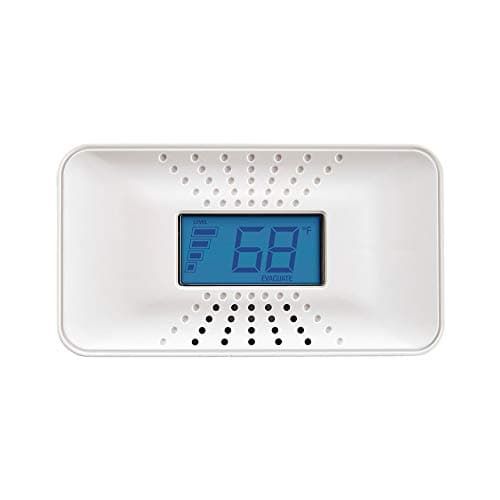 First Alert CO710 Sealed-Battery CO Alarm Sealed ten-year battery, digital display, no cord. Goes exactly where the room needs it rather than where an outlet is. | The room that shares a wall with the garage | 8.6/ 10 | $44.00 · View on Amazon #ad how we are funded · price as of October 19, 2026 |
| 2 | 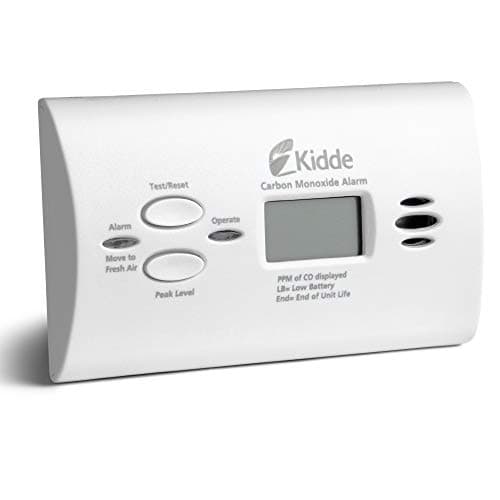 Kidde KN-COPP-B-LPM Battery CO Alarm with Digital Display Battery-powered, with peak-level memory that records down to 11 ppm. The alarm for a chronic, intermittent garage problem. | Catching the leak you were not home for | 8.2/ 10 | $27.97 · View on Amazon #ad how we are funded · price as of October 19, 2026 |
| 3 | 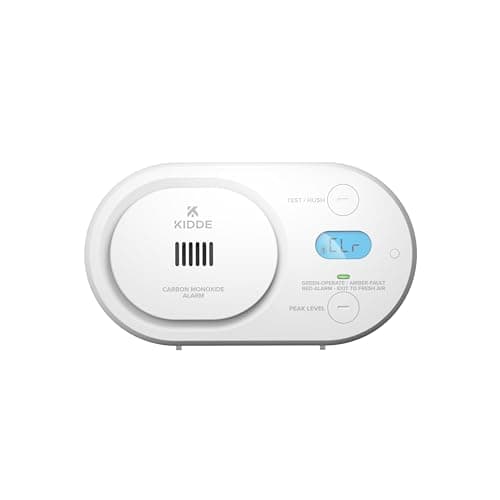 Kidde COBDL Low-Level Carbon Monoxide Alarm Alerts at 30-70 ppm, below where a standard alarm may sound. A listed alarm in its own right, and a deliberate choice. | A household with people the 70 ppm threshold does not serve | 8.0/ 10 | $40.47 · View on Amazon #ad how we are funded · price as of October 19, 2026 |
| 4 | 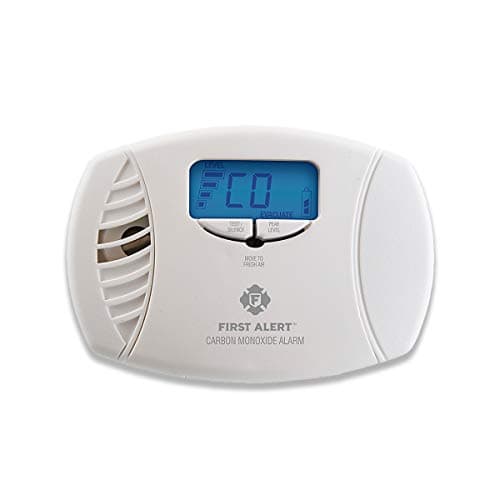 First Alert CO615 Plug-In CO Alarm with Battery Backup Plug-in with battery backup and a display. The cheapest good answer when the outlet happens to be where the alarm should go. | A mudroom or hallway with an outlet in the right place | 7.3/ 10 | $44.95 · View on Amazon #ad how we are funded · price as of October 19, 2026 |
The picks
1. The room that shares a wall with the garage
First Alert CO710 Sealed-Battery CO Alarm
Sealed ten-year battery, digital display, no cord. Goes exactly where the room needs it rather than where an outlet is.
- Listed to
- UL 2034
- Sensing / agent
- Electrochemical CO sensor
- Power / service life
- 10-year sealed battery
Why this one. The decision on a garage-adjacent alarm is almost entirely about placement freedom. The room that needs covering is usually a mudroom, a utility room, a kitchen or a bedroom over the garage — and the right height in that room is dictated by where people breathe and sleep, not by where the builder put an outlet. A sealed-battery alarm with no cord goes where the room needs it.
The display earns its place here. An attached garage produces intermittent CO: a cold start, a car left running for two minutes while a door closes, a generator run under an overhang. Those events can push a reading up and then clear. An alarm with a readout lets you see a number instead of guessing whether the chirp you half-heard meant anything. The Kidde units below go one step further and remember the peak.
And the sealed battery is the right call in a utility space. Mudrooms and laundry rooms are where replaceable-battery alarms go to die, because they are the rooms nobody looks at. Ten years sealed removes the decision entirely. CO detector lifespan and replacement covers what happens at the end of that ten years.
What it does well
- UL 2034 listed, which is the standard that fixes the concentrations a CO alarm must respond at
- Sealed ten-year battery — nothing to change, and no chirp until the unit is genuinely finished
- No cord and no outlet dependency, so it can be mounted on the garage's shared wall at any height
- Digital display shows the measured concentration rather than just alarming, which turns a reading into a decision
- Keeps working through a power cut, which is exactly when generators and kerosene heaters come out
- Ten years is one purchase for the life of the sensor, so there is no maintenance ritual to forget
The downside
- No peak-level memory, so a leak that cleared before you got home leaves no trace
- End of life means replacing the whole unit — that is the design, not a fault
- No app and no notification, so an empty house alarms to nobody
- Still a 40-100°F device. It belongs inside the heated envelope, not in the garage
Do not buy this if: a mudroom that is really part of the garage — an unheated utility passage that drops below 40°F in winter. That room needs the alarm one door further in, in conditioned space.
- Sealed 10-year battery — nothing to change, and no low-battery chirp until it is genuinely done
- Digital display showing the measured concentration
- Placement is free: no outlet required, so it can sit at the height the room actually needs
- End of life means replacing the whole unit, by design
#ad how we are funded · price as of October 19, 2026
2. Catching the leak you were not home for
Kidde KN-COPP-B-LPM Battery CO Alarm with Digital Display
Battery-powered, with peak-level memory that records down to 11 ppm. The alarm for a chronic, intermittent garage problem.
- Listed to
- UL 2034
- Sensing / agent
- Electrochemical CO sensor
- Power / service life
- Battery powered; 10-year unit life
This is the diagnostic pick. If you suspect the attached garage is putting CO into the house but you have never caught it happening, peak-level memory is the feature that settles the question: it holds the highest concentration the sensor has seen since you last cleared it, down to 11 ppm — well below the level at which a UL 2034 alarm is permitted to sound.
Use it deliberately. Clear the memory, live normally for a week, then read it. A number in the teens or twenties tells you the garage is communicating with the house and the door seal, the ventilation or your habits need attention. A flat zero is genuinely reassuring in a way no alarm that never sounded can be.
If what you want is an alarm that actually sounds at those lower concentrations rather than merely recording them, that is the low-level pick below.
What it does well
- **Peak-level memory recording concentrations as low as 11 ppm** — the single most useful feature for an intermittent source
- UL 2034 listed with a digital display
- Battery only, so it goes wherever the room needs it with no outlet nearby
- Portable enough to move between rooms while you work out where the CO is coming from
- Replaceable batteries mean the unit is not disposable at the first flat cell
The downside
- Replaceable batteries require an actual annual check — the failure mode sealed units were designed out of
- Ten-year unit life still applies regardless of how fresh the batteries are
- No sealed-battery convenience, so this is the alarm for somebody who will maintain it
Do not buy this if: a household that will never test an alarm. If nobody is going to check a battery, buy the sealed CO710 and accept that you lose the peak memory.
- Battery only, so it goes where there is no outlet — a bedroom wall, a cabin, a rental
- Digital display plus peak-level memory
- Portable enough to travel with, which matters more than most buying guides admit
- Replaceable batteries mean an annual check is genuinely required
#ad how we are funded · price as of October 19, 2026
3. A household with people the 70 ppm threshold does not serve
Kidde COBDL Low-Level Carbon Monoxide Alarm
Alerts at 30-70 ppm, below where a standard alarm may sound. A listed alarm in its own right, and a deliberate choice.
- Listed to
- UL 2034, 5th edition; ETL listed
- Sensing / agent
- Electrochemical CO sensor
- Power / service life
- Two AA batteries; 10-year limited warranty on the alarm
The case for a low-level alarm next to a garage is specific. UL 2034 deliberately builds in a delay: an alarm must not sound when exposed to a constant 30 ppm for 30 days, must alarm within 60 to 240 minutes at 70 ppm, 10 to 50 minutes at 150 ppm and 4 to 15 minutes at 400 ppm. That design protects against nuisance alarms from cooking and traffic — and it means a chronic 40 ppm from a leaky garage door, which is enough to give a toddler a headache, is specifically allowed to go unannounced.
If the room next to the garage is a nursery, a bedroom used by somebody elderly, or a room where a pregnant person sleeps, that is the gap this alarm closes. Best low-level CO monitors is the fuller treatment.
Buy it in addition to, not instead of, a standard alarm covering the sleeping areas. Two alarms with different thresholds is a better system than one clever one.
What it does well
- **Alerts earlier, at 30 to 70 ppm**, with a distinct light and sound pattern below the concentration at which a standard UL 2034 alarm is permitted to sound
- Kidde names the people that band is for: young children, older adults, pregnant women and pets
- Separate full alarm at 70 ppm, exactly as the standard requires
- UL 2034 5th edition and ETL listed — this is a listed alarm, not an uncertified instrument
- Digital backlit display and a test/hush button, with no wiring so it sits at the height the room needs
The downside
- Two AA batteries rather than a sealed ten-year cell, so it needs checking
- It is a listed alarm, not a professional monitor — it does not read single-figure ppm
- An early-warning band means more alerts, which in a garage-adjacent room may mean several a winter
- Specialist availability compared with the mainstream units
Do not buy this if: a household that will treat an early-warning chirp as a nuisance and silence it permanently. An alarm that gets hushed forever is worse than a standard one that never cried wolf.
- Alerts earlier, at 30 to 70 ppm, with a distinct light and sound pattern — below the concentration at which a standard UL 2034 alarm is permitted to sound
- Kidde names the people that early band is for: young children, older adults, pregnant women and pets
- Digital backlit display and a test/hush button; no wiring, so it can sit at the height the room needs
- Separate full alarm at 70 ppm, as the standard requires
- It is a listed alarm in its own right, not a professional monitor — it does not read single-figure ppm
#ad how we are funded · price as of October 19, 2026
4. A mudroom or hallway with an outlet in the right place
First Alert CO615 Plug-In CO Alarm with Battery Backup
Plug-in with battery backup and a display. The cheapest good answer when the outlet happens to be where the alarm should go.
- Listed to
- UL 2034
- Sensing / agent
- Electrochemical CO sensor
- Power / service life
- AC powered with battery backup
There is nothing wrong with a plug-in alarm — CO mixes fairly evenly through a room, so outlet height is a perfectly valid position, and plug-in vs battery CO detectors goes through the evidence. The problem on a garage wall is specifically that outlets there tend to be in bad spots.
If yours is in a good spot — in the hallway outside the mudroom, at head height, not behind anything — this is the cheapest sensible pick on the page.
What it does well
- UL 2034 listed, mains powered with battery backup so an outage does not blind it
- Plugs in at outlet height, which is a convenient place to read and test an alarm
- Digital display of the current reading
- No ladder and no fixings — relevant for a renter in a garage-adjacent unit
The downside
- **Tied to an outlet**, so it cannot go where the room actually needs it
- Outlets near garage doors are often low and behind things, which is the worst place for an alarm you need to hear
- Backup battery is replaceable, so it needs the annual check the sealed units do not
- Easy to unplug for a vacuum cleaner and forget to plug back in
Do not buy this if: a room where the only outlet is behind a freezer or a coat rack. Placement freedom beats convenience on this particular wall.
- Plugs in at outlet height, which is where a hallway alarm is easiest to read and test
- Battery backup keeps it alive through an outage
- Digital display of the current reading
- Tied to an outlet position, so it cannot go wherever you like
#ad how we are funded · price as of October 19, 2026
Fix the garage, not just the alarm
An alarm tells you about a problem. These three things reduce the problem, and all of them are free or nearly so.
Never run an engine with the garage door closed, and do not warm a car up in a garage with the door open either. An open overhead door does not make a garage ventilated; it makes it a partially open box with an engine in it, and the house is still on the other side of the wall. Back the car out, then let it idle.
Check the door between the garage and the house. It should be solid-core, self-closing and sealed — that assembly is doing fire-rating duty and air-sealing duty at the same time. A door propped open with a boot scraper has defeated both. Same for the weatherstripping at its base, and for any gap where ducting or wiring passes through the shared wall.
Never run a generator in the garage. This is the single most lethal CO mistake in American homes and it gets made every hurricane season. A generator belongs outdoors, well away from any door, window or vent. Generator CO safety is the page, and it is worth reading before a storm rather than during one.
Questions people actually ask
Should I put a carbon monoxide detector in my garage?
Do I need a CO detector if I have an attached garage?
Where should a CO detector go in a room next to the garage?
What CO level from a garage should worry me?
Can I use a combination smoke and CO alarm next to the garage?
How these picks were chosen. On published specifications, safety listings and manufacturer documentation — plus the findings of organizations that do run tests. We have no laboratory and we do not burn anything. Read the full methodology.
Sources
- International Code Council — IRC Chapter 3 — building planning (R310, R314, R315)
- NFPA — NFPA 72, National Fire Alarm and Signaling Code (2025 edition)
- UL Solutions — UL 2034 — single and multiple station carbon monoxide alarms
- BRK Electronics / First Alert — What levels of CO cause an alarm?
- CPSC — Carbon Monoxide Fact Sheet
Read next
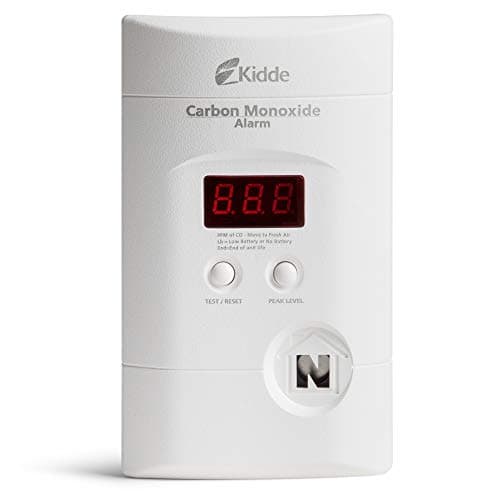
Carbon Monoxide Detectors
Room by room, and a straight answer to the high-or-low question.
Carbon Monoxide Detectors
How Many Carbon Monoxide Detectors Do I Need?
Two rules decide the count: separate sleeping areas, and levels. Worked through by house size.
Carbon Monoxide Detectors
The Best Low-Level CO Monitors
Why the 30 ppm floor exists, who it fails, and what a low-level monitor adds.
Carbon Monoxide Detectors
Generator Carbon Monoxide Safety
Outdoors only, well clear of openings — and why an open garage door changes nothing.
Smoke Detectors
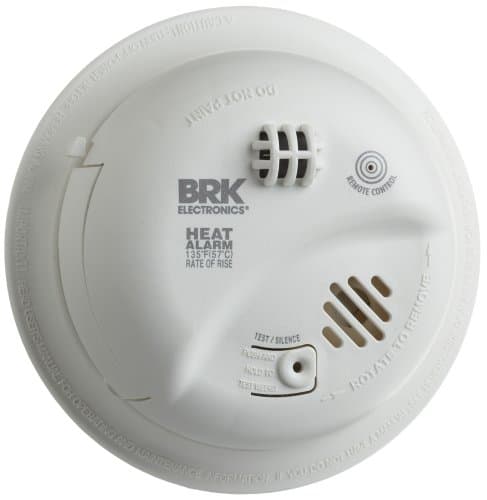
Why a garage needs a UL 539 heat alarm rather than a smoke alarm, and which of the two residential units to fit.