Smoke Detectors
Heat Alarms for Garages
A smoke alarm in a garage is a false alarm generator that eventually gets disconnected. A heat alarm is slower by design, and in that one room slower is the trade worth making.
By Ryder M.Last reviewed

Fit a UL 539 heat alarm, not a smoke alarm. A garage has exhaust fumes, dust, cold starts and summer heat, and all four of those make a smoke alarm cry wolf until somebody pulls its power — which leaves the room with nothing. A heat alarm ignores all of it and responds to temperature instead, which makes it slower on a smoldering fire and completely reliable against nuisance tripping. Of the two mainstream residential units, the First Alert HD6135FB is the one to fit, because it adds rate-of-rise sensing to the fixed 135°F threshold and so reacts before the ceiling actually reaches 135°F.
Siren & Safe is reader-funded. We earn a commission on some links on this page, at no cost to you. It does not change what we recommend or the order we rank it in. Full disclosure.
Why a smoke alarm does not survive a garage
Every condition a garage has is a condition smoke sensing dislikes.
Exhaust. Starting a cold engine in an enclosed space puts particulates straight onto the ceiling. An ionization chamber in particular reads that as smoke, because for its purposes it is smoke.
Dust. Garages are where the sanding, the sawing and the bag of cement live. Dust in a sensing chamber produces both false alarms and, eventually, a chamber that no longer responds properly to anything.
Temperature and humidity swings. An unconditioned garage goes from below freezing to over 100°F across a year and condenses moisture on everything each spring. UL 217 alarms are generally listed for roughly 40°F to 100°F operation; outside that band the manufacturer makes no promises.
The outcome is predictable and it is the actual hazard: the alarm nuisance-trips, somebody disconnects it, and the garage — which is where the gasoline, the battery chargers, the paint and the car are — ends up with no detection at all. A device that is reliably ignored is worse than a slower device that is still connected.
That covers the fire side of a garage. For the carbon monoxide side — which is the reason the residential code treats an attached garage as an alarm trigger on its own — see best CO detectors for an attached garage.
The two residential heat alarms
This registry holds two, which is close to the whole mainstream residential market. Both are listed to UL 539 and both are hardwired with a 9V backup.
| First Alert HD6135FB | Kidde HD135F | |
|---|---|---|
| Fixed temperature threshold | 135°F | 135°F |
| Rate-of-rise sensing | Yes — 15°F per minute | No |
| Listing | UL 539 | UL 539 |
| Power | 120V AC with 9V backup | 120V AC with 9V backup |
| Interconnect | Compatible BRK and First Alert units | Compatible Kidde units |
| Manufacturer-stated locations | Garages, attics, crawl spaces, furnace rooms, laundry rooms | Garages and similar unconditioned spaces |
| Smoke sensing | None | None |
Neither unit can be counted toward a required smoke alarm anywhere in the house. UL 539 and UL 217 are different standards for different devices.
Quick picks
Scored against speed of response, nuisance immunity, listing clarity and interconnect. Tap a row for the full write-up. The price in each buy button is the live Amazon price at the last check, stamped with the date it was taken.
| # | Product | Best for | Score | Price |
|---|---|---|---|---|
| 1 | 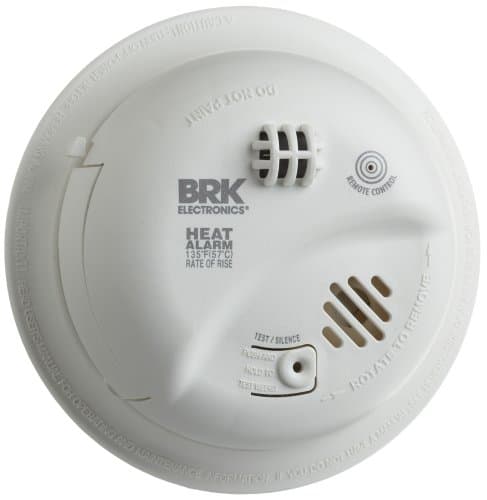 First Alert HD6135FB Hardwired Heat Alarm Fixed 135°F plus rate-of-rise sensing, so it reacts to a fast temperature climb rather than waiting for a number. | The garage heat alarm to fit | 8.8/ 10 | $29.79 · View on Amazon #ad how we are funded · price as of October 19, 2026 |
| 2 | 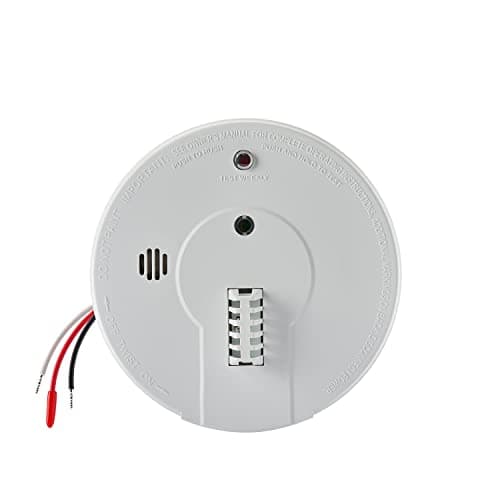 Kidde HD135F Hardwired Heat Alarm Fixed 135°F only. Cheaper, simpler, and it waits for the temperature rather than the trend. | A Kidde circuit, on a budget | 7.6/ 10 | $42.97 · View on Amazon #ad how we are funded · price as of October 19, 2026 |
Which one to fit
1. The garage heat alarm to fit
First Alert HD6135FB Hardwired Heat Alarm
Fixed 135°F plus rate-of-rise sensing, so it reacts to a fast temperature climb rather than waiting for a number.
- Listed to
- UL 539 — a heat alarm standard, NOT UL 217. It is not a smoke alarm and cannot replace one
- Sensing / agent
- Thermistor with a microprocessor: alarms at a fixed 135°F, or on a rate of rise of 15°F per minute
- Power / service life
- 120V AC with a 9V replaceable backup battery
Rate-of-rise is the reason to pay for this one rather than the Kidde. A fixed-temperature-only alarm waits for the air at the ceiling to actually reach 135°F, and in a large cold garage in February that can take a surprisingly long time while a car burns underneath it.
Rate-of-rise sensing watches the gradient instead. A climb of roughly 15°F per minute is not something a garage does on its own, even in direct sun with the door shut, and it is exactly what a developing fire does. The alarm fires on the gradient and gets you minutes you would not otherwise have.
The interconnect is the second reason. An alarm sounding in a garage at 2am, behind a fire door, in a room nobody sleeps near, is a noise in an empty room. Wired into the house circuit alongside compatible First Alert and BRK units, it becomes an alarm in the hallway outside the bedrooms, which is the only place the alarm is any use.
Mount it on the ceiling, as high as the structure allows, and keep it away from the vehicle door opening — a door that lets a January draft in across the sensor is a door that slows it down. Smoke detectors vs heat detectors covers the choice in general terms.
What it does well
- Fixed-temperature AND rate-of-rise sensing — it reacts to a 15°F per minute climb before 135°F is reached
- Interconnects with compatible BRK and First Alert alarms on the same circuit, so the garage alarm wakes the house
- First Alert states compliance with UL 539, CSFM, NFPA 72, HUD and FHA requirements
- Intended by the manufacturer for garages, attics, crawl spaces, furnace rooms and laundry rooms
The downside
- Detects heat, not smoke: in a smoldering fire it will be the last device in the house to notice
- Hardwired 120V with a 9V replaceable backup — the backup battery is an annual job
- Needs a circuit, so a detached garage with no alarm wiring is an electrician's visit
Do not buy this if: you are trying to protect a garage that opens onto a bedroom with no other alarm in the path. A heat alarm is a supplement to a smoke-alarm layout, never a substitute for it.
- Fixed-temperature AND rate-of-rise sensing, so it reacts to a fast temperature climb before 135°F is reached
- Interconnects with compatible BRK and First Alert alarms on the same circuit
- Intended for garages, attics, crawl spaces, furnace rooms and laundry rooms — places a smoke alarm cannot live
- Complies with UL 539, CSFM, NFPA 72, HUD and FHA requirements
- Detects heat, not smoke: in a smoldering fire it will be the last thing in the house to notice
First Alert product documentation
#ad how we are funded · price as of October 19, 2026
2. A Kidde circuit, on a budget
Kidde HD135F Hardwired Heat Alarm
Fixed 135°F only. Cheaper, simpler, and it waits for the temperature rather than the trend.
- Listed to
- UL 539 — a heat alarm standard, NOT UL 217. It is not a smoke alarm and cannot replace one
- Sensing / agent
- Fixed-temperature thermistor that alarms at 135°F. No rate-of-rise sensing
- Power / service life
- 120V AC with a 9V replaceable backup battery
The case for this one is a house already wired with Kidde alarms. Interconnect compatibility runs along brand lines, and a Kidde heat alarm on a Kidde circuit is a half-hour job that leaves the whole set talking to each other.
The case against it is the missing rate-of-rise stage. Fixed-temperature sensing is a threshold: nothing happens until the air at the sensor reaches 135°F. In a sealed single-car garage that comes quickly. In a three-car garage with an unsealed roll-up door in winter, it does not.
If your garage is small and attached, this is a perfectly reasonable alarm and the price difference is real. If it is big, cold or detached, buy the response time instead.
What it does well
- Listed to UL 539 and interconnects with compatible Kidde alarms on the same circuit
- Two LEDs for power and alarm status, so a glance confirms it is alive
- The cheaper of the two mainstream residential heat alarms
- Completely immune to the dust, exhaust and humidity that defeat smoke alarms in this room
The downside
- Fixed temperature only — no rate-of-rise, so it waits for 135°F rather than reacting to how fast the air is heating
- 9V replaceable backup battery
- Same category limit as every heat alarm: it is deaf to smoke
Do not buy this if: the garage is large, cold or poorly sealed. Those are exactly the conditions where a fixed-threshold-only alarm loses the most time, and the rate-of-rise unit is worth the difference.
- Fixed temperature only — it waits for 135°F rather than reacting to how fast the air is heating
- Interconnects with compatible Kidde alarms on the same circuit
- Two LEDs for power and alarm status
- The cheaper of the two mainstream residential heat alarms, and the less capable
- Same category limit as every heat alarm: it is deaf to smoke
#ad how we are funded · price as of October 19, 2026
Fitting it properly
A heat alarm in the wrong position is slower than a heat alarm in the right position by minutes, not seconds.
- Ceiling, not wall, and as high as the structure allows. Heat rises and collects at the highest point. A heat alarm mounted on a wall at door-head height is waiting for the whole room to heat up.
- Away from the vehicle door opening. A draft across the sensor every time the door opens slows the response and, on a rate-of-rise unit, can mask a genuine climb.
- Away from heaters, flues and direct sun through a window. Not because they will trip it — 135°F needs real heat — but because a sensor baking in afternoon sun ages faster than one in shade.
- Interconnected into the house, if there is any way to do it. An alarm nobody can hear has done its job and failed anyway. This is the single most important choice on the page.
- With the fire door between garage and house intact. The attached-garage fire is a known residential killer and the fire-rated door is most of the protection. An alarm does not replace it.
- Not instead of a smoke alarm in the house. NFPA 72 wants a smoke alarm inside each sleeping room and outside each sleeping area. The garage heat alarm is an addition to that layout.
What else belongs in a garage
The heat alarm is the detection layer. It is not the only thing this room needs, and the garage is the one place in a house where the other layers genuinely earn their keep.
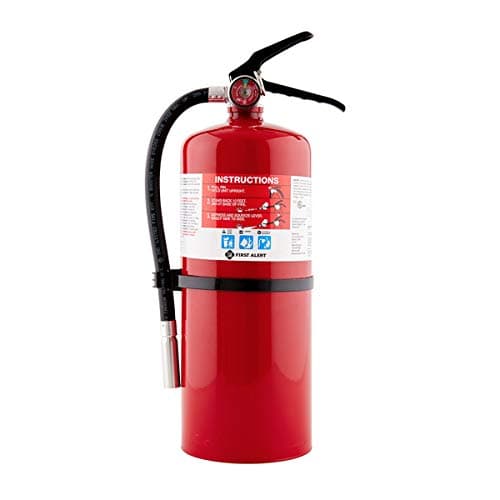
An extinguisher rated for what is actually stored there. A garage fire is usually Class B — gasoline, solvents, paint thinner — or Class C if it starts at a charger or an outlet. An ABC dry chemical unit covers all three. Best garage fire extinguishers covers the sizing, and the short answer is that a kitchen-sized canister is too small for this room.
A plan for lithium batteries. Power tool packs, e-bikes and scooters charging unattended on a bench are the fastest-growing residential ignition source there is, and a lithium fire is not an ABC powder problem. Best fire blankets for lithium batteries and automatic fire extinguishers both deal with this directly.
A CO alarm, if the garage is attached and anyone sleeps above it. A running engine in an attached garage is one of the classic residential CO exposures, and a heat alarm will not say a word about it. Where to install CO detectors covers the position.
Questions people actually ask
Can I put a smoke detector in my garage?
Does a heat alarm satisfy smoke alarm requirements?
What temperature does a garage heat alarm trigger at?
Should the garage heat alarm be interconnected with the house alarms?
How these picks were chosen. On published specifications, safety listings and manufacturer documentation — plus the findings of organizations that do run tests. We have no laboratory and we do not burn anything. Read the full methodology.
Sources
- UL Solutions — UL 539 — single and multiple station heat detectors
- UL Solutions — UL 217 — smoke alarms
- NFPA — NFPA 72, National Fire Alarm and Signaling Code (2025 edition)
- NFPA — Smoke alarms — installation and placement guidance
- BRK / First Alert — Codes and standards reference for smoke and CO alarms
Read next
Smoke Detectors
Smoke Detectors vs Heat Detectors
Why a heat alarm is always slower, and the four rooms where that is the right trade.
Fire Extinguishers
The Best Fire Extinguishers for a Garage
A garage is a B-class room. Buy the flammable-liquid rating, not the home-kitchen unit.
Placement & Code
NFPA 72 Residential Requirements
The residential sections, quoted with their numbers, and what each one means in practice.
Smoke Detectors
The Best Smoke Detectors for Basements
Dual sensing, mounted at the foot of the stairs rather than over the furnace. Plus the CO question.
Carbon Monoxide Detectors
Room by room, and a straight answer to the high-or-low question.