Fire Extinguishers
Automatic Fire Extinguishers
A device that puts out a fire while you are asleep is an appealing product. The category is mostly unlisted, the lithium claims are mostly untested, and one product here has published testing.
By Ryder M.Last reviewed
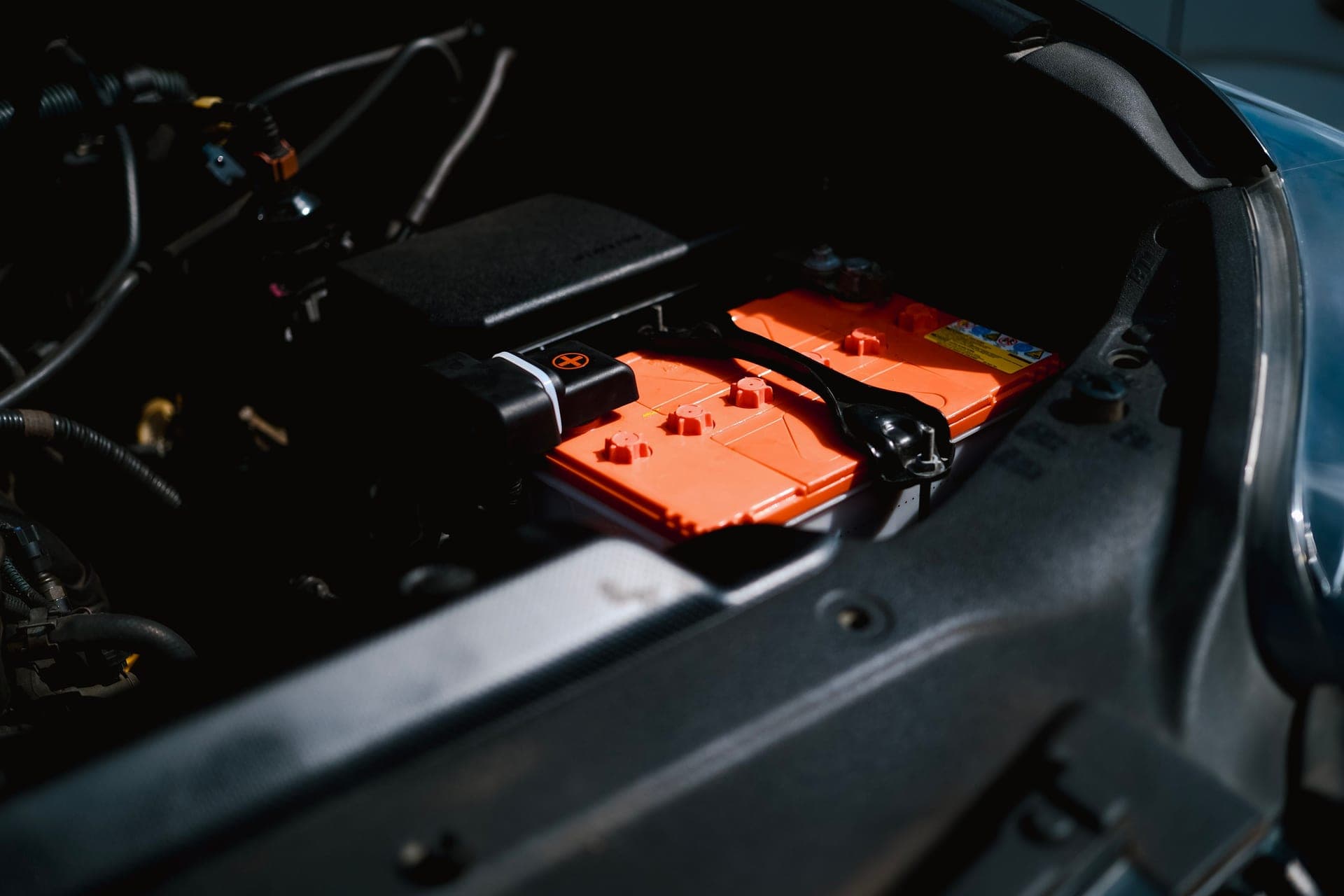
Treat almost every consumer automatic extinguisher as unproven. Self-activating balls, stick-on pucks and small aerosol canisters sold for charging cabinets and battery storage rarely carry a UL rating or any published test protocol, and a device with no listing has no evidence behind its claim. The one retail product here formulated for the hazard is StaySafe Lithium, and it is manual, single use and unrated; the agents with a named published protocol, F-500 EA tested to the Dutch NEN NTA 8133 and AVD, are professional-channel products. None of them will stop a large pack already in full thermal runaway. The reliable controls for lithium battery fires are separation, charging discipline and evacuation.
Siren & Safe is reader-funded. We earn a commission on some links on this page, at no cost to you. It does not change what we recommend or the order we rank it in. Full disclosure.
What is sold as an automatic fire extinguisher
Three product shapes dominate the category, and it is worth separating them because they fail differently.
Self-activating balls. A sphere packed with dry chemical and a fuse-like trigger. Rolled into a charging cabinet or hung above a boiler, it is supposed to burst when flame reaches it and disperse powder. They are widely sold, almost never UL listed, and the activation depends on direct flame contact with the trigger.
Stick-on pucks and canisters. Small aerosol-style devices with a heat-sensitive element, mounted inside an enclosure — an electrical panel, a server cabinet, a battery box. The commercial versions of this concept are real engineered products with listings. The consumer versions mostly are not.
Fixed automatic systems. Real suppression systems with listings, engineering and installation requirements — a range hood system in a restaurant, a clean-agent system in a server room. These work, and they are not what is being sold on a marketplace listing for the price of a takeaway.
The first two are what people mean when they search for an automatic extinguisher for lithium batteries, and the honest assessment of both is the same: no listing, no published protocol, no evidence.
Why lithium-ion is the hard case
Every conventional extinguisher works by removing one leg of the fire triangle — fuel, oxygen or heat — or by interrupting the chemical chain reaction. A lithium-ion cell in thermal runaway supplies its own heat and its own oxidizer from inside a sealed casing.
That breaks the model. Smothering the outside of a pack does nothing about a reaction happening inside a cell. Dry chemical does not cool. Water cools well but cannot easily get inside the pack, and a burning pack is also an electrical hazard and a source of toxic vent gas.
Runaway also propagates. One cell going takes its neighbors with it, so a pack fire reignites repeatedly over minutes or hours — which is why fire services deal with them by cooling for a very long time or by letting them burn out in a controlled place.
NFPA's guidance on lithium-ion batteries reflects all of this. It is built around prevention and separation: buy certified products, charge on non-combustible surfaces, do not charge unattended or overnight, keep packs away from exits and sleeping areas, stop using a pack that has swollen, been dropped or got hot, and get out and call 911 if one starts to vent. There is no consumer device in that guidance that makes the fire go away.
The category, assessed on evidence
Assessed on what each product type publishes about itself — listing, test protocol, and what the mechanism can physically do.
| Product type | Listing or protocol | Plausible on a small conventional fire | Plausible on lithium-ion runaway |
|---|---|---|---|
| Self-activating extinguisher ball | Usually none published | Only if flame reaches the trigger directly | No evidence; powder does not cool |
| Stick-on puck or mini canister (consumer) | Usually none published | Possibly, inside a small sealed enclosure | No published testing found |
| Engineered fixed suppression system | Yes — listed and installed to a standard | Yes, within its design | Only where specifically engineered for batteries |
| StaySafe Lithium spray (manual) | Formulated for lithium-ion; no named protocol published | Yes | Small cells early, sprayed as a fluid; not a large pack in runaway |
| Listed ABC dry chemical (manual) | UL 711, rating on the label | Yes, this is what it is for | No — handles the surrounding fire, not the cell |
Nothing in the lithium column is a recommendation to fight a battery fire. The purpose of the column is to show how little supports the claims made for the top two rows.
Quick picks
Scored against published testing, available to households, works on small cells and honest marketing. Tap a row for the full write-up. The price in each buy button is the live Amazon price at the last check, stamped with the date it was taken.
| # | Product | Best for | Score | Price |
|---|---|---|---|---|
| 1 | 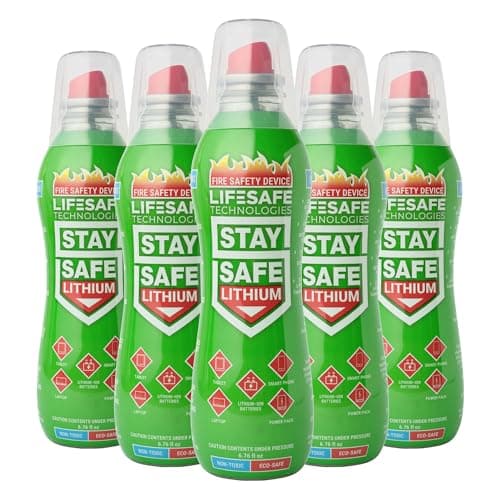 StaySafe Lithium Fire Extinguishing Spray Formulated for lithium-ion battery fires and available on a shelf. Manual, and single use. | The one built for the hazard, and sold at retail | 6.5/ 10 | $99.95 · View on Amazon #ad how we are funded · price as of October 19, 2026 |
| 2 | 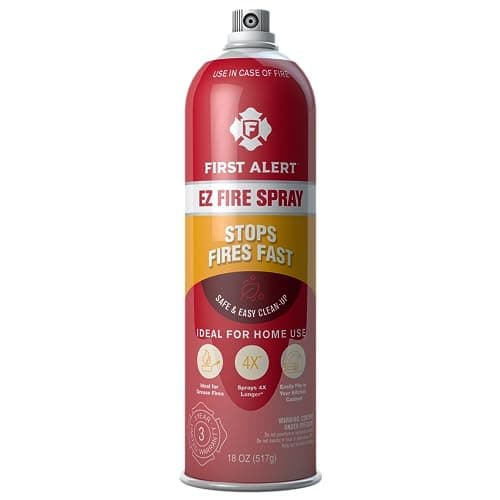 First Alert EZ Fire Spray AF400 Not automatic and not a rated extinguisher, but it says so — which is more than most of this category manages. | A realistic small-fire tool, honestly labeled | 5.4/ 10 | $11.98 · View on Amazon #ad how we are funded · price as of October 19, 2026 |
| 3 | 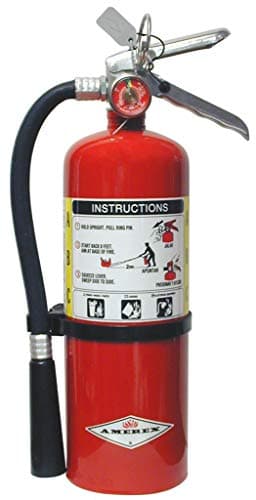 Amerex B500 5 lb ABC Dry Chemical Extinguisher UL rated 2-A:10-B:C with an all-metal valve. A listed manual extinguisher beats an unlisted automatic one. | What to actually have on the wall | 7.8/ 10 | $75.01 · View on Amazon #ad how we are funded · price as of October 19, 2026 |
The honest alternatives
Two of these are manual extinguishers and one is a convenience aerosol. None of them is automatic, which is the point — the listed options in this space all need a person.
1. The one built for the hazard, and sold at retail
StaySafe Lithium Fire Extinguishing Spray
Formulated for lithium-ion battery fires and available on a shelf. Manual, and single use.
- Listed to
- Not a UL-rated A:B:C portable extinguisher. LifeSafe states the product is tested and approved with recognized standards bodies and third-party test facilities, without naming a rating
- Sensing / agent
- Patented non-toxic extinguishing fluid, sprayed from a hand-held canister
- Power / service life
- Single use — discharge the unit fully and replace it
This is on the page as a benchmark rather than a recommendation for most readers. It answers the question the automatic products duck: is there anything actually formulated for a lithium-ion fire that a household can buy?
The answer is yes, narrowly. It is a hazard-specific formulation sold through ordinary retail, which puts it in a different category from anything sold as a battery fire ball. What it is not is independently rated: LifeSafe cites recognized standards bodies and third-party test facilities without naming one, and the agents with a named published protocol behind them — F-500 EA, tested to the Dutch NEN NTA 8133, and AVD — are facilities products sold through professional distributors.
The mechanism is worth understanding because it explains the limits. The agent is a sprayed fluid, which cools the cell. Cooling is the only thing that interrupts thermal runaway, and cooling the inside of a sealed pack from the outside is extremely hard. On a phone, a power bank or a laptop, caught early, it can work. On a large e-bike or EV pack already venting, it cannot, and LifeSafe does not claim otherwise.
Best lithium battery fire extinguishers goes further into the evidence, and reaches the same uncomfortable conclusion.
What it does well
- One of very few retail products formulated specifically for lithium-ion battery fires rather than repurposed from a general-purpose agent
- A sprayed fluid, which cools a cell in a way a dry powder or a smothering ball cannot
- LifeSafe states it is safe on electrical fires up to 1000V from a stated minimum distance
- LifeSafe does not claim it stops a pack in full runaway, which is itself a mark of credibility
The downside
- **No UL rating and no named test protocol** — LifeSafe says only that the product is tested and approved with recognized standards bodies and third-party facilities
- It will not stop a large pack already in full thermal runaway, and nothing sold to consumers will
- Not an automatic device — this is a manual canister, listed here as the hazard-specific alternative to one
Do not buy this if: you want something that acts on its own in a locked charging cabinet. This needs a person holding it, and that is a real limitation of the one product here aimed at the hazard.
- Formulated specifically for fires started by lithium-ion batteries in phones, laptops, power banks and other electronics
- LifeSafe states it is safe on electrical fires up to 1000V from a stated minimum distance
- No pin and no gauge: remove the cap, point and spray until the canister is empty
- Non-toxic with no residue to clean up, which is the practical difference from dry chemical indoors
- It will not stop a large pack already in full thermal runaway, and nothing sold to consumers will
#ad how we are funded · price as of October 19, 2026
2. A realistic small-fire tool, honestly labeled
First Alert EZ Fire Spray AF400
Not automatic and not a rated extinguisher, but it says so — which is more than most of this category manages.
- Listed to
- Aerosol extinguishing spray — not a UL-rated A:B:C portable extinguisher
- Sensing / agent
- Sodium-bicarbonate-based extinguishing aerosol
- Power / service life
- Single use; check the stamped expiry
This is included to mark the boundary. It is the honest version of a convenience product: easy to use, limited, and described as what it is.
Compare that with the typical automatic extinguisher ball — a device whose packaging claims Class A, B, C and lithium capability, carries no UL rating, names no test protocol, and cannot be found in any certification directory. The difference is not the price. It is whether the claim is checkable.
On a conventional small fire this can is a reasonable thing to own. On a battery it is not, and neither is the ball.
What it does well
- Aim and spray with no pin and no gauge, which makes it usable by anyone
- Wipes up with a cloth instead of the corrosive mess dry chemical leaves
- Cheap enough to keep one wherever small fires are plausible
- The manufacturer states plainly that it is an extinguishing aerosol rather than a rated extinguisher
The downside
- It is not a UL-rated A:B:C portable extinguisher and does not satisfy a code requirement for one
- No lithium-ion claim and no lithium-ion testing — do not buy it for a battery
- Single use, with a stamped expiry to check
Do not buy this if: a lithium battery fire. It has no published testing against thermal runaway, and this page exists because that distinction matters.
- Aerosol can format — no pin, no pressure gauge, aim and spray
- Wipes up with a cloth instead of the corrosive mess dry chemical leaves
- Genuinely easier for someone who will never practice with a real extinguisher
- It is not a rated extinguisher and does not satisfy a code requirement for one
#ad how we are funded · price as of October 19, 2026
3. What to actually have on the wall
Amerex B500 5 lb ABC Dry Chemical Extinguisher
UL rated 2-A:10-B:C with an all-metal valve. A listed manual extinguisher beats an unlisted automatic one.
- Listed to
- UL rated 2-A:10-B:C
- Sensing / agent
- Monoammonium phosphate dry chemical
- Power / service life
- Rechargeable; all-metal valve and body
If the reason you are looking at automatic extinguishers is a garage or workshop full of chargers, the useful spend is here plus a change in how you charge.
A listed ABC unit handles the fire that an overheating charger usually starts — the cable, the bench, the cardboard box, the plastic housing. That is a Class A and C fire and the powder is rated for it. What it will not do is reach inside a cell in runaway, and no powder will.
So the layered answer for a charging bench is: a listed extinguisher on the wall, a non-combustible surface, nothing stored within a couple of feet, no unattended overnight charging, and a smoke or heat alarm that is interconnected to the house. Best garage fire extinguishers and heat alarms for garages cover the other two layers.
What it does well
- A real UL rating from a real test protocol, which is the thing the automatic category is missing
- All-metal valve rather than plastic, so it is genuinely serviceable
- 2-A:10-B:C covers the ordinary combustibles, flammable liquids and electrical fires a workshop produces
- Rechargeable, so a partial discharge does not write the unit off
The downside
- Dry chemical does not cool, so it is not a lithium-ion answer either
- Needs a person present and a proper bracket
- 5 lb is heavier than some people can aim one-handed
Do not buy this if: you are specifically trying to protect an unattended charging area. A manual extinguisher cannot do that, and the honest answer there is not to charge unattended.
- All-metal valve rather than plastic, which is the difference between a serviceable unit and a disposable one
- Rechargeable, so a partial discharge during a small fire does not write off the extinguisher
- 2-A:10-B:C covers ordinary combustibles, flammable liquids and energized electrical equipment
- 5 lb is heavier than the supermarket unit and needs a proper bracket
#ad how we are funded · price as of October 19, 2026
What actually reduces lithium battery risk at home
This list is unglamorous and it is the part that works. It is drawn from NFPA's lithium-ion battery guidance.
- Charge on a non-combustible surface with clear space around it. Concrete, tile or metal. Not a carpet, a sofa, a bed or a pile of cardboard on a bench.
- Do not charge unattended or overnight. This is the single highest-value habit on the list, and it is the one automatic extinguishers are sold to excuse. Charge when you are awake and in the building.
- Charge away from exits and sleeping areas. If a pack vents, you need the route out of the building to still be usable. An e-bike charging in a hallway is blocking the one path everyone needs.
- Use the manufacturer's charger and certified cells. Mismatched chargers and uncertified replacement packs are heavily over-represented in battery fires. Buy the product with the certification, not the bargain with the claim.
- Retire a pack that has swollen, been dropped, got hot or been soaked. Damage is cumulative and invisible. A pack that has had a bad day is a pack to dispose of properly, not to charge once more.
- Put detection where the batteries are. A heat alarm in a garage, interconnected to the house, is worth more than any automatic device sold for a charging cabinet. Heat alarms for garages covers the fitting.
- Have an evacuation plan and use it. A venting pack is an evacuation, not a firefighting problem. Fire escape plan is the page to read before you buy anything on this one.
Questions people actually ask
Do automatic fire extinguisher balls work?
Is there an automatic extinguisher for lithium battery fires?
What should I put in a battery charging cabinet?
Can I use an ABC extinguisher on a lithium battery fire?
How these picks were chosen. On published specifications, safety listings and manufacturer documentation — plus the findings of organizations that do run tests. We have no laboratory and we do not burn anything. Read the full methodology.
Sources
- NFPA — Lithium-ion battery safety
- NFPA — NFPA 10, Standard for Portable Fire Extinguishers
- UL Solutions — Fire extinguisher testing and certification (UL 711)
- CPSC — Recalls and product safety news
- US Fire Administration — Home fire prevention
Read next
Fire Extinguishers
The Best Fire Extinguishers for Lithium Battery Fires
Why no consumer unit stops a pack in runaway, and what genuinely helps instead.
Fire Blankets
Fire Blankets for Lithium Battery Fires
Why smothering cannot work on thermal runaway, what a blanket genuinely buys you, and where the line is.
Fire Extinguishers
The Best Fire Extinguishers for a Garage
A garage is a B-class room. Buy the flammable-liquid rating, not the home-kitchen unit.
Smoke Detectors
Why a garage needs a UL 539 heat alarm rather than a smoke alarm, and which of the two residential units to fit.
Placement & Code
A fill-in template: two exits per room, a meeting place, and who helps whom.