Fire Extinguishers
The Best Fire Extinguishers for Lithium Battery Fires
This page is going to tell you that the product you came for mostly does not exist, and then tell you what does work. That is the honest version.
By Ryder M.Last reviewed
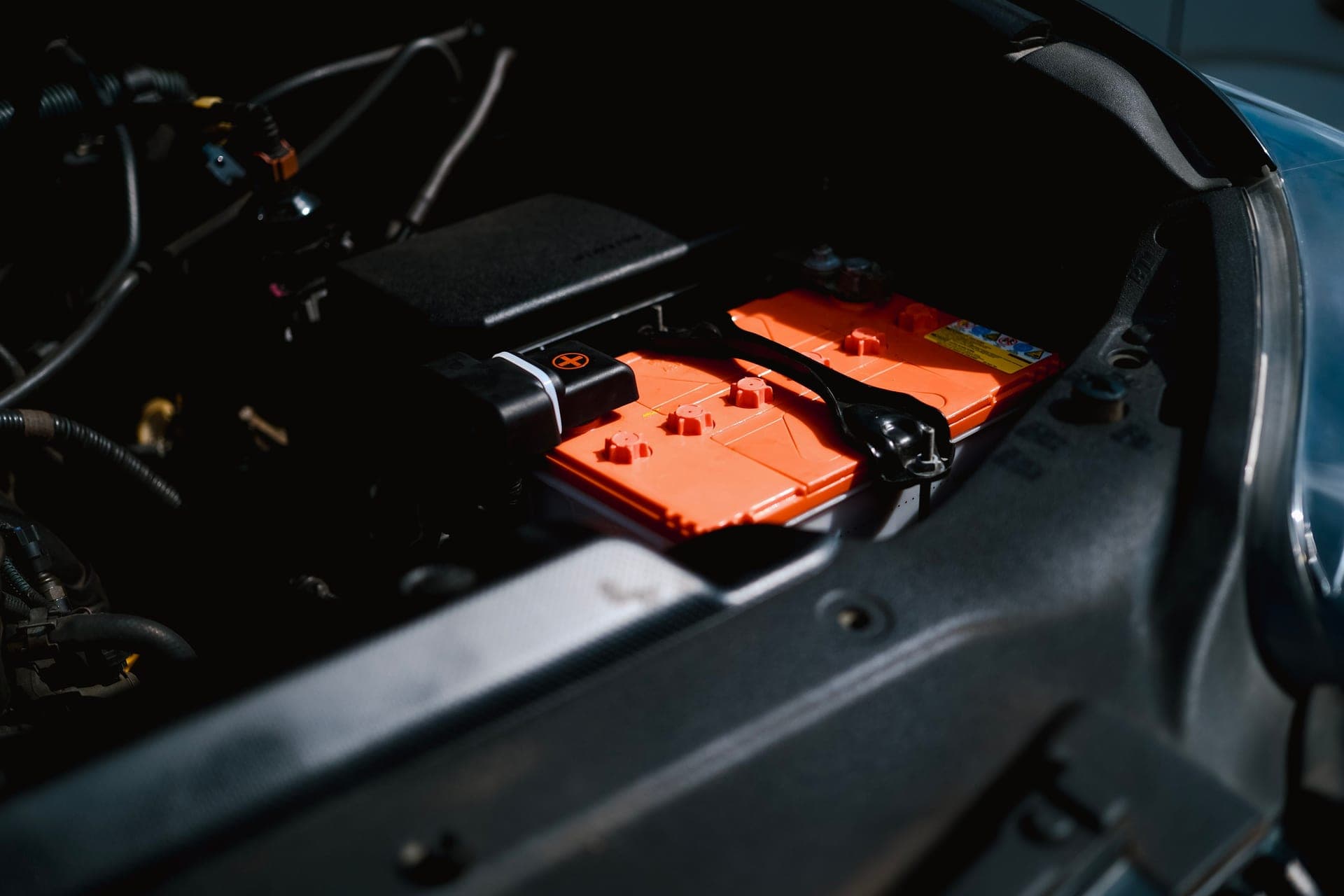
No extinguisher sold to households reliably stops a large lithium-ion pack once it is in thermal runaway — an e-bike or EV battery in runaway produces its own oxidizer inside the cells, burns extremely hot and can reignite hours later. For a small single cell or device, a lot of water is the standard guidance and an ABC extinguisher handles the surrounding fire. F-500 EA has published testing against lithium-ion runaway and is a professional-channel product. The intervention that actually works is prevention, and it is covered below.
Siren & Safe is reader-funded. We earn a commission on some links on this page, at no cost to you. It does not change what we recommend or the order we rank it in. Full disclosure.
Why this is genuinely hard
Most fire suppression works by removing one leg of the fire triangle: heat, fuel or oxygen. Thermal runaway in a lithium-ion cell defeats two of the three.
It supplies its own oxidizer. As the cathode material breaks down at temperature it releases oxygen inside the cell. Smothering the outside does not starve a reaction fed from within.
It is self-heating and it cascades. One cell in runaway heats its neighbors until they go too. Stopping the fire means removing heat faster than the reaction generates it, which needs a large amount of a good coolant applied for a long time — which is why fire services use a lot of water on EVs and why the handheld option is limited.
It can reignite. A pack that appears extinguished can go again hours later as remaining cells reach their trigger temperature. That is why damaged EVs are sometimes left in the open under observation.
NFPA's lithium-ion battery safety material is worth reading in full, and the fire-service consensus is consistent: for anything beyond a single small cell, this is an evacuate-and-call event.
What works on what
| The situation | What to do |
|---|---|
| A phone or single small cell, just started venting | Leave the room if you can. If it is on a hard non-combustible surface and nothing else is alight, a lot of water on it is the standard guidance. Ventilate and do not breathe the vapor |
| A device charging on a bed or sofa, now alight | Get out and call 911. The furnishings are the fire that will kill you, and an extinguisher on them is the only useful handheld action while leaving |
| An e-bike or e-scooter battery in runaway | Get out, close the door, call 911. These are large packs. Nothing handheld stops them, and the fire is violent |
| An EV pack | Get everyone well clear and call 911, telling them it is an electric vehicle. Fire services use very large water volumes; a handheld unit is irrelevant to the pack |
| A swollen, hissing or hot battery that has not ignited | Do not charge it, do not puncture it, do not put it in a bin. Move it outdoors onto a non-combustible surface only if you can do so safely, and arrange proper disposal |
| The surrounding room fire, small and contained | An ABC extinguisher, with your back to the exit, while everyone else is already leaving |
Never put a burning battery in a confined container, and never move a pack that is already venting or flaming — carrying it spreads the fire along your escape route.
Quick picks
Scored against stops thermal runaway, controls the surrounding fire, available to households, published lithium testing and rated and serviceable. Tap a row for the full write-up. No price is shown anywhere on this site because we do not cache retailer prices.
| # | Product | Best for | Score | Price |
|---|---|---|---|---|
| 1 |  Amerex B500 5 lb ABC Dry Chemical Extinguisher It will not stop the cells. It will stop the room catching. | The fire around the battery | 6.4/ 10 | Check price on Amazon #ad how we are funded · we do not cache prices |
| 2 | 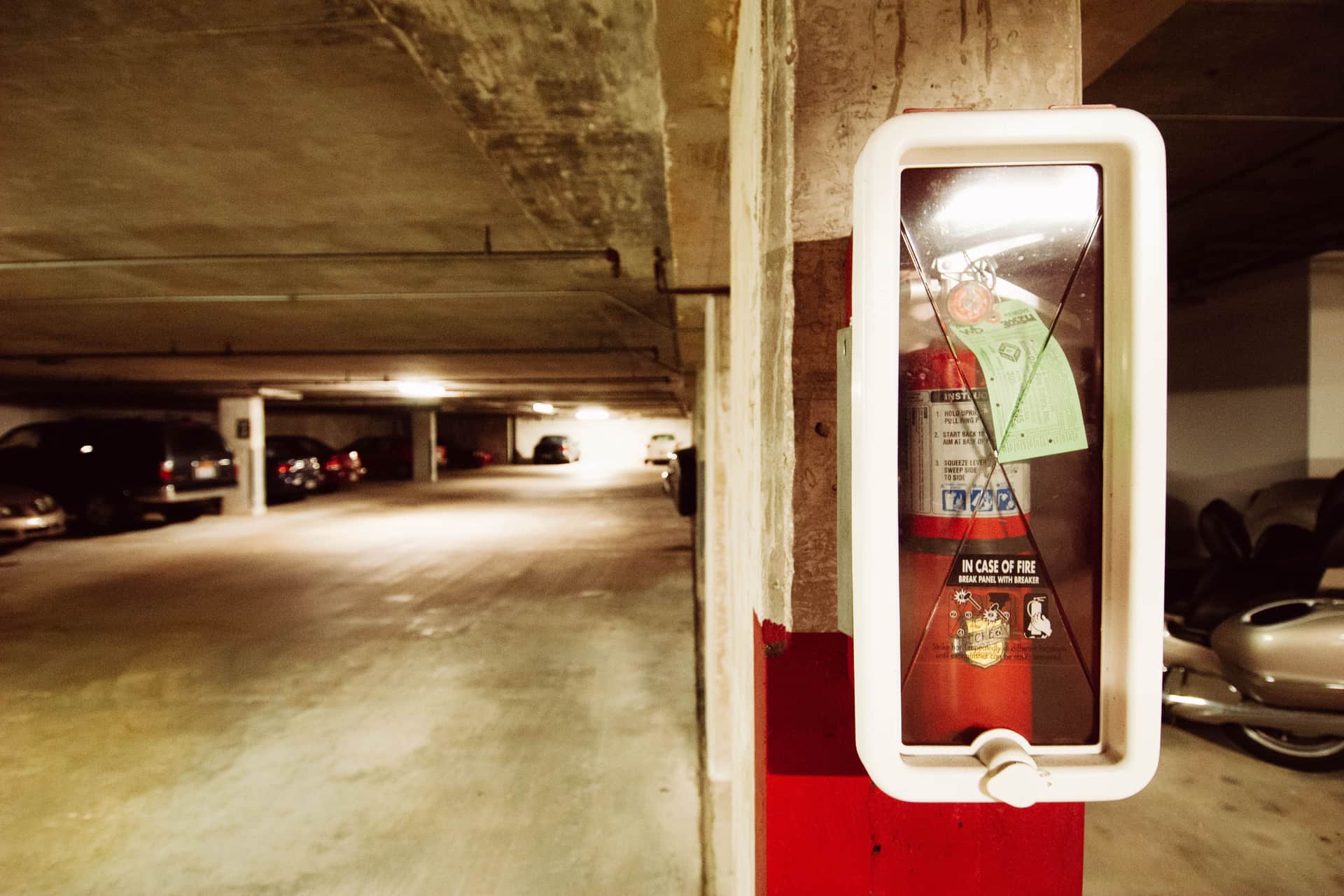 F-500 EA Encapsulator Agent Extinguisher Real published testing against runaway. A facilities product, not a household one. | The agent with published lithium testing | 7.0/ 10 | Check price on Amazon #ad how we are funded · we do not cache prices |
| 3 | 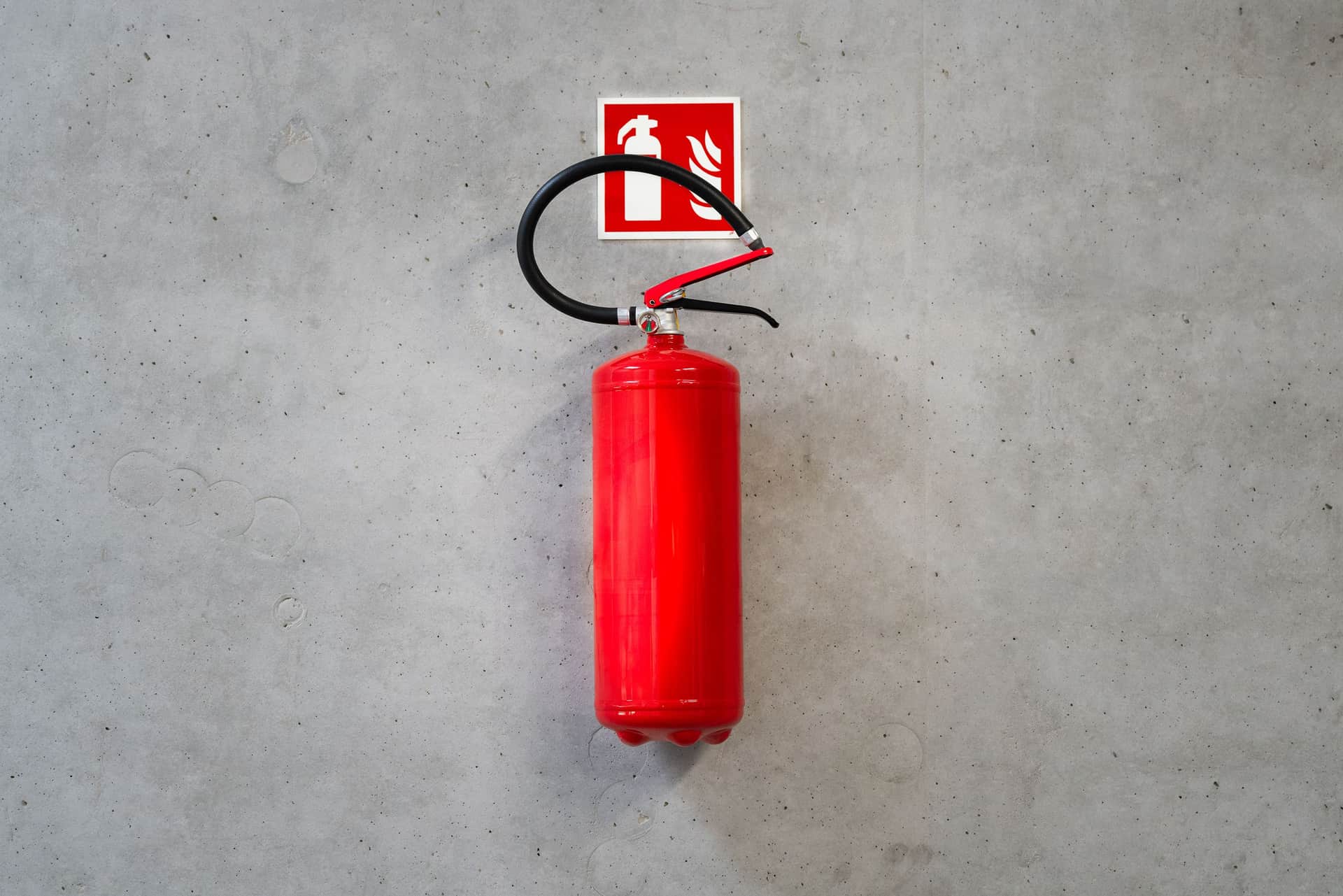 First Alert EZ Fire Spray AF400 For the first five seconds of a single small cell. Nothing more. | A device on a worktop, caught immediately | 4.9/ 10 | Check price on Amazon #ad how we are funded · we do not cache prices |
The options, ranked honestly
Illustrative photo
1. The fire around the battery
Amerex B500 5 lb ABC Dry Chemical Extinguisher
It will not stop the cells. It will stop the room catching.
- Listed to
- UL rated 2-A:10-B:C
- Sensing / agent
- Monoammonium phosphate dry chemical
- Power / service life
- Rechargeable; all-metal valve and body
We have put this first not because it solves the problem but because it is the honest best answer available to a household, and the distinction between the two is the point of this page.
What thermal runaway is: a cell that overheats, mechanically fails or is overcharged begins an exothermic reaction that heats neighboring cells, which then do the same. The reaction releases oxygen from the cathode material, so the fire carries its own oxidizer. Smothering does nothing to a reaction that does not need your air, and dry chemical does not remove enough heat to interrupt the cascade.
What the extinguisher does do is control the ordinary fire the event starts — the sofa the e-bike was charging on, the carpet, the cardboard, the curtains. That is a genuinely useful job, and on the timescale that matters it is the only one available to you.
The correct sequence is: get everyone out, call 911, tell them it is a lithium battery. If and only if the surrounding fire is small, contained and between you and nothing, use the extinguisher on that while leaving. Do not stand over a venting pack.
What it does well
- 2-A:10-B:C covers the furniture, flooring and fittings a battery fire ignites around it
- The C rating means it is safe to use around energized equipment, which a charging device is
- All-metal valve, rechargeable, widely available
- It is the extinguisher you should already own for every other reason
The downside
- **Will not stop a pack in thermal runaway**, and nothing on a shop shelf will
- Dry chemical does not cool the cells, and cooling is the whole problem
- Corrosive residue over everything, including the device
Do not buy this if: you believe it addresses the battery itself. It does not. Buy it because every house should have one, and understand that in a battery event its job is the surroundings while everyone leaves.
- All-metal valve rather than plastic, which is the difference between a serviceable unit and a disposable one
- Rechargeable, so a partial discharge during a small fire does not write off the extinguisher
- 2-A:10-B:C covers ordinary combustibles, flammable liquids and energized electrical equipment
- 5 lb is heavier than the supermarket unit and needs a proper bracket
#ad how we are funded · we do not cache prices
Illustrative photo
2. The agent with published lithium testing
F-500 EA Encapsulator Agent Extinguisher
Real published testing against runaway. A facilities product, not a household one.
- Listed to
- Tested to the Dutch NEN NTA 8133 lithium-ion protocol; sold through professional channels
- Sensing / agent
- F-500 EA encapsulator agent, applied through a misting nozzle
- Power / service life
- Rechargeable; professional service
F-500 EA is an encapsulator agent: a surfactant chemistry that encapsulates hydrocarbons and interrupts the combustion chain reaction, applied as a fine mist. The mist is not a detail — the cooling effect depends on surface area, and the manufacturer specifies a misting nozzle for small lithium-ion fires for that reason. The manufacturer's material sets out the application.
What earns it a place here is that it has been tested and the results are published — it has passed NEN NTA 8133, a Dutch protocol specifically for lithium-ion battery fire suppression. In a subject full of marketing claims about battery fires, an actual named protocol is worth a great deal.
The caveats are real and we would rather state them than sell around them. It is a professional product with professional pricing and distribution. And even with the right agent and nozzle, a large pack already in full runaway is beyond a handheld unit — the published testing is about stopping propagation in smaller batteries, not about defeating an EV pack.
AVD, an aqueous vermiculite dispersion, is the other agent in this space and is similarly a professional product. Both change what an early response can achieve; neither makes a battery fire a domestic DIY job.
What it does well
- One of very few agents with published testing against lithium-ion thermal runaway — it has passed the Dutch NEN NTA 8133 protocol
- The misting nozzle is what makes it work on small cells; the agent alone is not the trick
- Encapsulator chemistry cools as well as interrupting combustion, which is the mechanism that matters here
- Serviceable, rechargeable professional equipment
The downside
- Priced and distributed for facilities rather than households
- Not something you will find in a hardware shop
- **Will still not stop a large pack already in full runaway** — no handheld will
Do not buy this if: you are a household looking for a shelf product. This is here because it is the honest answer to 'what actually has evidence', and because if you run a workshop, a bike shop or a building with a battery store, it is worth knowing about.
- One of very few agents with published testing against lithium-ion thermal runaway
- The misting nozzle is what makes it work on small cells — the agent alone is not the trick
- Priced and distributed for facilities, not households
- It will not stop a large pack already in full thermal runaway, and nothing sold to consumers will
Hazard Control Technologies product documentation
#ad how we are funded · we do not cache prices
Illustrative photo
3. A device on a worktop, caught immediately
First Alert EZ Fire Spray AF400
For the first five seconds of a single small cell. Nothing more.
- Listed to
- Aerosol extinguishing spray — not a UL-rated A:B:C portable extinguisher
- Sensing / agent
- Sodium-bicarbonate-based extinguishing aerosol
- Power / service life
- Single use; check the stamped expiry
Ranked last and included only for completeness. If a device on a desk starts venting and you have this in a drawer, using it on the immediate surroundings while you get everyone out is not wrong.
But there is no published testing for lithium-ion here, the agent quantity is very small, and a venting cell produces toxic gas you should not be standing in.
The better instinct, almost always, is the door. A phone or a power bank is not worth a lungful of vented electrolyte.
What it does well
- Immediately to hand, which for a device fire caught at the start is worth something
- Wipes up instead of coating a kitchen or desk in corrosive powder
- No pin, no gauge, no aim required
The downside
- **No published lithium-ion testing of any kind**
- Not a rated extinguisher
- Tiny agent quantity and single use
Do not buy this if: anything bigger than a phone or a single small cell caught in the first seconds, and honestly not that either if you can simply leave. We have included it because people will reach for whatever is nearest, and it is better than nothing on the surrounding fire — not because it addresses a battery.
- Aerosol can format — no pin, no pressure gauge, aim and spray
- Wipes up with a cloth instead of the corrosive mess dry chemical leaves
- Genuinely easier for someone who will never practice with a real extinguisher
- It is not a rated extinguisher and does not satisfy a code requirement for one
#ad how we are funded · we do not cache prices
What actually prevents this
Since the suppression answer is weak, the prevention answer carries the weight. All of this is free.
- Charge on a hard, non-combustible surface. Not on a bed, a sofa, a carpet or a pile of paper. The furnishing is what turns a cell failure into a house fire.
- Do not charge overnight or while out, particularly e-bikes, e-scooters and anything with a large pack. Charge when someone is awake and present.
- Charge away from your escape route. An e-bike charging in a hallway by the front door blocks the exit if it fails. A garage, a shed or an outbuilding is better; a hallway is the worst place in the house.
- Use the manufacturer's charger. Mismatched and counterfeit chargers are a documented cause, and the saving is trivial against the risk.
- Retire damaged, swollen, dropped or water-damaged packs immediately. A swollen cell is a warning, not a cosmetic issue. Check CPSC recalls for your devices too.
- Do not buy unbranded replacement packs for e-bikes, scooters or tools. This is the single most common factor in the e-mobility fire statistics.
- Dispose of batteries properly, at a collection point rather than in household waste. Bin and truck fires from discarded cells are a genuine and growing problem.
- Fit a smoke alarm where you charge. A garage is a heat-detector space rather than a smoke-alarm one; a utility room or hallway is not. Placement.
What we will not tell you
That any product on a consumer shelf reliably stops a lithium-ion pack in thermal runaway. Several are marketed as though they do, using language that stops just short of the claim, and there is no published testing behind most of it.
We would rather write a page that ends in 'get out and call 911' than sell a product that fails at the worst moment. If a genuinely available consumer product with published testing against lithium-ion runaway appears, this page will change and its last-reviewed date will move.
What we can tell you is that a rated ABC extinguisher near your escape route, a charging routine that keeps packs off soft furnishings and away from exits, and working smoke alarms are the three things that genuinely change outcomes here. Two of the three cost nothing.
Questions people actually ask
What kind of fire extinguisher works on lithium battery fires?
Can you put out a lithium-ion battery fire with a normal extinguisher?
Should you use water on a lithium battery fire?
What do I do with a swollen lithium battery?
Where should I charge an e-bike battery?
Can a lithium battery fire reignite after it goes out?
How these picks were chosen. On published specifications, safety listings and manufacturer documentation — plus the findings of organizations that do run tests. We have no laboratory and we do not burn anything. Read the full methodology.
Sources
- NFPA — Lithium-ion battery safety
- CPSC — Recalls and product safety news
- Hazard Control Technologies — F-500 EA encapsulator agent fire extinguishers
- UL Solutions — Fire extinguisher testing and certification (UL 711)
Read next

Fire Extinguishers
The Best Fire Extinguishers for a Home
Four rated units, what the numbers mean, and why the valve material matters.

Fire Extinguishers
The Best Fire Extinguishers for a Car
Size, rating and the mount — plus why you should not open a smoking hood.

Fire Extinguishers
Fire Extinguisher Classes
The full class chart, what the numbers measure, and which agent suits which fire.

Placement & Code
Home Fire Safety Checklist
A printable room-by-room audit of alarms, CO detection, exits and suppression.
Fire Extinguishers
How to Use a Fire Extinguisher
PASS, the two decisions that come first, and why aiming at the flames wastes the charge.