Fire Extinguishers
The Best Fire Extinguishers for a Car
An unsecured cylinder in a car is a projectile. The mount matters as much as the rating, and in a crash it matters more.
By Ryder M.Last reviewed
A car wants a compact ABC extinguisher rated at least 1-A:10-B:C, mounted securely where the driver can reach it from the seat — the First Alert HOME1 at 2.5 lb is the right size class, and an aerosol spray in the door pocket is a reasonable addition. The B and C ratings are what matter here, because a vehicle fire is fuel, oil and electrical. And the rule that overrides the product: if there is smoke from a closed hood, get everyone away from the vehicle and call 911 rather than opening it.
Siren & Safe is reader-funded. We earn a commission on some links on this page, at no cost to you. It does not change what we recommend or the order we rank it in. Full disclosure.
What a car fire actually is
Almost never ordinary combustibles first. A vehicle fire typically starts as a flammable liquid or electrical event: a fuel or oil leak onto a hot exhaust or turbo, a hydraulic line, an overheating wiring loom, a failed alternator, or increasingly a battery.
That is why the B and C ratings are the ones to read on the label. An extinguisher with a high A rating and no B is the wrong tool for a car.
It also explains why engine-bay fires are so unforgiving. By the time smoke is visible at the edges of a closed hood, the fire is established in a compartment full of fuel lines, plastics and wiring, with the whole thing above your head once you lift the panel.
Interior fires are the ones an extinguisher genuinely addresses: a discarded cigarette, a charger or device battery, a fault under the dash, cargo. Those are contained, visible and reachable.
Quick picks
Scored against fits a vehicle, b and c capability, mountability, rated and serviceable and reach from the seat. Tap a row for the full write-up. No price is shown anywhere on this site because we do not cache retailer prices.
| # | Product | Best for | Score | Price |
|---|---|---|---|---|
| 1 |  First Alert HOME1 Rechargeable Home Extinguisher (2.5 lb) 2.5 lb, rated, rechargeable, with a bracket. The right size class for a vehicle. | A car or small van | 8.4/ 10 | Check price on Amazon #ad how we are funded · we do not cache prices |
| 2 | 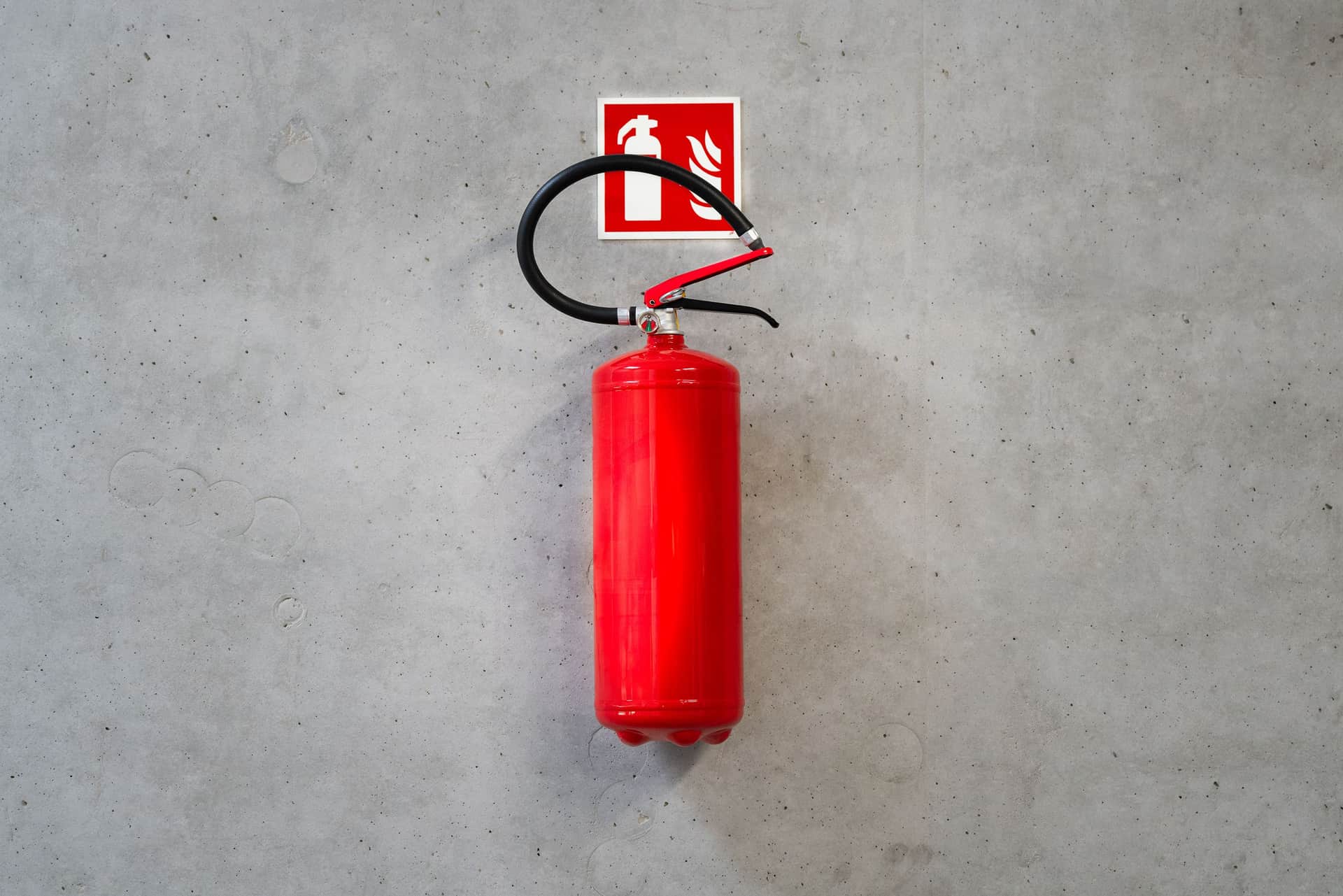 First Alert EZ Fire Spray AF400 The one you can actually use through a half-open window. | A door pocket or glovebox | 7.1/ 10 | Check price on Amazon #ad how we are funded · we do not cache prices |
| 3 | Kidde Pro 210 4 lb Multi-Purpose Extinguisher Step up to 4 lb where there is space and more to burn. | A van, truck or towing vehicle | 7.3/ 10 | Check price on Amazon #ad how we are funded · we do not cache prices |
The vehicle picks in full
Illustrative photo
1. A car or small van
First Alert HOME1 Rechargeable Home Extinguisher (2.5 lb)
2.5 lb, rated, rechargeable, with a bracket. The right size class for a vehicle.
- Listed to
- UL rated 1-A:10-B:C
- Sensing / agent
- Monoammonium phosphate dry chemical
- Power / service life
- Rechargeable by a certified professional; metal head and pull pin
Size is the first constraint in a vehicle, and it is why a 5 lb household unit is the wrong answer. You need something that mounts out of the way, stays put through a year of cornering, and can be retrieved from the driver's seat or from immediately outside the door.
The ratings that matter are B and C. A vehicle fire is fuel, oil, hydraulic fluid and wiring — flammable liquids and energized electrical equipment. The 10-B:C on this unit covers both. The 1-A is a bonus for upholstery and cargo.
Mount it, properly. Under the driver's seat, on a seat-rail bracket, or in the boot within reach of the tailgate, using the bracket and actual fasteners. In a collision an unsecured 2.5 lb cylinder is a missile. This is the part people skip and it is the part with the worst consequences.
Check the gauge more often than you would at home. A car cabin cycles between freezing and very hot, which is harder on a pressurized cylinder than a hallway wall.
What it does well
- 2.5 lb and compact enough to mount under a seat or in a boot without losing the space
- UL rated 1-A:10-B:C, so the B and C capability a vehicle needs is covered
- Metal head and metal pull pin with a safety seal, rechargeable rather than disposable
- Mounting bracket included — the part that actually matters in a car
The downside
- 1-A is a modest ordinary-combustible rating, though that is rarely the vehicle case
- Short run time; this is a first-response unit
- A cabin is a temperature-cycling environment and gauges should be checked more often than at home
Do not buy this if: you cannot mount it properly. An extinguisher rolling around a footwell or loose in a boot is worse than none: it is unavailable when you need it and dangerous in a collision.
- 2.5 lb — the lightest unit most people can aim accurately with one hand
- Metal head and a metal pull pin with a safety seal, not the plastic valve of the disposable tier
- Color-coded corrosion-resistant gauge and a mounting bracket in the box
- 1-A is half the ordinary-combustible rating of a 2-A unit, which is the trade for the size
First Alert product documentation
#ad how we are funded · we do not cache prices
Illustrative photo
2. A door pocket or glovebox
First Alert EZ Fire Spray AF400
The one you can actually use through a half-open window.
- Listed to
- Aerosol extinguishing spray — not a UL-rated A:B:C portable extinguisher
- Sensing / agent
- Sodium-bicarbonate-based extinguishing aerosol
- Power / service life
- Single use; check the stamped expiry
The genuine advantage in a car is reach. A rated extinguisher mounted under a seat or in the boot is several seconds and a door away. An aerosol in the door pocket is in your hand.
For the specific fires a car interior produces — a cigarette in upholstery, a charger or a phone battery on a seat, a small electrical fault under the dash — that immediacy is worth more than capacity.
Do not let it substitute for the rated unit. And check the stamped date: a can that has spent three summers in a hot glovebox deserves replacing on schedule.
What it does well
- Fits a door pocket or glovebox, so it is genuinely within reach from the seat
- No pin and no gauge — usable one-handed with no recollection required
- Residue wipes off rather than coating the interior with corrosive powder
- Cheap enough to have one in each vehicle
The downside
- **Not a UL-rated extinguisher** and will not satisfy any requirement for one
- Single use, with an expiry date nobody checks
- Very little agent — adequate for a contained interior fire at most
Do not buy this if: it is the only thing in the vehicle, or you need a rated unit for a track day, a commercial vehicle or an inspection. It is a companion to a rated extinguisher, not a replacement.
- Aerosol can format — no pin, no pressure gauge, aim and spray
- Wipes up with a cloth instead of the corrosive mess dry chemical leaves
- Genuinely easier for someone who will never practice with a real extinguisher
- It is not a rated extinguisher and does not satisfy a code requirement for one
#ad how we are funded · we do not cache prices
Illustrative photo
3. A van, truck or towing vehicle
Kidde Pro 210 4 lb Multi-Purpose Extinguisher
Step up to 4 lb where there is space and more to burn.
- Listed to
- UL rated 2-A:10-B:C
- Sensing / agent
- Monoammonium phosphate dry chemical
- Power / service life
- Rechargeable; mounting bracket included
A van or pickup changes the arithmetic. There is cargo, there are often tools and fuel cans, and there is physical space to mount something larger. The A rating starts to matter because there is genuinely more ordinary combustible material aboard.
Towing is the other case. A trailer, horsebox or caravan adds a lot of material and a set of bearings and brakes that can overheat, and a 4 lb unit is a reasonable minimum.
Mount it where you can reach it from outside as well as from the seat — in a van, that usually means near the side or rear door rather than deep in the load space.
What it does well
- 2-A:10-B:C with meaningfully more run time than a 2.5 lb unit
- Rechargeable with a bracket included
- Suits a van or truck with cargo, tools and fuel aboard
- The right unit if you tow — a trailer or caravan adds a lot of burnable material
The downside
- Too big to mount conveniently in a small car
- Harder to reach quickly from a driver's seat
- Temperature cycling applies here too
Do not buy this if: a normal passenger car. There is nowhere good to put it, and an extinguisher in an awkward place is one you will not reach in time.
- 4 lb — the lightest unit that still reaches a 2-A rating, which matters for one-handed use
- Rechargeable, with the bracket in the box
- Same 2-A:10-B:C class coverage as heavier units, with less run time
- Less agent means less margin for error if the first attempt misses
#ad how we are funded · we do not cache prices
Mounting it so it is there when you need it
The mount is the part of this purchase that determines whether it works. Do not skip it.
Pick a position you can reach from the driver's seat or the open door
Under the driver's or passenger's seat on a seat-rail bracket is the usual answer in a car. In a van, near the side or rear door so it is reachable from outside too.
Use the bracket and real fasteners
Not a bungee, not a strap, not wedged under a seat. In a collision an unsecured cylinder becomes a projectile that can injure the people it was bought to protect.
Check nothing fouls the seat mechanism or the pedals
Operate the seat through its full travel and check the pedals are clear with the bracket in place.
Keep it out of direct sun where you can
A cylinder baking on a rear shelf all summer ages faster. Under a seat is cooler as well as more accessible.
Check the gauge every few months
More often than at home, because a cabin cycles through a much wider temperature range. A gauge outside the green means replace or recharge now.
Tell everyone who drives it where the extinguisher is
An extinguisher nobody knows about is decoration. Say it once, out loud, to every regular driver.
Electric vehicles, honestly
A handheld extinguisher will not stop a traction battery in thermal runaway. Nothing sold to consumers will. Once a large lithium-ion pack is in runaway, the reaction produces its own oxidizer inside the cells, it burns at very high temperature, and it can reignite hours later — which is why fire services use very large volumes of water and why damaged EVs are sometimes quarantined in the open.
What an extinguisher in an EV is genuinely for is the same as in any car: an interior fire, a cargo fire, a small electrical fault outside the pack. That is worth having.
What matters far more for an EV is the response: get everyone out and well clear, call 911, and tell them it is an electric vehicle so they arrive with the right plan. Do not sit in a vehicle whose pack is warning about a thermal event.
Lithium battery fires covers the mechanism and what does and does not work, including the agents that have published testing against small cells.
What else belongs in a vehicle
A fire blanket is worth more in a car than people expect — not for the engine, but for a person whose clothing has caught, which is a realistic scenario at a roadside or a fuel pump. A cheap one in the boot costs almost nothing. Blanket picks.
A seatbelt cutter and window breaker, which is a different emergency but the same glovebox.
A torch, because vehicle fires and breakdowns are disproportionately at night.
And if the vehicle is an RV or a camper, the carbon monoxide question is entirely separate and more dangerous than the fire one. CO detectors for RVs and travel.
Questions people actually ask
What kind of fire extinguisher should I keep in my car?
Where should a fire extinguisher be mounted in a car?
Should I open the hood if my engine is smoking?
Will a fire extinguisher put out an electric car fire?
How often should I check a car fire extinguisher?
Is an aerosol fire spray enough for a car?
How these picks were chosen. On published specifications, safety listings and manufacturer documentation — plus the findings of organizations that do run tests. We have no laboratory and we do not burn anything. Read the full methodology.
Sources
Read next
Fire Extinguishers
The Best Fire Extinguishers for Lithium Battery Fires
Why no consumer unit stops a pack in runaway, and what genuinely helps instead.

Fire Extinguishers
Fire Extinguisher Classes
The full class chart, what the numbers measure, and which agent suits which fire.

Fire Extinguishers
The Best Fire Extinguishers for a Home
Four rated units, what the numbers mean, and why the valve material matters.

Fire Extinguishers
Aerosol Spray vs Traditional Extinguishers
Rated capability against something an untrained person will actually use.
Carbon Monoxide Detectors
The Best CO Detectors for RVs and Travel
A battery unit for the bag, and why an RV needs an RV-listed alarm instead.