Smoke Detectors
The Best Smoke Detectors for a Hallway
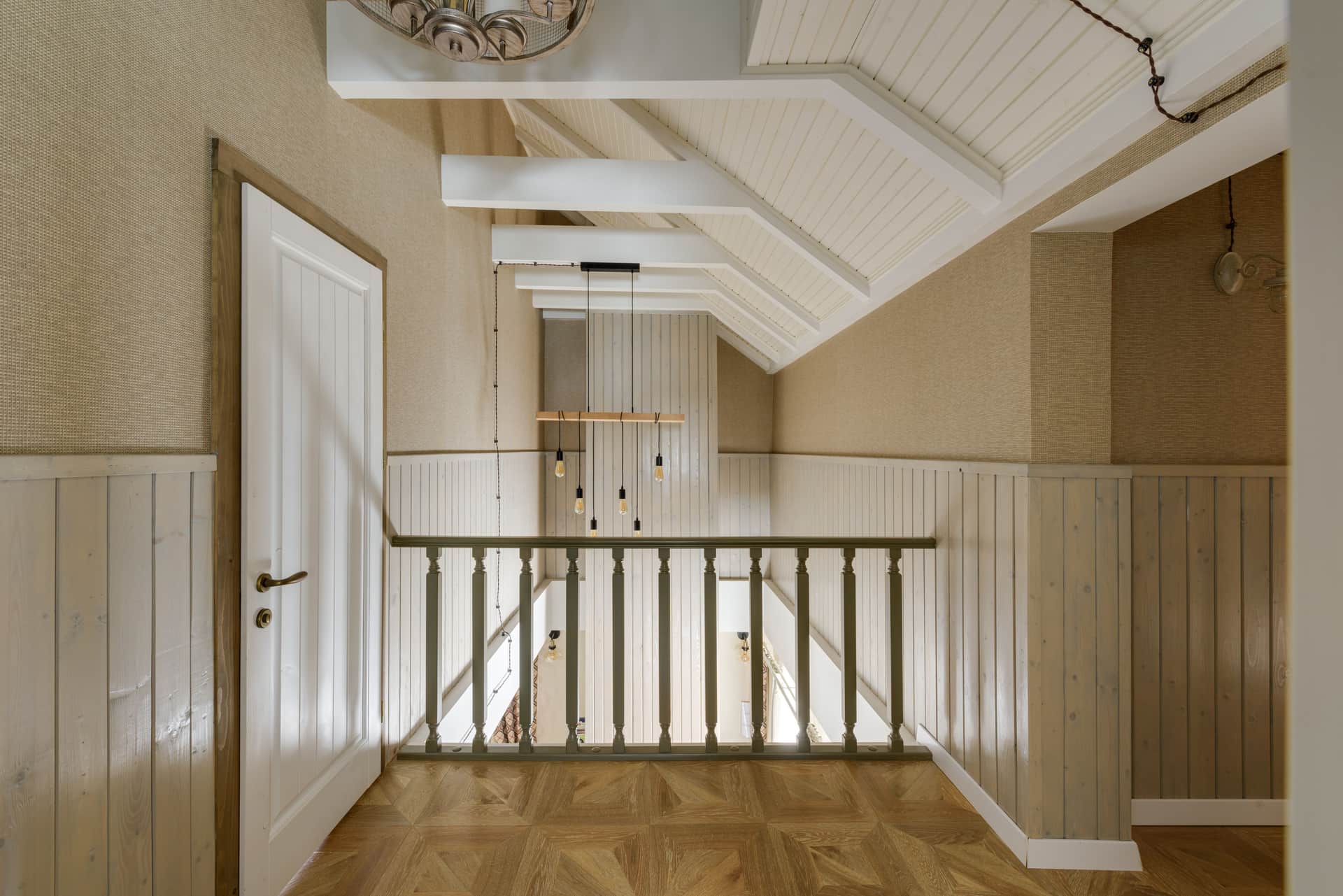
Outside the sleeping areas is the position the residential code is written around, and the one where orientation matters more than anywhere else in the house.
By Ryder M.Last reviewed
Buy the First Alert SM210V for a hallway: a sealed ten-year photoelectric alarm that announces the location you programmed, which is worth real money in the one position where a half-woken person has to decide which way to go. The budget pick is the Kidde 20SD10 - the cheapest certified alarm in this registry, and a perfectly good hallway alarm if you would rather spend the difference on covering the bedrooms too. If the ceilings are already wired for alarms, the First Alert SMI105-AC keeps the wired interconnect, which is the single most valuable feature available in this position: a hallway alarm that sounds when the basement alarm detects is doing the job the code asks of it.
Siren & Safe is reader-funded. We earn a commission on some links on this page, at no cost to you. It does not change what we recommend or the order we rank it in. Full disclosure.
Why the hallway is the position that matters most
If a house has one smoke alarm, the residential code pattern says it goes outside the sleeping areas, in the immediate vicinity of the bedrooms - which in most homes means the hallway or the landing. That is not an arbitrary choice. It is the position that catches smoke traveling from anywhere on the floor while bedroom doors are shut, and it is the position whose sound has to reach every sleeping person in the house.
The modern pattern adds to it rather than replacing it: an alarm inside each bedroom, one outside each separate sleeping area, and one on every story including the basement. The hallway unit is the hinge of that arrangement, and it is the one most houses already have. The question for most buyers is therefore not whether to put an alarm there but which alarm to put there, and the answer turns on two features: sensor type and interconnection.
On sensor type, a hallway is a smoldering-smoke position. Smoke that has traveled from another room has cooled and aged, and photoelectric sensing responds to that sooner. It also nuisance-trips less on the cooking aerosol that drifts out of a kitchen into exactly this space - which is why the clearance guidance keeps alarms out of a 10 foot radius of a fixed cooking appliance where the layout allows, and permits a photoelectric unit closer where it does not.
On interconnection, the hallway is the position where it pays most. An alarm that sounds only for what reaches its own ceiling is deaf to a basement or garage fire until the smoke has climbed the house. Wired or wireless, interconnection is the feature to buy here before voice, before displays and before apps. How far apart should smoke detectors be covers spacing along a long hallway, and smoke detector placement covers the clearances.
Quick picks
Scored against right sensor for the position, orientation value, ten-year upkeep, nuisance resistance and install simplicity. Tap a row for the full write-up. The price in each buy button is the live Amazon price at the last check, stamped with the date it was taken.
| # | Product | Best for | Score | Price |
|---|---|---|---|---|
| 1 | 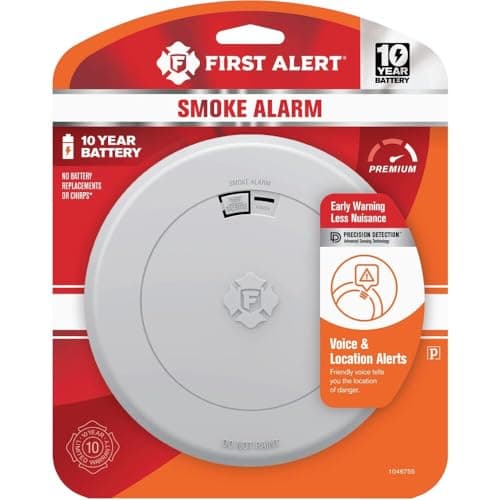 First Alert SM210V 10-Year Battery Smoke Alarm with Voice Alerts A sealed ten-year photoelectric alarm that says the room it is in. The hallway is the one position where a spoken location earns its premium. | A hallway or landing where the house has more than one floor | 9.1/ 10 | $40.82 · View on Amazon #ad how we are funded · price as of November 11, 2026 |
| 2 | 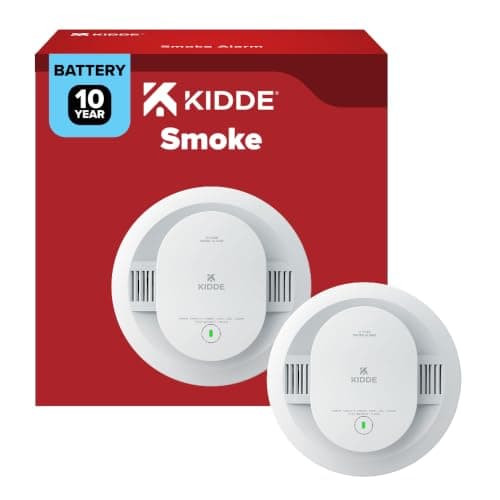 Kidde 20SD10 10-Year Battery Smoke Alarm The cheapest certified alarm here. A good hallway alarm, and the one that makes covering every bedroom affordable at the same time. | The budget pick - covering the hallway and the bedrooms in one purchase | 8.5/ 10 | $32.47 · View on Amazon #ad how we are funded · price as of November 11, 2026 |
| 3 | 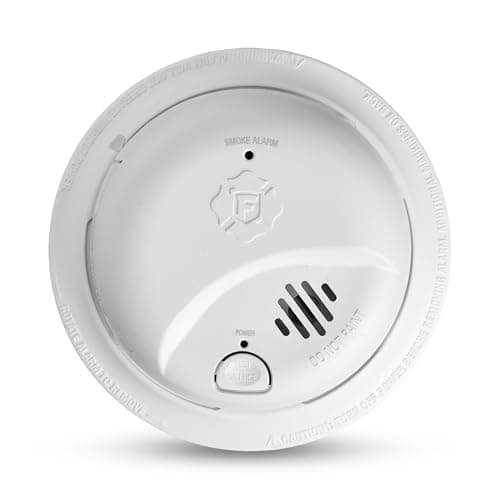 First Alert SMI105-AC Hardwired Smoke Alarm with 10-Year Battery Backup A hardwired photoelectric alarm with a ten-year backup cell and wired interconnect. In a hallway, interconnect beats every other feature available. | A wired house - the hallway alarm that sounds when another floor detects | 8.9/ 10 | |
| 4 | 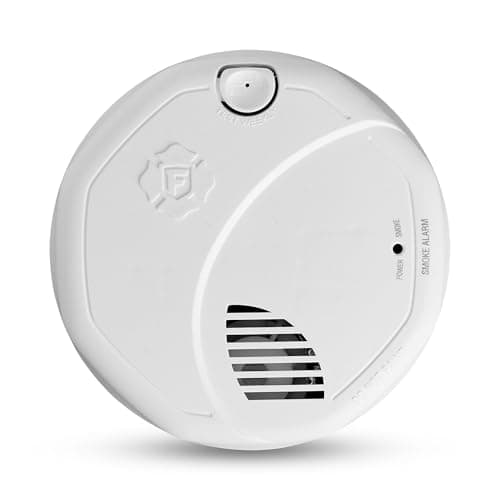 First Alert SM310 10-Year Sealed Battery Dual Sensor Smoke Alarm The only dual-sensor alarm in this registry: photoelectric and ionization chambers in one housing, so it is not trading one fire type for the other. | A hallway next to a kitchen, where one sensor type is not enough | 8.4/ 10 |
The picks
1. A hallway or landing where the house has more than one floor
First Alert SM210V 10-Year Battery Smoke Alarm with Voice Alerts
A sealed ten-year photoelectric alarm that says the room it is in. The hallway is the one position where a spoken location earns its premium.
- Listed to
- UL 217 — First Alert states compliance with the latest edition
- Sensing / agent
- Photoelectric smoke sensing, with spoken annunciation
- Power / service life
- Sealed 10-year lithium battery
Why the hallway is the orientation position. Bedroom alarms tell you about your own room. The hallway alarm is the one that wakes a household and sends it somewhere, and "somewhere" is a decision: down the stairs, or back into a bedroom and out of a window. An alarm that names the floor it is on shortens that decision, and in the dark, shortening decisions is the whole game.
Photoelectric is the right sensor here, not a preference. Hallway and landing fires usually reach the alarm as cool, smoldering smoke that has traveled - furniture, wiring, a smoldering mattress through an open door. Photoelectric sensing responds to that sooner than ionization and nuisance-trips less on cooking drifting out of a kitchen.
Program it on the table. Set the label, test it, then mount it. An alarm announcing the wrong floor is worse than one announcing nothing.
What it does well
- **Voice alert naming the location you programmed**, which in a stairwell answers the only question that matters: is the fire above me or below me
- **Photoelectric sensing published by First Alert** - the correct sensor type for a hallway, where smoldering smoke arrives before flame
- **Sealed 10-year cell** with no low-battery chirps and an end-of-life warning
- **85 dB at 10 ft and a 10-year limited warranty**, both published by the manufacturer
- **Two screws, no wiring**, so it suits a hallway with no alarm cable
- Distinct malfunction signal, so a fault reads as replace rather than reset
The downside
- **Smoke only.** No CO cell, so a hallway in a gas house still needs CO coverage from another device
- **No interconnect**, which in a hallway is the feature you most want - this alarm sounds alone
- **The voice is a recorded label from a fixed list**, not a custom message
- **Near the top of the budget** for a feature that does nothing in a single-story flat
- Sealed and disposable at ten years
Do not buy this if: a wired house, where the interconnected unit below gives you something more valuable than a voice. A single-floor apartment does not need the location announcement either - see [best smoke detectors for apartments](/smoke-detectors/best-smoke-detectors-for-apartments).
- Speaks rather than only sounding a horn, which removes the 3am question of what the noise means
- Photoelectric sensing — the right sensor for a hallway or a landing
- Sealed ten-year cell, so the alarm never asks to be reached
- Part of First Alert's current SM-series rather than the outgoing SMI line
First Alert product documentation
#ad how we are funded · price as of November 11, 2026
2. The budget pick - covering the hallway and the bedrooms in one purchase
Kidde 20SD10 10-Year Battery Smoke Alarm
The cheapest certified alarm here. A good hallway alarm, and the one that makes covering every bedroom affordable at the same time.
- Listed to
- UL 217, 10th edition (UL 217-2024 Ed.10)
- Sensing / agent
- Photoelectric smoke sensing only — no CO cell
- Power / service life
- Sealed 10-year lithium battery; 10-year limited warranty
The honest budget argument. NFPA's analysis of US home fires puts nearly three in five home fire deaths in homes with no working smoke alarm. Going from one hallway alarm to a hallway alarm plus one in every bedroom moves that number far more than any feature on any box - and at this price it is one purchase, not a project.
It is still the right class of alarm. Certified to the current UL 217 edition, sealed for a decade, with reduced-nuisance sensing. Cheap here means fewer features, not a worse detector.
Date them all on day one. Buy four, install four, write the same month on all four, replace all four together.
What it does well
- **Lowest price in the roundup by a clear margin**, which turns a hallway-only install into a whole-floor install
- **Certified to UL 217 10th edition**, the current edition with the cooking-nuisance test
- **Sealed 10-year battery** and no low-battery chirps across its life
- **Three long beeps and a red flash on smoke**, so the pattern identifies the hazard
- **Twist-and-click bracket** and a self-test rather than waiting for you to press the button
- A brand an inspector, landlord or home buyer recognizes on sight
The downside
- **No CO cell**, so a hallway in a house with gas, oil, a fireplace or an attached garage needs a second device
- **No interconnect**, so it sounds where it is
- **Kidde does not name the sensor type** - the published wording is "advanced sensing technology"
- **No voice and no display**, so it contributes nothing to orientation
- Sealed, so scrap at ten years
Do not buy this if: the only alarm in a house with a fuel-burning appliance. If you want one device for both hazards in the hallway, see [best combination smoke and CO alarms](/smoke-detectors/best-combination-smoke-and-co-alarms).
- Listed to the 10th edition of UL 217, which carries the cooking-nuisance test the 8th edition introduced
- Kidde's own wording: advanced sensing technology helps distinguish real smoke from everyday cooking or steam
- No low-battery chirps for ten years — the first end-of-life beep is the replacement signal
- Three long beeps and a red flash on smoke, so the pattern tells you which hazard it is
- Twist-and-click bracket, and it self-tests rather than waiting for you to press the button
#ad how we are funded · price as of November 11, 2026
3. A wired house - the hallway alarm that sounds when another floor detects
First Alert SMI105-AC Hardwired Smoke Alarm with 10-Year Battery Backup
A hardwired photoelectric alarm with a ten-year backup cell and wired interconnect. In a hallway, interconnect beats every other feature available.
- Listed to
- UL 217 — First Alert states compliance with the latest edition
- Sensing / agent
- Photoelectric smoke sensing only — no CO cell
- Power / service life
- 120V AC with a sealed 10-year lithium backup battery
Interconnect is the hallway feature. A hallway alarm exists to wake a sleeping household. If it can only detect what reaches its own ceiling, it is blind to a fire starting in a basement, a garage or a loft until the smoke has traveled the whole house - which is exactly the delay that kills people. An interconnected hallway alarm removes that delay for the price of using wiring you already have.
Do the whole loop at once. Alarms on a shared circuit age together, and one new unit on an old loop is a loop that chirps again next year.
If there is no wiring, radio does the same job. A wireless-interconnect set gets you the same functional outcome without cable through finished ceilings - interconnected smoke alarms covers both routes.
What it does well
- **Wired interconnect** - when any compatible alarm on the circuit sounds, this one sounds. That is what turns a basement fire into an upstairs alarm
- **10-year sealed backup battery**, so a tripped breaker does not silence the hallway
- **Photoelectric sensing on a hardwired circuit**, which is the configuration most US houses should be replacing into
- **Alarm-origin indicator** identifies which unit started it, which ends the hunt an interconnected system otherwise creates
- **Test and silence button** that holds the hush for up to eight hours
- **End-of-life warning** rather than silent expiry
The downside
- **Needs a wired base and 120 V.** No alarm cable in the ceiling means this is not the alarm, and an unfamiliar junction box means an electrician
- **Smoke only**, so CO still needs covering separately
- **First Alert does not name the sensor type** on the listing - the published wording is "Precision Detection"
- **Interconnect compatibility is per-brand and per-family**, not universal
- A nuisance alarm now sounds on every floor at once
Do not buy this if: a rental or any home with no alarm wiring - use the battery units above. Before mixing brands on an existing loop, read [are smoke alarms interchangeable](/smoke-detectors/are-smoke-alarms-interchangeable).
- Photoelectric sensing on a hardwired circuit, which is the combination most houses should be replacing into
- Precision Detection sensing, which First Alert states meets the new industry standards on cooking nuisance alarms
- Non-replaceable 10-year backup cell rather than an annual 9V change
- Test/silence button that holds the hush for up to eight hours
- Interconnects over the existing alarm circuit with compatible First Alert and BRK units
First Alert product documentation
4. A hallway next to a kitchen, where one sensor type is not enough
First Alert SM310 10-Year Sealed Battery Dual Sensor Smoke Alarm
The only dual-sensor alarm in this registry: photoelectric and ionization chambers in one housing, so it is not trading one fire type for the other.
- Listed to
- UL 217 — First Alert states compliance with the latest edition
- Sensing / agent
- Dual sensor: a photoelectric chamber and an ionization chamber in one housing
- Power / service life
- Sealed 10-year lithium battery; 10-year limited warranty
Why dual sensor at all. The two sensing technologies see different fires: ionization responds sooner to fast flaming fires, photoelectric sooner to smoldering ones, and the difference in the laboratory can be minutes. A hallway sees both kinds, because it sees whatever leaks out of every room on the floor. One housing with both chambers is the only way to have the faster sensor for each.
It is also the compromise. Ionization chambers are the reason burnt toast sets alarms off, so a dual-sensor unit inherits part of that. First Alert's answer is its Precision Detection sensing; the practical answer is the 10 foot clearance from a cooking appliance wherever the layout allows.
Use the lock if the hallway is shared. In a duplex, an HMO or a rental, an alarm that cannot be lifted off its bracket is an alarm that is still there next year.
What it does well
- **Dual sensor - photoelectric and ionization in one unit**, so flaming and smoldering fires both get the sensor that sees them first
- **First Alert states its Precision Detection sensing reduces cooking nuisance alarms**, which is the relevant claim for a hallway near a kitchen
- **Sealed 10-year lithium cell** with a 10-year limited warranty
- **Optional locking feature** that stops the alarm being lifted off its bracket - useful in a shared hallway
- **85 dB at 10 ft** and a compact 5 x 5 in body
- No wiring required
The downside
- **No CO cell**
- **No interconnect and no voice**
- **An ionization chamber is more nuisance-prone than photoelectric alone** - the dual design mitigates that rather than eliminating it
- **More expensive than the single-sensor battery alarms** for a benefit that is real but hard to see
- Sealed and disposable at ten years
Do not buy this if: a hallway opening directly onto a cooking area inside the usual clearance, where a photoelectric-only alarm is the quieter choice. [Ionization versus photoelectric](/smoke-detectors/ionization-vs-photoelectric) is the page that settles the sensor argument.
- The only dual-sensor unit here — photoelectric and ionization, so it is not trading one fire type for the other
- First Alert calls the sensing Precision Detection, and states it reduces cooking nuisance alarms
- 85 dB at 10 ft
- Optional locking feature that stops the alarm being lifted off its bracket
- 5 x 5 x 2 in, 0.54 lb
First Alert product documentation
The four alarms side by side
Specifications as published by the manufacturers, checked on 2026-11-10. The live price and the date it was taken sit in each buy button.
| Alarm | Sensor | Power | Interconnect | Orientation feature |
|---|---|---|---|---|
| First Alert SM210V | Photoelectric (published) | Sealed 10-year battery | None | Spoken room name |
| Kidde 20SD10 | Not named by Kidde | Sealed 10-year battery | None | None |
| First Alert SMI105-AC | Photoelectric (Precision Detection) | 120 V, 10-year backup | Wired, same family | Alarm-origin indicator |
| First Alert SM310 | Dual: photoelectric and ionization | Sealed 10-year battery | None | None |
Hallway spacing matters as much as the unit. On a long hallway, one alarm at each end beats one in the middle, and no alarm should sit within 36 in of a supply register, a bathroom door or the blade tip of a ceiling fan.
Getting a hallway alarm right
Three groups: position, clearances, and the test that actually tells you something.
Position
- In the immediate vicinity of the bedrooms, outside the sleeping area - the hallway or landing the bedroom doors open onto.
- On the ceiling where possible. A wall position is allowed but must sit within the manufacturer's published distance of the ceiling.
- On a long hallway, use two alarms rather than one, and keep to the published spacing rather than splitting the difference by eye.
- At the top of a stairwell rather than part way up, because smoke moves up the stairs.
Clearances
- At least 10 ft from a fixed cooking appliance where the layout allows, and a photoelectric unit if it does not.
- At least 36 in from a bathroom door, a supply register and the blade tip of a ceiling fan.
- Not in the dead air space right in a wall-ceiling corner, and not behind a door that swings over it.
- Away from a draught path that will dilute the smoke before it reaches the sensor - a window at one end of the hallway counts.
Test it the way you sleep
- Press the test button monthly on every alarm in the house.
- Then do the real test: bedroom door shut, fan on, lights off, someone presses the hallway alarm. If it is not unmistakable from the bed, you need an alarm inside the room.
- Vacuum the vents every six months, more often near a kitchen.
- If it nuisance-trips repeatedly, move it or change the sensor type - never take the battery out.
Questions people actually ask
What is the best smoke detector for a hallway?
Are smoke detectors required in hallways?
Photoelectric or ionization for a hallway?
How many smoke alarms does a hallway need?
Should the hallway alarm be interconnected?
How these picks were chosen. On published specifications, safety listings and manufacturer documentation — plus the findings of organizations that do run tests. We have no laboratory and we do not burn anything. Read the full methodology.
Sources
- UL Solutions — UL 217 — smoke alarms
- UL Solutions — UL 217, Standard for Smoke Alarms, published with new technical requirements
- NFPA — NFPA 72, National Fire Alarm and Signaling Code (2025 edition)
- NFPA — Smoke alarms — installation and placement guidance
- NFPA — Smoke Alarms in US Home Fires
- NFPA — Cooking equipment fires in US homes
- International Code Council — IRC Chapter 3 — building planning (R310, R314, R315)
- UpCodes — Specific location requirements for smoke alarms (NFPA 72 §29.11.3.4)
- First Alert — 10-year battery smoke alarm with voice alerts (SM210V) — product page
Read next
Smoke Detectors
The Best Smoke Detectors for a Home
Four alarms, what UL 217 tests, and why interconnection beats every other feature.
Smoke Detectors
The Best Smoke Detectors for Bedrooms
A bedroom alarm has one job: wake somebody asleep. Photoelectric, sealed, and ideally spoken.
Smoke Detectors
The Best Talking Smoke Detectors
Four certified alarms that say what they detected instead of sounding an ambiguous horn, compared on what the voice announces and whether you can program it.
Placement & Code
Smoke Detector Placement, Room by Room
The three requirements, the four exclusions, and an original placement diagram.
Placement & Code
How Far Apart Should Smoke Detectors Be?
30 ft nominal, 15 ft from a wall, 0.7 times the listed spacing to any point. Where those figures change the alarm count in a real house.
Smoke Detectors
Why interconnection matters most, and the wired, wireless and hybrid routes.