Smoke Detectors
Interconnected Smoke Alarms
This is the feature we weight above every other in the category, and most houses either have it and do not know, or do not have it and could.
By Ryder M.Last reviewed

Interconnected alarms all sound when any one of them detects something, which is what wakes a family on the far side of the house — a basement fire in a standalone-alarm house may not reach anyone upstairs until it is well developed. If your house has hardwired alarms they are almost certainly interconnected already, and the mistake to avoid is replacing them with standalone battery units. If it has no alarm wiring, wireless-interconnect alarms retrofit the behavior with no wiring at all.
Siren & Safe is reader-funded. We earn a commission on some links on this page, at no cost to you. It does not change what we recommend or the order we rank it in. Full disclosure.
Find out whether you already have it
Thirty seconds, no tools. Press and hold the test button on one alarm, and listen.
If every alarm in the house sounds, they are interconnected and you should protect that when you replace them.
If only the one you pressed sounds, they are standalone — and that is the gap this page exists for.
If some sound and some do not, you have a half-wired or partially-paired house, which is the most common and most deceptive situation because everything looks fine when tested individually. Note which ones answered and which did not.
Do this now rather than at your next replacement round. It costs nothing and it is the most informative test in the house.
Why it outranks every other feature
Because detection and warning are different problems, and interconnection solves the second one.
A standalone alarm in the basement detects a basement fire perfectly well. It then announces it to an empty basement. The people who need the warning are two floors up behind closed doors — and closed bedroom doors are strongly protective in a fire, which means they are also doing a good job of attenuating sound.
NFPA's data puts nearly three in five home fire deaths in homes with no alarms or with alarms that failed to operate. An alarm that sounded in a room nobody was in is not in that statistic, and it did not help either.
New construction reflects this: the residential code generally requires smoke alarms to be hardwired with battery backup and interconnected in new dwellings. Existing houses usually are not required to retrofit — which is exactly why so many are standalone, and why wireless interconnect is worth knowing about.
Quick picks
Scored against retrofit without wiring, units supported, both hazards covered, ten-year upkeep and cross-brand freedom. Tap a row for the full write-up. No price is shown anywhere on this site because we do not cache retailer prices.
| # | Product | Best for | Score | Price |
|---|---|---|---|---|
| 1 |  X-Sense SC07-W Wireless Interconnected Smoke & CO Alarm Whole-house alerting retrofitted with no wiring and nothing to maintain. | A house with no alarm wiring | 9.1/ 10 | Check price on Amazon #ad how we are funded · we do not cache prices |
| 2 | Kidde P4010ACSCO-W Wire-Free Interconnect Smoke & CO Alarm Bridges an existing wired circuit to rooms that have no alarm wiring. | A half-wired house | 8.4/ 10 | Check price on Amazon #ad how we are funded · we do not cache prices |
| 3 | 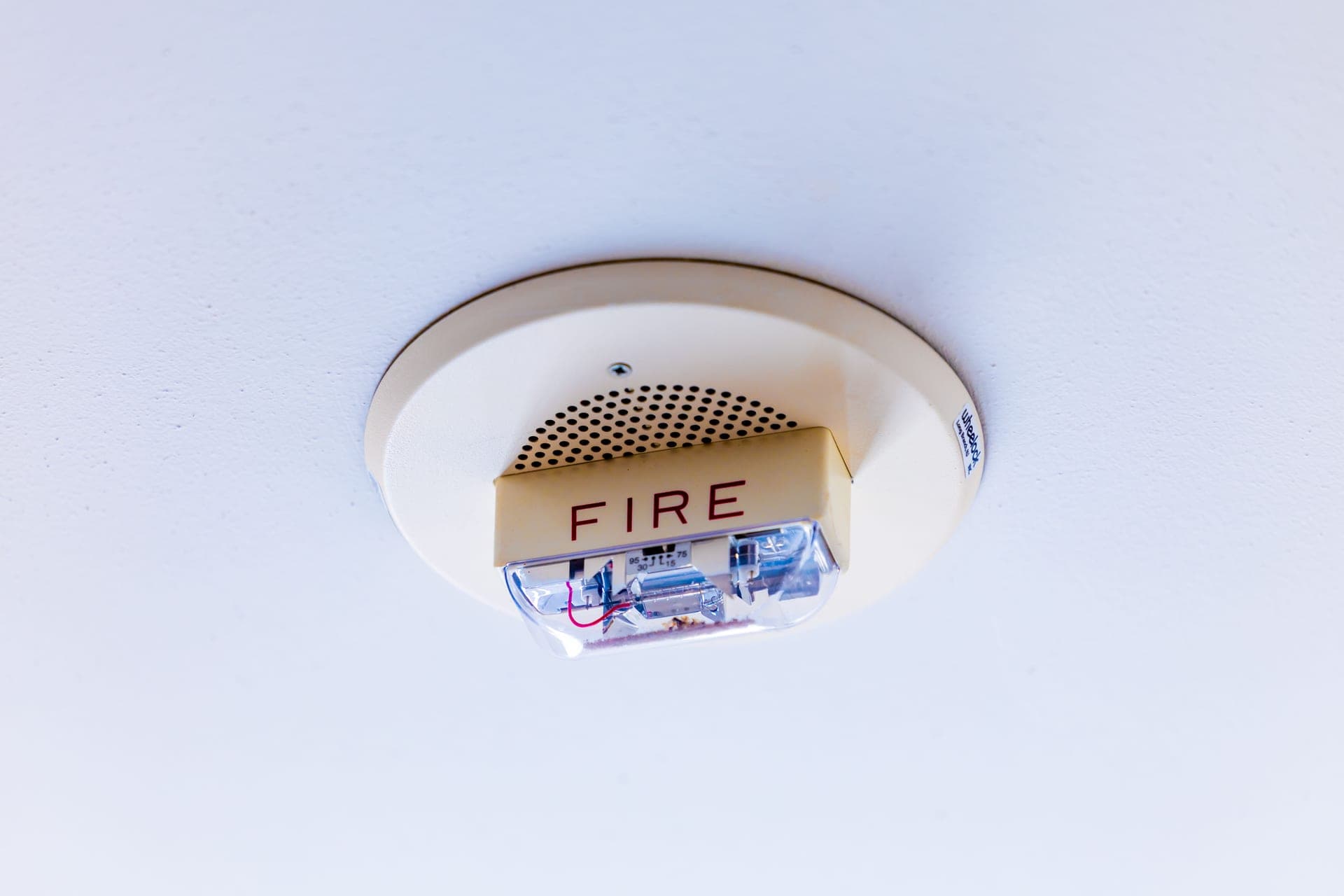 Kidde P4010ACSCO Hardwired Combination Smoke & CO Alarm The like-for-like replacement that preserves what the wiring gives you. | Keeping an existing wired set | 7.7/ 10 | Check price on Amazon #ad how we are funded · we do not cache prices |
The three routes in full
Illustrative photo
1. A house with no alarm wiring
X-Sense SC07-W Wireless Interconnected Smoke & CO Alarm
Whole-house alerting retrofitted with no wiring and nothing to maintain.
- Listed to
- UL 217 and UL 2034
- Sensing / agent
- Photoelectric smoke sensing plus an electrochemical CO cell
- Power / service life
- 10-year sealed lithium battery, not hardwired
For a house that never had alarm wiring, this is the single highest-value upgrade in this whole category. Retrofitting wired interconnection means opening walls at six positions; this is a mesh pairing during installation.
Why it matters more than any feature: a standalone alarm protects the room it is in. A house is a set of rooms with doors between them, and the doors are doing exactly what you want them to do in a fire — which also means they attenuate sound. A basement fire, a garage fire, a kitchen fire at 3am in a house of standalone alarms may be well developed before anyone upstairs hears anything.
It matters most in a household where someone needs help getting out. An adult cannot assist a child in a room they have not yet been warned about. Escape ladders for kids and older adults makes the same point from the other end.
No app and no network in the alerting path is a genuine advantage over the smart route. There is nothing here to be discontinued.
What it does well
- Wireless interconnect for up to 24 units, with no wiring anywhere in the house
- UL 217 and UL 2034 with a 10-year sealed battery and an LCD CO reading
- No app, account, router or firmware in the alerting path
- X-Sense recommends it specifically for large or multi-story homes
The downside
- Proprietary mesh, so the whole house commits to one manufacturer
- Photoelectric only
- Both sensors retire together at end of life
Do not buy this if: the house already has a working hardwired interconnected circuit. You would be spending money to get back something you have — replace those units with wired combination alarms instead.
- Wireless interconnect for up to 24 units — one alarm triggers the whole set
- No wiring, which is the point: it retrofits interconnection into a house that never had it
- LCD CO reading on each unit
- X-Sense recommends it for large or multi-story homes
#ad how we are funded · we do not cache prices
Illustrative photo
2. A half-wired house
Kidde P4010ACSCO-W Wire-Free Interconnect Smoke & CO Alarm
Bridges an existing wired circuit to rooms that have no alarm wiring.
- Listed to
- UL 217 and UL 2034
- Sensing / agent
- Photoelectric smoke sensing plus an electrochemical CO cell
- Power / service life
- 120V AC with a 10-year sealed battery backup
The half-wired house is extremely common and the failure it produces is invisible. An alarm circuit covers the original floors; an extension, a converted attic or a finished basement has battery units. Everything tests fine individually, and the house is two non-communicating halves — with the basement, which is where the furnace is, usually on the wrong side of the divide.
Wire-free interconnect fixes it: the wired alarms keep talking over the wire, and the unwired rooms join the same set over RF.
If you are diagnosing this in your own house, the test is simple. Press one alarm's button and listen. If only that unit sounds, you have found the gap.
What it does well
- Wire-free interconnect bridges hardwired alarms to rooms with no alarm wiring
- Solves the very common house with a circuit on the original floors and nothing in an extension or basement
- UL 217 and UL 2034 with a 10-year sealed backup battery
- Voice alerts identify the hazard rather than sounding an ambiguous horn
The downside
- Still needs AC power at each hardwired position
- Mixing platforms is not an option — the whole set has to be one manufacturer
- More expensive per position than plain battery units
Do not buy this if: there is no existing wiring to bridge from. Then a fully wireless set is simpler and cheaper, and the bridging capability is doing nothing for you.
- Wire-free interconnect bridges hardwired alarms to rooms with no alarm wiring
- Voice alerts identify the hazard and, on some configurations, the room
- Solves the common half-wired house: original circuit upstairs, nothing in the basement
- Still needs AC power at each hardwired position
#ad how we are funded · we do not cache prices
Illustrative photo
3. Keeping an existing wired set
Kidde P4010ACSCO Hardwired Combination Smoke & CO Alarm
The like-for-like replacement that preserves what the wiring gives you.
- Listed to
- UL 217 and UL 2034
- Sensing / agent
- Photoelectric smoke sensing plus an electrochemical CO cell
- Power / service life
- 120V AC with a 10-year sealed battery backup
If your house has wired alarms, this page has one instruction for you: do not replace them with standalone battery units. It is the easier fit, it is what a lot of households do when a wired alarm expires, and it silently removes whole-house alerting.
A wired replacement keeps the interconnection in the wiring, where it has no batteries, no radios and nothing to pair. That is a genuinely more robust arrangement than either wireless option.
Replace the set together rather than one at a time — they were installed together and they expire together. When to replace.
What it does well
- Interconnects over the existing 120V circuit with no new hardware in the alerting path
- UL 217 and UL 2034, so a replacement round adds CO detection
- 10-year sealed backup battery keeps it alive through an outage
- Voice messaging names the hazard
The downside
- Only useful where wiring already exists
- Whole-set replacement is a bigger job than swapping battery units
Do not buy this if: there is no wiring. Running new circuits to six ceiling positions purely to gain interconnection costs far more than buying wireless-interconnect alarms.
- Drops straight onto an existing hardwired circuit and interconnects over the wire
- Voice messaging distinguishes a smoke event from a CO event out loud
- One ceiling position covers both hazards
- Needs an existing 120V alarm circuit — it is not a battery-only retrofit
#ad how we are funded · we do not cache prices
Which route suits your house
| Your house | Route | What to buy |
|---|---|---|
| Hardwired alarms, all sound together | Keep the wiring | Wired combination alarms on the same circuit. Do not drop to battery units |
| No alarm wiring anywhere | Wireless interconnect | A set of battery interconnect alarms, all one manufacturer |
| Circuit on some floors, nothing in an extension or basement | Hybrid | Wire-free interconnect units that bridge wired and unwired positions |
| One-bedroom flat, everything audible from one ceiling | Interconnection is optional | A single good standalone combination alarm is defensible |
| You want notification when nobody is home | Smart, on top of interconnection | Interconnected alarms everywhere plus one smart unit. Smart alarms |
The rules that catch people out
Do not mix manufacturers on an interconnected set. Interconnect signaling is manufacturer-specific, whether wired or wireless. A mixed set can appear to work and fail when it matters. Pick a platform for the house and stay on it. First Alert vs Kidde.
Do not assume mounting plates are interchangeable between brands. A wired swap between manufacturers usually means changing the plate and the connector harness at each position — not difficult, and a reason to stay on one platform.
Do not interconnect across separate dwellings. A basement apartment or in-law suite is its own dwelling unit, and its alarms should be its own set. Its occupants should not be woken by the upstairs kitchen, and more importantly, an alarm sounding in someone else's flat is not information anyone can act on.
Check the unit limit. Wireless meshes have a maximum number of devices — the X-Sense SC07-W supports up to 24, which is far more than a house needs, but large properties should check.
Test the whole set after installing it, and once a year after that. Press one button and walk the house. That is the only way to know the pairing is still live.
Interconnection is not the same as smart
This confusion costs people money, so it is worth separating clearly.
Interconnection means the alarms talk to each other, so one sounding sounds them all. It needs no app, no account, no router and no internet, and it is the feature that wakes the household.
Smart means the alarm talks to your phone, so you find out when nobody is home. That is genuinely valuable for an often-empty house, and it does nothing for the people inside.
A lot of people shopping for smart alarms actually want interconnection, and they can have it for less. Buy interconnected alarms for every required position, then add a smart unit where the away notification earns its cost. Smart smoke detectors works through that.
Questions people actually ask
What are interconnected smoke alarms?
How do I know if my smoke alarms are interconnected?
Can I get interconnected smoke alarms without wiring?
Can I mix brands of interconnected smoke alarms?
Are interconnected smoke alarms required?
Is interconnection the same as a smart smoke alarm?
How these picks were chosen. On published specifications, safety listings and manufacturer documentation — plus the findings of organizations that do run tests. We have no laboratory and we do not burn anything. Read the full methodology.
Sources
- NFPA — Smoke Alarms in US Home Fires
- International Code Council — IRC Chapter 3 — building planning (R314 smoke alarms, R315 CO alarms)
- NFPA — NFPA 72, National Fire Alarm and Signaling Code (2025 edition)
- BRK / First Alert — Codes and standards reference for smoke and CO alarms
- UL Solutions — UL 217 — smoke alarms
Read next
Smoke Detectors
The Best Smoke Detectors for a Home
Four alarms, what UL 217 tests, and why interconnection beats every other feature.

Smoke Detectors
The Best Smart Smoke Detectors
The one smart feature worth paying for, and why coverage still beats cleverness.
Smoke Detectors
First Alert vs Kidde Smoke Detectors
Both are listed and both work — the decision is which platform you commit to.
Placement & Code
How Many Smoke Detectors Do I Need?
Worked counts for real house shapes, including split levels and open plans.
Placement & Code
NFPA 72 Residential Requirements
The residential sections, quoted with their numbers, and what each one means in practice.