Smoke Detectors
Are Smoke Alarms Interchangeable?
The plug fits. That is the problem. A Kidde harness mates with a First Alert alarm perfectly well, and the interconnect stops working without a single warning light.
By Ryder M.Last reviewed
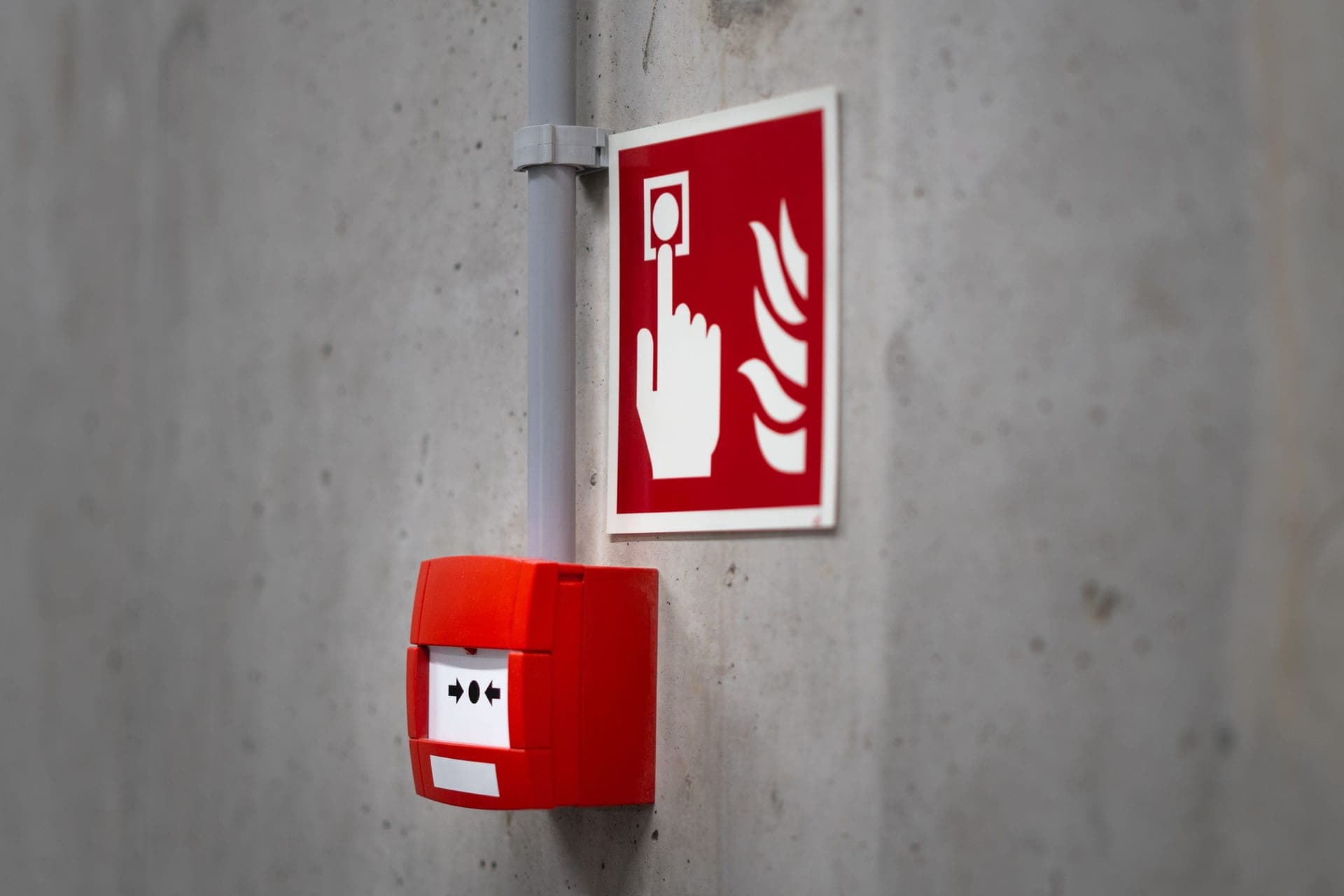
Within one manufacturer's compatible range, yes. Across brands on an interconnected circuit, no — and the failure is silent. Kidde and First Alert both use a three-wire 120V harness with the same quick-connect plug, so a different brand will physically fit and will power up, test and alarm on its own. What it will not reliably do is pass or receive the interconnect signal, which means one alarm detecting smoke no longer sounds the rest of the house. Replace every alarm on an interconnected circuit with the same manufacturer's compatible units, at the same time.
Siren & Safe is reader-funded. We earn a commission on some links on this page, at no cost to you. It does not change what we recommend or the order we rank it in. Full disclosure.
What "interchangeable" is really asking
There are three separate questions hiding inside this one, and they have different answers.
Will the alarm physically fit? Almost always yes. Kidde and First Alert hardwired residential alarms both use a three-conductor harness — line, neutral and a third interconnect conductor — terminated in a quick-connect plug of effectively the same pattern. It mates. It will not fall out.
Will the alarm work on its own? Yes. Power on, test button, alarm on smoke, end-of-life warning: all of it functions. This is the part that makes the failure so easy to miss.
Will it alarm the rest of the house? This is the one that fails. The interconnect conductor carries a low-voltage signal between alarms, and manufacturers do not guarantee that signal across brands. Both Kidde and First Alert state compatibility within their own listed ranges and no further. In practice a mixed circuit may pass the signal one way, both ways, or not at all — and nothing on either alarm tells you which.
How to test whether your interconnect actually works
Two people, five minutes, and it settles the question for the whole house. Do it now if you have ever mixed brands, and do it after any alarm replacement.
Warn the household, and anyone who shares a wall
An interconnected set at 85 dB per unit is genuinely loud and the test can run for ten or fifteen seconds. Tell people first, especially anyone with a hearing aid, a baby asleep or a nervous dog. In an apartment, tell the neighbors.
Station someone at the furthest alarm from the one you are testing
Furthest in sound terms, not in feet: the other end of the house, through closed doors, upstairs if the test unit is downstairs. That is the path the signal has to cover in a real fire.
Press and hold the test button on the first alarm
Hold it until the alarm sounds, and keep holding. On an interconnected circuit every other alarm on that circuit should begin sounding within a few seconds. If the listener hears nothing, the interconnect between those two units is not working.
Repeat from a different alarm, ideally on the other floor
Signaling faults are not always symmetrical, especially on a mixed circuit. An alarm that triggers the others may not be triggered by them. Test in both directions before you decide the circuit is sound.
Write down the result and the date
On the same list that carries each alarm's manufacture date. The next person to replace an alarm in this house — possibly you, in six years — needs to know which brand the circuit is and whether it linked.
Quick picks
Scored against circuit compatibility, listing specificity, backup battery and nuisance resistance. Tap a row for the full write-up. The price in each buy button is the live Amazon price at the last check, stamped with the date it was taken.
| # | Product | Best for | Score | Price |
|---|---|---|---|---|
| 1 | 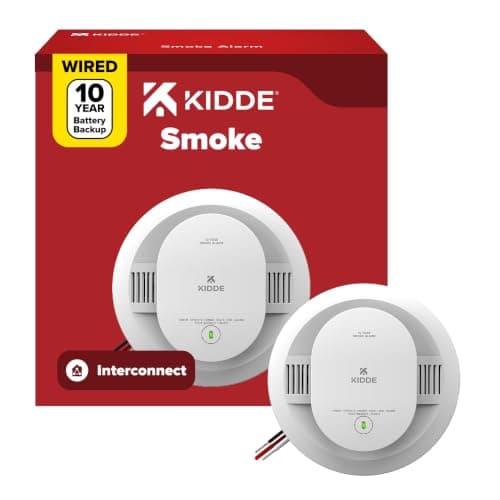 Kidde 20SA10 Hardwired Smoke Alarm with 10-Year Backup Battery The direct successor to the discontinued P4010ACS line, listed to UL 217 10th edition, with a sealed ten-year backup cell. | Replacing a Kidde hardwired circuit | 9.4/ 10 | $39.97 · View on Amazon #ad how we are funded · price as of October 19, 2026 |
| 2 | 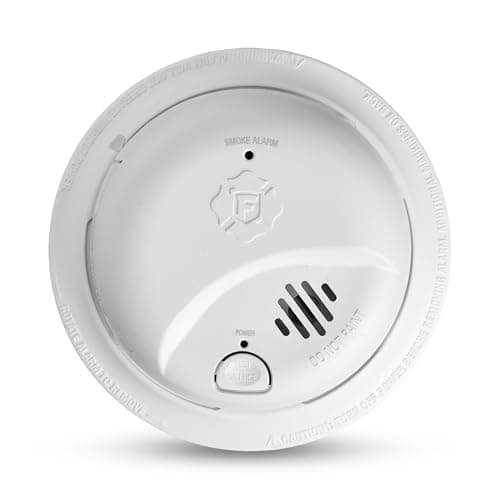 First Alert SMI105-AC Hardwired Smoke Alarm with 10-Year Battery Backup First Alert's stated replacement for the SMI105-AC, with a sealed ten-year backup cell and photoelectric sensing. | Replacing a First Alert or BRK hardwired circuit | 8.8/ 10 | |
| 3 | 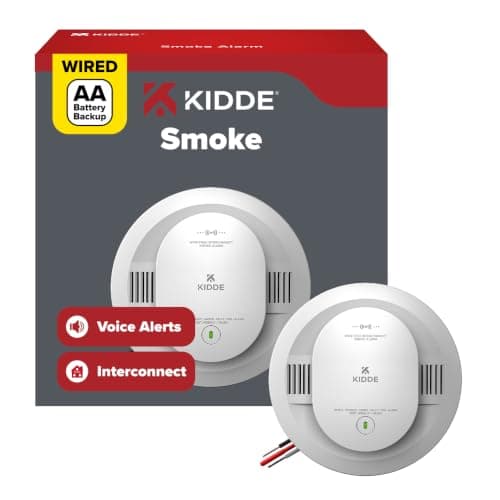 Kidde 20SAR-VRF Hardwired Smoke Alarm with Wire-Free Interconnect Hardwired and wire-free interconnect in one unit, which is the honest fix for a part-wired house. | Bridging wired alarms to rooms with no wiring | 8.4/ 10 |
What to replace with, by brand
Match the brand that is already on the circuit. These three cover the Kidde side, the First Alert and BRK side, and the part-wired house.
1. Replacing a Kidde hardwired circuit
Kidde 20SA10 Hardwired Smoke Alarm with 10-Year Backup Battery
The direct successor to the discontinued P4010ACS line, listed to UL 217 10th edition, with a sealed ten-year backup cell.
- Listed to
- UL 217, 10th edition (UL 217-2024 Ed.10)
- Sensing / agent
- Photoelectric smoke sensing only — no CO cell
- Power / service life
- 120V AC with a sealed 10-year backup battery; 10-year limited warranty
If the alarms coming down say Kidde, these are the ones going up. The connector, the bracket pattern and the interconnect signaling all match the line this replaces, which turns a whole-house changeover into an afternoon rather than a rewiring job.
The UL edition is the upgrade people do not notice they are getting. Most hardwired Kidde circuits in US houses hold alarms listed to an older edition of UL 217, from before the cooking-nuisance test existed. Replacing into the 10th edition is the single cheapest way to stop a hallway alarm reacting to the kitchen.
The sealed backup cell is the second quiet improvement. Replaceable 9V backups are why interconnected houses chirp, and chirping is why alarms get disconnected. Smoke detector chirping covers the diagnosis if you have one doing it now.
What it does well
- Drops onto an existing 120V alarm circuit and interconnects over the wire — one sounds, they all sound
- Listed to UL 217 10th edition, which is the edition carrying the cooking-nuisance test
- Sealed ten-year backup battery, so a tripped breaker does not leave the house unprotected
- Kidde's own stated successor to the P4010ACS, which is the alarm most Kidde circuits currently hold
The downside
- Photoelectric only — no CO cell, so CO needs a separate device or a combination unit
- Interconnects with compatible Kidde alarms, not with First Alert or BRK
- A hardwired swap means the breaker goes off first, which rules out a casual five-minute job
Do not buy this if: your circuit currently holds First Alert or BRK alarms. Mixing is the exact failure this page is about, and the First Alert unit below is the equivalent on that side.
- Drops onto an existing 120V alarm circuit and interconnects over the wire — one sounds, they all sound
- Sealed 10-year backup battery, so a tripped breaker does not leave the house unprotected
- Same reduced-nuisance sensing as the battery model in this series
- No low-battery chirps across the ten years
- The direct successor to the P4010ACS line, which Kidde has discontinued
#ad how we are funded · price as of October 19, 2026
2. Replacing a First Alert or BRK hardwired circuit
First Alert SMI105-AC Hardwired Smoke Alarm with 10-Year Battery Backup
First Alert's stated replacement for the SMI105-AC, with a sealed ten-year backup cell and photoelectric sensing.
- Listed to
- UL 217 — First Alert states compliance with the latest edition
- Sensing / agent
- Photoelectric smoke sensing only — no CO cell
- Power / service life
- 120V AC with a sealed 10-year lithium backup battery
BRK and First Alert are the same family, which is the one piece of cross-brand compatibility that genuinely holds: a BRK circuit takes First Alert alarms and vice versa, because they are the same signaling.
Everything else about this unit is the mirror image of the Kidde above — same reasoning, same sealed backup cell, same argument for going photoelectric while the ladder is already out.
The one place it is weaker is the listing statement. First Alert says the latest edition rather than naming it. That is not a defect, but a named edition is a checkable fact and an unnamed one is not, so it costs a point. UL 217 certification explained sets out which editions changed what.
What it does well
- Interconnects over the existing alarm circuit with compatible First Alert and BRK units
- Non-replaceable ten-year backup cell rather than an annual 9V change
- Photoelectric sensing on a hardwired position, which is the combination most houses should be moving to
- First Alert's own stated replacement for the SMI105-AC it is discontinuing
The downside
- States compliance with the latest UL 217 edition without naming the edition number
- Will not interconnect with Kidde alarms on the same circuit
- Photoelectric only, so a fast flaming fire is its weaker case
Do not buy this if: the alarms you are taking down are Kidde. Brand continuity on an interconnected circuit is the whole point of this page.
- Photoelectric sensing on a hardwired circuit, which is the combination most houses should be replacing into
- Precision Detection sensing, which First Alert states meets the new industry standards on cooking nuisance alarms
- Non-replaceable 10-year backup cell rather than an annual 9V change
- Test/silence button that holds the hush for up to eight hours
- Interconnects over the existing alarm circuit with compatible First Alert and BRK units
First Alert product documentation
3. Bridging wired alarms to rooms with no wiring
Kidde 20SAR-VRF Hardwired Smoke Alarm with Wire-Free Interconnect
Hardwired and wire-free interconnect in one unit, which is the honest fix for a part-wired house.
- Listed to
- UL 217 10th edition and UL 2034 5th edition; ETL listed
- Sensing / agent
- Photoelectric smoke sensing, with voice annunciation
- Power / service life
- 120V AC with two replaceable AA backup batteries
Most houses that have an interconnect problem have it because part of the house was built later. An extension, a converted garage, a loft room: wired for lighting, never wired for alarms.
This unit is the bridge. The wired units on the original circuit behave exactly as they always did, and the radio side carries the alarm into the rooms the cable never reached. You get one house-wide alarm instead of two systems that cannot hear each other.
The AA backup is the compromise and it is worth knowing about before you buy twelve of them. Best interconnected smoke detectors weighs the wired, wire-free and hybrid routes side by side.
What it does well
- Hardwired AND wire-free interconnect — joins the wired alarms on its circuit to alarms in rooms with no wiring, up to 12 compatible units
- Voice alert announces "Fire!" rather than sounding an ambiguous horn
- Listed to UL 217 10th edition and UL 2034 5th edition, and ETL listed
- Solves the extension or converted-loft problem without pulling cable
The downside
- AA backup batteries rather than a sealed cell — the one part of this alarm that still needs an annual visit
- Wire-free interconnect only reaches compatible Kidde units, so it is a Kidde-house answer
- More expensive per position than a plain hardwired alarm
Do not buy this if: your house is wired throughout. You would be paying for a radio you will never switch on.
- Hardwired AND wire-free interconnect: it joins the wired alarms on its circuit to alarms in rooms that have no wiring, up to 12 compatible units
- Voice alert announces "Fire!" rather than sounding an ambiguous horn
- 85 dB with a red LED
- Listed to UL 217 10th edition, which carries the cooking-nuisance test the 8th edition introduced
- AA backup batteries rather than a sealed cell — the one part of this alarm that still needs an annual visit
What is and is not compatible
Based on what each manufacturer states about its own range. Where a manufacturer makes no claim, this table does not make one either.
| Combination | Physically fits | Works standalone | Interconnect reliable |
|---|---|---|---|
| Kidde replacing Kidde, within the compatible range | Yes | Yes | Yes — stated by the manufacturer |
| First Alert replacing First Alert or BRK | Yes | Yes | Yes — same family, stated by the manufacturer |
| Kidde alarm on a First Alert circuit | Yes | Yes | Not guaranteed by either manufacturer |
| First Alert alarm on a Kidde circuit | Yes | Yes | Not guaranteed by either manufacturer |
| Smoke alarm and CO alarm from one brand, same circuit | Yes | Yes | Yes where the manufacturer lists them as compatible |
| Heat alarm interconnected with smoke alarms, same brand | Yes | Yes | Yes where the manufacturer lists them as compatible |
| Battery alarm on a hardwired position | No harness | Yes | No — there is nothing to connect to |
The third and fourth rows are the whole page. They fit, they work, and the house is no longer interconnected.
Rules for a swap that does not break anything
Six rules. The first one solves the problem on its own and the rest are what makes the job go smoothly.
- Replace the whole circuit with one brand, at one time. Alarms on a circuit are the same age, reach end of life together and cost less per unit in a set. Replacing them one at a time over years is how mixed circuits happen in the first place.
- Kill the breaker before you touch the harness. These are 120V devices. Pull the breaker, confirm it is dead at the alarm, then work.
- Keep the old harness only if the new alarm's manufacturer says to. Most replacements ship a new plug. Reusing an incompatible old harness is the other way to end up with a non-linking circuit.
- Write the install date on the new alarm in marker. Not the manufacture date, which is already printed on it — the install date, so the next person knows how the two relate.
- Test the interconnect in both directions before you put the ladder away. It is the only check that proves the job worked.
- Check the CPSC recall list for the model you are fitting. It takes under a minute and it has caught real units.
What the code expects of the circuit
Interconnection is not a nice-to-have in new construction. Both NFPA 72 and the residential code require alarms in new and substantially renovated dwellings to be interconnected so that one alarm sounds all of them, and both require the alarms to be on the building's power with a battery backup.
That requirement exists because of distance and doors. The alarm that detects the fire is rarely the alarm that needs to wake someone; a basement alarm sounding alone, two floors below a closed bedroom door, is not an alarm anyone will hear in time.
So a mixed circuit is not only a technical failure — in a house built to that requirement, it is a house that no longer meets the condition it was signed off against. That matters at a sale, at a rental inspection and at an insurance claim. NFPA 72 residential requirements sets out the full layout.
Questions people actually ask
Are Kidde and First Alert smoke detectors interchangeable?
Can I replace just one hardwired smoke alarm?
Will mixing brands damage the alarms?
Can a CO alarm be interconnected with smoke alarms?
How these picks were chosen. On published specifications, safety listings and manufacturer documentation — plus the findings of organizations that do run tests. We have no laboratory and we do not burn anything. Read the full methodology.
Sources
- NFPA — NFPA 72, National Fire Alarm and Signaling Code (2025 edition)
- International Code Council — IRC Chapter 3 — building planning (R310, R314, R315)
- UL Solutions — UL 217 — smoke alarms
- UL Solutions — UL 217, Standard for Smoke Alarms, published with new technical requirements
- UL Solutions — UL 2034 — single and multiple station carbon monoxide alarms
- BRK / First Alert — Codes and standards reference for smoke and CO alarms
- CPSC — Recalls and product safety news
Read next
Smoke Detectors
The Best Interconnected Smoke Detectors
One sounds, they all sound. Wireless retrofit and hardwired picks, and the mixing mistake to avoid.
Smoke Detectors
Why interconnection matters most, and the wired, wireless and hybrid routes.
Smoke Detectors
The Best Hardwired Smoke Detectors
Four current hardwired alarms, the backup-battery decision, and the compatibility rule that breaks interconnects.
Smoke Detectors
The monthly button test, the aerosol chamber test, the interconnect test, and why open flame is never a test method.
Smoke Detectors
The diagnostic in order, and why a new battery often is not the answer.