Smoke Detectors
The Best Interconnected Smoke Detectors
A basement fire detected in the basement does not wake anyone upstairs. Interconnection is the only feature in this category that fixes that, and most houses can have it without new wiring.
By Ryder M.Last reviewed

The X-Sense SC07-W is the pick for most houses: wireless interconnect for up to 24 units, a 10-year sealed battery, and listings to both UL 217 and UL 2034, so it retrofits whole-house interconnection into a home with no alarm wiring at all. If your house already has a hardwired alarm circuit, keep it and replace the units with the Kidde 20SAR-VRF, which bridges the wired alarms to battery units in rooms the wiring never reached. Do not mix manufacturers on one interconnect set — compatibility is per-brand and a mixed set can silently fail to link.
Siren & Safe is reader-funded. We earn a commission on some links on this page, at no cost to you. It does not change what we recommend or the order we rank it in. Full disclosure.
Why interconnection outranks every other spec
A standalone smoke alarm sounds in the room it is in. That is fine if the fire and the people are in the same place, and it is close to useless if they are not.
The fires that kill are overwhelmingly the ones that start somewhere nobody is — a basement, a garage, a kitchen at 3am — and grow while a standalone alarm shouts into an empty room. By the time smoke reaches the bedroom landing and sets off the alarm there, the escape route is the thing that is full of smoke.
Interconnection collapses that gap to nothing. One unit detects, every unit in the house sounds, and the people who need the warning get it at the same instant as the empty room does.
It is also the feature with the least marketing attached. Smart notifications, voice alerts, app integration and sensor type all get more attention, and none of them change the outcome as much as whether the alarm in the basement can make the alarm in the bedroom go off.
If you have a working hardwired circuit, you probably already have this and may not know. If you have standalone battery alarms, wireless interconnect retrofits it with no wiring and no electrician.
The house layout that most rewards interconnection is the commonest one in America. Best smoke detectors for a two-story home works through the staircase problem and the hardwired and battery routes to solving it.
Quick picks
Scored against interconnect reach, no wiring needed, covers carbon monoxide, nothing to maintain and expandability. Tap a row for the full write-up. The price in each buy button is the live Amazon price at the last check, stamped with the date it was taken.
| # | Product | Best for | Score | Price |
|---|---|---|---|---|
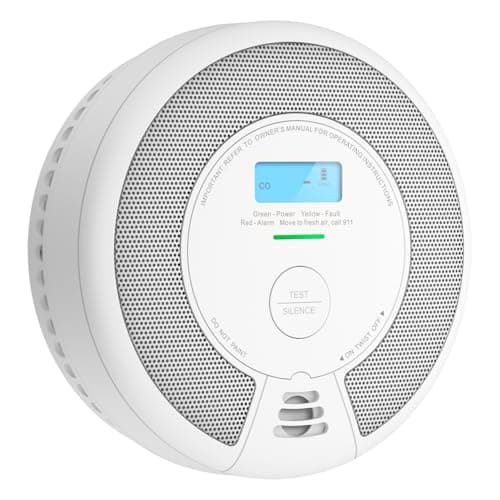
| 1 | 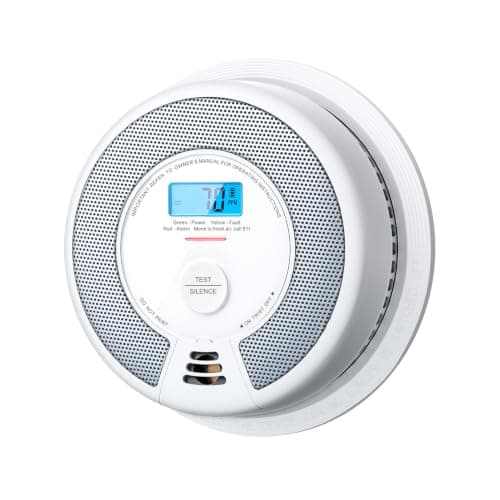 X-Sense SC07-W Wireless Interconnected Smoke & CO Alarm Wireless interconnect for up to 24 units on a 10-year sealed battery. Both hazards. | A house with no alarm wiring | 9.4/ 10 | $44.99 · View on Amazon #ad how we are funded · price as of October 19, 2026 |
| 2 | 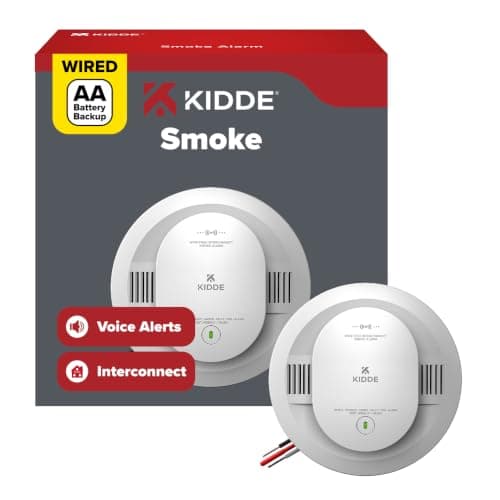 Kidde 20SAR-VRF Hardwired Smoke Alarm with Wire-Free Interconnect Hardwired AND wire-free interconnect in one unit, with a voice alert. | Bridging a half-wired house | 8.3/ 10 | |
| 3 | 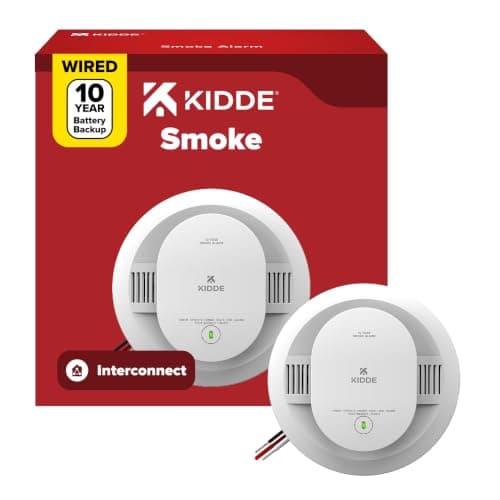 Kidde 20SA10 Hardwired Smoke Alarm with 10-Year Backup Battery Hardwired photoelectric with a sealed 10-year backup. The straight swap. | Replacing units on an existing wired circuit | 7.6/ 10 | $39.97 · View on Amazon #ad how we are funded · price as of October 19, 2026 |
| 4 | 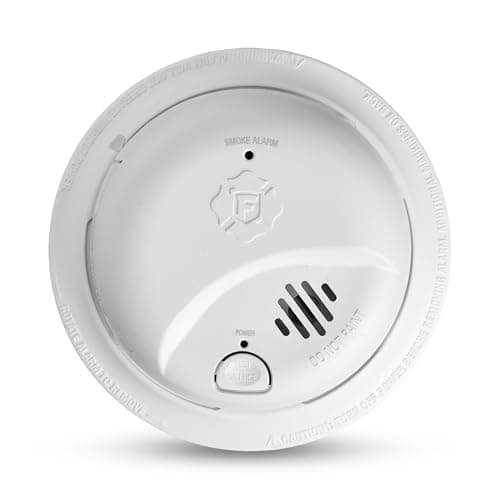 First Alert SMI105-AC Hardwired Smoke Alarm with 10-Year Battery Backup Hardwired photoelectric with a sealed 10-year backup, on the First Alert side. | A First Alert or BRK circuit | 7.5/ 10 |
The alarms in full
1. A house with no alarm wiring
X-Sense SC07-W Wireless Interconnected Smoke & CO Alarm
Wireless interconnect for up to 24 units on a 10-year sealed battery. Both hazards.
- Listed to
- UL 217 and UL 2034
- Sensing / agent
- Photoelectric smoke sensing plus an electrochemical CO cell
- Power / service life
- 10-year sealed lithium battery, not hardwired
This is the pick because of what it solves for the largest number of houses. Most US homes built before the hardwiring requirement have no alarm circuit at all, and for those the realistic choice has always been standalone alarms that each shout into an empty room.
Wireless interconnect removes that constraint entirely. Twenty-four units is far more than any house needs, which means you can cover every bedroom, every landing, the basement and the hallway and still have headroom.
The dual listing matters more than it looks. Because each unit is both a UL 217 smoke alarm and a UL 2034 CO alarm, one device satisfies both requirements for a given position — which on a bedroom landing is exactly where both requirements land. Combination alarms covers that trade in full.
The sealed cell is the third reason. Interconnected systems multiply the maintenance problem: eight alarms with replaceable batteries is eight annual tasks and eight chances for somebody to pull a cell to stop a chirp. Ten years with no chirp removes the event that disables alarms.
What it does well
- Wireless interconnect for up to 24 units — one alarm triggers the whole set, with no cable anywhere
- Listed to UL 217 and UL 2034, so each unit is a real smoke alarm and a real CO alarm
- 10-year sealed lithium battery — no annual cell change and no 3am low-battery chirp
- LCD CO reading on each unit, and X-Sense recommends the system for large or multi-story homes
The downside
- Battery only, so it cannot join an existing hardwired circuit — it replaces the concept rather than extending it
- A combination unit compromises slightly on mounting height, since smoke wants a ceiling and CO is less height-sensitive
- Both sensors retire together at the end-of-life date even if only one has aged out
- Wireless linking is proprietary: these interconnect with each other, not with other brands
Do not buy this if: the house already has a healthy hardwired alarm circuit. Ripping out working wired interconnection to go wireless is a downgrade in resilience for no gain — keep the circuit and replace the units on it.
- Wireless interconnect for up to 24 units — one alarm triggers the whole set
- No wiring, which is the point: it retrofits interconnection into a house that never had it
- LCD CO reading on each unit
- X-Sense recommends it for large or multi-story homes
#ad how we are funded · price as of October 19, 2026
2. Bridging a half-wired house
Kidde 20SAR-VRF Hardwired Smoke Alarm with Wire-Free Interconnect
Hardwired AND wire-free interconnect in one unit, with a voice alert.
- Listed to
- UL 217 10th edition and UL 2034 5th edition; ETL listed
- Sensing / agent
- Photoelectric smoke sensing, with voice annunciation
- Power / service life
- 120V AC with two replaceable AA backup batteries
This is the unit for the most common awkward case in American housing: a house that is partly wired. The original build has alarms on a circuit; a loft conversion, a garage conversion, an extension or a finished basement does not.
Standard hardwired alarms cannot reach the new rooms and standard wireless alarms cannot join the old circuit, so most people end up with two systems that do not talk to each other — which is the same as having no interconnection where it matters.
The 20SAR-VRF sits on the wired circuit and also speaks wirelessly, so the extension's battery alarms join the house system. One alarm anywhere sounds everything.
The voice annunciation is worth more than it sounds in an interconnected set. When eight alarms go off at once the horn tells you nothing about where or what; a spoken word at least tells you which hazard. Interconnected smoke alarms covers the wiring side of this in detail.
What it does well
- Hardwired and wire-free interconnect at once — it joins the wired alarms on its circuit to battery alarms in rooms that have no wiring, up to 12 compatible units
- Voice alert announces "Fire!" rather than sounding an ambiguous horn, which removes the 3am question of what the noise means
- Listed to UL 217 10th edition, which carries the cooking-nuisance test the 8th edition introduced
- 85 dB with a red LED, and it is ETL listed as well
The downside
- AA backup batteries rather than a sealed cell — the one part of this alarm that still needs an annual visit
- No CO cell, so carbon monoxide needs separate coverage
- Requires an existing 120V alarm circuit to use the hardwired half
- Compatibility is within the Kidde range; it will not bridge to another brand
Do not buy this if: the house has no alarm wiring at all. The dual-interconnect ability is the whole reason to buy this unit, and half of it is wasted without a circuit to join.
- Hardwired AND wire-free interconnect: it joins the wired alarms on its circuit to alarms in rooms that have no wiring, up to 12 compatible units
- Voice alert announces "Fire!" rather than sounding an ambiguous horn
- 85 dB with a red LED
- Listed to UL 217 10th edition, which carries the cooking-nuisance test the 8th edition introduced
- AA backup batteries rather than a sealed cell — the one part of this alarm that still needs an annual visit
3. Replacing units on an existing wired circuit
Kidde 20SA10 Hardwired Smoke Alarm with 10-Year Backup Battery
Hardwired photoelectric with a sealed 10-year backup. The straight swap.
- Listed to
- UL 217, 10th edition (UL 217-2024 Ed.10)
- Sensing / agent
- Photoelectric smoke sensing only — no CO cell
- Power / service life
- 120V AC with a sealed 10-year backup battery; 10-year limited warranty
If the house already has a hardwired alarm circuit — most US homes built or substantially renovated in recent decades do — the highest-value change available is replacing the units on it rather than abandoning it.
Wired interconnection is the most reliable form there is. There is no radio link to lose, no pairing to redo, and the circuit keeps working as long as the breaker is on. The sealed backup covers the case where it is not.
The usual mistake is the opposite one: a hardwired alarm reaches end of life, somebody replaces it with a standalone battery unit from a supermarket, and the house quietly loses interconnection one alarm at a time. If you are replacing one on a circuit, replace them all together and keep the set matched.
The hardwired roundup covers the whole-house version of this job.
What it does well
- Drops onto an existing 120V alarm circuit and interconnects over the wire — one sounds, they all sound
- Sealed 10-year backup battery, so a tripped breaker does not leave the house unprotected and there is no annual cell change
- Photoelectric sensing with Kidde's reduced-nuisance technology, listed to UL 217 10th edition
- The direct successor to the P4010ACS line, which Kidde has discontinued
The downside
- Wired interconnect only — it will not reach a room with no alarm cable
- No CO cell
- Positions are fixed by where the existing wiring is, which is not always where the standard wants an alarm
- Requires a compatible interconnect conductor; mixing brands on one circuit is a known source of trouble
Do not buy this if: any room the alarm wiring does not reach. For those, pair this with a wire-free bridging unit or go wireless throughout — a wired alarm cannot join a room it has no cable to.
- Drops onto an existing 120V alarm circuit and interconnects over the wire — one sounds, they all sound
- Sealed 10-year backup battery, so a tripped breaker does not leave the house unprotected
- Same reduced-nuisance sensing as the battery model in this series
- No low-battery chirps across the ten years
- The direct successor to the P4010ACS line, which Kidde has discontinued
#ad how we are funded · price as of October 19, 2026
4. A First Alert or BRK circuit
First Alert SMI105-AC Hardwired Smoke Alarm with 10-Year Battery Backup
Hardwired photoelectric with a sealed 10-year backup, on the First Alert side.
- Listed to
- UL 217 — First Alert states compliance with the latest edition
- Sensing / agent
- Photoelectric smoke sensing only — no CO cell
- Power / service life
- 120V AC with a sealed 10-year lithium backup battery
Which of the two hardwired picks you want is decided by what is already on the ceiling, not by which is better. Interconnect compatibility runs along brand lines, and the correct move is almost always to match the circuit.
BRK and First Alert are the same family, which widens the compatible set usefully in older houses — a lot of US alarm circuits were populated with BRK units that First Alert still lists compatibility with.
Beyond that this unit and the Kidde 20SA10 are close: photoelectric, hardwired, sealed ten-year backup, no CO cell. Both are replacing older ionization units, which is the upgrade that matters more than the brand. Ionization versus photoelectric explains why.
What it does well
- Interconnects over the existing alarm circuit with compatible First Alert and BRK units — the right unit if that is what the house already has
- Photoelectric sensing on a hardwired circuit, which is the combination most houses should be replacing into
- Non-replaceable 10-year backup cell rather than an annual 9V change
- First Alert's own stated replacement for the SMI105-AC, which is being discontinued
The downside
- Wired interconnect only — no wireless bridging to unwired rooms
- No CO cell
- Compatibility is stated within the First Alert and BRK range, so it is not a free swap onto a Kidde circuit
- Position fixed by the existing wiring
Do not buy this if: the circuit is populated with Kidde units. Interconnect compatibility is per-manufacturer, and a mixed circuit is the single most common reason an interconnected set silently stops linking.
- Photoelectric sensing on a hardwired circuit, which is the combination most houses should be replacing into
- Precision Detection sensing, which First Alert states meets the new industry standards on cooking nuisance alarms
- Non-replaceable 10-year backup cell rather than an annual 9V change
- Test/silence button that holds the hush for up to eight hours
- Interconnects over the existing alarm circuit with compatible First Alert and BRK units
First Alert product documentation
Side by side
Listings and specifications exactly as each manufacturer publishes them. Prices are shown live inside each buy button, dated.
| X-Sense SC07-W | Kidde 20SAR-VRF | Kidde 20SA10 | First Alert SMI105-AC | |
|---|---|---|---|---|
| Interconnect type | Wireless, up to 24 units | Wired + wire-free, up to 12 | Wired only | Wired only |
| Needs existing wiring | No | Yes, for the wired half | Yes | Yes |
| Reaches an unwired room | Yes | Yes | No | No |
| Listing | UL 217 and UL 2034 | UL 217 10th ed. and UL 2034 5th ed.; ETL | UL 217 10th ed. | UL 217 |
| Covers carbon monoxide | Yes | No | No | No |
| Power | Sealed 10-year battery | 120V AC + 2x AA backup | 120V AC + sealed 10-year backup | 120V AC + sealed 10-year backup |
| Annual battery task | None | Yes — AA cells | None | None |
| Voice alert | No | Yes | No | No |
| Brand compatibility | X-Sense only | Kidde range | Kidde range | First Alert and BRK |
| Best for | No wiring anywhere | A half-wired house | An existing Kidde circuit | An existing First Alert / BRK circuit |
How these were judged
We run no tests. Every criterion is something a manufacturer publishes or an owner can verify on their own ceiling.
- Can it reach every room that needs an alarm? Wired sets stop where the cable stops. This is the criterion that decides most houses, and it is about the building rather than the product.
- How many units can it link? Headroom matters, because the set grows when a basement gets finished or a loft gets converted.
- What is it listed to? UL 217 for smoke, UL 2034 for CO. A dual listing means one device legitimately covers both requirements for a position.
- What does interconnection cost in maintenance? Eight alarms with replaceable cells is eight annual tasks and eight chances for someone to pull a battery. Sealed cells remove that.
- Does it tell you anything when it sounds? With a whole house sounding at once, a voice alert is the only thing that distinguishes smoke from carbon monoxide.
- Is the compatibility honestly stated? Interconnect works along brand lines. A manufacturer that names the compatible range is more useful than one that implies universal linking.
Do not mix manufacturers on one interconnect set
This is the single most consequential mistake in this category, and it is easy to make because the units look interchangeable on a ceiling.
Interconnect compatibility runs along manufacturer lines. Kidde links with compatible Kidde units. First Alert links with compatible First Alert and BRK units. Wireless systems link with their own brand's radios and nothing else.
The failure mode is quiet, which is what makes it dangerous. A mixed circuit can look completely normal — every alarm powers up, every test button sounds that alarm's own horn — while the units never actually signal one another. You find out on the night it matters.
So: pick one manufacturer per interconnected set, and when you replace alarms on an existing circuit, replace them all at once with a matched set rather than one at a time as they age out.
Test the link, not the alarm. Hold the test button on the unit furthest from the bedrooms and walk to the far end of the house to confirm the others sound. A test button pressed on one alarm confirms that alarm's horn and battery; only the walk confirms the interconnection.
Wired, wireless, or both
Already hardwired? Keep the circuit. Wired interconnection is the most reliable form available — no radio link, no pairing, nothing to lose — and the right move is to replace the units on it with current-generation photoelectric alarms rather than abandoning it. The common error is swapping a dying hardwired alarm for a standalone battery unit, which costs the house its interconnection one ceiling at a time.
No wiring at all? Wireless interconnect, throughout. It retrofits the behavior with no electrician, and sealed ten-year cells mean the system asks nothing of you for a decade.
Partly wired — an extension, a loft conversion, a finished basement that the original circuit never reached? This is the case for a dual-interconnect unit that sits on the wired circuit and speaks wirelessly to battery alarms in the new rooms. It is also the case most people solve badly, by running two unconnected systems.
Renting? Wireless, every time, because it needs no modification to the building and it comes with you. Smoke detectors for rental properties covers the landlord side, including who is responsible for what.
Where the alarms go once they are linked
Interconnection changes how well a correctly-placed set performs. It does not change where the alarms go, and a linked set in the wrong positions is still a linked set in the wrong positions.
The requirement is an alarm in every sleeping room, outside each separate sleeping area, and on every level including the basement. How many smoke detectors do I need works the count through for real house shapes.
Two placement rules bite harder on an interconnected set, because a single nuisance-prone unit now wakes the entire house rather than one room: keep alarms at least 3 ft from an air supply register and from a ceiling fan's blade tips, and well back from the cooker. Smoke detector distance from vents has the measurements, and kitchen and bathroom placement covers the cooking exclusion.
A household that has had one 3am whole-house false alarm is a household that will consider disabling the system, so nuisance resistance stops being a comfort feature and becomes a reliability one. Fewer false alarms is the page on that.
What interconnection does not do
It does not extend a sensor's life. Every alarm in the set still has a replacement date, commonly ten years, and the test button checks the horn and the power rather than the sensing chamber. Take each unit down once a year and read the manufacture date on the back. When to replace smoke detectors covers the end-of-life signals.
It does not summon anyone. An interconnected set is louder, not monitored. Even a smart alarm that notifies a phone is not a monitored system with a central station that calls the fire service. Smart versus regular is the honest version of what the notification buys.
It does not cover carbon monoxide unless the units are listed to UL 2034. A smoke alarm cannot detect CO at any price, and the two sensors are completely different. CO detector versus smoke detector sets out why.
And it does not replace a plan. The point of waking everybody at once is that everybody then does something, which requires knowing what. The fire escape plan is the template, and it is free.
Questions people actually ask
What are the best interconnected smoke detectors?
Can you interconnect smoke alarms without wiring?
Can you mix brands of interconnected smoke alarms?
How do I test whether my alarms are actually interconnected?
Are hardwired or wireless interconnected alarms better?
How many interconnected smoke alarms do I need?
Do interconnected alarms also detect carbon monoxide?
How these picks were chosen. On published specifications, safety listings and manufacturer documentation — plus the findings of organizations that do run tests. We have no laboratory and we do not burn anything. Read the full methodology.
Sources
- NFPA — NFPA 72, National Fire Alarm and Signaling Code (2025 edition)
- NFPA — Smoke alarms — installation and placement guidance
- NFPA — Smoke Alarms in US Home Fires
- UL Solutions — UL 217 — smoke alarms
- UL Solutions — UL 2034 — single and multiple station carbon monoxide alarms
- International Code Council — IRC Chapter 3 — building planning (R314 smoke alarms, R315 CO alarms)
Read next
Smoke Detectors
Why interconnection matters most, and the wired, wireless and hybrid routes.
Smoke Detectors
The Best Hardwired Smoke Detectors
Four current hardwired alarms, the backup-battery decision, and the compatibility rule that breaks interconnects.
Smoke Detectors
The Best Smoke Detectors for a Home
Four alarms, what UL 217 tests, and why interconnection beats every other feature.
Smoke Detectors
The Best Combination Smoke and CO Alarms
Two listings, one position — and the one room where separate units win.
Placement & Code
How Many Smoke Detectors Do I Need?
Worked counts for real house shapes, including split levels and open plans.