Placement & Code
Smoke Detector Distance From Vents
A supply register blows smoke away from the sensing chamber and a return pulls it past before it can accumulate. Both delay the alarm, and the fix is a measurement.
By Ryder M.Last reviewed
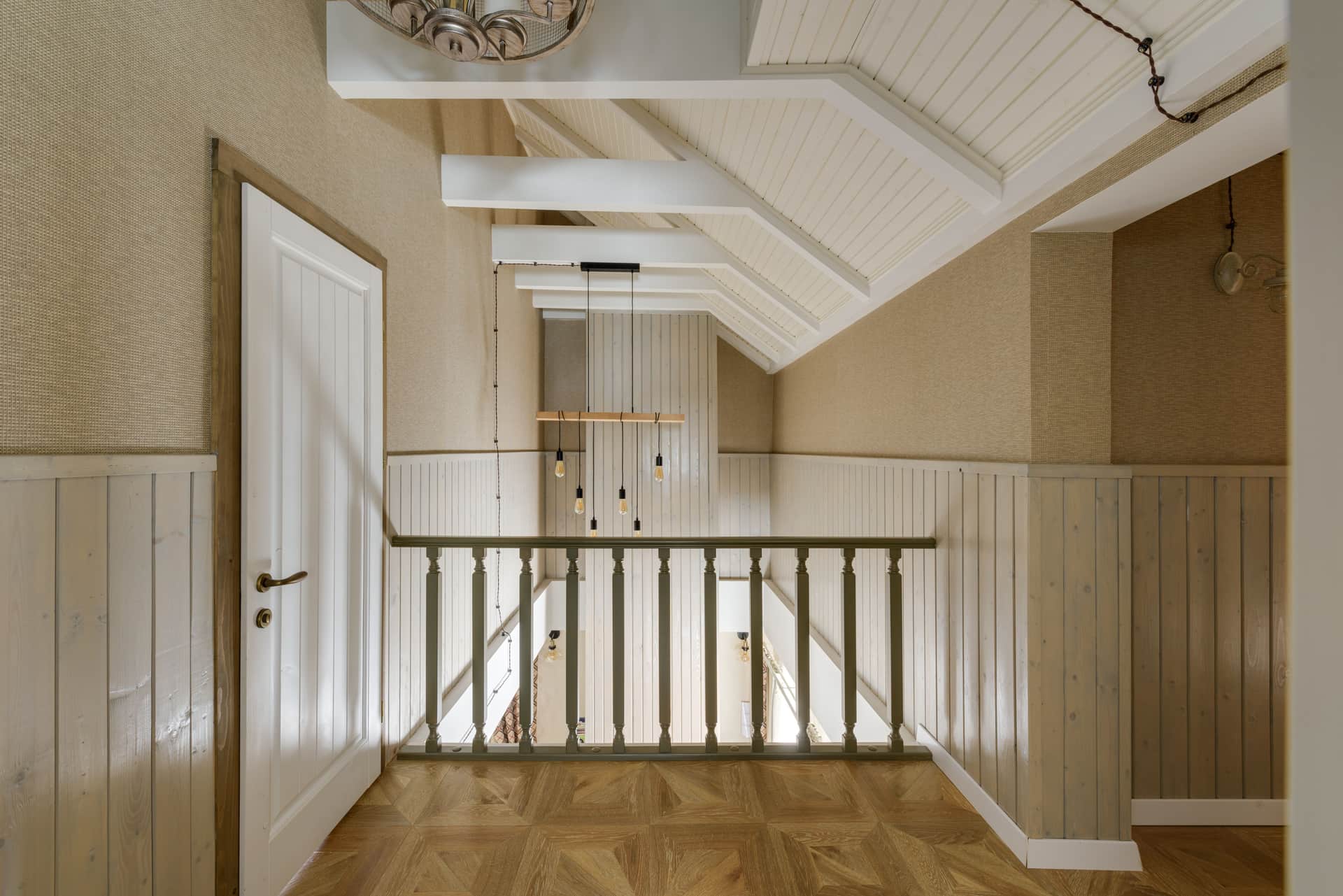
Keep a smoke alarm **at least 3 ft from an air supply register**, measured horizontally, and the same distance from the discharge of a bathroom extract fan or a ceiling fan blade tip. NFPA 72 sets that figure because moving air prevents smoke accumulating in the sensing chamber, which delays the alarm. **Air returns are a different case** — a return draws room air past the alarm, so a position near a return is not forbidden the way a supply position is, but it should not be the alarm's only coverage. When a required position and a vent conflict, move the alarm, not the requirement.
Siren & Safe is reader-funded. We earn a commission on some links on this page, at no cost to you. It does not change what we recommend or the order we rank it in. Full disclosure.
Why air movement defeats a smoke alarm
A smoke alarm does not sense a fire. It senses smoke that has accumulated inside its sensing chamber, and accumulation is a slow process that depends on air being relatively still at the ceiling.
A supply register is a jet of conditioned air. Smoke arriving at the ceiling near one is pushed away and diluted before it can build up to the concentration the chamber needs, which delays the alarm — and in a slow smoldering fire, which is the residential fire that kills, a delay is measured in minutes rather than seconds.
A ceiling fan does the same thing by a different mechanism, stirring the layer of air at the ceiling so that smoke never stratifies into the clean layer the alarm is sitting in.
An air return is a genuinely different case, and the distinction matters. A return draws room air toward it, which means it pulls smoke past the alarm rather than pushing it away. That is not a reason to put alarms next to returns deliberately, but it is why NFPA 72 treats the two openings differently: the 3 ft rule is written about supply registers.
None of this is theoretical. An alarm 18 in from a bedroom register that reads perfectly on a test button is an alarm that will respond late to a real fire, and the test button tells you nothing about it.
Minimum distances
Distances measured horizontally along the ceiling. Where a local requirement or a manufacturer's instruction is stricter, follow that instead.
| Feature | Minimum distance | Why | If you cannot achieve it |
|---|---|---|---|
| Air supply register or diffuser | 3 ft (36 in) | The jet pushes smoke away from the sensing chamber and dilutes it | Move the alarm. This is the one that is non-negotiable |
| Ceiling fan | 3 ft from the blade tips | Stirs the ceiling air layer so smoke never stratifies | Move the alarm outward, or to a wall 4 to 12 in below the ceiling |
| Air return grille | Not restricted the same way | A return draws smoke toward the alarm rather than away | Acceptable, but do not let it be the only alarm on the level |
| Bathroom extract fan discharge | 3 ft, and ideally further | Both air movement and humidity — steam is a nuisance trigger | Treat it like a bathroom door: distance plus a photoelectric unit |
| Bathroom door | 3 ft | Shower steam causes nuisance alarms, which get alarms disabled | Move along the hallway, away from the door |
| Any wall, for a ceiling-mounted alarm | At least 4 in | The wall-ceiling junction is a dead-air pocket smoke does not enter | Move toward the center of the ceiling |
| Ceiling, for a wall-mounted alarm | 4 to 12 in below it | Below the dead-air pocket, above the level smoke stratifies past | Ceiling mounting is preferable where it is possible |
| Kitchen cooking appliance | At least 10 ft, or 6 ft with a nuisance-resistant alarm | Cooking aerosols are the dominant source of residential nuisance alarms | Kitchen placement covers the exceptions |
NFPA 72 is the national standard; your local authority having jurisdiction may adopt a different edition or impose stricter requirements. The manufacturer's installation instructions are also enforceable and occasionally stricter than the standard.
Quick picks
Scored against position freedom, nuisance resistance, nothing to maintain, interconnects and listing. Tap a row for the full write-up. The price in each buy button is the live Amazon price at the last check, stamped with the date it was taken.
| # | Product | Best for | Score | Price |
|---|---|---|---|---|
| 1 | 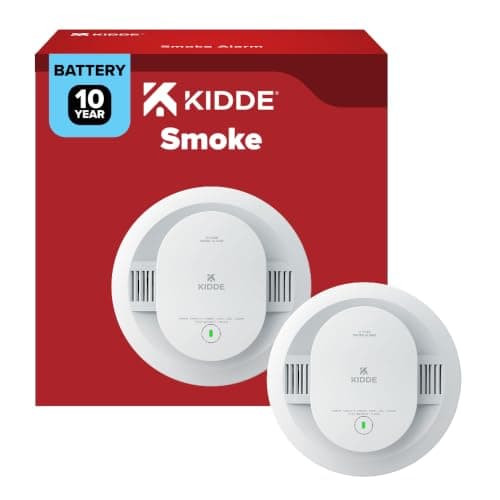 Kidde 20SD10 10-Year Battery Smoke Alarm Sealed ten-year battery, so the position is yours to choose. | Moving the alarm away from a vent, with no wiring | 8.5/ 10 | $32.47 · View on Amazon #ad how we are funded · price as of October 19, 2026 |
| 2 | 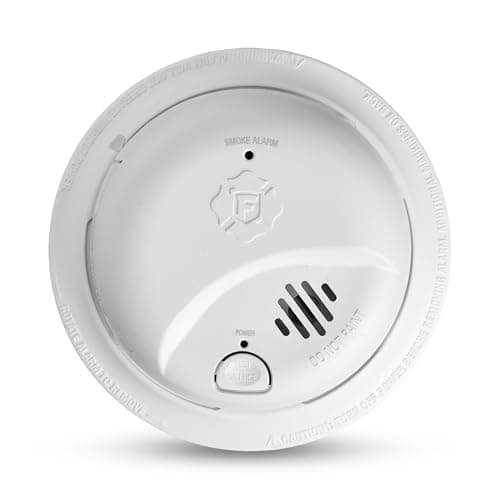 First Alert SMI105-AC Hardwired Smoke Alarm with 10-Year Battery Backup Hardwired photoelectric with a sealed ten-year backup, for the moved box. | Relocating a hardwired position properly | 8.1/ 10 |
Alarms for resolving a vent conflict
1. Moving the alarm away from a vent, with no wiring
Kidde 20SD10 10-Year Battery Smoke Alarm
Sealed ten-year battery, so the position is yours to choose.
- Listed to
- UL 217, 10th edition (UL 217-2024 Ed.10)
- Sensing / agent
- Photoelectric smoke sensing only — no CO cell
- Power / service life
- Sealed 10-year lithium battery; 10-year limited warranty
The practical problem this page describes usually has a boring solution: put the alarm somewhere else. And the thing that makes that possible is a battery.
Hardwired alarms live where the electrician put the box, and the box is frequently near the register because both were installed to a ceiling plan rather than to NFPA 72. Moving a wired box means an electrician and a ceiling repair.
A sealed-battery unit goes where the measurement says, with a twist-and-click bracket and two screws. Where the required position is occupied by a supply register, this is the product that resolves it in ten minutes.
It is not a replacement for interconnection though. If the house has a wired circuit, read interconnected alarms before taking a unit off it — a wireless-interconnect model may let you move the position and keep the whole-house sounding.
What it does well
- **Battery powered, so the position is a decision rather than a constraint** — this is the whole reason it is on this page
- Listed to UL 217 10th edition, which carries the newer nuisance-resistance testing
- Photoelectric sensing, the right default for a residential fire
- No low-battery chirps across ten years and nothing to reach
The downside
- Standalone — it will not make other alarms in the house sound
- No CO cell
- Battery format cannot replace a unit on an existing hardwired circuit
Do not buy this if: the house has a hardwired interconnected circuit you want to keep intact. There, a wired unit in a slightly compromised position may still beat a battery unit in a perfect one, because interconnection matters more than 3 ft.
- Listed to the 10th edition of UL 217, which carries the cooking-nuisance test the 8th edition introduced
- Kidde's own wording: enhanced sensing technology reduces false alarms often caused by cooking
- No low-battery chirps for ten years — the first end-of-life beep is the replacement signal
- Three long beeps and a red flash on smoke, so the pattern tells you which hazard it is
- Twist-and-click bracket, and it self-tests rather than waiting for you to press the button
#ad how we are funded · price as of October 19, 2026
2. Relocating a hardwired position properly
First Alert SMI105-AC Hardwired Smoke Alarm with 10-Year Battery Backup
Hardwired photoelectric with a sealed ten-year backup, for the moved box.
- Listed to
- UL 217 — First Alert states compliance with the latest edition
- Sensing / agent
- Photoelectric smoke sensing only — no CO cell
- Power / service life
- 120V AC with a sealed 10-year lithium backup battery
Where an existing hardwired alarm sits too close to a supply register, there are two honest options: move the box, or add a correctly-positioned battery alarm and leave the wired one where it is.
Moving the box is the better answer if you are already having electrical work done, because it keeps the interconnection — and interconnection is worth more than almost anything else in this subject. A fire detected in a kitchen sounding the bedroom alarms is a bigger improvement than 3 ft of air movement.
This is the unit to put on the moved box: photoelectric rather than the ionization sensing in most older hardwired units, with a sealed backup cell so the annual 9V ritual disappears.
If you are replacing one, replace them all at the same time. The hardwired roundup explains why mixing generations and manufacturers on one circuit causes more trouble than it saves.
What it does well
- Photoelectric sensing on a hardwired circuit, which is the combination most houses should be replacing into
- **Interconnects over the existing alarm circuit** with compatible First Alert and BRK units
- Non-replaceable 10-year backup cell rather than an annual 9V change
- Precision Detection sensing, which First Alert states meets the newer industry standards on cooking nuisance alarms
The downside
- The position is wherever the wiring is, so relocating it is an electrician's job
- Mixing manufacturers on one interconnect circuit is a known source of trouble
- No CO cell
Do not buy this if: the house has no alarm wiring. Running cable to achieve a 3 ft improvement in position is rarely proportionate when a battery unit solves it immediately.
- Photoelectric sensing on a hardwired circuit, which is the combination most houses should be replacing into
- Precision Detection sensing, which First Alert states meets the new industry standards on cooking nuisance alarms
- Non-replaceable 10-year backup cell rather than an annual 9V change
- Test/silence button that holds the hush for up to eight hours
- Interconnects over the existing alarm circuit with compatible First Alert and BRK units
First Alert product documentation
The conflicts that come up in real houses, and how to resolve each
Every one of these is a situation where the required position and the ceiling you actually have disagree.
- A small bedroom where every point is within 3 ft of the register. Mount on the wall instead, 4 to 12 in below the ceiling, on the wall furthest from the register and above the bed area rather than by the window.
- A hallway with a register at each end. Take the midpoint. Hallways are usually long enough that the center satisfies both, and the center is where smoke from either direction accumulates anyway.
- A bedroom with a ceiling fan in the middle. Move outward 3 ft from the blade tips rather than inward. The ceiling fan guide covers the geometry, including why the fan being off does not change where the alarm goes.
- An existing hardwired box 18 in from a register. Either move the box, or leave it and add a correctly-positioned battery alarm on the same ceiling. Two alarms in one room is not a fault.
- A bathroom extract fan discharging into a hallway ceiling void. Treat the discharge point as a register, keep 3 ft, and use a photoelectric unit because steam is the trigger that disables hallway alarms.
- A vaulted ceiling with a register high in the slope. Two rules interact here — distance from the register and distance down from the apex. Sloped and vaulted ceilings gives the measurements for the second.
- Recessed lighting close to the only viable position. Not a vent, but worth checking: some manufacturers specify a minimum distance from a recessed fixture because of convected heat. Read the instructions in the box.
What to do when the duct is the fire risk
There is a case where the relationship between alarms and ductwork runs the other way: a fire inside the HVAC system itself.
Residential forced-air systems are not generally required to have duct smoke detection, which is a commercial requirement driven by the need to shut a large air handler down before it distributes smoke through a building. For a house, the room alarms are the system.
What a homeowner can do is simpler and more useful. Have the system serviced annually, keep filters clean, and understand that a running blower during a fire will distribute smoke through every room it serves — which is the argument for shutting the HVAC off at the thermostat as part of leaving, if the thermostat is on your way out and it costs you no time.
The second point is about carbon monoxide rather than smoke. A furnace, a boiler or a gas water heater with a cracked heat exchanger or a blocked flue puts combustion products into the air the ductwork distributes, and no smoke alarm detects that. Where to install CO detectors covers the positions, and the basement near the plant is the one most often missed.
Why 3 ft matters more than the brand
A correctly positioned budget alarm outperforms a premium alarm 18 in from a supply register, and that is not a close call. Position is the highest-leverage variable in this whole subject and the only one that costs nothing.
The reason it gets ignored is that the failure is invisible. A badly positioned alarm passes its test button, shows a green light, and behaves exactly like a correctly positioned one for years — right up until the night it responds four minutes late.
So the useful exercise is a tape measure and ten minutes. Walk the house, measure from each alarm to the nearest supply register, ceiling fan blade tip and bathroom door, and write down anything under 3 ft.
Then fix those first, before buying anything. The main placement guide covers every position in the house, and how many smoke detectors do I need covers the count once the positions are right.
The other thing to measure while you have the tape out
The date on the back of each unit. Not the test button, which checks the horn and the power and tells you nothing about the sensing chamber.
Smoke alarms have a service life, commonly ten years. A house with six alarms, four of them expired, has two alarms — and this is more common than any positioning error.
While each unit is off the ceiling to be read, vacuum gently around the vents with a soft brush attachment. Dust in the chamber is the main cause of the nuisance alarms that lead to alarms being removed, and it takes ten seconds per unit.
Then put the whole thing on an annual date. The home safety checklist is the one-page version, and when to replace smoke detectors covers the end-of-life signals that get mistaken for a low battery.
Questions people actually ask
How far should a smoke detector be from an air vent?
Can a smoke detector be near an air return?
How far should a smoke detector be from a ceiling fan?
What happens if a smoke detector is too close to a vent?
How far from a bathroom should a smoke detector be?
Should I move a hardwired alarm that is too close to a register?
How these picks were chosen. On published specifications, safety listings and manufacturer documentation — plus the findings of organizations that do run tests. We have no laboratory and we do not burn anything. Read the full methodology.
Sources
- NFPA — NFPA 72, National Fire Alarm and Signaling Code (2025 edition)
- UpCodes — Specific location requirements for smoke alarms (NFPA 72 §29.11.3.4)
- NFPA — Smoke alarms — installation and placement guidance
- International Code Council — IRC Chapter 3 — building planning (R310, R314, R315)
- NFPA — Smoke Alarms in US Home Fires
Read next
Placement & Code
Smoke Detector Placement, Room by Room
The three requirements, the four exclusions, and an original placement diagram.
Placement & Code
Smoke Detector Placement With Ceiling Fans
The 36 in rule from the blade tip, why it exists, and what to do in a room that cannot meet it.
Placement & Code
Kitchen and Bathroom Placement
The cooking and bathroom exclusion distances, and how to satisfy them in an open plan.
Placement & Code
Why the apex is the wrong spot, and how peaked, vaulted, tray and joisted ceilings differ.
Placement & Code
NFPA 72 Residential Requirements
The residential sections, quoted with their numbers, and what each one means in practice.