Smoke Detectors
The Best Hardwired Smoke Detectors
If your ceilings already have an alarm circuit, you own the best feature in the category. The job is replacing into it without breaking the interconnect.
By Ryder M.Last reviewed
For most houses with existing alarm wiring the right replacement is the Kidde 20SA10 — photoelectric, listed to the 10th edition of UL 217, with a sealed ten-year backup battery so you never touch it again. Before you buy anything, count your positions and check what is on the ceiling now, because hardwired alarms only interconnect with compatible units and a mixed set is a set that does not all sound together.
Siren & Safe is reader-funded. We earn a commission on some links on this page, at no cost to you. It does not change what we recommend or the order we rank it in. Full disclosure.
You already own the best feature in the category
If there is a wired alarm on your hallway ceiling, that house has interconnection — and interconnection is the feature that changes outcomes. A fire that starts downstairs at night has to alert somebody asleep upstairs behind a closed door. One alarm in the room of origin does not do that reliably. Every alarm in the house sounding at once does.
The best interconnected smoke detectors covers both sides of that — keeping a wired set, and retrofitting the behavior wirelessly where the cable never reached.
This is why the most damaging mistake in this whole category is quiet and common: replacing hardwired alarms with battery units because the battery ones are easier to fit. The new alarms work. Each one passes its test button. And the house has silently lost whole-house alerting, which was the thing the wiring was there to provide.
So the rule for a hardwired house is simple. Replace hardwired with hardwired. If a position is genuinely impossible to rewire, use a wireless-interconnect model that can join the rest of the system rather than a standalone alarm that cannot.
One warning before you order: match the brand already on the circuit. Are smoke alarms interchangeable explains why the connector fits across brands while the interconnect signal does not, and why that failure shows no warning light at all.
Before you buy anything
Fifteen minutes now prevents the two failures that make people redo this job: an incompatible set, and the wrong number of units.
Count every position
Walk the house and count the alarms already on ceilings, including the ones in bedrooms and the one in the basement you forgot about. Hardwired alarms are replaced as a set, so the count is the order quantity. While you are there, check whether any required position is missing — inside each bedroom, outside each sleeping area, one per level.
Read the back of one of them
Take a unit down — twist it off the bracket, then unplug the wiring harness. The back carries the brand, the model and the date of manufacture. The model tells you which family the circuit is currently running; the date tells you whether the rest of them are about to expire too.
Check the harness
The plug on the ceiling wire is the part you are matching. Kidde and First Alert use different connectors, so switching brands means replacing the harness at every position — which is a wiring job, not a swap. If you are staying with the same brand, the existing harness usually stays.
Decide smoke-only or combination
A combination unit covers carbon monoxide from the same position. That is the right call in a house with gas appliances, an attached garage or any fuel-burning heat. It is not automatically right everywhere — CO alarms and smoke alarms want different heights in some rooms, which is what combo versus separate is about.
Buy the whole set at once, from one family
All the same brand, all the same generation, all fitted on the same day. That is what keeps the interconnect working and puts every unit on the same ten-year clock, so the next replacement is one job rather than a decade of dribbling failures.
Kill the breaker before you touch anything
These are on a 120V circuit. Switch it off at the panel and confirm the alarms have gone dark before you unplug the first harness. If the wiring is not in good condition, or the circuit is not obvious at the panel, this is a job for an electrician rather than a Saturday.
Quick picks
Scored against listing currency, backup power, interconnection, nuisance resistance and upkeep. Tap a row for the full write-up. The price in each buy button is the live Amazon price at the last check, stamped with the date it was taken.
| # | Product | Best for | Score | Price |
|---|---|---|---|---|
| 1 | 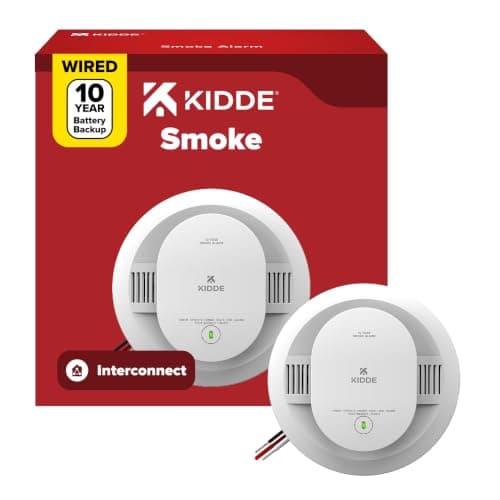 Kidde 20SA10 Hardwired Smoke Alarm with 10-Year Backup Battery The straight successor to the Kidde line most of these ceilings already carry. | Most hardwired replacements | 9.0/ 10 | $39.97 · View on Amazon #ad how we are funded · price as of October 19, 2026 |
| 2 | 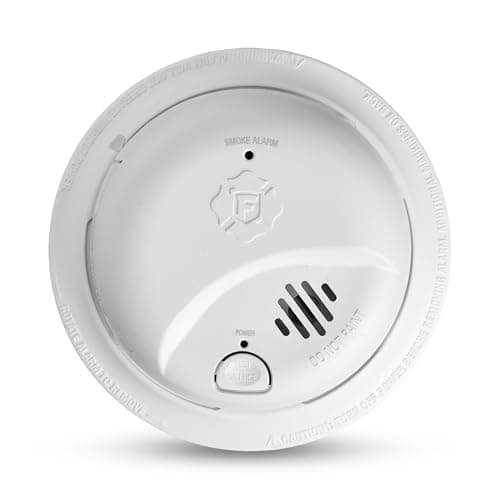 First Alert SMI105-AC Hardwired Smoke Alarm with 10-Year Battery Backup The same specification from the other major brand, and the current model rather than the one being retired. | A First Alert or BRK house | 8.6/ 10 | |
| 3 | 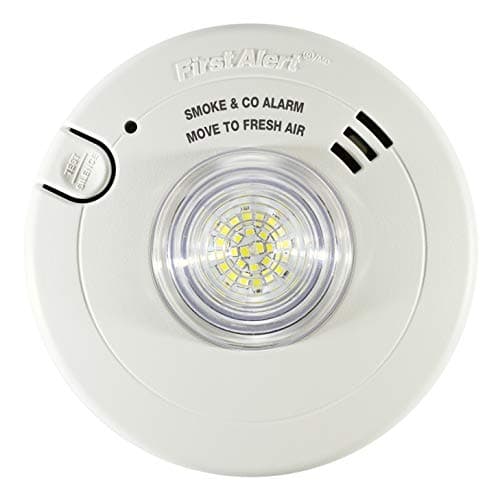 First Alert BRK 7030BSL Hearing-Impaired Smoke + CO Alarm with Strobe A hardwired combination alarm with an integrated LED strobe. | Covering CO and hearing loss from the same position | 8.8/ 10 | $139.17 · View on Amazon #ad how we are funded · price as of October 19, 2026 |
| 4 | 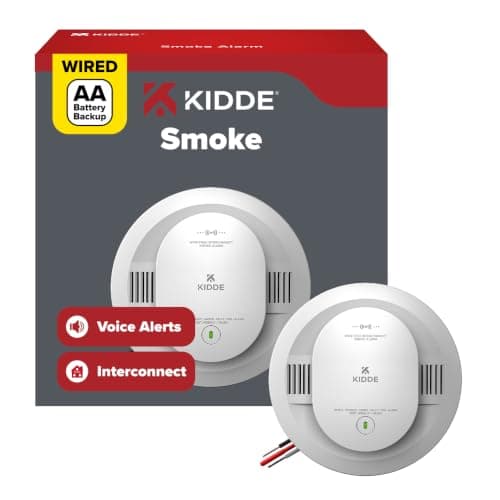 Kidde 20SAR-VRF Hardwired Smoke Alarm with Wire-Free Interconnect Hardwired on the circuit it sits on, and wirelessly interconnected to the rooms that have no wiring. | A house that is wired in some rooms and not others | 8.3/ 10 |
1. Most hardwired replacements
Kidde 20SA10 Hardwired Smoke Alarm with 10-Year Backup Battery
The straight successor to the Kidde line most of these ceilings already carry.
- Listed to
- UL 217, 10th edition (UL 217-2024 Ed.10)
- Sensing / agent
- Photoelectric smoke sensing only — no CO cell
- Power / service life
- 120V AC with a sealed 10-year backup battery; 10-year limited warranty
If your ceilings already have alarm wiring, this is the boring correct answer. It goes on the existing circuit, it interconnects with the other alarms on that circuit, and the sealed backup cell means the only thing you will ever do to it is press the test button.
The sealed backup battery is the upgrade worth paying for and the one people skip. A hardwired alarm with a 9V backup chirps once a year when that 9V sags, usually at night, usually in the hallway, and the standard response is to pull the 9V out. An alarm on mains power with no backup battery still works — until the breaker trips or the power goes out, which is exactly when a house fire is most likely to have started. A sealed ten-year cell removes the whole sequence.
The compatibility point is the one that actually ruins replacements. Hardwired alarms interconnect over a third wire, but the signaling on that wire is not universal across every brand and generation. Mixing manufacturers on one circuit can leave you with alarms that are powered and working and do not trigger each other — which looks fine on a test of each individual unit and fails as a system. The safe approach is to replace the whole circuit with one model at one time. See the compatibility section below.
The sensor trade is the usual one. Photoelectric responds sooner to smoldering fires and later to fast flaming ones, which we go through in ionization versus photoelectric. For a hallway or a landing it is the right default.
What it does well
- Listed to UL 217 10th edition (UL 217-2024 Ed.10), which carries the cooking-nuisance test the 8th edition introduced
- Sealed ten-year backup battery — no annual 9V change, and no 3am chirp from a backup cell you forgot existed
- Interconnects over the existing 120V alarm circuit: one sounds, they all sound
- Kidde's own replacement for the discontinued P4010ACS, so it is the natural like-for-like swap in a Kidde house
- Ten-year limited warranty matching the ten-year service life
The downside
- Photoelectric only — no ionization chamber, so fast flaming fires are not the sensor's strength
- **Smoke only.** No CO cell, so that ceiling position covers one hazard out of two
- No display or voice: it tells you there is smoke, not where or what
- The sealed backup cell means a failed battery is a whole-unit replacement rather than a $5 fix
Do not buy this if: a house with gas appliances, an attached garage or any fuel-burning heat and no separate CO alarms. In that house the ceiling position is worth more as a combination unit — use the First Alert 7030BSL below, or read [combo versus separate alarms](/carbon-monoxide-detectors/combo-vs-separate-alarms) first.
- Drops onto an existing 120V alarm circuit and interconnects over the wire — one sounds, they all sound
- Sealed 10-year backup battery, so a tripped breaker does not leave the house unprotected
- Same reduced-nuisance sensing as the battery model in this series
- No low-battery chirps across the ten years
- The direct successor to the P4010ACS line, which Kidde has discontinued
#ad how we are funded · price as of October 19, 2026
2. A First Alert or BRK house
First Alert SMI105-AC Hardwired Smoke Alarm with 10-Year Battery Backup
The same specification from the other major brand, and the current model rather than the one being retired.
- Listed to
- UL 217 — First Alert states compliance with the latest edition
- Sensing / agent
- Photoelectric smoke sensing only — no CO cell
- Power / service life
- 120V AC with a sealed 10-year lithium backup battery
There is very little between this and the Kidde on paper, and the deciding factor should be what is already on your ceilings. If the existing alarms say First Alert or BRK, buy this. If they say Kidde, buy the Kidde. The point is that every alarm on the circuit is from one compatible family.
The one thing worth flagging is the model churn. First Alert has been moving from the SMI-series to the SM2-series, and retailers are still selling both. The SMI105-AC that you will find at a lower price is the outgoing model — it is a perfectly functional alarm, but buying the outgoing generation of a device you intend to leave in place for ten years is a false economy, particularly when the newer generation is the one carrying the updated nuisance-resistant sensing.
Check the date stamp on whatever arrives. A hardwired alarm expires ten years from manufacture just as a battery one does, and clearance stock is clearance stock for a reason.
What it does well
- Photoelectric sensing on a hardwired circuit with a sealed ten-year backup cell
- First Alert's Precision Detection sensing, which the company states meets the new industry standards on cooking nuisance alarms
- Interconnects with compatible First Alert and BRK units on the existing circuit
- The stated replacement for the SMI105-AC, so it is the model to buy rather than the discounted older stock beside it
The downside
- Smoke only — no CO cell, same limitation as the Kidde
- Stock at First Alert's own store has been inconsistent, though the major retailers carry it
- No voice or display
- If your existing alarms are Kidde, this is the wrong brand to put on that circuit
Do not buy this if: a circuit currently populated with Kidde alarms. Brand-matching the whole circuit matters more than any spec difference between these two units, and they are close enough that there is no reason to fight it.
- Photoelectric sensing on a hardwired circuit, which is the combination most houses should be replacing into
- Precision Detection sensing, which First Alert states meets the new industry standards on cooking nuisance alarms
- Non-replaceable 10-year backup cell rather than an annual 9V change
- Test/silence button that holds the hush for up to eight hours
- Interconnects over the existing alarm circuit with compatible First Alert and BRK units
First Alert product documentation
3. Covering CO and hearing loss from the same position
First Alert BRK 7030BSL Hearing-Impaired Smoke + CO Alarm with Strobe
A hardwired combination alarm with an integrated LED strobe.
- Listed to
- Hardwired combination smoke and carbon monoxide alarm with an integrated LED strobe
- Sensing / agent
- Smoke sensing through First Alert's Optipath 360 chamber plus a carbon monoxide cell, with an LED strobe
- Power / service life
- 120V AC hardwired; 10-year limited warranty
This is the unit to fit where the alerting problem is not volume. A standard alarm assumes the occupant wakes to 85 dB, and for someone with moderate or severe hearing loss that assumption fails exactly when it matters, because hearing aids come out at night.
The figure to ask any seller for is the candela rating, because that is the measure of how much light the strobe actually puts out. First Alert publishes 77 candela for this one and states the strobes on interconnected units flash in unison. A listing that will not quote a candela figure at all is selling you an LED somebody added to a housing.
The AC-power caveat is the honest catch and we would rather you heard it here. Strobes draw far more current than a horn, and this is a hardwired appliance. In a power cut, a household relying on the flash should not assume it keeps flashing. If that is your situation, a strobe alarm is a good thing to have and it is not sufficient on its own — pair it with a bedside device that has its own power, which is the subject of the best smoke detectors for the hard of hearing.
What it does well
- Smoke alarm, carbon monoxide alarm and strobe in one hardwired unit, on one ceiling position
- First Alert publishes the synchronized LED strobe at 77 candela, stated as a visual warning intended to waken hearing-impaired residents
- Smart strobe: separate flash patterns distinguish a smoke event from a carbon monoxide event
- Interconnected units flash in unison as well as sounding together, so the visual alert is whole-house rather than room-only
- Optipath 360 gives the sensing chamber 360 degrees of direct access, and the warranty runs ten years
The downside
- **It is a hardwired appliance.** The strobe depends on live AC power, which is the scenario a household relying on the flash most needs to understand
- Physically larger and more conspicuous than a plain alarm
- Costs meaningfully more per position than a smoke-only unit
- Enough light output to be genuinely unpleasant in a small bedroom if it triggers at night for a benign reason
Do not buy this if: every ceiling in the house. This is a targeted unit for the rooms where someone sleeps who may not wake to a horn, plus the hallway outside. Fitting it everywhere is a lot of money for light in rooms nobody is asleep in.
- Smoke alarm, CO alarm and strobe in one device, so one ceiling position and one install covers all three
- First Alert publishes the synchronized LED strobe at 77 candela, intended to wake hearing-impaired residents
- Smart strobe: separate flash patterns distinguish a smoke event from a carbon monoxide event
- Interconnected units flash in unison as well as sounding together
- Optipath 360 gives the sensing chamber 360 degrees of direct access
- **The strobe needs live AC power** — it is a hardwired appliance, not a battery alarm
#ad how we are funded · price as of October 19, 2026
4. A house that is wired in some rooms and not others
Kidde 20SAR-VRF Hardwired Smoke Alarm with Wire-Free Interconnect
Hardwired on the circuit it sits on, and wirelessly interconnected to the rooms that have no wiring.
- Listed to
- UL 217 10th edition and UL 2034 5th edition; ETL listed
- Sensing / agent
- Photoelectric smoke sensing, with voice annunciation
- Power / service life
- 120V AC with two replaceable AA backup batteries
Most houses with alarm wiring do not have it everywhere. A converted loft, a garage conversion, a basement that was finished later, an extension — these routinely end up with no alarm circuit, and the standard result is a wired system upstairs and an isolated battery alarm in the new room that nobody else can hear.
This alarm is the fix. It sits on the wired circuit and also talks wirelessly to Kidde alarms in the unwired rooms, so the whole house becomes one alerting system rather than two. For a house in that position it is the most useful product on this page.
The cost is the backup battery. Kidde's wire-free interconnect models in this series use two AAs rather than a sealed ten-year cell, which means an annual replacement and the chirp that follows if you skip it. We would still choose it for the bridging job, because a whole-house interconnect is worth more than a battery you never touch — but go in knowing you have signed up for a yearly task, and do the batteries in every alarm on the same day each year so it is one job rather than a recurring surprise.
What it does well
- Bridges the two worlds: wired interconnect on its own circuit, wire-free interconnect to up to 12 compatible Kidde alarms elsewhere
- Voice alert announces "Fire!" instead of leaving you to interpret a horn at 3am
- Listed to UL 217 10th edition and UL 2034 5th edition; ETL listed
- Solves the extension problem — a loft conversion or a garage conversion that never got alarm wiring can join the existing system
The downside
- **Two AA backup batteries, not a sealed ten-year cell.** That is an annual job and an annual chirp risk, and it is a real step back from the other three alarms here
- The wireless side is proprietary Kidde, so the rooms you extend to have to be Kidde too
- 12-unit ceiling on the mesh, which is generous for a house and not for anything larger
- More setup than a plain replacement: the pairing sequence has to be done correctly or you have an expensive standalone alarm
Do not buy this if: a straightforward like-for-like swap where every position is already wired. You would be taking on replaceable backup batteries to buy a capability your circuit already gives you.
- Hardwired AND wire-free interconnect: it joins the wired alarms on its circuit to alarms in rooms that have no wiring, up to 12 compatible units
- Voice alert announces "Fire!" rather than sounding an ambiguous horn
- 85 dB with a red LED
- Listed to UL 217 10th edition, which carries the cooking-nuisance test the 8th edition introduced
- AA backup batteries rather than a sealed cell — the one part of this alarm that still needs an annual visit
What the backup battery decides
Every alarm here runs on mains power. The backup cell is what keeps it alive in a power cut — and it is the spec that determines how much of your attention the alarm demands over the next ten years.
| Sealed 10-year backup | Replaceable 9V or AA backup | |
|---|---|---|
| Battery changes over the alarm's life | None | Roughly ten, at every position |
| Chirp risk | Once, at end of life | Annually, per unit, usually overnight |
| What happens in a long power cut | Alarm keeps working | Alarm keeps working, if the cell was replaced |
| Failure mode | None you can cause | Backup removed to stop a chirp — the alarm looks fine on AC and has no backup at all |
| On this page | Kidde 20SA10, First Alert SMI105-AC, First Alert 7030BSL | Kidde 20SAR-VRF (two AA) |
A hardwired alarm with its backup battery removed still lights up, still passes the test button and still detects smoke. It just stops working the moment the breaker trips. That is the quietest failure in this category.
The compatibility rule that breaks interconnects
Hardwired alarms interconnect over a third conductor — usually the red wire — that carries a signal from whichever alarm is in alarm to every other alarm on the circuit. The catch is that the signaling is not a universal standard across every brand and every generation.
In practice that means a circuit with Kidde alarms at three positions and First Alert alarms at two can end up as two separate systems that happen to share a wire. Each alarm works. Each one passes its own test. Press the test button on one and the others stay silent, which is the only symptom, and it is a symptom nobody sees unless they specifically test the interconnect rather than the units.
So test the interconnect, not the alarms. Hold the test button on the alarm furthest from the others for long enough for it to sound, then have somebody confirm every other alarm in the house has also started. If they have not, you have a set of standalone alarms on a shared circuit, and the fix is to replace the odd ones out with the same family as the rest.
The same applies to a partial replacement. Swapping two failed alarms out of six and leaving the other four is how mixed circuits happen. If the four survivors are also nine years old, you are going to be back inside a year anyway — do the set.
Hardwired does not mean maintenance-free
Mains power removes the battery problem and nothing else. The sensing chamber still expires ten years from the date of manufacture stamped on the back, and a hardwired alarm past that date is as finished as a battery one — it simply keeps its lights on while being finished, which makes it easier to ignore.
Dust is the other one. A hallway ceiling alarm sits in the path of every warm-air current in the house and accumulates a decade of fine dust in its chamber. That is both a nuisance-alarm cause and a sensitivity problem, and the fix is thirty seconds with a vacuum brush around the vents whenever you think of it.
Test monthly, replace at ten years, and read when to replace smoke detectors for what the end-of-life signal sounds like — on a hardwired unit it is particularly easy to mistake for a fault in the wiring.
Questions people actually ask
Can I replace a hardwired smoke detector with a battery one?
Do hardwired smoke detectors need batteries?
How long do hardwired smoke detectors last?
Can I mix brands of hardwired smoke alarms on the same circuit?
Do I need an electrician to replace a hardwired smoke alarm?
Why does my hardwired smoke alarm chirp when it has power?
Is hardwired better than battery for a smoke detector?
How these picks were chosen. On published specifications, safety listings and manufacturer documentation — plus the findings of organizations that do run tests. We have no laboratory and we do not burn anything. Read the full methodology.
Sources
- UL Solutions — UL 217 — smoke alarms
- NFPA — NFPA 72, National Fire Alarm and Signaling Code (2025 edition)
- NFPA — Smoke alarms — installation and placement guidance
- International Code Council — IRC Chapter 3 — building planning (R314 smoke alarms, R315 CO alarms)
- Kidde — Smoke Alarm, Hardwired with 10-Year Backup Battery (20SA10) — product specifications
- First Alert — Hearing-impaired alarms and strobe lights
- BRK / First Alert — Codes and standards reference for smoke and CO alarms
Read next
Smoke Detectors
The Best Battery-Operated Smoke Detectors
Sealed ten-year cells, the interconnect problem, and four battery alarms that are current models.
Smoke Detectors
The Best Smoke Detectors for a Home
Four alarms, what UL 217 tests, and why interconnection beats every other feature.
Smoke Detectors
Why interconnection matters most, and the wired, wireless and hybrid routes.
Smoke Detectors
When to Replace Smoke Detectors
Where the date is, why the test button proves little, and what to replace with.
Carbon Monoxide Detectors
Combination Alarms vs Separate Units
One device or two — the replacement-timing trade nobody mentions.
Placement & Code
How Many Smoke Detectors Do I Need?
Worked counts for real house shapes, including split levels and open plans.