Smoke Detectors
The Best Smoke Detectors for Rental Properties
A landlord is not buying detection. Detection is solved. You are buying tamper resistance, a ten-year replacement cycle that survives tenant turnover, and a paper trail.
By Ryder M.Last reviewed

Fit sealed ten-year alarms — in several states, including California, New York and Maryland, battery alarms in this application are required by law to have a non-removable ten-year cell. Our pick is the First Alert SM310, because it is the one here with a locking bracket that stops a unit being lifted off the ceiling. If the building has alarm wiring, replace like for like with the Kidde 20SA10 rather than dropping to battery units and losing the interconnect.
Siren & Safe is reader-funded. We earn a commission on some links on this page, at no cost to you. It does not change what we recommend or the order we rank it in. Full disclosure.
Several states now mandate the sealed ten-year battery
This is the most important thing for a landlord to know, because it is a legal requirement rather than a recommendation, and it has caught out people restocking from a cash-and-carry.
California requires battery-operated smoke alarms installed on or after 1 July 2014 to have a hush feature and a sealed, non-replaceable battery with a minimum ten-year life. New York restricts the sale of battery-powered smoke alarms to units with a ten-year sealed battery, explicitly to discourage tampering. Maryland requires any battery-only alarm more than ten years old to be replaced with a sealed ten-year unit. Other states and a number of cities have comparable rules.
The reasoning is the same everywhere and it is aimed squarely at this application: a removable battery is a removable battery, and in a property the owner does not live in, nobody finds out it is gone until it matters.
The practical consequence is simple. If you are buying battery alarms for rental property, buy sealed ten-year units, full stop — even where your jurisdiction has not yet required it. The cheap nine-volt alarms still on shelves are not a saving in this application, and in several states they are not a legal option.
What actually goes wrong in rentals
None of these are detection failures. All of them are addressed by product choice or process rather than by a better sensor.
- The alarm is removed. Taken down during cooking, after a chirp, or at a party, and never replaced. A locking bracket and a nuisance-resistant listing are the two defences
- The battery is taken. Historically the most common, which is exactly why several states now mandate sealed cells
- A hardwired unit is replaced with a battery one during a repair, silently removing interconnection from the whole apartment
- Alarms outlive their ten years across a portfolio because nobody is tracking dates. Fitting a whole property on one day fixes this permanently
- Mixed brands on one circuit after piecemeal repairs, leaving alarms that each pass their own test and do not trigger each other
- No record of any of it, so at a dispute or an inspection the landlord has assertions rather than evidence
Quick picks
Scored against tamper resistance, turnover durability, sensor coverage, cost per unit and nuisance resistance. Tap a row for the full write-up. The price in each buy button is the live Amazon price at the last check, stamped with the date it was taken.
| # | Product | Best for | Score | Price |
|---|---|---|---|---|
| 1 | 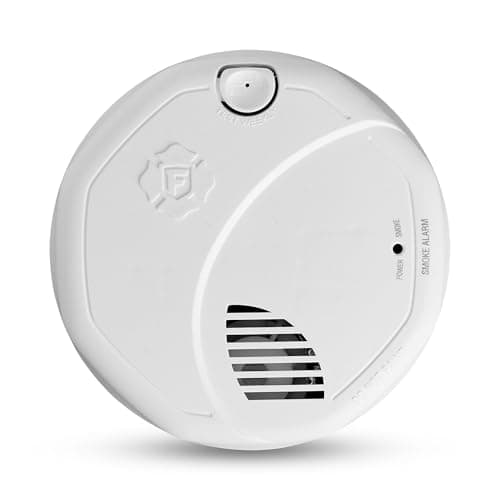 First Alert SM310 10-Year Sealed Battery Dual Sensor Smoke Alarm The locking bracket, which is the single most useful feature on a rental ceiling. | Stopping the alarm coming off the ceiling | 8.7/ 10 | |
| 2 | 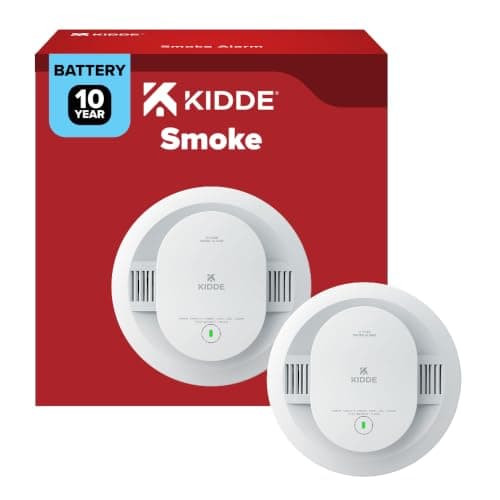 Kidde 20SD10 10-Year Battery Smoke Alarm The cheapest way to put a current-listing sealed alarm in every required position. | Fitting out a portfolio economically | 8.5/ 10 | $32.47 · View on Amazon #ad how we are funded · price as of October 19, 2026 |
| 3 | 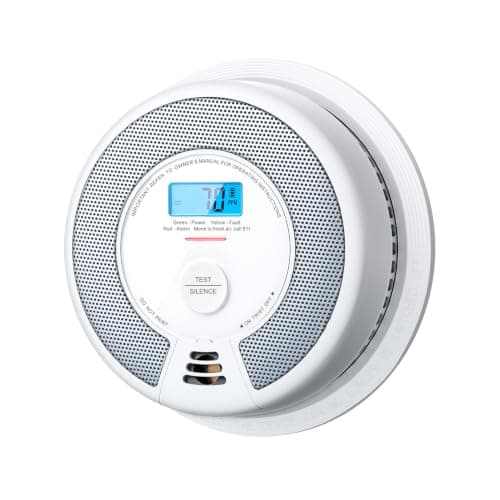 X-Sense SC07-W Wireless Interconnected Smoke & CO Alarm Whole-unit interconnection without opening a single wall. | An older building with no alarm wiring | 8.1/ 10 | $44.99 · View on Amazon #ad how we are funded · price as of October 19, 2026 |
| 4 | 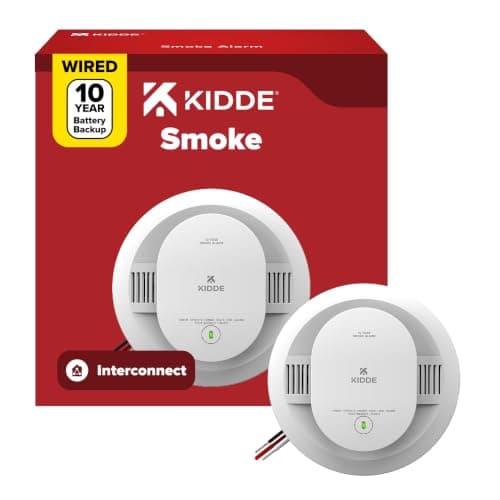 Kidde 20SA10 Hardwired Smoke Alarm with 10-Year Backup Battery Replace like for like and keep the interconnection the building already paid for. | A unit that already has alarm wiring | 8.6/ 10 | $39.97 · View on Amazon #ad how we are funded · price as of October 19, 2026 |
1. Stopping the alarm coming off the ceiling
First Alert SM310 10-Year Sealed Battery Dual Sensor Smoke Alarm
The locking bracket, which is the single most useful feature on a rental ceiling.
- Listed to
- UL 217 — First Alert states compliance with the latest edition
- Sensing / agent
- Dual sensor: a photoelectric chamber and an ionization chamber in one housing
- Power / service life
- Sealed 10-year lithium battery; 10-year limited warranty
Ask any landlord what goes wrong with smoke alarms and you will not hear about sensor failure. You hear about the unit found in a kitchen drawer at check-out, the one hanging by its wires, the one with a sock over it.
The locking feature addresses that directly. It converts removing the alarm from a thirty-second twist into something requiring a tool and intent — which will not stop somebody determined, and does stop the far more common case of an irritated tenant taking it down during a dinner party and never putting it back.
A listed alarm will not, however, tell you anything about smoking or vaping in the unit — it is specifically engineered not to react to ambient smoke, and cigarette and vape detectors for rentals covers the particulate monitors that do. The dual sensor is worth having in a rental for a reason specific to the application: you do not know what the tenant will do in the space. A landlord is fitting an alarm for an unknown occupant, unknown furniture, unknown habits, and dual-sensor coverage is the answer that does not require you to guess which fire profile matters.
Pair it with a separate CO alarm anywhere there is gas, a fireplace or an attached garage — where to install CO detectors covers the positions.
What it does well
- An optional locking feature that prevents the alarm being lifted off its bracket — the failure mode that actually happens in rentals
- Sealed ten-year lithium battery with nothing a tenant can remove
- Genuinely dual sensor, photoelectric and ionization, so no fire profile is uncovered
- Precision Detection sensing, which First Alert states reduces cooking nuisance alarms
- Ten-year limited warranty, so the unit's life matches a typical replacement cycle
The downside
- **No CO cell**, so any unit with gas appliances or an attached garage needs a separate CO alarm as well
- No interconnect, wired or wireless
- The ionization chamber is the half historically associated with cooking nuisance alarms, and in a small apartment the kitchen is close to everything
- Costs more per position than a plain photoelectric alarm, which matters across a portfolio
Do not buy this if: a studio or one-bedroom where the only legal position is close to the kitchen. There, a photoelectric-only alarm is the more sensible choice — a nuisance-prone alarm in a small apartment is an alarm that gets taken down, locking bracket or not.
- The only dual-sensor unit here — photoelectric and ionization, so it is not trading one fire type for the other
- First Alert calls the sensing Precision Detection, and states it reduces cooking nuisance alarms
- 85 dB at 10 ft
- Optional locking feature that stops the alarm being lifted off its bracket
- 5 x 5 x 2 in, 0.54 lb
First Alert product documentation
2. Fitting out a portfolio economically
Kidde 20SD10 10-Year Battery Smoke Alarm
The cheapest way to put a current-listing sealed alarm in every required position.
- Listed to
- UL 217, 10th edition (UL 217-2024 Ed.10)
- Sensing / agent
- Photoelectric smoke sensing only — no CO cell
- Power / service life
- Sealed 10-year lithium battery; 10-year limited warranty
For most rental fit-outs this is the sensible default, and the argument is coverage. Alarms work by being in the right positions, and the difference between a unit with three alarms and a unit with five is larger than the difference between a good alarm and a very good one.
The nuisance-resistant listing matters more in rentals than in owner-occupied homes, for a slightly cynical reason. An alarm that goes off every time somebody cooks gets disabled, and in a rental you will not find out until an inspection or an incident. An alarm listed to the 10th edition of UL 217 has been tested against exactly that scenario, and it is the cheapest available insurance against the behavior you cannot supervise.
Buy the whole property's worth at once and fit them on the same day. That puts every alarm on the same ten-year clock, so your replacement cycle is one scheduled visit per property rather than an unpredictable trickle of call-outs.
What it does well
- Sealed ten-year lithium cell — no battery for a tenant to remove, and none for you to budget for
- UL 217 10th edition, the listing with the cooking-nuisance test, which matters in a small apartment where the kitchen is close to the hallway
- Photoelectric only, the right sensor for a kitchen-adjacent position
- Cheap enough to cover every required position rather than the minimum, which is the actual determinant of outcome
- Self-testing, which reduces what you are relying on a tenant to do
The downside
- **No locking bracket** — it twists off as easily as any other alarm
- No CO cell
- No interconnect
- No display or voice
Do not buy this if: a property with a history of alarms going missing. If you have had units removed before, the locking bracket is worth the difference and you already know it.
- Listed to the 10th edition of UL 217, which carries the cooking-nuisance test the 8th edition introduced
- Kidde's own wording: enhanced sensing technology reduces false alarms often caused by cooking
- No low-battery chirps for ten years — the first end-of-life beep is the replacement signal
- Three long beeps and a red flash on smoke, so the pattern tells you which hazard it is
- Twist-and-click bracket, and it self-tests rather than waiting for you to press the button
#ad how we are funded · price as of October 19, 2026
3. An older building with no alarm wiring
X-Sense SC07-W Wireless Interconnected Smoke & CO Alarm
Whole-unit interconnection without opening a single wall.
- Listed to
- UL 217 and UL 2034
- Sensing / agent
- Photoelectric smoke sensing plus an electrochemical CO cell
- Power / service life
- 10-year sealed lithium battery, not hardwired
Older rental stock frequently has no alarm circuit and no realistic way to add one. In a two-story maisonette or a townhouse conversion, that has historically meant a set of isolated alarms — which is the configuration where a fire on one floor does not wake somebody on another.
Wireless interconnect solves it at the price of the alarms. For a landlord facing a jurisdiction that expects interconnection on change of occupancy, or simply wanting to have done the right thing, it is by far the cheapest route to a defensible answer.
One operational note. Because the mesh is proprietary and paired, document the set: how many units, which rooms, and the model. At turnover, check the count. A tenant who takes one unit with them has not just removed an alarm, they have removed a node from a network you will otherwise assume is complete.
What it does well
- Wireless interconnect across up to 24 units — one alarm sounding sounds the whole apartment
- UL 217 and UL 2034 together, so one device covers the CO requirement as well
- Sealed ten-year battery
- Meets an interconnection expectation in a building where running new circuits is not realistic
The downside
- Proprietary mesh, so every position in that unit has to be the same system — and a tenant who loses one has broken a set
- **No locking bracket**
- More expensive per position than a plain alarm, which multiplies across a portfolio
- Photoelectric only
Do not buy this if: a single-story studio where every room is within earshot of one ceiling. The interconnect is buying you nothing there, and the money is better spent on a locking unit.
- Wireless interconnect for up to 24 units — one alarm triggers the whole set
- No wiring, which is the point: it retrofits interconnection into a house that never had it
- LCD CO reading on each unit
- X-Sense recommends it for large or multi-story homes
#ad how we are funded · price as of October 19, 2026
4. A unit that already has alarm wiring
Kidde 20SA10 Hardwired Smoke Alarm with 10-Year Backup Battery
Replace like for like and keep the interconnection the building already paid for.
- Listed to
- UL 217, 10th edition (UL 217-2024 Ed.10)
- Sensing / agent
- Photoelectric smoke sensing only — no CO cell
- Power / service life
- 120V AC with a sealed 10-year backup battery; 10-year limited warranty
If the ceilings have wired alarms, replace them with wired alarms. The most common and most damaging shortcut in rental maintenance is swapping a failed hardwired unit for a battery one because it is quicker on the day — the position still has an alarm, so nothing looks wrong, and the building has quietly lost whole-unit alerting.
It is also the change most likely to fail an inspection, because an inspector who sees battery alarms hanging below capped alarm wiring knows exactly what happened.
Do the building in one visit with one model. And test the interconnect rather than the alarms: hold the test button on the furthest unit and confirm every other alarm in the apartment sounds. Testing each alarm individually will pass a set that does not interconnect at all.
What it does well
- Hardwired, so a tenant cannot disable it by removing a battery
- Interconnects over the existing circuit — one sounds, they all sound
- Sealed ten-year backup battery, so there is no annual backup cell to chirp or be pulled
- UL 217 10th edition, which carries the cooking-nuisance test
- Kidde's direct successor to the discontinued P4010ACS, which is what a lot of rental ceilings currently carry
The downside
- Needs an existing circuit at every position — not a retrofit answer
- **Smoke only**, no CO cell
- Brand-matching matters: mixing manufacturers on one circuit can silently break the interconnect
- Replacing a whole building's wired alarms is a bigger coordinated job than swapping battery units
Do not buy this if: a building where you were planning to "simplify" by moving to battery alarms. That is a downgrade dressed as a saving, and in some jurisdictions it is not permitted once wiring exists.
- Drops onto an existing 120V alarm circuit and interconnects over the wire — one sounds, they all sound
- Sealed 10-year backup battery, so a tripped breaker does not leave the house unprotected
- Same reduced-nuisance sensing as the battery model in this series
- No low-battery chirps across the ten years
- The direct successor to the P4010ACS line, which Kidde has discontinued
#ad how we are funded · price as of October 19, 2026
A process that survives turnover
The hardware is the easy part. What protects a landlord is doing the same five things at every change of occupancy.
Fit the whole property on one day, one brand, one model
Every required position: inside each bedroom, outside each sleeping area, one per level. One purchase, one fitting visit, one ten-year clock. This single decision removes most of what goes wrong later.
Photograph every alarm at hand-over
A dated photo of each alarm in place, with the manufacture date on the back captured before you fit it. This costs five minutes and is the difference between evidence and an assertion if there is ever a dispute.
Test the interconnect, not the alarms
Hold the test button on the alarm furthest from the others and confirm the rest sound. A set that fails this test will still pass an alarm-by-alarm check, which is why alarm-by-alarm checks miss it.
Put it in the tenancy paperwork
Where the alarms are, that they were tested and working on the date of hand-over, that the tenant must not remove or disable them, and who to contact if one chirps. Many jurisdictions require a written certification at the start of a tenancy — check yours.
Check the count at every inspection
Not whether they work. Whether they are all still there. Missing units are the failure mode, and a count takes a minute.
Diary the ten-year replacement
From the manufacture date, not the fitting date. If you fitted the property in one visit, that is one diary entry per property rather than a rolling stream of individual failures.
Do not solve nuisance alarms by buying tougher brackets
There is a temptation, having been through two or three tenants who removed an alarm, to treat this as a compliance problem and simply make the alarms harder to take down.
That is half the answer and the less useful half. An alarm that goes off every time somebody makes toast is going to be defeated by a tenant who wants it defeated, bracket or not — with a bag over it, a wad of tape, or a screwdriver. What you want is an alarm nobody has a reason to remove.
Which means position first. If a required alarm position is inside the 10 ft cooking radius the code excludes, that is a fixable design problem in the property rather than a tenant behavior problem, and fixing it once fixes it for every future tenancy. Kitchen and bathroom placement has the distances. In a small apartment where the geometry genuinely leaves no better position, a photoelectric alarm with a current nuisance listing is the mitigation.
Then the bracket, for the residual cases. In that order, it works. In the other order, you get a locked alarm with a sock over it.
Questions people actually ask
What smoke detectors are required in a rental property?
Do rental smoke alarms have to have sealed batteries?
Can a tenant remove a smoke detector?
Who is responsible for smoke detectors in a rental, the landlord or the tenant?
Can I replace a hardwired rental smoke alarm with a battery one?
How often should a landlord replace smoke detectors?
Do rental properties need carbon monoxide alarms too?
How these picks were chosen. On published specifications, safety listings and manufacturer documentation — plus the findings of organizations that do run tests. We have no laboratory and we do not burn anything. Read the full methodology.
Sources
- Kidde — Fire safety laws by state — safety hub
- Office of the Maryland State Fire Marshal — New smoke alarm law explanation
- Firemen's Association of the State of New York — New York to require smoke detectors with 10-year batteries
- NFPA — NFPA 72, National Fire Alarm and Signaling Code (2025 edition)
- International Code Council — IRC Chapter 3 — building planning (R314 smoke alarms, R315 CO alarms)
- UL Solutions — UL 217 — smoke alarms
Read next
Placement & Code
Rental and Landlord Requirements
Where rental alarm duties actually come from, and what tenants and landlords should check.
Smoke Detectors
The Best Battery-Operated Smoke Detectors
Sealed ten-year cells, the interconnect problem, and four battery alarms that are current models.
Smoke Detectors
The Best Hardwired Smoke Detectors
Four current hardwired alarms, the backup-battery decision, and the compatibility rule that breaks interconnects.
Smoke Detectors
Why interconnection matters most, and the wired, wireless and hybrid routes.
Placement & Code
How Many Smoke Detectors Do I Need?
Worked counts for real house shapes, including split levels and open plans.
Carbon Monoxide Detectors
Do I Need a Carbon Monoxide Detector?
The five sources all-electric homes forget, and the one case where no is honest.
Smoke Detectors
Best Cigarette and Vape Detectors for Rentals
Particulate monitors that notice smoking and vaping, what each one can actually prove, and why your smoke alarm is not one of them.