Smoke Detectors
Best Smoke Detectors for a Two-Story Home
A fire downstairs and sleepers upstairs is the geometry that kills people. One alarm sounding on the wrong floor is not a warning.
By Ryder M.Last reviewed

For a two-story house, buy interconnected alarms, and buy the Kidde 20SAR-VRF if the ceilings already have alarm wiring: it is hardwired with a sealed wire-free interconnect for up to 12 units, listed to UL 217 10th edition, and it announces "Fire!" rather than sounding an ambiguous horn. If the house has no alarm wiring, the X-Sense SC07-W does the same job on sealed ten-year batteries across up to 24 units. The reason this matters more in a two-story home than anywhere else is the staircase: a kitchen fire on the ground floor fills the stairwell first, and an alarm that sounds only downstairs gives the people asleep upstairs exactly nothing.
Siren & Safe is reader-funded. We earn a commission on some links on this page, at no cost to you. It does not change what we recommend or the order we rank it in. Full disclosure.
Why a second story changes the answer
In a single-level home, every alarm is within earshot of every bedroom. Add a floor and that stops being true in three separate ways, all of them working against you.
Smoke goes up the stairs first. A stairwell is a chimney. A fire in a ground-floor kitchen or living room pushes hot smoke into the stairwell, which carries it to the upper landing and then into any bedroom with an open door. The people most at risk are the furthest from the fire — which is the opposite of how an un-interconnected alarm system behaves.
Sound does not travel the way smoke does. An 85 dB alarm downstairs, measured at 10 feet, is a great deal quieter at the top of a staircase behind a closed bedroom door. Closed doors are good fire protection and bad acoustics, and the correct fix is not a louder alarm downstairs but an alarm that also sounds upstairs at the same moment.
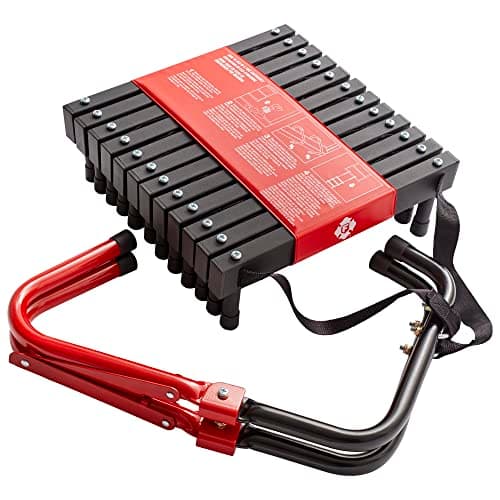
And the escape route is the thing on fire. On the ground floor, every room has a window or a door to outside. Upstairs, the primary route is the staircase and the secondary route is a window at height. That is the whole argument for an escape ladder in a two-story house, and for practicing the route before you need it — best 2-story fire escape ladders and fire escape plan.
The four picks, by what a two-story house needs
Every figure is the manufacturer's published specification. The first column is the one that decides this purchase.
| Alarm | Interconnect | Power | Hazards | Voice |
|---|---|---|---|---|
| Kidde 20SAR-VRF | Hardwired + wire-free, up to 12 units | 120V AC with AA backup | Smoke | Yes — "Fire!" |
| X-Sense SC07-W | Wireless, up to 24 units | Sealed 10-year battery | Smoke + CO | No |
| Kidde 30CUAR-VRF | Hardwired + wire-free | 120V AC with AA backup | Smoke + CO | Yes — names the hazard |
| Kidde 20SD10 | None | Sealed 10-year battery | Smoke | No |
Interconnected alarms from different manufacturers generally do not talk to each other. Pick one system and stay inside it.
Quick picks
Scored against whole-house interconnect, retrofit reach, nuisance resistance, ten-year upkeep and alert clarity. Tap a row for the full write-up. The price in each buy button is the live Amazon price at the last check, stamped with the date it was taken.
| # | Product | Best for | Score | Price |
|---|---|---|---|---|
| 1 | 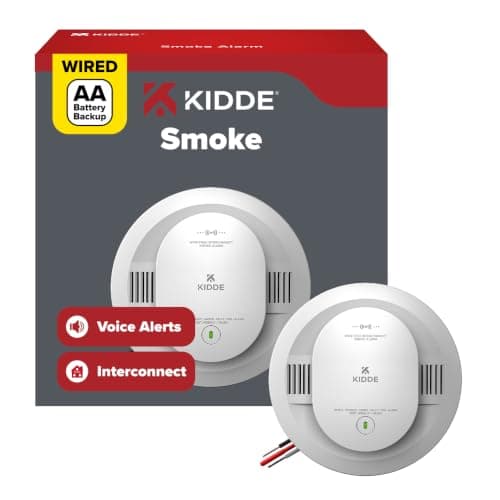 Kidde 20SAR-VRF Hardwired Smoke Alarm with Wire-Free Interconnect Hardwired where there is wire, wireless to the rooms without it, and it says what the hazard is. The best answer for most two-story houses. | A two-story house that already has alarm wiring | 8.6/ 10 | |
| 2 | 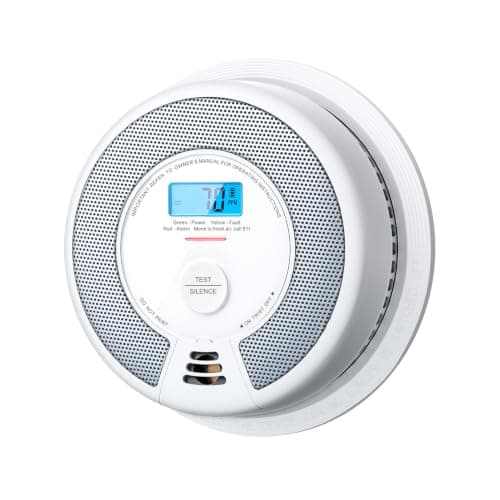 X-Sense SC07-W Wireless Interconnected Smoke & CO Alarm Sealed ten-year batteries, both listings published, interconnect across up to 24 units. The retrofit answer, and a very good one. | A two-story house with no alarm wiring | 8.5/ 10 | $44.99 · View on Amazon #ad how we are funded · price as of October 19, 2026 |
| 3 | 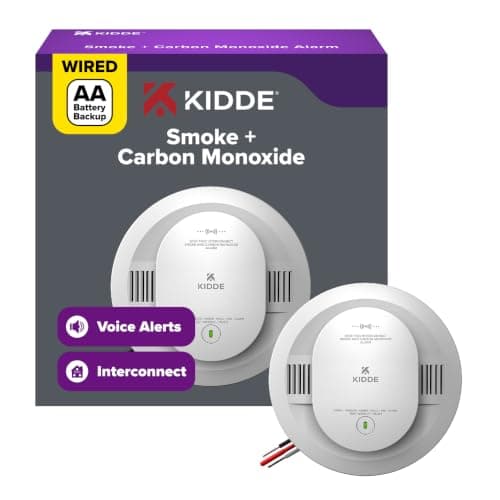 Kidde 30CUAR-VRF Wire-Free Interconnect Smoke & CO Alarm Combination smoke and CO with the same hybrid interconnect. The unit for the landing and the hall. | The hallway positions that need CO as well as smoke | 8.4/ 10 | |
| 4 | 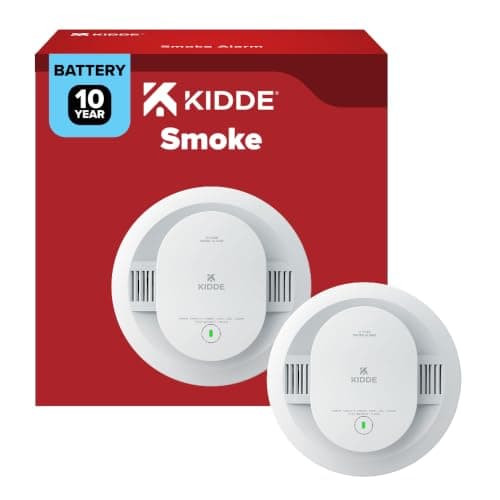 Kidde 20SD10 10-Year Battery Smoke Alarm Sealed ten-year battery, UL 217 10th edition, self-testing. The cheap unit that fills out the count. | The bedroom ceilings, on a budget | 7.4/ 10 | $32.47 · View on Amazon #ad how we are funded · price as of October 19, 2026 |
The picks
1. A two-story house that already has alarm wiring
Kidde 20SAR-VRF Hardwired Smoke Alarm with Wire-Free Interconnect
Hardwired where there is wire, wireless to the rooms without it, and it says what the hazard is. The best answer for most two-story houses.
- Listed to
- UL 217 10th edition and UL 2034 5th edition; ETL listed
- Sensing / agent
- Photoelectric smoke sensing, with voice annunciation
- Power / service life
- 120V AC with two replaceable AA backup batteries
Why interconnection is the whole purchase in a two-story house. NFPA 72 asks for a smoke alarm inside every sleeping room, outside each sleeping area and on every level of the home. Follow that and a typical two-story house ends up with five or six alarms. If they are not interconnected, each one is a local warning: the alarm in the downstairs hall sounds at the fire, and the people in the upstairs bedrooms hear a muffled noise through a closed door, two floors of air and a staircase that is already filling with smoke.
The hybrid interconnect is the specific reason to buy this unit. Most two-story houses in the United States are half-wired — alarm wiring in the hallways from an earlier code cycle, nothing in the bedrooms or the basement. This alarm bridges the two: it sits on the existing wired circuit and relays to battery wire-free units in the rooms that have no wiring, so you get one system without pulling cable through finished ceilings.
And the voice matters at the top of a staircase. A horn tells a person something is wrong. A voice announcement tells them what, which is the difference between standing on a landing working it out and going straight down the stairs. Interconnected smoke alarms covers how the wiring and the wireless pairing actually work.
What it does well
- **Hardwired AND wire-free interconnect** — it joins the wired alarms on its circuit to alarms in rooms with no wiring, up to 12 compatible units
- Listed to UL 217 10th edition, which carries the cooking-nuisance test introduced in the 8th
- Voice alert announces "Fire!" instead of an ambiguous horn, which matters most to somebody woken disoriented
- 85 dB with a red LED, the standard household audibility figure
- Mains powered, so the interconnect cannot be defeated by a flat battery
- Photoelectric sensing with voice annunciation — the right sensor for a hallway and a landing
The downside
- **AA backup batteries rather than a sealed cell** — this is the one part of the alarm that still needs an annual visit
- Needs AC power at each hardwired position, so it is only the right pick if the ceilings are wired
- 12 units is a ceiling on the set size; a large house with outbuildings can hit it
- Photoelectric only — no ionization chamber, so fast flaming fires are covered less well than by a dual sensor
Do not buy this if: a house with no alarm wiring at all. Buy the X-Sense SC07-W below instead — you want interconnection far more than you want hardwiring.
- Hardwired AND wire-free interconnect: it joins the wired alarms on its circuit to alarms in rooms that have no wiring, up to 12 compatible units
- Voice alert announces "Fire!" rather than sounding an ambiguous horn
- 85 dB with a red LED
- Listed to UL 217 10th edition, which carries the cooking-nuisance test the 8th edition introduced
- AA backup batteries rather than a sealed cell — the one part of this alarm that still needs an annual visit
2. A two-story house with no alarm wiring
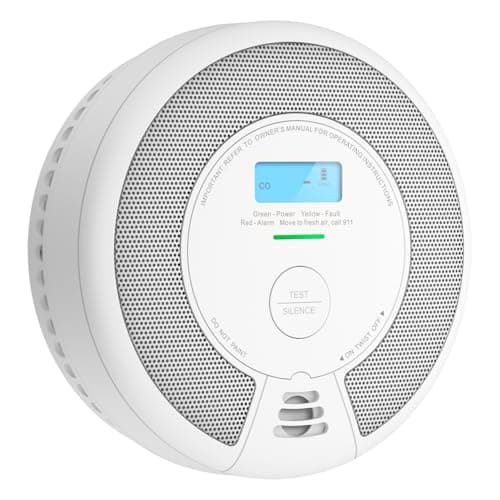
X-Sense SC07-W Wireless Interconnected Smoke & CO Alarm
Sealed ten-year batteries, both listings published, interconnect across up to 24 units. The retrofit answer, and a very good one.
- Listed to
- UL 217 and UL 2034
- Sensing / agent
- Photoelectric smoke sensing plus an electrochemical CO cell
- Power / service life
- 10-year sealed lithium battery, not hardwired
This is the alarm we would put in most two-story houses built before alarm wiring was routine. It solves the actual problem — a warning that reaches the bedrooms — without an electrician, and it does it on batteries that are sealed for the life of the unit.
The 24-unit ceiling is generous enough that a large house, a basement and a detached garage can all sit on one set. Pair it with the count in how many smoke detectors do I need before you order, because buying the right number at once is cheaper than adding units later.
What it will not do is reach your phone. If the house is empty for ten hours a day or there is a vulnerable relative in it, read best smart smoke detectors and put one smart unit at the position where a notification would change what you do.
What it does well
- **Wireless interconnect for up to 24 units** — one alarm triggers the whole set, upstairs and down
- No wiring at all, which is the point: it retrofits interconnection into a house that never had it
- UL 217 and UL 2034 both published, so the smoke and CO halves each have a named listing
- Sealed ten-year lithium battery — no cells to buy and no battery to pull out at 3 am
- An LCD on each unit reads the measured CO concentration rather than only alarming
- X-Sense recommends it specifically for large or multi-story homes, which is exactly this case
The downside
- No Wi-Fi and no app, so nothing reaches a phone when the house is empty
- No voice announcement of the room — the interconnect tells you the house is alarming, not where
- Photoelectric smoke sensing only, the same single-technology trade as most current alarms
- Will not interconnect with Nest Protect units, so a Nest house is a whole-set changeover
Do not buy this if: a house where the ceilings are already wired. Use the wiring — a mains-powered interconnect cannot be defeated by a battery at all.
- Wireless interconnect for up to 24 units — one alarm triggers the whole set
- No wiring, which is the point: it retrofits interconnection into a house that never had it
- LCD CO reading on each unit
- X-Sense recommends it for large or multi-story homes
#ad how we are funded · price as of October 19, 2026
3. The hallway positions that need CO as well as smoke
Kidde 30CUAR-VRF Wire-Free Interconnect Smoke & CO Alarm
Combination smoke and CO with the same hybrid interconnect. The unit for the landing and the hall.
- Listed to
- UL 217 10th edition and UL 2034 5th edition; ETL listed
- Sensing / agent
- Photoelectric smoke sensing plus an electrochemical CO cell, with voice annunciation
- Power / service life
- 120V AC with two AA backup batteries
The reason this belongs on a two-story page is the landing. In a two-story house, the upstairs landing is the single position that covers the most people: it sits between the bedrooms and the staircase, it is the first place smoke from downstairs arrives, and it is a sensible height for a CO alarm serving the sleeping area.
That makes it worth spending more on than a bedroom ceiling. A combination alarm with a voice announcement there, smoke-only units in the bedrooms, and the set interconnected is the arrangement we would build. Combo vs separate alarms works through the trade in detail, and best combination smoke and CO alarms is the roundup.
What it does well
- Wire-free interconnect bridges hardwired alarms to rooms with no alarm wiring
- **Voice alerts announce "Fire" or "Warning, Carbon Monoxide"** — two hazards with completely different responses, named out loud
- UL 217 10th edition and UL 2034 5th edition, ETL listed
- Kidde names renovations, basements and lofts as the case for it, which describes the half-wired two-story house precisely
- Photoelectric smoke plus an electrochemical CO cell in one ceiling position
The downside
- Still needs AC power at each hardwired position — pair it with battery wire-free units for the rooms that have none
- **AA backup batteries rather than a sealed cell**, so this one needs an annual visit too
- A combination alarm in a bedroom is often overkill; the smoke-only units are cheaper per position
- Two sensors in one housing means the whole unit goes when either reaches end of life
Do not buy this if: every ceiling in the house. Put combination alarms at the hallway and landing positions where CO actually needs to be caught, and smoke-only units in the bedrooms.
- Wire-free interconnect bridges hardwired alarms to rooms with no alarm wiring
- Voice alerts announce "Fire" or "Warning, Carbon Monoxide" rather than an ambiguous horn
- Kidde names renovations, basements and lofts as the case for it — the half-wired house, original circuit upstairs and nothing below
- Still needs AC power at each hardwired position; pair it with Kidde's battery wire-free units for the rooms that have none
- AA backup batteries rather than a sealed cell, so this one still needs an annual visit
4. The bedroom ceilings, on a budget
Kidde 20SD10 10-Year Battery Smoke Alarm
Sealed ten-year battery, UL 217 10th edition, self-testing. The cheap unit that fills out the count.
- Listed to
- UL 217, 10th edition (UL 217-2024 Ed.10)
- Sensing / agent
- Photoelectric smoke sensing only — no CO cell
- Power / service life
- Sealed 10-year lithium battery; 10-year limited warranty
We are including a standalone alarm on an interconnection page deliberately, because the commonest real-world mistake is the opposite one: a household that cannot afford six interconnected alarms buys two and leaves four ceilings empty.
Coverage first, interconnection second, cleverness third. NFPA's own research is unambiguous that the risk of dying in a reported home fire is far lower where working smoke alarms are present, and an empty ceiling has no features at all. If the budget stretches to interconnected alarms everywhere, buy those. If it does not, fill every required position with these and upgrade the hallway and landing first.
When to replace smoke detectors matters more with a mixed set, because the units will reach their dates at different times.
What it does well
- Listed to the 10th edition of UL 217, which carries the cooking-nuisance test the 8th edition introduced
- Kidde's own wording: enhanced sensing technology reduces false alarms often caused by cooking
- **No low-battery chirps for ten years** — the first end-of-life beep is the replacement signal
- Three long beeps and a red flash on smoke, so the pattern itself identifies the hazard
- Twist-and-click bracket, and it self-tests rather than waiting for somebody to press the button
- Cheap enough per unit that getting to the right alarm count stops being an argument
The downside
- **No interconnect at all** — which is the one feature a two-story house most needs
- Photoelectric only, no CO cell
- No voice annunciation
- A set of these is a set of local alarms, not a system
Do not buy this if: being the whole answer in a two-story house. Standalone alarms upstairs and down leave exactly the gap this page is about. Use these to add coverage to an interconnected set, not to replace one.
- Listed to the 10th edition of UL 217, which carries the cooking-nuisance test the 8th edition introduced
- Kidde's own wording: enhanced sensing technology reduces false alarms often caused by cooking
- No low-battery chirps for ten years — the first end-of-life beep is the replacement signal
- Three long beeps and a red flash on smoke, so the pattern tells you which hazard it is
- Twist-and-click bracket, and it self-tests rather than waiting for you to press the button
#ad how we are funded · price as of October 19, 2026
Where the alarms go in a two-story house
This is NFPA 72's requirement applied to the commonest American layout. Count the positions before you order units.
- Inside every bedroom, on both floors. One per sleeping room, no exceptions.
- Outside each separate sleeping area — the upstairs landing, and the downstairs hall if anybody sleeps on the ground floor.
- On every level, including the basement. A basement alarm belongs on the ceiling at the bottom of the stairs, not over the furnace. Best smoke detectors for basements.
- At the top of the staircase, which in most two-story houses is the same position as the landing alarm. If your landing is large or L-shaped, treat the stair head as its own position.
- Not within 20 feet of a cooking appliance unless the alarm is photoelectric or has a hush feature, in which case 10 feet is permitted. This is the rule that prevents the kitchen alarm being disabled in week two. Best smoke detectors for kitchens.
- And interconnect all of them, which is the point of this page.
One system, not a collection
The practical warning worth more than any pick on this page: interconnect systems do not cross brands. Kidde wire-free units talk to Kidde wire-free units. X-Sense talks to X-Sense. A house with three Kidde alarms and three X-Sense alarms has two systems that each cover half a house, which is barely better than none.
Decide the system first, then buy the units. If the ceilings are wired, that pushes you toward a hardwired-plus-wireless family. If they are not, pick a sealed-battery wireless family and buy the whole set at once.
Then test it as a system. Press the button on the alarm furthest from the bedrooms and walk upstairs while it is sounding — if you cannot hear it clearly behind a closed bedroom door, the interconnect is not working or the set is incomplete. How to test a smoke alarm covers the right way to do this, and it is a ten-minute job twice a year.
Questions people actually ask
How many smoke detectors does a two-story house need?
Do smoke detectors in a two-story house need to be interconnected?
Where should the smoke detector go on a staircase?
Can I mix hardwired and battery smoke alarms in the same house?
What else does a two-story house need besides alarms?
How these picks were chosen. On published specifications, safety listings and manufacturer documentation — plus the findings of organizations that do run tests. We have no laboratory and we do not burn anything. Read the full methodology.
Sources
- NFPA — NFPA 72, National Fire Alarm and Signaling Code (2025 edition)
- NFPA — Smoke alarms — installation and placement guidance
- NFPA — Smoke Alarms in US Home Fires
- UL Solutions — UL 217 — smoke alarms
- UL Solutions — UL 217, Standard for Smoke Alarms, published with new technical requirements
- International Code Council — IRC Chapter 3 — building planning (R310, R314, R315)
Read next
Smoke Detectors
The Best Interconnected Smoke Detectors
One sounds, they all sound. Wireless retrofit and hardwired picks, and the mixing mistake to avoid.
Smoke Detectors
Why interconnection matters most, and the wired, wireless and hybrid routes.
Placement & Code
How Many Smoke Detectors Do I Need?
Worked counts for real house shapes, including split levels and open plans.
Placement & Code
How Far Apart Should Smoke Detectors Be?
30 ft nominal, 15 ft from a wall, 0.7 times the listed spacing to any point. Where those figures change the alarm count in a real house.
Escape Ladders
The Best 2-Story Fire Escape Ladders
Two ladders for a second-floor window, and why standoffs beat weight ratings.