Smoke Detectors
The Best Smart Smoke Detectors
There is exactly one smart feature that changes outcomes, and it is not the app. It is being told about a fire in a house you are not in.
By Ryder M.Last reviewed

The First Alert SC5 is the smart alarm to buy: UL 217 and UL 2034, a ten-year sealed battery, Google Home integration and phone alerts — and it is the unit Google directs Nest Protect owners toward, reusing the same mounting bracket. The honest caveat is that the one genuinely valuable smart feature is the notification when nobody is home. Everything else an app adds is convenience, and a house with six ordinary alarms is better protected than a house with one clever one.
Siren & Safe is reader-funded. We earn a commission on some links on this page, at no cost to you. It does not change what we recommend or the order we rank it in. Full disclosure.
The one feature worth paying for
Notification when nobody is home. That is it, and it is a real thing: a fire in an empty house has nobody to hear the horn, and the difference between finding out at 2pm and finding out at 6pm is the difference between a kitchen and a house.
It matters most for a house that is empty during the working day, a second home, a rental you manage, a household where someone travels, or an elderly relative living alone whose alarms you would like visibility of.
It also has a second-order benefit that is less obvious: you find out about nuisance alarms you would otherwise never know happened. An alarm that trips twice a week while everyone is out is a placement problem nobody is diagnosing. Smoke alarm false alarms.
What smart alarms do not fix
Coverage. One smart alarm in a house with three unprotected bedrooms is the wrong spend and it is the commonest mistake in this category. The requirement is one alarm per sleeping room, one outside each sleeping area, one per level — and hitting that count with ordinary alarms beats hitting one third of it expensively. How many do I need.
Placement. A smart alarm inside the 10 ft cooking exclusion nuisance-trips exactly like a dumb one, and it will tell you about it on your phone. Kitchen placement.
Detection. Every listed alarm has passed the same UL 217 tests. The app does not detect smoke.
Service life. A smart alarm has the same ten-year sensing-chamber life as any other. Firmware updates do not refresh a sensor. When to replace.
Getting people out. That needs a plan, and the plan is free. The escape plan template.
Quick picks
Scored against alerts when away, listing coverage, works without the app, ecosystem and cost per position. Tap a row for the full write-up. No price is shown anywhere on this site because we do not cache retailer prices.
| # | Product | Best for | Score | Price |
|---|---|---|---|---|
| 1 | 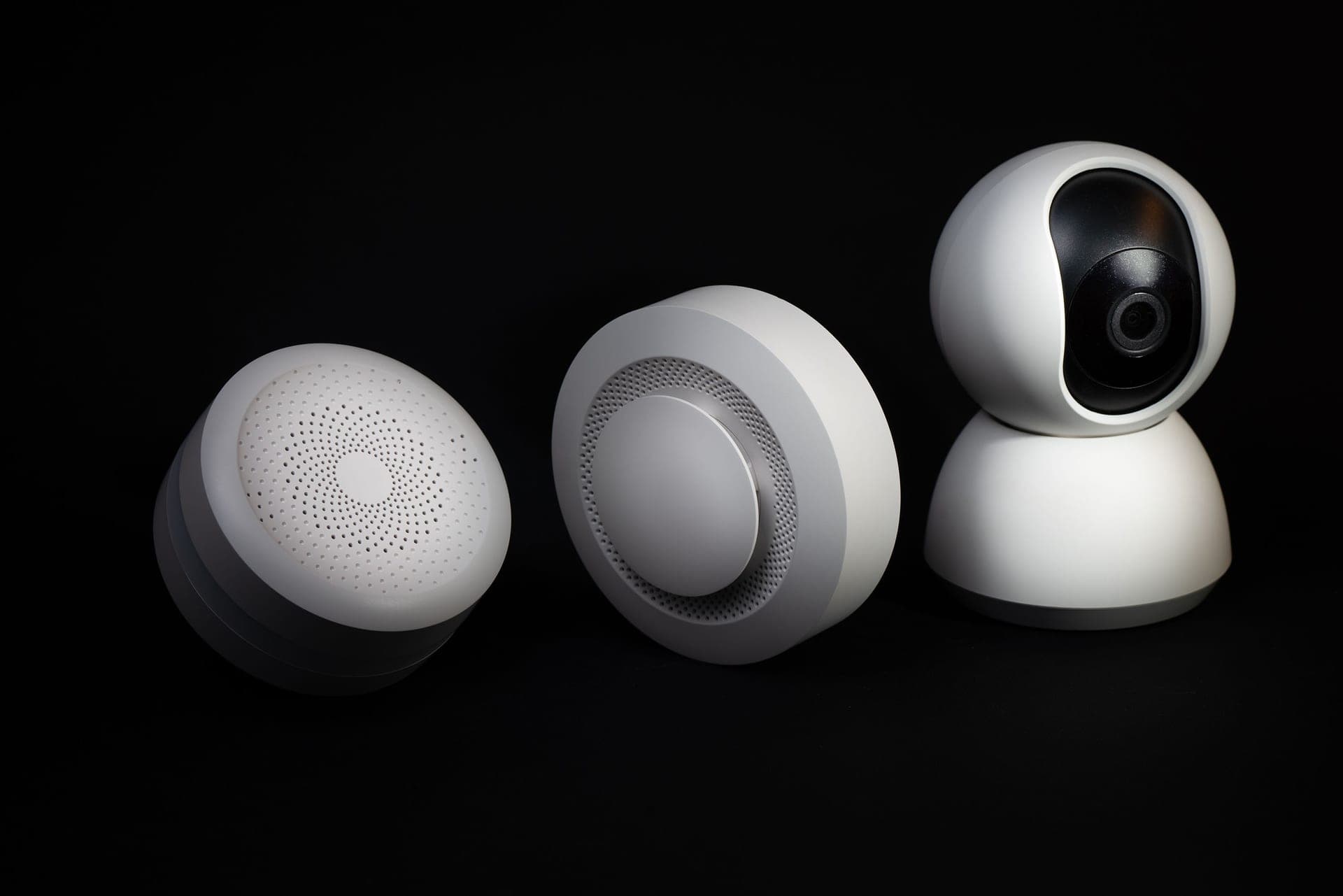 First Alert SC5 Smart Smoke & Carbon Monoxide Alarm Phone alerts, Google Home, and the bracket already on your ceiling. | An often-empty house, or a Nest replacement | 8.4/ 10 | Check price on Amazon #ad how we are funded · we do not cache prices |
| 2 |  X-Sense SC07-W Wireless Interconnected Smoke & CO Alarm Interconnect gets you the outcome people buy smart alarms for, cheaper. | Whole-house alerting without the smart layer | 7.5/ 10 | Check price on Amazon #ad how we are funded · we do not cache prices |
| 3 | Kidde P4010ACSCO-W Wire-Free Interconnect Smoke & CO Alarm Bridges wired alarms to rooms with no alarm wiring, with a voice. | A half-wired house | 7.1/ 10 | Check price on Amazon #ad how we are funded · we do not cache prices |
The three options in full
Illustrative photo
1. An often-empty house, or a Nest replacement
First Alert SC5 Smart Smoke & Carbon Monoxide Alarm
Phone alerts, Google Home, and the bracket already on your ceiling.
- Listed to
- UL 217 and UL 2034
- Sensing / agent
- Photoelectric smoke sensing plus an electrochemical CO cell
- Power / service life
- 10-year sealed battery
The feature to pay for is the away notification, and the reasoning is simple: a local horn in an empty house achieves nothing. For a house that is regularly empty during the day, a second home, a property you let, or a household with someone who travels, being told is the difference between a kitchen fire and a total loss.
It is also the clean answer for Nest Protect owners. Google stopped producing the Nest Protect in March 2025, and First Alert's compatibility guidance confirms the SC5 reuses the Nest bracket and ships a quick-connect adapter for hardwired positions — so you can replace units as they age rather than in one weekend. Nest Protect vs First Alert SC5 covers the swap.
What it is first is a listed alarm. UL 217 and UL 2034, ten-year sealed battery, a local horn that works with the Wi-Fi down. That ordering matters: a smart alarm whose smoke detection depends on connectivity would be a worse product than a dumb one.
What it does well
- Phone alerts when the alarm sounds and nobody is home — the one smart feature that genuinely matters
- UL 217 and UL 2034 with a 10-year sealed battery: it is a proper alarm first
- Works with the Google Home app, and Google promotes it as the Nest Protect replacement
- Reuses the Nest Protect bracket and includes a quick-connect adapter for hardwired swaps
The downside
- Wi-Fi and app dependency for the features you are paying extra for
- Higher cost per position, which bites when the correct count is six
- Interconnection between units runs through the ecosystem rather than a dedicated RF mesh
Do not buy this if: you have unprotected bedrooms. Spend the same money on ordinary alarms for every required position first, then add a smart unit where it earns its keep.
- Works with the Google Home app; Google promotes it as the Nest Protect replacement
- Reuses the Nest Protect mounting bracket, and ships a quick-connect adapter for hardwired swaps
- Interconnects with existing Nest Protect units during a staged changeover
- Phone alerts when the alarm sounds away from home
First Alert product documentation
#ad how we are funded · we do not cache prices
Illustrative photo
2. Whole-house alerting without the smart layer
X-Sense SC07-W Wireless Interconnected Smoke & CO Alarm
Interconnect gets you the outcome people buy smart alarms for, cheaper.
- Listed to
- UL 217 and UL 2034
- Sensing / agent
- Photoelectric smoke sensing plus an electrochemical CO cell
- Power / service life
- 10-year sealed lithium battery, not hardwired
This is here because a lot of people shopping for smart alarms actually want the thing interconnection provides: one alarm sounding means every alarm sounds. That is the feature that wakes a family on the far side of the house, and it does not need an app, an account or a working router.
If that is what you are after, buy interconnected alarms and skip the smart layer. You will cover more positions for the same money, and covering positions is what the NFPA data is actually about.
If you genuinely need away notifications, this is not the unit — but it is a reasonable choice for the bedrooms with one smart alarm at the main hub position.
What it does well
- Wireless interconnect for up to 24 units — the whole house sounds together, with no wiring and no Wi-Fi
- UL 217 and UL 2034 with a 10-year sealed battery and an LCD CO reading
- No app, no account, no firmware, no network dependency
- Low enough per position that covering every required spot is realistic
The downside
- **No away notification** — if nobody is home, nobody knows
- No integration with anything
- Proprietary mesh, so whole-house interconnection means one manufacturer
Do not buy this if: the house is often empty and being told remotely is the reason you are shopping. Interconnection solves 'everyone in the house hears it'; it does not solve 'nobody is in the house'.
- Wireless interconnect for up to 24 units — one alarm triggers the whole set
- No wiring, which is the point: it retrofits interconnection into a house that never had it
- LCD CO reading on each unit
- X-Sense recommends it for large or multi-story homes
#ad how we are funded · we do not cache prices
Illustrative photo
3. A half-wired house
Kidde P4010ACSCO-W Wire-Free Interconnect Smoke & CO Alarm
Bridges wired alarms to rooms with no alarm wiring, with a voice.
- Listed to
- UL 217 and UL 2034
- Sensing / agent
- Photoelectric smoke sensing plus an electrochemical CO cell
- Power / service life
- 120V AC with a 10-year sealed battery backup
Many houses are half-wired: an alarm circuit on the original floors and nothing in an extension, a converted attic or a finished basement. The tempting fix is battery units in the new rooms, and it quietly splits the house into two non-communicating halves.
Wire-free interconnect fixes exactly that, and it is a genuinely underrated product category.
The voice announcement is worth having on a combination unit, particularly in a basement where a CO event is more likely than a smoke one. Interconnected smoke alarms covers the wired, wireless and hybrid routes.
What it does well
- Wire-free interconnect bridges an existing hardwired circuit to rooms that have no alarm wiring
- Solves the very common half-wired house: original circuit upstairs, nothing in the basement
- Voice alerts identify the hazard rather than sounding an ambiguous horn
- UL 217 and UL 2034 with a 10-year sealed backup battery
The downside
- No away notification
- Still needs AC power at each hardwired position
- More expensive than plain battery units
Do not buy this if: your house has no alarm wiring at all. Then a fully wireless set is simpler and cheaper — the bridging capability is only valuable if there is something to bridge from.
- Wire-free interconnect bridges hardwired alarms to rooms with no alarm wiring
- Voice alerts identify the hazard and, on some configurations, the room
- Solves the common half-wired house: original circuit upstairs, nothing in the basement
- Still needs AC power at each hardwired position
#ad how we are funded · we do not cache prices
What each approach actually buys you
| Capability | Ordinary standalone | Interconnected | Smart |
|---|---|---|---|
| Detects smoke to UL 217 | Yes | Yes | Yes |
| Wakes the room it is in | Yes | Yes | Yes |
| Wakes the whole house | No | Yes | Usually, via the ecosystem |
| Tells you when nobody is home | No | No | Yes |
| Works with the internet down | Yes | Yes | Local horn yes, alerts no |
| Tells you which hazard | Some, by voice | Some, by voice | Yes, in the app |
| Lets you hush from your phone | No | No | Yes |
| Cost per position | Lowest | Low | Highest |
| Needs an account and a network | No | No | Yes |
The row that decides most purchases is 'tells you when nobody is home'. If that is not your problem, interconnected alarms give you the rest for less.
The dependency question, handled honestly
A smart alarm adds a network, an account, an app and a firmware lifecycle to a life-safety device. That is a real trade and it deserves stating rather than glossing.
What is mitigated: every alarm here is a listed alarm with a local horn and a sealed battery. With the router unplugged it still detects smoke and still sounds. The smart layer is additive, not load-bearing, and that is the design you should insist on.
What is not mitigated: cloud services get discontinued. Google stopped producing the Nest Protect in March 2025 — a well-supported product from a very large company. Existing units continue to receive software and security updates, which is the responsible way to wind something down, but the episode is a reasonable input to your thinking about how much of your safety infrastructure should depend on a service.
Our position: buy the coverage in ordinary or interconnected alarms, and add smart where the away notification earns its cost. That way a discontinued service costs you a feature rather than your alarms.
Questions people actually ask
What is the best smart smoke detector?
Are smart smoke detectors worth it?
Do smart smoke detectors work without Wi-Fi?
What smart smoke detector works with Google Home?
Is one smart smoke alarm enough?
Do I need smart alarms if mine are interconnected?
How these picks were chosen. On published specifications, safety listings and manufacturer documentation — plus the findings of organizations that do run tests. We have no laboratory and we do not burn anything. Read the full methodology.
Sources
- First Alert — Nest Protect replacement — First Alert SC5 compatibility
- UL Solutions — UL 217 — smoke alarms
- NFPA — Smoke Alarms in US Home Fires
- NFPA — NFPA 72, National Fire Alarm and Signaling Code (2025 edition)
- CPSC — Recalls and product safety news
- BRK / First Alert — Codes and standards reference for smoke and CO alarms
Read next

Smoke Detectors
Nest Protect vs First Alert SC5
The discontinued original and its promoted successor — what actually transfers.

Smoke Detectors
Interconnected Smoke Alarms
Why interconnection matters most, and the wired, wireless and hybrid routes.

Smoke Detectors
The Best Smoke Detectors for a Home
Four alarms, what UL 217 tests, and why interconnection beats every other feature.

Smoke Detectors
Google Nest Protect Review
Discontinued, still working, still on a ten-year clock. What owners should do.

Placement & Code
How Many Smoke Detectors Do I Need?
Worked counts for real house shapes, including split levels and open plans.