Smoke Detectors
First Alert Smoke Detector Alternatives
First Alert is the default for a reason. Here is what to buy when the model you wanted is gone, and what you give up on the way across.
By Ryder M.Last reviewed
If you came here for a First Alert replacement, the alarm that matches it most closely is the Kidde 20SD10: a sealed ten-year battery alarm listed to UL 217 10th edition, from the other established US brand, at the lowest price in this registry - which also makes it the budget pick. If what you valued about First Alert was a published sensor type, the X-Sense SC07 is the alternative that beats it: photoelectric smoke sensing named on the listing, a certified CO cell in the same housing and a concentration display, for less than most smoke-only alarms. And if you are replacing a hardwired First Alert on an existing circuit, the Kidde 20SA10 drops onto the same kind of base and keeps the wired interconnect. One caution before you switch brands at all: interconnect compatibility is per-family, not universal.
Siren & Safe is reader-funded. We earn a commission on some links on this page, at no cost to you. It does not change what we recommend or the order we rank it in. Full disclosure.
Why people look for a First Alert alternative
Four reasons account for nearly all of it, and only one is about the product. The commonest is the model is gone: First Alert runs a very large catalogue and retires lines regularly, so a specific SKU a household standardized on five years ago is frequently no longer sold. The second is stock: a model exists but the retailer has none, and an alarm bought today beats a better one bought in three weeks. The third is price drift on a particular unit. The fourth, and the only product reason, is a missing feature - a CO cell, a published sensor type, a wireless interconnect the family does not offer.
None of those makes First Alert the wrong brand. It is one of the two established US residential alarm manufacturers, its interconnect family including BRK is the largest available, and on its newer SM-series it publishes the sensor type on its own product pages - something the rest of the industry has largely stopped doing. If the model you wanted is in stock at a sensible price, buy it.
What this page does is answer the question when it is not. Everything below is in this site's registry, which means it was resolved to a live listing and priced through the daily price layer before it was written about - so these are alternatives you can actually buy today, which is the only kind that helps.
One thing to settle before you switch: whether your alarms are interconnected. If the ceilings have alarm cable and the units talk to each other, changing brand means changing the set. If they are standalone battery alarms, you can mix freely and nothing cares.
Quick picks
Scored against matches what you were buying, certification documented, ten-year upkeep, price and install simplicity. Tap a row for the full write-up. The price in each buy button is the live Amazon price at the last check, stamped with the date it was taken.
| # | Product | Best for | Score | Price |
|---|---|---|---|---|
| 1 | 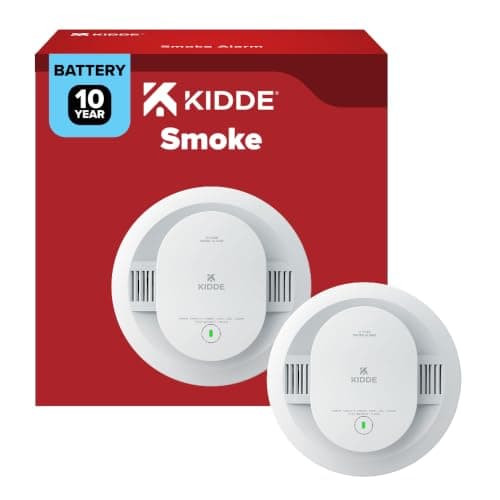 Kidde 20SD10 10-Year Battery Smoke Alarm The other established US brand's current sealed ten-year battery alarm, listed to the newest UL 217 edition, at the lowest price on this site. | The closest like-for-like swap, and the budget pick | 9.0/ 10 | $32.47 · View on Amazon #ad how we are funded · price as of November 11, 2026 |
| 2 | 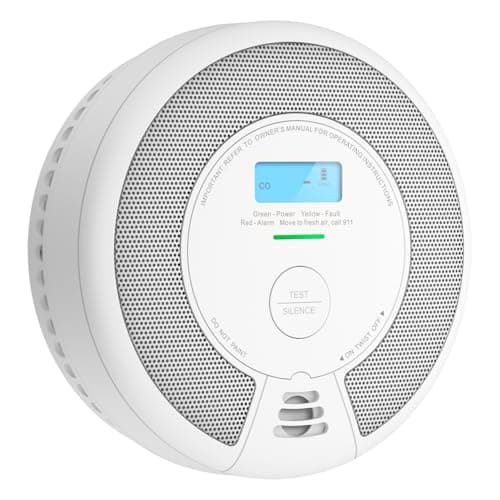 X-Sense SC07 Smoke & Carbon Monoxide Alarm Photoelectric smoke sensing named on the listing, a certified CO cell in the same housing and a concentration display - for less than most smoke-only alarms. | Anyone who wants the sensor type printed and a CO cell included | 9.0/ 10 | |
| 3 | 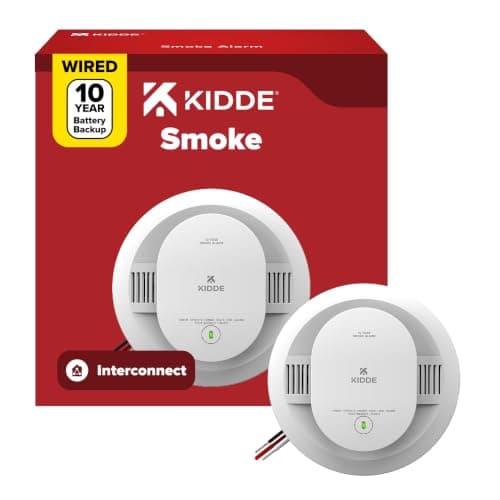 Kidde 20SA10 Hardwired Smoke Alarm with 10-Year Backup Battery A hardwired photoelectric alarm with a sealed ten-year backup cell and wired interconnect across compatible Kidde units. The alternative for a wired ceiling. | Replacing a hardwired First Alert without losing the interconnect | 8.7/ 10 | $44.44 · View on Amazon #ad how we are funded · price as of November 11, 2026 |
The picks
1. The closest like-for-like swap, and the budget pick
Kidde 20SD10 10-Year Battery Smoke Alarm
The other established US brand's current sealed ten-year battery alarm, listed to the newest UL 217 edition, at the lowest price on this site.
- Listed to
- UL 217, 10th edition (UL 217-2024 Ed.10)
- Sensing / agent
- Photoelectric smoke sensing only — no CO cell
- Power / service life
- Sealed 10-year lithium battery; 10-year limited warranty
What First Alert is known for, and whether this matches it. First Alert's strengths in this category are a very wide range, strong retail availability, a family of interconnect-compatible units including BRK, and - on the newer SM-series - a published sensor type on some models. The Kidde matches the first three in kind and misses the fourth: Kidde's current DETECT alarms do not name their sensor anywhere a shopper reads it.
Why it still ranks first here. Because the commonest reason people search for an alternative is availability or price, not dissatisfaction, and on both counts this is the cleanest swap in the registry. Same class of device, same certification standard, lower price.
Replace on age, not on brand. Whatever you buy, write the install month on the back. The stamped date is the manufacture date, and a ten-year clock that started in a warehouse is shorter than you think.
What it does well
- **Same product class as a First Alert battery alarm**: sealed ten-year cell, 85 dB horn, bracket and screws in the box, no wiring
- **Listed to UL 217 10th edition** per Kidde's certification document - the current edition, which carries the cooking-nuisance test
- **Lowest price of any alarm this site recommends**, so a one-for-one swap can become a whole-house upgrade
- **Kidde publishes "No battery changes for 10 years"** with the footnote that this is not a battery performance claim, plus an end-of-life beep at ten years
- **Three long beeps and a red flash on smoke**, and a self-test rather than waiting for the button
- An equally recognizable brand to an inspector, insurer or home buyer
The downside
- **Kidde does not name the sensor type.** Its published wording is "advanced sensing technology", so if First Alert's "Sensor Type Photoelectric" labeling was what you valued, this is a step backwards
- **Smoke only - no CO cell**
- **No interconnect** of any kind
- **Will not join a First Alert interconnect loop.** Mixing brands on one circuit is where retrofits go wrong
- Sealed, so at ten years the unit is scrap rather than a battery change
Do not buy this if: a wired house where you need to keep the interconnect - use the Kidde 20SA10 below. If sensor documentation is the point, go to the X-Sense. See also [are smoke alarms interchangeable](/smoke-detectors/are-smoke-alarms-interchangeable).
- Listed to the 10th edition of UL 217, which carries the cooking-nuisance test the 8th edition introduced
- Kidde's own wording: advanced sensing technology helps distinguish real smoke from everyday cooking or steam
- No low-battery chirps for ten years — the first end-of-life beep is the replacement signal
- Three long beeps and a red flash on smoke, so the pattern tells you which hazard it is
- Twist-and-click bracket, and it self-tests rather than waiting for you to press the button
#ad how we are funded · price as of November 11, 2026
2. Anyone who wants the sensor type printed and a CO cell included
X-Sense SC07 Smoke & Carbon Monoxide Alarm
Photoelectric smoke sensing named on the listing, a certified CO cell in the same housing and a concentration display - for less than most smoke-only alarms.
- Listed to
- UL 217 and UL 2034
- Sensing / agent
- Photoelectric smoke sensing plus an electrochemical CO cell
- Power / service life
- 10-year sealed lithium battery, not hardwired
Where this is an upgrade rather than a substitute. If the First Alert model you were looking at was smoke-only, this covers two hazards for similar money and prints its sensor type, which First Alert now only does on part of its range. For a household choosing on documentation - the thing this site's buyers filter hardest on - that is a straightforward improvement.
What you lose. Range and ecosystem. First Alert's interconnect family, including BRK units, is the largest in US residential alarms, and nothing X-Sense sells joins it. If you own four First Alert alarms on a circuit, this is not the alarm to add.
ETL versus UL, briefly. ETL is a recognized testing laboratory issuing a mark against the same UL 217 standard. It is a real certification. It is also not the letters some inspectors and insurers have written into their paperwork, which is worth five minutes before a bulk order - UL 217 certification explained covers the detail.
What it does well
- **Certified to UL 217 and UL 2034**, so it is a real smoke alarm and a real CO alarm in one ceiling position
- **Photoelectric smoke sensing named on the listing** - the sensor that responds sooner to smoldering fires and nuisance-trips less on cooking
- **Sealed 10-year lithium cell**, so there is no battery ritual and no low-battery chirp until end of life
- **LCD shows the measured CO concentration** rather than only alarming, which is unusual near this price
- **Cheaper than most First Alert combination alarms** while covering both hazards
- Two screws, wall or ceiling, no wiring and no app
The downside
- **No interconnect at all** - X-Sense lists the SC07 as standalone, not wireless-capable and not base-station compatible
- **ETL certified to UL 217 rather than UL-listed.** Same standard and a recognized laboratory, different mark - check first if an inspector asked for UL specifically
- **A newer brand in the US than First Alert**, with a shorter track record and less retail presence
- **No app and no notifications**, so an empty house tells you nothing
- The display is small and unlit
Do not buy this if: a house with bedrooms on two floors where interconnection matters more than anything else - the SC07-W is the same alarm with a wireless link. For the full case see [best combination smoke and CO alarms](/smoke-detectors/best-combination-smoke-and-co-alarms).
- LCD reads the measured CO concentration rather than only alarming
- Standalone unit — no wireless interconnect, no Wi-Fi, no base station
- Sealed battery, so there is no annual battery ritual and no low-battery chirp until end of life
- Test and silence on one control
3. Replacing a hardwired First Alert without losing the interconnect
Kidde 20SA10 Hardwired Smoke Alarm with 10-Year Backup Battery
A hardwired photoelectric alarm with a sealed ten-year backup cell and wired interconnect across compatible Kidde units. The alternative for a wired ceiling.
- Listed to
- UL 217, 10th edition (UL 217-2024 Ed.10)
- Sensing / agent
- Photoelectric smoke sensing only — no CO cell
- Power / service life
- 120V AC with a sealed 10-year backup battery; 10-year limited warranty
The interconnect trap, stated clearly. Wired interconnect works within a manufacturer's compatible family, not across brands. A Kidde alarm on a circuit with three First Alert alarms will power up, detect smoke and sound - on its own. The others will stay quiet, and so will it when they detect. That is not a defect; it is how the signaling is designed. If you are switching brands on a wired house, budget for the whole loop.
Why the whole loop is not a disaster. Alarms on a shared circuit age together, so a loop with one new unit is a loop you will be back up a ladder for next year anyway. Doing all of them at once, with the same install month written on each, is the cheaper decision over ten years.
Keep the paperwork. Note the model and the date somewhere other than the alarm. It is the evidence a buyer's surveyor or an insurer asks for.
What it does well
- **Drops onto an existing 120 V alarm circuit** and interconnects over the wire - one sounds, they all sound
- **Sealed 10-year backup battery**, so a tripped breaker does not leave the house unprotected and there is no annual 9 V change
- **Listed to UL 217 10th edition**, which carries the cooking-nuisance test introduced in the 8th
- **The direct successor to Kidde's discontinued P4010ACS line**, so documentation and compatibility notes are current
- **Same reduced-nuisance sensing** as the battery model in the series
- No low-battery chirps across the ten years
The downside
- **It will not interconnect with your existing First Alert or BRK alarms.** This is the whole catch of switching brands on a wired loop: you have to change the set, not one unit
- **Needs a wired base and 120 V**, so an unfamiliar junction box means an electrician
- **Smoke only** - CO needs covering separately
- **Kidde does not name the sensor type** in its published copy
- More expensive than the battery units here, for a feature you only get if the wiring exists
Do not buy this if: a single replacement on a mixed loop - if you only want to change one alarm on an existing First Alert circuit, buy the current First Alert equivalent instead and keep the family intact. [Best hardwired smoke detectors](/smoke-detectors/best-hardwired-smoke-detectors) covers the field.
- Drops onto an existing 120V alarm circuit and interconnects over the wire — one sounds, they all sound
- Sealed 10-year backup battery, so a tripped breaker does not leave the house unprotected
- Same reduced-nuisance sensing as the battery model in this series
- No low-battery chirps across the ten years
- The direct successor to the P4010ACS line, which Kidde has discontinued
#ad how we are funded · price as of November 11, 2026
What changes if you switch
A side-by-side of the things that actually differ, as published by the manufacturers and checked on 2026-11-10. The live price and the date it was taken sit in each buy button.
| Alternative | Sensor named? | Hazards | Interconnect | Joins a First Alert loop? |
|---|---|---|---|---|
| Kidde 20SD10 | No - "advanced sensing technology" | Smoke only | None | No |
| X-Sense SC07 | Yes - photoelectric | Smoke and CO | None | No |
| Kidde 20SA10 | No - not named by Kidde | Smoke only | Wired, compatible Kidde units | No |
The last column is the one that catches people out. No third-party alarm joins a First Alert or BRK interconnect loop - if your ceilings are wired and the alarms sound together, switching brand means replacing the whole set.
Questions people actually ask
What is the best alternative to a First Alert smoke detector?
Can I replace a First Alert smoke alarm with a Kidde one?
Is Kidde or First Alert better?
Are First Alert alarms being discontinued?
Do I need the same brand of smoke alarm throughout the house?
How these picks were chosen. On published specifications, safety listings and manufacturer documentation — plus the findings of organizations that do run tests. We have no laboratory and we do not burn anything. Read the full methodology.
Sources
- UL Solutions — UL 217 — smoke alarms
- UL Solutions — UL 217, Standard for Smoke Alarms, published with new technical requirements
- UL Solutions — UL 2034 — single and multiple station carbon monoxide alarms
- Kidde — DETECT smoke alarm, 10-year battery powered (20SD10) — product page
- First Alert — 10-year battery smoke alarm with voice alerts (SM210V) — product page
- X-Sense — SC07 10-year battery combination smoke and carbon monoxide alarm with LCD
- NFPA — NFPA 72, National Fire Alarm and Signaling Code (2025 edition)
Read next
Smoke Detectors
First Alert vs Kidde Smoke Detectors
Both are listed and both work — the decision is which platform you commit to.
Smoke Detectors
Are Smoke Alarms Interchangeable?
The connector fits across brands; the interconnect signal does not. Why a mixed circuit fails silently.
Smoke Detectors
The Best Smoke Detectors for a Home
Four alarms, what UL 217 tests, and why interconnection beats every other feature.
Smoke Detectors
Kidde Smoke Alarm Alternatives
Three certified alternatives to a Kidde smoke alarm, including the one route that keeps an interconnect - and why a discontinued model number is the usual reason people look.
Smoke Detectors
The Best Hardwired Smoke Detectors
Four current hardwired alarms, the backup-battery decision, and the compatibility rule that breaks interconnects.
Smoke Detectors
What the standard tests, what the recent editions changed, and how to verify a mark is real.