Smoke Detectors
Kidde Smoke Alarm Alternatives
Most searches for a Kidde alternative are really searches for a discontinued model number. Here is what to fit instead, and when to stay with the family.
By Ryder M.Last reviewed

If you want the sensor type printed on the box - the thing Kidde no longer publishes - buy the X-Sense SC07: photoelectric smoke sensing named on the listing, a certified CO cell in the same housing, a concentration display and a sealed ten-year cell, for less than most smoke-only alarms. The budget pick for a straight battery swap is the First Alert SM210V, which announces the room it is in and is the one alarm here whose sensor type First Alert publishes on its own product page. If you are replacing a hardwired Kidde and want to keep an interconnect, the First Alert SMI105-AC is the equivalent on the other established US family. One warning that applies to every row: nothing here joins an existing Kidde interconnect loop, so on a wired house you replace the set rather than the unit.
Siren & Safe is reader-funded. We earn a commission on some links on this page, at no cost to you. It does not change what we recommend or the order we rank it in. Full disclosure.
Why people look for a Kidde alternative
The dominant reason is a model number that no longer exists. Autocomplete for this topic is full of it: replacements for the i12020ACA, alternatives to the 900-CUAR, what to fit instead of the P4010ACS. Kidde retires lines and renames series regularly, and a household that standardized on one SKU across six ceilings eventually finds it unavailable. In most of those cases Kidde publishes a current successor, and fitting it is the cheapest answer because it keeps the interconnect.
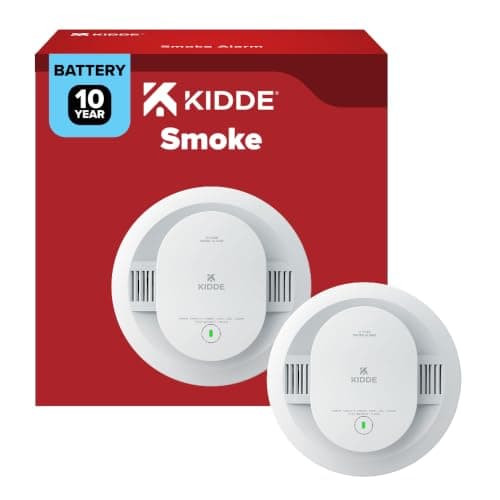
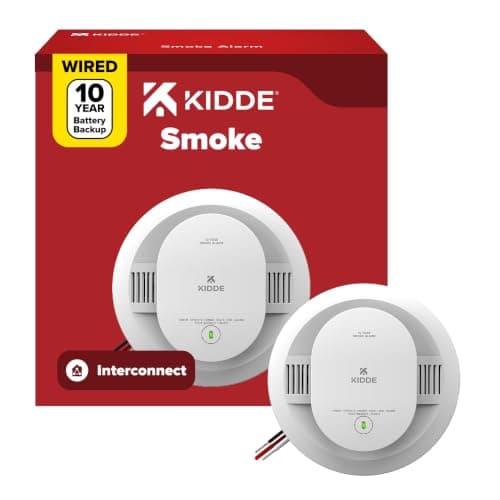
The second reason is specification opacity, and it is the one this page can actually fix. Checked on 2026-11-10, Kidde's current DETECT alarms describe their sensing as "advanced sensing technology" without naming the sensor type in the listing copy, and the UL 217 10th edition reference sits in a linked certification document rather than on the page. That is not a safety problem - the certification is real - but for a buyer who filters on what a device is made of and tested to, it is a dead end.
The third is price and availability in the normal way, and the fourth is a feature the family does not offer in the form you want, usually a combination alarm with a readable CO display.
What none of this means is that Kidde is a brand to avoid. Its 20SD10 is the cheapest alarm this site recommends anywhere and appears as a budget pick on several pages, its 10th-edition listings are current, and its 24-unit interconnect family is one of the two largest in the US market. If the model you want is in stock, buy it.
Quick picks
Scored against matches what you were buying, sensor documented, ten-year upkeep, price and install simplicity. Tap a row for the full write-up. The price in each buy button is the live Amazon price at the last check, stamped with the date it was taken.
| # | Product | Best for | Score | Price |
|---|---|---|---|---|
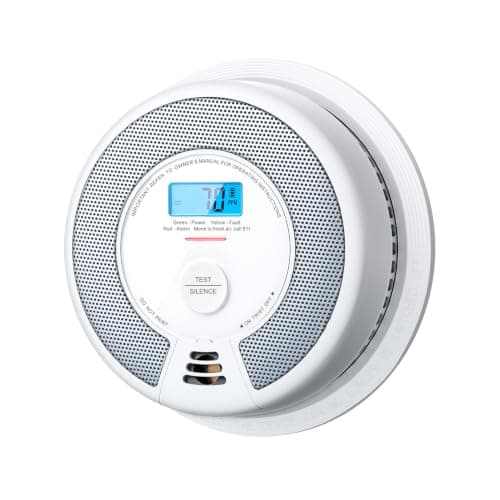
| 1 | 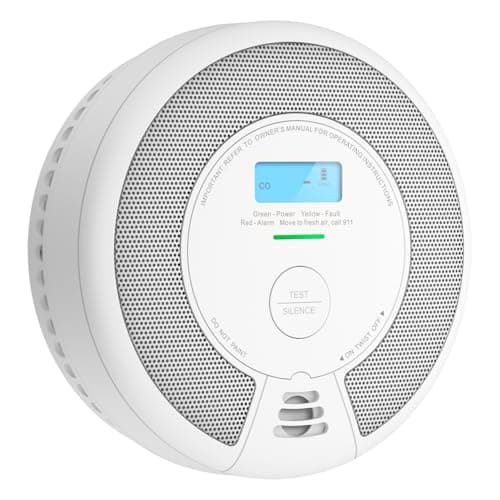 X-Sense SC07 Smoke & Carbon Monoxide Alarm The alternative that answers the actual complaint about current Kidde alarms: it prints its sensor type, and it covers carbon monoxide as well. | Anyone who wants the sensor type named, and a CO cell with it | 9.1/ 10 | |
| 2 | 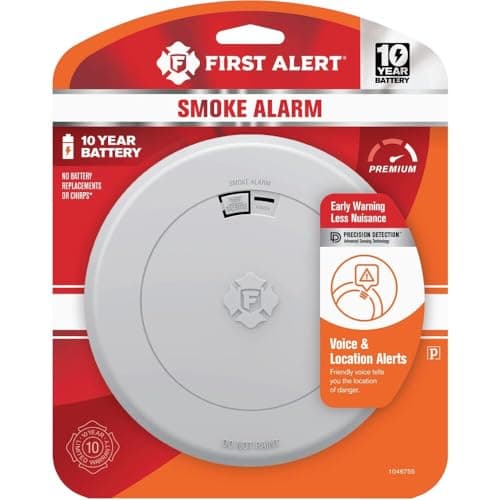 First Alert SM210V 10-Year Battery Smoke Alarm with Voice Alerts A sealed ten-year photoelectric alarm with a spoken location, from the other established US brand, with the sensor type published on First Alert's own page. | The budget pick for a battery swap - and it says which room | 8.8/ 10 | $40.82 · View on Amazon #ad how we are funded · price as of November 11, 2026 |
| 3 | 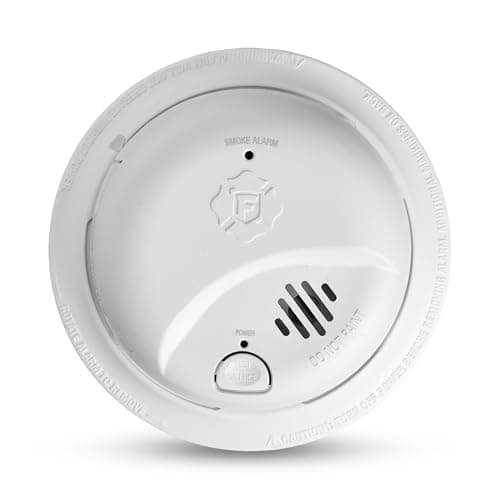 First Alert SMI105-AC Hardwired Smoke Alarm with 10-Year Battery Backup The equivalent hardwired photoelectric alarm on the other established US family, with a ten-year backup cell and wired interconnect across First Alert and BRK units. | Replacing a hardwired Kidde and keeping an interconnect | 8.6/ 10 |
The picks
1. Anyone who wants the sensor type named, and a CO cell with it
X-Sense SC07 Smoke & Carbon Monoxide Alarm
The alternative that answers the actual complaint about current Kidde alarms: it prints its sensor type, and it covers carbon monoxide as well.
- Listed to
- UL 217 and UL 2034
- Sensing / agent
- Photoelectric smoke sensing plus an electrochemical CO cell
- Power / service life
- 10-year sealed lithium battery, not hardwired
What Kidde is known for, fairly stated. Kidde is one of the two mainstays of the US residential market: a very large current range, strong availability, a 24-unit interconnect family, listings to the newest UL 217 edition and some of the lowest prices in the category. Its own 20SD10 is the cheapest alarm this site recommends anywhere, and it appears as a budget pick on several pages here.
Where it has drifted. Checked on 2026-11-10, Kidde's current DETECT alarms describe their sensing only as "advanced sensing technology" and do not name the sensor type in the page copy; the UL 217 10th edition reference lives in a linked certification document rather than the listing. For a buyer filtering on what a device actually is, that is a real gap - and this alarm closes it.
It is not a like-for-like swap on a wired loop. Nothing third-party is. If the ceiling has alarm cable, read the interconnect note on the hardwired pick below before you order anything.
What it does well
- **Photoelectric smoke sensing named on the listing** - the specification Kidde's current DETECT range does not publish anywhere a shopper reads it
- **Certified to UL 217 and UL 2034**, so one unit covers both household hazards from one ceiling position
- **Sealed 10-year lithium cell**, so there is no annual battery ritual and no low-battery chirp until end of life
- **LCD shows the measured CO concentration** rather than only alarming
- **Cheaper than most combination alarms**, including Kidde's own
- Two screws, wall or ceiling, no wiring
The downside
- **No interconnect at all** - X-Sense lists the SC07 as standalone and not base-station compatible
- **ETL certified to UL 217 rather than UL-listed**: same standard, recognized laboratory, different mark
- **Newer brand in the US** than Kidde, with a shorter track record
- **No app or notifications**
- Small unlit display
Do not buy this if: a wired house where interconnect must be preserved, or a two-story house where alarms sounding together matters more than anything - the SC07-W is the wireless-interconnect version. See [best smoke detectors for two-story homes](/smoke-detectors/best-smoke-detectors-for-two-story-homes).
- LCD reads the measured CO concentration rather than only alarming
- Standalone unit — no wireless interconnect, no Wi-Fi, no base station
- Sealed battery, so there is no annual battery ritual and no low-battery chirp until end of life
- Test and silence on one control
2. The budget pick for a battery swap - and it says which room
First Alert SM210V 10-Year Battery Smoke Alarm with Voice Alerts
A sealed ten-year photoelectric alarm with a spoken location, from the other established US brand, with the sensor type published on First Alert's own page.
- Listed to
- UL 217 — First Alert states compliance with the latest edition
- Sensing / agent
- Photoelectric smoke sensing, with spoken annunciation
- Power / service life
- Sealed 10-year lithium battery
Why this is the budget pick rather than the top one. It is the easiest switch - same class of device, same install, better documentation, and a genuinely useful extra in the spoken location. It ranks below the X-Sense only because it covers one hazard rather than two for similar money.
Program it before it goes up. Set the room label on a table and test it. An alarm announcing the wrong floor is worse than one announcing nothing.
Pair it with CO coverage. If the house burns gas, oil or wood, or has an attached garage, a smoke-only alarm is covering one of two hazards - do I need a CO detector is the short version.
What it does well
- **First Alert publishes "Sensor Type Photoelectric"** on its own product page for this model - the best-documented US-brand alarm in this registry
- **Voice alerts that name the location you programmed**, which orients a half-woken person in a hallway or on a landing
- **Sealed 10-year battery** with no low-battery chirps and an end-of-life warning
- **85 dB at 10 ft and a 10-year limited warranty**, both published by First Alert
- **Straight swap for a standalone battery Kidde** - unscrew the old bracket, fit the new one
- A distinct malfunction signal, so a fault reads as replace rather than reset
The downside
- **Smoke only** - no CO cell, so a house with any fuel-burning appliance needs CO coverage elsewhere
- **No interconnect**, so the voice names the room only when this is the alarm that sounded
- **The voice is a recorded label from a fixed list**, not a custom message
- **More expensive than Kidde's cheapest battery alarm**, which is often what people were buying
- Sealed and disposable at ten years
Do not buy this if: a hearing-impaired household, where a voice is no more audible than a horn - see [best smoke detectors for the hard of hearing](/smoke-detectors/best-smoke-detectors-for-hard-of-hearing). It is also not a CO alarm.
- Speaks rather than only sounding a horn, which removes the 3am question of what the noise means
- Photoelectric sensing — the right sensor for a hallway or a landing
- Sealed ten-year cell, so the alarm never asks to be reached
- Part of First Alert's current SM-series rather than the outgoing SMI line
First Alert product documentation
#ad how we are funded · price as of November 11, 2026
3. Replacing a hardwired Kidde and keeping an interconnect
First Alert SMI105-AC Hardwired Smoke Alarm with 10-Year Battery Backup
The equivalent hardwired photoelectric alarm on the other established US family, with a ten-year backup cell and wired interconnect across First Alert and BRK units.
- Listed to
- UL 217 — First Alert states compliance with the latest edition
- Sensing / agent
- Photoelectric smoke sensing only — no CO cell
- Power / service life
- 120V AC with a sealed 10-year lithium backup battery
The discontinued-model problem. Most searches for a Kidde alternative are really searches for a model number that no longer exists - the i12020ACA, the 900-CUAR, the P4010ACS line. Kidde usually publishes a current successor for each, and where it does, that successor is the cheapest and simplest answer because it keeps the interconnect. This page exists for the cases where you would rather move family than chase a part number.
If you move family, move all of it. One alarm from a different manufacturer on a wired loop sounds alone and stays quiet when the others detect. Replace the set, write the same install month on every unit, and keep the model list somewhere other than the ceiling.
Check the local requirement before you change configuration. Some jurisdictions treat replacing a hardwired alarm with a battery one as a downgrade that is not permitted - rental and landlord requirements and your authority having jurisdiction are the places to check.
What it does well
- **Wired interconnect across compatible First Alert and BRK units** - the largest interconnect family in US residential alarms
- **10-year sealed backup battery**, so a power cut does not silence it and there is no annual 9 V change
- **Photoelectric sensing on a hardwired circuit**, which is the configuration most US houses should be replacing into
- **Alarm-origin indicator** identifies which unit started it
- **Test and silence button** that holds the hush for up to eight hours
- End-of-life warning rather than silent expiry
The downside
- **It will not interconnect with your existing Kidde alarms.** Switching family on a wired loop means replacing the whole set
- **Needs a wired base and 120 V** - an electrician if the junction box is unfamiliar
- **Smoke only**
- **First Alert does not name the sensor type** on this listing - "Precision Detection" is the published wording
- A nuisance alarm now sounds on every floor at once
Do not buy this if: swapping a single unit on an otherwise-Kidde circuit. In that case buy the current Kidde equivalent, which is the 20SA10, and keep the family intact. [Best hardwired smoke detectors](/smoke-detectors/best-hardwired-smoke-detectors) covers both sides.
- Photoelectric sensing on a hardwired circuit, which is the combination most houses should be replacing into
- Precision Detection sensing, which First Alert states meets the new industry standards on cooking nuisance alarms
- Non-replaceable 10-year backup cell rather than an annual 9V change
- Test/silence button that holds the hush for up to eight hours
- Interconnects over the existing alarm circuit with compatible First Alert and BRK units
First Alert product documentation
What changes if you switch
The differences that actually matter, as published by the manufacturers and checked on 2026-11-10. The live price and the date it was taken sit in each buy button.
| Alternative | Sensor named? | Hazards | Interconnect | Joins a Kidde loop? |
|---|---|---|---|---|
| X-Sense SC07 | Yes - photoelectric | Smoke and CO | None | No |
| First Alert SM210V | Yes - photoelectric | Smoke only | None | No |
| First Alert SMI105-AC | No - "Precision Detection" | Smoke only | Wired, First Alert and BRK | No |
If your Kidde alarms are hardwired and sound together, the last column decides the job: switching family means replacing the whole loop, not one unit. A standalone battery Kidde can be swapped for anything here in five minutes.
Questions people actually ask
What is the best alternative to a Kidde smoke alarm?
What replaces a discontinued Kidde smoke alarm?
Can I mix Kidde and First Alert smoke alarms?
Why does Kidde not say whether its alarms are photoelectric or ionization?
Are Kidde smoke alarms good?
How these picks were chosen. On published specifications, safety listings and manufacturer documentation — plus the findings of organizations that do run tests. We have no laboratory and we do not burn anything. Read the full methodology.
Sources
- UL Solutions — UL 217 — smoke alarms
- UL Solutions — UL 217, Standard for Smoke Alarms, published with new technical requirements
- UL Solutions — UL 2034 — single and multiple station carbon monoxide alarms
- Kidde — DETECT smoke alarm, 10-year battery powered (20SD10) — product page
- X-Sense — SC07 10-year battery combination smoke and carbon monoxide alarm with LCD
- First Alert — 10-year battery smoke alarm with voice alerts (SM210V) — product page
- NFPA — NFPA 72, National Fire Alarm and Signaling Code (2025 edition)
Read next
Smoke Detectors
First Alert vs Kidde Smoke Detectors
Both are listed and both work — the decision is which platform you commit to.
Smoke Detectors
First Alert Smoke Detector Alternatives
Three certified alarms to buy instead of a First Alert unit that is out of stock or discontinued - and the interconnect trap to check before you switch brands.
Smoke Detectors
Are Smoke Alarms Interchangeable?
The connector fits across brands; the interconnect signal does not. Why a mixed circuit fails silently.
Smoke Detectors
The Best Hardwired Smoke Detectors
Four current hardwired alarms, the backup-battery decision, and the compatibility rule that breaks interconnects.
Smoke Detectors
The Best Smoke Detectors for a Home
Four alarms, what UL 217 tests, and why interconnection beats every other feature.
Smoke Detectors
First Alert vs Kidde vs X-Sense
Sensor coverage, listing clarity and what each brand includes — a three-way with no default winner.