Smoke Detectors
First Alert vs Kidde Smoke Detectors
This SERP is mostly forum threads because the honest answer is boring: both brands make listed alarms that work. The decision is about platform, not quality.
By Ryder M.Last reviewed
Both First Alert and Kidde make UL 217 listed alarms in every relevant configuration, and neither is meaningfully better at detecting smoke. Choose First Alert if you want the smart route or are replacing Nest Protects, because the SC5 is Google's promoted successor and reuses the Nest bracket. Choose Kidde if your house has hardwired alarms, because the P4010 platform swaps in cleanly and adds a wire-free interconnect option for half-wired houses. Do not mix brands on an interconnected circuit.
Siren & Safe is reader-funded. We earn a commission on some links on this page, at no cost to you. It does not change what we recommend or the order we rank it in. Full disclosure.
Why this comparison has no dramatic answer
Because both brands make alarms listed to UL 217, which means both have passed the same third-party testing for sensitivity, response timing, audibility, nuisance resistance and durability. Neither brand has a detection advantage you can act on, and any page claiming otherwise is inventing a distinction.
That is also why the search results for this question are dominated by forum threads rather than by an authoritative page: there is no exciting answer, so nobody wrote one.
The real decision is about platform. Both brands sell a full range — battery and hardwired, smoke-only and combination, standalone and interconnected — and once you have committed a house to one interconnect ecosystem, you have committed the rest of the positions too. So choose on the capability you need in your specific house, not on the brand.
Where each brand is genuinely distinctive
| If your situation is… | Choose | Because |
|---|---|---|
| Replacing Google Nest Protects | First Alert | The SC5 is Google's promoted successor, reuses the Nest bracket and includes a hardwired adapter — you can swap units one at a time |
| You want phone alerts when nobody is home | First Alert | The smart route is the stronger half of their range |
| The house has hardwired interconnected alarms | Kidde | The P4010 platform is a clean like-for-like swap on the existing circuit |
| The house is half-wired — circuit upstairs, nothing in the basement | Kidde | The wire-free interconnect variant bridges wired and unwired rooms into one set |
| You want a voice that names the hazard | Kidde | Voice messaging is standard across much of the P4010 line |
| No wiring anywhere, and you want interconnect | Either — or neither | Both offer battery interconnect. X-Sense's SC07-W is also a strong option at this job; see the main roundup |
| Budget is the binding constraint | Either | Both have inexpensive listed battery units. Buy the count you need before you buy features |
Quick picks
Scored against listing coverage, platform strength, wired retrofit, smart capability and cost per position. Tap a row for the full write-up. No price is shown anywhere on this site because we do not cache retailer prices.
| # | Product | Best for | Score | Price |
|---|---|---|---|---|
| 1 | 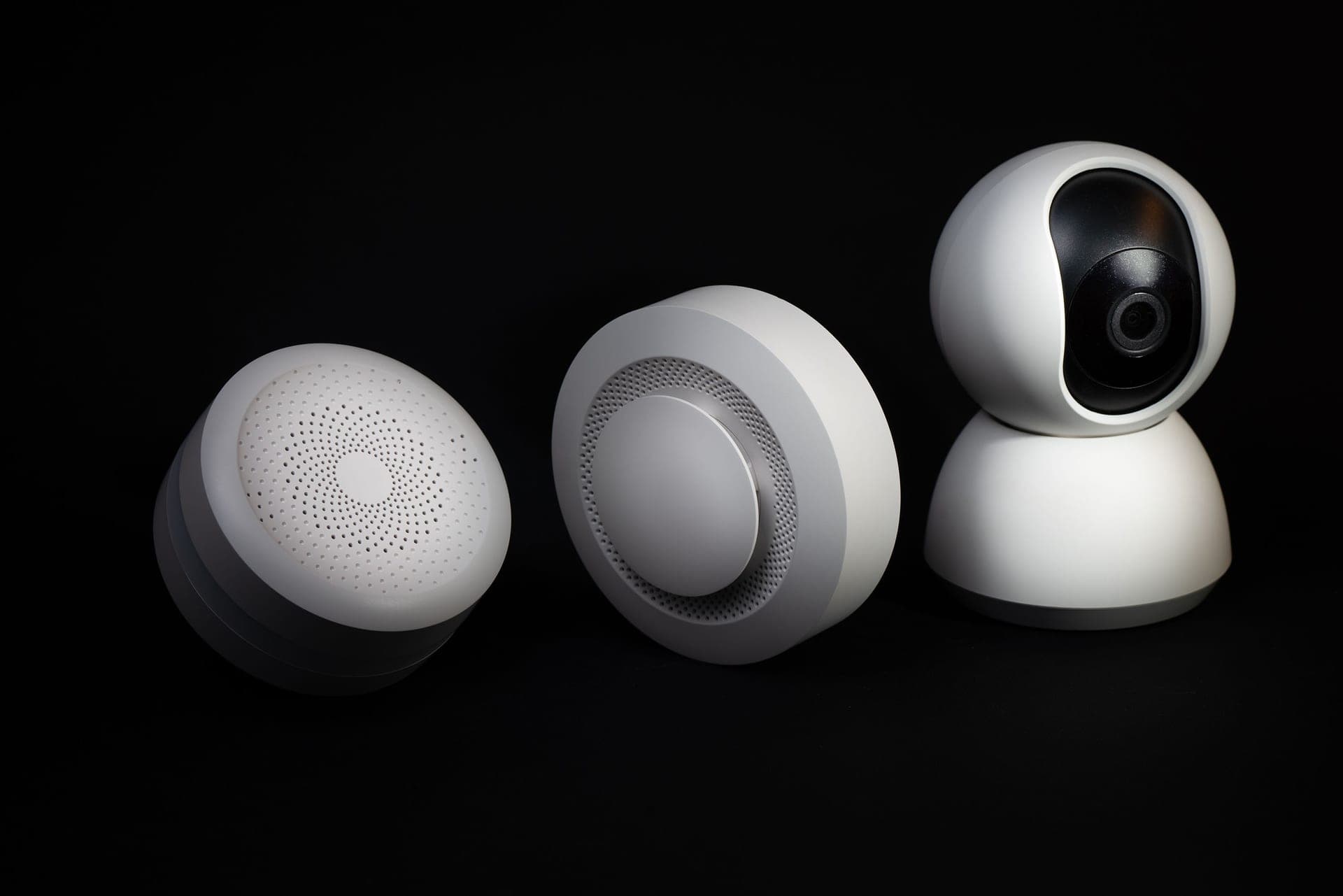 First Alert SC5 Smart Smoke & Carbon Monoxide Alarm Phone alerts, Google Home, and the bracket already on your ceiling. | The smart route, and Nest replacements | 8.0/ 10 | Check price on Amazon #ad how we are funded · we do not cache prices |
| 2 | 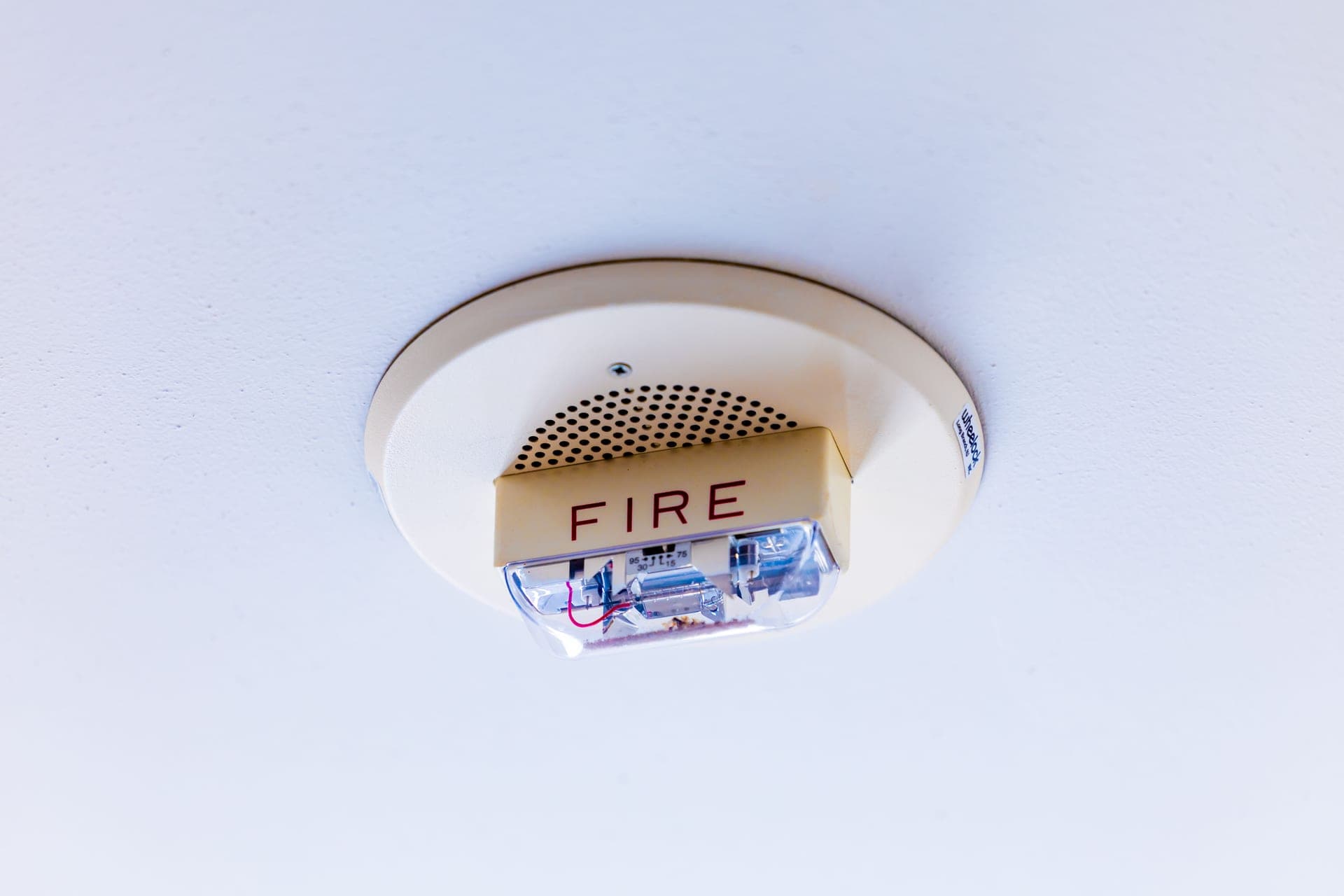 Kidde P4010ACSCO Hardwired Combination Smoke & CO Alarm The cleanest wired retrofit, with a voice that names the hazard. | A house with existing alarm wiring | 8.2/ 10 | Check price on Amazon #ad how we are funded · we do not cache prices |
The two platform picks in full
Illustrative photo
1. The smart route, and Nest replacements
First Alert SC5 Smart Smoke & Carbon Monoxide Alarm
Phone alerts, Google Home, and the bracket already on your ceiling.
- Listed to
- UL 217 and UL 2034
- Sensing / agent
- Photoelectric smoke sensing plus an electrochemical CO cell
- Power / service life
- 10-year sealed battery
First Alert's distinctive position right now is the smart end, and specifically the Nest handover. Google stopped producing the Nest Protect in March 2025, and First Alert's own compatibility guidance confirms the SC5 reuses the Nest mounting bracket and ships an adapter for hardwired positions.
That matters practically: a house with four Nest Protects can be converted one unit at a time as they age out, on the brackets already in the ceilings, rather than as a single expensive weekend.
Everything else about it is the same proposition as any good modern alarm — both listings, a ten-year sealed battery, a local horn that works with the router unplugged.
What it does well
- UL 217 and UL 2034 with a 10-year sealed battery
- Phone alerts when the alarm sounds and nobody is home
- Google promotes it as the Nest Protect replacement, and it reuses the Nest mounting bracket
- Quick-connect adapter included for hardwired replacements
The downside
- Wi-Fi and app dependency for the features you pay extra for
- Higher cost per position, which matters when the correct count is six
- Interconnection runs through the ecosystem rather than a dedicated RF mesh
Do not buy this if: your house has a working hardwired interconnected circuit and you simply want to replace aging units. Kidde's P4010 platform is the cleaner like-for-like swap there and costs less per position.
- Works with the Google Home app; Google promotes it as the Nest Protect replacement
- Reuses the Nest Protect mounting bracket, and ships a quick-connect adapter for hardwired swaps
- Interconnects with existing Nest Protect units during a staged changeover
- Phone alerts when the alarm sounds away from home
First Alert product documentation
#ad how we are funded · we do not cache prices
Illustrative photo
2. A house with existing alarm wiring
Kidde P4010ACSCO Hardwired Combination Smoke & CO Alarm
The cleanest wired retrofit, with a voice that names the hazard.
- Listed to
- UL 217 and UL 2034
- Sensing / agent
- Photoelectric smoke sensing plus an electrochemical CO cell
- Power / service life
- 120V AC with a 10-year sealed battery backup
Kidde's distinctive strength is the hardwired platform, and the P4010ACSCO-W wire-free variant is the underrated part of it. A very common house has an alarm circuit on the original floors and nothing in an extension, a converted attic or a finished basement — and the tempting fix, battery units in the new rooms, quietly splits the house into two halves that cannot hear each other.
The wire-free variant bridges that. Wired alarms keep talking over the wire, and the unwired rooms join the same set over RF.
The voice announcement is genuinely useful on a combination unit, particularly in a basement where a CO event is more likely than a smoke one. Being told which hazard shortens a decision that has different correct answers.
What it does well
- Drops onto an existing 120V alarm circuit and interconnects over the wire
- UL 217 and UL 2034 from one ceiling position
- Voice messaging announces the hazard rather than sounding an ambiguous horn
- A wire-free interconnect sibling exists for bridging to rooms with no wiring
The downside
- No smart features — no away notification at all
- Needs AC power at each position
- No display for the CO concentration
Do not buy this if: the house is often empty and you want to be told remotely. Kidde's strength here is wired retrofit and whole-house sounding, not remote awareness.
- Drops straight onto an existing hardwired circuit and interconnects over the wire
- Voice messaging distinguishes a smoke event from a CO event out loud
- One ceiling position covers both hazards
- Needs an existing 120V alarm circuit — it is not a battery-only retrofit
#ad how we are funded · we do not cache prices
Can you mix First Alert and Kidde?
On separate standalone alarms: yes, freely. Two unconnected alarms in two rooms do not care who made the other one. A house with a Kidde in the basement and a First Alert in the hallway is fine.
On an interconnected circuit: no. Do not mix brands on a wired interconnect, and do not expect one brand's wireless mesh to talk to another's. Interconnect signaling is manufacturer-specific, and mixing is exactly the kind of thing that appears to work on the bench and fails in a fire.
The related question people ask — are the mounting plates interchangeable — has the same answer: assume not. Different manufacturers use different plates and different connector harnesses, and a wired swap between brands usually means changing the plate and the connector at each position. That is not difficult, and it is a reason to pick a platform and stay on it.
The one documented cross-brand compatibility worth knowing about is the First Alert SC5 reusing the Nest Protect bracket, which exists specifically because Google and First Alert arranged it as a migration path.
What actually matters more than the brand
How many you have. One in every sleeping room, one outside each separate sleeping area, one per level including the basement. For a three-bedroom two-story house with a basement that is six, and it is usually more than the house currently has. How many do I need.
Whether they are interconnected. One alarm sounding should sound them all. In a standalone-alarm house a basement fire may not wake the far bedroom until it is well developed. Interconnected smoke alarms.
Whether they are in the right places. Not within 10 ft of a cooker, not within 36 in of a bathroom door with a shower, a supply register or paddle-fan blade tips. The placement guide.
How old they are. Ten years from the manufacture date on the back, and the test button does not test the sensor. When to replace.
Those four things are where the difference between a protected house and an unprotected one lives. The brand on the plastic is a long way down the list, and it is worth saying that plainly on a page whose whole premise is a brand comparison.
Questions people actually ask
Is First Alert or Kidde better for smoke detectors?
Are Kidde and First Alert smoke detectors interchangeable?
Can I mix brands of interconnected smoke alarms?
Which brand is best for hardwired smoke alarms?
Does the brand of smoke detector matter?
How these picks were chosen. On published specifications, safety listings and manufacturer documentation — plus the findings of organizations that do run tests. We have no laboratory and we do not burn anything. Read the full methodology.
Sources
- UL Solutions — UL 217 — smoke alarms
- First Alert — Nest Protect replacement — First Alert SC5 compatibility
- NFPA — NFPA 72, National Fire Alarm and Signaling Code (2025 edition)
- NFPA — Smoke Alarms in US Home Fires
- CPSC — Recalls and product safety news
Read next

Smoke Detectors
The Best Smoke Detectors for a Home
Four alarms, what UL 217 tests, and why interconnection beats every other feature.

Smoke Detectors
Nest Protect vs First Alert SC5
The discontinued original and its promoted successor — what actually transfers.

Smoke Detectors
Interconnected Smoke Alarms
Why interconnection matters most, and the wired, wireless and hybrid routes.
Smoke Detectors
The Best Combination Smoke and CO Alarms
Two listings, one position — and the one room where separate units win.
Placement & Code
How Many Smoke Detectors Do I Need?
Worked counts for real house shapes, including split levels and open plans.