Smoke Detectors
The Best Smoke Detectors for an RV or Camper
A motorhome gives you less warning than a house and a shorter route out. The alarm has to be compact, sealed and hard to nuisance-trip.
By Ryder M.Last reviewed

Buy the X-Sense SC07 for an RV: a sealed ten-year alarm certified for both smoke and carbon monoxide, with the measured CO concentration on an LCD - which matters in a vehicle carrying propane and towing a generator. The budget pick is the Kidde 20SD10, the cheapest certified alarm in this registry and the right answer if your coach already has a separate CO alarm. If the galley sits within a couple of steps of the only sensible ceiling position - the normal RV layout - take the X-Sense SC06 instead, whose dust-resistant housing is built for exactly the nuisance-alarm problem that gets RV detectors unhooked and thrown in a drawer.
Siren & Safe is reader-funded. We earn a commission on some links on this page, at no cost to you. It does not change what we recommend or the order we rank it in. Full disclosure.
Why an RV is not a small house
Three things change in a vehicle. The first is volume: a fire in a 200 square foot coach fills the space with smoke in a fraction of the time a house takes, and the usable escape window is correspondingly shorter. The second is fuel: an RV carries propane, motor fuel and often a generator, which puts a carbon monoxide source permanently on board rather than in a basement you rarely enter. The third is egress: most campers have one door and a roof vent, so there is no second staircase to fall back on.
That combination is why the standard advice for a camper leans harder on the alarm than it does in a house. A certified smoke alarm plus a certified CO alarm, both in date, both sealed, is the baseline - and in practice the single most valuable upgrade most owners can make is replacing the factory unit, because it is usually the oldest safety device in the vehicle and runs on a battery nobody has touched.
The second-order problem is nuisance alarms. A galley within a few feet of the only ceiling position produces false alarms constantly, and a false alarm in a camper has the same ending every time: the alarm is unhooked. Photoelectric sensing and a dust-resistant housing are the two cheap interventions against that, and both are available here for less than $40.
Finally, treat the alarm as part of a plan rather than the plan. Know which window is your second exit, keep the route clear, and practice opening it - a roof vent or an emergency window is only an exit if it has been opened in the last year. Fire escape plan covers the household version of the same drill.
Quick picks
Scored against fits a small space, covers the rv hazards, ten-year upkeep, nuisance resistance and install simplicity. Tap a row for the full write-up. The price in each buy button is the live Amazon price at the last check, stamped with the date it was taken.
| # | Product | Best for | Score | Price |
|---|---|---|---|---|
| 1 | 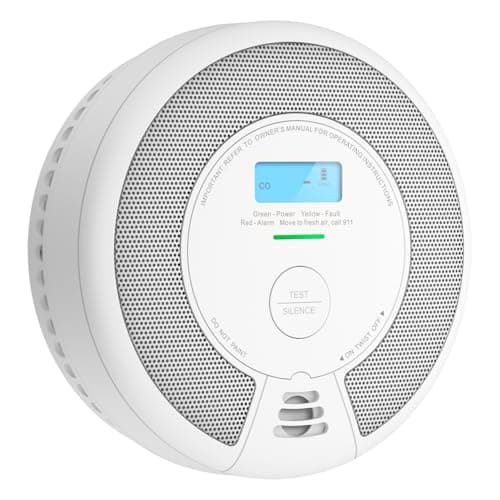 X-Sense SC07 Smoke & Carbon Monoxide Alarm A sealed ten-year smoke and CO alarm with a concentration display. In a vehicle with propane on board, covering both hazards from one position is the whole argument. | Most RVs - both hazards, one ceiling position, nothing to maintain | 9.1/ 10 | |
| 2 | 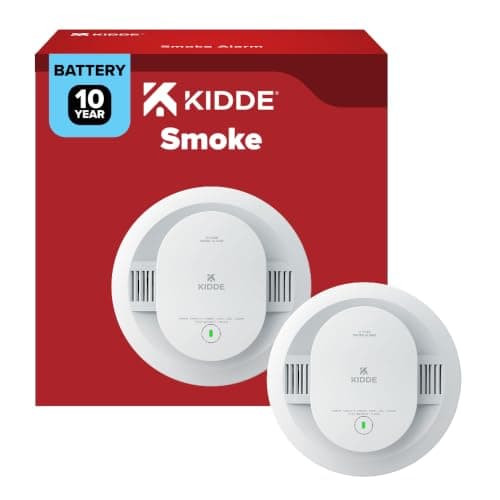 Kidde 20SD10 10-Year Battery Smoke Alarm The cheapest certified alarm on this site, sealed for ten years. The right unit when the CO hazard is handled by a dedicated alarm. | The budget pick - a coach with CO already covered | 8.4/ 10 | $32.47 · View on Amazon #ad how we are funded · price as of November 11, 2026 |
| 3 | 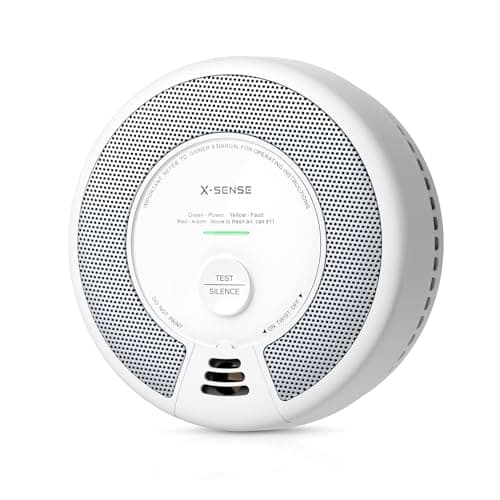 X-Sense SC06 Smoke & Carbon Monoxide Alarm Smoke and CO in a dust-resistant housing. The fix for the alarm that goes off every time you fry something in a space four feet wide. | A galley-adjacent position that keeps nuisance-tripping | 8.9/ 10 |
The picks
1. Most RVs - both hazards, one ceiling position, nothing to maintain
X-Sense SC07 Smoke & Carbon Monoxide Alarm
A sealed ten-year smoke and CO alarm with a concentration display. In a vehicle with propane on board, covering both hazards from one position is the whole argument.
- Listed to
- UL 217 and UL 2034
- Sensing / agent
- Photoelectric smoke sensing plus an electrochemical CO cell
- Power / service life
- 10-year sealed lithium battery, not hardwired
Why a combination alarm, specifically in a vehicle. An RV carries its fuel with it. Propane for the hob, the fridge and the heater; petrol or diesel for the engine; often a generator bolted to the frame or sitting outside the door. Carbon monoxide from any of those enters a volume a fraction the size of a house, which is why RV CO incidents escalate fast. One device certified for both hazards covers the two things most likely to kill you in a camper, from the one ceiling position a camper usually has.
Sealed is not a luxury here. The factory alarm in most coaches runs on a 9 V cell behind a door, in a vehicle that sits unused for months. Those are the alarms found silent. A sealed ten-year unit cannot be cannibalized for a remote control.
Replace the factory unit on age, not on behavior. The date is stamped on the back. A ten-year-old alarm in a twelve-year-old coach is not a working alarm, however convincingly it beeps when you press the button.
What it does well
- **Certified to UL 217 and UL 2034** - a real smoke alarm and a real CO alarm, which is the pairing an RV actually needs
- **LCD shows the measured CO concentration** rather than only alarming, so a generator running at the wrong angle to the wind becomes a number you can watch
- **Sealed 10-year lithium cell**, which removes the single commonest RV alarm failure: a 9 V battery borrowed for something else and never replaced
- **Photoelectric smoke sensing** named on the listing - less prone to nuisance-tripping on cooking than ionization
- **Compact and mounts with two screws**, wall or ceiling, which matters when the only flat surface is a cabinet side
- No wiring, no 12 V tap, no interaction with the coach electrics
The downside
- **No interconnect at all** - X-Sense lists it as a standalone unit. In a long fifth wheel with a bedroom at one end that is a real limitation
- **Not a listed RV appliance.** It is a residential alarm used in a vehicle, which is normal practice but means no RV-specific vibration or temperature rating
- **Standard UL 2034 thresholds**, so it is silent through the low-level CO band
- **ETL certified to UL 217 rather than UL-listed** - same standard, different mark
- The display is small and unlit, so it is a daytime instrument
Do not buy this if: a coach that already has a working CO alarm, where a cheaper smoke-only unit covers the gap - or a galley position inside a couple of feet of the hob, where the SC06 below is the better buy. For the CO side on its own see [best CO detectors for RV and travel](/carbon-monoxide-detectors/best-co-detectors-for-rv-and-travel).
- LCD reads the measured CO concentration rather than only alarming
- Standalone unit — no wireless interconnect, no Wi-Fi, no base station
- Sealed battery, so there is no annual battery ritual and no low-battery chirp until end of life
- Test and silence on one control
2. The budget pick - a coach with CO already covered
Kidde 20SD10 10-Year Battery Smoke Alarm
The cheapest certified alarm on this site, sealed for ten years. The right unit when the CO hazard is handled by a dedicated alarm.
- Listed to
- UL 217, 10th edition (UL 217-2024 Ed.10)
- Sensing / agent
- Photoelectric smoke sensing only — no CO cell
- Power / service life
- Sealed 10-year lithium battery; 10-year limited warranty
Where the budget pick is the right pick. A lot of coaches already have a working CO alarm - often a 12 V unit fitted low on a wall near the floor, which is where RV manufacturers have traditionally put them. If yours is in date and tests good, the gap is on the smoke side, and this is the cheapest certified way to close it.
Buy two. A long trailer with a bedroom at one end and the galley at the other has two zones, and at this price covering both is trivial. Standalone alarms do not sound together, so the second unit is doing real work.
Write the install month on it. The stamped date is the manufacture date, and a coach bought used may be carrying alarms older than the owner assumes.
What it does well
- **Lowest price of any alarm this site recommends**, which makes a second unit in the bedroom an easy decision
- **Certified to UL 217 10th edition** per Kidde's certification document - the current edition, with the cooking-nuisance test
- **Sealed 10-year battery**: Kidde publishes "No battery changes for 10 years" with the footnote that this is not a battery performance claim
- **Three long beeps and a red flash on smoke**, so the pattern tells you which hazard it is
- **Twist-and-click bracket** and a self-test, which suits a vehicle you want to stop thinking about
- A brand name a campground or an insurer recognizes
The downside
- **Smoke only - no CO cell.** In an RV with propane on board, this alarm covers one of the two hazards and you must have a CO alarm as well
- **No interconnect**, wired or wireless
- **Kidde does not name the sensor type** - its published wording is "advanced sensing technology"
- **No display, no voice, no app**, which is the honest reason it is the cheapest unit here
- Sealed, so at ten years it is scrap rather than a battery change
Do not buy this if: the only alarm in a coach that burns propane, because it cannot detect carbon monoxide. Pair it with a dedicated CO alarm or buy the combination unit above - [do I need a CO detector](/carbon-monoxide-detectors/do-i-need-a-co-detector) is the short version.
- Listed to the 10th edition of UL 217, which carries the cooking-nuisance test the 8th edition introduced
- Kidde's own wording: advanced sensing technology helps distinguish real smoke from everyday cooking or steam
- No low-battery chirps for ten years — the first end-of-life beep is the replacement signal
- Three long beeps and a red flash on smoke, so the pattern tells you which hazard it is
- Twist-and-click bracket, and it self-tests rather than waiting for you to press the button
#ad how we are funded · price as of November 11, 2026
3. A galley-adjacent position that keeps nuisance-tripping
X-Sense SC06 Smoke & Carbon Monoxide Alarm
Smoke and CO in a dust-resistant housing. The fix for the alarm that goes off every time you fry something in a space four feet wide.
- Listed to
- UL 217 and UL 2034
- Sensing / agent
- Photoelectric smoke sensing plus an electrochemical CO cell
- Power / service life
- 10-year sealed battery
The RV nuisance-alarm problem is worse than the house version. A camper galley is a few feet from the only ceiling position, there is no extractor worth the name, and the whole volume is small enough that toast sets the alarm off. The result is predictable: the alarm comes off the ceiling and goes in a drawer, and the coach travels unprotected. Anything that lowers the nuisance rate is buying back a working alarm.
Dust matters more in a vehicle, too. Months in storage, gravel roads, road film through the vents - RV alarms foul faster than household ones. Vacuum the vents at the start of every season as well as buying a housing designed to resist it.
Position it away from the hob and away from the roof vent. The roof vent draws air across the ceiling and can pull cooking aerosol straight to a badly placed alarm.
What it does well
- **Dust-resistant housing**, which addresses the real mechanism behind nuisance alarms in a vehicle: fine particulate settling in the sensing chamber on gravel roads and in storage
- **Certified to UL 217 and UL 2034** - both RV hazards, one position
- **Photoelectric smoke and electrochemical CO sensors** named on the listing
- **Sealed 10-year lithium cell**, no wiring, wall or ceiling
- **Among the cheapest combination alarms anywhere**, so covering a second zone is affordable
- Compact body, which matters when the only mounting surface is a cabinet face
The downside
- **No display.** It alarms; it does not report a CO concentration, and in a coach with a generator a number over time is genuinely useful
- **Standalone only** - X-Sense points at the SC06-W for interconnect, which this site does not stock
- **"Dust-resistant" is a design claim**, with no published ingress rating behind it
- **ETL to UL 217 rather than UL-listed**
- Still a residential alarm used in a vehicle, with no RV-specific vibration rating
Do not buy this if: an owner who wants to watch a CO number while a generator runs - the SC07 has the display. For the dedicated CO instrument case, see [best low-level CO monitors](/carbon-monoxide-detectors/best-low-level-co-monitors).
- Dust-resistant housing — the cheap fix for nuisance alarms in a dusty utility space
- Dual smoke and CO detection in one ceiling position
- Single test and silence control
- No display: it alarms, it does not report a concentration
The three alarms side by side
Specifications as published by the manufacturers, checked on 2026-11-10. The live price and the date it was taken sit in each buy button.
| Alarm | Hazards | Power | Display | Nuisance feature |
|---|---|---|---|---|
| X-Sense SC07 | Smoke (UL 217) and CO (UL 2034) | Sealed 10-year lithium | CO concentration on LCD | Photoelectric sensing |
| Kidde 20SD10 | Smoke only (UL 217 10th ed.) | Sealed 10-year battery | None | Enhanced sensing per Kidde |
| X-Sense SC06 | Smoke (UL 217) and CO (UL 2034) | Sealed 10-year lithium | None | Dust-resistant housing |
None of these is a listed RV appliance - they are residential alarms used in a vehicle, which is ordinary practice. If your campground, insurer or rental contract specifies an RV-listed device, check that wording before you buy.
Questions people actually ask
What is the best smoke detector for an RV?
Do I need both a smoke alarm and a CO alarm in a camper?
How often should I replace the smoke alarm in my RV?
Why does my RV smoke detector keep going off when I cook?
Can I use a household smoke alarm in an RV?
How these picks were chosen. On published specifications, safety listings and manufacturer documentation — plus the findings of organizations that do run tests. We have no laboratory and we do not burn anything. Read the full methodology.
Sources
- UL Solutions — UL 217 — smoke alarms
- UL Solutions — UL 217, Standard for Smoke Alarms, published with new technical requirements
- UL Solutions — UL 2034 — single and multiple station carbon monoxide alarms
- X-Sense — SC07 10-year battery combination smoke and carbon monoxide alarm with LCD
- Kidde — DETECT smoke alarm, 10-year battery powered (20SD10) — product page
- NFPA — Smoke Alarms in US Home Fires
- US Fire Administration — Home fire prevention
Read next
Smoke Detectors
The Best Smoke Detectors for a Home
Four alarms, what UL 217 tests, and why interconnection beats every other feature.
Carbon Monoxide Detectors
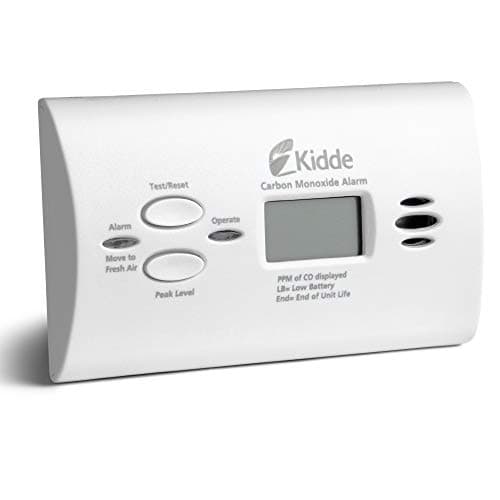
The Best CO Detectors for RVs and Travel
A battery unit for the bag, and why an RV needs an RV-listed alarm instead.
Fire Extinguishers
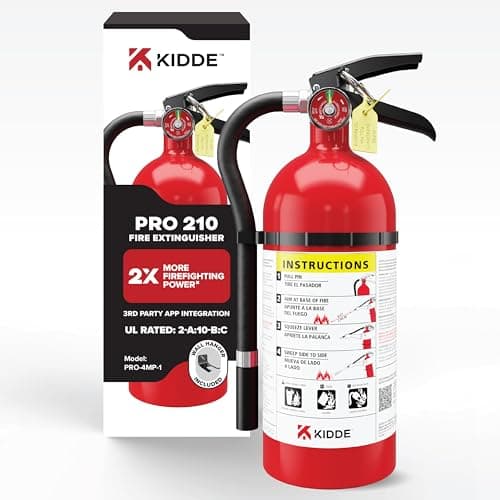
Three positions, three ratings. Why the canister the RV shipped with is not enough.

Fire Blankets
The Best Fire Blankets for RVs
Galley pan fires, mounting in a moving vehicle, and the line between fighting and leaving.
Smoke Detectors
The Best Combination Smoke and CO Alarms
Two listings, one position — and the one room where separate units win.
Smoke Detectors
Why Your Smoke Alarm Goes Off for No Reason
Position first, contamination second, faulty alarm a distant third.