Fire Blankets
The Best Fire Blankets for RVs
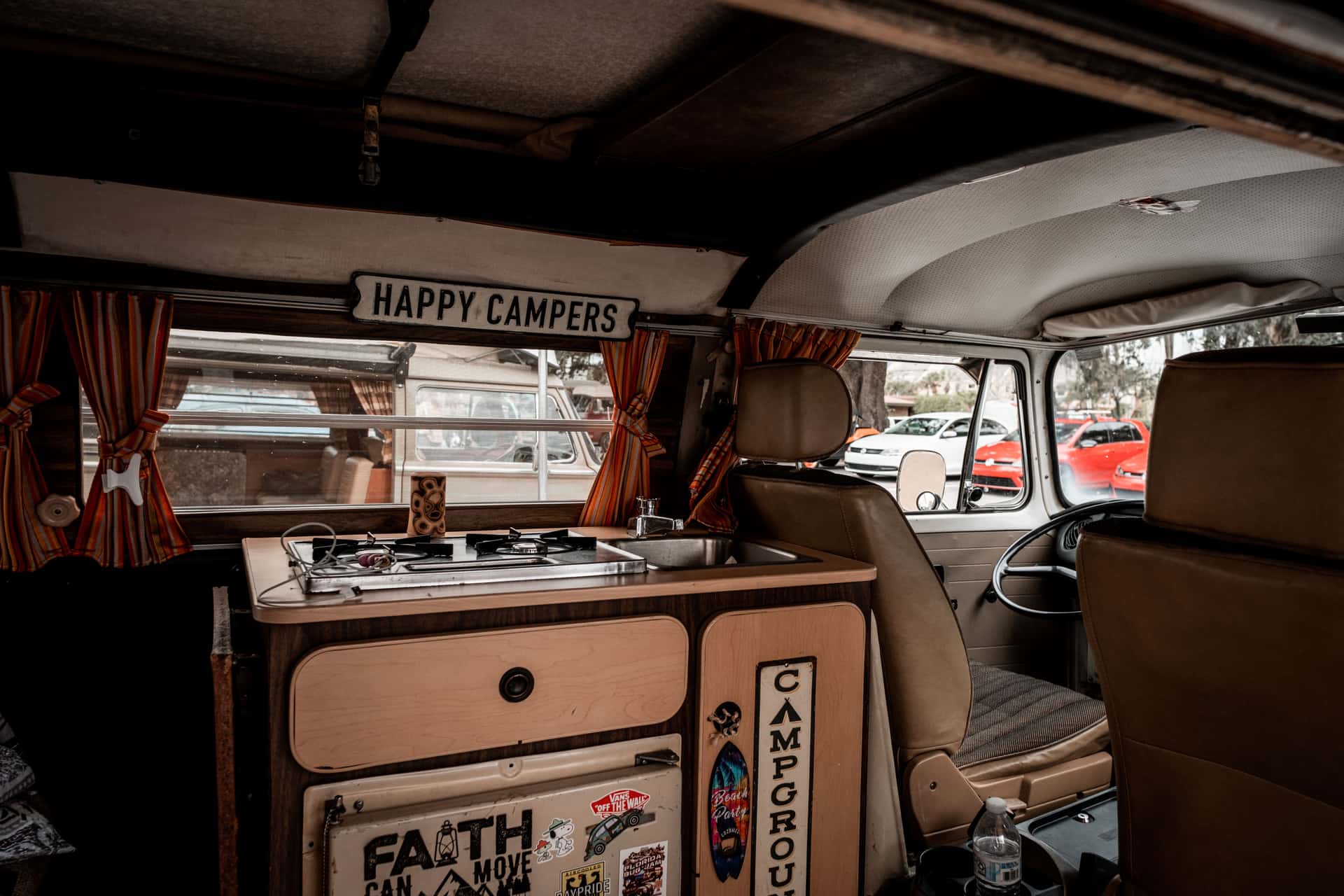
The blanket is for one job in an RV: a pan fire in the galley, caught in the first few seconds. Everything else in an RV fire is a leave-now event, and it is worth being clear about the line.
By Ryder M.Last reviewed
Buy a compact EN 1869 blanket for the galley and mount it by the door, not above the hob — the Tonyko is our pick because it names the standard edition and comes in sizes that suit a small galley. Add the JJ CARE kit if you do not already own heat-resistant gloves, because a blanket conducts heat and an RV galley gives you nowhere to retreat to. And understand the boundary: a blanket handles a pan. It does nothing about propane, a wheel-well fire or anything involving the chassis.
Siren & Safe is reader-funded. We earn a commission on some links on this page, at no cost to you. It does not change what we recommend or the order we rank it in. Full disclosure.
Why an RV galley is different from a kitchen
The fire is the same. Everything around it is different, and it changes what equipment is worth carrying.
You cannot step back. A domestic kitchen gives you a couple of meters and usually two ways out of the room. A galley gives you an arm's length and a corridor. That compresses the decision window and it makes gloves genuinely important, because the reflex to drop something hot is much worse when there is nowhere for it to fall safely.
Everything is closer to everything. Soft furnishings, curtains, a dinette cushion and a cabinet front are all within a foot of the hob in most coaches. A pan fire that is not covered in the first few seconds stops being a pan fire faster than it would at home.
There is propane in the building. That is the single biggest difference and it is why the boundary between fighting and leaving sits earlier in an RV than in a house. A domestic kitchen fire that gets away from you is a serious house fire. An RV fire that gets away from you is a serious fire next to a pressurized cylinder.
The vehicle moves. Anything you mount has to stay mounted through a day of road vibration, and anything loose in a locker will have migrated by the time you need it.
A car is a tighter problem than an RV and the answer differs: best fire blankets for cars covers what survives a trunk and what a blanket cannot do to a burning vehicle. For the rated unit alongside it, best RV fire extinguishers works through the galley, the bay and the engine separately.
Mounting a blanket in a vehicle
Four decisions, and the first one is the one people get wrong in houses as well as in RVs.
Not above the hob
The single most common mounting error. A blanket mounted above or behind the cooker is a blanket you have to reach through the fire to get. Mount it on the escape side — between the galley and the door — so you are moving away from the fire as you grab it.
Screw it, do not stick it
Adhesive hooks fail in vehicles. Heat, vibration and the temperature cycling of a coach parked in the sun all work against them, and they come off quietly. Put a screw into a cabinet face or a stud. It takes five minutes and it is still there next season.
At eye level, visible, not behind a door
In an emergency people find things they can see. A blanket in a locker behind the dinette cushions is a blanket nobody retrieves in ten seconds, however well you know the coach.
Put a second one outside the coach
An exterior locker or the tow vehicle. If the fire is between you and the galley blanket, the galley blanket is not available — and for a fire at a grill, an awning or a generator, an exterior blanket is the one you want anyway.
Quick picks
Scored against size for a galley, standard named, stows in a vehicle, one-handed deployment and value in multi-pack. Tap a row for the full write-up. The price in each buy button is the live Amazon price at the last check, stamped with the date it was taken.
| # | Product | Best for | Score | Price |
|---|---|---|---|---|
| 1 | 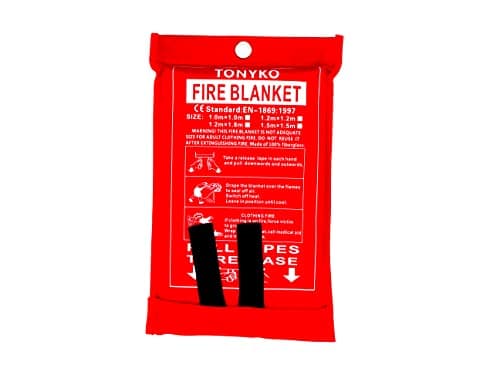 Tonyko Fiberglass Fire Blanket Names a specific EN 1869 edition, and comes in a size that suits a small worktop. | The galley | 8.4/ 10 | $21.99 · View on Amazon #ad how we are funded · price as of October 20, 2026 |
| 2 | 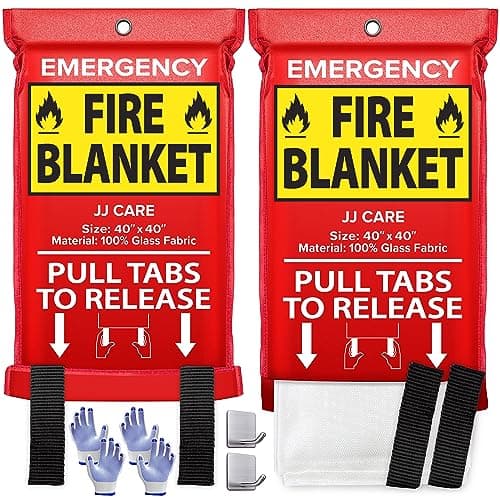 JJ CARE Fire Blanket Kit A kit rather than a blanket, and in an RV the gloves are not optional. | The gloves, in a space with no room to retreat | 8.0/ 10 | |
| 3 | 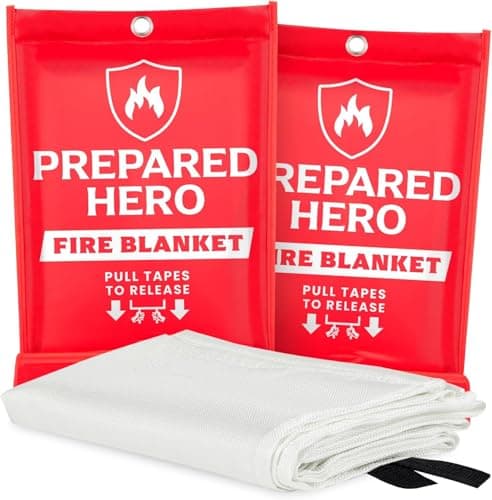 Prepared Hero Emergency Fire Blanket The deployment mechanism, which is the part that matters when you are reaching without looking. | A pull-tab pouch you can work one-handed | 7.5/ 10 | $39.98 · View on Amazon #ad how we are funded · price as of October 20, 2026 |
| 4 | 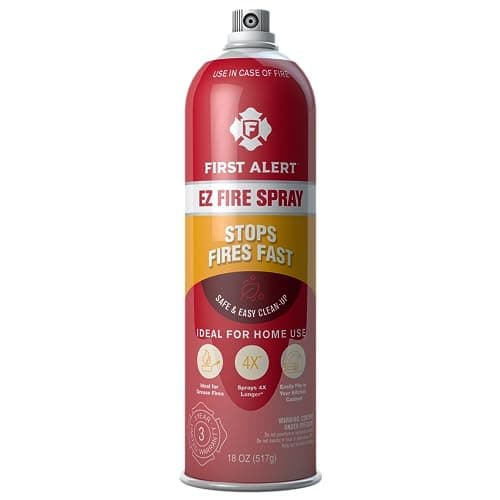 First Alert EZ Fire Spray AF400 An aerosol that wipes up — which in a vehicle interior matters more than it sounds. | The thing to pair the blanket with | 7.8/ 10 | $11.98 · View on Amazon #ad how we are funded · price as of October 20, 2026 |
1. The galley
Tonyko Fiberglass Fire Blanket
Names a specific EN 1869 edition, and comes in a size that suits a small worktop.
- Listed to
- Tonyko states the blanket meets EN 1869:1997 for cooking-fire suppression
- Sensing / agent
- Woven fiberglass
- Power / service life
- Single use on a real fire
An RV galley is the one place in a vehicle where a fire blanket is genuinely the right tool. Two burners, a small worktop, cooking oil, and somebody cooking in a confined space while the vehicle is parked — that is exactly the fire EN 1869 tests against.
Size is the spec to get right, and smaller is better here in a way it is not in a house. A 39 in blanket covers a galley hob comfortably and is manageable in a space where you cannot step back. A 5 ft blanket in a galley is unwieldy, and the extra material has nowhere to go.
The standard matters more than the brand. EN 1869 puts the blanket over burning cooking oil and requires it to extinguish the fire and keep it out. A blanket without that test is an unknown quantity on the only fire you bought it for. Tonyko naming the 2019 edition is worth more than a generic "fire rated" claim.
What it does well
- Tonyko states conformity to EN 1869:2019 — naming the edition, which most sellers in this category will not do
- Available around 39.3 x 39.3 in and 1 x 1 m, both of which suit a two-burner galley better than an oversized blanket
- Folds flat enough to live in a drawer or a locker without taking a useful cubic foot
- Cheap in multi-packs, so one in the galley, one in an exterior locker and one in the tow vehicle is realistic
The downside
- **Some packs ship without a pouch or hooks**, which matters more in a vehicle than in a house — a loose blanket in a drawer is a blanket you are rummaging for
- Woven fiberglass, so wear gloves and bag it after any use
- Single use on a real fire
- A 39 in blanket is small for anything beyond a pan — it will not cover a seat or a mattress fire
Do not buy this if: an exterior or engine fire, and not for a propane fire. If flame is coming from outside the coach, from a locker, or from anywhere near an LP cylinder, the blanket stays where it is and you get everybody out.
- Tonyko names a specific EN 1869 edition, which is more than most sellers in this category do
- 47.2 x 47.2 in (1.2 x 1.2 m) in the size linked here — large enough to wrap around a body as a heat shield, which the smaller hob blankets are not
- Also sold in a 47.2 x 70.9 in and a 78.7 x 78.7 in, so check which size you are adding to the basket
- Plain blanket — no pouch or hooks in the pack, so plan the fixing yourself
- Tonyko names the kitchen, fireplace, grill, car and camping as the intended uses
#ad how we are funded · price as of October 20, 2026
2. The gloves, in a space with no room to retreat
JJ CARE Fire Blanket Kit
A kit rather than a blanket, and in an RV the gloves are not optional.
- Listed to
- JJ CARE does not name a listing number or test standard on its listing
- Sensing / agent
- Dual-layer woven fiberglass
- Power / service life
- Single use on a real fire; JJ CARE states the blankets themselves do not expire in storage
Gloves matter more in an RV than in a house, and the reason is geometry. In a kitchen you can approach a pan fire from a step back and retreat. In a galley you are within arm's length of the hob with a wall behind you and a dinette to one side. A blanket conducts heat to your hands quickly, and the instinct when it does is to drop it — which puts a burning pan on the floor of a vehicle you were standing in.
The large blanket is worth having somewhere in the vehicle even if the galley gets the small one. A 4.9 ft blanket is the size that wraps a person whose clothing has caught, and in a narrow coach with one usable exit that is a scenario worth having an answer to.
Do not use the adhesive hooks. Screw a hook into a cabinet face near the door. Adhesive mounts in vehicles fail — they come off in summer heat, they creep with vibration, and they typically do it silently at some point between one trip and the next.
What it does well
- Ships with welding-style gloves, which is the component people skip and then regret
- Two sizes including a 4.9 x 4.9 ft, large enough to wrap a person — relevant in a vehicle with a narrow exit
- Adhesive hooks included, so mounting is thought about rather than improvised
- The manufacturer references the EN 1869 standard
The downside
- **The adhesive hooks are the wrong fixing for a vehicle.** RV wall panels, vibration and temperature swings all work against adhesive — use a screw fixing into a stud or a cabinet face
- The larger blanket is bulky for a galley locker
- References EN 1869 without naming an edition or a certificate
- Woven fiberglass, with the usual fiber handling considerations
Do not buy this if: someone who already owns heat-resistant gloves and has a proper fixing point. You would be buying accessories you have, and the hooks are the weakest part of the kit in this application.
- Ships as a kit: two 40 x 40 in blankets, protective gloves and adhesive hooks
- 40 x 40 in is hob-sized — enough for a pan, not enough to wrap an adult
- Gloves are the part people skip and then regret, because a blanket transmits heat
- Adhesive hooks fail on textured walls; use a screw fixing if you can
- Sold in pack sizes from two upwards, so the second blanket can go in the garage or the car
3. A pull-tab pouch you can work one-handed
Prepared Hero Emergency Fire Blanket
The deployment mechanism, which is the part that matters when you are reaching without looking.
- Listed to
- Prepared Hero states conformity to CE safety standards, naming EN 1896:1997
- Sensing / agent
- Two layers of woven fiberglass around an inner fire-retardant layer
- Power / service life
- Single use on a real fire; inspect and replace after any deployment
The pouch is the reason this is on the page. Fire blankets fail in practice not because the material is wrong but because the thing is folded in a drawer and, in the ten seconds available, the person cannot get it out and open.
A pull-tab pouch mounted at eye level by the door solves that. You grab, you pull, and the blanket is in your hands already unfolded. In an RV, where the galley is a meter from the door and both hands are rarely free, that is a bigger practical advantage than any material specification.
Where we would temper the recommendation is the evidence. The manufacturer does not publish an independent listing number, and on a product whose whole purpose is a specific performance under a specific fire, we would rather see the certificate. Both things are true: the deployment is the best here and the documentation is the weakest.
What it does well
- Pull-tab pouch — the blanket comes out with one hand and one motion, which is the only mechanism that works when you are not looking at it
- 39 x 39 in, a sensible galley size
- Sold in multi-packs, so covering a coach and a tow vehicle is not expensive
- No powder, no residue and no clean-up in a vehicle where clean-up is genuinely difficult
The downside
- **The manufacturer does not publish an independent listing number for this product**, which is a real gap next to a blanket that names EN 1869:2019
- Heavily marketed, which is not a fault in itself but means the claims need reading carefully
- Woven fiberglass
- Single use
Do not buy this if: a buyer who wants the certification to be the deciding factor. If a named standard is what you are paying for, the Tonyko is the better-evidenced choice — see our [Prepared Hero versus the alternatives](/fire-blankets/prepared-hero-vs-alternatives) comparison.
- 39 x 39 in, sold as a two-pack so a kitchen and a garage can both be covered
- Pull-down tabs deploy it, which is the only mechanism that matters when you are reaching blind
- No powder, no residue, no clean-up beyond throwing the blanket away
- Woven fiberglass construction, so the fiber question below applies to it
- A hanging slot in the sleeve, so it can live on the wall rather than in a drawer
Prepared Hero product documentation
#ad how we are funded · price as of October 20, 2026
4. The thing to pair the blanket with
First Alert EZ Fire Spray AF400
An aerosol that wipes up — which in a vehicle interior matters more than it sounds.
- Listed to
- Aerosol extinguishing spray — not a UL-rated A:B:C portable extinguisher
- Sensing / agent
- Sodium-bicarbonate-based extinguishing aerosol
- Power / service life
- Single use; check the stamped expiry
We have put an extinguisher on a fire blanket page deliberately, because the honest advice for an RV galley is that you want both and they cover different failures.
A blanket handles a contained pan fire and produces no mess. An aerosol handles a fire that has already left the pan — a tea towel, a curtain, a cupboard front — which a blanket cannot cover. In a vehicle where a dry chemical discharge means dismantling the interior to clean it, an aerosol that wipes off is disproportionately useful.
Neither replaces the rated extinguisher. RVs are generally required to carry one, and that requirement is about fires far beyond what either of these tools addresses. What size fire extinguisher do I need covers the sizing.
What it does well
- No pin and no gauge — point and spray, which is a much lower-skill action than operating a traditional extinguisher
- Wipes up with a cloth rather than coating the interior in dry chemical powder
- Small enough to live in a galley drawer alongside the blanket
- Covers fires a blanket cannot reach, such as one that has spread past the hob
The downside
- **Not a substitute for the extinguisher your RV is required to carry** — check your vehicle's requirement and your insurer's
- Lower capacity than a traditional extinguisher; it is a first-few-seconds tool
- Has a shelf life, and in a vehicle stored through temperature extremes it is worth checking the date more often than you would at home
- It is an extinguisher, not a blanket — included here because the pairing is the right answer, not because it does the blanket's job
Do not buy this if: replacing your RV's rated extinguisher. This is an addition for the fire you catch immediately, sitting alongside the blanket and the rated unit rather than instead of either.
- Aerosol can format — no pin, no pressure gauge, aim and spray
- Wipes up with a cloth instead of the corrosive mess dry chemical leaves
- Genuinely easier for someone who will never practice with a real extinguisher
- It is not a rated extinguisher and does not satisfy a code requirement for one
#ad how we are funded · price as of October 20, 2026
What else belongs in an RV that a blanket does not cover
A blanket is one item in a set. These are the gaps it leaves, in the order we would fill them.
- A rated fire extinguisher, which RVs are generally required to carry. Check your vehicle's requirement and your insurer's — see what size fire extinguisher do I need
- A working smoke alarm, in date. RV alarms live a harder life than domestic ones — vibration, temperature swings, damp storage — and they still expire ten years from manufacture
- A carbon monoxide alarm. Generators, LP appliances and a neighboring rig's exhaust are all real sources in a confined space. The best CO detectors for RV and travel covers the specifics
- An LP gas detector, which is a different device again and is mounted low because propane is heavier than air
- Two ways out, rehearsed. In a coach that usually means the door and a designated egress window, and it is worth physically opening that window once rather than assuming it opens
Storage, vibration and the check nobody does
An RV stores its safety equipment through conditions a house never inflicts: a summer parked in the sun, a winter in a damp storage lot, and thousands of miles of vibration in between.
For a fire blanket that is less punishing than it is for an extinguisher — woven fiberglass does not degrade the way a pressurized cylinder can lose charge. The failure mode is different: the blanket is fine and it is no longer where you put it, or the pouch has worked loose, or the adhesive hook let go in July and the blanket has been under the dinette since.
So the check is a look rather than a test. Before each trip, confirm the blanket is mounted where it should be, the pouch is intact, and the pull tab is accessible. Ten seconds. While you are there, press the test button on the smoke alarm and look at the extinguisher gauge.
And after any real deployment, the blanket is finished. It is a single-use item on an actual fire, and "it looks fine" is not the test — replace it. Where to mount a fire blanket covers the reasoning in more detail.
Questions people actually ask
Do I need a fire blanket in an RV?
What size fire blanket is best for an RV galley?
Where should I mount a fire blanket in an RV?
Will a fire blanket work on a propane fire?
Can I reuse an RV fire blanket after using it?
Do RVs need smoke and CO alarms as well?
How these picks were chosen. On published specifications, safety listings and manufacturer documentation — plus the findings of organizations that do run tests. We have no laboratory and we do not burn anything. Read the full methodology.
Sources
- British Standards Institution — BS EN 1869: Fire blankets — specification
- NFPA — Cooking equipment fires in US homes
- US Fire Administration — Cooking fire safety
- CDC / NIOSH — Synthetic vitreous fibers — occupational health guidance
Read next
Fire Blankets
The Best Fire Blankets for a Home
Three blankets worth mounting, plus the woven-fiberglass issue the sellers leave out.
Fire Blankets
Height, distance and fixing — plus the one position that makes a blanket useless.
Fire Blankets
The Best Fire Blankets for Grills and BBQs
Lid first, tank off, blanket third. Sizing for a full-size grill and the propane line you do not cross.
Carbon Monoxide Detectors
The Best CO Detectors for RVs and Travel
A battery unit for the bag, and why an RV needs an RV-listed alarm instead.
Fire Extinguishers
What Size Fire Extinguisher Do I Need?
Weight against rating and run time, and why the likely operator decides it.
Fire Blankets
Fire Blanket vs Fire Extinguisher
Contact range versus projected agent — and the fires where each one is the wrong choice.