Fire Extinguishers
What Size Fire Extinguisher Do I Need?
Size buys rating and run time and costs you control. The right answer is the biggest unit the person most likely to use it can hold out and steer.
By Ryder M.Last reviewed
For a house, a 5 lb ABC unit rated 2-A:10-B:C on the main level and a larger unit with a higher B rating in the garage covers the realistic risks. Go down to 4 lb if control matters more than run time, and to 2.5 lb for an apartment, a boat or a supplementary position. The principle that actually decides it: a heavier extinguisher is harder to aim and sweep accurately, and operator error is the dominant failure mode in domestic use — so buy for the likely operator, not for the spec sheet.
Siren & Safe is reader-funded. We earn a commission on some links on this page, at no cost to you. It does not change what we recommend or the order we rank it in. Full disclosure.
The sizes, and what each one is for
| Size | Typical rating | Best position | The trade |
|---|---|---|---|
| 2.5 lb | 1-A:10-B:C | Apartment kitchen, boat, caravan, upstairs landing, vehicle | Easiest to control; half the A rating and little run time |
| 4 lb | 2-A:10-B:C | Main level, narrow kitchen, utility room, upstairs | The best compromise — full rating, controllable weight |
| 5 lb | 2-A:10-B:C | Main level near the kitchen exit; the house default | More run time; a real weight to steer |
| 10 lb and up | 3-A:40-B:C and higher | Garage, workshop, outbuilding | Most capability; too heavy for many users and most rooms |
Ratings are typical for each size class rather than guaranteed — read the label on the specific unit. What the numbers mean.
Why the likely operator decides it
Using an extinguisher correctly means holding it out in front of you, aiming at the base of the fire rather than the flames, squeezing fully, and sweeping across the burning area while advancing. That is a two-handed, extended-arm, fine-control task performed under stress by someone who has almost certainly never done it.
Weight degrades every part of that. A unit that is heavy for its operator gets held closer to the body, which changes the angle; gets aimed less precisely; and gets swept in a shorter arc. The rating on the label assumes a trained operator achieving the rated performance — an untrained operator with too much extinguisher achieves considerably less.
So the question is not 'what is the biggest unit I can buy'. It is 'what is the biggest unit the person most likely to reach for it can hold out and steer for several seconds'. Have them pick one up in the shop, or pick up the one you already own tonight.
In many households that person is not the one doing the buying. Buy for them.
How many, and where
Main level, near the kitchen exit. The single most important position, because the kitchen is where fires start and the exit is where you want to be standing.
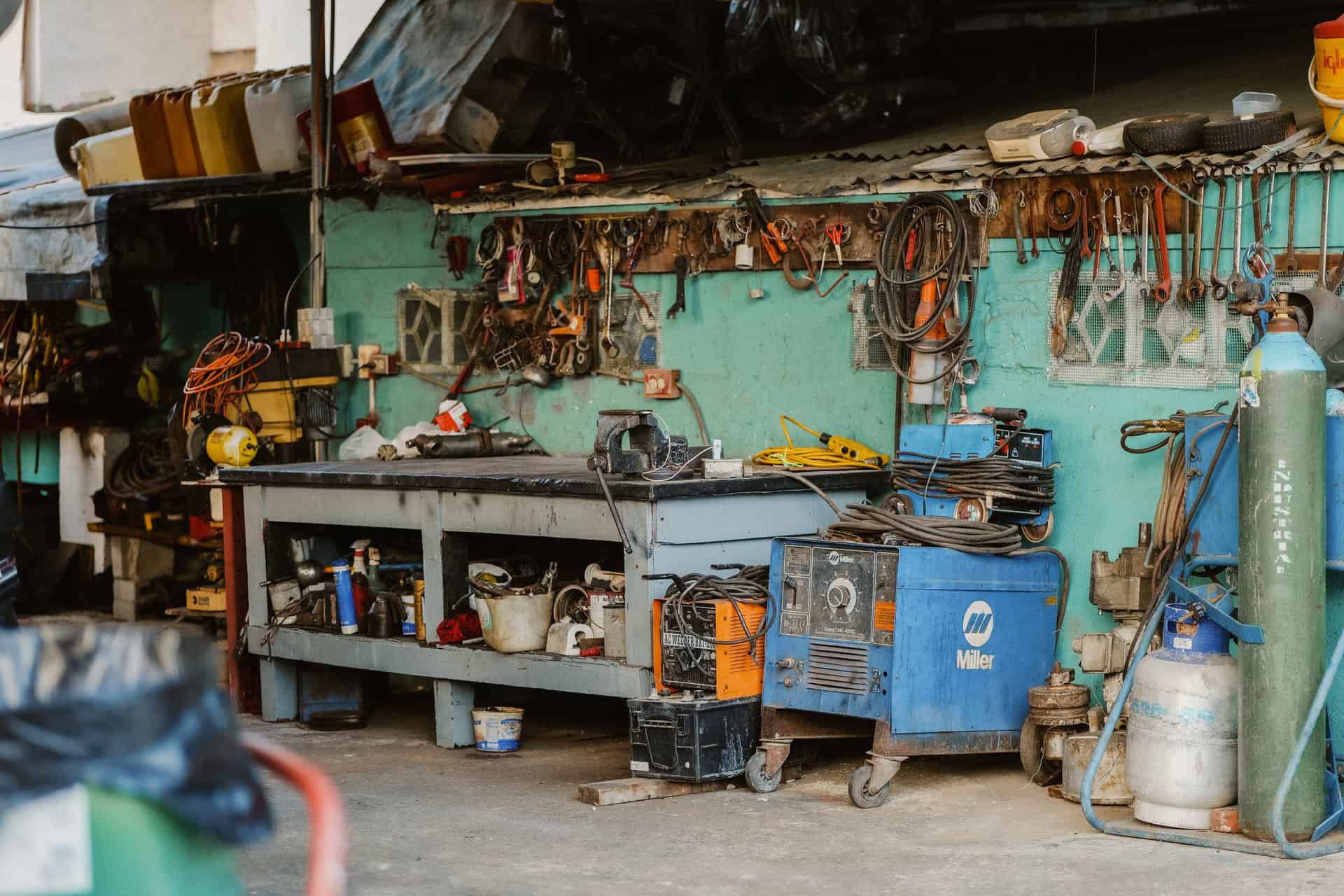
Garage or workshop. Larger, higher B rating. This is the room where a fire grows unnoticed.
One per additional level. A two-story house benefits from an upstairs unit, which can be smaller since it is a supplementary position.
A vehicle, mounted with a bracket rather than loose. Car extinguishers.
Position beats size every time. An oversized extinguisher in the wrong place — beside the cooker, in the back of a cupboard, on the floor behind the vacuum — is worse than a smaller one mounted on the escape route.
When to ignore all of this
If you have no working smoke alarms, buy those first and come back to extinguisher sizing later. Alarms are the highest-impact purchase in home fire safety by a wide margin. The smoke alarm roundup.
If your realistic worry is a pan of oil, the size of your extinguisher is not the question — a fire blanket within one step of the hob is. Blanket picks.
If a code requirement or a landlord specifies a rating, that governs. Requirements commonly start at 2-A, which rules out the 2.5 lb class as a primary unit. Rental requirements.
If nobody will ever read the technique, an aerosol spray alongside a rated unit is a reasonable hedge. Aerosol vs traditional.
Questions people actually ask
What size fire extinguisher do I need for my home?
Is a 2.5 lb fire extinguisher enough?
Should I buy the biggest fire extinguisher I can?
What size extinguisher do I need for a garage?
How many fire extinguishers does a house need?
How these picks were chosen. On published specifications, safety listings and manufacturer documentation — plus the findings of organizations that do run tests. We have no laboratory and we do not burn anything. Read the full methodology.
Sources
- NFPA — NFPA 10, Standard for Portable Fire Extinguishers
- UL Solutions — Fire extinguisher testing and certification (UL 711)
- US Fire Administration — Home fire prevention
Read next
Fire Extinguishers
The Best Fire Extinguishers for a Home
Four rated units, what the numbers mean, and why the valve material matters.
Fire Extinguishers
Amerex B500 vs First Alert HOME1
Twice the agent and rating, against a unit you can actually control one-handed.
Fire Extinguishers
Fire Extinguisher Classes
The full class chart, what the numbers measure, and which agent suits which fire.
Fire Extinguishers
How to Use a Fire Extinguisher
PASS, the two decisions that come first, and why aiming at the flames wastes the charge.
Fire Extinguishers
Fire Extinguisher Expiration and Service
Where the date is, what the gauge means, and the service intervals that apply.