Fire Blankets
The Best Fire Blanket for a Kitchen
The kitchen is the one room where a blanket genuinely outperforms an extinguisher — because the fire you are most likely to have there is a pan of oil, and an extinguisher can make that worse.
By Ryder M.Last reviewed
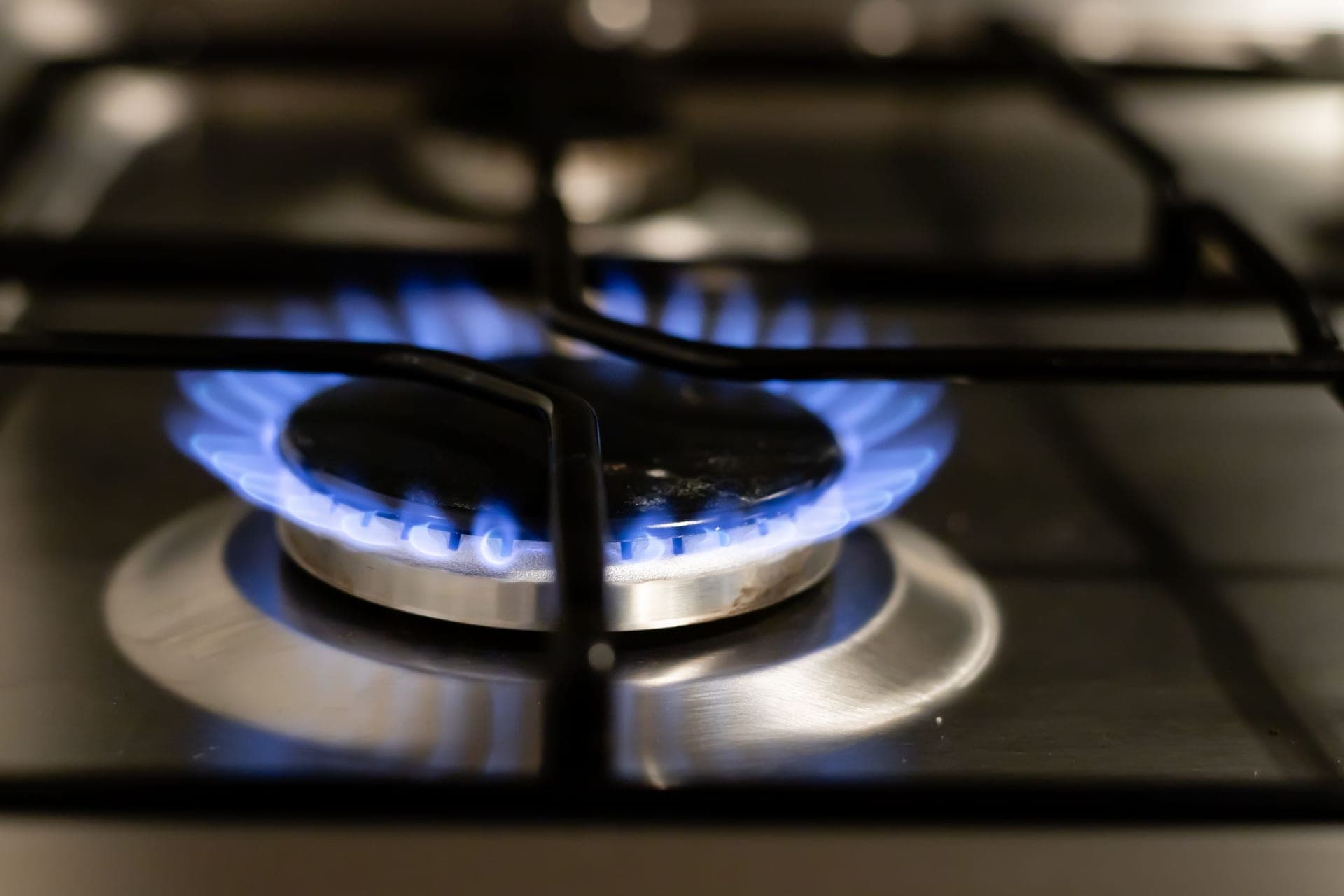
For a hob, buy a 40 x 40 in blanket with a pull-tab pouch and keep it within one step of the cooker but never above it. The JJ CARE kit is our pick because the gloves come with it. The reason a blanket wins in this room specifically is that the standard written for cooking fires — EN 1869 — tests exactly the scenario a kitchen produces, and a dry-chemical extinguisher aimed at hot oil can splash burning fuel out of the pan.
Siren & Safe is reader-funded. We earn a commission on some links on this page, at no cost to you. It does not change what we recommend or the order we rank it in. Full disclosure.
Why the kitchen is the blanket's room
Cooking equipment is the leading cause of home fires in the United States, and the great majority of those fires start on a hob with oil or fat. That single fact is what makes the kitchen different: the most likely fire in the room is a contained liquid fire in a metal vessel, which is precisely what a blanket is good at and precisely what water and dry chemical are bad at.
Water into hot oil flashes to steam under the oil layer and throws burning fuel upward and outward. That is the mechanism behind the videos, and it is why how to put out a grease fire leads with 'do not use water' rather than with a product.
A dry-chemical extinguisher will put out a pan fire, but the discharge is a high-velocity stream. Aimed carelessly into a pan of oil it can splash the fuel over the cooker and the wall behind it. A blanket has no velocity. You lay it, the oxygen supply is cut, and nothing moves.
What EN 1869 tests, and what it does not
EN 1869 is the European specification for fire blankets intended for smothering small fires — cooking fires specifically. Its test involves a pan of burning cooking oil and requires the blanket to extinguish it and to keep it extinguished without reignition. It also sets construction requirements for the blanket itself.
That is a genuinely relevant test. It is the scenario your kitchen will actually produce, which is more than can be said for a lot of standards quoted in consumer safety marketing.
What it does not do is tell you anything about fiber shedding, about performance on a fire that has left the pan, or about how long the blanket will survive in a steamy kitchen. It also is not a US standard — there is no directly equivalent UL listing for household fire blankets, which is why this category has no UL number to look for the way smoke alarms have UL 217. A blanket naming EN 1869 has been designed against a real cooking-fire test. That is the claim, and it is worth making; it is not a warranty.
Quick picks
Scored against suits a hob fire, standard referenced, deployment speed, complete on arrival and mounting hardware. Tap a row for the full write-up. No price is shown anywhere on this site because we do not cache retailer prices.
| # | Product | Best for | Score | Price |
|---|---|---|---|---|
| 1 |  JJ CARE Fire Blanket Kit Right size, right kit, gloves in the box. | The hob | 8.0/ 10 | Check price on Amazon #ad how we are funded · we do not cache prices |
| 2 |  Tonyko Fiberglass Fire Blanket Buy the multi-pack and stop rationing blankets. | Covering several rooms cheaply | 7.1/ 10 | Check price on Amazon #ad how we are funded · we do not cache prices |
| 3 | Prepared Hero Emergency Fire Blanket Fastest pouch of the three, thinnest documentation. | One-handed access | 7.2/ 10 | Check price on Amazon #ad how we are funded · we do not cache prices |
The kitchen picks in full
Illustrative photo
1. The hob
JJ CARE Fire Blanket Kit
Right size, right kit, gloves in the box.
- Listed to
- Manufacturer references the EN 1869 cooking-fire blanket standard
- Sensing / agent
- Woven fiberglass
- Power / service life
- Single use on a real fire
Size is the whole argument in a kitchen. 40 x 40 in covers a 12-inch skillet with room to seal around the edge, which is what smothering requires — the fire goes out because the blanket makes contact with the pan rim, not because the fabric is near it. Much smaller and you are laying a cloth on top of a fire; much larger and you cannot control the drape one-handed while your other hand turns the heat off.
The gloves matter more in the kitchen than anywhere else, because a pan fire puts your hands directly over rising heat as you place the blanket. Woven fiberglass conducts. Without gloves the instinct is to let go early, which leaves a gap, which lets the fire breathe.
The hooks are the part that fails in this room. Kitchen walls collect grease film and steam, and adhesive pads let go of greasy paint. Drill it if you can, and mount it beside the cooker at about worktop height — not above the hob, where the rising heat and the flames are. That is covered in detail in where to mount a fire blanket.
What it does well
- 40 x 40 in is the size that covers a large skillet with margin and still handles in one motion
- Gloves included — the accessory that decides whether you keep hold of it
- References EN 1869, the standard written for cooking fires
- The larger blanket in the kit doubles as a wrap for clothing that has caught
The downside
- Adhesive hooks are not a permanent fixing in a kitchen full of steam and grease
- No published certificate number, only the standard name
- Woven fiberglass, with the handling caveats that implies
Do not buy this if: your cooker is in an alcove with no clear wall within reach. A blanket you have to cross the kitchen for is not a kitchen blanket — in that layout an aerosol spray in a nearby drawer is genuinely the better answer.
- Ships as a kit: blankets, welding-style gloves and adhesive hooks
- Two sizes — 40 x 40 in for a hob, and a 4.9 x 4.9 ft for wrapping a person or a larger fire
- Gloves are the part people skip and then regret, because a blanket transmits heat
- Adhesive hooks fail on textured walls; use a screw fixing if you can
#ad how we are funded · we do not cache prices
Illustrative photo
2. Covering several rooms cheaply
Tonyko Fiberglass Fire Blanket
Buy the multi-pack and stop rationing blankets.
- Listed to
- Manufacturer states conformity to EN 1869:2019
- Sensing / agent
- Woven fiberglass
- Power / service life
- Single use on a real fire
The kitchen case for Tonyko is coverage rather than refinement. Once a blanket costs little enough to buy four, the right answer stops being 'the best blanket by the hob' and becomes 'a blanket everywhere a fire could plausibly start' — the hob, the grill outside, the garage bench, the car. That is a better safety outcome than one premium blanket in one room.
It also names its standard edition, and in a category this loose that is a genuine mark of a seller who has read the paperwork. EN 1869:2019 is checkable. 'Meets international standards' is not.
What you have to accept is assembly. Check whether your pack has a pouch, and if it does not, buy one or mount the folded blanket in a shallow open holder where it can be grabbed rather than unpicked. A blanket in a kitchen drawer under the tea towels is not a kitchen blanket.
What it does well
- EN 1869:2019 named with the edition, which is unusually specific for this category
- Multi-packs make it realistic to cover kitchen, grill and car
- 39.3 x 39.3 in and 1 x 1 m are both good hob sizes
- Plain construction with no marketing claims to unpick
The downside
- Some packs arrive with no pouch, which costs you seconds you do not have
- No gloves
- You will be sourcing a wall fixing yourself
Do not buy this if: you want one blanket, mounted, done. This is the buy for covering several risks at once, and it needs a little assembly to get there.
- Tonyko names a specific EN 1869 edition, which is more than most sellers in this category do
- Sold in several sizes, including a 1 x 1 m and a 39.3 x 39.3 in
- Plain blanket — no pouch or hooks in some packs, so check what you are buying
- Multi-packs are cheap enough to put one in the car and one by the grill
#ad how we are funded · we do not cache prices
Illustrative photo
3. One-handed access
Prepared Hero Emergency Fire Blanket
Fastest pouch of the three, thinnest documentation.
- Listed to
- Manufacturer does not publish an independent listing number for this product
- Sensing / agent
- Two layers of woven fiberglass around an inner fire-retardant film
- Power / service life
- Single use on a real fire; inspect and replace after any deployment
In a kitchen, access speed is worth real points, and this pouch is the best of the three. You pull the tab and the blanket comes out partly opened. That is one fewer motion at the moment when your attention is on a pan rather than on the packaging.
The published construction is useful too. An inner fire-retardant film between two woven faces is a specific design, and knowing it is there tells you the blanket is not a single-ply weave that will let radiant heat straight through.
We still rank documentation above pouch design on a life-safety product, which is why it sits third. Buy it for the pouch if you want the pouch. Do not buy it because a lot of other people did.
What it does well
- 39 x 39 in, a good hob size
- The pull-tab pouch opens one-handed, which is how you will actually reach for it
- Construction is published: two fiberglass layers around an inner fire-retardant film
- Mount included
The downside
- No listing number published — the marketing substitutes owner counts for test data
- No gloves
- Sold hard, which is not a product flaw but does make the claims harder to weigh
Do not buy this if: you need documentation for a landlord, an insurer or a rental listing. For that you want a product with a certificate you can attach, and this is not it.
- 39 x 39 in, sold in multi-packs so a kitchen and a garage can both be covered
- Pull-tab pouch, which is the only mechanism that matters when you are reaching blind
- No powder, no residue, no clean-up beyond throwing the blanket away
- Woven fiberglass construction, so the fiber question below applies to it
Prepared Hero product documentation
#ad how we are funded · we do not cache prices
How to use one on a pan fire
Read this now, not during the fire. The sequence is short and the order matters.
Turn the heat off if you can reach the control safely
Removing the heat source is what stops the oil reheating and reigniting once the blanket is on. If the controls are behind the flames, skip this and come back to it.
Put your gloves on if they are to hand
Seconds spent here are usually worth it. Fiberglass conducts, and the reflex to let go is what leaves a gap at the pan rim.
Hold the blanket in front of you as a shield
Keep it between your face and the pan as you approach. Do not reach over the fire — approach from the side.
Lay it over the pan and seal the edges down
Place, do not throw. A thrown blanket lands unevenly and lets air in at one edge. Smooth it down so it contacts the pan rim all the way round.
Leave it alone for at least half an hour
Hot oil reignites the moment it meets air again. Lifting the blanket to check is the most common way this goes wrong. Leave the room if the smoke is bad, and open a window from outside the kitchen.
Do not move the pan, and replace the blanket
Carrying a covered pan anywhere risks spilling burning oil. And a blanket that has done its job is finished — bag it and buy another.
What else the kitchen needs
A blanket is one third of a kitchen. The other two thirds are an alarm that is far enough from the cooker not to nuisance-trip, and a small extinguisher by the exit rather than by the hob.
The alarm distance is a code question, not a preference. NFPA 72 sets an exclusion radius around a fixed cooking appliance and additional conditions between 10 and 20 ft — kitchen and bathroom placement has the numbers. Getting this right is also the fix for most nuisance alarms, which is why smoke alarm false alarms is mostly a placement page.
For the extinguisher, the best kitchen extinguishers covers what class you want and why the popular 'kitchen' units are not all Class K.
Questions people actually ask
Should I use a fire blanket or an extinguisher on a pan of oil?
Where should a fire blanket go in a kitchen?
Is a fire blanket enough for a kitchen on its own?
Can I reuse a fire blanket after a small fire?
Do I need gloves to use a fire blanket?
How these picks were chosen. On published specifications, safety listings and manufacturer documentation — plus the findings of organizations that do run tests. We have no laboratory and we do not burn anything. Read the full methodology.
Sources
- British Standards Institution — BS EN 1869: Fire blankets — specification
- NFPA — Cooking equipment fires in US homes
- US Fire Administration — Cooking fire safety
Read next
Fire Blankets
The Best Fire Blankets for a Home
Three blankets worth mounting, plus the woven-fiberglass issue the sellers leave out.

Fire Blankets
Where to Mount a Fire Blanket
Height, distance and fixing — plus the one position that makes a blanket useless.
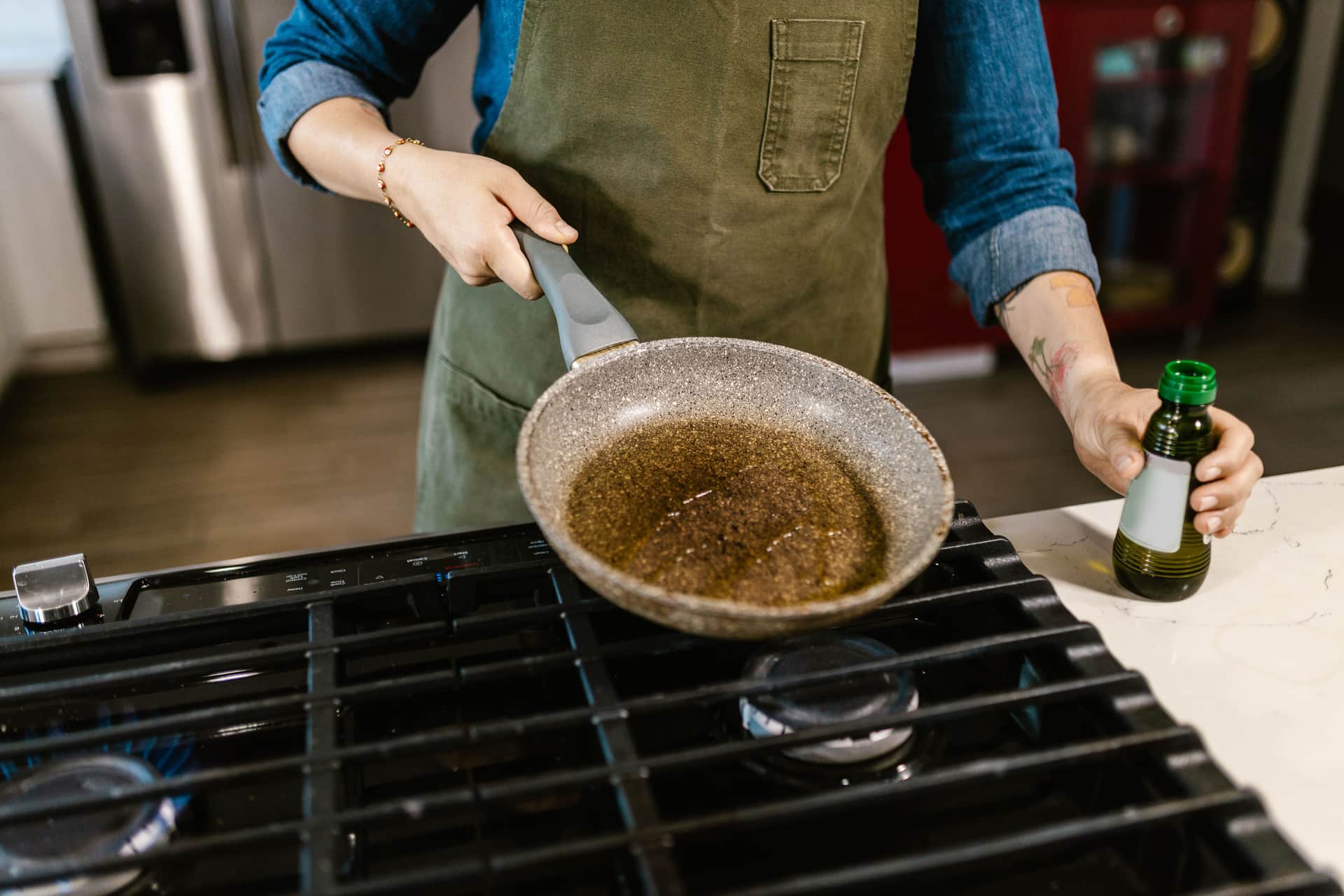
Fire Extinguishers
How to Put Out a Grease Fire
The correct sequence, why water is catastrophic, and when to leave instead.
Fire Extinguishers
The Best Kitchen Fire Extinguishers
Class K versus ABC, and why the blanket is the kitchen's first tool.
Placement & Code
Kitchen and Bathroom Placement
The cooking and bathroom exclusion distances, and how to satisfy them in an open plan.