Fire Blankets
How to Use a Fire Blanket
There is no aiming and no technique to practice, which is the point of the product. There are still two mistakes that turn a contained fire into a spreading one.
By Ryder M.Last reviewed
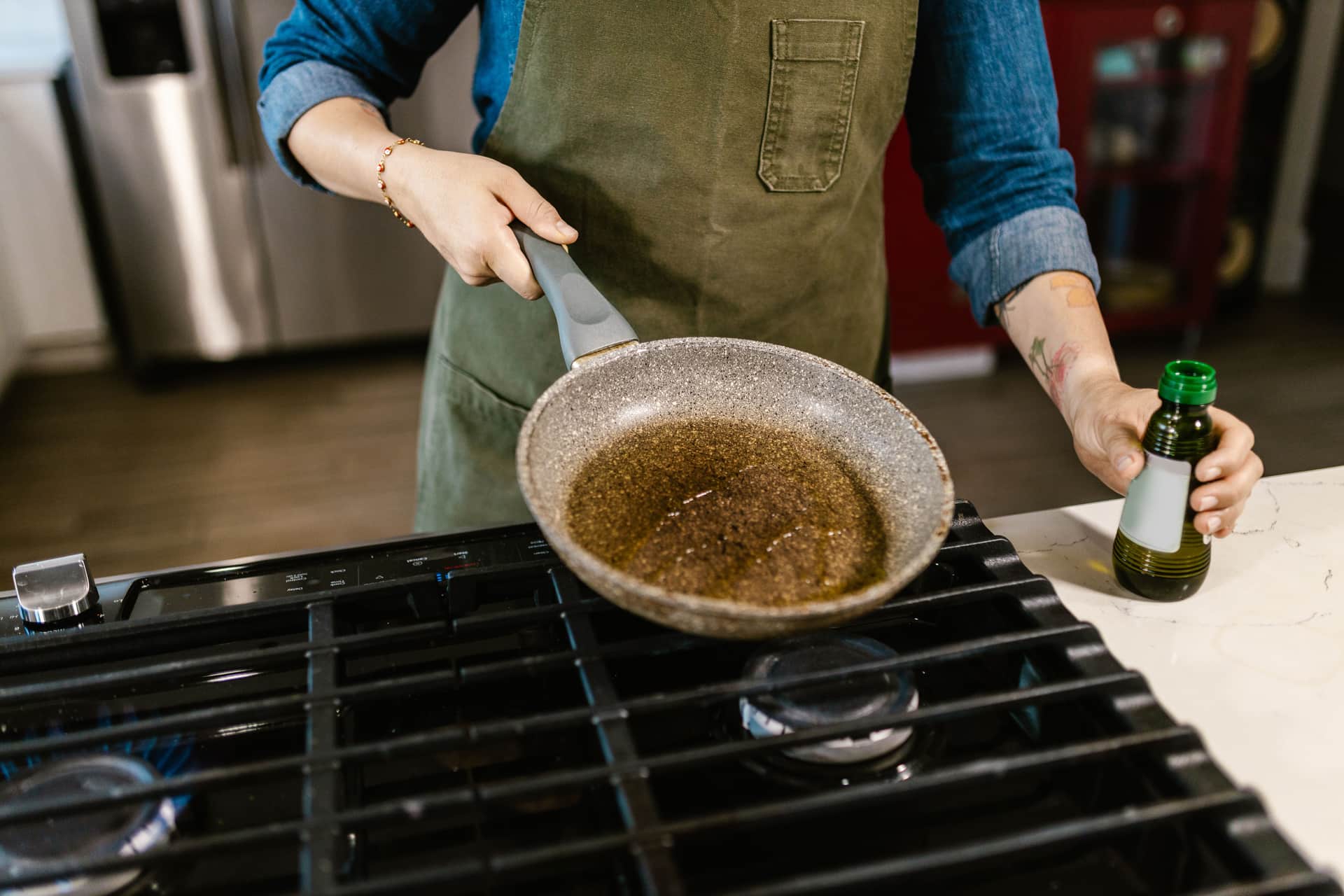
**Turn the heat off if you can reach the control, open the blanket fully, hold the top edge in front of you with your hands behind it, lay it over the fire from the near edge to the far edge, and leave it in place for at least 15 minutes.** Do not lift a corner to look, do not move the pan, and do not try to carry a burning pan outside. A fire blanket works by cutting off oxygen, so every one of those actions undoes it — and a pan of oil that reflashes once the blanket comes off is a worse fire than the one you covered.
Siren & Safe is reader-funded. We earn a commission on some links on this page, at no cost to you. It does not change what we recommend or the order we rank it in. Full disclosure.
The six steps
This is the whole procedure. There is no aiming, no pin, no sweep and nothing to practice beyond knowing where the blanket is.
Turn the heat off, if the control is reachable
A knob or a switch you can reach without putting your hand over the flame. If the control is behind or above the fire, skip this step entirely and cover the fire first — you can turn the heat off after it is smothered. Removing the heat source is what stops the oil reaching its ignition temperature again.
Open the blanket fully, holding the top edge
Both hands on the top edge, with the blanket hanging down in front of you so the material is between your hands and the fire. Keep your hands behind the fabric rather than wrapping them over the top edge toward the flame.
Shield your face and forearms behind it as you approach
The blanket is your heat shield on the way in as well as the thing you put down. Approach with it up, not with it bundled under your arm.
Lay it over the fire from the near edge to the far edge
Place the near edge down first and roll it away from you over the pan. Do not throw it, and do not drop it from above — both can fan the fire and can splash burning oil. Laying it down rolls air out ahead of the fabric instead of trapping it.
Press it down around the base to seal the edges
Gently, with gloved hands if you have them. A blanket resting on the rim of a pan with air getting underneath has not smothered anything. The seal is what does the work.
Leave it in place for at least 15 minutes, then leave the room
Longer if you can. Burning oil stays above its ignition temperature for a surprisingly long time, and lifting the blanket early reintroduces oxygen to fuel that is still hot enough to reflash. Walk away, open a window elsewhere, and come back.
Quick picks
Scored against deploys fast, size for a pan, hand protection, named standard and multi-pack value. Tap a row for the full write-up. The price in each buy button is the live Amazon price at the last check, stamped with the date it was taken.
| # | Product | Best for | Score | Price |
|---|---|---|---|---|
| 1 | 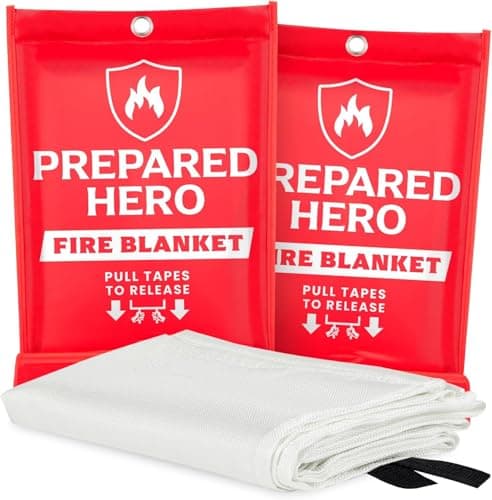 Prepared Hero Emergency Fire Blanket 39 x 39 in with a pull-tab pouch, which is the part that matters when you reach blind. | A kitchen, in a pull-tab pouch | 7.6/ 10 | $39.98 · View on Amazon #ad how we are funded · price as of October 19, 2026 |
| 2 | 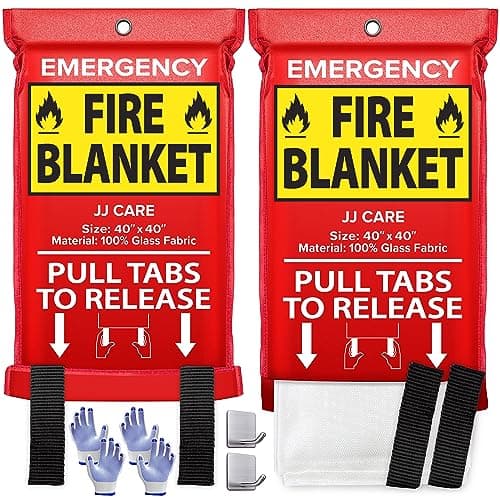 JJ CARE Fire Blanket Kit Blankets, welding-style gloves and hooks. The gloves are the reason. | A kit with the gloves in it | 8.4/ 10 | |
| 3 | 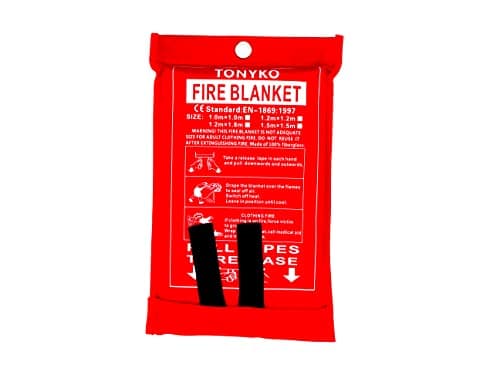 Tonyko Fiberglass Fire Blanket States conformity to EN 1869:2019, which is more than most sellers manage. | A named EN 1869 edition, in multi-packs | 7.8/ 10 | $21.99 · View on Amazon #ad how we are funded · price as of October 19, 2026 |
Blankets, and what each one brings
1. A kitchen, in a pull-tab pouch
Prepared Hero Emergency Fire Blanket
39 x 39 in with a pull-tab pouch, which is the part that matters when you reach blind.
- Listed to
- Prepared Hero states conformity to CE safety standards, naming EN 1896:1997
- Sensing / agent
- Two layers of woven fiberglass around an inner fire-retardant layer
- Power / service life
- Single use on a real fire; inspect and replace after any deployment
The pouch is the feature that makes a blanket usable, and it is the thing people shopping on size and price overlook. A folded blanket in a box on a shelf takes ten or fifteen seconds to find, open and unfold. A pull-tab pouch takes two.
In a pan fire, ten seconds is the difference between a covered pan and a fire that has reached the extractor hood.
The 39 x 39 in size is right for a kitchen: large enough to cover a big pan and still have material to press down around it, which is what seals the oxygen out. What size fire blanket do I need covers the sizing properly.
What this product does not have is a named standard, and that is worth stating because this site's whole position is that the listing is the checkable fact. The brand comparison sets out the evidence against the alternatives.
What it does well
- **Pull-tab pouch** — the only mechanism that matters when you are reaching for it without looking
- 39 x 39 in, which covers a large pan with margin to tuck down the sides
- Sold in multi-packs, so a kitchen and a garage can both be covered
- No powder, no residue, no clean-up beyond throwing the blanket away
The downside
- **Manufacturer does not publish an independent listing number for this product**
- Woven fiberglass, so the fiber question applies
- No gloves in the pack, and a blanket transmits heat to your hands
Do not buy this if: you want a blanket with a named standard behind it. The pouch and the size are good; the evidence is weaker than a product naming an EN 1869 edition.
- 39 x 39 in, sold as a two-pack so a kitchen and a garage can both be covered
- Pull-down tabs deploy it, which is the only mechanism that matters when you are reaching blind
- No powder, no residue, no clean-up beyond throwing the blanket away
- Woven fiberglass construction, so the fiber question below applies to it
- A hanging slot in the sleeve, so it can live on the wall rather than in a drawer
Prepared Hero product documentation
#ad how we are funded · price as of October 19, 2026
2. A kit with the gloves in it
JJ CARE Fire Blanket Kit
Blankets, welding-style gloves and hooks. The gloves are the reason.
- Listed to
- JJ CARE does not name a listing number or test standard on its listing
- Sensing / agent
- Dual-layer woven fiberglass
- Power / service life
- Single use on a real fire; JJ CARE states the blankets themselves do not expire in storage
The gloves are the reason this kit is worth the shelf space, and the reason is a thing almost nobody expects: a fire blanket gets hot.
It is a thin woven barrier, not insulation. You are holding your hands within inches of a pan fire with a layer of glass cloth between, and the heat comes through quickly. Unprotected hands make people let go early or stop short of pressing the blanket down, and both of those leave a gap that keeps the fire alive.
The larger 4.9 x 4.9 ft blanket in the pack covers the second scenario a blanket is for — a person whose clothing is alight — which a 40 x 40 in square does badly.
Fix the hooks properly rather than using the adhesive pads on anything textured. Where to mount a fire blanket covers the position, and it is the thing people get wrong most often: never above the cooker.
What it does well
- **Ships with welding-style gloves** — the part people skip and then regret, because a blanket transmits heat
- Two sizes: 40 x 40 in for a hob, and a 4.9 x 4.9 ft for wrapping a person or a larger fire
- Manufacturer references the EN 1869 cooking-fire blanket standard
- Adhesive hooks included for mounting
The downside
- Adhesive hooks fail on textured walls — use a screw fixing if you can
- Woven fiberglass construction
- A kit in a box deploys more slowly than a pull-tab pouch
Do not buy this if: you need the fastest possible deployment and nothing else. A pouch beats a box for speed, and in a pan fire speed is the dominant variable.
- Ships as a kit: two 40 x 40 in blankets, protective gloves and adhesive hooks
- 40 x 40 in is hob-sized — enough for a pan, not enough to wrap an adult
- Gloves are the part people skip and then regret, because a blanket transmits heat
- Adhesive hooks fail on textured walls; use a screw fixing if you can
- Sold in pack sizes from two upwards, so the second blanket can go in the garage or the car
3. A named EN 1869 edition, in multi-packs
Tonyko Fiberglass Fire Blanket
States conformity to EN 1869:2019, which is more than most sellers manage.
- Listed to
- Tonyko states the blanket meets EN 1869:1997 for cooking-fire suppression
- Sensing / agent
- Woven fiberglass
- Power / service life
- Single use on a real fire
EN 1869 is the European specification for fire blankets intended for cooking fires, and it is the only named standard that regularly appears in this product category. A manufacturer that cites a specific edition — EN 1869:2019 — is making a checkable claim rather than a marketing one.
That is the argument for this one, and for a site whose readers filter on what a product is certified to, it is a strong one.
The practical caveat is packaging. Check whether the pack you are buying includes a pouch, because a plain blanket needs somewhere to live and the answer cannot be a drawer. A blanket you have to rummage for is a blanket that arrives after the fire has spread.
The multi-pack economics are genuinely useful though. One by the hob, one by the grill, one in the car, one in the garage — the right number of fire blankets in a house is more than one, and this is the product that makes that affordable.
What it does well
- **Names a specific EN 1869 edition**, which is stronger evidence than most products in this category offer
- Sold in several sizes, including a 1 x 1 m and a 39.3 x 39.3 in
- Multi-packs cheap enough to put one in the car and one by the grill
- No residue, no powder, nothing to clean up
The downside
- Plain blanket — some packs have no pouch or hooks, so check what you are buying
- No gloves included
- Woven fiberglass construction
Do not buy this if: you want a pouch and hooks in the box. Some packs are the blanket alone, and a blanket with nowhere to live ends up in a drawer under the tea towels.
- Tonyko names a specific EN 1869 edition, which is more than most sellers in this category do
- 47.2 x 47.2 in (1.2 x 1.2 m) in the size linked here — large enough to wrap around a body as a heat shield, which the smaller hob blankets are not
- Also sold in a 47.2 x 70.9 in and a 78.7 x 78.7 in, so check which size you are adding to the basket
- Plain blanket — no pouch or hooks in the pack, so plan the fixing yourself
- Tonyko names the kitchen, fireplace, grill, car and camping as the intended uses
#ad how we are funded · price as of October 19, 2026
The mistakes that make it worse
Each of these is common, and each one converts a contained fire into a spreading one.
- Lifting a corner to look. The single most common error. A smothered oil fire is still hot, and admitting oxygen to hot oil restarts it — frequently more violently than the first time. Fifteen minutes minimum, and resist the urge.
- Moving the pan. Carrying a burning pan to a sink or a door is how a contained kitchen fire becomes a house fire and a hospital visit. Burning oil slops. It goes on your hands, on the floor, on the route you are walking. Leave the pan where it is.
- Throwing the blanket. It fans the fire on the way in and it lands unevenly, leaving gaps. Lay it on, rolling away from you.
- Using water, at any point. Water in burning oil vaporizes instantly and ejects the oil as a fireball. This is the mechanism behind a great many serious kitchen burns, and it applies before, during and after the blanket.
- Reaching across the hob. If the blanket is mounted above or behind the cooker, getting it means putting your arm through the flame plume. Mount it to the side, within one step, never above.
- Reusing it. A blanket used on a real fire is finished, whatever it looks like. Replace it, and inspect any blanket annually for damage even if it has never been used.
Using one on a person whose clothing is alight
This is the second thing a fire blanket is for, and the technique differs from a pan in one important respect.
Get the person to the ground first. Stop, drop and roll exists because a standing person's clothing fire runs upward toward the face. If they are running, stop them; if they are standing, get them down.
Then wrap rather than cover, working from the shoulders downward, keeping the blanket off the face. Smother, pat the flames out through the fabric, and keep the material away from the airway.
A 40 x 40 in kitchen square is small for this. If covering a person is a scenario you want to be ready for — a workshop, a laboratory, a kitchen with a deep fryer — the larger 4.9 x 4.9 ft size is the one that does it, and that is the practical argument for the kit rather than the single square.
Afterwards: cool the burn with cool running water for 20 minutes and call 911. Do not peel away fabric stuck to a burn, and do not apply anything else to it.
One question that comes up during the fifteen-minute wait: can a fire blanket catch fire explains why the cloth will not ignite at pan-fire temperatures, and what does fail on a blanket that has been used or stored badly.
When a blanket is the wrong tool
A fire you cannot cover in one movement. The whole mechanism is exclusion of oxygen, which requires covering the fuel completely. A fire that has reached a cabinet, a hood, a curtain or a wall cavity cannot be covered, and attempting it costs you the seconds you needed to leave.
A fire you cannot get close to. A blanket has no range. If the heat stops you reaching contact distance, a rated extinguisher from several feet back is the tool, and that is the main case for owning both.
An electrical fire still under power. Covering energized equipment does not de-energize it, and the fault that started the fire is still being fed. Kill the power, then cover — or use a C-rated extinguisher, which exists for exactly this.
A lithium cell in thermal runaway. A cell produces its own oxidizer internally, so smothering does not stop it. A blanket can contain the surrounding fire and limit the spread, which is genuinely useful, but it does not stop the cell. Blankets for lithium batteries is the honest version of what they can and cannot do.
Anything in a wall or a ceiling void. You cannot reach the seat of it. Get out and let the fire service open the structure.
The one-minute preparation that makes this work
Take the blanket out of its pouch once, now, while nothing is on fire. Work out which edge is the top, how the pouch releases, and how to hold it. Put it back the same way.
That is the entire preparation and it is the difference between a two-second deployment and a fumble. The product is designed to need no training; the packaging is not.
Then say out loud, to everyone who cooks in the house, where it is. A blanket nobody knows about is a blanket nobody reaches for, and the kitchen is the one room where the person present is frequently not the person who bought the equipment.
And check the position while you are there. Within one step of the hob, to the side, never above — where to mount a fire blanket has the detail, and fire blanket versus fire extinguisher explains why the blanket is the kitchen's first tool rather than its only one.
Questions people actually ask
How do you use a fire blanket on a pan fire?
How long do you leave a fire blanket on a fire?
Can you reuse a fire blanket?
Do you need gloves to use a fire blanket?
Can a fire blanket be used on a person?
Should I move the pan outside after covering it?
How these picks were chosen. On published specifications, safety listings and manufacturer documentation — plus the findings of organizations that do run tests. We have no laboratory and we do not burn anything. Read the full methodology.
Sources
- British Standards Institution — BS EN 1869: Fire blankets — specification
- NFPA — Cooking equipment fires in US homes
- US Fire Administration — Cooking fire safety
- CDC / NIOSH — Synthetic vitreous fibers — occupational health guidance
Read next
Fire Blankets
The Best Fire Blanket for a Kitchen
Why a blanket beats an extinguisher at the hob, and what the cooking-fire standard really covers.
Fire Blankets
Height, distance and fixing — plus the one position that makes a blanket useless.
Fire Blankets
What Size Fire Blanket Do I Need?
39 to 40 in for a pan, around 5 x 5 ft for a person. Measured against your own hob.
Fire Blankets
Fire Blanket vs Fire Extinguisher
Contact range versus projected agent — and the fires where each one is the wrong choice.
Fire Extinguishers
The correct sequence, why water is catastrophic, and when to leave instead.