Fire Extinguishers
Class B Fire Extinguishers
The letter tells you what it fights. The number tells you how much of it. Most households buy the letter and ignore the number, which is backwards.
By Ryder M.Last reviewed
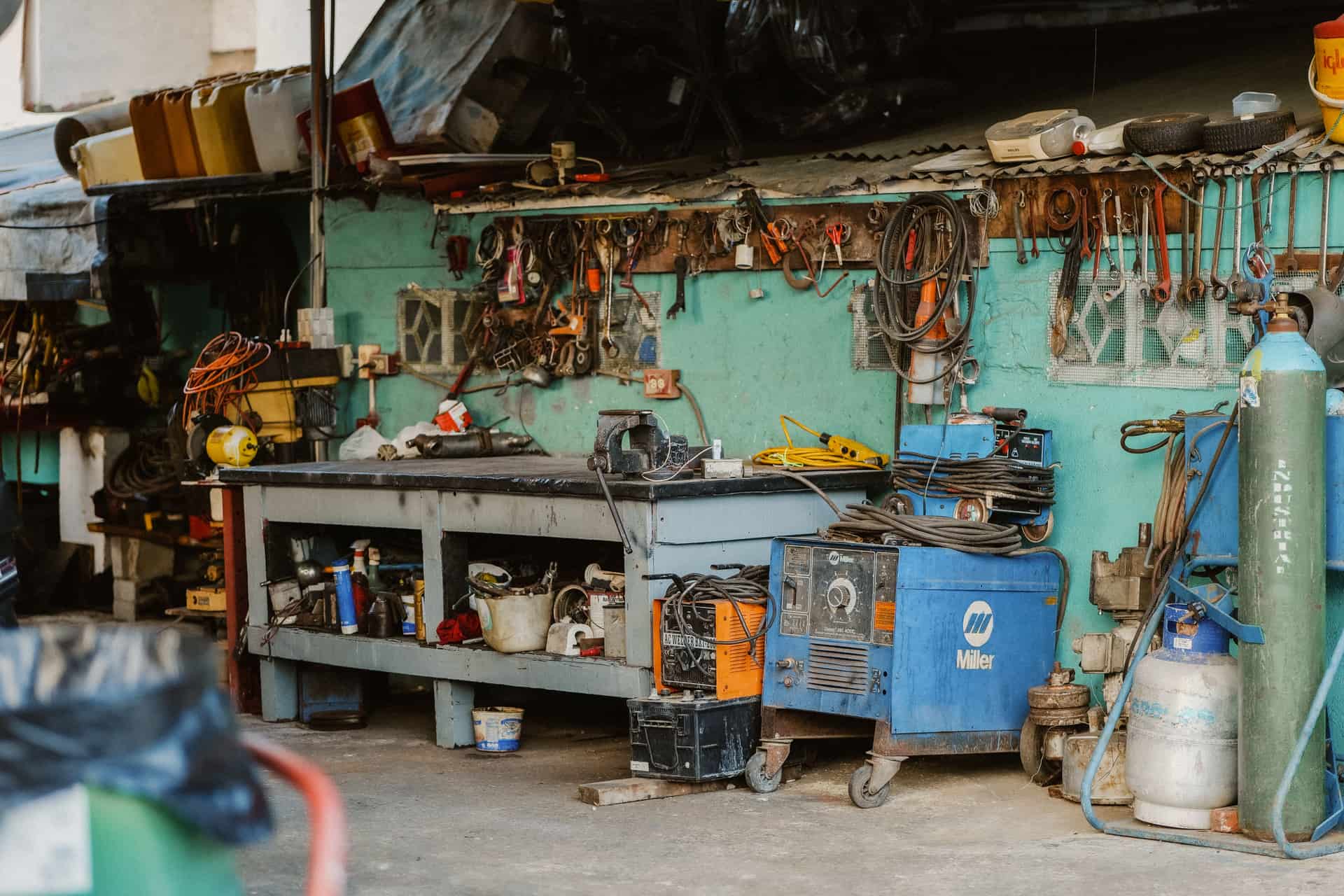
A Class B fire extinguisher is rated for flammable liquids and gases — gasoline, diesel, paint, solvent, oil, propane. The number in front of the B is the approximate square footage of burning liquid surface a non-expert operator should be able to put out, so a 10-B unit is rated for roughly 10 sq ft and a 40-B for roughly 40. Almost every multi-purpose home extinguisher is already an ABC unit carrying a B rating; the real decision is how large that number needs to be. For a garage, a workshop or anywhere fuel is stored, step up from the usual 10-B to a 40-B unit.
Siren & Safe is reader-funded. We earn a commission on some links on this page, at no cost to you. It does not change what we recommend or the order we rank it in. Full disclosure.
What Class B actually covers
Class B is flammable and combustible liquids and gases. Gasoline, diesel, kerosene, paint, paint thinner, lacquer, alcohol, motor oil, grease in its liquid state, propane, butane.
What it does not cover is as important. Cooking oils and fats in a cooking appliance are Class K, not Class B, because they burn hotter and reignite from residual heat in a way a Class B agent does not reliably stop. Combustible metals are Class D. Energized electrical equipment is Class C, which is not a quantity rating at all but a statement that the agent does not conduct electricity. And ordinary combustibles — wood, paper, cloth, most plastics — are Class A.
Almost nothing sold to a household is a Class B only extinguisher. The home market is dominated by multi-purpose ABC dry chemical, which carries an A rating, a B rating and the C classification on one label. So in practice, buying "a Class B extinguisher" means buying an ABC unit and paying attention to the B number.
The A rating on those same units is the one that covers furniture, bedding and stored cardboard, and Class A fire extinguishers sets out what the number in front of the A actually measures.
The full breakdown of every class, including what the letters mean on a label you are holding, is on fire extinguisher classes.
What the number in front of the B measures
This is the part the listings never explain, and it is the only reason the rating is useful.
The B number is an approximate square footage of burning flammable-liquid surface that a non-expert operator should be able to extinguish with that unit. A 10-B extinguisher is rated for roughly 10 sq ft of liquid fire. A 40-B is rated for roughly 40 sq ft.
The rating is deliberately conservative. In the UL fire test the extinguisher has to put out a pan substantially larger than its rated number in the hands of a trained operator — the published number is the derated figure for somebody who has never done this before. That derating is the single most sensible thing about the whole system, and it is why you should take the number at face value rather than assuming you will do better.
There is no number before the C, ever. C is not a quantity. It certifies that the agent is non-conductive, so using the extinguisher on energized equipment will not electrocute the operator. An extinguisher rated 2-A:10-B:C has a quantity rating for A, a quantity rating for B, and a yes-or-no for C.
Class C fire extinguishers works through what that certification actually means, including why water and foam can never carry it.
B ratings, in plain terms
Approximate rated liquid-fire area for each common B rating, with the position in a house where it makes sense.
| Rating | Approximate rated liquid-fire area | Typical unit | Where it belongs |
|---|---|---|---|
| 10-B | About 10 sq ft | 2.5 to 5 lb ABC | Main level, kitchen exit, apartment, upstairs landing |
| 40-B | About 40 sq ft | 10 lb ABC | Garage, workshop, outbuilding, anywhere fuel is stored |
| 60-B and up | About 60 sq ft and above | Commercial dry chemical | Beyond a household requirement — a shop, a plant room, a fleet yard |
| No B rating | Not rated for liquid fires at all | Water or Class A only | Never put water on a liquid fire — it spreads it |
Ratings are produced under UL 711 and printed on each label. Read the label on the specific unit rather than assuming from its weight.
Quick picks
Scored against b rating, run time, controllability, build quality and fits most positions. Tap a row for the full write-up. The price in each buy button is the live Amazon price at the last check, stamped with the date it was taken.
| # | Product | Best for | Score | Price |
|---|---|---|---|---|
| 1 | 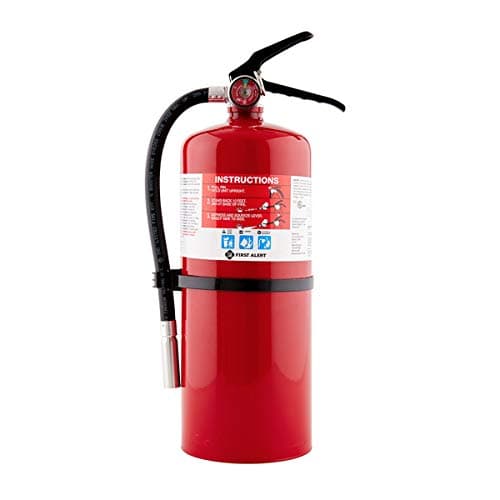 First Alert PRO10 Rechargeable Heavy Duty Extinguisher 40-B is four times the rated liquid-fire capability of the usual home unit. | A garage, workshop or anywhere fuel is stored | 8.0/ 10 | $72.98 · View on Amazon #ad how we are funded · price as of October 20, 2026 |
| 2 | 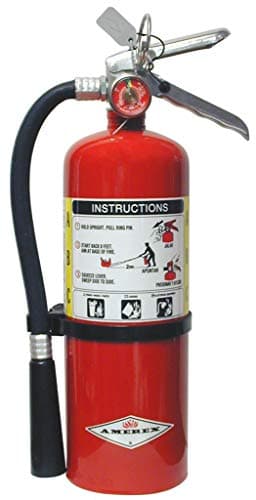 Amerex B500 5 lb ABC Dry Chemical Extinguisher 2-A:10-B:C. The standard home rating, and enough for a domestic liquid fire. | The main level of a house | 7.9/ 10 | $75.01 · View on Amazon #ad how we are funded · price as of October 20, 2026 |
| 3 | 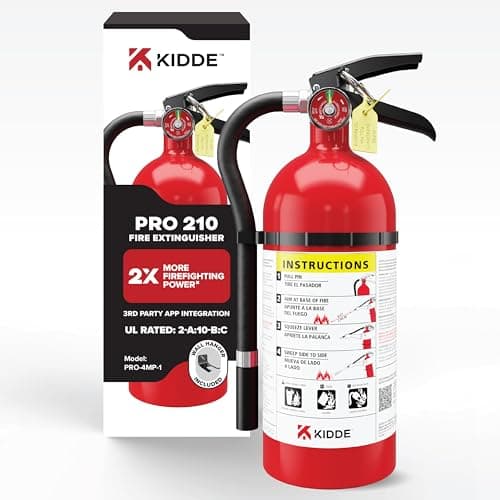 Kidde Pro 210 4 lb Multi-Purpose Extinguisher Same 2-A:10-B:C at a pound less, which is often the better buy. | Keeping the same B rating in a lighter unit | 7.7/ 10 | $54.97 · View on Amazon #ad how we are funded · price as of October 20, 2026 |
1. A garage, workshop or anywhere fuel is stored
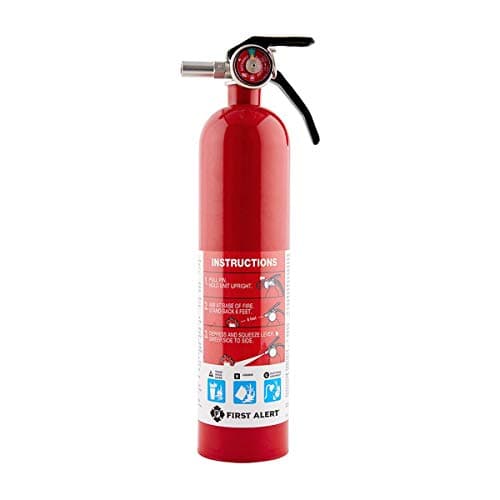
First Alert PRO10 Rechargeable Heavy Duty Extinguisher
40-B is four times the rated liquid-fire capability of the usual home unit.
- Listed to
- UL rated 4-A:60-B:C
- Sensing / agent
- Monoammonium phosphate dry chemical
- Power / service life
- Rechargeable by a certified professional; all-metal construction with a commercial-grade metal valve and head; 12-year limited warranty
If you are on this page because of a garage, this is the unit. The reason to size up in a garage is the B number specifically, not the A number, and the jump from 10-B to 40-B is a jump in tested flammable-liquid capability rather than a marketing tier.
Think about what is actually in a garage: a gas can, a lawnmower with fuel in it, a quart of paint thinner, chain oil, aerosols, a spare propane cylinder. A spill fire from any of those spreads across a floor in seconds, and the rated square footage is the honest measure of whether you can cover it.
A garage is also the room where a fire develops unnoticed, which argues for run time as well as rating. Both point the same way here.
Mount it beside the door you would leave by, at a height you can lift from without stretching — not at the back of the garage behind the car, which is where the fire will be between you and the extinguisher.
What it does well
- 4-A:60-B:C — the highest B rating of anything we recommend for a residential setting
- Four times the rated flammable-liquid area of a standard 10-B home unit
- Rechargeable with a metal valve, so a partial discharge is not a write-off
- Enough run time to sweep properly, which matters more on a liquid fire than on any other class
The downside
- **Heavy and physically large** — genuinely difficult for some people to hold out and steer
- Needs a solid wall fixing rather than a plasterboard anchor
- Overkill in a kitchen, where the realistic fire is cooking oil and a blanket is the better first move
- Dry chemical, so the aftermath is the usual corrosive phosphate dust
Do not buy this if: an apartment, a kitchen or any household where the likely operator cannot handle the weight. A 40-B unit nobody can aim is worth less than a 10-B unit somebody can.
- 4-A:60-B:C is a far larger rating than most home units — six times the flammable-liquid rating of the 10-B:C supermarket unit
- Rechargeable rather than disposable, with an all-metal valve and head
- Suits a garage, workshop or home office where liquids and equipment are the realistic risk
- Mounting bracket and a color-coded corrosion-resistant pressure gauge in the box
- Bigger and heavier, which is a real problem for anyone who cannot handle the weight one-handed
#ad how we are funded · price as of October 20, 2026
2. The main level of a house
Amerex B500 5 lb ABC Dry Chemical Extinguisher
2-A:10-B:C. The standard home rating, and enough for a domestic liquid fire.
- Listed to
- UL rated 2-A:10-B:C
- Sensing / agent
- Monoammonium phosphate dry chemical
- Power / service life
- Rechargeable; all-metal valve and body
For most of a house, 10-B is the right number. The domestic liquid fires that realistically happen are small and contained — a pan of oil, a spilled bottle of spirit, a fondue burner — and 10 sq ft is a generous envelope for those.
What you are buying beyond the rating is build. An all-metal valve is the difference between an extinguisher that can be serviced for twenty years and one that gets thrown away after a single partial discharge.
Position it near the kitchen exit on the main level rather than beside the cooker. You want to be standing between the fire and the door, not reaching across the hob.
What it does well
- 10-B covers roughly 10 sq ft of burning liquid — a pan, a small spill, a fuel container
- All-metal valve and body rather than the plastic valve of the disposable tier
- Rechargeable and widely serviced, so a partial discharge is recoverable
- 2-A also meets the ordinary-combustible minimum that most requirements specify
The downside
- **10-B is modest** if your realistic risk is a workshop floor rather than a kitchen
- 5 lb is a real weight to steer accurately
- Dry chemical aftermath through the whole room
- Needs a proper bracket, which some listings leave out
Do not buy this if: a garage full of fuel and solvent. The A rating is fine there; the B rating is the one that falls short, and that is the whole argument for the 40-B unit above.
- All-metal valve rather than plastic, which is the difference between a serviceable unit and a disposable one
- Rechargeable, so a partial discharge during a small fire does not write off the extinguisher
- 2-A:10-B:C covers ordinary combustibles, flammable liquids and energized electrical equipment
- 5 lb is heavier than the supermarket unit and needs a proper bracket
#ad how we are funded · price as of October 20, 2026
3. Keeping the same B rating in a lighter unit
Kidde Pro 210 4 lb Multi-Purpose Extinguisher
Same 2-A:10-B:C at a pound less, which is often the better buy.
- Listed to
- UL rated 2-A:10-B:C
- Sensing / agent
- Monoammonium phosphate dry chemical
- Power / service life
- Rechargeable; mounting bracket included
This is the unit we would put in most houses where the likely operator is not a large adult. The B rating is identical to the 5 lb unit above — you are trading run time for control, not capability.
That trade is usually right. Operator error is the dominant failure mode in domestic extinguisher use, and on a Class B fire the technique is less forgiving than on a Class A one: aim too high and the discharge pushes burning liquid around instead of smothering it.
Two of these — main level and upstairs — is a better arrangement for many houses than one heavier unit downstairs. What size fire extinguisher do I need works through the sizing in full.
What it does well
- Full 2-A:10-B:C in a 4 lb unit — the rating does not drop with the weight
- Noticeably easier to hold out and sweep, which is what decides whether the agent lands on the base of the fire
- Bracket in the box, rechargeable
- Fits positions a 5 lb cylinder does not: a landing, a utility room, a narrow galley kitchen
The downside
- Less agent, so less margin if the first attempt misses
- **Still only 10-B**, so it does not solve the garage problem either
- Same dry-chemical aftermath
Do not buy this if: a space where run time is what you need. On a liquid fire with any size to it, the extra pound of agent is doing real work.
- 4 lb — the lightest unit that still reaches a 2-A rating, which matters for one-handed use
- Rechargeable, with the bracket in the box
- Same 2-A:10-B:C class coverage as heavier units, with less run time
- Less agent means less margin for error if the first attempt misses
#ad how we are funded · price as of October 20, 2026
Where a house genuinely needs Class B capability
Not everywhere. These are the positions where the B number should drive the purchase rather than ride along with it.
- The garage. Fuel cans, a mower, a generator, a motorcycle, oil, solvent, aerosols, a propane cylinder. This is the Class B room in almost every house
- A workshop or hobby space. Lacquer, thinners, adhesives, degreaser, a parts washer. Small volumes, high flash risk
- Anywhere a generator lives or gets refueled. Hot engine plus gasoline is the classic domestic Class B ignition — and see generator CO safety for the other hazard it brings
- A boat, an RV or a trailer. Fuel, propane and a confined space, with the added problem that the exit may be past the fire. CO detectors for RV and travel covers the related alarm question
- A vehicle. A car fire is a Class B fire with an electrical component. Car fire extinguishers covers mounting and sizing
- A fuel-oil tank or an outbuilding with stored fuel. Rare, serious, and worth a 40-B unit at the door
Using one on a liquid fire
The PASS technique is the same across all classes, but the aiming error that ruins a Class B attempt is specific. This is worth reading before you need it.
Have your back to the exit before you start
Liquid fires move. If it spreads past you while you are working, the decision has already been made for you — and it should be the exit, not the fire.
Aim at the near edge of the pool, not the center
This is the Class B specific error. Firing into the middle of a burning liquid pool drives the liquid outwards and spreads the fire. Start at the near edge and work the agent across the surface.
Sweep across the surface, low and flat
You are laying a blanket of agent over the liquid. A steep downward angle has the same splashing effect as aiming at the center.
Keep going past the point the flames disappear
Liquid fuel reignites from hot surfaces and residual vapor. Use the rest of the agent on the area you just covered rather than stopping the second it looks out.
Do not use water, ever
Water sinks through burning liquid, flashes to steam and throws the fuel into the air. It is the single worst thing you can do to a Class B fire, and it is the instinct most people have.
Leave if it is bigger than the rating
A 10-B unit on a 30 sq ft spill fire is not a close call. Get out, close the door, call 911 from outside.
Common mistakes with the B rating
Buying by weight instead of by label. Two 5 lb extinguishers can carry different ratings depending on the agent and the valve. The label is the specification; the weight is a proxy that is right most of the time and wrong often enough to matter.
Assuming the kitchen unit covers the garage. A 10-B unit on the main level is correct for the main level and underpowered for a fuel store 30 ft away. Buy for the room.
Treating a Class B rating as cover for a cooking-oil fire. It is not. A pan of oil is Class K territory, it reignites from residual heat, and the right domestic answer is a lid or a blanket. Kitchen Class K vs ABC explains why the distinction exists.
Leaving the B number out of the decision entirely and buying whichever red cylinder was on the shelf. That is how a garage ends up protected by a unit rated for a tenth of its realistic hazard.
Questions people actually ask
What is a Class B fire extinguisher used for?
What does the number before the B mean?
Is an ABC extinguisher also a Class B extinguisher?
What B rating do I need for a garage?
Why is there no number before the C?
Can I use water on a Class B fire?
Does a Class B extinguisher work on a propane fire?
How these picks were chosen. On published specifications, safety listings and manufacturer documentation — plus the findings of organizations that do run tests. We have no laboratory and we do not burn anything. Read the full methodology.
Sources
- NFPA — NFPA 10, Standard for Portable Fire Extinguishers
- UL Solutions — Fire extinguisher testing and certification (UL 711)
- US Fire Administration — Home fire prevention
- CPSC — Recalls and product safety news
Read next
Fire Extinguishers
The full class chart, what the numbers measure, and which agent suits which fire.
Fire Extinguishers
What Size Fire Extinguisher Do I Need?
Weight against rating and run time, and why the likely operator decides it.
Fire Extinguishers
The Best Fire Extinguishers for a Home
Four rated units, what the numbers mean, and why the valve material matters.
Fire Extinguishers
The Best Fire Extinguishers for a Car
Size, rating and the mount — plus why you should not open a smoking hood.
Fire Extinguishers
How to Use a Fire Extinguisher
PASS, the two decisions that come first, and why aiming at the flames wastes the charge.
Fire Extinguishers
Why Class K exists, what saponification does, and what a home kitchen should keep instead.
Fire Extinguishers
The A rating is the decision. What each letter is tested on, and the three places a BC unit beats an ABC one.