Fire Extinguishers
Class A Fire Extinguishers
Class A covers the fuel a house is actually made of. The letter tells you what it fights; the number in front of it is the only part that tells you how much.
By Ryder M.Last reviewed

A Class A fire extinguisher is rated for ordinary combustibles — wood, paper, fabric, trash, rubber and most plastics — and in a US home that almost always means a multi-purpose ABC dry-chemical unit rather than a dedicated Class A one. The number matters more than the letter: a **2-A** unit extinguished roughly twice the test fire of a **1-A** unit, and 2-A is the minimum many code requirements and inspections specify. Buy 2-A or better for a house, and treat the 1-A units as supplementary.
Siren & Safe is reader-funded. We earn a commission on some links on this page, at no cost to you. It does not change what we recommend or the order we rank it in. Full disclosure.
What counts as a Class A fire
Class A is the ordinary-combustible class: wood, paper, cloth, trash, rubber and most plastics. It is the default fuel of a domestic fire and the class that describes almost everything in a living room.
The defining physical characteristic is that Class A materials burn with glowing embers as well as flame, and that is what makes them different to fight. A flame can be knocked down in a second; an ember bed underneath it will re-ignite the moment the agent clears unless the fuel has been cooled or thoroughly coated.
That is why water and water-based agents are so effective on Class A and so dangerous on Class B and Class C — water cools, and cooling is exactly what an ember bed needs. It is also why dry chemical, which interrupts the chemical chain reaction rather than cooling, needs enough agent to coat the fuel rather than just sweep the flame off the top.
A short list of what is not Class A is just as useful: cooking oil is Class K, gasoline and solvent are Class B, energized electrical equipment is Class C, and burning metals are Class D. The full classes reference sets out all five.
What the number in front of the A means
The A number is produced under UL 711 test conditions against a standardized wood crib and panel fire. It is a relative scale, not a measurement of square feet.
| Rating | Relative Class A capability | Typical unit | Where it fits |
|---|---|---|---|
| 1-A | Baseline | 2.5 lb home extinguisher | Supplementary: a landing, a boat, a vehicle, a second unit |
| 2-A | Roughly twice 1-A | 4 to 5 lb unit | A house's primary extinguisher; the common code minimum |
| 3-A | Roughly three times 1-A | Larger rechargeable unit | Garage, workshop, basement store, high fire load |
| 4-A and above | Commercial scale | Industrial units | Not a residential purchase |
| No A rating | None | CO2 and clean-agent units, aerosol sprays | Electrical and liquid only — not for ember-forming fuels |
Ratings as published by each manufacturer. A unit with no A rating is not a Class A extinguisher regardless of how it performs on other classes.
Quick picks
Scored against class a rating, run time, build and serviceability, meets a 2-a minimum and one-handed control. Tap a row for the full write-up. The price in each buy button is the live Amazon price at the last check, stamped with the date it was taken.
| # | Product | Best for | Score | Price |
|---|---|---|---|---|
| 1 | 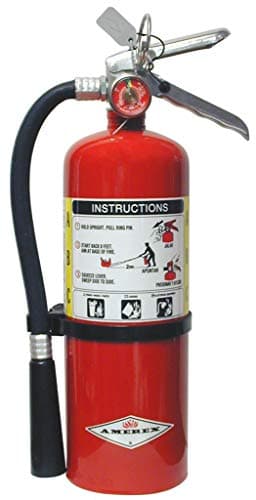 Amerex B500 5 lb ABC Dry Chemical Extinguisher 2-A:10-B:C, 5 lb, all-metal. Double the A rating of the small home units. | The standard 2-A answer for a house | 8.1/ 10 | $75.01 · View on Amazon #ad how we are funded · price as of October 20, 2026 |
| 2 | 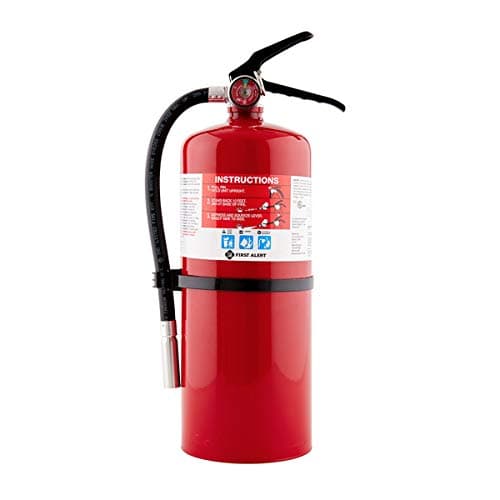 First Alert PRO10 Rechargeable Heavy Duty Extinguisher 4-A:60-B:C. The highest A rating in the consumer channel. | A high Class A fire load | 8.2/ 10 | $72.98 · View on Amazon #ad how we are funded · price as of October 20, 2026 |
| 3 | 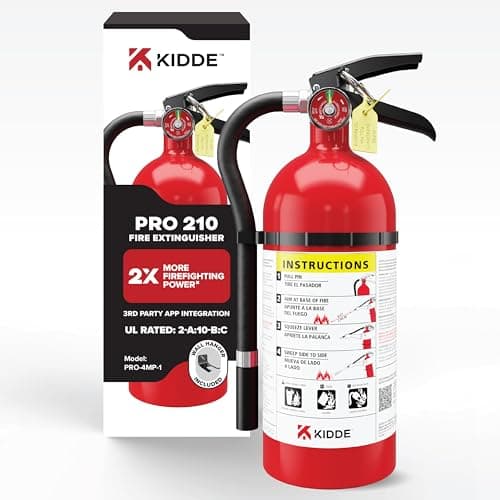 Kidde Pro 210 4 lb Multi-Purpose Extinguisher 4 lb and still 2-A:10-B:C, bracket in the box. | 2-A in the lightest body available | 7.6/ 10 | $54.97 · View on Amazon #ad how we are funded · price as of October 20, 2026 |
Units with a useful Class A rating
1. The standard 2-A answer for a house
Amerex B500 5 lb ABC Dry Chemical Extinguisher
2-A:10-B:C, 5 lb, all-metal. Double the A rating of the small home units.
- Listed to
- UL rated 2-A:10-B:C
- Sensing / agent
- Monoammonium phosphate dry chemical
- Power / service life
- Rechargeable; all-metal valve and body
If a page about Class A extinguishers has one practical recommendation, it is this unit, and the reason is the number rather than the brand. 2-A is the threshold that separates a unit sized for a house from a unit sized for a wastebasket.
Class A fires are the ones a home produces: a sofa, bedding, curtains, a pile of recycling, a stack of firewood by the hearth, a child's plastic toy box. They are also the fires that grow by spreading across a surface rather than pooling, which means the fight takes several seconds of continuous discharge rather than one burst.
The run time is why agent quantity belongs in a conversation about A ratings at all. The rating tells you what the unit achieved in test; the 5 lb of agent tells you whether you get a second attempt.
The all-metal construction is a durability argument rather than a performance one, and it is the reason this unit recurs across this site. The home roundup makes the full case.
What it does well
- 2-A, which is roughly twice the ordinary-combustible capability of a 1-A unit
- Satisfies code requirements and inspections that specify a 2-A minimum
- All-metal valve and body, built to be recharged rather than discarded
- Also 10-B:C, so one unit covers all three household classes
The downside
- 5 lb is a real weight to hold out and sweep accurately
- Dry chemical leaves a mildly corrosive residue over the room
- Larger than many people expect from the photographs
Do not buy this if: the likely user cannot control 5 lb at arm's length. A 2-A rating that gets waved at the flame tips is worth less than a 1-A rating aimed at the base.
- All-metal valve rather than plastic, which is the difference between a serviceable unit and a disposable one
- Rechargeable, so a partial discharge during a small fire does not write off the extinguisher
- 2-A:10-B:C covers ordinary combustibles, flammable liquids and energized electrical equipment
- 5 lb is heavier than the supermarket unit and needs a proper bracket
#ad how we are funded · price as of October 20, 2026
2. A high Class A fire load
First Alert PRO10 Rechargeable Heavy Duty Extinguisher
4-A:60-B:C. The highest A rating in the consumer channel.
- Listed to
- UL rated 4-A:60-B:C
- Sensing / agent
- Monoammonium phosphate dry chemical
- Power / service life
- Rechargeable by a certified professional; all-metal construction with a commercial-grade metal valve and head; 12-year limited warranty
The A rating scales with the material a room holds, and the rooms that hold the most ordinary combustible material in a typical house are not the ones people furnish — they are the ones they store things in.
A garage, a basement, a loft conversion used for storage, a workshop with timber offcuts: those are 3-A rooms, and the extra rating is buying you the ability to keep fighting after the fire has reached a second item.
The trade is weight, and it is not a trivial one. The garage roundup makes the case for putting this unit specifically where the fuel is rather than treating it as a general upgrade.
What it does well
- 3-A — half again the ordinary-combustible rating of a 2-A unit
- The right choice where the room stores a lot of A-class material: a garage, a workshop, a basement store
- Rechargeable with a metal valve
- 40-B as well, which is the other reason it suits a garage
The downside
- Heavy enough to be a genuine control problem for some users
- Needs real wall space
- Overkill in a hallway or a one-bedroom apartment
Do not buy this if: it is the only extinguisher in a small home. Mount capability where the fuel is, and keep something lighter where the people are.
- 4-A:60-B:C is a far larger rating than most home units — six times the flammable-liquid rating of the 10-B:C supermarket unit
- Rechargeable rather than disposable, with an all-metal valve and head
- Suits a garage, workshop or home office where liquids and equipment are the realistic risk
- Mounting bracket and a color-coded corrosion-resistant pressure gauge in the box
- Bigger and heavier, which is a real problem for anyone who cannot handle the weight one-handed
#ad how we are funded · price as of October 20, 2026
3. 2-A in the lightest body available
Kidde Pro 210 4 lb Multi-Purpose Extinguisher
4 lb and still 2-A:10-B:C, bracket in the box.
- Listed to
- UL rated 2-A:10-B:C
- Sensing / agent
- Monoammonium phosphate dry chemical
- Power / service life
- Rechargeable; mounting bracket included
This is the useful middle of the Class A question: the rating threshold most requirements care about, in a body that an average adult can hold out at arm's length and steer.
Two units at the same A rating are not equivalent in use. The rating is what the unit achieved; the agent quantity is how long you have to achieve it. A 4 lb 2-A unit and a 5 lb 2-A unit fight the same size of test fire, and the heavier one gives you more seconds to do it in.
For a hallway, a landing, an apartment or a second unit upstairs, that trade is the right way round. What size do I need works through the thresholds room by room.
What it does well
- Reaches 2-A at 4 lb, which is the lightest body that does
- Mounting bracket included
- Satisfies requirements that specify a 2-A minimum
- Easier to aim accurately than the heavier units, which is where domestic use fails
The downside
- Less agent and therefore less run time than a 5 lb unit at the same rating
- Little margin if the first attempt misses the base of the fire
- Same dry-chemical aftermath
Do not buy this if: the room holds a large Class A fire load. Same rating, less agent, means the same capability with fewer chances to apply it.
- 4 lb — the lightest unit that still reaches a 2-A rating, which matters for one-handed use
- Rechargeable, with the bracket in the box
- Same 2-A:10-B:C class coverage as heavier units, with less run time
- Less agent means less margin for error if the first attempt misses
#ad how we are funded · price as of October 20, 2026
Why there are almost no dedicated Class A extinguishers at home
Pure Class A extinguishers exist. They are water, water-mist or foam units, and they are the standard choice in a school corridor, an office or a hotel landing — somewhere the fire load is paper and furniture, and the room has no fuel store and no exposed electrics to worry about.
They are rare in houses for three reasons. A water unit is heavy for the capability you get, it will freeze in an unheated garage or outbuilding, and it must never be discharged at energized electrical equipment or at a pan of oil — two of the three fires a home is most likely to produce.
The multi-purpose ABC dry-chemical extinguisher exists precisely to collapse that problem. One unit, one position on the wall, one set of instructions, and it is rated for ordinary combustibles, flammable liquids and live electrical equipment at once.
The cost of that convenience is the aftermath: monoammonium phosphate is mildly acidic, hygroscopic and unpleasant to clean up. That is a real cost and it is worth knowing before you discharge one indoors — the clean-up guide sets out what the residue is and how to handle it.
Using a Class A rated unit on an ember-forming fire
The technique for Class A differs from Class B in one important way: you are not just removing a flame, you are stopping an ember bed from restarting it.
Call 911 first, or have someone else do it
Before you pick anything up. A Class A fire in furniture or bedding can double in a very short time, and the call costs you nothing if the extinguisher works.
Stand back, with the exit behind you
Far enough that you can see the whole fire and retreat without turning around. A dry-chemical unit has useful reach; you do not need to be close.
Aim at the base of the fire, not the flames
The flame is the product; the burning material is the fire. Aiming high empties the extinguisher into the air, which is the single most common domestic failure.
Sweep side to side, and keep going after the flame drops
This is the Class A specific instruction. The flame goes out before the embers do, and stopping at the moment it looks extinguished is what allows a re-ignition thirty seconds later.
Break up and wet down the fuel afterwards, if it is safe
A soaked sofa cushion does not restart. A dry one with a hot core does. Where water is safe to use — no live electrics, no oil — use it after the extinguisher has done its work.
Leave if it is not out in the first few seconds
A household extinguisher gives you one short attempt. If the fire is not visibly going out, put it down, get out, close the door, and stay out.
Does a Class A rating satisfy a code requirement?
Sometimes, and the threshold is usually the number rather than the letter. Where a residential requirement, a rental license condition or a landlord obligation specifies a minimum portable extinguisher rating, 2-A:10-B:C is the figure that recurs, and a 1-A unit does not meet it.
NFPA 10 is the standard that governs selection, placement, inspection and maintenance of portable fire extinguishers, and it is the document your local requirement is most likely to reference. What it requires of you in a single-family home is minimal; what it requires in a rental, a multi-family building or a short-let is not.
Two practical consequences. First, if you are buying to satisfy a requirement rather than a preference, read the requirement and buy the rating it names — not the unit a retailer calls a home extinguisher. Second, keep the receipt and the inspection tag, because what gets checked at an inspection is the label and the gauge, not your intentions.
Requirements vary by state and municipality, and the rental and landlord page covers the alarm side of the same question.
The honest hierarchy for a house
A 2-A:10-B:C unit on the main level is the single most useful fire purchase in a house, because Class A is the fire a house most often produces and 2-A is the rating that covers it.
A larger 4-A:60-B:C unit in the garage or workshop, where both the ordinary combustible load and the liquid load are highest.
A fire blanket within one step of the cooker, because the kitchen's likely fire is oil, and that is Class K rather than Class A. An ABC extinguisher aimed at a pan of burning oil can splash the fuel.
Working smoke alarms before any of it. A Class A fire begins with smoke, often for a long time, and the device that reacts to that is a photoelectric alarm rather than anything with a rating on it. Placement first, hardware second.
Questions people actually ask
What is a Class A fire extinguisher used for?
What type of fire extinguisher is a Class A extinguisher?
What does the number before the A mean?
Is 1-A big enough for a house?
Can a Class A extinguisher be used on an electrical fire?
Why do Class A fires re-ignite after the flame goes out?
How these picks were chosen. On published specifications, safety listings and manufacturer documentation — plus the findings of organizations that do run tests. We have no laboratory and we do not burn anything. Read the full methodology.
Sources
- UL Solutions — Fire extinguisher testing and certification (UL 711)
- NFPA — NFPA 10, Standard for Portable Fire Extinguishers
- Amerex — What is a Class K fire?
- US Fire Administration — Home fire prevention
Read next
Fire Extinguishers
The full class chart, what the numbers measure, and which agent suits which fire.
Fire Extinguishers
What Class B covers, what the number measures, and the rating a garage actually needs.
Fire Extinguishers
What Size Fire Extinguisher Do I Need?
Weight against rating and run time, and why the likely operator decides it.
Fire Extinguishers
How to Use a Fire Extinguisher
PASS, the two decisions that come first, and why aiming at the flames wastes the charge.
Fire Extinguishers
The Best Fire Extinguishers for a Home
Four rated units, what the numbers mean, and why the valve material matters.