Fire Extinguishers
Fire Extinguisher Powder: Safe Handling and Cleanup
The fire is out and the room is coated. What the powder is, why time matters, and the sequence that gets it out without grinding it into everything.
By Ryder M.Last reviewed

Dry chemical fire extinguisher powder is not acutely poisonous, but it is a fine respiratory irritant that is mildly acidic and hygroscopic — it pulls moisture from the air and becomes corrosive to metal and electronics within hours. Handle it with ventilation, an N95 or better respirator, gloves and eye protection; collect the bulk dry with a shop vacuum rather than a household one; then neutralize and wash hard surfaces. Do it the same day. The damage that follows an extinguisher discharge is mostly caused by leaving the residue in place, not by the fire.
Siren & Safe is reader-funded. We earn a commission on some links on this page, at no cost to you. It does not change what we recommend or the order we rank it in. Full disclosure.
What the powder actually is
The agent in a standard ABC household extinguisher is monoammonium phosphate, a fine pale-yellow powder. BC-rated units and most aerosol sprays use sodium bicarbonate or potassium bicarbonate instead, and the two behave differently once they land.
Monoammonium phosphate is mildly acidic. It is also hygroscopic: it absorbs moisture out of the air, and once damp it is both mildly corrosive to bare metal and conductive on a circuit board. That is the mechanism behind the single most common complaint after a discharge — appliances and electronics that survived the fire failing days or weeks later.
Bicarbonate residue is close to neutral, much less hygroscopic, and comes off surfaces with far less effort. If you discharged an aerosol spray or a kitchen BC unit rather than an ABC extinguisher, the job ahead of you is considerably smaller.
Neither agent is acutely poisonous in the way the word toxic suggests, and that question is covered in detail on is fire extinguisher powder toxic. The hazard that matters during clean-up is mechanical and respiratory: a very fine dust that irritates eyes, airways and skin, in a quantity that fills a room.
What to put on before you start
The point of the protective equipment is the airborne dust during collection, which is far worse than the settled layer you are looking at.
- An N95 or better respirator. A surgical mask does not filter a fine mineral dust. This is the item worth having and the one most people skip.
- Eye protection that seals, rather than reading glasses. The dust is fine enough to find its way around an open frame, and it is an irritant.
- Nitrile or rubber gloves. Prolonged skin contact with a mildly acidic dust causes dryness and irritation, and you will be handling cloths and water.
- Long sleeves and clothes you will wash separately. The powder travels and it does not brush out cleanly.
- Ventilation first. Open windows and doors on opposite sides of the room if you can, and run an extract fan outward. Do not run the central HVAC system — it will distribute the dust through the whole house.
The clean-up sequence
Order matters. Almost all avoidable damage comes from wetting the powder before the bulk of it has been collected dry.
Ventilate, and shut the HVAC off at the thermostat
Cross-ventilate the room and switch the heating or air conditioning off so the system does not pull the dust into ducts and spread it. Close internal doors to rooms that are clean.
Collect the bulk dry, with a shop vacuum
A HEPA-filtered shop vacuum, used gently and without disturbing the layer more than necessary. Do not use a household vacuum: the dust is fine enough to pass a domestic filter and come straight out of the exhaust, and it will ruin the motor.
Sweep what the vacuum cannot reach, slowly
A soft brush and a dustpan for corners, with no sudden movements. Every sweep that lifts dust into the air is dust you breathe and dust that settles again somewhere you have already cleaned.
Neutralize the acidity on hard surfaces
For monoammonium phosphate, a solution of hot water with a small amount of baking soda is the usual domestic approach for neutralizing the residual acidity on metal and painted surfaces; a 50/50 solution of isopropyl alcohol and warm water is the common alternative where water alone would be a problem. Work in small sections and change the water often — a dirty bucket just moves powder around.
Wash down, then rinse and dry
Warm water and dish soap on hard surfaces, rinsed and dried properly. Dried residue in a seam or a screw head is where corrosion starts, so dry rather than leaving surfaces to air.
Treat soft furnishings and clothing separately
Vacuum upholstery and carpet thoroughly, then consider steam or professional cleaning — the powder works its way deep into a pile and re-emerges for months. Wash affected clothing on its own, twice, and run the machine empty afterwards.
Deal with food and open packaging by throwing it away
Anything unpackaged, anything in a container that was open, and anything in a cupboard that got coated. This is not a judgment about toxicity; it is that a fine mineral dust in food is not worth the argument.
Replace the extinguisher before you forget
A discharged unit is not a spare. Recharge it professionally or replace it the same week, and write the date somewhere you will see it.
Quick picks
Scored against residue left behind, usable untrained, rated capability, range and suits a kitchen. Tap a row for the full write-up. The price in each buy button is the live Amazon price at the last check, stamped with the date it was taken.
| # | Product | Best for | Score | Price |
|---|---|---|---|---|
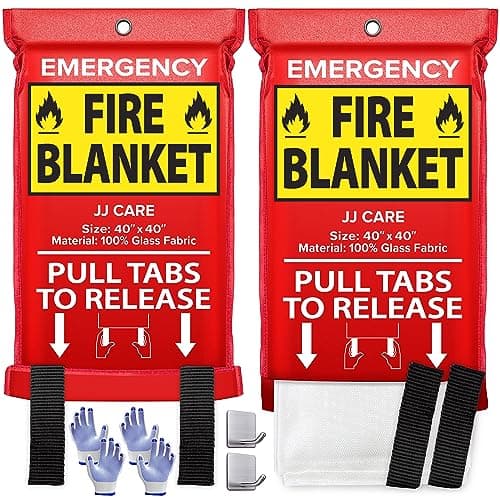
| 1 | 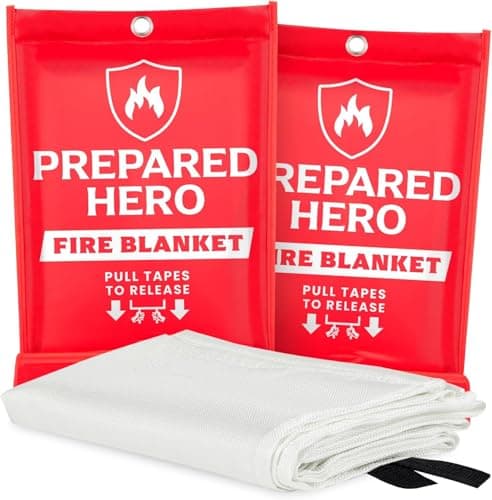 Prepared Hero Emergency Fire Blanket A smothered pan fire has no residue. The only true zero-cleanup option. | Leaving nothing to clean up at all | 7.4/ 10 | $39.98 · View on Amazon #ad how we are funded · price as of October 19, 2026 |
| 2 | 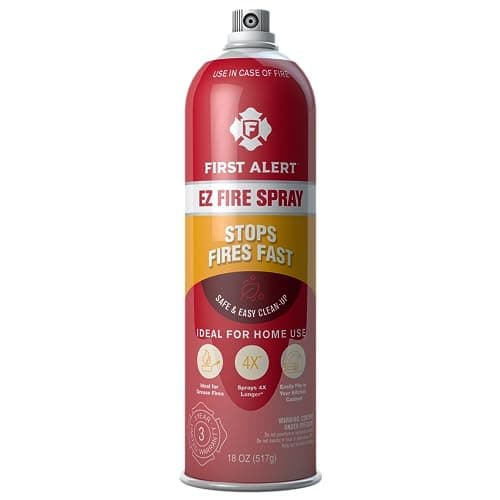 First Alert EZ Fire Spray AF400 Bicarbonate aerosol. Wipes up with a cloth, and it is not a rated extinguisher. | A small fire you do not want to coat the room for | 6.8/ 10 | $11.98 · View on Amazon #ad how we are funded · price as of October 19, 2026 |
| 3 | 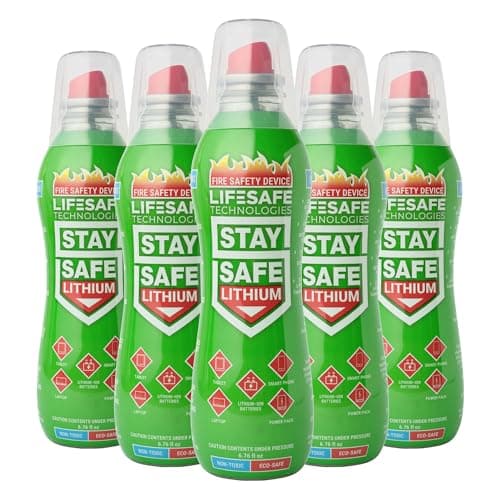 StaySafe Lithium Fire Extinguishing Spray A sprayed fluid rather than a powder. Lithium-ion only, and single use. | A low-residue agent, for one specific hazard | 5.6/ 10 | $99.95 · View on Amazon #ad how we are funded · price as of October 19, 2026 |
Tools that leave less behind, or nothing
1. Leaving nothing to clean up at all
Prepared Hero Emergency Fire Blanket
A smothered pan fire has no residue. The only true zero-cleanup option.
- Listed to
- Prepared Hero states conformity to CE safety standards, naming EN 1896:1997
- Sensing / agent
- Two layers of woven fiberglass around an inner fire-retardant layer
- Power / service life
- Single use on a real fire; inspect and replace after any deployment
The best way to deal with dry chemical residue is not to create any, and for the fire a kitchen is most likely to produce — a pan of oil — a blanket genuinely outperforms an extinguisher rather than merely being tidier.
It is also the one option on this page with no clean-up argument against it. You smother the pan, leave it covered until it is cold, and dispose of the blanket.
What it will not do is reach. If the fire has left the pan and reached a cabinet, you are past a blanket and into extinguisher territory, residue and all.
Keep it within one step of the cooker and never above it — where to mount a fire blanket covers the position, which people get wrong more often than the product choice.
What it does well
- No powder, no agent, no residue — the clean-up is throwing the blanket away
- Nothing to aim and no sequence to remember under stress
- 39 x 39 in, sold in multi-packs so a kitchen and a garage can both be covered
- Pull-tab pouch, which is the mechanism that matters when you are reaching without looking
The downside
- Contact range only — you have to get to the fire and cover it
- No published independent listing number for this product
- Single use on a real fire, and woven fiberglass construction
Do not buy this if: the fire is already bigger than the blanket, or it is inside an appliance housing or a wall. A blanket smothers what it can cover and nothing else.
- 39 x 39 in, sold as a two-pack so a kitchen and a garage can both be covered
- Pull-down tabs deploy it, which is the only mechanism that matters when you are reaching blind
- No powder, no residue, no clean-up beyond throwing the blanket away
- Woven fiberglass construction, so the fiber question below applies to it
- A hanging slot in the sleeve, so it can live on the wall rather than in a drawer
Prepared Hero product documentation
#ad how we are funded · price as of October 19, 2026
2. A small fire you do not want to coat the room for
First Alert EZ Fire Spray AF400
Bicarbonate aerosol. Wipes up with a cloth, and it is not a rated extinguisher.
- Listed to
- Aerosol extinguishing spray — not a UL-rated A:B:C portable extinguisher
- Sensing / agent
- Sodium-bicarbonate-based extinguishing aerosol
- Power / service life
- Single use; check the stamped expiry
Bicarbonate residue behaves differently to monoammonium phosphate, and that is the whole reason it is on a clean-up page. It is not acidic, it is far less hygroscopic, and it comes off a worktop with a damp cloth instead of a neutralizing wash.
In a kitchen that difference is substantial. Dry chemical over a hob, open food, a toaster and a row of sockets is frequently a worse outcome than the fire was — people replace appliances they could have kept.
What it is not is rated. There is no UL 711 A:B:C figure, so it cannot be the answer to a requirement, and the agent quantity is small enough that it addresses a fire in its first seconds and nothing beyond that. The full comparison is the honest version of both sides.
What it does well
- Sodium-bicarbonate-based agent wipes off rather than needing neutralizing and washing
- No pin, no gauge, no technique — point and press
- Small enough for a kitchen drawer or a car door pocket
- Far kinder to appliances and electronics than monoammonium phosphate
The downside
- **Not a UL-rated A:B:C portable extinguisher** and satisfies no code requirement
- Very little agent — an incipient-fire product only
- Single use with a stamped expiry almost nobody checks
Do not buy this if: it is your only fire tool, or you need a rated unit for a landlord, an inspection or a code minimum. Buying this instead of a rated extinguisher is the way to get this wrong.
- Aerosol can format — no pin, no pressure gauge, aim and spray
- Wipes up with a cloth instead of the corrosive mess dry chemical leaves
- Genuinely easier for someone who will never practice with a real extinguisher
- It is not a rated extinguisher and does not satisfy a code requirement for one
#ad how we are funded · price as of October 19, 2026
3. A low-residue agent, for one specific hazard
StaySafe Lithium Fire Extinguishing Spray
A sprayed fluid rather than a powder. Lithium-ion only, and single use.
- Listed to
- Not a UL-rated A:B:C portable extinguisher. LifeSafe states the product is tested and approved with recognized standards bodies and third-party test facilities, without naming a rating
- Sensing / agent
- Patented non-toxic extinguishing fluid, sprayed from a hand-held canister
- Power / service life
- Single use — discharge the unit fully and replace it
This is here as the honest answer to the question people actually ask after their first discharge: is there an extinguisher that does not do this to a room?
There is, and the rated ones are largely not sold to households. Encapsulator agents and clean agents exist precisely because dry chemical is destructive, and the rated versions live in the professional channel where the equipment being protected is worth more than the agent. What retail offers is unrated single-use canisters like this one.
For a domestic reader the useful conclusion is not to buy this. It is to understand that the residue is the price of a cheap, reliable, universally-rated agent, and to position a blanket and an aerosol so the rated extinguisher is the third thing you reach for rather than the first.
What it does well
- A sprayed fluid rather than a dry powder, so there is no hygroscopic dust to neutralize
- LifeSafe states the fluid is non-toxic and leaves no residue to clean up
- No pin and no gauge: remove the cap, point and spray
- Formulated for lithium-ion battery fires specifically, which almost nothing else at retail is
The downside
- **Not a rated extinguisher**, and single use, so it answers no requirement and replaces nothing
- A fluid on electrics only within the voltage and distance LifeSafe publishes, which is a limit to read before you need it
- It will not stop a large pack already in full thermal runaway, and nothing sold to consumers will
Do not buy this if: you want a general-purpose house extinguisher. This is a single-use canister bought for a specific lithium hazard, and most homes should not be shopping in this part of the market at all.
- Formulated specifically for fires started by lithium-ion batteries in phones, laptops, power banks and other electronics
- LifeSafe states it is safe on electrical fires up to 1000V from a stated minimum distance
- No pin and no gauge: remove the cap, point and spray until the canister is empty
- Non-toxic with no residue to clean up, which is the practical difference from dry chemical indoors
- It will not stop a large pack already in full thermal runaway, and nothing sold to consumers will
#ad how we are funded · price as of October 19, 2026
What not to do
Each of these makes the outcome measurably worse, and all of them are common.
- Do not use a household vacuum cleaner. The dust passes a domestic filter, exits through the exhaust as an aerosol, and destroys the motor bearings. A shop vacuum with a HEPA filter, or nothing.
- Do not wet it before you have collected the bulk. Damp monoammonium phosphate becomes a paste that bonds to surfaces and is far harder to remove than the dry powder was.
- Do not use a leaf blower or compressed air indoors. It converts a settled layer into an inhalable cloud and distributes it through the whole building.
- Do not run the HVAC system. Ducted distribution turns a one-room clean-up into a whole-house one.
- Do not power up a coated appliance to see if it still works. Hygroscopic residue on a board is conductive. Have it cleaned or write it off, but do not energize it.
- Do not leave it until the weekend. The corrosion clock starts as soon as the powder absorbs moisture from the air, and bare metal, wiring terminals and circuit boards are what pay for the delay.
Which rooms justify calling someone
A single small discharge in a kitchen is a domestic job. A full 5 lb unit emptied in a living room is a judgment call, and there are three cases where it is worth paying somebody.
Where the discharge was substantial and the room is carpeted and furnished. Powder in a pile and in upholstery keeps resurfacing, and a restoration contractor has extraction equipment that a rental machine does not match.
Where electronics or an electrical panel were coated. Boards need cleaning rather than wiping, and a coated consumer unit is an electrician's job rather than a cloth's.
Where anyone in the household has asthma or a respiratory condition. The airborne phase of the clean-up is the hazardous part, and it is not worth doing yourself to save a call.
In all three cases, document it with photographs before you touch anything. Residue damage from a discharge is often an insurance matter, and the photographs taken before the clean-up are the ones that count.
The conclusion most households should draw
Not that dry chemical extinguishers are a bad buy — they are the cheapest reliable way to own A, B and C capability in one unit, and they belong in every house.
The conclusion is about order of reach. The kitchen's first tool should be a blanket, the drawer's second tool can be a bicarbonate aerosol, and the rated ABC extinguisher by the exit is the third — the one for the fire that has outgrown both.
A household arranged that way discharges a dry-chemical unit only when it genuinely needed to, which is the only version of this clean-up nobody regrets.
And read the five-minute technique guide once. Aiming at the base rather than the flames is what empties less of the unit into the air, and less agent in the air is less powder on the room.
Questions people actually ask
Is it safe to clean up fire extinguisher powder yourself?
Can I vacuum up fire extinguisher powder?
How do you neutralize fire extinguisher powder?
Is fire extinguisher powder corrosive?
Do I have to throw food away after a fire extinguisher discharge?
How long do I have before the powder causes damage?
How these picks were chosen. On published specifications, safety listings and manufacturer documentation — plus the findings of organizations that do run tests. We have no laboratory and we do not burn anything. Read the full methodology.
Sources
- CDC / NIOSH — Occupational exposure guidance and chemical databases
- NFPA — NFPA 10, Standard for Portable Fire Extinguishers
- CPSC — Recalls and product safety news
- US Fire Administration — Home fire prevention
Read next
Fire Extinguishers
Is Fire Extinguisher Powder Toxic?
What ABC powder actually is, and what it does to lungs, electronics and pets.
Fire Extinguishers
What each extinguishing agent leaves behind, and the least harmful option that still works.
Fire Extinguishers
Aerosol Spray vs Traditional Extinguishers
Rated capability against something an untrained person will actually use.
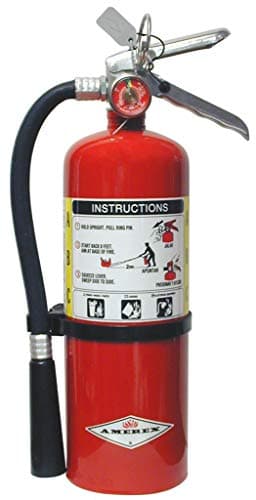
Fire Extinguishers
How to Use a Fire Extinguisher
PASS, the two decisions that come first, and why aiming at the flames wastes the charge.
Fire Blankets
Fire Blanket vs Fire Extinguisher
Contact range versus projected agent — and the fires where each one is the wrong choice.