Smoke Detectors
First Alert SC5 Review
The alarm Google points Nest Protect owners at. Judged as a purchase rather than as a replacement, it is a good alarm with an unusual power design and one piece of missing paperwork.
By Ryder M.Last reviewed

The First Alert SC5 is worth buying if you specifically want a smart combination alarm that drops onto an existing Nest Protect bracket and talks to a phone. It is a photoelectric smoke chamber plus an electrochemical carbon monoxide cell, 85 dB at 10 feet, voice alerts that name the threat and the room, wireless interconnect, and a ten-year limited warranty — all genuinely useful. Two things keep it from being an unqualified recommendation: it runs on six replaceable CR123A lithium cells rather than a sealed ten-year battery, and First Alert's own specification table names only UL 217 10th edition, with no UL 2034 number printed for the CO half. At premium money, both deserve to be on the table before you buy.
Siren & Safe is reader-funded. We earn a commission on some links on this page, at no cost to you. It does not change what we recommend or the order we rank it in. Full disclosure.
How we judged it
This is a specification and documentation review, not a burn test. We do not set fires, and we do not quote numbers we cannot point at: everything in the specification table below is First Alert's own published figure for model SMCO600NV, read from the manufacturer's product page on the date at the top of this review. Where a figure is not published, this page says so instead of estimating it.
The five criteria we score a combination alarm on are the ones that decide whether it does its job eight years from now: does it detect both hazards with real sensors, does it tell somebody who is not in the building, does it sound the rest of the house, what does it need from you over ten years, and what listings are actually published. Price enters at the end, as a question of whether the first four justify it.
A note on the last criterion, because it is unusual to score paperwork. A smoke alarm is a product you cannot test against the hazard it exists for — you can press the button, which tests the horn and the circuit, not the chamber. The listing is the only evidence that an independent laboratory did test it against fire and against carbon monoxide. That makes a published standard number more than a formality, and a missing one worth a sentence.
First Alert SC5 — the published specification
Every row is First Alert's own published figure for model SMCO600NV. Nothing here is estimated, and the empty rows are empty because the manufacturer does not publish them.
| Specification | Published figure |
|---|---|
| Model | SMCO600NV (battery version) |
| Sensors | Photoelectric (smoke) plus electrochemical (carbon monoxide) |
| Standard named | Conforms to UL 217 10th edition |
| UL 2034 number | Not named on the manufacturer's specification table |
| Power | Six replaceable 3V CR123A lithium cells |
| Sound level | 85 dB at 10 feet |
| Alert type | Voice, with Heads-Up warning naming hazard and location |
| Interconnect | Wireless, including with compatible Google Nest Protect units |
| App | Resideo Connect |
| Size and weight | 5.75 in diameter, 1.6 in deep, 1 lb |
| Warranty | 10 years limited |
Read from First Alert's product page on 2026-10-16. A manufacturer can change a specification without changing a model number, so check the box before you install.
Quick picks
Scored against detection coverage, away notifications, interconnect, ten-year upkeep and published paperwork. Tap a row for the full write-up. The price in each buy button is the live Amazon price at the last check, stamped with the date it was taken.
| # | Product | Best for | Score | Price |
|---|---|---|---|---|
| 1 | 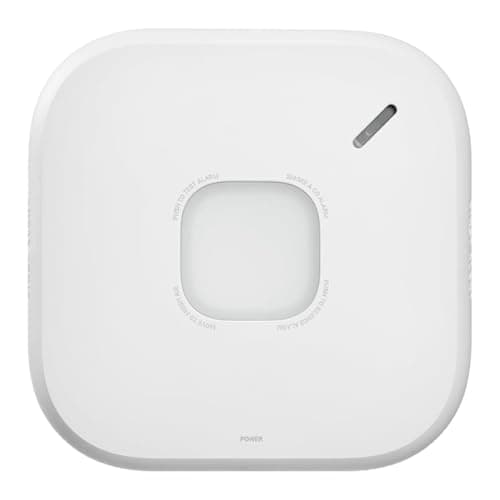 First Alert SC5 Smart Smoke & Carbon Monoxide Alarm The right alarm for a Nest bracket and a phone notification. Not the right alarm for somebody who wants ten years of ignoring it. | Replacing a Nest Protect, or a smart position in a mixed set | 7.6/ 10 | $124.97 · View on Amazon #ad how we are funded · price as of October 19, 2026 |
| 2 | 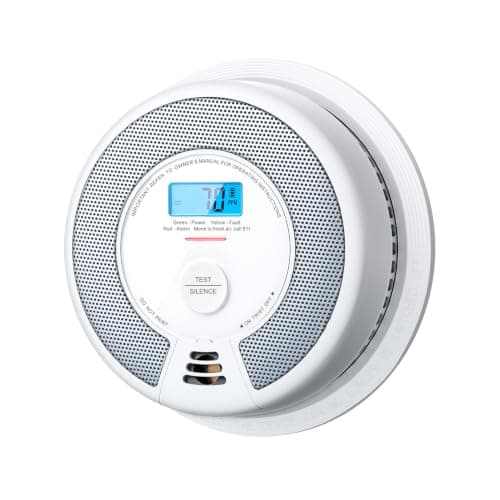 X-Sense SC07-W Wireless Interconnected Smoke & CO Alarm Sealed ten-year battery, both listings published, wireless interconnect. No phone notification — and for most ceilings that is a fair trade. | The same job without the app, at a fraction of the price | 8.2/ 10 | $44.99 · View on Amazon #ad how we are funded · price as of October 19, 2026 |
The verdict, and the alternative
1. Replacing a Nest Protect, or a smart position in a mixed set
First Alert SC5 Smart Smoke & Carbon Monoxide Alarm
The right alarm for a Nest bracket and a phone notification. Not the right alarm for somebody who wants ten years of ignoring it.
- Listed to
- Conforms to UL 217 10th edition — First Alert's published specification names no UL 2034 number
- Sensing / agent
- Photoelectric smoke sensing plus an electrochemical CO cell
- Power / service life
- Six replaceable 3V CR123A lithium cells; 10-year limited warranty
What you are actually buying. The SC5 is a smart combination alarm: photoelectric smoke sensing in one chamber, an electrochemical carbon monoxide cell in another, 85 dB at 10 feet, voice announcement rather than tone alone, Wi-Fi, wireless interconnect, and a ten-year limited warranty. First Alert publishes it as model SMCO600NV in a 5.75 in disc 1.6 in deep. It exists in two versions — the battery unit reviewed here and a hardwire version for a position that already has alarm wiring in it.
The Nest angle is the real reason it exists. Google stopped producing the Nest Protect and promotes the SC5 as the replacement, and the two share a mounting bracket: an owner can twist out a Nest unit and mount an SC5 in its place without touching the ceiling. More usefully, the SC5 interconnects wirelessly with compatible First Alert and Nest Protect units, which means a house full of Nest alarms can be converted a unit at a time as each one reaches its date instead of all at once. If that is your situation, this is the alarm, and Nest Protect vs First Alert SC5 works through the changeover step by step.
The battery design is the thing nobody mentions. Current combination alarms overwhelmingly ship with a sealed ten-year lithium battery: nothing to buy, nothing to change, and no low-battery chirp until the unit is genuinely finished. The SC5 instead takes six user-replaceable 3V CR123A lithium cells. That is a deliberate engineering choice — the radio and the voice announcements draw real current — but it has consequences a buyer should price in. CR123A is a camera-and-flashlight battery, not a supermarket AA. Six of them is a non-trivial purchase. And a replaceable battery reintroduces the failure mode that sealed batteries were invented to remove: the chirp at 3 am, the cell pulled out to stop it, the alarm that is then dead for a year. If the household history includes a single removed battery, read smoke detector chirping and then buy a sealed unit instead.
The paperwork gap. First Alert's specification table for the SC5 reads "Conforms to UL 217 10th Edition Standard" and lists no UL 2034 number. UL 217 is the smoke-alarm standard, and the 10th edition is the current one — the edition that added a cooking-nuisance test, which is a genuinely meaningful upgrade. UL 2034 is the separate standard for residential carbon monoxide alarms, and it is the one that fixes the thresholds a CO alarm must respond at. We could not verify a published UL 2034 listing for the SC5 at the time of writing. That is not proof it lacks one; manufacturers' spec tables are often incomplete. But on a premium combination alarm it is a question worth asking the seller before you buy, because the CO half of a combination alarm is the half you can never test with a real hazard. UL 217 certification explained covers what each standard actually tests.
Detection, honestly. Photoelectric sensing is the right primary technology for a home — it responds faster to the smoldering fires that kill people in their sleep, and it is far less nuisance-prone near a kitchen. What the SC5 does not have is an ionization chamber, which responds faster to fast flaming fires. A single photoelectric alarm is not a weakness so much as a trade, and the standard answer is coverage rather than cleverness: more alarms, in more rooms, interconnected. Ionization vs photoelectric sets out which fires each one wins.
Where the SC5 is genuinely the correct purchase: a house with Nest Protect units coming up on their ten-year dates; one landing or hallway position where a phone notification has real value because the house is often empty; a household that wants a spoken location rather than a tone. Where it is not: every ceiling in the house. Smart alarms are worth having at the positions where the notification changes what you would do, and ordinary sealed-battery alarms are worth having everywhere else. Smart vs regular smoke detectors is the page for that decision.
What it does well
- Two real sensors — a photoelectric smoke chamber and an electrochemical CO cell — so one ceiling position covers both hazards
- Conforms to UL 217 10th edition, the smoke-alarm standard that added the cooking-nuisance test
- Voice alerts with First Alert's Heads-Up warning name the hazard type and the location rather than just sounding
- Wireless interconnect, including with Google Nest Protect units, which is what makes a one-at-a-time changeover realistic
- Mounts on the Nest Protect bracket already in the ceiling, so the swap is a twist rather than a drill
- Phone alerts through the Resideo Connect app when the alarm sounds and nobody is home
The downside
- **Six CR123A lithium cells, user-replaceable** — not the sealed ten-year battery most current alarms use, so there is a specialty battery to buy and a replacement ritual to remember
- First Alert's published specification names **UL 217 10th edition only**; we could not verify a published UL 2034 listing number for the CO half
- 85 dB at 10 feet is the ordinary household figure, so it is no louder than a $20 alarm for a sleeping adult
- Photoelectric smoke sensing only — there is no ionization chamber, so fast flaming fires are covered less well than by a dual-sensor unit
- Premium pricing against sealed-battery combination alarms that do the detection job for a fraction of it
- The app and the ecosystem are moving parts: this alarm's value depends on a cloud service staying supported, which a dumb alarm does not
Do not buy this if: you want to mount an alarm and forget it for a decade. A sealed ten-year combination alarm removes both the battery purchase and the battery decision, and for most ceilings in most houses that is the better buy. The SC5 earns its money where the bracket, the interconnect with existing Nest units or the phone notification genuinely matter.
- Google promotes it as the Nest Protect replacement, and it mounts on the same bracket
- Wireless interconnect, including with compatible Google Nest Protect units, so a changeover can be staged one alarm at a time
- Voice alerts with Heads-Up warning, naming the hazard and the location rather than only sounding
- Phone alerts through the Resideo Connect app when the alarm sounds away from home
- 85 dB at 10 feet — the standard household figure, not a louder one
First Alert product documentation
#ad how we are funded · price as of October 19, 2026
2. The same job without the app, at a fraction of the price
X-Sense SC07-W Wireless Interconnected Smoke & CO Alarm
Sealed ten-year battery, both listings published, wireless interconnect. No phone notification — and for most ceilings that is a fair trade.
- Listed to
- UL 217 and UL 2034
- Sensing / agent
- Photoelectric smoke sensing plus an electrochemical CO cell
- Power / service life
- 10-year sealed lithium battery, not hardwired
This is the comparison that decides the SC5 for most buyers, so it belongs in the review rather than in a footnote. The X-Sense SC07-W does the detection job to the same shape — photoelectric smoke, electrochemical CO, wireless interconnect across the house — with a sealed ten-year battery and both listings published, for a small fraction of the per-position cost.
What it cannot do is reach your phone. If the house is empty for ten hours a day, or if there is an elderly relative in it, or if a rental needs to notify a manager, that is a real gap and the SC5 closes it. If the house is occupied most of the time and the point of the alarm is to wake people in it, the notification is a convenience and the sealed battery is the feature.
Our standing recommendation for a whole house is the boring one: sealed-battery interconnected alarms everywhere, and a smart unit only at the positions where a notification would change what you do. Best smart smoke detectors ranks the smart tier, and best combination smoke and CO alarms covers the rest of the ceiling.
What it does well
- UL 217 and UL 2034 both published, which is the paperwork the SC5 spec table does not spell out
- Sealed ten-year lithium battery — no cells to buy, no battery to pull out at 3 am
- Wireless interconnect across a whole house, so one alarm sounding sounds them all
- An LCD that reads the measured CO concentration instead of only alarming
- A fraction of the SC5's price per position, which matters when a house needs five of them
The downside
- No Wi-Fi and no app, so nothing reaches your phone when the house is empty
- No voice announcement of the room — the interconnect tells you the house is alarming, not where
- Photoelectric smoke sensing only, same single-technology trade as the SC5
- Will not interconnect with Nest Protect units, so it is a whole-set changeover rather than a staged one
Do not buy this if: you need an alert while you are at work, or you are converting a Nest Protect house one unit at a time. Neither is something this alarm can do, and both are exactly what the SC5 is for.
- Wireless interconnect for up to 24 units — one alarm triggers the whole set
- No wiring, which is the point: it retrofits interconnection into a house that never had it
- LCD CO reading on each unit
- X-Sense recommends it for large or multi-story homes
#ad how we are funded · price as of October 19, 2026
Who should buy the SC5
Four situations where it is the right answer, and the honest version of each.
- You own Nest Protect alarms. This is the strongest case by a distance. Same bracket, wireless interconnect with the units you still have, and a staged changeover instead of a single expensive weekend.
- The house is often empty and somebody needs to know. A holiday let, a second home, a property with a vulnerable adult in it, a house with pets. A phone notification is the whole value, and a dumb alarm cannot produce one.
- You want the room named out loud. Voice alerts that say what and where are measurably easier to act on at 3 am than an undifferentiated shriek, especially for anyone woken disoriented.
- One or two positions, not twelve. Smart alarms earn their price at the position where the notification matters. Filling a whole house with them costs several hundred dollars more than filling it with sealed-battery interconnected units and does not detect fire any better.
Who should not
And what to buy instead in each case.
- You want to install it and forget it. Six CR123A cells is a running cost and a maintenance decision. Buy a sealed ten-year alarm — best combination smoke and CO alarms is the page.
- You need a published UL 2034 number for the CO half. Several combination alarms publish both listings plainly. If that documentation matters to you, buy one of those instead.
- You are equipping a rental. Smart alarms depend on somebody's Wi-Fi, somebody's account and somebody's app updates — three things a landlord does not control in an occupied unit. Best smoke detectors for rental property covers what survives a tenancy.
- Your house is hardwired. If the ceiling already has alarm wiring, use it. A hardwired interconnected set cannot be defeated by a flat battery at all, and best hardwired smoke detectors is the right page.
The thing a smart alarm does not fix
Every alarm on this site, smart or otherwise, is subject to the same arithmetic: a fire kills people who do not get out, and getting out depends on hearing the alarm early enough and knowing where to go. Notifications and voice alerts help with the first half. Nothing in an app helps with the second.
Coverage beats cleverness. NFPA 72 asks for a smoke alarm inside every sleeping room, outside each sleeping area and on every level of the home. A house with one brilliant alarm and four empty ceilings is worse protected than a house with five ordinary interconnected ones — and this is the single most common way a well-intentioned smart-home upgrade makes a home less safe, because the budget went into one device instead of five positions. How many smoke detectors do I need does the count room by room.
And practice the plan. Two ways out of every room, a meeting point outside, and a run-through twice a year with the children involved. Fire escape plan is the one page on this site we would ask you to read even if you buy nothing.
Questions people actually ask
Is the First Alert SC5 worth it?
What batteries does the First Alert SC5 take?
Is the First Alert SC5 UL listed?
Does the SC5 work with the Nest Protect?
How loud is the First Alert SC5?
How these picks were chosen. On published specifications, safety listings and manufacturer documentation — plus the findings of organizations that do run tests. We have no laboratory and we do not burn anything. Read the full methodology.
Sources
- First Alert — SC5 Battery Smart Smoke & Carbon Monoxide Alarm — specifications
- First Alert — Nest Protect replacement — First Alert SC5 compatibility
- UL Solutions — UL 217 — smoke alarms
- UL Solutions — UL 217, Standard for Smoke Alarms, published with new technical requirements
- UL Solutions — UL 2034 — single and multiple station carbon monoxide alarms
- NFPA — NFPA 72, National Fire Alarm and Signaling Code (2025 edition)
- NFPA — Smoke alarms — installation and placement guidance
Read next
Smoke Detectors
Nest Protect vs First Alert SC5
The discontinued original and its promoted successor — what actually transfers.
Smoke Detectors
The Best Smart Smoke Detectors
The one smart feature worth paying for, and why coverage still beats cleverness.
Smoke Detectors
The Best Combination Smoke and CO Alarms
Two listings, one position — and the one room where separate units win.
Smoke Detectors
Smart vs Regular Smoke Detectors
What connectivity actually buys, why some smart alarms are on an older listing, and the mixed set we would fit.
Smoke Detectors
What the standard tests, what the recent editions changed, and how to verify a mark is real.