Smoke Detectors
Nest Protect vs X-Sense
One of these is a retired product with a loyal following. The other is a current sealed-battery alarm at a third of the price. The comparison is still worth making, because what you lose is not nothing.
By Ryder M.Last reviewed
The X-Sense SC07 is the alarm to buy, for the simple reason that the Nest Protect is no longer in production — Google ended it in March 2025 and the units still circulating are old stock on a ten-year clock that started at manufacture. What you give up is spoken room-by-room alerts and phone notifications; what you get is the same UL 217 and UL 2034 listing, a live CO concentration on an LCD, and a sealed ten-year battery. If the app and the voice were the reason you wanted a Nest Protect, the honest answer is the First Alert SC5, which Google itself points owners toward.
Siren & Safe is reader-funded. We earn a commission on some links on this page, at no cost to you. It does not change what we recommend or the order we rank it in. Full disclosure.
The short version
This comparison has a structural answer rather than a close one, and it is worth stating before the detail: you cannot buy a new Nest Protect. Production ended in March 2025. Everything else follows from that.
What remains is a real question, though, because the Nest Protect did two things most alarms still do not. It named the room in a human voice, and it told your phone. If you are replacing one, the choice is whether those two features were the point or the packaging.
If they were the packaging, an X-Sense SC07 does the detection for a fraction of the cost with the same two UL listings and a CO readout Nest never offered. If they were the point, the First Alert SC5 is the only replacement that keeps them and fits the bracket already on your ceiling.
Side by side
Every figure below is from the manufacturer's own published specification for the current listing. Nothing here is measured by us.
| Nest Protect (2nd gen) | X-Sense SC07 | X-Sense SC07-W | First Alert SC5 | |
|---|---|---|---|---|
| Still in production | No — ended March 2025 | Yes | Yes | Yes |
| Smoke sensing | Split-spectrum | Photoelectric | Photoelectric | Photoelectric |
| CO sensing | Electrochemical cell | Electrochemical cell | Electrochemical cell | Electrochemical cell |
| CO concentration shown | No | Yes, on an LCD | Yes, on an LCD | No |
| Listings | UL 217 and UL 2034 | UL 217 and UL 2034 | UL 217 and UL 2034 | UL 217 and UL 2034 |
| Power | Battery or wired versions | Sealed 10-year lithium | Sealed 10-year lithium | Sealed 10-year battery |
| Interconnect | Yes, as a set | None | Wireless, up to 24 units | Yes, including with Nest Protect |
| Phone alerts | Yes | No | No | Yes, via Google Home |
| Spoken alerts | Yes, named the room | No | No | No |
The listings column is the one that matters most and the one that separates these products least — all four are listed to the same two standards. Detection is not where the money goes.
Quick picks
Scored against still in production, smoke sensing, co reporting, whole-house linking and app and voice. Tap a row for the full write-up. The price in each buy button is the live Amazon price at the last check, stamped with the date it was taken.
| # | Product | Best for | Score | Price |
|---|---|---|---|---|
| 1 | 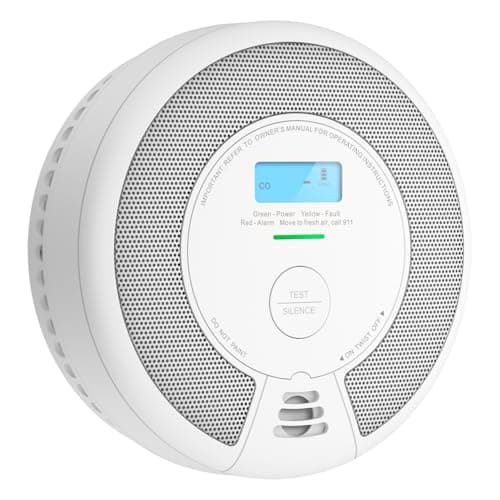 X-Sense SC07 Smoke & Carbon Monoxide Alarm Current, listed to UL 217 and UL 2034, and it shows the CO concentration instead of only alarming. | The straight replacement | 7.6/ 10 | |
| 2 | 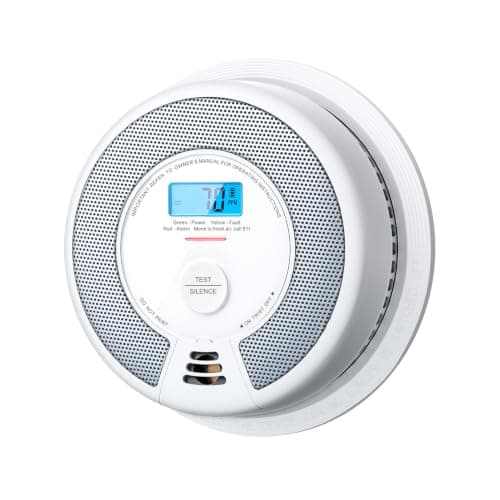 X-Sense SC07-W Wireless Interconnected Smoke & CO Alarm The same alarm with wireless interconnect for up to 24 units, which is how you replace a linked Nest set. | The replacement for a linked set | 8.3/ 10 | $44.99 · View on Amazon #ad how we are funded · price as of October 19, 2026 |
| 3 | 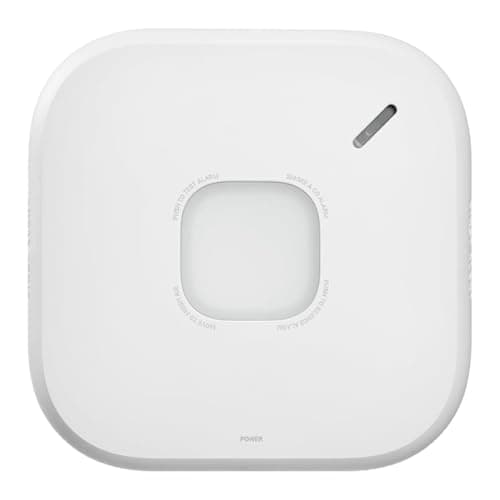 First Alert SC5 Smart Smoke & Carbon Monoxide Alarm The successor Google itself names, and it reuses the Nest Protect mounting bracket. | Keeping the app and the Google Home integration | 8.2/ 10 | $124.97 · View on Amazon #ad how we are funded · price as of October 19, 2026 |
| 4 | 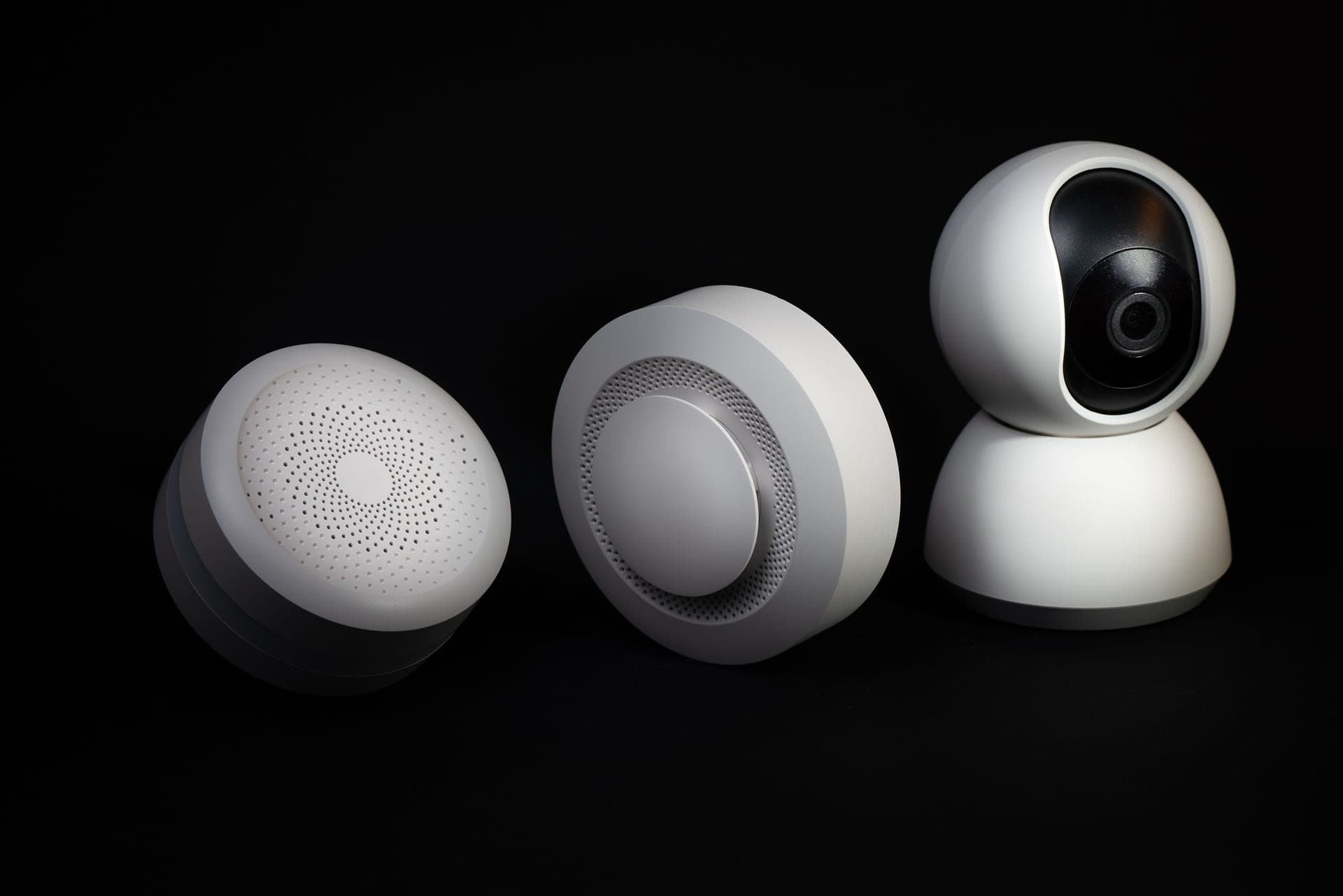 Google Nest Protect (2nd generation) Out of production since March 2025. Existing units still work and still update; new stock is old stock. | Context only — it is no longer a purchase | 6.8/ 10 | Discontinued |
The four alarms in play
1. The straight replacement
X-Sense SC07 Smoke & Carbon Monoxide Alarm
Current, listed to UL 217 and UL 2034, and it shows the CO concentration instead of only alarming.
- Listed to
- UL 217 and UL 2034
- Sensing / agent
- Photoelectric smoke sensing plus an electrochemical CO cell
- Power / service life
- 10-year sealed lithium battery, not hardwired
This is the alarm the Nest Protect comparison usually ends at, and the reason is not price. It is that the two devices answer the same question — smoke and CO in one ceiling position, with a ten-year unit life and no battery ritual — and only one of them is still being manufactured.
The CO display is the genuinely useful feature, and it is the one Nest never gave you. UL 2034 sets the alarm thresholds high on purpose: a listed CO alarm is not required to sound until roughly 70 ppm has been present for an hour. A unit that reads out 25 ppm tells you something is producing carbon monoxide long before the threshold logic does, which is exactly what a reader filtering on evidence rather than convenience wants.
What the SC07 does not do is talk to anything. Read smart vs regular smoke detectors before you decide that does not matter, because the trade is narrower than it looks: the thing a smart alarm buys you is a notification when the house is empty, and nothing else on the list is worth paying for.
On sensing type it is photoelectric, which is the right default for a house. Ionization vs photoelectric sets out why, and the short version is that photoelectric is faster on the smoldering fires that kill people in their sleep.
What it does well
- Current production, so the ten-year clock starts when you buy it rather than when it was warehoused
- LCD reads the measured CO concentration rather than only sounding at the alarm threshold
- Sealed ten-year lithium battery, so there is no annual battery change and no low-battery chirp until end of life
- Photoelectric smoke sensing plus an electrochemical CO cell in one ceiling position
The downside
- Standalone: no interconnect, no Wi-Fi, no base station, so one unit alarming does not wake the far end of the house
- No phone alert, which means a fire while you are out is a fire nobody hears
- No spoken annunciation, so the horn alone has to tell you which hazard it is
Do not buy this if: you live in a house where a bedroom cannot hear the kitchen. A standalone alarm is the wrong architecture for that, and the SC07-W below is the same alarm with the fix built in.
- LCD reads the measured CO concentration rather than only alarming
- Standalone unit — no wireless interconnect, no Wi-Fi, no base station
- Sealed battery, so there is no annual battery ritual and no low-battery chirp until end of life
- Test and silence on one control
2. The replacement for a linked set
X-Sense SC07-W Wireless Interconnected Smoke & CO Alarm
The same alarm with wireless interconnect for up to 24 units, which is how you replace a linked Nest set.
- Listed to
- UL 217 and UL 2034
- Sensing / agent
- Photoelectric smoke sensing plus an electrochemical CO cell
- Power / service life
- 10-year sealed lithium battery, not hardwired
If you had more than one Nest Protect, this is your replacement rather than the SC07 — and it is worth being blunt about why. A set of Nest Protects behaved as one alarm. Replacing them with standalone units quietly downgrades the house from a linked system to a collection of single-room alarms, which is a real reduction in protection that nobody tells you about at the checkout.
NFPA 72 has required interconnected alarms in new construction for years, and the reason is distance. Smoke starts in one room; the person who needs to wake up is in another, two floors away, behind a closed door. An unlinked alarm in the basement is a noise in the basement.
Up to 24 units is more than any house needs, which in practice means the limit will never bind. Best interconnected smoke detectors covers the wired and wire-free options side by side if you want to compare before committing to one brand's radio.
One caution on mixed sets: these pair with each other, not with your old alarms. Are smoke alarms interchangeable explains why a half-replaced interconnect is worse than either a full old set or a full new one.
What it does well
- Wireless interconnect for up to 24 units — one alarm triggers every alarm in the set
- No wiring needed, which is the point: it retrofits interconnection into a house that never had it
- Same LCD CO reading and the same UL 217 and UL 2034 listing as the standalone SC07
- X-Sense recommends it specifically for large and multi-story homes
The downside
- Still no phone alert and no spoken annunciation
- A wireless set has to be paired, so this is a setup job rather than a twist-and-go
- Sealed battery means the whole set ages together and retires together
Do not buy this if: you only need one alarm in one place. The interconnect is the entire reason for the price difference, and a single unit cannot use it.
- Wireless interconnect for up to 24 units — one alarm triggers the whole set
- No wiring, which is the point: it retrofits interconnection into a house that never had it
- LCD CO reading on each unit
- X-Sense recommends it for large or multi-story homes
#ad how we are funded · price as of October 19, 2026
3. Keeping the app and the Google Home integration
First Alert SC5 Smart Smoke & Carbon Monoxide Alarm
The successor Google itself names, and it reuses the Nest Protect mounting bracket.
- Listed to
- Conforms to UL 217 10th edition — First Alert's published specification names no UL 2034 number
- Sensing / agent
- Photoelectric smoke sensing plus an electrochemical CO cell
- Power / service life
- Six replaceable 3V CR123A lithium cells; 10-year limited warranty
This is the one honest reason to spend the extra money: the bracket. A Nest Protect changeover usually means several ceiling positions, and the SC5 drops onto the fixings that are already up there, including the hardwired ones with a quick-connect adapter.
The staged-changeover behavior matters more than it sounds. Because the SC5 interconnects with surviving Nest Protects, you can replace the units that have reached their date and leave the rest, and the house stays linked throughout. No other replacement on the market does that.
The sensing story is unremarkable — photoelectric plus an electrochemical CO cell, listed to UL 217 and UL 2034, the same as everything else here. You are buying continuity and an app, not better detection. Nest Protect vs First Alert SC5 takes that comparison apart properly.
What it does well
- Works with the Google Home app, and Google promotes it as the Nest Protect replacement
- Reuses the Nest Protect mounting bracket, with a quick-connect adapter for hardwired swaps
- Interconnects with remaining Nest Protect units, so the changeover can be staged one room at a time
- Phone alerts when the alarm sounds and nobody is home
The downside
- No CO concentration display — it alarms rather than reporting a number
- Costs several times what a sealed-battery X-Sense costs for the same listings
- Cloud-dependent features stop being features the day the app changes
Do not buy this if: you wanted out of the app ecosystem rather than further into it. If the phone notification is not the reason you are buying, you are paying for it anyway.
- Google promotes it as the Nest Protect replacement, and it mounts on the same bracket
- Wireless interconnect, including with compatible Google Nest Protect units, so a changeover can be staged one alarm at a time
- Voice alerts with Heads-Up warning, naming the hazard and the location rather than only sounding
- Phone alerts through the Resideo Connect app when the alarm sounds away from home
- 85 dB at 10 feet — the standard household figure, not a louder one
First Alert product documentation
#ad how we are funded · price as of October 19, 2026
Illustrative photo
4. Context only — it is no longer a purchase
Google Nest Protect (2nd generation)
Out of production since March 2025. Existing units still work and still update; new stock is old stock.
Discontinued. This is here for owners of existing units, not as a current purchase.
- Listed to
- UL 217 and UL 2034
- Sensing / agent
- Split-spectrum smoke sensing plus an electrochemical CO cell
- Power / service life
- Manufacturer-stated 10-year unit life; production ended March 2025
It is listed here because people are still searching for it, still being offered it, and still deciding whether a discounted one is a smart buy. It is not, and the reason is arithmetic rather than opinion.
An alarm's ten-year life runs from the manufacture date stamped on the back of the housing, not from the day you install it. A unit built in early 2025 and sold in late 2026 is already nearly two years into its life, and the sealed CO cell has been degrading in the box the whole time. Pay full price for eight years of service and you have paid a premium for a discount.
Google's own guidance points owners at the First Alert SC5, and Google has committed to continuing software and security updates for units already installed. If you have working Nest Protects, nothing here says rip them out — check the date on each one and replace it when it reaches ten years. Nest Protect discontinued: what to buy now sets out the changeover in order.
What it does well
- Split-spectrum smoke sensing, which was genuinely ahead of the single-chamber alarms of its generation
- Spoken alerts that named the room, which is still the clearest alarm annunciation anyone has shipped
- Existing units continue to receive software and security updates
- Linked as a set and reported to a phone, years before that was ordinary
The downside
- Google ended production in March 2025 — it is not a current purchase at any price
- Anything still on a shelf has been aging against a ten-year unit life since it was built
- No new units means no warranty replacements and a shrinking accessory supply
Do not buy this if: any new installation. A ten-year life clock that started before you bought the unit is not a bargain, however good the discount looks.
- Google stopped producing it in March 2025 — it is no longer a current purchase
- Existing units continue to receive software and security updates
- Spoken alerts that named the room, plus phone notifications
- The First Alert SC5 is the successor Google itself points owners toward
What you actually lose by leaving Nest
Two things, and it is worth naming them honestly rather than pretending a cheaper alarm is a straight upgrade.
The spoken alert. A Nest Protect said which room. In a two-story house at two in the morning, that is not a gimmick — it is the difference between going toward the fire and going away from it. Nothing in the X-Sense line replaces it. The nearest equivalents on this site are the Kidde 20SAR-VRF and the First Alert SM210V, both of which annunciate but neither of which names the room.
The empty-house notification. A fire in an unoccupied house is discovered by a neighbor or by nobody. A phone alert is the only thing that changes that, and it is the single strongest argument for a connected alarm. If you have pets, a home office full of lithium batteries, or a tenant, this is worth real money.
Everything else in the Nest proposition — the self-test, the light ring, the app history — is convenience. Convenience is a reasonable thing to buy. It is not detection, and the UL listings above show that the detection is the same.
Checks before you order anything
A replacement decision made without these four facts usually gets made twice.
- Read the manufacture date on every alarm already in the house. Not the install date and not the battery date. Anything within two years of ten is on this round of replacements whether you planned it or not.
- Count the ceiling positions. One alarm is a different purchase from six. At six, the wireless interconnect of the SC07-W stops being a luxury.
- Decide whether the house is ever empty for long. That is the only question that justifies a connected alarm, and it has a yes-or-no answer.
- Check whether your positions are hardwired. A wired position wants a wired replacement — pulling an AC alarm and leaving a battery unit on a live cable is how an interconnect gets quietly broken.
- Check the CPSC recall list for anything you are keeping. Free, thirty seconds, and it occasionally matters.
Who should buy which
One or two unlinked positions, no app interest: the X-Sense SC07. It is current, it carries both listings, and the CO readout is a genuine advantage over every alarm in this comparison including the Nest.
Three or more positions, or any multi-story house: the X-Sense SC07-W. Interconnection does more for survival than any sensing upgrade available at this price, and NFPA 72 has required it in new construction for a long time for exactly that reason.
A Nest Protect set you are replacing gradually, or a household that wants the phone alert: the First Alert SC5. It is the expensive answer and it is the only one that keeps the set linked while you change it over one unit at a time.
A discounted new-in-box Nest Protect: no. The clock started without you.
Questions people actually ask
Is the Nest Protect discontinued?
Is an X-Sense alarm as safe as a Nest Protect?
Can I mix X-Sense and Nest Protect alarms in one house?
Does the X-Sense SC07 need Wi-Fi?
How these picks were chosen. On published specifications, safety listings and manufacturer documentation — plus the findings of organizations that do run tests. We have no laboratory and we do not burn anything. Read the full methodology.
Sources
- First Alert — Nest Protect replacement — First Alert SC5 compatibility
- UL Solutions — UL 217 — smoke alarms
- UL Solutions — UL 2034 — single and multiple station carbon monoxide alarms
- NFPA — NFPA 72, National Fire Alarm and Signaling Code (2025 edition)
- CPSC — Recalls and product safety news
Read next
Smoke Detectors
Nest Protect Is Discontinued. What Now?
Production ended March 2025. What still works, what the deadline is, and the four replacements worth considering.
Smoke Detectors
Nest Protect vs First Alert SC5
The discontinued original and its promoted successor — what actually transfers.
Smoke Detectors
The Best Smart Smoke Detectors
The one smart feature worth paying for, and why coverage still beats cleverness.
Smoke Detectors
The Best Interconnected Smoke Detectors
One sounds, they all sound. Wireless retrofit and hardwired picks, and the mixing mistake to avoid.
Smoke Detectors
The Best Combination Smoke and CO Alarms
Two listings, one position — and the one room where separate units win.