Smoke Detectors
Nest Protect Is Discontinued. What Now?
Discontinued does not mean dead. It means no new units, a fixed end date on every one you own, and a replacement decision you get to make calmly rather than at 3am.
By Ryder M.Last reviewed
Yes — Google ended production of the Nest Protect in March 2025, and it is no longer a product you can buy new. Units already installed keep working and keep receiving software and security updates, so there is nothing to do today beyond reading the manufacture date on the back of each one: the ten-year life runs from that date, and that is your actual deadline. Google points owners toward the First Alert SC5, which reuses the Nest Protect bracket and interconnects with surviving units so you can change the house over one position at a time.
Siren & Safe is reader-funded. We earn a commission on some links on this page, at no cost to you. It does not change what we recommend or the order we rank it in. Full disclosure.
What "discontinued" does and does not mean
Google ended production of the Nest Protect in March 2025 and sold through the remaining stock. Rather than building a successor, Google co-launched a First Alert alarm that works with the Google Home app and points owners toward it.
Your installed units did not stop working, and they have not stopped updating. Google has continued software and security updates for alarms already in service. The alarm on your ceiling is doing today exactly what it did last year.
What has changed is the horizon. There will be no new hardware, no new accessories and no warranty replacements from new stock. Every Nest Protect in the world is now on a fixed timetable, and that timetable is printed on the back of the unit.
What to do this week
Four steps, none of which involves buying anything. Do these before you shop, because the answers change what you should buy.
Take each alarm down and read the manufacture date
It is printed on the back of the housing. This is the date the ten-year life runs from — not the install date, not the date on the app, not the battery date. Write it on a list with the room name. This is the only piece of information that tells you whether you are replacing alarms this month or in four years.
Add ten years to each date
That is the replacement deadline for that unit. Nest Protect units sold toward the end of production will reach it in the early 2030s; a first-generation unit may already be past it. Any unit within a year of its date goes on the shopping list now.
Test every unit, and understand what the test proves
The test button confirms the horn, the battery and the electronics. It does not confirm the smoke chamber or the CO cell, which is precisely why the date matters more than the test. A unit that passes its test and is eleven years old is still finished. See how to test a smoke alarm for the method that gets closest to a real check.
Count your positions and note which are hardwired
A hardwired Nest Protect position needs a hardwired replacement or a deliberate decision to go battery. Leaving a live AC cable capped in a ceiling box is legal in most places but it breaks the interconnect, and a broken interconnect is the quiet failure mode nobody notices until it matters.
Quick picks
Scored against swap difficulty, keeps app alerts, listings, links to old nest units and cost per position. Tap a row for the full write-up. The price in each buy button is the live Amazon price at the last check, stamped with the date it was taken.
| # | Product | Best for | Score | Price |
|---|---|---|---|---|
| 1 | 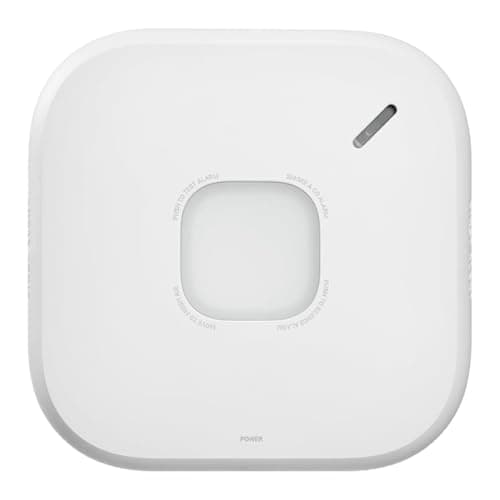 First Alert SC5 Smart Smoke & Carbon Monoxide Alarm Google's own named successor. Fits the existing bracket and links to the Nest Protects you have not replaced yet. | The direct, bracket-compatible swap | 8.4/ 10 | $124.97 · View on Amazon #ad how we are funded · price as of October 19, 2026 |
| 2 | 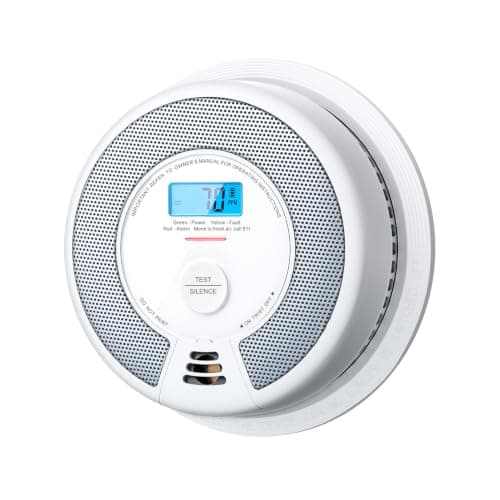 X-Sense SC07-W Wireless Interconnected Smoke & CO Alarm Wireless interconnect for up to 24 units, a CO readout, and a fraction of the cost per position. | Replacing the whole set at once, cheaply | 7.8/ 10 | $44.99 · View on Amazon #ad how we are funded · price as of October 19, 2026 |
| 3 | 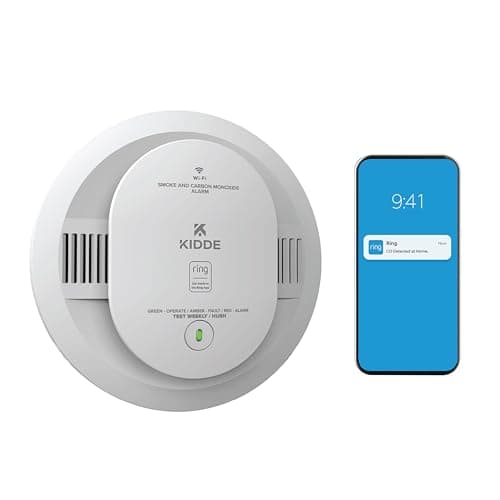 Kidde Battery Smart Smoke & Carbon Monoxide Alarm (Ring) Wi-Fi straight to the Ring app with no hub, voice annunciation, and optional paid monitoring. | A household already inside the Ring app | 6.6/ 10 | $69.97 · View on Amazon #ad how we are funded · price as of October 19, 2026 |
| 4 | 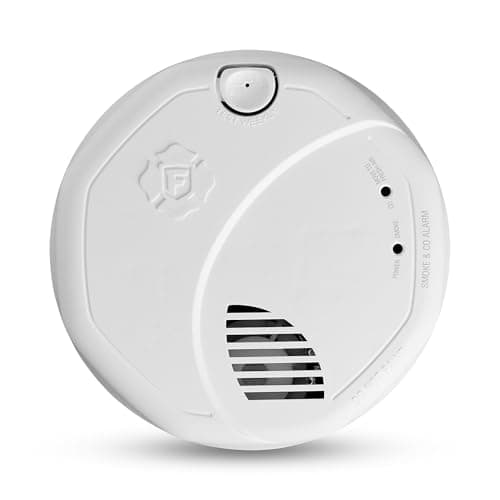 First Alert SMCO410 Z-Wave Plus Smart Smoke & CO Alarm Z-Wave Plus, which is the one way to get a combo alarm into local home automation. | A Z-Wave or Home Assistant setup | 6.9/ 10 | $64.98 · View on Amazon #ad how we are funded · price as of October 19, 2026 |
The four replacements worth considering
Ordered by how well each one handles the changeover rather than by price. Every one of these is current production as of this page's date.
1. The direct, bracket-compatible swap
First Alert SC5 Smart Smoke & Carbon Monoxide Alarm
Google's own named successor. Fits the existing bracket and links to the Nest Protects you have not replaced yet.
- Listed to
- Conforms to UL 217 10th edition — First Alert's published specification names no UL 2034 number
- Sensing / agent
- Photoelectric smoke sensing plus an electrochemical CO cell
- Power / service life
- Six replaceable 3V CR123A lithium cells; 10-year limited warranty
If you have several Nest Protects and want the house to stay linked while you replace them, this is the only product that does it. Nothing else interconnects with a Nest Protect.
That matters because a replacement project rarely happens in one evening. Alarms reach their date at different times, ceilings are at different heights, and someone in the house always objects to a stepladder in the hall. Being able to replace the oldest unit this month and the next one next year — with the set still behaving as one alarm throughout — is worth a lot.
The bracket compatibility is the second practical win. A Nest Protect position is a Nest Protect bracket, and a different manufacturer's alarm means new fixings, new holes and a patch of ceiling that does not match. Nest Protect vs First Alert SC5 goes through the swap in detail.
What it does well
- Reuses the Nest Protect mounting bracket, with a quick-connect adapter for hardwired positions
- Interconnects with remaining Nest Protect units, which is what makes a staged changeover possible
- Works with the Google Home app, so the phone alerts survive the changeover
- Listed to UL 217 and UL 2034 with a sealed ten-year battery
The downside
- The most expensive way to cover a ceiling position, by a wide margin
- No CO concentration readout — it alarms, it does not report a number
- Keeps you dependent on an app and an account for the features you are paying for
Do not buy this if: you only ever used the Nest Protect as an alarm and ignored the app. You would be paying a large premium for software you do not open.
- Google promotes it as the Nest Protect replacement, and it mounts on the same bracket
- Wireless interconnect, including with compatible Google Nest Protect units, so a changeover can be staged one alarm at a time
- Voice alerts with Heads-Up warning, naming the hazard and the location rather than only sounding
- Phone alerts through the Resideo Connect app when the alarm sounds away from home
- 85 dB at 10 feet — the standard household figure, not a louder one
First Alert product documentation
#ad how we are funded · price as of October 19, 2026
2. Replacing the whole set at once, cheaply
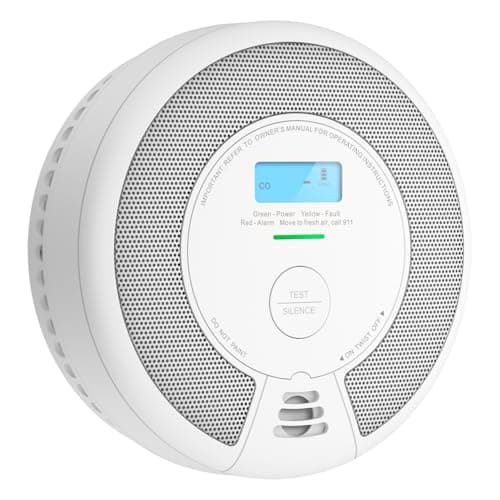
X-Sense SC07-W Wireless Interconnected Smoke & CO Alarm
Wireless interconnect for up to 24 units, a CO readout, and a fraction of the cost per position.
- Listed to
- UL 217 and UL 2034
- Sensing / agent
- Photoelectric smoke sensing plus an electrochemical CO cell
- Power / service life
- 10-year sealed lithium battery, not hardwired
This is the pragmatic choice, and for most households it is the better one. Replace every position in one weekend, get interconnection back, get a CO number you can read, and spend less than two SC5s cost.
The thing to be clear-eyed about is that it is all or nothing. These alarms pair with each other and with nothing else, so a half-done job leaves the old Nest units talking among themselves and the new ones talking among themselves. Pick a weekend and do the lot.
Interconnection is the feature worth protecting through a changeover. Interconnected smoke alarms explains what the code expects and why an unlinked house is a meaningfully worse outcome than a linked one, regardless of how good each individual alarm is.
What it does well
- Wireless interconnect for up to 24 units, so a whole-house set stays a set without any wiring
- LCD shows the measured CO concentration, which the Nest Protect never did
- Sealed ten-year lithium battery and the same UL 217 and UL 2034 listings
- Cost per ceiling position low enough to replace every alarm in the house in one go
The downside
- Will not link to a Nest Protect, so this is an all-at-once changeover rather than a staged one
- No phone alert at all — an empty house is on its own
- New bracket at every position
Do not buy this if: you want to replace one alarm now and the rest later. Mixing this with surviving Nest units leaves you with two unlinked islands.
- Wireless interconnect for up to 24 units — one alarm triggers the whole set
- No wiring, which is the point: it retrofits interconnection into a house that never had it
- LCD CO reading on each unit
- X-Sense recommends it for large or multi-story homes
#ad how we are funded · price as of October 19, 2026
3. A household already inside the Ring app
Kidde Battery Smart Smoke & Carbon Monoxide Alarm (Ring)
Wi-Fi straight to the Ring app with no hub, voice annunciation, and optional paid monitoring.
- Listed to
- Ring's product page does not state a UL listing number for this alarm
- Sensing / agent
- Photoelectric smoke sensing plus an electrochemical CO cell
- Power / service life
- Two replaceable AA batteries; 10-year limited warranty excluding batteries
Included because it is the obvious destination for Nest refugees who already have a Ring doorbell, and because the voice annunciation is a real feature rather than a marketing one.
The listing gap has to be stated plainly, though. Every other alarm on this page names UL 217 and UL 2034 on the manufacturer's own page. This one does not, and we are not going to assume a listing that is not published. That is not a claim the alarm is unsafe; it is a claim that the evidence is thinner, and thinner evidence is how this site ranks things.
Battery type is the other practical downgrade. A sealed ten-year cell is the single biggest reason modern alarms stay in service — no chirps, no dead-battery removal, no 3am disconnection. AA batteries bring all of that back. Best battery smoke detectors covers why that matters more than it sounds.
What it does well
- Connects over 2.4 GHz Wi-Fi to the Ring app with no hub required
- Voice alert announces "Fire" rather than sounding an ambiguous horn
- Wire-free interconnect with compatible Kidde alarms
- Optional 24/7 professional smoke and CO monitoring, which is not required to use the alarm
The downside
- Ring's product page does not state a UL listing number for this alarm, which on this site is a serious mark against it
- AA batteries rather than a sealed ten-year cell, so the annual visit comes back
- No local control — the features depend on Wi-Fi, an account and a cloud service
Do not buy this if: you choose on published listings. We could not find a stated UL number on the seller's page, and the whole argument of this site is that the listing is the checkable fact.
- Connects over 2.4 GHz Wi-Fi to the Ring app — no hub required, and no local control either
- Voice alert announces "Fire" as well as sounding 85 dB at 10 ft
- Wire-free interconnect with compatible Kidde alarms
- Ring states over 25% faster smoke detection than the prior generation
- Optional 24/7 professional smoke and CO monitoring, which is a paid subscription and not required to use the alarm
- AA batteries rather than a sealed ten-year cell
#ad how we are funded · price as of October 19, 2026
4. A Z-Wave or Home Assistant setup
First Alert SMCO410 Z-Wave Plus Smart Smoke & CO Alarm
Z-Wave Plus, which is the one way to get a combo alarm into local home automation.
- Listed to
- First Alert states the alarm's Precision Detection sensing complies with the latest industry standards; it does not name a UL edition on the listing
- Sensing / agent
- Photoelectric smoke sensing plus an electrochemical CO cell
- Power / service life
- Sealed 10-year lithium battery
The narrow case for this one is local control. If you run Home Assistant, a Z-Wave alarm is the only type that reports into it without routing through somebody's cloud, and that is a legitimate reason to accept the compromises.
The compromise is the UL edition. The 8th edition of UL 217 introduced the cooking-nuisance test that is the reason modern alarms stop crying at toast; the 10th edition is what the current Kidde and First Alert non-smart alarms are listed to. A 9th-edition listing is not a bad alarm, but it is an older specification and we are not going to call it current.
If local control is the goal, read best smoke detectors for Home Assistant first — it compares the Z-Wave route against the alternatives, including the option of leaving the alarms dumb and monitoring them another way.
What it does well
- Z-Wave Plus certified, so a local controller such as Z-Wave JS can adopt it without a cloud account
- Works with a Ring Alarm or Ring Alarm Pro base station
- Sealed ten-year lithium battery with an end-of-life warning
- Works with a Ring Alarm or Ring Alarm Pro base station, which is how the away-from-home notifications reach you
The downside
- First Alert does not name a UL edition on the listing, which the plain Kidde units do — so you cannot check it against the newer cooking-nuisance test
- Needs a Z-Wave controller, which is a whole project if you do not already have one
- No CO concentration display
Do not buy this if: you want the newest nuisance-alarm testing. The 10th edition of UL 217 is the one with the cooking test, and this alarm does not claim it.
- Z-Wave Plus certified, which is what lets a non-Ring controller such as Home Assistant's Z-Wave JS adopt it
- Works with a Ring Alarm or Ring Alarm Pro base station — First Alert states the base station plus a Ring Alarm Smoke and CO Listener are required for away-from-home notifications
- Precision Detection sensing, which First Alert states reduces cooking nuisance alarms
- Test and silence button, plus an end-of-life warning when it is time to replace the unit
- Sealed ten-year cell: no battery changes and no low-battery chirps
First Alert product documentation
#ad how we are funded · price as of October 19, 2026
Replacement routes compared
The decision is really about the changeover, not the alarm. This is what each route costs you in practice.
| Route | Links to surviving Nest units | Phone alerts | Stated listing | Best when |
|---|---|---|---|---|
| First Alert SC5 | Yes | Yes, Google Home | UL 217 and UL 2034 | You are replacing gradually and want to keep the app |
| X-Sense SC07-W | No | No | UL 217 and UL 2034 | You will replace every position in one go and want interconnect back cheaply |
| Kidde smart combo (Ring) | No | Yes, Ring app | No UL number stated on the seller's page | You are already inside the Ring app and accept the thinner evidence |
| First Alert SMCO410 | No | Via a Z-Wave controller | No UL edition published | You run local home automation and want the alarm inside it |
No row here offers spoken room-by-room alerts. That capability left the residential market with the Nest Protect and nothing has replaced it.
The staged changeover, in order
If you have four or five Nest Protects and no appetite for replacing them all at once, the order that keeps the house safest is simple.
Replace the oldest unit first, not the most convenient one. The alarm nearest its date is the one most likely to fail a real fire, and it is almost never the one at the bottom of the stairs you walk past every day.
Then replace any unit outside a bedroom door. NFPA 72 puts an alarm inside every sleeping room and outside every sleeping area for a reason: that is where the alarm has to be heard, and it is where an aged unit costs the most.
Leave the basement and the far end of the house for last — not because they do not matter, but because they are the positions where a linked replacement earns its keep, and by then you will know which route you are using.
Throughout: if you are using SC5s, the set stays linked. If you are going to X-Sense, do not start until you are ready to finish, because a partly-converted house has two sets of alarms that cannot hear each other.
Questions people actually ask
Will my Nest Protect stop working now that it is discontinued?
What is the official Nest Protect replacement?
Do I have to replace all my Nest Protects at the same time?
How do I find the manufacture date on a Nest Protect?
How these picks were chosen. On published specifications, safety listings and manufacturer documentation — plus the findings of organizations that do run tests. We have no laboratory and we do not burn anything. Read the full methodology.
Sources
- First Alert — Nest Protect replacement — First Alert SC5 compatibility
- UL Solutions — UL 217 — smoke alarms
- UL Solutions — UL 217, Standard for Smoke Alarms, published with new technical requirements
- UL Solutions — UL 2034 — single and multiple station carbon monoxide alarms
- NFPA — NFPA 72, National Fire Alarm and Signaling Code (2025 edition)
- NFPA — Smoke alarms — installation and placement guidance
Read next
Smoke Detectors
The Nest Protect is out of production. What the X-Sense SC07 replaces, and what it does not.

Smoke Detectors
Discontinued, still working, still on a ten-year clock. What owners should do.
Smoke Detectors
Nest Protect vs First Alert SC5
The discontinued original and its promoted successor — what actually transfers.
Smoke Detectors
When to Replace Smoke Detectors
Where the date is, why the test button proves little, and what to replace with.
Smoke Detectors
The monthly button test, the aerosol chamber test, the interconnect test, and why open flame is never a test method.