Smoke Detectors
Hardwired vs Battery Smoke Detectors
The question is almost never which detects smoke better. It is whether every alarm in the house sounds at once, and whether the code lets you choose.
By Ryder M.Last reviewed
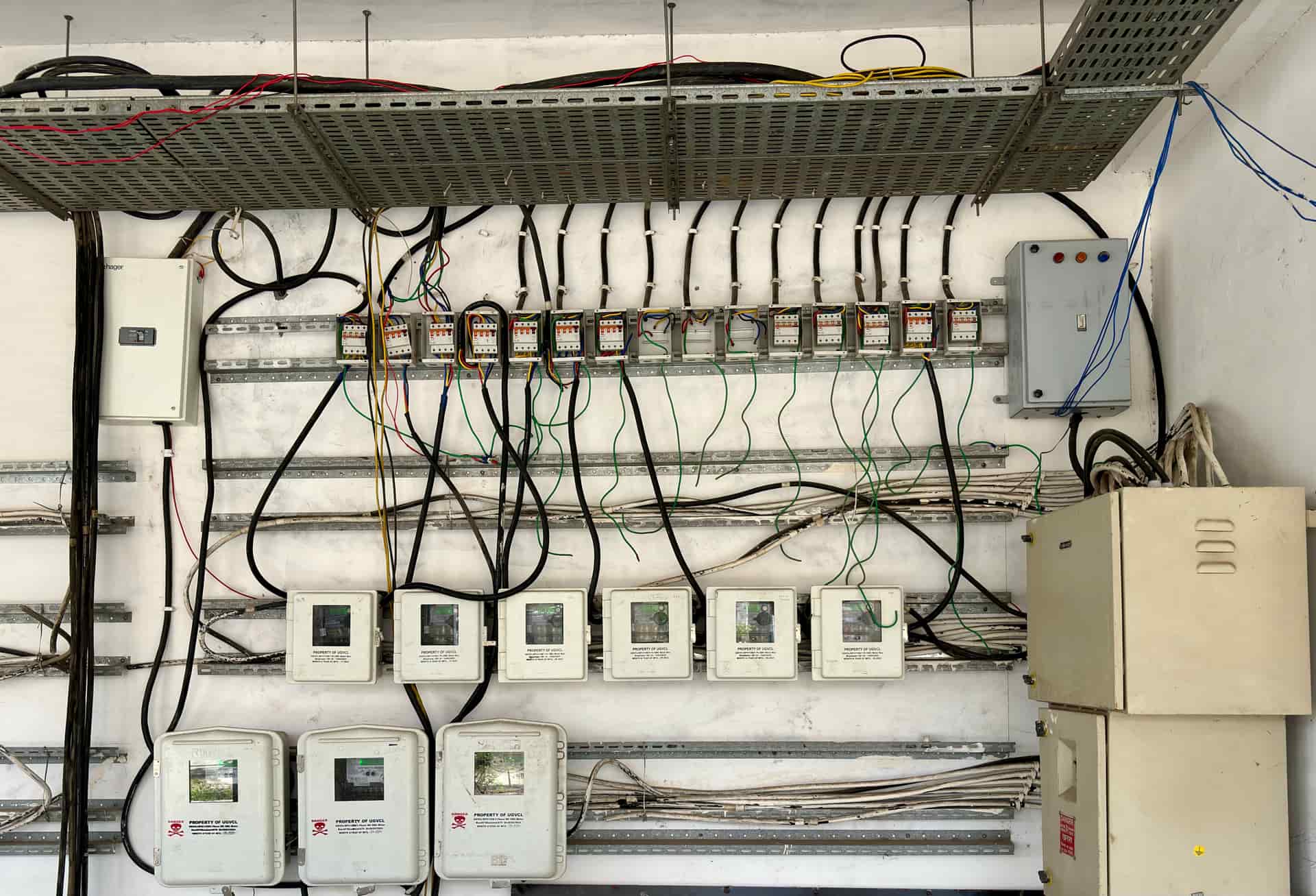
If your ceilings already have alarm wiring, replace hardwired with hardwired — the wire buys you interconnection, which is the feature that gets a sleeping person out of a back bedroom, and dropping to standalone battery alarms to save an hour is the worst trade in this category. If there is no wiring, do not add it for its own sake: a wireless-interconnect sealed-battery set like the X-Sense SC07-W gets you the same functional outcome for the price of the units. Detection is not the variable either way; every alarm on this page is certified to UL 217 and has passed the same laboratory fires. What differs is interconnection, what the code requires of you, and who has to remember a battery.
Siren & Safe is reader-funded. We earn a commission on some links on this page, at no cost to you. It does not change what we recommend or the order we rank it in. Full disclosure.
The short answer, by situation
Your ceilings already have alarm wiring. Replace hardwired with hardwired. The cable is the expensive part and it is already paid for; what it buys is interconnection, and interconnection is worth more than any other feature in this hub. Dropping a wired house to standalone battery alarms is the single most common unforced error in home fire safety.
Your ceilings have no alarm wiring and the house is finished. Do not run cable for its own sake. A wireless-interconnect sealed-battery set delivers the functional outcome — every alarm sounds at once — for the price of the units, with no electrician and no holes in finished ceilings. The exception is a jurisdiction or an inspector that specifically requires AC-powered interconnected alarms.
You are renting. Battery, every time, and not as a compromise. Maintaining the landlord's alarms is the landlord's legal duty in nearly every US jurisdiction, and adding your own certified battery alarm inside your own bedroom is the biggest improvement available to a tenant. Rental and landlord requirements sets out the pattern.
You are building, adding on, or doing permitted work. You are not choosing. The residential code requires hardwired, interconnected alarms with battery backup in new construction, and permitted alterations frequently pull existing areas up to current requirements too. That is a conversation with the building department before it is a shopping decision.
Hardwired vs battery, line by line
What actually differs. Note the first row, because it is the one most buyers assume is the difference and it is not.
| Hardwired (with battery backup) | Sealed-battery | |
|---|---|---|
| Detection performance | Certified to UL 217 | Certified to UL 217 — identical standard, identical tests |
| Interconnection | Over the existing wire, within a compatible family | Only on wireless-interconnect models, by radio between units |
| Power failure | Runs on the backup cell | Unaffected — it was always on the cell |
| New construction | Required by the residential code | Not permitted as the primary system |
| Existing homes | Required where it is already installed; replace like with like | Generally permitted where no wiring exists |
| Install | Junction box, connector, 120 V — often an electrician | Two screws and a bracket |
| Upkeep | None for ten years on a sealed backup; annual on AA-backup models | None for ten years |
| End of life | Replace the unit; the wiring stays | Replace the whole unit |
| Moves with you | No — it belongs to the house | Yes |
| Typical cost per position | Low, if the wiring exists; high if it does not | Low, with interconnect models in the middle |
The decisive row is the second one, not the first. Everything else is logistics.
What the code actually says, and where people get it wrong
The residential code's coverage requirement is the same whichever power source you use: an alarm inside each sleeping room, one outside each separate sleeping area in the immediate vicinity of the bedrooms, and one on every story of the dwelling including basements. That part is not up for negotiation and it does not change with technology.
Where power source enters is new construction and alterations. In new dwellings the code requires alarms to be hardwired to the building's power with a battery backup, and to be interconnected so that one alarm sounding sounds them all. Permitted alterations, repairs and additions commonly trigger a requirement to bring existing alarms up to current standards as well — and in many jurisdictions that requirement is satisfied without new wiring if the work does not involve removing interior finishes.
The misconception worth killing: "battery alarms are not code compliant" is wrong as a general statement, and "I can put battery alarms in because mine is an old house" is wrong as a general statement too. Both depend on your jurisdiction and on what work you are doing. The amendments states and cities make to the model code are where the real answer lives, which is why the only reliable move is to ask your building department before you buy.
The second misconception: an interconnected wired system is not something you are allowed to abandon. If a hardwired alarm fails or expires, the replacement is a hardwired alarm. Taking the loop out of service because battery units are easier is a downgrade, and in a rental or a house you intend to sell it is the kind of downgrade an inspector notices. Smoke detector requirements when selling a house covers how that plays out at the point of sale, and NFPA 72 residential requirements covers the standard behind it.
Quick picks
Scored against interconnection, code fit on a wired circuit, upkeep over ten years, install difficulty and covers both hazards. Tap a row for the full write-up. The price in each buy button is the live Amazon price at the last check, stamped with the date it was taken.
| # | Product | Best for | Score | Price |
|---|---|---|---|---|
| 1 | 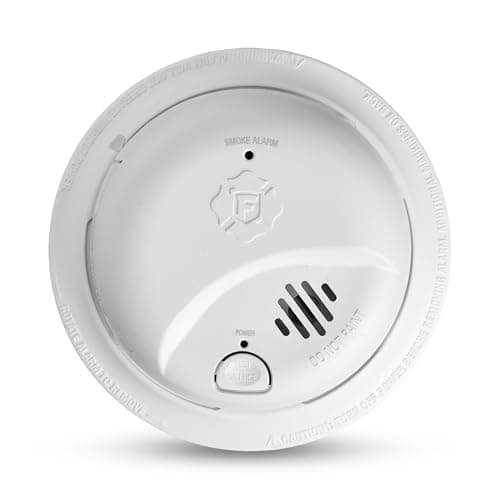 First Alert SMI105-AC Hardwired Smoke Alarm with 10-Year Battery Backup The alarm most wired houses should be replacing into: hardwired with a sealed 10-year backup cell, wired interconnect, and no annual battery to forget. | A straight hardwired replacement — the default if the wire exists | 8.5/ 10 | |
| 2 | 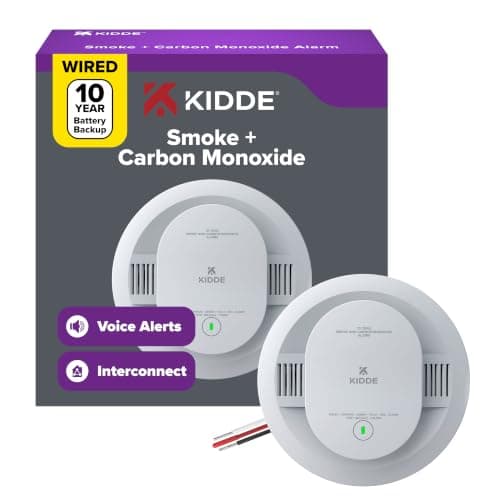 Kidde 30CUA10-V Hardwired Combination Smoke & CO Alarm A hardwired combination alarm with a sealed 10-year backup and voice annunciation. In a house with a furnace, a water heater or an attached garage, this is the hardwired unit to buy. | A wired house that burns something — smoke and CO on the circuit | 8.9/ 10 | $73.99 · View on Amazon #ad how we are funded · price as of November 11, 2026 |
| 3 | 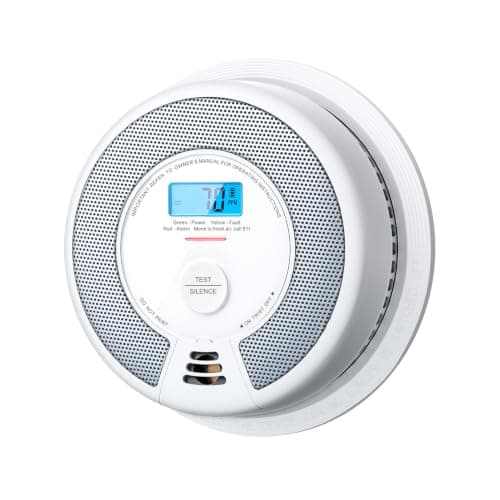 X-Sense SC07-W Wireless Interconnected Smoke & CO Alarm The battery answer that actually competes with hardwired. Radio interconnect between sealed 10-year units, smoke and CO certified, and no cable anywhere. | A house with no alarm wiring — interconnection without an electrician | 8.8/ 10 | |
| 4 | 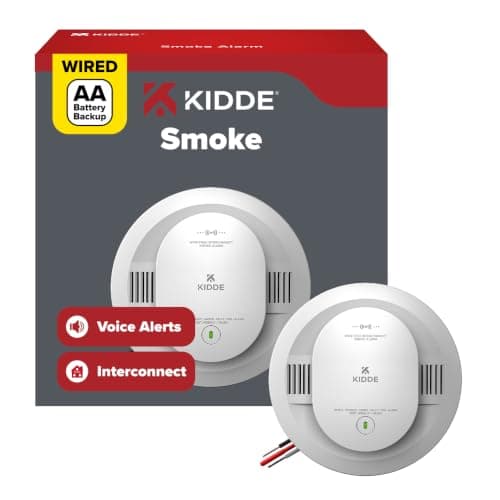 Kidde 20SAR-VRF Hardwired Smoke Alarm with Wire-Free Interconnect The bridge unit. It sits on the existing circuit like any hardwired alarm and also talks by radio to alarms in rooms the wiring never reached. | A half-wired house — hardwired where there is wire, radio where there isn't | 8.1/ 10 | $50.65 · View on Amazon #ad how we are funded · price as of November 11, 2026 |
| 5 | 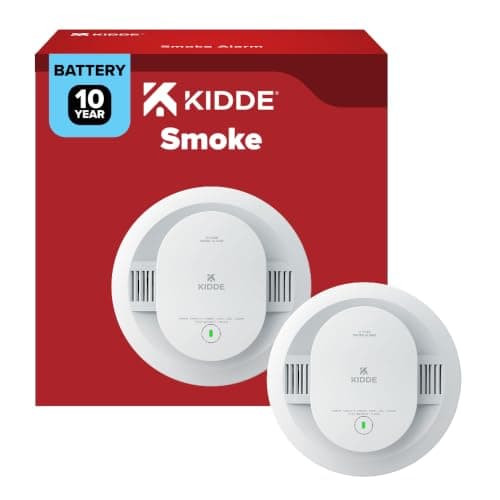 Kidde 20SD10 10-Year Battery Smoke Alarm No interconnect, no wiring, no upkeep and the lowest price on this page. The right answer for the spare bedroom nobody ran cable to. | Covering a room the wiring never reached, for very little money | 7.6/ 10 | $32.47 · View on Amazon #ad how we are funded · price as of November 11, 2026 |
Five alarms across both sides
1. A straight hardwired replacement — the default if the wire exists
First Alert SMI105-AC Hardwired Smoke Alarm with 10-Year Battery Backup
The alarm most wired houses should be replacing into: hardwired with a sealed 10-year backup cell, wired interconnect, and no annual battery to forget.
- Listed to
- UL 217 — First Alert states compliance with the latest edition
- Sensing / agent
- Photoelectric smoke sensing only — no CO cell
- Power / service life
- 120V AC with a sealed 10-year lithium backup battery
Why hardwired wins when the wire is already there. The wire is not doing anything clever — it is carrying power and an interconnect signal. But the interconnect signal is the single most valuable thing in this hub, and the expensive part of it, the cable in your ceilings, is already paid for. Replacing hardwired alarms with hardwired alarms keeps it for the price of the units.
The backup cell is the part that changed. The historic objection to hardwired alarms was that they still needed a 9V battery changed every year, which meant they chirped like battery alarms and got silenced like battery alarms. A sealed 10-year backup removes that entirely: the alarm runs on house power, rides out a power cut on the cell, and the cell lasts as long as the alarm does.
Do the whole loop at once. Alarms on a shared circuit were installed together and age together. One new unit on a nine-year-old loop is a loop that chirps again next year, and a mixed-age loop makes end-of-life signals genuinely confusing. Best hardwired smoke detectors covers the wider field.
What it does well
- **Interconnects over the existing alarm circuit** with compatible First Alert and BRK units, so one alarm sounding sounds the house
- **Sealed 10-year lithium backup cell** rather than an annual 9V change — it keeps the hardwired advantage without the hardwired chore
- **Keeps working through a power cut** on the backup cell, which is the whole reason the code asks for battery backup on a wired alarm
- **Test/silence button holds the hush for up to eight hours**, which is the feature that stops a kitchen-adjacent alarm from being disabled permanently
- **Alarm-origin indicator** shows which unit started it, ending the hunt that interconnected systems otherwise create
- Drops onto the existing base and connector in most houses, so the labor is minutes per alarm rather than a rewire
The downside
- **It needs an existing 120 V alarm circuit.** No wiring, no alarm — and if the junction box or connector is unfamiliar to you, this is an electrician's job, not an afternoon's
- **Smoke only.** No CO cell, so a wired house with gas, oil or an attached garage still needs CO coverage from another device
- **First Alert does not name the sensor type** on the listing: the published wording is "Precision Detection advanced sensing technology"
- **Interconnect compatibility is per-brand and per-family, not universal.** Mixing manufacturers on one loop is where retrofits go wrong
- Replacing one alarm on an aging loop means the rest will reach end of life soon after — the honest job is the whole loop
Do not buy this if: a rental, or any home with no alarm wiring in the ceilings. Go to the SC07-W further down instead. Before you put a different brand on an existing loop, read [are smoke alarms interchangeable](/smoke-detectors/are-smoke-alarms-interchangeable).
- Photoelectric sensing on a hardwired circuit, which is the combination most houses should be replacing into
- Precision Detection sensing, which First Alert states meets the new industry standards on cooking nuisance alarms
- Non-replaceable 10-year backup cell rather than an annual 9V change
- Test/silence button that holds the hush for up to eight hours
- Interconnects over the existing alarm circuit with compatible First Alert and BRK units
First Alert product documentation
2. A wired house that burns something — smoke and CO on the circuit
Kidde 30CUA10-V Hardwired Combination Smoke & CO Alarm
A hardwired combination alarm with a sealed 10-year backup and voice annunciation. In a house with a furnace, a water heater or an attached garage, this is the hardwired unit to buy.
- Listed to
- UL 217 and UL 2034 — Kidde's data sheet states the unit meets UL 217, UL 2034, NFPA 72 and NFPA 101 at the date of manufacture
- Sensing / agent
- Photoelectric smoke sensing plus an electrochemical CO cell, with voice annunciation
- Power / service life
- 120V AC with a sealed 10-year backup battery; 10-year limited warranty and an end-of-life beep at ten years
Why the combination unit is usually right on a wired circuit. Finding legal alarm positions is the hard part of covering a house, and a combination device halves how many you need. On a hardwired circuit it is even more clearly correct, because the position is already chosen for you — the wire is where it is, and a device that covers both hazards from that point is strictly better than one that covers one.
What it does not replace. A ceiling CO alarm is a real CO alarm and it is not a low-level monitor. If somebody in the household is unusually vulnerable to carbon monoxide, or you want a reading at sleeping height, that is a second device — best low-level CO monitors covers the specialist end, and where to install CO detectors covers the height question properly.
Interconnect only within the family. Up to 24 compatible Kidde devices is generous, and the operative word is compatible. Do not assume a First Alert unit will talk to it. The safest retrofit is one brand, one family, one loop.
What it does well
- **Smoke and CO in one hardwired position.** Kidde's data sheet states the unit meets UL 217, UL 2034, NFPA 72 and NFPA 101 at the date of manufacture, so it satisfies both requirements from one ceiling point
- **Wired interconnect across up to 24 compatible Kidde devices**, which is enough for any house this site is written for
- **Voice alerts announce "Fire!" or "Warning! Carbon Monoxide"** instead of an ambiguous horn — and in a CO event, knowing which hazard it is changes what you do
- **Sealed 10-year backup battery** rather than the 2 AA cells its 30CUAR sibling takes, so there is nothing to change for a decade
- **85 dB at 10 ft** with Kidde's current sensing and an end-of-life beep at ten years
The downside
- **It needs an existing 120 V alarm circuit** — Kidde is explicit that this is not a battery-only retrofit
- **The CO cell is on the ceiling with the smoke sensor.** That is a legal position and it is not the best one for catching a slow low-level leak at pillow height; a dedicated CO alarm near the bed does that better
- **Kidde does not name the sensor type** in the listing text, describing the sensing as advanced sensing technology
- **Dearer than a smoke-only hardwired unit**, and in an all-electric house with no attached garage and no fireplace the CO cell is money spent on a hazard you may not have
- Voice annunciation is a recorded phrase, not intelligence — useful, and less than the word suggests
Do not buy this if: an all-electric home with no fuel-burning appliance, no fireplace and no attached garage, where the smoke-only hardwired unit above does the job for less. Settle that question with [do I need a CO detector](/carbon-monoxide-detectors/do-i-need-a-co-detector).
- Drops straight onto an existing hardwired circuit and interconnects over the wire, with up to 24 compatible Kidde devices on one set
- Voice alerts announce "Fire!" or "Warning! Carbon Monoxide" rather than sounding an ambiguous horn
- Sealed ten-year backup battery rather than the 2 AA cells its 30CUAR sibling uses — nothing to change for a decade
- 85 dB at 10 ft, with Kidde's enhanced sensing technology for the cooking-nuisance resistance the latest residential standard tests
- Needs an existing 120V alarm circuit — it is not a battery-only retrofit
#ad how we are funded · price as of November 11, 2026
3. A house with no alarm wiring — interconnection without an electrician
X-Sense SC07-W Wireless Interconnected Smoke & CO Alarm
The battery answer that actually competes with hardwired. Radio interconnect between sealed 10-year units, smoke and CO certified, and no cable anywhere.
- Listed to
- UL 217 and UL 2034
- Sensing / agent
- Photoelectric smoke sensing plus an electrochemical CO cell
- Power / service life
- 10-year sealed lithium battery, not hardwired
This is the pick that makes the comparison close. Ten years ago the hardwired-versus-battery argument was easy, because battery alarms could not interconnect and that was the end of it. Radio interconnect changed the shape of the question: a sealed-battery set now delivers the one thing wiring was for, with no cable, no electrician and no holes in finished ceilings.
Where it still loses. Two places. First, code and inspection: a jurisdiction or an inspector can require AC-powered interconnected alarms, and a radio set does not meet that however well it works. Second, permanence — a wired system is part of the house and survives the household; a battery set is equipment that walks out with the tenant.
Buy the set together. Pair every unit at the same sitting, label them by room on the back, test the link where they will actually live, and only then mount them. Best smoke detectors for two-story homes explains why the staircase is the geometry that makes interconnection matter.
What it does well
- **Wireless interconnect between units** — one alarm detects, they all sound. This is the feature hardwiring is really for, delivered without cable
- **Smoke and CO certified** to UL 217 and UL 2034, with a photoelectric smoke sensor named on the listing
- **Radio between alarms, not Wi-Fi.** No router, no account, no outage — if your internet is down they still sound together
- **Sealed 10-year lithium cell** in every unit, so there is no annual battery and no low-battery chirp until end of life
- **Installs in minutes with two screws per unit**, which keeps the whole job inside what a tenant or a non-electrician can do
- Moves with you, which no hardwired alarm does
The downside
- **It does not satisfy a hardwired requirement.** Where the code or an inspector calls for interconnected, AC-powered alarms, a radio battery set is not a substitute — this is the central limitation and it is not a small one
- **You need at least two units** for the feature to mean anything, so the real entry cost is double
- **Range is finite and your house decides it.** Masonry, foil-backed insulation and steel cut into the link; pair the set and test it in the real positions before drilling
- **It will not join an existing hardwired loop.** Wireless sets are their own network alongside the wired alarms, never an extension of them
- **ETL certified to UL 217 rather than UL-listed** — recognized laboratory, same standard, different mark, which occasionally matters to an inspector or insurer
- Sealed, so at ten years you replace a matched set rather than a battery
Do not buy this if: a house whose ceilings already have alarm wiring, where you should keep the wired system rather than abandon it, or a situation where an inspector has specified AC-powered interconnected alarms. [Interconnected smoke alarms](/smoke-detectors/interconnected-smoke-alarms) covers both routes side by side.
- Wireless interconnect for up to 24 units — one alarm triggers the whole set
- No wiring, which is the point: it retrofits interconnection into a house that never had it
- LCD CO reading on each unit
- X-Sense recommends it for large or multi-story homes
4. A half-wired house — hardwired where there is wire, radio where there isn't
Kidde 20SAR-VRF Hardwired Smoke Alarm with Wire-Free Interconnect
The bridge unit. It sits on the existing circuit like any hardwired alarm and also talks by radio to alarms in rooms the wiring never reached.
- Listed to
- UL 217 10th edition and UL 2034 5th edition; ETL listed
- Sensing / agent
- Photoelectric smoke sensing, with voice annunciation
- Power / service life
- 120V AC with two replaceable AA backup batteries
The half-wired house is extremely common and badly served. A 1960s house with alarms on the main floor and a basement finished in 1998 is the canonical case: there is a circuit, it does not reach everywhere, and running cable into the finished ceiling below is disproportionate. Kidde names exactly that scenario — renovations, basements and lofts — as the case for this unit.
The AA batteries are a real cost, not a footnote. Everything else this site recommends in the sealed-battery era exists to stop a household from having to think about cells. This alarm asks you to think about them once a year, and in return it links two parts of a house that could not otherwise be linked. Decide honestly whether the person who lives there will do it.
Plan the whole set before you buy one. Which positions have AC, which do not, and which units will pair with which. A bridge alarm bought without that plan is just an expensive hardwired alarm. How many smoke detectors do I need is the page that does the counting.
What it does well
- **Hardwired and wire-free interconnect in one unit**, joining the wired alarms on its circuit to battery alarms elsewhere, up to 12 compatible units
- **Voice alert announces "Fire!"** rather than sounding an ambiguous horn
- **Listed to UL 217 10th edition and UL 2034 5th edition, ETL listed** — the current editions, which carry the cooking-nuisance test
- **Solves the commonest real-world layout**: original alarm circuit on the main floor, a finished basement or a converted loft with nothing in it
- **85 dB with a red LED**, the standard specification with nothing exotic to fail
The downside
- **Two replaceable AA backup cells, not a sealed battery.** This is the one part of the alarm that still needs an annual visit, and it reintroduces exactly the chirp-and-remove failure mode sealed alarms were designed to eliminate
- **It still needs AC power at its own position.** The bridge only works from a wired ceiling point outward; it cannot create coverage where there is neither wire nor a paired battery unit
- **Compatibility is within Kidde's wire-free family.** Pair it with Kidde battery wire-free units, not with another brand's
- **Smoke only** — no CO cell, so a half-wired house that burns gas needs CO coverage planned separately
- **Most expensive smoke-only alarm in this comparison**, and the premium buys connectivity rather than detection
Do not buy this if: a fully wired house, where a plain hardwired alarm is cheaper and the radio half is redundant, or a fully unwired house, where the SC07-W set is simpler and needs no AC at all. It is also the wrong choice if nobody in the household will reliably change an AA battery once a year.
- Hardwired AND wire-free interconnect: it joins the wired alarms on its circuit to alarms in rooms that have no wiring, up to 12 compatible units
- Voice alert announces "Fire!" rather than sounding an ambiguous horn
- 85 dB with a red LED
- Listed to UL 217 10th edition, which carries the cooking-nuisance test the 8th edition introduced
- AA backup batteries rather than a sealed cell — the one part of this alarm that still needs an annual visit
#ad how we are funded · price as of November 11, 2026
5. Covering a room the wiring never reached, for very little money
Kidde 20SD10 10-Year Battery Smoke Alarm
No interconnect, no wiring, no upkeep and the lowest price on this page. The right answer for the spare bedroom nobody ran cable to.
- Listed to
- UL 217, 10th edition (UL 217-2024 Ed.10)
- Sensing / agent
- Photoelectric smoke sensing only — no CO cell
- Power / service life
- Sealed 10-year lithium battery; 10-year limited warranty
The legitimate use. Almost every house has a room the alarm wiring never reached: a converted attic, a back bedroom added later, a basement office. A cheap certified sealed alarm in that room is a large improvement over nothing, and the price means there is no reason to leave it uncovered.
The illegitimate use. Taking down a working hardwired alarm and putting this up because it is easier. That trades interconnection for convenience, and interconnection is the thing that wakes the person furthest from the fire. If the hardwired alarm is past its date, it is replaced by a hardwired alarm.
Quantity still beats features. Going from two alarms to six in a three-bedroom house does more for your odds than anything else in this hub. If the budget only stretches to standalone units, buy enough of them — and read best battery smoke detectors for the rest of that field.
What it does well
- **Cheapest alarm on this page by a clear margin**, which is what makes covering an extra room a decision rather than a budget argument
- **Certified to UL 217 10th edition** per Kidde's certification document — the detection question is fully settled
- **Sealed 10-year battery.** Kidde publishes "No battery changes for 10 years", footnoted as not a battery performance claim, with a replacement beep at ten years
- **Twist-and-click bracket and two screws** — the lowest-friction install in this comparison, and it wall-mounts where a ceiling is out of reach
- **85 dB alarm and LED status lights**, with nothing extra to go wrong
The downside
- **No interconnect of any kind**, which is the entire subject of this page. It sounds where it is and nowhere else
- **Not a substitute on a wired circuit.** Replacing a hardwired, interconnected alarm with this is the specific mistake this page exists to argue against
- **Smoke only** — no CO cell at all
- **Kidde does not name the sensor type**: the published wording is "Advanced Smoke Detection" and "enhanced sensing technology"
- Sealed and disposable at ten years, with no voice, display or app
Do not buy this if: any position that currently holds a hardwired alarm, and not the only alarm in a house with a fuel-burning appliance. If you are buying several of these to cover a house cheaply, read [the best smoke detectors under $50](/smoke-detectors/best-smoke-detectors-under-50) first — an interconnected set is often only a little more.
- Listed to the 10th edition of UL 217, which carries the cooking-nuisance test the 8th edition introduced
- Kidde's own wording: advanced sensing technology helps distinguish real smoke from everyday cooking or steam
- No low-battery chirps for ten years — the first end-of-life beep is the replacement signal
- Three long beeps and a red flash on smoke, so the pattern tells you which hazard it is
- Twist-and-click bracket, and it self-tests rather than waiting for you to press the button
#ad how we are funded · price as of November 11, 2026
What you may and may not swap
Hardwired for hardwired, same brand family: usually straightforward. The base and connector are often shared across a manufacturer's range, so the alarm comes off and the new one goes on. Confirm the connector matches before you buy a set of six.
Hardwired for hardwired, different brand: check first. Connectors differ between manufacturers, and interconnect signaling is not a standard — one brand's alarms are not guaranteed to talk to another's on a shared loop, and a half-talking loop is worse than either alternative because the failure is silent. Are smoke alarms interchangeable is the page that works through the adapters and the exceptions.
Hardwired for battery: not a swap, a downgrade. It gives up interconnection, it may put you out of compliance depending on your jurisdiction, and it leaves a live wire in a junction box that now has nothing on it. If there is a genuine reason the circuit cannot be used, that is an electrician's assessment, not a shopping decision.
Battery for battery, standalone for wireless-interconnect: fine, and usually an upgrade. You can also run a wireless-interconnect battery set in the rooms a wired loop does not reach and leave the wired alarms exactly as they are. The two systems will not talk to each other, but both will work, and that is a legitimate configuration rather than a compromise — the bridge unit above is the one product here designed to join them.
Ten-year cost, honestly
The cost argument usually gets made badly in both directions, so here it is properly. If the wiring exists, hardwired is the cheaper option over a decade: the units cost about the same as good battery alarms, there is nothing to change, and the interconnect comes free with the cable you already own.
If the wiring does not exist, hardwired is dramatically more expensive, and almost all of it is labor. Running cable through finished ceilings and walls to six positions is a day or more of an electrician's time plus the making-good afterward. Against that, a wireless-interconnect battery set is the price of the units and an hour of your own time. There is no version of the arithmetic where retrofitting cable wins on money alone.
Where battery alarms lose money is the one case nobody budgets for: replaceable cells. A decade of 9V batteries across six alarms costs more than the premium for sealed units, and that is before the real cost — the alarm somebody disabled at 3 a.m. and never reactivated. Every battery alarm recommended on this site is sealed for exactly that reason.
What neither option changes is the number of alarms you need, and that is where the money should go first. Six certified alarms correctly positioned beats three premium ones every time, whichever way they are powered. The best smoke detectors under $50 is the page for making a fixed budget cover a whole house.
Questions people actually ask
Are hardwired smoke detectors better than battery ones?
Can I replace hardwired smoke detectors with battery-operated ones?
Do battery smoke detectors meet code?
Do hardwired smoke detectors still need batteries?
Can I interconnect smoke alarms without running wires?
How long do hardwired and battery smoke alarms last?
Which is better for a rented apartment?
How these picks were chosen. On published specifications, safety listings and manufacturer documentation — plus the findings of organizations that do run tests. We have no laboratory and we do not burn anything. Read the full methodology.
Sources
- International Code Council — IRC Chapter 3 — building planning (R310, R314, R315)
- UpCodes — Specific location requirements for smoke alarms (NFPA 72 §29.11.3.4)
- NFPA — NFPA 72, National Fire Alarm and Signaling Code (2025 edition)
- UL Solutions — UL 217 — smoke alarms
- UL Solutions — UL 217, Standard for Smoke Alarms, published with new technical requirements
- UL Solutions — UL 2034 — single and multiple station carbon monoxide alarms
- Kidde — DETECT smoke alarm, 10-year battery powered (20SD10) — product page
- NFPA — Smoke Alarms in US Home Fires
- NFPA — Smoke alarms — installation and placement guidance
Read next
Smoke Detectors
The Best Hardwired Smoke Detectors
Four current hardwired alarms, the backup-battery decision, and the compatibility rule that breaks interconnects.
Smoke Detectors
The Best Battery-Operated Smoke Detectors
Sealed ten-year cells, the interconnect problem, and four battery alarms that are current models.
Smoke Detectors
Why interconnection matters most, and the wired, wireless and hybrid routes.
Smoke Detectors
Are Smoke Alarms Interchangeable?
The connector fits across brands; the interconnect signal does not. Why a mixed circuit fails silently.
Smoke Detectors
The Best Smoke Detectors Under $50
Six UL 217 certified alarms under $50, scored on cost per covered room. What the ceiling costs you, and the two features never worth cutting.
Placement & Code
NFPA 72 Residential Requirements
The residential sections, quoted with their numbers, and what each one means in practice.