Placement & Code
Smoke Detector Requirements When Selling a House
This is the cheapest item on any closing list and one of the most common reasons a walkthrough gets re-scheduled. Two hours of work, done early, removes it entirely.
By Ryder M.Last reviewed
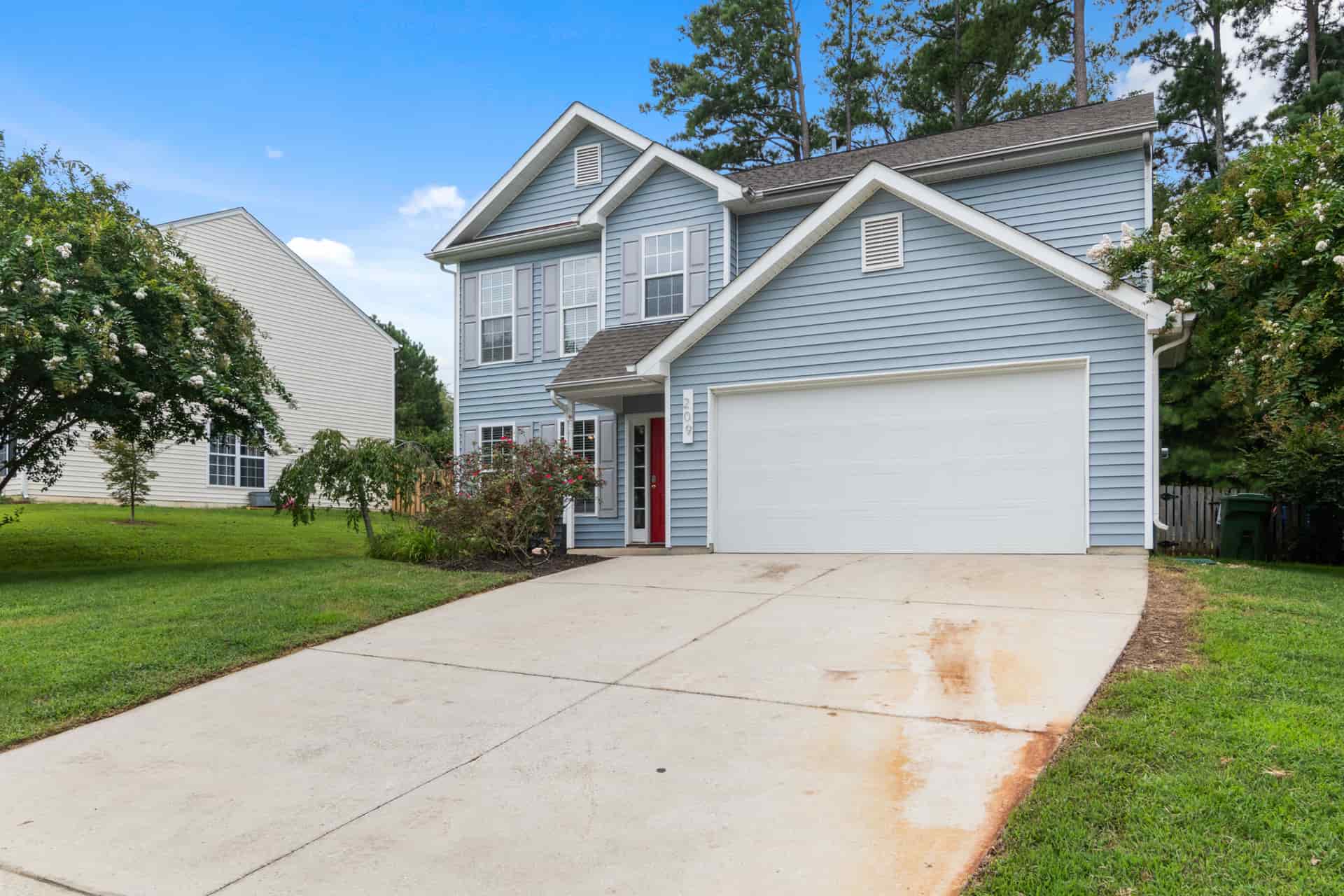
Assume yes, and verify locally. Most US jurisdictions impose some alarm condition at the point of sale or transfer — commonly a working smoke alarm inside every sleeping room and outside every sleeping area, one on every floor including a basement, a carbon monoxide alarm where there is a fuel-burning appliance or an attached garage, and in a growing number of states a sealed ten-year battery rather than a replaceable 9V. The exact rule is set by your state and your municipality, not by the national code, so confirm with your local building or fire department before the inspection rather than after it.
Siren & Safe is reader-funded. We earn a commission on some links on this page, at no cost to you. It does not change what we recommend or the order we rank it in. Full disclosure.
Why this comes up at a sale at all
Smoke alarm rules reach a house twice. Once when it is built or substantially altered, through the building code — and once at transfer, through a state or local law that applies specifically to a sale or a change of occupancy.
The second one catches people out because it is not in the building code. A house that was entirely compliant when it was built in 1998 can fail a 2026 resale condition, because the resale rule has moved — most often to require sealed ten-year batteries, alarms on every floor, or carbon monoxide alarms that did not exist as a requirement when the house was finished.
The national standards are the floor, not the rule. NFPA 72 and the residential code set out the layout that state and local law builds on: an alarm inside each sleeping room, outside each separate sleeping area, and on every floor including basements, interconnected and mains-powered with battery backup in new construction. Your state's transfer requirement is a separate document that may ask for more.
Which is why the only correct answer to "what do I need" is: the layout below, plus one phone call to your local building or fire department. That call is free and it is the whole difference between passing and re-scheduling.
The pre-listing alarm checklist
Work through this before the first showing rather than before the walkthrough. Everything on it is a two-hour job and a modest cost, and every item is a thing an inspector can see in thirty seconds.
Positions
- A smoke alarm inside every room used for sleeping, including rooms the listing calls a den or an office if they have a closet and a window
- A smoke alarm outside each separate sleeping area, in the hallway or landing serving those bedrooms
- A smoke alarm on every floor, including a finished or unfinished basement
- A carbon monoxide alarm where there is any fuel-burning appliance or an attached garage, on each level with sleeping rooms
- Nothing within the exclusion zones around a kitchen, a bathroom or an air vent — those positions produce nuisance alarms and can be flagged
Condition
- Every unit inside ten years of its manufacture date, read off the back of the housing rather than guessed
- Sealed ten-year battery units where your jurisdiction requires them, and no exposed 9V compartments if it does
- Every alarm physically present on its bracket — not in a drawer, not in the garage, not hanging off a wire
- No paint on any housing or over any sensing slot
- Hardwired positions filled with hardwired alarms, with the interconnect tested from both ends
Paperwork and handover
- A written list of every alarm, its room, its type and its manufacture date — useful for the inspection and genuinely useful to the buyer
- Receipts for anything replaced, in case the requirement is one you have to attest to
- Manuals or model numbers left for the new owner, so they know what brand the interconnect is
- Confirmation from your local building or fire department of the requirement you are being measured against
What usually fails, and what it costs to fix
These are the findings that come up repeatedly. None of them is expensive; all of them are cheaper before the inspection than after it.
| Finding | Why it fails | Fix |
|---|---|---|
| Alarm older than ten years | Past the service life the manufacturer and NFPA both state; the sensing chamber cannot be verified | Replace the unit. Read the date on the back of every alarm in the house first. |
| Missing alarm in a bedroom used as an office | The requirement follows the room's use as a sleeping room, not the listing's label | Fit an alarm in it. Cheaper than arguing about what the room is. |
| No alarm in the basement | Every floor includes basements in the standard layout | One sealed-battery unit, mounted clear of the stairs and any vent. |
| Replaceable 9V where a sealed unit is required | A growing number of states require sealed ten-year batteries at transfer | Swap for sealed ten-year units. Do all battery positions at once. |
| No CO alarm with a gas appliance or attached garage | The condition most sellers forget, because CO rules arrived later | A combination unit or a dedicated CO alarm on each level with bedrooms. |
| Battery unit on a hardwired position | Breaks the interconnect, and an inspector can see the capped harness | Fit a hardwired unit matching the brand on the circuit. |
| Interconnect not working after a part-replacement | Mixed brands on one circuit do not pass the signal reliably | Replace the whole circuit with one brand and test from both ends. |
| Alarm painted over | Blocks the sensing slots; counts as a non-functioning alarm | Replace it. Paint cannot be cleaned out of a chamber. |
The total cost of clearing every row above in an average three-bedroom house is a fraction of one day's delay to a closing.
Quick picks
Scored against meets sealed-battery rules, listing specificity, install effort and nuisance resistance. Tap a row for the full write-up. The price in each buy button is the live Amazon price at the last check, stamped with the date it was taken.
| # | Product | Best for | Score | Price |
|---|---|---|---|---|
| 1 | 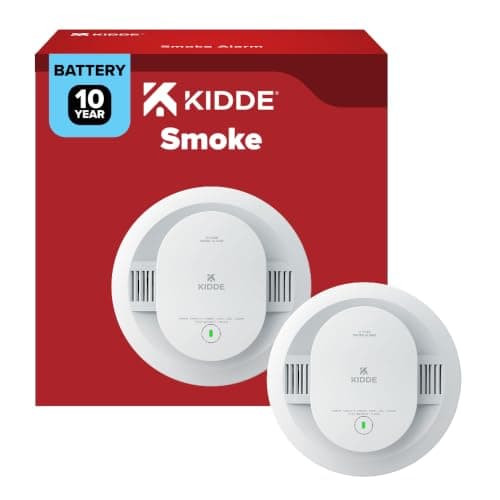 Kidde 20SD10 10-Year Battery Smoke Alarm Sealed ten-year lithium battery and UL 217 10th edition. The unit that answers a sealed-battery requirement directly. | Battery positions, and the sealed ten-year rule | 9.6/ 10 | $32.47 · View on Amazon #ad how we are funded · price as of October 19, 2026 |
| 2 | 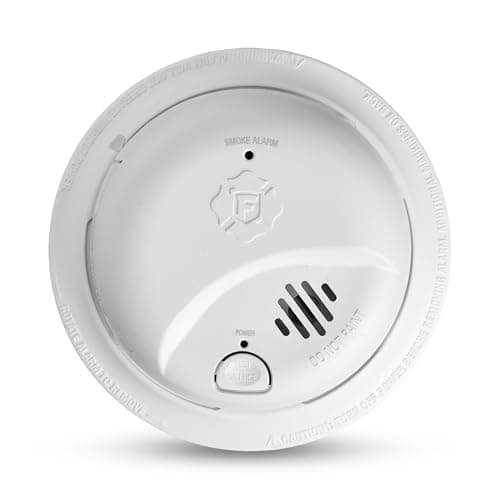 First Alert SMI105-AC Hardwired Smoke Alarm with 10-Year Battery Backup Photoelectric on a 120V circuit with a sealed ten-year backup cell. Keeps the interconnect, kills the chirp. | Hardwired positions, replaced like for like | 8.2/ 10 | |
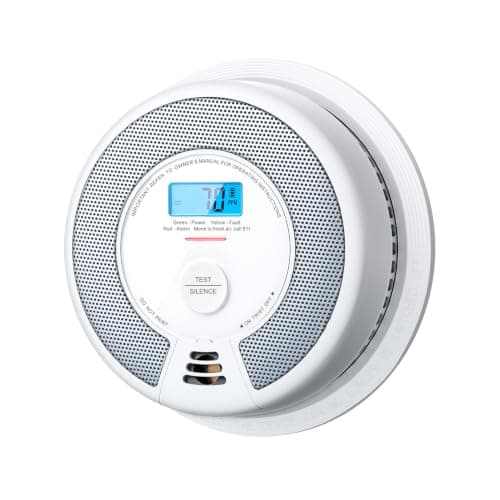
| 3 | 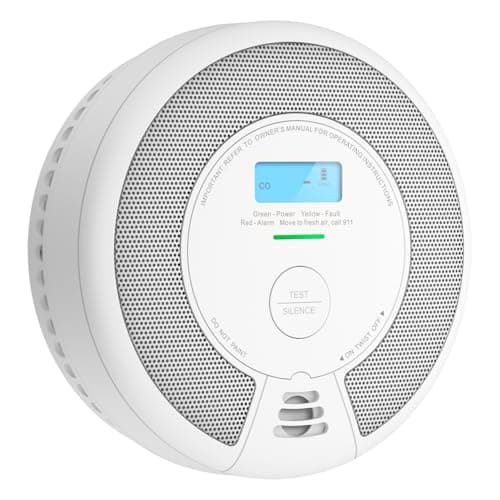 X-Sense SC07 Smoke & Carbon Monoxide Alarm Smoke and CO in one sealed-battery unit, listed to UL 217 and UL 2034, with a CO concentration readout. | Clearing the carbon monoxide condition | 8.8/ 10 |
What to fit, by position
Three units cover almost every house: a sealed-battery alarm for battery positions, a hardwired alarm for wired positions, and a combination unit for the carbon monoxide condition.
1. Battery positions, and the sealed ten-year rule
Kidde 20SD10 10-Year Battery Smoke Alarm
Sealed ten-year lithium battery and UL 217 10th edition. The unit that answers a sealed-battery requirement directly.
- Listed to
- UL 217, 10th edition (UL 217-2024 Ed.10)
- Sensing / agent
- Photoelectric smoke sensing only — no CO cell
- Power / service life
- Sealed 10-year lithium battery; 10-year limited warranty
If the house has battery positions, this is the straightforward answer and it is also the cheapest way to clear the most common modern requirement.
A sealed ten-year unit is the one an inspector cannot argue with. The whole reason states moved to sealed batteries is that removable 9V cells get taken out — for a TV remote, for a smoke chirp at 2am, for a toy — and a sealed unit removes the possibility. An inspector looking at a sealed alarm with a manufacture date inside ten years has nothing left to check.
The UL edition is worth having for the buyer's sake rather than the inspector's. An alarm listed to the 10th edition is built to pass the cooking-nuisance test, which means the hallway alarm near the kitchen is far less likely to be ripped off the ceiling in the new owner's first fortnight.
Buy them in a multi-pack and do every battery position at once. Mixed ages across a house is exactly the finding that turns one item into a list.
What it does well
- Sealed ten-year lithium battery, which is what a sealed-battery requirement asks for
- Listed to UL 217 10th edition — the edition carrying the cooking-nuisance test
- No low-battery chirps for ten years, so nothing for a buyer to complain about during their first month
- Twist-and-click bracket, and it self-tests rather than waiting for a button press
The downside
- No CO cell, so a CO requirement needs a separate device or a combination unit
- Battery only — it will not join a hardwired interconnect
- Replacing a hardwired alarm with this is a downgrade an inspector may flag
Do not buy this if: the position you are filling is hardwired. Putting a battery unit on a live alarm circuit breaks the interconnect and can fail an inspection on its own.
- Listed to the 10th edition of UL 217, which carries the cooking-nuisance test the 8th edition introduced
- Kidde's own wording: enhanced sensing technology reduces false alarms often caused by cooking
- No low-battery chirps for ten years — the first end-of-life beep is the replacement signal
- Three long beeps and a red flash on smoke, so the pattern tells you which hazard it is
- Twist-and-click bracket, and it self-tests rather than waiting for you to press the button
#ad how we are funded · price as of October 19, 2026
2. Hardwired positions, replaced like for like
First Alert SMI105-AC Hardwired Smoke Alarm with 10-Year Battery Backup
Photoelectric on a 120V circuit with a sealed ten-year backup cell. Keeps the interconnect, kills the chirp.
- Listed to
- UL 217 — First Alert states compliance with the latest edition
- Sensing / agent
- Photoelectric smoke sensing only — no CO cell
- Power / service life
- 120V AC with a sealed 10-year lithium backup battery
Houses built since the 1990s usually have hardwired interconnected positions, and the single most common seller mistake is filling one with a battery alarm because it was on the shelf.
An inspector who sees a battery unit hanging where a harness is capped off has found two problems: a lost interconnect and an obvious alteration. Replacing like for like avoids both, and the sealed backup cell means the new owner is not greeted by a chirp six months in.
Brand matters here and it is the thing nobody expects. Are smoke alarms interchangeable explains why — the connector fits across brands and the interconnect signal does not, so a mixed circuit fails with no warning light at all. Match what is already up there, and test the interconnect from both ends before the walkthrough.
What it does well
- Drops onto an existing 120V alarm circuit and interconnects with compatible First Alert and BRK units
- Non-replaceable ten-year backup cell rather than an annual 9V change
- Photoelectric sensing, which is the right default for a sleeping area
- First Alert's stated replacement for the SMI105-AC it is discontinuing
The downside
- Will not interconnect with Kidde alarms — match the brand already on the circuit
- States the latest UL 217 edition without naming the edition number
- The breaker has to come off, so this is a proper job rather than a twist-and-go
Do not buy this if: the circuit holds Kidde alarms. Mixing brands on an interconnected circuit silently breaks the linking, which is a real inspection finding and a real safety loss.
- Photoelectric sensing on a hardwired circuit, which is the combination most houses should be replacing into
- Precision Detection sensing, which First Alert states meets the new industry standards on cooking nuisance alarms
- Non-replaceable 10-year backup cell rather than an annual 9V change
- Test/silence button that holds the hush for up to eight hours
- Interconnects over the existing alarm circuit with compatible First Alert and BRK units
First Alert product documentation
3. Clearing the carbon monoxide condition
X-Sense SC07 Smoke & Carbon Monoxide Alarm
Smoke and CO in one sealed-battery unit, listed to UL 217 and UL 2034, with a CO concentration readout.
- Listed to
- UL 217 and UL 2034
- Sensing / agent
- Photoelectric smoke sensing plus an electrochemical CO cell
- Power / service life
- 10-year sealed lithium battery, not hardwired
The carbon monoxide condition is the part of a sale requirement sellers most often miss, because CO rules arrived later than smoke rules and are not in anyone's muscle memory.
Where a house has a fuel-burning appliance — gas furnace, gas range, water heater, fireplace — or an attached garage, there is very commonly a CO alarm requirement at transfer. A combination unit satisfies both conditions in one position and one purchase, which is why it is here.
The caveat is worth taking seriously: some jurisdictions and some inspectors expect separate devices, or expect CO alarms at particular positions. Combo vs separate alarms lays out the trade-offs, and where to install CO detectors covers the positions. One phone call to the local building department settles it before you buy six of anything.
What it does well
- Covers both hazards in one ceiling position, which is the efficient way to satisfy two requirements
- Listed to UL 217 for smoke and UL 2034 for carbon monoxide
- Sealed ten-year lithium battery with no annual battery task
- LCD reads the measured CO concentration rather than only alarming
The downside
- Standalone — no interconnect, so it is not the answer for a wired position
- A combination unit retires as one device, so both sensors go at once
- Some jurisdictions prefer separate devices at specific heights — check before relying on a combo
Do not buy this if: your local rule specifies separate smoke and CO devices, or specifies CO alarm positions a ceiling combo cannot satisfy. Ask first; this is the one requirement that varies most.
- LCD reads the measured CO concentration rather than only alarming
- Standalone unit — no wireless interconnect, no Wi-Fi, no base station
- Sealed battery, so there is no annual battery ritual and no low-battery chirp until end of life
- Test and silence on one control
Doing it in one pass
Two hours with a ladder, a marker and a notepad. Do it before the photographs, not before the closing.
Call your local building or fire department first
Ask one question: what is the smoke and carbon monoxide alarm requirement for a residential sale in this jurisdiction? Ask specifically whether sealed ten-year batteries are required and whether a certificate or self-attestation is involved. This call changes what you buy, so make it before you shop.
Walk the house and write down every position
Room, type (smoke, CO or combination), power (battery or hardwired), and the manufacture date off the back of the housing. Include the basement, the landing and any room with a bed in it regardless of what the floorplan calls it.
Mark the gaps against the checklist above
Missing positions, out-of-date units, 9V units where sealed is required, hardwired positions with battery alarms, and any CO gap. The list you end up with is your shopping list.
Buy one brand for the hardwired circuit and sealed units for the rest
Match the brand already on the interconnected circuit — Kidde to Kidde, First Alert or BRK to First Alert or BRK. Battery positions can be any current sealed unit. Buy a multi-pack rather than singles.
Fit them with the breaker off for anything hardwired
Confirm dead at the alarm before you touch the harness. Use the bracket and the harness that come with the new unit rather than reusing an old plug unless the manufacturer says to.
Test every alarm, and test the interconnect from both ends
Press and hold each test button until it sounds. On the hardwired circuit, hold one alarm's button and have someone confirm the far end of the house sounds, then repeat from a different alarm. This is the check that catches the silent failure.
Leave the list for the buyer
Room, type, brand, manufacture date. It takes two minutes, it answers the inspector's questions without you being there, and it is the kind of handover that makes a buyer trust the rest of the house.
If you are the buyer instead
Run the same checklist in reverse during your own walkthrough, and read the manufacture date on every unit rather than trusting a test button. A seller's compliance is a snapshot at one date; the dates on the housings tell you what you are actually inheriting.
Three things are worth asking for explicitly. Which brand the hardwired circuit is, because that determines what you can fit in five years. Whether the interconnect has been tested from both ends. And whether any alarm has been replaced recently with a different brand from the rest.
If the alarms are seven or eight years old, factor a full replacement into your first-year costs rather than treating it as a surprise. Doing the whole house at once is cheaper, gives every alarm the same date, and lets you choose the sensing type and the interconnect route deliberately. Best smoke detectors and how many smoke detectors do I need are the two pages to start from.
Questions people actually ask
Are smoke detectors required when selling a house?
Do I need sealed ten-year battery smoke alarms to sell?
Can I use battery alarms to replace hardwired ones before a sale?
Who is responsible for smoke alarms at closing, buyer or seller?
How these picks were chosen. On published specifications, safety listings and manufacturer documentation — plus the findings of organizations that do run tests. We have no laboratory and we do not burn anything. Read the full methodology.
Sources
- NFPA — NFPA 72, National Fire Alarm and Signaling Code (2025 edition)
- International Code Council — IRC Chapter 3 — building planning (R310, R314, R315)
- UpCodes — Specific location requirements for smoke alarms (NFPA 72 §29.11.3.4)
- NFPA — Smoke alarms — installation and placement guidance
- UL Solutions — UL 217 — smoke alarms
- UL Solutions — UL 217, Standard for Smoke Alarms, published with new technical requirements
- UL Solutions — UL 2034 — single and multiple station carbon monoxide alarms
- US Fire Administration — Home fire prevention
Read next
Placement & Code
NFPA 72 Residential Requirements
The residential sections, quoted with their numbers, and what each one means in practice.
Placement & Code
Rental and Landlord Requirements
Where rental alarm duties actually come from, and what tenants and landlords should check.
Placement & Code
How Many Smoke Detectors Do I Need?
Worked counts for real house shapes, including split levels and open plans.
Smoke Detectors
When to Replace Smoke Detectors
Where the date is, why the test button proves little, and what to replace with.
Placement & Code
A printable room-by-room audit of alarms, CO detection, exits and suppression.