Smoke Detectors
The Best Smoke Detectors Under $50
Almost nothing you pay extra for in this category is detection. Here is what $50 genuinely buys, what it does not, and the one place where spending less is the wrong call.
By Ryder M.Last reviewed
Buy the X-Sense SC07 if you have one alarm to buy under $50: a sealed 10-year photoelectric smoke and CO alarm, certified to UL 217 and UL 2034, that mounts with two screws and never needs a battery. If you are buying several and want the lowest cost per covered room, the Kidde 20SD10 is the cheapest alarm this site recommends anywhere. If the house is already wired for alarms, the First Alert SMI105-AC keeps the interconnect for about the same money. The useful thing to know before you shop is that the price ceiling costs you features, not detection — every alarm here has passed the same UL 217 laboratory fires as a $120 smart alarm.
Siren & Safe is reader-funded. We earn a commission on some links on this page, at no cost to you. It does not change what we recommend or the order we rank it in. Full disclosure.
What $50 actually buys in a smoke alarm
Start with the part most budget roundups bury: the price ceiling does not cost you detection. Every alarm on this page is certified to UL 217, which means it has passed the same smoke-entry and sensitivity tests in the same laboratory fires as a $120 smart alarm. There is no cheap-alarm tier that detects smoke worse. If there were, it would not be certified, and it would not be legal to sell as a smoke alarm.
What under $50 buys, comfortably, is the specification most US households should be installing anyway: a sealed 10-year battery, photoelectric or current-generation sensing built around the cooking-nuisance requirements, an 85 dB horn, an end-of-life warning, and in several cases a certified CO cell in the same housing. In one case it also buys interconnection. That is not a compromise list. That is the right list.
What it does not buy is the convenience layer: Wi-Fi and phone alerts, app silencing, a lit display, a strobe for a hearing-impaired household, or a dual-sensor chamber. Those are real features with real uses, and none of them is detection performance. A $120 smart alarm in a house with three unprotected bedrooms is the wrong spend, every time.
The one place the ceiling genuinely bites is accessibility hardware. A strobe-and-bed-shaker setup for a deaf or hard-of-hearing household starts well above $50 and there is no budget equivalent — that is a case where the cap should simply be ignored. Best smoke detectors for the hard of hearing is the page for it.
How we scored these
Five criteria, chosen for a buyer working to a cap. Detection is not among them, for the reason above: every alarm here is certified to UL 217 and that is the detection question settled.
- Cost per covered room. The only budget metric that matters. A house needs an alarm inside each bedroom, one outside each sleeping area and one per floor — so the right question is not "how much is this alarm" but "how many rooms does $150 cover with this alarm".
- What you get for the money. Whether the unit adds a certified CO cell, an interconnect, a display or a voice at this price, or whether you are paying purely for the horn.
- Nuisance resistance. How likely the alarm is to go off while you cook, because the cheapest alarm in the world is worthless in a drawer. Photoelectric sensing and a usable hush button both score here.
- Ten-year upkeep. What the household has to remember. A sealed cell scores highest because the answer is nothing, and over a decade it is also cheaper than replacement 9V batteries.
- Install simplicity. Whether it goes up with two screws or needs a junction box and 120 V. Hardwired units lose points here and gain them on interconnect.
Quick picks
Scored against cost per covered room, what you get for the money, nuisance resistance, ten-year upkeep and install simplicity. Tap a row for the full write-up. The price in each buy button is the live Amazon price at the last check, stamped with the date it was taken.
| # | Product | Best for | Score | Price |
|---|---|---|---|---|
| 1 | 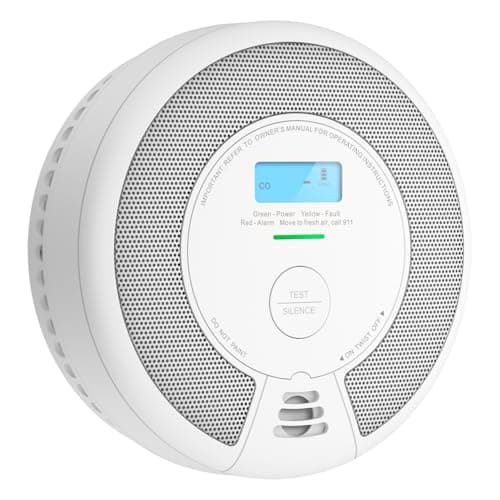 X-Sense SC07 Smoke & Carbon Monoxide Alarm Smoke and CO, both certified, sealed for ten years, with a CO reading on the display. Nothing else at this price covers two hazards from one ceiling position. | The single best alarm you can buy under $50 | 9.2/ 10 | |
| 2 | 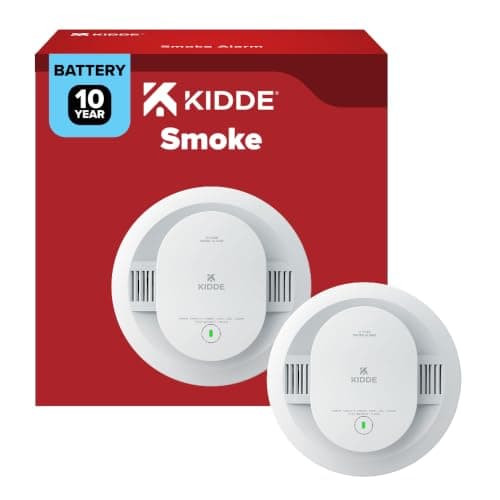 Kidde 20SD10 10-Year Battery Smoke Alarm The cheapest alarm we recommend anywhere, and the reason the honest advice — cover every bedroom and every floor — stops being a budget conversation. | Buying several — the lowest cost per covered room on this site | 8.7/ 10 | $32.47 · View on Amazon #ad how we are funded · price as of November 11, 2026 |
| 3 | 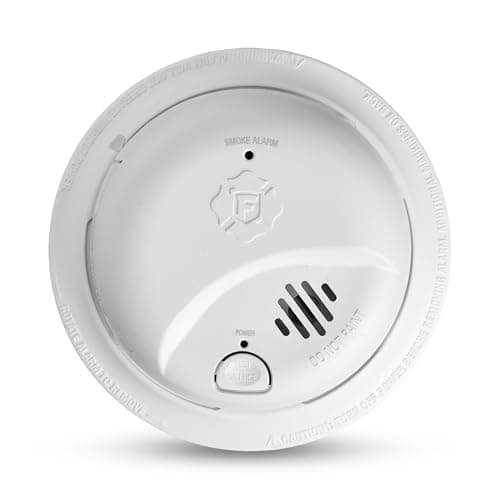 First Alert SMI105-AC Hardwired Smoke Alarm with 10-Year Battery Backup A hardwired alarm with a 10-year battery backup and wired interconnect, for roughly what a decent battery alarm costs. If the ceiling already has a wired base, this is the replacement. | A house already wired for alarms — keeps the interconnect, under the ceiling | 8.6/ 10 | |
| 4 | 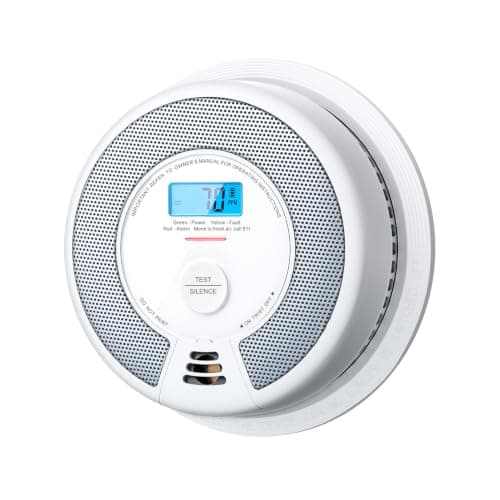 X-Sense SC07-W Wireless Interconnected Smoke & CO Alarm The SC07 with a wireless interconnect, and the cheapest honest way to get alarms that sound together in a house that was never wired for them. | A whole house with no alarm wiring — interconnect for under $50 a unit | 9.0/ 10 | |
| 5 | 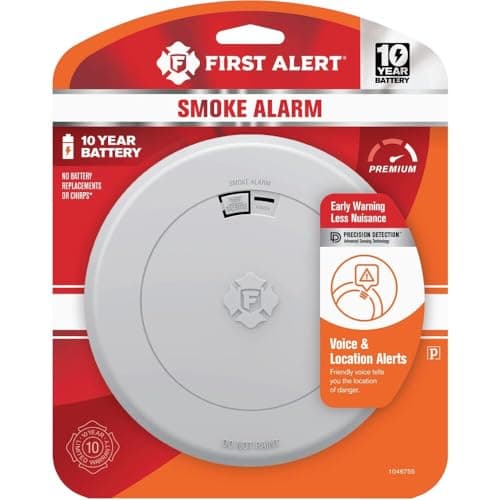 First Alert SM210V 10-Year Battery Smoke Alarm with Voice Alerts A sealed 10-year photoelectric alarm that announces the location you programmed. The cheapest voice-location alarm worth buying, and First Alert publishes the sensor type. | A sleeping area — the alarm that says which room, still under the ceiling | 8.4/ 10 | $40.82 · View on Amazon #ad how we are funded · price as of November 11, 2026 |
| 6 | 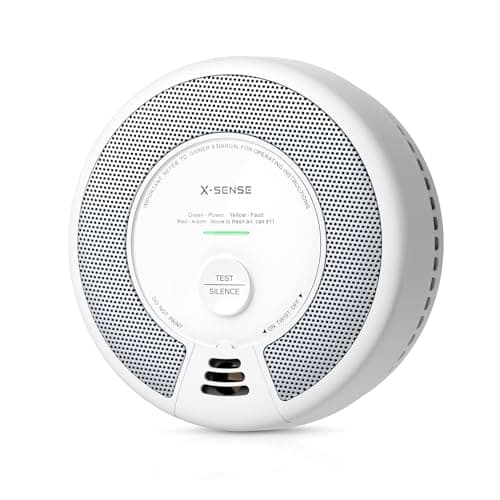 X-Sense SC06 Smoke & Carbon Monoxide Alarm Smoke and CO in a dust-resistant housing for less than most smoke-only alarms. The cheap fix for the room where the alarm keeps going off for no reason. | A laundry room, workshop or furnace room that keeps nuisance-tripping | 8.8/ 10 |
The picks
1. The single best alarm you can buy under $50
X-Sense SC07 Smoke & Carbon Monoxide Alarm
Smoke and CO, both certified, sealed for ten years, with a CO reading on the display. Nothing else at this price covers two hazards from one ceiling position.
- Listed to
- UL 217 and UL 2034
- Sensing / agent
- Photoelectric smoke sensing plus an electrochemical CO cell
- Power / service life
- 10-year sealed lithium battery, not hardwired
Why this is the best value in the category, not just under $50. A combination alarm halves the number of legal ceiling positions you have to find, and finding positions is the hard part of covering a house. One device, certified for both hazards, sealed for a decade, at the price of a cheap smoke-only alarm plus a few dollars. That is the arithmetic, and nothing else here beats it.
What the extra money buys further up the range. A $120 smart alarm gives you phone alerts, voice annunciation and app silencing. It does not give you better detection — it has passed the same UL 217 tests as this unit. If you have $120 and three unprotected bedrooms, three of these beats one of those by a distance. Smart vs regular smoke detectors works through where the line genuinely sits.
Position still does most of the work. Keep it outside the 10 ft radial distance from a fixed cooking appliance if the layout allows, and stay 36 in clear of a bathroom door, a supply register and a ceiling-fan blade tip. A $35 alarm in the right place beats a $150 alarm in the wrong one every time.
What it does well
- **Two hazards for one price.** Certified to UL 217 and UL 2034, which means it is a real smoke alarm and a real CO alarm — and a separate CO alarm would eat most of the remaining budget
- **Photoelectric smoke sensing**, named on the listing, which is the sensor that responds sooner to smoldering fires and nuisance-trips far less on cooking than ionization
- **Sealed 10-year lithium cell.** Over its life it is cheaper than a decade of 9V batteries, and it removes the failure mode that actually kills people: a battery somebody took out
- **LCD shows the measured CO concentration** rather than only alarming, which is unusual anywhere near this price
- **No wiring.** Wall or ceiling, bracket and anchors in the box, done in two minutes
- Comfortably inside the $50 ceiling at the time of writing, with room to spare if the price moves
The downside
- **No interconnect at all.** X-Sense lists it as a standalone unit — not wireless-capable, not base-station compatible. In a two-story house that is the thing you are giving up by not spending more
- **ETL certified to UL 217 rather than UL-listed.** Same standard, recognized laboratory, different mark. If an inspector or insurer has asked specifically for a UL mark, check before you buy
- **Sealed, so disposable at ten years** — the whole unit is scrap, and the lithium cell belongs at a recycling point rather than in the trash
- **No app, no notification.** If the house empties out for weeks, nothing tells you the alarm went off
- The display is small and unlit; it is a daytime instrument, not something you read from the bed
Do not buy this if: a house with bedrooms on two floors, where alarms that sound together are worth more than anything else on this page — the SC07-W below does that and is still under the ceiling. For the full multi-floor argument see [best smoke detectors for two-story homes](/smoke-detectors/best-smoke-detectors-for-two-story-homes).
- LCD reads the measured CO concentration rather than only alarming
- Standalone unit — no wireless interconnect, no Wi-Fi, no base station
- Sealed battery, so there is no annual battery ritual and no low-battery chirp until end of life
- Test and silence on one control
2. Buying several — the lowest cost per covered room on this site
Kidde 20SD10 10-Year Battery Smoke Alarm
The cheapest alarm we recommend anywhere, and the reason the honest advice — cover every bedroom and every floor — stops being a budget conversation.
- Listed to
- UL 217, 10th edition (UL 217-2024 Ed.10)
- Sensing / agent
- Photoelectric smoke sensing only — no CO cell
- Power / service life
- Sealed 10-year lithium battery; 10-year limited warranty
Cheap is the feature, and it is a real one. The single biggest safety gain available in this category is not on any spec sheet: it is the number of alarms in the house. NFPA's analysis of US home fires puts nearly three in five home fire deaths in homes with no working alarm. Going from two alarms to six does more for your odds than every premium feature in this roundup combined, and the unit that makes that affordable is the unit that actually gets installed.
What you are giving up, stated plainly. No CO cell, no interconnect, no voice, no display. Three of those four are things most households can live without. The CO cell is the one to think hard about: if the house burns anything, this alarm is covering one of two hazards. Best combination smoke and CO alarms is where to go if it burns gas.
Date them on day one. Buy four at once and you replace four at once. The date stamped on the back is the manufacture date, so write the install month on each unit in permanent marker — when to replace smoke detectors explains why that distinction matters at year nine.
What it does well
- **The lowest price in this roundup by a clear margin**, which means a three-bedroom house can go from two alarms to six for less than the cost of one smart unit
- **Certified to UL 217 10th edition** per Kidde's certification document — the current edition, which carries the cooking-nuisance test
- **Sealed 10-year battery.** Kidde publishes "No battery changes for 10 years", with the footnote that this is not a battery performance claim, and the unit beeps to remind you to replace it ten years after it is powered
- **85 dB alarm and LED status lights** — the specification every certified alarm has to meet, with nothing extra to go wrong
- **Twist-and-click bracket**, two screws, no wiring, and it wall-mounts where a ceiling is out of reach
- A brand name a landlord, inspector or home buyer recognizes on sight, which avoids an argument about what is on the ceiling
The downside
- **Smoke only — no CO cell.** In a house with gas, oil, a fireplace, an attached garage or a generator, this alarm does not touch the carbon monoxide hazard at all and you need a second device
- **No interconnect**, wired or wireless. It sounds where it is and nowhere else
- **Kidde does not name the sensor type.** Its product page says "Advanced Smoke Detection" and "enhanced sensing technology", and the retail listing says the same. If sensor type is a hard requirement for you, that matters — see [non-toxic smoke detectors](/smoke-detectors/non-toxic-smoke-detectors)
- **No voice, no display, no app.** It is a horn and two LEDs, which is the honest reason it is the cheapest unit here
- Sealed, so at ten years it is scrap rather than a battery change
Do not buy this if: the only alarm in a house with any fuel-burning appliance, because it cannot detect carbon monoxide. Pair it with a CO alarm or buy a combination unit — [do I need a CO detector](/carbon-monoxide-detectors/do-i-need-a-co-detector) is the five-minute version of that decision.
- Listed to the 10th edition of UL 217, which carries the cooking-nuisance test the 8th edition introduced
- Kidde's own wording: advanced sensing technology helps distinguish real smoke from everyday cooking or steam
- No low-battery chirps for ten years — the first end-of-life beep is the replacement signal
- Three long beeps and a red flash on smoke, so the pattern tells you which hazard it is
- Twist-and-click bracket, and it self-tests rather than waiting for you to press the button
#ad how we are funded · price as of November 11, 2026
3. A house already wired for alarms — keeps the interconnect, under the ceiling
First Alert SMI105-AC Hardwired Smoke Alarm with 10-Year Battery Backup
A hardwired alarm with a 10-year battery backup and wired interconnect, for roughly what a decent battery alarm costs. If the ceiling already has a wired base, this is the replacement.
- Listed to
- UL 217 — First Alert states compliance with the latest edition
- Sensing / agent
- Photoelectric smoke sensing only — no CO cell
- Power / service life
- 120V AC with a sealed 10-year lithium backup battery
If the wiring exists, use it. A hardwired, interconnected system is the configuration the residential code asks for in new construction, and it is better than anything battery-powered for one reason: every alarm in the house sounds at once. Dropping a wired house down to standalone battery alarms to save an hour of work is the worst trade available in this category, and it is extremely common.
The budget angle. Interconnect is normally the feature that pushes an alarm over $50 — wireless-interconnect units cost more, and smart alarms cost multiples. A plain hardwired unit gets you the same outcome for less, because the expensive part is already in your ceiling. That is why this alarm earns a place on a price-capped list.
Replace the whole loop, not one alarm. Alarms on a shared circuit age together, and a mixed-age loop with one new unit is a loop that will chirp again next year. Do them all, keep the receipts, and write the install month on the back of each. Best hardwired smoke detectors covers the wider field, and hardwired vs battery smoke detectors settles the choice if you are still deciding.
What it does well
- **Wired interconnect** — when one alarm sounds, all compatible alarms sound. That is the single most valuable feature in this entire roundup and it is rare under $50
- **10-year battery backup**, so the alarm keeps working through a power cut and there is no annual battery to change
- **Alarm indicator identifies which unit started it**, which ends the hunt around the house that interconnected systems otherwise create
- **End-of-life warning** when the unit is due for replacement, rather than silent expiry
- **First Alert's Precision Detection sensing** is built around the current industry requirements for reduced cooking nuisance alarms, which is the standard the newest UL 217 edition is written around
- Cheapest route to a properly interconnected house if the wiring is already in the ceilings
The downside
- **It needs a wired base and 120 V.** If your ceilings have no alarm wiring, this is not the alarm — and if you are not confident with the junction box and connector, that is an electrician, not a Saturday
- **Smoke only.** No CO cell, so a wired house with gas appliances still needs CO coverage from somewhere
- **First Alert does not name the sensor type** on the listing — "Precision Detection advanced sensing technology" is the published wording
- **Interconnect compatibility is per-brand and per-family**, not universal. Mixing manufacturers on one loop is where retrofits go wrong — check before you buy a set
- A nuisance alarm now sounds in every room at once, which is the point and is still unpleasant at 2 a.m.
Do not buy this if: a rental or any home with no alarm wiring in the ceilings — go to the SC07 or the SC07-W instead. Before you mix brands on an existing loop, read [are smoke alarms interchangeable](/smoke-detectors/are-smoke-alarms-interchangeable), which is the page that saves the most money in this hub.
- Photoelectric sensing on a hardwired circuit, which is the combination most houses should be replacing into
- Precision Detection sensing, which First Alert states meets the new industry standards on cooking nuisance alarms
- Non-replaceable 10-year backup cell rather than an annual 9V change
- Test/silence button that holds the hush for up to eight hours
- Interconnects over the existing alarm circuit with compatible First Alert and BRK units
First Alert product documentation
4. A whole house with no alarm wiring — interconnect for under $50 a unit
X-Sense SC07-W Wireless Interconnected Smoke & CO Alarm
The SC07 with a wireless interconnect, and the cheapest honest way to get alarms that sound together in a house that was never wired for them.
- Listed to
- UL 217 and UL 2034
- Sensing / agent
- Photoelectric smoke sensing plus an electrochemical CO cell
- Power / service life
- 10-year sealed lithium battery, not hardwired
The one feature worth breaking a budget for. Everything else on this page is a convenience. Interconnection is not: it is the mechanism that gets a sleeping person out of a back bedroom with the door shut and a fan running, which is the scenario the fatality statistics are mostly made of. If the choice is four standalone alarms or three interconnected ones, take the three.
Why wireless rather than wired here. Because retrofitting alarm cable through finished ceilings is an electrician's invoice that dwarfs the alarms. Radio gets you the same functional outcome for the price of the units, which is the entire reason this product category exists. Interconnected smoke alarms covers both routes and when each makes sense.
Buy the set in one order. Pair every unit at the same time, label them by room on the back, then mount them. Discovering a range problem after the holes are drilled is the one avoidable mistake with these.
What it does well
- **Wireless interconnect between units** — one alarm sounds, they all sound. In a house with bedrooms upstairs this is worth more than every other feature on this page put together
- **Smoke and CO certified** to UL 217 and UL 2034, same as the SC07, with the photoelectric sensor named on the listing
- **Radio between the alarms, not Wi-Fi.** No router, no account, no cloud dependency — if the internet is down they still sound together
- **Sealed 10-year lithium cell** in every unit, no wiring, no hub, wall or ceiling mounting
- Still under the $50 ceiling per unit at the time of writing, which is the only reason interconnect appears on a budget page at all
The downside
- **The real entry price is double**, because one SC07-W on its own is just a more expensive SC07. On a per-house basis this is the most expensive recommendation here
- **Range is finite and your house decides it.** Masonry, foil-backed insulation and steel cut into the link, so pair the set on a table and test it in the real positions before drilling
- **ETL to UL 217 rather than UL-listed**, like the rest of the X-Sense range
- **It will not join a landlord's existing hardwired loop.** Wireless sets are their own network alongside whatever is already fitted, never an extension of it
- Sealed and disposable at ten years — and you will be replacing a matched set
Do not buy this if: a studio or a single-floor one-bedroom, where there is nothing to interconnect and the plain SC07 does the same job for less. In a rented apartment, check the fixtures clause first — [best smoke detectors for apartments](/smoke-detectors/best-smoke-detectors-for-apartments) covers what a tenant can and cannot do.
- Wireless interconnect for up to 24 units — one alarm triggers the whole set
- No wiring, which is the point: it retrofits interconnection into a house that never had it
- LCD CO reading on each unit
- X-Sense recommends it for large or multi-story homes
5. A sleeping area — the alarm that says which room, still under the ceiling
First Alert SM210V 10-Year Battery Smoke Alarm with Voice Alerts
A sealed 10-year photoelectric alarm that announces the location you programmed. The cheapest voice-location alarm worth buying, and First Alert publishes the sensor type.
- Listed to
- UL 217 — First Alert states compliance with the latest edition
- Sensing / agent
- Photoelectric smoke sensing, with spoken annunciation
- Power / service life
- Sealed 10-year lithium battery
Where a voice alarm earns its keep. Not volume — orientation. A person woken by a horn in an unfamiliar dark hallway loses seconds working out where the sound is coming from, and seconds are the whole budget in a house fire. An alarm that says "basement" is doing something a horn cannot. In a two-story house where the stairs are the only way out, that is worth the few extra dollars.
It is still a smoke-only alarm. This is the trade to be clear about. You are paying for the announcement and giving up the CO cell. In an all-electric house with no attached garage that is defensible. In a gas house it is not, and the SC07 is the better buy.
Program it before it goes up. Set the location on the table, test it, then mount it. Nobody enjoys doing that from a stepladder.
What it does well
- **Voice alerts that name the location** you set, which orients a half-woken person before they have opened their eyes — the one premium feature on this page with a real safety argument behind it
- **First Alert publishes "Sensor Type Photoelectric"** on its own product page, which makes this the best-documented alarm in the roundup
- **Sealed 10-year battery** with no low-battery chirps for the life of the alarm, plus an end-of-life warning
- **85 dB alarm and a 10-year limited warranty**, both published by First Alert rather than inferred from a retailer
- A malfunction signal distinct from an alarm — three chirps a minute per BRK's specification sheet, meaning replace rather than reset
The downside
- **Smoke only.** No CO cell, so it does not replace a CO alarm in a house with any fuel-burning appliance
- **No interconnect**, so the voice tells you the room only if this is the alarm that sounded
- **The voice is a recorded location label**, not intelligence — people expect more from the word on the box than it delivers
- **Near the top of the budget** for a feature that is situational: in a one-room apartment, naming the room tells you nothing you cannot see
- Sealed and disposable at ten years
Do not buy this if: a household that needs CO coverage from the same device, or anybody buying in quantity — the Kidde 20SD10 covers more rooms for the same outlay. For hearing-impaired households the voice is not the answer either; see [best smoke detectors for the hard of hearing](/smoke-detectors/best-smoke-detectors-for-hard-of-hearing).
- Speaks rather than only sounding a horn, which removes the 3am question of what the noise means
- Photoelectric sensing — the right sensor for a hallway or a landing
- Sealed ten-year cell, so the alarm never asks to be reached
- Part of First Alert's current SM-series rather than the outgoing SMI line
First Alert product documentation
#ad how we are funded · price as of November 11, 2026
6. A laundry room, workshop or furnace room that keeps nuisance-tripping
X-Sense SC06 Smoke & Carbon Monoxide Alarm
Smoke and CO in a dust-resistant housing for less than most smoke-only alarms. The cheap fix for the room where the alarm keeps going off for no reason.
- Listed to
- UL 217 and UL 2034
- Sensing / agent
- Photoelectric smoke sensing plus an electrochemical CO cell
- Power / service life
- 10-year sealed battery
The utility-room failure mode. Alarms in laundry rooms, workshops and furnace rooms do not usually fail by missing a fire. They fail by going off too often, getting taken down, and never going back up. A housing designed to keep grit out is a cheap intervention against that sequence, and it costs less here than most plain alarms.
The CO half is the point in a furnace room. The furnace, the water heater and anything with a flue are the appliances that produce carbon monoxide, and they live in exactly these rooms. An alarm with no CO cell down there is covering the less likely of the two hazards in front of it. Best CO detectors for basements is the companion page.
Vacuum it twice a year. Dust resistance buys margin, not immunity, and two minutes with a vacuum nozzle beats any purchase on this page for nuisance alarms.
What it does well
- **Dust-resistant housing**, which addresses the actual cause of nuisance alarms in utility spaces: fine particulate settling in the sensing chamber
- **Smoke and CO certified** to UL 217 and UL 2034, which is exactly the right pairing for a furnace room
- **Photoelectric smoke and electrochemical CO sensors** named on the listing
- **Sealed 10-year lithium cell**, wall or ceiling mounting, no wiring
- Among the cheapest combination alarms anywhere, which makes covering a basement an easy decision
The downside
- **No display.** It alarms; it does not report a CO concentration, and in a furnace room a number over time is how you spot a failing appliance
- **Standalone only** — X-Sense points you at the SC06-W for wireless interconnect, which this site does not stock
- **"Dust-resistant" is a design claim, not a test result.** There is no published ingress rating behind it
- **ETL to UL 217 rather than UL-listed**
- Sealed and disposable at ten years
Do not buy this if: a bedroom or hallway where you would rather read the CO concentration off a display — the SC07 is the same alarm with the LCD. It is also not a substitute for a heat alarm in an unconditioned garage or attic; see [heat alarms for garages](/smoke-detectors/heat-alarms-for-garages).
- Dust-resistant housing — the cheap fix for nuisance alarms in a dusty utility space
- Dual smoke and CO detection in one ceiling position
- Single test and silence control
- No display: it alarms, it does not report a concentration
The combination alarm version of this page
If the house burns gas, oil or wood, or has an attached garage, the better use of the same money is a combination alarm. Best smoke and carbon monoxide alarms under $50 covers the four certified units that fit under the same cap - including one with a wireless interconnect - and explains why covering two hazards from one ceiling position is the cheaper arithmetic.
The six alarms side by side
Specifications as published by the manufacturers and their retail listings, checked on 2026-11-06. Every unit here is certified to UL 217; the combination units are additionally certified as CO alarms. No prices appear in this table on purpose — the live price sits in each buy button and is refreshed daily.
| Alarm | CO cell | Power | Interconnect | Extras | Sensor named? |
|---|---|---|---|---|---|
| X-Sense SC07 | Yes — UL 2034 | Sealed 10-year lithium | No | CO concentration on LCD | Yes — photoelectric |
| Kidde 20SD10 | No | Sealed 10-year battery | No | LED status lights only | No — "advanced sensing technology" |
| First Alert SMI105-AC | No | 120 V hardwired, 10-year backup | Wired, same-family | Alarm-origin indicator | No — "Precision Detection" |
| X-Sense SC07-W | Yes — UL 2034 | Sealed 10-year lithium | Wireless, between units | CO concentration on LCD | Yes — photoelectric |
| First Alert SM210V | No | Sealed 10-year battery | No | Voice names the room | Yes — photoelectric |
| X-Sense SC06 | Yes — UL 2034 | Sealed 10-year lithium | No | Dust-resistant housing | Yes — photoelectric |
Specifications change without a model number changing, and the same alarm is sold under several SKUs and listing titles. Check the listing and the box before you order. Where the sensor type is not named, that is the manufacturer's published wording, not an omission on our part — non-toxic smoke detectors explains why it has become hard to read.
Spend on quantity before you spend on features
This is the whole argument of the page, so it gets its own section. The highest-value thing you can do with a fixed budget in this category is buy more alarms. NFPA's analysis of US home fires found nearly three in five home fire deaths happened in homes with no smoke alarms or with alarms that failed to operate, and that the death rate per 1,000 home structure fires is around 60 percent lower where an alarm worked. No feature on any box moves a number like that.
Run the arithmetic for a typical three-bedroom, two-story house with a basement. The code pattern is an alarm inside each bedroom, one outside each sleeping area in the immediate vicinity of the bedrooms, and one on every story including the basement — six alarms. At the cheapest unit on this page, that is a single purchase under about $200. One premium smart alarm costs more than half of it and covers one room.
So the order of operations for a budget is: cover every required position first with certified alarms; add a CO cell wherever the house burns anything; add interconnection if there are bedrooms on another floor; and only then consider voice, displays or apps. How many smoke detectors do I need does the counting for your layout, and where to place them covers the positions.
The exception, again, is accessibility. If somebody in the household will not hear an 85 dB horn, quantity does not help and the budget has to move. That is the one case where this page's advice is to spend more than $50.
The two things never worth cutting
A sealed battery. Replaceable-battery alarms are still sold and they are still cheaper, and they are the source of most of the chirping in America — and of most of the dead alarms, because a chirping alarm at 3 a.m. gets the battery taken out and the battery does not go back in. A sealed 10-year cell removes that failure mode entirely, and across a decade it costs less than the 9V batteries it replaces. Every alarm on this page is sealed, and that is deliberate.
Certification. Every alarm worth buying carries a mark from a recognized testing laboratory against UL 217. Kidde's current units reference the 10th edition; the X-Sense range is ETL certified to UL 217 with its documentation naming the 9th. Either is a real certification from a real laboratory. What you must not buy is an uncertified alarm — and they exist on marketplaces, usually at prices that look like a bargain. UL 217 certification explained covers what the standard actually tests and how to read the mark.
A third thing, slightly softer: if your house has any fuel-burning appliance, do not cut the CO cell to save ten dollars. Carbon monoxide gives no warning a person can sense, and the combination alarms on this page cost barely more than smoke-only units. Combination or separate alarms weighs the one-device-versus-two question honestly.
Shopping to a $50 cap without getting burned
Three groups: what to check on the listing, what to check in the box, what to do after.
On the listing
- Confirm a recognized certification mark against UL 217. If a listing cannot name the standard it was tested to, close the tab — a cheap uncertified alarm is the one genuinely dangerous purchase in this category.
- Check whether the price you see is for one unit or a multipack. Multipack listings are where most of the real value sits, and they are also where a $50 cap quietly becomes a $50-per-unit cap.
- Check whether the unit is sealed or takes a replaceable battery. A cheap 9V alarm is not a bargain over ten years.
- If the house burns gas, oil or wood, filter for UL 2034 as well as UL 217 so the CO hazard is covered by the same device.
In the box
- Find the manufacture date stamped on the back of the unit and write the install month next to it in permanent marker. The stamped date is not the install date.
- Check the bracket, screws and anchors are present. A screw into drywall without an anchor is a fallen alarm in eighteen months.
- Pair any wireless-interconnect units on the table and test the link in the real positions before you drill.
- Program any voice location before the unit goes on the ceiling.
After it is up
- Press the test button on every alarm monthly. It takes a minute and it tests the horn and electronics.
- Test the way you actually sleep — bedroom door shut, fan on, from the bed. If the hallway alarm is not unmistakable from there, you need one inside the room.
- Vacuum the vents every six months, especially in a kitchen-adjacent or utility position.
- If an alarm nuisance-trips repeatedly, move it or change the sensor type — never take the battery out. Smoke alarm false alarms lists the fixes in order of cost.
Questions people actually ask
What is the best smoke detector under $50?
Are cheap smoke detectors less reliable than expensive ones?
How many smoke detectors can I get for $200?
Can I get a combination smoke and carbon monoxide alarm for under $50?
Is a sealed 10-year battery worth it on a budget alarm?
Can I get interconnected smoke alarms for under $50 each?
How these picks were chosen. On published specifications, safety listings and manufacturer documentation — plus the findings of organizations that do run tests. We have no laboratory and we do not burn anything. Read the full methodology.
Sources
- UL Solutions — UL 217 — smoke alarms
- UL Solutions — UL 217, Standard for Smoke Alarms, published with new technical requirements
- Kidde — DETECT smoke alarm, 10-year battery powered (20SD10) — product page
- NFPA — Smoke Alarms in US Home Fires
- NFPA — Smoke alarms — installation and placement guidance
- NFPA — NFPA 72, National Fire Alarm and Signaling Code (2025 edition)
- International Code Council — IRC Chapter 3 — building planning (R310, R314, R315)
- UpCodes — Specific location requirements for smoke alarms (NFPA 72 §29.11.3.4)
- US Fire Administration — Home fire prevention
Read next
Smoke Detectors
The Best Smoke Detectors for a Home
Four alarms, what UL 217 tests, and why interconnection beats every other feature.
Smoke Detectors
The Best Battery-Operated Smoke Detectors
Sealed ten-year cells, the interconnect problem, and four battery alarms that are current models.
Smoke Detectors
The Best Non-Toxic Smoke Detectors
No ionization chamber means no americium-241. Five alarms whose makers publish the sensor type, and what the non-toxic label cannot tell you.
Smoke Detectors
Hardwired vs Battery Smoke Detectors
Interconnection is the real difference, not detection. What the code requires, what you can legally swap, and five alarms across both sides.
Placement & Code
How Many Smoke Detectors Do I Need?
Worked counts for real house shapes, including split levels and open plans.
Smoke Detectors
The Best Combination Smoke and CO Alarms
Two listings, one position — and the one room where separate units win.