Smoke Detectors
The Best Smoke Detectors for Bedrooms
Every other position in a house is about detecting a fire. A bedroom alarm is about waking somebody, and those are not the same engineering problem.
By Ryder M.Last reviewed

The Kidde 20SD10 is the pick for most bedrooms: photoelectric, listed to the 10th edition of UL 217, and on a sealed ten-year battery so nobody ever has to reach it. If anyone in the household sleeps heavily — and children notoriously do — the First Alert SM210V is the better buy, because a spoken alert removes the three seconds a sleeping person spends working out what the noise is. A bedroom needs an alarm **inside** it as well as one on the landing outside, and photoelectric sensing is the right technology for both.
Siren & Safe is reader-funded. We earn a commission on some links on this page, at no cost to you. It does not change what we recommend or the order we rank it in. Full disclosure.
Why a bedroom alarm is a different purchase
Every other alarm in a house is a detector. A bedroom alarm is an alarm clock for the worst morning of your life, and it is judged on whether it gets an unconscious person onto their feet.
The reason this matters is where fatal fires find people. Fires that kill overwhelmingly do so at night, in bedrooms, through smoke inhalation rather than burns, and often with a working alarm somewhere else in the house.
Three design consequences follow. The alarm needs to be in the room, not only on the landing, because a closed door that protects you also attenuates the sound. It needs to wake rather than merely sound, which is where voice annunciation and low-frequency signaling earn their place. And it needs to be nuisance-resistant, because an alarm that cries wolf over a hot shower or a scented candle is an alarm somebody will take down.
That last point is the one people underestimate. The dominant cause of a non-working bedroom alarm is not a failed sensor; it is a human being who removed the battery after one too many false alarms. Fewer false alarms is the page on that specific failure.
Quick picks
Scored against wakes a sleeping adult, nuisance resistance, nothing to maintain, install anywhere and distinguishes the hazard. Tap a row for the full write-up. The price in each buy button is the live Amazon price at the last check, stamped with the date it was taken.
| # | Product | Best for | Score | Price |
|---|---|---|---|---|
| 1 | 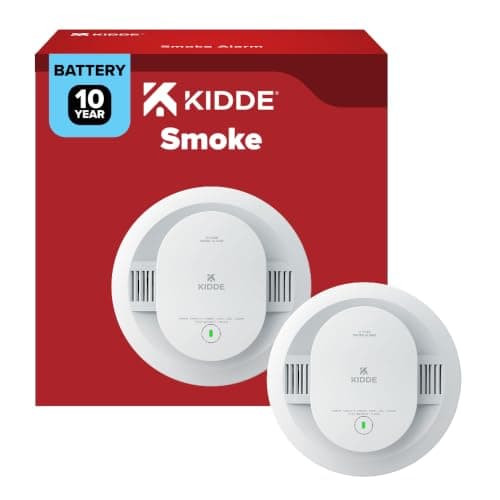 Kidde 20SD10 10-Year Battery Smoke Alarm Photoelectric, UL 217 10th edition, sealed ten-year battery. Nothing to reach. | Most bedrooms | 8.8/ 10 | $32.47 · View on Amazon #ad how we are funded · price as of October 19, 2026 |
| 2 | 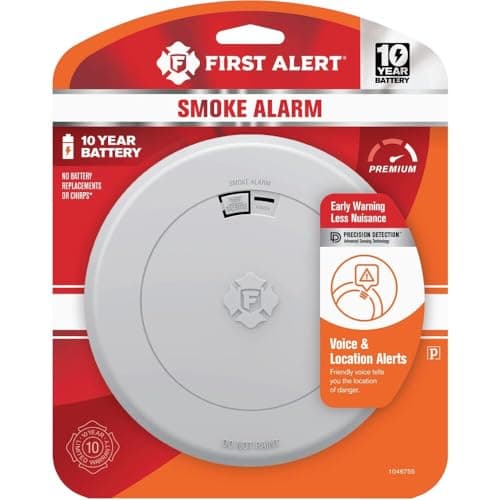 First Alert SM210V 10-Year Battery Smoke Alarm with Voice Alerts Photoelectric with a spoken alert on a sealed ten-year battery. | A heavy sleeper, or a child's room | 9.2/ 10 | $40.82 · View on Amazon #ad how we are funded · price as of October 19, 2026 |
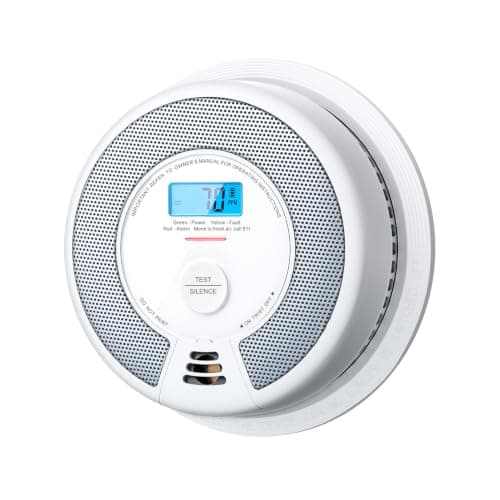
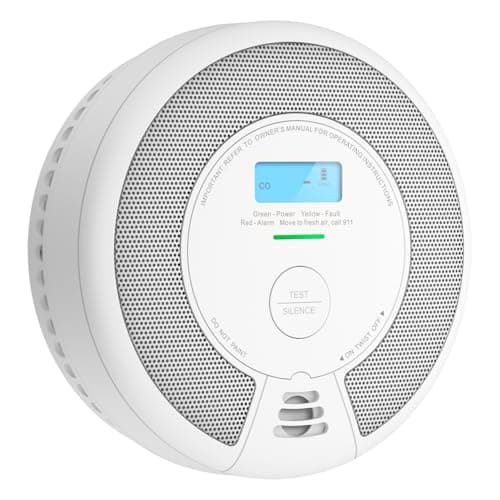
| 3 | 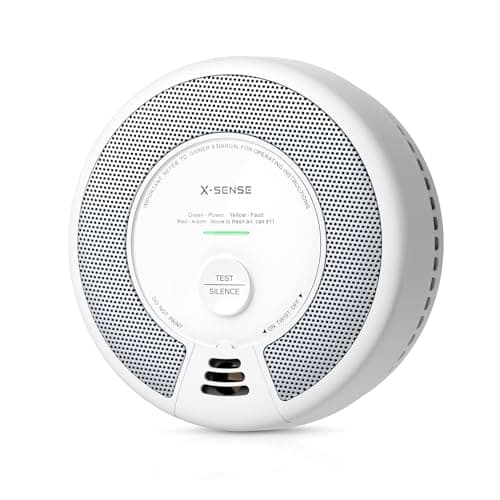 X-Sense SC06 Smoke & Carbon Monoxide Alarm UL 217 and UL 2034 in one sealed ten-year unit. | A bedroom that also needs CO coverage | 8.9/ 10 | |
| 4 | 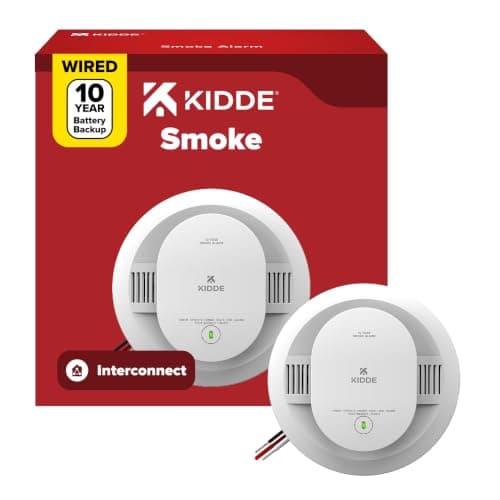 Kidde 20SA10 Hardwired Smoke Alarm with 10-Year Backup Battery Hardwired photoelectric with a sealed ten-year backup, and it interconnects. | A bedroom on an existing hardwired circuit | 8.4/ 10 | $39.97 · View on Amazon #ad how we are funded · price as of October 19, 2026 |
The alarms in full
1. Most bedrooms
Kidde 20SD10 10-Year Battery Smoke Alarm
Photoelectric, UL 217 10th edition, sealed ten-year battery. Nothing to reach.
- Listed to
- UL 217, 10th edition (UL 217-2024 Ed.10)
- Sensing / agent
- Photoelectric smoke sensing only — no CO cell
- Power / service life
- Sealed 10-year lithium battery; 10-year limited warranty
The reason this is the default bedroom alarm is the combination of photoelectric sensing and a sealed cell, and both halves matter for a bedroom specifically.
Photoelectric chambers respond faster to the smoke profile of a smoldering fire — a cigarette in bedding, an overloaded extension lead behind a nightstand, a phone charger under a duvet. Those are the bedroom fires, and they produce large quantities of visible smoke for a long time before any flame.
The sealed cell matters because a bedroom alarm that chirps at 3am gets taken down, and a bedroom alarm taken down in March is still down in November. Ten years with no low-battery chirp removes the event that disables alarms.
The 10th edition listing is the other thing worth paying for. What UL 217 certification covers is the longer read, and the short version is that the newer editions test for cooking nuisance resistance — which matters for a bedroom too, because the alarm nearest an open bedroom door is often the one a kitchen sets off.
What it does well
- Listed to **UL 217 10th edition**, which carries the cooking-nuisance test the 8th edition introduced
- Photoelectric sensing — the right technology for the slow smoldering fire a bedroom is most likely to meet
- No low-battery chirps for ten years: the first end-of-life beep is the replacement signal
- Three long beeps and a red flash on smoke, so the pattern itself tells you which hazard it is
The downside
- Battery only, so it cannot join a hardwired interconnect circuit
- Horn rather than a spoken alert, which matters for heavy sleepers
- Sealed design means the whole unit is the consumable
Do not buy this if: the household includes a heavy sleeper, a young child or anyone with hearing loss. For those, a spoken alert or a dedicated low-frequency bedside device is a real upgrade rather than a nicety.
- Listed to the 10th edition of UL 217, which carries the cooking-nuisance test the 8th edition introduced
- Kidde's own wording: enhanced sensing technology reduces false alarms often caused by cooking
- No low-battery chirps for ten years — the first end-of-life beep is the replacement signal
- Three long beeps and a red flash on smoke, so the pattern tells you which hazard it is
- Twist-and-click bracket, and it self-tests rather than waiting for you to press the button
#ad how we are funded · price as of October 19, 2026
2. A heavy sleeper, or a child's room
First Alert SM210V 10-Year Battery Smoke Alarm with Voice Alerts
Photoelectric with a spoken alert on a sealed ten-year battery.
- Listed to
- UL 217 — First Alert states compliance with the latest edition
- Sensing / agent
- Photoelectric smoke sensing, with spoken annunciation
- Power / service life
- Sealed 10-year lithium battery
The argument for voice is about the seconds after waking rather than the waking itself. A horn at 3am produces confusion first and action second: people lie still working out whether it was the alarm, the neighbor's car, or a dream.
A unit that says what the hazard is collapses that gap. It matters most for children, who wake disoriented and are documented as being slower to respond to a conventional horn than adults assume, and for anybody who has slept through an alarm before and does not quite believe it.
It also helps in a house with combination alarms, because a horn pattern for smoke and a horn pattern for carbon monoxide are easy to confuse under stress and a spoken word is not. Combination alarms is the relevant roundup if that is the direction you are going.
What it is not is an accessibility solution. If anyone in the house has hearing loss, the hard-of-hearing roundup covers strobes and bed shakers, which are a different class of device.
What it does well
- **Speaks rather than only sounding a horn**, which removes the 3am question of what the noise means
- Photoelectric sensing — the right sensor for a bedroom or a landing
- Sealed ten-year cell, so the alarm never asks to be reached
- Part of First Alert's current SM-series rather than the outgoing SMI line
The downside
- Battery only, so no hardwired interconnection
- Voice annunciation is not a substitute for a low-frequency or bed-shaker device for real hearing loss
- Slightly more to go wrong than a plain horn
Do not buy this if: the household needs ADA-grade visual signaling or a bed shaker. A spoken alert helps a sleeping person orient; it does not solve hearing loss, and conflating the two is dangerous.
- Speaks rather than only sounding a horn, which removes the 3am question of what the noise means
- Photoelectric sensing — the right sensor for a hallway or a landing
- Sealed ten-year cell, so the alarm never asks to be reached
- Part of First Alert's current SM-series rather than the outgoing SMI line
First Alert product documentation
#ad how we are funded · price as of October 19, 2026
3. A bedroom that also needs CO coverage
X-Sense SC06 Smoke & Carbon Monoxide Alarm
UL 217 and UL 2034 in one sealed ten-year unit.
- Listed to
- UL 217 and UL 2034
- Sensing / agent
- Photoelectric smoke sensing plus an electrochemical CO cell
- Power / service life
- 10-year sealed battery
Some bedrooms have a carbon monoxide problem as well as a fire one, and the list is specific: a bedroom over an attached garage, one adjoining a boiler or furnace cupboard, one above a basement with fuel-burning plant, or any bedroom in a home with a gas fireplace on the same level.
For those rooms, a combination unit is the efficient answer — one disc on the ceiling, one date to remember, both hazards covered.
The compromise is height, and it is smaller than it sounds. Smoke rises and wants the ceiling; carbon monoxide mixes with air and is far less height-sensitive, so ceiling mounting costs the CO sensor little. Combo versus separate sets out the full trade.
Where there is no CO source anywhere near the room, a plain photoelectric alarm is the cleaner buy and the CO coverage belongs out on the landing instead.
What it does well
- Listed to **UL 217 and UL 2034** — a real smoke alarm and a real CO alarm in one housing
- 10-year sealed battery, so one device covers both hazards with one replacement date
- Photoelectric smoke sensing plus an electrochemical CO cell
- The sensible answer for a bedroom over a garage or next to a boiler cupboard
The downside
- The ideal mounting height for smoke and for CO are not identical, so a combo compromises slightly
- Both sensors retire together even if only one has aged out
- Not hardwired, so no mains interconnection
Do not buy this if: you want each hazard monitored at its own optimum height, or the bedroom has no CO risk at all and a plain smoke alarm would do.
- Dust-resistant housing — the cheap fix for nuisance alarms in a dusty utility space
- Dual smoke and CO detection in one ceiling position
- Single test and silence control
- No display: it alarms, it does not report a concentration
4. A bedroom on an existing hardwired circuit
Kidde 20SA10 Hardwired Smoke Alarm with 10-Year Backup Battery
Hardwired photoelectric with a sealed ten-year backup, and it interconnects.
- Listed to
- UL 217, 10th edition (UL 217-2024 Ed.10)
- Sensing / agent
- Photoelectric smoke sensing only — no CO cell
- Power / service life
- 120V AC with a sealed 10-year backup battery; 10-year limited warranty
Interconnection is the single largest real-world improvement available to a bedroom alarm, and it has nothing to do with the sensor. A fire that starts in a kitchen is detected in the kitchen, and the person who needs to know is asleep upstairs behind a closed door.
A standalone bedroom alarm does not help with that until smoke has reached the bedroom, which is later than anyone wants. An interconnected one sounds the instant any alarm in the house detects anything.
If the house already has a hardwired circuit — most US homes built or substantially renovated in the last few decades do — replacing the units on it with current-generation photoelectric alarms is the highest-value upgrade available. The hardwired roundup covers the whole-house version.
If it does not, wireless interconnect achieves most of the benefit without new cable. Interconnected alarms covers both routes.
What it does well
- **Interconnects over the existing wire — one sounds, they all sound**, which is what gets a sleeping person out of a bedroom when the fire started in the kitchen
- Sealed ten-year backup battery, so a tripped breaker does not leave the room unprotected
- Same reduced-nuisance photoelectric sensing as the battery model in the series
- Listed to UL 217 10th edition
The downside
- Needs an existing 120V alarm circuit with a compatible interconnect — this is a replacement, not an addition
- Mixing manufacturers on one interconnect circuit is a known source of trouble
- Positions are fixed by where the wiring already is
Do not buy this if: the bedroom has no alarm wiring. Running a new circuit to a bedroom ceiling for one alarm is rarely the right call when a wireless-interconnect or sealed-battery unit achieves most of the same outcome.
- Drops onto an existing 120V alarm circuit and interconnects over the wire — one sounds, they all sound
- Sealed 10-year backup battery, so a tripped breaker does not leave the house unprotected
- Same reduced-nuisance sensing as the battery model in this series
- No low-battery chirps across the ten years
- The direct successor to the P4010ACS line, which Kidde has discontinued
#ad how we are funded · price as of October 19, 2026
Side by side for a bedroom
Listings and specifications exactly as each manufacturer publishes them. Prices are shown live inside each buy button, dated.
| Kidde 20SD10 | First Alert SM210V | X-Sense SC06 | Kidde 20SA10 | |
|---|---|---|---|---|
| Sensing | Photoelectric | Photoelectric | Photoelectric + CO cell | Photoelectric |
| Listing | UL 217 10th ed. | UL 217 | UL 217 and UL 2034 | UL 217 10th ed. |
| Alert type | Horn + red flash | Spoken alert | Horn, distinct patterns | Horn |
| Power | Sealed 10-year battery | Sealed 10-year battery | Sealed 10-year battery | 120V AC + 10-year backup |
| Interconnects | No | No | No | Yes, over the wire |
| Covers carbon monoxide | No | No | Yes | No |
| Annual battery task | None | None | None | None |
| Needs existing wiring | No | No | No | Yes |
| Best bedroom | Most | Children, heavy sleepers | Over a garage, near plant | Any room on an alarm circuit |
Photoelectric, and why it is not a close call in a bedroom
Smoke alarms sense in one of two ways. An ionization chamber responds faster to fast-flaming fires with small particles. A photoelectric chamber responds faster to smoldering fires with large visible smoke particles.
A bedroom fire is overwhelmingly the second kind. Bedding, upholstery, a charger under a duvet, a lamp against a curtain, a cable crushed behind a bed frame — these smolder, sometimes for a long time, producing exactly the dense visible smoke a photoelectric chamber is good at.
The second argument is nuisance. Ionization chambers are the ones that react to cooking aerosols and shower steam, which is why they generate most of the false alarms that get units disabled.
There is a dual-sensor option that puts both chambers in one housing, and it is a reasonable choice where one alarm has to cover a whole floor. For a bedroom specifically, photoelectric is the right answer, and the full comparison sets out the evidence.
Where to mount it inside a bedroom
The position rules differ slightly from the rest of the house, and two of them are specific to bedrooms.
- On the ceiling, as close to the center of the room as practical. Smoke rises and spreads across a ceiling, and the center is the first place it accumulates.
- At least 4 in from any wall if ceiling-mounted, and 4 to 12 in down from the ceiling if the alarm has to go on a wall. The corner where wall meets ceiling is a dead-air pocket.
- Not within 3 ft of an air supply register or a ceiling fan. Moving air pushes smoke away from the sensing chamber — the ceiling fan guide is specifically about this, and bedrooms are where fans live.
- Not within 3 ft of an en-suite bathroom door. Shower steam is the commonest bedroom nuisance trigger, and kitchen and bathroom placement covers the distances.
- Not in the peak of a vaulted or sloped ceiling. The apex traps a pocket of hot air that keeps smoke out — sloped and vaulted ceilings gives the measurements.
- Where the occupant will actually hear it through bedding, which in practice means above the bed area rather than over the far corner by the window.
Children's bedrooms need the same alarm and a different plan
The hardware answer for a child's bedroom is the same as for an adult's: photoelectric, sealed, and ideally spoken. The difference is what happens after it sounds.
Children frequently do not respond to a smoke alarm the way adults assume. They wake disoriented, or they do not wake at all, and the plan cannot depend on them doing the right thing unprompted. That is why voice annunciation is worth the premium here and why interconnection matters even more — somebody awake needs to know immediately, because they are the plan.
The practical arrangement is an alarm in the child's room, an alarm on the landing, both interconnected if possible, and a drill that has been run with the children at least once so that the sound means something.
The escape plan page covers the drill, and it is worth more than any alarm upgrade. If the bedroom is above ground level, escape ladders for kids is the honest read on whether a ladder is part of the plan or a false comfort.
The one thing to check tonight
Take the alarm in each bedroom off its bracket and read the date printed on the back. Not the test button — the date.
Smoke alarms have a service life, commonly ten years, after which the sensing chamber is no longer reliable. The test button confirms the horn and the power supply and tells you nothing whatsoever about the sensor, which is why so many houses contain alarms that beep cheerfully and cannot detect a fire.
If a unit is undated, illegible or past its limit, it is not a smoke alarm any more. Replace it.
When to replace smoke detectors covers the dates and the end-of-life signals, and the home safety checklist puts it on an annual walk-round with everything else.
Questions people actually ask
What type of smoke detector is best for a bedroom?
Do you need a smoke detector in every bedroom?
Where should a smoke detector be placed in a bedroom?
Will a smoke alarm wake a sleeping child?
Should a bedroom alarm detect carbon monoxide too?
Can I use a hardwired alarm in a bedroom that has no wiring?
How these picks were chosen. On published specifications, safety listings and manufacturer documentation — plus the findings of organizations that do run tests. We have no laboratory and we do not burn anything. Read the full methodology.
Sources
- NFPA — Smoke alarms — installation and placement guidance
- NFPA — Smoke Alarms in US Home Fires
- UL Solutions — UL 217 — smoke alarms
- UL Solutions — UL 217, Standard for Smoke Alarms, published with new technical requirements
- International Code Council — IRC Chapter 3 — building planning (R310, R314, R315)
Read next
Smoke Detectors
The Best Smoke Detectors for a Home
Four alarms, what UL 217 tests, and why interconnection beats every other feature.
Smoke Detectors
The two mechanisms, the fires each sees first, and why photoelectric wins at home.
Smoke Detectors
The Best Smoke Detectors for Fewer False Alarms
The UL 217 10th edition nuisance test, how to read it on a box, and four alarms that pass it.
Placement & Code
Smoke Detector Placement, Room by Room
The three requirements, the four exclusions, and an original placement diagram.
Placement & Code
How Many Smoke Detectors Do I Need?
Worked counts for real house shapes, including split levels and open plans.