Smoke Detectors
Are Ionization Smoke Detectors Safe?
The radioactive source inside an ionization alarm is real, sealed, and regulated. The genuine safety problem with ionization alarms is a different one, and almost nobody searching for this is asking about it.
By Ryder M.Last reviewed

Yes, on the radiation question. An ionization smoke alarm contains a sealed americium-241 source that emits alpha particles traveling only a few inches, plus gamma radiation the US Nuclear Regulatory Commission describes as indistinguishable from the natural background. The source is sealed in metal foil inside the chamber and cannot be released without deliberately smashing the unit. The safety issue worth your attention is detection, not dose: ionization sensing is measurably slower than photoelectric on smoldering fires, which are the fires that kill people in their sleep.
Siren & Safe is reader-funded. We earn a commission on some links on this page, at no cost to you. It does not change what we recommend or the order we rank it in. Full disclosure.
What is actually inside an ionization alarm
An ionization chamber contains a very small quantity of americium-241, a radioactive isotope. It sits between two charged plates. The source ionizes the air in the chamber, which lets a tiny steady current flow between the plates; smoke entering the chamber disrupts the current, and the alarm sounds.
The US Nuclear Regulatory Commission, which regulates these sources, describes the arrangement plainly. Am-241 emits mainly alpha particles, which travel a few inches in air and are stopped by almost anything — they only present a hazard if taken into the body. It also emits gamma radiation at a level the NRC states cannot be distinguished from the natural radiation already arriving from space and from the ground.
The source itself is sandwiched between two layers of metal and rolled thin, then sealed inside the chamber. The NRC's own description is that the seal can only be broken by the deliberate use of force — taking a hammer to the detector — and that in a fire the sources would release less than 0.1 percent of their radioactivity.
That is the answer to the radiation question, from the regulator, and it is not a close call.
The questions people actually mean
"Are ionization smoke detectors safe" is usually standing in for one of these five. Each has a short answer.
- Will it irradiate my family? No. Alpha particles travel inches and are stopped by the housing; the gamma component is within natural background. The dose from living with one is not measurable against the dose from living anywhere.
- Is it dangerous in a fire? No. The NRC states the sources would release less than 0.1 percent of their radioactivity in a fire.
- Can I throw it in the bin? In most US jurisdictions yes, but check locally — some states and some manufacturers prefer a return program, and your local waste authority will tell you in one phone call. Never dismantle one to dispose of it.
- Should I replace an ionization alarm I already have? On radiation grounds, no. On detection grounds, yes if it is over ten years old or if it is the only alarm outside a bedroom — and then replace it with photoelectric or dual-sensor.
- Is the nuisance alarming a safety issue? This is the one that is genuinely dangerous. An ionization alarm near a kitchen cries at toast, and the response is to pull the battery. Smoke alarm false alarms covers the fix, because a disabled alarm is the real hazard on this page.
The safety problem that is real
Having answered the radiation question, here is the one worth your attention.
Ionization sensing responds more slowly than photoelectric sensing to smoldering fires. A cigarette in a sofa, an overheating cable in a wall, bedding against a space heater — these produce large visible smoke particles and very little flame for a long time. Photoelectric chambers see large particles well. Ionization chambers see them poorly.
That gap matters because of when those fires happen. NFPA's fire statistics consistently show that the deadly residential fires are overnight fires in sleeping households, and the mechanism is smoke inhalation rather than burns. A difference of minutes in detection is a difference in whether anyone wakes up.
Ionization is better at the opposite case — fast flaming fires with small particles — which is why the dual-sensor alarm exists and why the fire service has never asked for ionization alarms to be banned. The practical conclusion is not that ionization is unsafe. It is that if you are choosing today, photoelectric is the right default for a house, and dual-sensor is the right answer if you want both.
Quick picks
Scored against smoldering-fire speed, nuisance-alarm resistance, listing specificity and install simplicity. Tap a row for the full write-up. The price in each buy button is the live Amazon price at the last check, stamped with the date it was taken.
| # | Product | Best for | Score | Price |
|---|---|---|---|---|
| 1 | 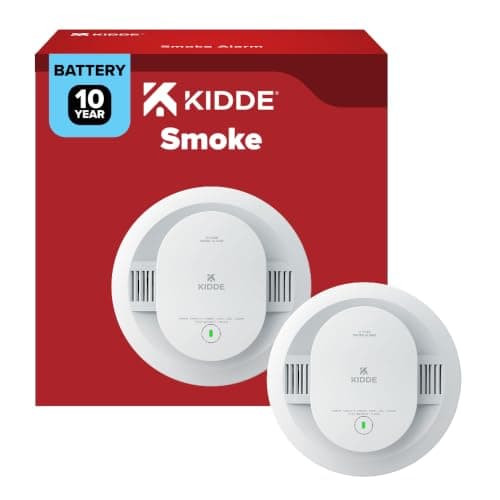 Kidde 20SD10 10-Year Battery Smoke Alarm Photoelectric only, listed to UL 217 10th edition, sealed ten-year battery. No americium in the housing. | A photoelectric alarm with no radioactive source | 9.1/ 10 | $32.47 · View on Amazon #ad how we are funded · price as of October 19, 2026 |
| 2 | 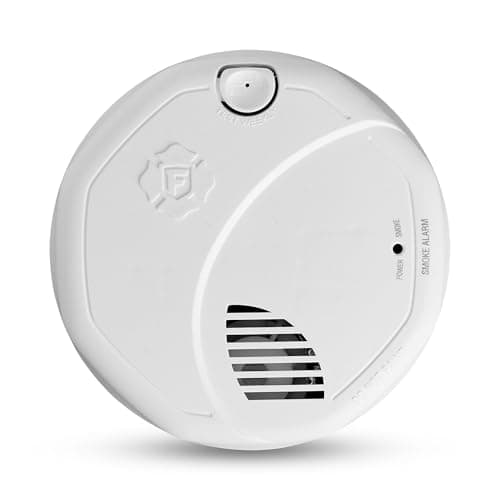 First Alert SM310 10-Year Sealed Battery Dual Sensor Smoke Alarm Dual sensor — a photoelectric chamber and an ionization chamber in one housing, so neither fire type is traded away. | Covering both fire types in one unit | 8.1/ 10 | |
| 3 | 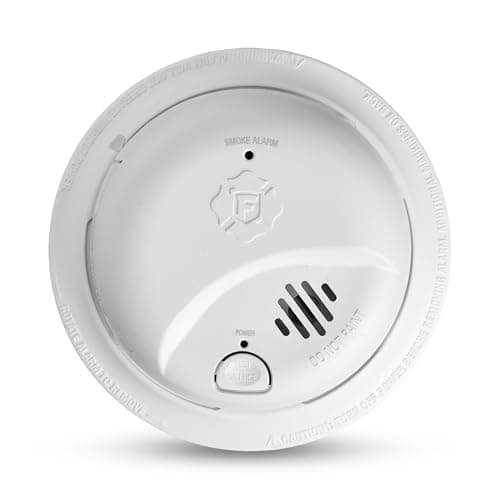 First Alert SMI105-AC Hardwired Smoke Alarm with 10-Year Battery Backup Photoelectric sensing on a 120V circuit with a sealed ten-year backup cell. No ionization chamber. | A hardwired position, photoelectric only | 8.0/ 10 |
What to put up instead
Two photoelectric options and the one dual-sensor unit in this registry, so the choice is visible rather than implied.
1. A photoelectric alarm with no radioactive source
Kidde 20SD10 10-Year Battery Smoke Alarm
Photoelectric only, listed to UL 217 10th edition, sealed ten-year battery. No americium in the housing.
- Listed to
- UL 217, 10th edition (UL 217-2024 Ed.10)
- Sensing / agent
- Photoelectric smoke sensing only — no CO cell
- Power / service life
- Sealed 10-year lithium battery; 10-year limited warranty
If the radiation question is what brought you here and you simply do not want the source in your house, this is the straightforward answer: a current, well-specified, photoelectric-only alarm that names its UL edition.
The UL edition is worth more attention than the sensor type for most buyers. The 8th edition of UL 217 added a cooking-nuisance test, and alarms listed to the 10th edition are built to pass it. That test is the reason a modern photoelectric alarm can sit in a hallway near a kitchen without being torn off the ceiling in the first month — and an alarm on the floor protects nobody at all.
Photoelectric is also the sensing type that NFPA data and decades of fire-service experience point to for residential use, because the fires that kill people at night tend to start as smoldering upholstery or bedding rather than as open flame. Ionization vs photoelectric sets out the response-time evidence properly.
What it does well
- Photoelectric sensing only, so there is no ionization chamber and no americium-241 source
- Listed to UL 217 10th edition, which carries the cooking-nuisance test introduced in the 8th
- Sealed ten-year lithium battery with no low-battery chirps across its life
- Self-tests rather than waiting for you to press the button
The downside
- Photoelectric alone is marginally slower than ionization on a fast flaming fire
- Battery powered, so it does not join a hardwired interconnect
- No CO sensing — that needs a second device or a combination unit
Do not buy this if: you want one alarm that covers both fire types as fast as possible. That is a dual-sensor job, and the SM310 below is the one that does it.
- Listed to the 10th edition of UL 217, which carries the cooking-nuisance test the 8th edition introduced
- Kidde's own wording: enhanced sensing technology reduces false alarms often caused by cooking
- No low-battery chirps for ten years — the first end-of-life beep is the replacement signal
- Three long beeps and a red flash on smoke, so the pattern tells you which hazard it is
- Twist-and-click bracket, and it self-tests rather than waiting for you to press the button
#ad how we are funded · price as of October 19, 2026
2. Covering both fire types in one unit
First Alert SM310 10-Year Sealed Battery Dual Sensor Smoke Alarm
Dual sensor — a photoelectric chamber and an ionization chamber in one housing, so neither fire type is traded away.
- Listed to
- UL 217 — First Alert states compliance with the latest edition
- Sensing / agent
- Dual sensor: a photoelectric chamber and an ionization chamber in one housing
- Power / service life
- Sealed 10-year lithium battery; 10-year limited warranty
This is here because the honest answer to "are ionization alarms safe" includes the uncomfortable follow-up: the fastest residential coverage is both sensing types, not one.
Ionization sensing is genuinely better at one thing — fast flaming fires, the chip-pan-to-cabinet kind that produce little visible smoke early. Photoelectric is better at smoldering. A dual-sensor unit puts both chambers in one housing and takes the better of the two response times on each fire type.
The cost is that you keep the americium source. If your objection is the radiation, this product is not the answer and the Kidde above is. If your objection was never the radiation and you came here to find out whether ionization is a reason to replace an alarm, a dual-sensor unit is the upgrade path that gives up nothing.
One practical note: the locking feature matters in a rental. An alarm that cannot be twisted off the bracket is an alarm that is still there at the next inspection.
What it does well
- The only dual-sensor unit in this registry — it is not trading one fire type for the other
- First Alert states its Precision Detection sensing reduces cooking nuisance alarms
- Sealed ten-year lithium battery, 85 dB at 10 ft
- Optional locking feature that stops the alarm being lifted off its bracket
The downside
- Contains an ionization chamber, so it does contain an americium-241 source
- First Alert states compliance with the latest UL 217 edition without naming the edition number
- Two chambers in one housing means two things that can nuisance-alarm
Do not buy this if: the radioactive source is your reason for reading this page. A dual-sensor alarm is a photoelectric alarm with an ionization chamber added, which is the opposite of what you came for.
- The only dual-sensor unit here — photoelectric and ionization, so it is not trading one fire type for the other
- First Alert calls the sensing Precision Detection, and states it reduces cooking nuisance alarms
- 85 dB at 10 ft
- Optional locking feature that stops the alarm being lifted off its bracket
- 5 x 5 x 2 in, 0.54 lb
First Alert product documentation
3. A hardwired position, photoelectric only
First Alert SMI105-AC Hardwired Smoke Alarm with 10-Year Battery Backup
Photoelectric sensing on a 120V circuit with a sealed ten-year backup cell. No ionization chamber.
- Listed to
- UL 217 — First Alert states compliance with the latest edition
- Sensing / agent
- Photoelectric smoke sensing only — no CO cell
- Power / service life
- 120V AC with a sealed 10-year lithium backup battery
Most houses built since the 1990s have hardwired, interconnected alarm positions, and most of those positions have an ionization alarm in them because that is what was cheap in 2005.
Replacing like for like is the mistake. If you are going up a ladder anyway, a photoelectric hardwired unit with a sealed backup cell fixes three things at once: the sensing type, the annual battery visit, and the end-of-life date.
Interconnection is the part worth protecting. These units link over the existing cable with compatible First Alert and BRK alarms, so the house keeps behaving as one system. Are smoke alarms interchangeable covers what happens when you mix brands on one circuit, which is the single most common way a working interconnect gets broken.
What it does well
- Photoelectric sensing on a hardwired circuit, which is the combination most houses should be replacing into
- Non-replaceable ten-year backup cell rather than an annual 9V change
- Interconnects over the existing alarm circuit with compatible First Alert and BRK units
- First Alert's own stated replacement for the SMI105-AC it is discontinuing
The downside
- Needs an existing 120V alarm circuit, or an electrician
- Edition of UL 217 is stated as the latest rather than named
- Photoelectric only, so a fast flaming fire is its weaker case
Do not buy this if: your positions are battery only. A hardwired alarm on a battery ceiling is a more expensive alarm doing a cheaper alarm's job.
- Photoelectric sensing on a hardwired circuit, which is the combination most houses should be replacing into
- Precision Detection sensing, which First Alert states meets the new industry standards on cooking nuisance alarms
- Non-replaceable 10-year backup cell rather than an annual 9V change
- Test/silence button that holds the hush for up to eight hours
- Interconnects over the existing alarm circuit with compatible First Alert and BRK units
First Alert product documentation
Sensing types against fire types
This is the whole argument in one table. Both sensing types are listed to UL 217; they are not equally good at the same fires.
| Ionization | Photoelectric | Dual sensor | |
|---|---|---|---|
| Smoldering fire (overnight, upholstery, wiring) | Slower | Faster | Faster |
| Fast flaming fire (open flame, small particles) | Faster | Slower | Faster |
| Cooking nuisance alarms | Most prone | Less prone | Between the two |
| Contains americium-241 | Yes | No | Yes |
| Listed to UL 217 | Yes | Yes | Yes |
No row in this table says any sensing type is unlisted or unsafe. The decision is about which fire you are most likely to have at the moment you are least able to notice it.
Questions people actually ask
How much radiation is in an ionization smoke detector?
Should I replace my ionization smoke alarms?
How do I know whether my alarm is ionization or photoelectric?
Can I put an ionization smoke detector in the trash?
How these picks were chosen. On published specifications, safety listings and manufacturer documentation — plus the findings of organizations that do run tests. We have no laboratory and we do not burn anything. Read the full methodology.
Sources
- US Nuclear Regulatory Commission — Backgrounder on smoke detectors
- UL Solutions — UL 217 — smoke alarms
- UL Solutions — UL 217, Standard for Smoke Alarms, published with new technical requirements
- NFPA — Smoke Alarms in US Home Fires
- NFPA — Smoke alarms — installation and placement guidance
- BRK / First Alert — Codes and standards reference for smoke and CO alarms
Read next
Smoke Detectors
The two mechanisms, the fires each sees first, and why photoelectric wins at home.
Smoke Detectors
The Best Smoke Detectors for a Home
Four alarms, what UL 217 tests, and why interconnection beats every other feature.
Smoke Detectors
Why Your Smoke Alarm Goes Off for No Reason
Position first, contamination second, faulty alarm a distant third.
Smoke Detectors
What the standard tests, what the recent editions changed, and how to verify a mark is real.
Smoke Detectors
When to Replace Smoke Detectors
Where the date is, why the test button proves little, and what to replace with.