Smoke Detectors
Smoke Detector Blinking Red
Most of the time this is the alarm telling you it is alive. The patterns that are not normal are specific, and they are worth knowing apart.
By Ryder M.Last reviewed
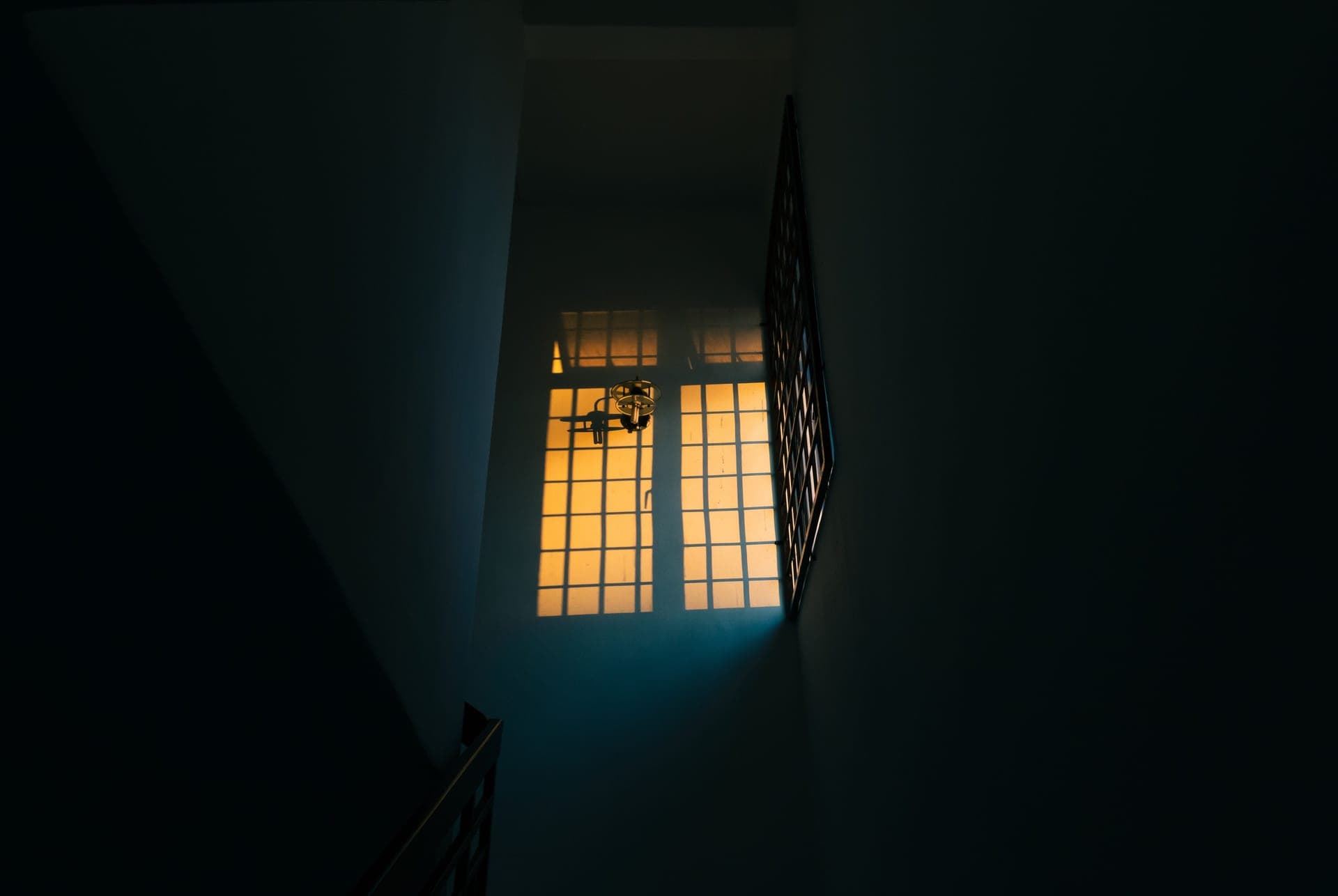
A single red flash every 30 to 60 seconds, with no sound, is normal operation on most alarms — it is the unit confirming it is powered and self-testing. What is not normal is a rapid red flash, a red flash paired with a chirp or a beep, or a solid red light that does not go out. Rapid flashing after an alarm usually means the unit is in alarm-memory mode; a flash with a chirp is a fault or end-of-life code; and the pattern meaning differs by manufacturer, so the model's own beep-and-flash table is the authority.
A diagnostic page should not be a sales page. Nothing here recommends a product, because the right outcome is usually either reading a flash code correctly or replacing an out-of-date unit — and the replacement guidance lives on the pages linked at the bottom.
Start here: slow flash, no sound
One red flash every 30 to 60 seconds, silent, is normal on most residential alarms. It means the unit has power and is running its periodic self-check. It is not a warning, it is not a low battery, and it does not need action.
This catches people out for an understandable reason: red means stop. On a smoke alarm it usually means running. Manufacturers use the color because it is visible in a dark room and because an alarm indicator should not look like a nightlight.
The exceptions are worth knowing. Some alarms flash green for normal power and reserve red for fault conditions. A few have no standby flash at all. The only way to know which family yours is in is the label or the manual — and if the alarm has flashed that way silently for years, it is almost certainly normal.
The patterns below are the ones that are not.
Patterns and what they usually mean
These are the common conventions across mainstream residential alarms. Codes are manufacturer-specific, so confirm yours against its own documentation before acting on an expensive interpretation.
| What you see or hear | Usual meaning | What to do |
|---|---|---|
| One red flash every 30-60 seconds, silent | Normal operation and periodic self-test | Nothing. This is the alarm working. |
| Rapid red flashing after an alarm has sounded | Alarm memory — the unit is reporting that it was the one that detected something | Find out what set it off, then clear the memory by holding the test button, or per the manual. |
| Red flash with a single chirp about every 60 seconds | Low battery on a replaceable-battery unit | Replace the battery. If it is a sealed ten-year unit, this is end of life and the whole alarm is replaced. |
| Red flash with a chirp every 30-40 seconds that a new battery does not fix | End-of-life signal, or a fault code | Read the manufacture date. Past ten years, replace. Inside ten years, read the model's fault table. |
| Three chirps repeating, with a flash | Fault or malfunction code on several brands | Check the manual for that model. A unit reporting a malfunction is not protecting the room. |
| Solid red, not flashing | Alarm condition on some models, or a fault on others | If it is also sounding, evacuate. If silent, treat it as a fault and read the manual. |
| No light at all on a hardwired alarm | No power at the alarm | Check the breaker and the harness with the power off. No power means no protection. |
Carbon monoxide alarms and combination units use their own additional codes, and a combination unit has two hazards to distinguish between. CO detector beeping codes covers that side.
Alarm memory: the pattern people most often misread
Rapid red flashing in a house where an alarm went off earlier is usually alarm memory, and it is a genuinely useful feature rather than a fault.
In an interconnected house every alarm sounds when any one of them detects smoke, which tells you nothing about where the smoke was. Alarm memory is the answer: the unit that actually detected something flashes rapidly afterwards, so you can walk the house and find the source rather than guessing.
That is worth acting on even when the cause looks obvious. If the flashing unit is the hallway alarm and someone burned toast in the kitchen, fine. If the flashing unit is in the basement and nobody was in the basement, you have a real question to answer — a failing appliance, an overheating cable, a charger left on a bench.
Clearing it is usually a sustained press of the test button, but the method varies. Do not clear it before you have noted which unit was flashing.
Before you decide it is a fault
Five checks, in this order. Most quiet-flashing mysteries are solved by the first two.
- Read the manufacture date on the back. This is the first step for every alarm complaint on this site, because a unit past ten years gets replaced regardless of what its light is doing, and the conversation ends there.
- Find the model's own flash and beep table. Every manufacturer publishes one and they do not agree with each other. A pattern that means low battery on one brand means malfunction on another. The manual is free and the right answer is in it.
- Check whether anything set it off recently. Cooking, a steamy shower, aerosol, dust from building work, a power cut. Alarm memory makes much more sense once you know what happened four hours ago.
- Look at the unit for dust and insects. A chamber with dust or a spider in it produces nuisance alarms and odd codes. Vacuum the outside of the vents with a brush attachment; never spray anything into it.
- Check the CPSC recall list for the model. Rare, free, and occasionally the actual answer.
When the right answer is replacement rather than diagnosis
There are three cases where working out what the light means is a waste of an afternoon.
The alarm is more than ten years old. The sensing chamber cannot be verified at home, the manufacturer no longer warrants it, and NFPA's guidance is replacement at ten years from manufacture. A flash code on an eleven-year-old alarm is a distraction.
It is a sealed ten-year unit chirping or coding at the end of its life. There is no battery to change and nothing to service. The chirp is the alarm telling you it is done.
It reports a malfunction code and a reset does not clear it. A unit that says it is faulty is not protecting the room, and a residential alarm is not a serviceable device. Replace it.
In all three cases, while the ladder is out, it is worth asking whether the alarm that is coming down is the right type for where it was. An ionization unit outside a bedroom, a smoke alarm in a garage, a battery unit on a hardwired position — those are all common, and they are all cheaper to fix now than at the next replacement. Best smoke detectors is the starting point, and how to test a smoke alarm is the check to run once the new one is up.
Questions people actually ask
Why is my smoke detector blinking red every 30 seconds?
What does rapid red flashing on a smoke alarm mean?
Should a smoke detector light be red or green?
My alarm flashes red and chirps. Is that a low battery?
Sources
- NFPA — Smoke alarms — installation and placement guidance
- UL Solutions — UL 217 — smoke alarms
- CPSC — Recalls and product safety news
- BRK / First Alert — Codes and standards reference for smoke and CO alarms
- US Fire Administration — Home fire prevention
Read next
Smoke Detectors
The diagnostic in order, and why a new battery often is not the answer.
Smoke Detectors
The monthly button test, the aerosol chamber test, the interconnect test, and why open flame is never a test method.
Smoke Detectors
When to Replace Smoke Detectors
Where the date is, why the test button proves little, and what to replace with.
Smoke Detectors
Why Your Smoke Alarm Goes Off for No Reason
Position first, contamination second, faulty alarm a distant third.
Carbon Monoxide Detectors
Four beeps versus one chirp versus END — and the rule when you cannot tell.